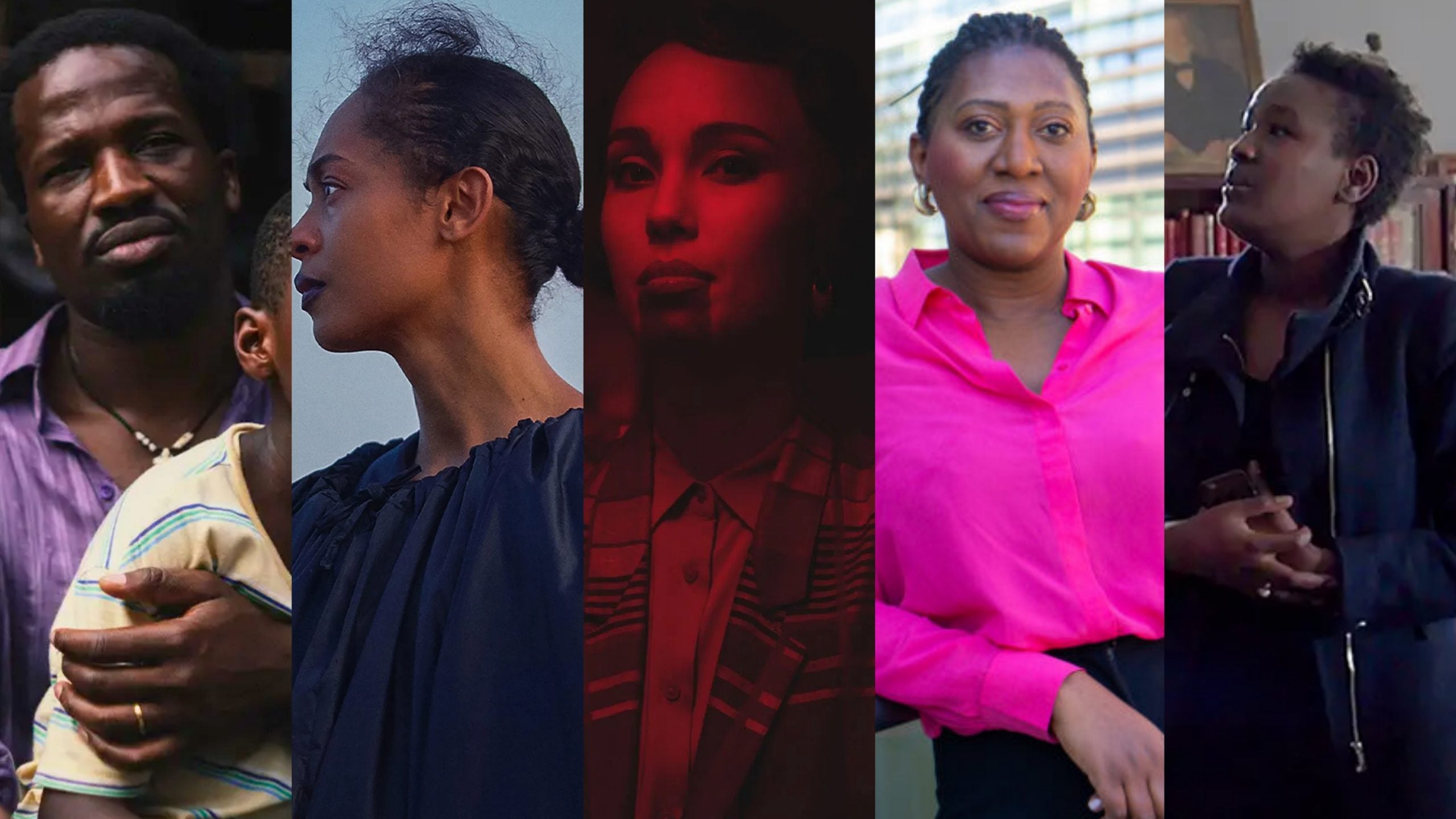
SFF – The Shadow Scholars, On Becoming A Guinea Fowl & My Father’s Shadow


Hosted by
KT & Oti
Show Notes
In our first episode of SFF coverage we are covering African/Black films: How to Build a Library, The Shadow Scholars, On Becoming a Guinea Fowl, My Father’s Shadow & BLKNWS: Terms & Conditions.
Check out interviews we have for these films:
Interview with “Shadow Scholars” Director, Eloïse King (video & audio)
Interview with “On Becoming A Guinea Fowl” Writer/Director, Rungano Nyoni (audio)
Interview with “My Father’s Shadow” Director, Akinola Davies Jr. (video & audio)
Tomato Meter
 KT
"Eloïse King brings a considered lens through centering humanity and drawing a parallel between colonialism and the power structures that exist today. There is a broader, more complex dialogue that is encouraged to be explored.Posted Jun 17, 2025"
 Oti
"The Shadow Scholars is a powerful look at global academic inequality, exposing how brilliance in Kenya fuels degrees abroad, while structural bias keeps the system rigged.Posted Jun 17, 2025"
KT"Rungano Nyoni articulates and visually demonstrates the weight that women hold and experiences we are bonded by. On Becoming A Guinea Fowl doesn’t coddle but is hopeful in the love, grace and collective power we have.Posted Jun 17, 2025"
Oti"On Becoming a Guinea Fowl peels back layers of silence, shame, and appearances with sharp wit and purpose. A bold, complex film that demands discussion long after it ends."
KT"While the contradiction of a colonial funded decolonised space deserves its own conversation, the biggest frustration was not offering enough perspectives. Almost as if to lead the audience to believe the means justifies the ends.Posted Jun 17, 2025"
KT"The world has tried (and always failed miserably) to duplicate Black creativity. It is not new and informed by its specificity. The joy and pain. Khalil layers these dimensions so effortlessly from art to little known histories.Posted Jun 17, 2025"
KT"Akinola Davies Jr & Wale Davies offer their hearts to deliver a sweet and peripheral memory of family, childhood and culture. The Egbo brothers work well as a playful contrast to Ṣọpẹ́ Dìrísù’s layered father figure presence.Posted Jun 17, 2025"
Oti"My Father’s Shadow is Akinola Davies Jr.’s tender, atmospheric debut that captures the messiness of family, memory, and belonging with beautiful visuals and powerful performances.Posted Jun 17, 2025"
Episode Details
- Duration
- 0:00
- Released
- June 17, 2025
- Category
- Episode
- Hosts
Transcript
Transcript (8,391 words)
Full transcript of SFF – The Shadow Scholars, On Becoming A Guinea Fowl & My Father’s Shadow.
KT: It is another week in the For Your Reference household. And we are doing it. Big friends and lovers. We're at the Major Sydney Film Festival. We're doing Big man tings, big dog music. I cannot hold your hand. Oti can hold my hand though. How have you been? People have been asking, inquiring, have you been let out of the locked room for some aeration, Oti?
Oti: Yeah. Finally get some opinions out here.
KT: Wow, I'm getting it off my chest. Somebody gotta do it. Tell us you got grand national money without telling us you got Grand National Money. Oti. Um, friends and lovers, thank you so much, uh, for supporting our podcast. Um, you know. Surprisingly, not surprisingly, our full reviews even Ref Max's, um, but our reviews are the most popular. Um, the interviews are cool, um, as well, but the feed has been very interview heavy. So love and appreciate friends and lovers. Different tastings, different flavorings. Thank y'all. We got y'all. Um, for sticking around, we did eight Sydney Film Festival interviews in total. Um, today we will be covering films that we've done interviews for. Um, it will be in the show notes, um, shout outs to Eloïse King, um, Akinola Davies Jr. as well as Rungano Nyoni.
KT: Uh, we have a themed episode. Oti?
Oti: Mm.
KT: We have Africa and black film. Oof. You'll have to answer for one of your films. Something is rotten in the state of Nairobi.
Oti: What blasphemy is this?
KT: We'll wait for it. Get your colonial coins, Oti. Um, let's get on with the show.
Oti: Jambo, friends and lovers.
KT: Hey, big black Africa is back in the house. Friends and lovers.
Oti: Yeah. Here about trying to defend something you've gotta say about a Kenyan film.
KT: Wow. Did I get,
Oti: I had to make an appearance.
KT: Did did I unlock the Bamboozled Oti?
Oti: That's the only Oti in existence.
KT: Well, you better keep that same energy unless you're gonna shuck and jive for the royal family. A hashtag not my royal family. You see how spicy it gets friends and lovers. Um, you know, but before we even get to where we were saying we were going, um, friends and lovers, thank you so much. Welcome back to the, the vivacious. Energy, the Ancestral bonding, um, or the For Your Reference, uh, podcast. You got your host, KT
Oti: and Oti.
KT: Today. Today, today, uh, Sydney Film Festival has come and gone asterisk. There were so many popular screenings that it's actually still continuing after the end of the official Sydney Film Festival. So there are still some screenings, friends and lovers. Um, but we have 16 titles. Um, we're going to be breaking them up into the most seasoned, most flavored, uh, tasty morsels, friends and lovers. Today we will be covering How to Build a Library, The Shadow Scholars. So we're going to the 254. We're going to Big Boy Oti, Kenya, um, Zambia, with On Becoming a Guinea Fowl. Nigeria, Lagos for My Father's Shadow. And all-rounded celebration of blackness for BLKNWS: Terms & Conditions. Are you ready, sir?
Oti: Ready?
KT: Well, let's start off with How to Build a Library. Um, fortunately, unfortunately, um, I had the experience of being sat between two white womens. Mm. Um, and unfortunately, fortunately, Oti hasn't even watched this documentary. Um, the premise of this film is exactly why I, you know, I, I, I put my pants on and, and hauled my ass over to, um, the screening. So the premise of the film is this McMillan Library. Um, I think it was an American, but it, it was a white person that settled in Kenya that decided to want to create their own library. So it was whites only. Um, and they, so there were two young women that wanted to reclaim that, right? And, and open it up with African, specifically Kenyan, um, authors and literature and really make it a, a place for the people.
KT: Mm. That was the crux of this documentary. Um, I, I guess I also do wanna note, uh, the directors of the film. There's Maia Lekow.
Oti: Mm-hmm.
KT: L-E-K-O-W. Mm-hmm. Um, she's an award-winning Kenyan filmmaker and musician, and then Christopher King.
Oti: Mm-hmm.
KT: You can look up the bio. I think that's friends and lovers. Um, we talk about lens a lot, so you know, it, it's not enough to have black and brown people behind the scenes. For me, it's not enough.
Oti: Mm-hmm.
KT: Um, but in regards to this film, I did a lot of prefacing. I'm going to read my pull quotes. These are all non-spoiler, friends and lovers. So grab your snack, you know, let's all air it out together and have a nasty de de colonialized hopefully. Meaningfully not ly shallowly time.
Oti: Mm.
KT: While the contradiction of a colonial funded decolonised space deserves its own conversation, the biggest frustration was not offering enough perspectives. Almost as if to lead the audience to believe the means justifies the ends. Wow.
Oti: So talk us through, talk us through, uh, what you loved, what you hated, and um, everything in between.
KT: Well, okay, so again, what I will say is I thought I was going to come home and giggle gaggle with Oti about how I was Twix between two middle aged white womens. One of them was sobbing, like the, the literal sobbing action saying how could we, I don't know why she was saying we, to me, she must be French. 'cause she, we, we, in my direction, she was like, how could we, how atrocious like she was feeling so much guilt and she was sobbing over, you know, the actions of her, not we. Um, and then the other white woman, she was giggling at, you know, the little kids that would have to greet, uh, you know, Queen Elizabeth.
Oti: Mm.
KT: So very different. Both not helpful white experiences to a film. But again, I started to realize this is who this film was for. And I wanna make it very, very clear friends and lovers. It was a very, as a Tongan and as Oti being a Kenyan, there was some things that our nationhoods that we didn't necessarily agree with in regards to the coronation of whoever's king that is right. So it was a very embarrassing time for the both of us. So if I had known that this library was one of the visiting spots of this so-called King Charles, I wouldn't have gone. Despite all purposes and appearances, I actually don't watch shit that I know is going to make me angry, friends and lovers, even though Oti took me to Mission Impossible.
KT: 'cause what the fuck was that? But that's a story for another day in regards to this particular film. It, it's interesting in, I guess the, the understanding of all countries, but specifically in regards to Kenya, you have these two young women that. Are appealing to the government because the government should be doing it anyway. Mm-hmm. Right. So that's where the funding would hopefully come in. And then it can be like, I guess, uh, um, like a fun irony of trying to get it done. You know, even them trying to get like bathrooms. Like toilets there, the government's like, Hmm, if you're gonna have toilets there, they should be public toilets.
KT: And also you, we should charge them and you should give us a kickback for charging people to use the public toilet. So there's a lot of bureaucracy, there's a lot of red tape, which can be its own interesting, you know, sort of observation and you know, what they have to go through. Um, one of the women also mentioned that her, like in her family, I think it was her grandfather, was like the right hand man of one of the most powerful leaders in Kenya. And I'm like, mm, how do de-colonial can you be if the colonial's in the D
Oti: So the gist of the movie is they want to get the government to help fund this library.
KT: And they were not, that, they were making it seem the government was just not the, the cart to horse or the horse to cart, whatever you wanna say, right? Mm. So. They were genuinely trying their hardest. Um, I had some qualms because aside from a few talking heads of like people that would actually visit the library, um, they didn't really consult people. It was more just, we are doing this because it's good for the people, but they're not really talking to the people. It felt very much this is what we are doing and we're doing it for you, as opposed to being in community and asking people what they need or what they want.
Oti: Okay. I hear you.
KT: I just want to quickly say the librarians, that is a whole profession. Right. And I didn't like, I didn't like the notion that the young women were trying to say because the, you know, the, the main sort of librarian that, uh, I guess he, he takes a bit of charge in regards to all of the librarians because it's three libraries. It's not just that one McMillan library. Um, and they kind of try to position it as, oh, you're an old man and you don't respect women. And it's like, no, 'cause these, so essentially there was commentary that they didn't want change the name of the McMillan library because that's a bandaid. Okay. And, and, and that can be a whole conversation.
KT: Right. But then they also wanted to change the Dewey Decimal system. Because they said that it wouldn't make sense for them to adopt Colonial systems, but they wanted to keep the name. And then I, if I'm being very cynical, it kind of felt like funding wise, keeping the name McMillan is probably very important, especially when you start to learn where the funding is coming from. But the, the general note that I wanted to make here is it didn't feel like, and maybe they did, but that's, that's on the fault of the documentary of not showing it. It didn't feel like they consulted the people. Like even the mothers groups were like, we just want a place for our kids to, you know, like, and when are you gonna do it?
KT: Like, they're promising wifi, they're promising computers, but like, when, like, when are you gonna get this done? Um. And even with the librarians, the librarians were being interviewed and they only touched on it just a little bit, but the librarians didn't feel respected at all because they were bringing in these uni students to come and revolutionize and decolonize with the colonial money that they're getting funded by. And they wouldn't even say hi to the librarians. They were training them like they were nothing. They didn't respect the knowledge that they had to offer as if everything like, like what's that saying? Like throwing the baby out with the bath water. Like everything to do with the older generation was wrong, including including the Dewey Decimal system.
KT: Um, and any sort of teachings like they can't learn anything from the older generation. They need to start everything and make it, it felt very social mediary, you know what I mean?
Oti: Mm-hmm.
KT: So coming to the Royal family, um, it, it was revealed that the, because because they said it would be, of course there would be some sort of criticism about them welcoming, uh, so-called King Charles, um, to the library. But of course they would have to, it's the least they can do because the British Council funded around $1 million. Thoughts?
Oti: Probably they can't change the name because if they do start to funding and all that, where the money's coming from, if they can get the government to actually do its fucking work, then yeah, kick them out. Otherwise, yeah, I guess it's where you have to balance on what,
KT: but don't you feel like that's where the class comes into play?
Oti: It just sounds like it's trying to be run by people who are not appreciative of what's there. The people that are there. The people that they can get knowledge and the knowhow from, rather than, you know, it being a, Ooh, everything's systemic, that is ingrained and society is bad. Which it is, but then trying to change it from there. But you can still learn
KT: Yeah. From others, but even if you can't learn from them, you should still respect them. Like the fact that one of the ladies was like, they don't even look at us. They just walk straight in and they're the ones that get all the funding. It doesn't go to the librarians.
Oti: Mm
KT: mm They get a nice fancy office and then the librarians are like in a little corner.
Oti: And they kept that in the documentary like,
KT: but that's what I'm saying. Even if, 'cause obviously to me. It is disgusting personally because if, if you take the money, take the money, right. Don't bang this drum of we're decolonizing while, while they're giving you the money. To me, that's a bit gross. Right? But let's ignore that for a second. Mm-hmm. From a documentary point of view, we weren't given any perspectives. It's like we weren't allowed to think differently. It was like they very decidedly wanted to have a feel good story and it's like, come on guys. Like, 'cause honestly, you see the difference of people in the fundraisers, they have like three different fundraisers through the documentary. Oh man, I think, you know what I'm saying, but as the fundraisers continue, you see the difference in the fundraising gala.
Oti: Mm.
KT: And that's all that they were focused on. They were focused on their little fundraising galas. They were focused on promising wifi and computers instead of actually getting in the trenches because, you know, there were archivists and they were talking about how they were conflicted because, you know, these white people, they kept very good records of things. Uh, trigger warning, friends and lovers, I'm not gonna get into detail, but I'm going to mention a lynching. They had a photograph of the first hanging in Kenya. And to have that, not just in the film, but to have that as an experience, and you're still taking the money and you're still, you know what I mean?
Oti: I hear you. I hear you.
KT: Yeah. Sit with that and chew it. Oti, deal with what, what I had to deal with. Where was all that energy before about defending your Kenyan film? Um, anyway, so yeah. It, it just wasn't a pleasant it experience for me. I actually considered like leaving, not in a dramatic way, like I just, like, I don't need to watch this, but I also feel like I can't review something unless I finish it.
Oti: Fair.
KT: I found my King Kong, Oti. Well, let's move on. We're still in Kenya and we're having a much better time with a, a, a very, uh, complex lens, which is much needed. Um, shout out to Eloïse King. We have an interview video, audio, um, on the podcast feed. It'll also be in the show notes as well. Take us away, Oti.
Oti: The Shadow Scholars is a powerful look at global academic inequality, exposing how brilliance in Kenya fuels degrees abroad, while structural bias keeps the system rigged. Oh,
KT: or
Oti: TPTI
KT: love that the mic was on. Ooh. Okay. Okay. Eloïse King brings a considered lens through centering humanity and drawing a parallel between colonialism and the power structures that exist today. There is a broader, more complex dialogue that is encouraged to be explored.
Oti: Mm-hmm. I really love this documentary,
KT: and this is what I'm saying about the other one. There were so many perspectives, there were so many angles, there was so much context, there was so much history.
Oti: Yeah. And, and so there's this sort of underbelly where no one wants to shine a light on because ooh, you know? Mm. It's, it's, it's just your Kenyans, you know, your average Joe doing fucking assignments for people who are doing their doctorates, their PhDs, their masters
KT: Medical. Yeah.
Oti: You know, and, and doing it at a, at a, at a level that, you know, gets these people to pass their fucking assignments. Know them bending backwards to, you know, it's a, it's a clientele. It's, it's a gap. As soon as I saw Patricia talking to, um, the folks doing it, I knew, just knew. It's as simple as that. It's just a supply and demand. Mm. It's not fancy. It's not like, Ooh, we wanna shake up the No. There's a need and Kenyans are meeting it because you get your money, you get paid in bloody dollars.
Oti: It goes a long way.
KT: Yeah.
Oti: Why wouldn't you do it?
KT: Yeah.
Oti: Now they're doing it at levels, which broke Patricia's mind and it would anyone really?
KT: Yeah.
Oti: Uh, because they're also juggling their own shit as well.
KT: But I think there was a parallel of her experiences as well.
Oti: Mm.
KT: It was compounded by, and unfortunately she was still experiencing it through the making of this documentary.
Oti: Yeah. I, I guess it's also Zooms, za and Luke's, uh, the education system whilst, you know, being black. Mm. And. How it people move or the lack there of, of sort of this trying to fight against this bloody structural biases. Mm. Where you can't really, you, you, you are seen as less. Yeah. And unless you are fucking pushing upwards
KT: Yeah.
Oti: You're never going to sort of overcome that. Mm-hmm. And it's one of the most interesting things, or at least even before my grading here in Australia, I was like, oh, will my degree mean anything? 'cause I, I was reading, I was like, I've graduated and all that, but ooh, can I do my masters' here? Oh, I can't do my masters' unless I do some bridging fucking course. Why is that?
KT: Yeah. Like a supplement. Yeah. Like, yeah, yeah, yeah. Fuck
Oti: that shit.
KT: Well, I think, um, you know, we'll, we'll talk more about the documentary, but we were at, so we've watched it twice, a screener for the interview. Mm. Um, and also as well as a screening shout outs to selling out and having packed, uh, screenings, um, for this. But we were at a Q&A, the Q&A panel with filmmaker Eloïse King, and also Professor Cath Ellis.
Oti: Mm.
KT: Was there, she was in the documentary and she was also there on the panel as well. But we will come back to the film. But, um, Professor Cath Ellis talked about that, how, you know, quite a few of, um, the universities in Kenya are ranked in like the top 700 of the world, but Australia doesn't even acknowledge that.
Oti: Mm-hmm.
KT: Because who are you to?
Oti: Yeah. Like how, how, how dare you.
KT: Yeah.
Oti: Uh, yeah. Uh, and, and I guess that's where you are, like looking at this and thinking that, oh, all the ethical qualms of... No, leave the ethics to the people who are fucking in their universities not being able to do their assignments.
KT: Yeah.
Oti: They just, there's a need and you're meeting it.
KT: Yeah. And I loved how pragmatic you were and it was like, it was literally like a delay, like a five second delay. 'cause you would be like, of course, for the money, for the bills, and then like, check it and like mercy, like people would be saying this in the documentary. Right. And you know of,
Oti: of course, no one wa, no one wants to be out here studying random shit that, you know. Takes hours on end to do, because
KT: even, even when they were putting in like the, the pricing per page, it was about $8, which my, my, uh, conversion rates are from like 15 years ago. But that used to be like 800 shillings, right?
Oti: Mm-hmm.
KT: Maybe a bit more, a bit less now. Um, yes.
Oti: Now, yeah.
KT: Which I guess if you were to consider the cost of like daily food and, but still $8 is not a lot for like medical fucking essays and shit, so it's already, we can even say exploitation, to be honest. The, the labor that was involved to create those essays was more than $8, is what I'm saying.
Oti: Yeah. And for you to the air
KT: time.
Oti: Yeah. And, and, and the bigger thing as well, for you to get that job, you have to be bloody white as well. Wow. Put up your fucking white whitest picture out there. Yeah.
KT: But so this is, this is the, this was the interesting sort of thing that I would like to hear from you because you could see that Patricia was feeling a lot of that. I feel like potentially a lot of that obviously had to do with her of all places, Oxford, you can imagine all of the institutions, but to be in an institution like Oxford to be the youngest black woman professor. Right. So I feel like obviously that experience, but I think even her being in like a western country and experiencing it. That point of view because it feels like watching the documentary and even you talking now, it just felt like, yeah, of course we're gonna use a white avatar with a white name.
Oti: Yeah. You know what I
KT: mean?
Oti: Yeah.
KT: Not to say that I, not to say that I'm simplifying the experience, but I feel like there's a bigger conversation and you know, in the interview of Eloïse, we talked about this as well. Kenya's not the only country, like South Korea is also an example as well, where you have, you know, highly educated, unemployed youth. Right. They get Squid Game, you get Shadow Scholars, I guess.
Oti: Yeah. Kenya has one of the biggest, um, uh, countries with a Gen Z population.
KT: Yeah.
Oti: So with, with the economy, with the economy being what it is and opportunities being scarce, you have people out there with your degrees not being able to get work. Yeah. What the hell you think people are going to do?
KT: Yeah.
Oti: Yeah. Anyway,
KT: I also appreciated the lens of colonialism in this film. Mm-hmm. Because I think sometimes it's, uh, you know, like no matter who you are, but I think sometimes it's easier to be like, oh, well, you know, person by person. And it's like, no, it's system by system motherfucker. Like, it's all entrenched in that. And I love that, that that was covered in this documentary, and it's like, whether you do your side reading or not, baby, you're going to get it in this documentary. You can't hide from that.
Oti: Yeah. And that's a good thing with this documentary, right? It, it paints a picture and it doesn't leave anything to sort of the imagination or you thinking, oh, why is that? Like they try and really, you know, why give you all the information. Um, yeah, just beautifully done, great work from Patricia and Eloïse. And we got to see. Mm.
KT: Rest in peace.
Oti: Rest in peace. Um, beloved author, just brilliant, brilliant, grew up on his work.
KT: And, but he even mentioned like even during the time of slavery, inventions would be created by black people, but it would never be given that credit, right? Mm-hmm. So there's, there are many parallels that you can draw even to today, even in regards to The Shadow Scholars as well. And yeah, like very well made documentary. Like I said in the interview, you know, obviously it was a white woman banging her drum about ethics, but it, to me, it's literally like getting mad at people for using paper straws while corporations are dumping toxic waste in black and brown communities.
KT: Mm-hmm. Let's have that conversation. And it's not even to demonize the students either. It's the fact that even. The, the people that are going to cop the most out of using these sort of services are poor students because the rich students that have their family name on facilities in these institutions aren't going to be the ones that get a slap on the wrist or get any sort of repercussions.
Oti: Yeah.
KT: Right. Um, and yeah, it, it was very interesting. Even when we watched a documentary, like I was even saying to you, Oti, I was like, even if it were to be addressed, we still have corporations that are short changing planes and shit. So even if you have a pilot that isn't necessarily knowledgeable in the qualifications and degree that he has, that doesn't stop capitalism. But I guess that's a different story for another day.
Oti: Mm-hmm.
KT: Moving along, friends and lovers, we are going to Zambia. Oh, friends and lovers. We also have an interview with Rungano. Um, we will also put the, um, it's an audio only. Um, we'll put the links in the show notes as well. This is On Becoming a Guinea Fowl. This is my favorite film, and I'm not one for hyperbole, but it, it, I don't think I will ever experience anything like I've experienced in this film.
Oti: Oh, wow. Yes.
KT: Don't be a dick man. Don't be those uncles waiting around for their plate of chicken. And the chicken and the, what did he say? He said vegetables or one of them said he wanted fish only. Uh,
Oti: so do I go with my, um,
KT: yeah. Come on Unc.
Oti: On Becoming a Guinea Fowl peels back layers of silence, shame, and keeping up appearances with sharp wit and purpose. A bold, complex film that demands discussion long after it ends.
KT: well. I hope you brought your booy and you're ready to discuss it then. Oh my,
Oti: I didn't say this sounded nice.
KT: What? You, you, you're manning up the space boo boo. You're not the Watchman
Oti: cry.
KT: Rungano Nyoni articulates and visually demonstrates the weight that women hold and experiences we are bonded by. On Becoming a Guinea Fowl doesn't coddle, but is hopeful in the love, grace, and collective power we have. We as in women, not you, sir.
Oti: What did I do? I,
KT: how are you sitting with it, by the way? Because friends and lovers, this is a very heavy film. Um, I don't think, because again, we, we are not gonna do spoilers. Um, but I would, I would say please experience it as much as you can without any sort of, um, I, I guess of, of our sort of layered thoughts. Um, but I would put a trigger warning. We are talking about trauma. Mm. I would say all senses of trauma because it's not necessarily a spoiler, but it is a part of the weaving of the story. So I would just say trauma, um, and all, all of the bullshit that women have to go through.
KT: Um, but I guess as a preface, before we get to the much needed discussion, you mentioned in your pull quote, so I'm very interested in your thoughts, Oti. Um, but it was interesting watching this because throughout, but even if we talk about, you know, our little debriefs after watching it, I, I got it. I got it. I felt it. I experienced every depth and layer that was offered in this film. Mm. And I know for you, you weren't necessarily there yet. Maybe you're not there now. I don't know. Um, but you've had time to listen to the interview.
Oti: I did. Beautiful interview.
KT: Thank you. Um, and also some time has passed. So I, I guess with that in mind, friends and lovers, um, I, I guess I would like to open the floor to you because again, in many cultures, women have to give servitude to men, unfortunately. But it's still my world, baby,
Oti: and I'll take it gracefully. Um, I, I love the movie based off my quote as well,
KT: why are you talking like it's a ugly baby? What? Like, it's got a good personality. I, I love it. I love it. Trepidatiously.
Oti: No, it's a good movie. Mm. I, I think immediately after watching the film, I felt a few things were left on the table that I would've hoped. Or I would've wished there would've been addressed in
KT: Is that you projecting though?
Oti: that would that yes, that would be me projecting, and that's why I needed time to sit. Mm-hmm. I listened to the interview, which was very, um, insightful as well, and my thoughts form differently, but I still had to sit with it for a couple of days.
KT: Okay.
Oti: It, it was,
KT: but it's also, it's okay if you still feel the same way and Yes. No, no.
Oti: We had, like, we, we, we had thought, we had, we talked about this in detail, and I guess it, this being a non-spoiler sort of limits what we can say, but I, being Kenyan, being African, a lot of the things that I saw being portrayed in the movie, it's, it felt close. It felt, mm-hmm. Lived it felt like, oh, these are the shit that you grew up seeing, you grew up knowing about. Mm-hmm. But there was a, there was a, a, a wall where you can't say anything because e culture plays such a big role and keeping up appearances is such an important thing and wanting to break that wall down and being like, Hey, let's look at this differently.
Oti: And I think the movie does it in a good way in terms of how it symbolizes the whole thing. So, and that's why I said I projected a lot on what I, I felt it would've gone to just based off experience and, and having grown up in Africa and wanting something that. Didn't leave room for, I don't wanna say misinterpretation, because there's very little chance of it. Mm-hmm. But you see where I'm going. Like it was, and that's where my mind was. Yeah. And that's where I was like battling in my head thinking, oh, oh, ooh. Was there something that could've just brought it home a bit meat, a bit tighter, but it didn't need to.
Oti: Mm, it didn't need to. And that's why I was like, okay. Once I sat back, had a couple of days thinking about it, we talked about it in length and with interview as well. You know, you get some insight into the thinking and into, into sort of how the. The mentality around it as well. So it made sense. It made sense, it made sense. But initially I had, I had, uh, I had some thoughts
KT: and, and I, I very much appreciate your thoughts. Um, I guess what I could offer is being a woman, um, you know, the women in your family are very independent. Mm-hmm. And they're very outspoken. Mm-hmm. And, and that's not to say that they don't fit into, or they don't want to conform to traditional roles. Mm-hmm. But I would also say that my mom, my aunties, women in my family are also very strong-willed and they are very vocal.
Oti: Mm-hmm.
KT: However, I've seen a lot of the pain. And I feel the weight that they've had to carry and consciously, unconsciously have passed on to me. Mm-hmm. To carry. And I think this is the very interesting sort of convergence that we had in On Becoming a Guinea Fowl because you had the experience of being African, and I have the experience of being a woman and you know, there were moments that you were so frustrated, but I'm sure there are moments where, you know, maybe if you look back at it now, even coming like to My Father's Shadow, like looking back at it now, maybe you would notice moments where women in your family would just not say the shit that they probably wanted to say in that particular moment.
Oti: Hmm.
KT: Right Through, through force, through conforming, through culture, like whatever you wanna call it. And you, you, you said something that I agree with and I wanna pick up on as well, because sometimes when you have films, even if you're from that culture, like sometimes if you have films and you can see that there's maybe not hatred, but there's a lot of pain that people hold. So it's done in a very like angry sort of way. This film was made with love. This was made with love for the Zambian women in her life.
Oti: Mm-hmm.
KT: And that's why I said to you, I don't know how you feel on it now, but the ending was very hopeful for me as a woman and knowing the sort of gender roles. If we wanna be generous, we can say that it's been passed down from colonialism, but you know. Men be menning, unfortunately, for a lot of us friends and lovers. So, um, there is a lot in this film and it's interesting 'cause usually, you know, when people watch a film, they can or they will try and predict the way that the film is going to go. I wasn't consciously trying to do it, but based on a lived and shared experience, I was able to see where the film was going.
Oti: Mm.
KT: And it's fucking heartbreaking. I think one of the most, um, comforting things. And I, I am gonna make it about myself just for a moment, like in regards to just film discourse. It, not you, but just in general. Like, I always get the feeling and people will even say like, oh, you know, it's not that deep, you know, it's not that serious. And to me it is. And I found a film that allowed me to feel as deeply as I want to feel, and I actually feel enough. Mm,
Oti: yeah, I hear you. And, and, and and, and it's something that, you know, while we're talking, you, you, you mentioned how it resonated in, in a level like I hadn't even thought of. Mm. So it's, I can understand, I can, I can sort of try and grasp that perspective as well and see, you know, like you claimed it's your favorite movie possibly of the year. So I can get that, I can get on board and sometimes shit is serious, you know, there's no need in trying to trivialize things when it is, you gotta stand on it.
KT: No, but it, it's not serious in that there's no joy that's allowed in. You heard the interview? Okay. Yeah. Like we had such a great time.
Oti: Hmm.
KT: Um, and I think, but that's the level of life experience that I have. I think I'm fucking hilarious. But it is at the intersection that makes people very uncomfortable when it comes to gender, race, even sex. Right. That's kind of my sweet spot in regards to the sense of humor that I have. Um, I, I do find a lot of levity, like, you know, there, there are some light, like it's, it's not all fucking dark and sad. And, and that's why I think I was calibrated to On Becoming a Guinea Fowl because it is shitty. But, you know, shout outs to my sister, like if I did not have my sister. I don't like, I, I would not have been able to go through and process a lot of the shit and that weight that I'm talking about that women hold or, or make other women hold.
KT: Whether it's the older generation or the young, younger generation. There's just shit that you don't talk about. You know, whether it's, whether it's self preservation and survival, or whether it's protecting yucky, shitty men. Yeah.
Oti: Yeah. I, I'm with you, man. There's some aspects of culture, man, that I respect, but Jesus Christ, man. Some things I just wanna take a sledge hammer to.
KT: I think you've got your screenplay team. On Becoming a McMillan Fowl.
Oti: That'll make me an Ovi ho, but it's all good.
KT: Oh, my, my. Okay. Well, um, let's move on. This is My Father's Shadow.
Oti: Mm. All right. Gonna stop. My Father's Shadow is Akinola Davies Jr.'s tender, atmospheric that captures the messiness of family, memory, and belonging with beautiful visuals and powerful performances.
KT: Nice.
Oti: Mm.
KT: Akinola Davies Jr. and Wale Davies offer their hearts to deliver a sweet and peripheral memory of family, childhood, and culture. The Egbo brothers work well as a playful contrast to Ṣọpẹ́ Dìrísù's layered father figure presence.
Oti: Oof. Yeah.
KT: How did it feel for you? Because I, well, you do have a brother, but I guess you guys have a bit more of a, like age gap. But I guess, how was it being able to see, albeit West Africa, not East Africa, but how was it being able to see two brothers, you know, like playing, playing the, the, the wrestle, the wrestlers that they bought and fighting over the Undertaker and you know, like, you know, having, having like food made for each other and understanding the pickiness and like, how was it seeing that?
Oti: Oh, it was very nostalgic, you know, with my, all my siblings. It wasn't just limited to my brother. You know, it, it's, uh, it's one of those things that it takes you on a journey. You know? It doesn't matter if you are in Lagos, it's all Mr. Worldwide sort of thing. Mm. So, and that's sort of the cool thing about what they'll be able to capture in this movie and the essence of it.
KT: Mm-hmm.
Oti: Um, what, what can you say?
KT: I think he said it all.
Oti: Mm.
KT: Um, it's so, it's so interesting because, you know, in interviews as well as the interview that we had, um, Akinola talked about how they didn't really know their father because he passed away when they were really young. Mm-hmm. So it was the collection of. Memories from, you know, their mom, people around them. And it wasn't necessarily a, a like for like, in regards to their father, it was more like an embodiment of a loved one. Yeah. Right. And I think it was done in a very poetic way with the visuals and, you know, the poetry that we feel throughout the film.
KT: Um, and, you know, e even the sort of, um, like the parallel sort of visual motifs in regards to the commentary. And yeah, it, it was interesting because, you know, this was very much at the boiling point, uh, in, in in Nigeria's history of, you know, like unfortunately a lot of, a lot of countries colonies, um, have experienced this of. feeling like everything's coming up Milhouse, you know, like Pete Hornberger from 30 Rock, like, you feel like change is gonna come, um, and then, you know, by hook or crook, like shit just doesn't go the way it's supposed to. It doesn't go in the way people voted for. And I think it's more the reckoning after that of now what?
Oti: Mm-hmm. And I guess that's a good thing about the movie in terms of just not shying away even from the politics of it all.
KT: Yeah.
Oti: You know, it's showing us and it's applicable. Uh, there was a podcast the other day and they're talking about the state of Africa countries and all that and what it would take to crawl outta this colonial yoke that's been tied. To Africa countries for so long, you know? As soon as we accept we're all one, man.
KT: Yeah.
Oti: Um, the easier it'll be.
KT: I I, I see the vision. I'm pretty sure I won't be invited, but it's okay. Um, but yeah, like My Father's Shadow was so beautiful and so poetic and it was really nice. It, it was really nice to be able to. Experience a film. 'cause it felt like it was a film that they wanted to make, you know? Um, and also there was a, there was a lot of like big brother presence at Wale, who, um, penned the screenplay as well as Akinola, um, as well. But yeah, there, there, there's so much friends and lovers. Everyone's raving about it. We are, you know, contributing to all of the love and splooshes for My Father's Shadow.
KT: But yeah, it was a menace in these streets. We referenced Mandabi, you know, like the, like the, the, the, the comedic sort of irony of him trying to get paid, not finding a way to get paid, you know, winking at his side pieces on the way. Like it's all just, it's all just in the day of being man, I guess.
Oti: Well, it was refreshing seeing him not punching people in the face all the time.
KT: Wow. From Gangs of. Yeah. Yeah. We got the reference. You
Oti: didn't.
KT: Yes, I did because you
Oti: stopped watching it
KT: anyway. Okay. Oti, are you excited for Black Snape?
Oti: Yeah.
KT: You know what?
Oti: Adventures of Black Snape and Harry Potter. I'm here for it.
KT: A black snake named Slick Back. Are you proud of who you're, wow. You really wilding out with this African Film Edition. All right, well, let's finish off. This is BLKNWS: Terms & Conditions. I went. After 30 whole big back years, I finally hauled my ass to Sydney Opera House.
Oti: Mm.
KT: We are Reference Degustation wankers, friends and lovers. So we have been to Bennelong, which is the restaurant. Um, and technically this isn't like the main concert halls, but it's the first time I've ever been to the Opera House. It's called the Playhouse, friends and Lovers. So this is,
Oti: How did it play out?
KT: You know, when we were talking about, you know, when we were talking about the weight that women have to hold and African men showing their whole ass. Do you remember that, Oti?
Oti: Just making it easier for you over here.
KT: No ass been out. Uh, can I, yeah. Can I meaningfully critique art? Is that okay with you?
Oti: You go for it.
KT: The world has tried, and always failed miserably, to duplicate Black creativity. It is not new and informed by its specificity. The joy and pain. Khalil layers these dimensions so effortlessly from art to little known histories.
Oti: Mm,
KT: I don't even understand what I experienced in regards to this. It is, you know, what people say, like genre bending, genre defying. This literally was, this was like taking a step. Like if, if I used Rick's in Rick and Morty's gun, like his little space gun, not where he goes and takes his dumps. Um, but if I, if I were allowed to go into the mind of a creative, that's exactly what this film was. Okay,
Oti: tell me more.
KT: So there was, I, I guess the part that I found, I, I, I struggled the most with, there was like a fantasy sort of element, um, to the film where they were like, uh, they were like on a fantastic voyage. They were, they were just traveling along through time and there were different figures and characters and, uh, roles that black people play throughout history, whether it's journalism, whether it's sociologists, uh, creative artist. So there were, it was essentially kind of, um, you know, the Black Mirror episode with Issa Rae?
Oti: Mm-hmm.
KT: It's kind of like they were in the lobby of there. Um, but Issa Rae wasn't there, unfortunately, but it was kind of like a Twilight Zone, Black Mirror, Afrofuturistic sort of reenactment. Yes. Your beautiful faces making the face that I was making because it was very confusing, but it tied it all together. So there was documentary footage, there was also segments called BLKNWS, and then they had different topics on it. And I, I guess the best way that I can distill what I understood from the film through all of its textural, uh, contrast and layers, is the history that is being taught is deliberately being taught that way.
KT: Therefore, if you wanna know about black history, you need to listen to black people. And you know, one of the things that really stuck with me. Um, while I was holding onto the spaceship as we were flying on our fantastic voyage in this film was there, there was an narration saying the most interesting thing about archives is how incomplete the archives are. Oh. And there were moments where they were talking about, um, you know, particular inventions through time, including the wells, like the, the steam, the boat, um, and how, you know, there's a longstanding history of suppressing or not acknowledging the creativity. And, you know, we even talked about that in The Shadow Scholars as well, right.
KT: Of innovation and I guess the exploitation of, um, and that comes to the arts and also creativity as well. And something that like. Reshifted, my brain while watching this film is, I, I think it's quite clear and friends and lovers, this is a nice reminder for you to know that we are an independent, uh, outlet. But it, it's not a surprise that, you know, journalism is dying, media is being owned by corporations. So a lot of the narratives and the wording of headlines can be softened or sharpened depending on the particular agenda of media.
Oti: Mm-hmm.
KT: And like something that was so beautiful and something that I shifted my thinking on in watching this film was the truth is in the art. Because the art is the voice and the expression of people. If you are watching a, a news report and the news report is, is, uh, reporting on all of that crime. It's not speaking to, well, I guess the colonial aspect, but it's also not speaking to the context in which those communities have been underfunded. How, you know, there's been a negligence of, there's been a cutback on programs, there's red zoning. Like there's so much that happens to give a context to demographics as opposed to just saying, these are people are bad.
Oti: Mm.
KT: Right. And it's interesting, like I, I've heard periphery about W. E. B. Du Bois and I wouldn't say it was always a positive light, but I think there was always an acknowledgement of the contribution that he made. But they also talked about a study that he did where he interviewed, I think it was over 8,000 black people in America. Mm. And a lot of the questioning was very, um, blamey was very sort of colonial like, it was like, oh, why do you have six people living in this one bedroom flat? Like shit like that.
Oti: Yeah.
KT: You know what I mean? And a lot of the work that he did actually informed the programs and the lack of programs that people would. Have access to. Mm. So it talks to the very real harm. So it's like you can say that these are cold, hard facts, but these facts are being used to disadvantage and discriminate against people.
Oti: Yeah. Always are. So
KT: there, there's that as well. So, you know, amongst all the recreations, there was also that as well. Um, and you know, there was, there was a fun Ron Funches, uh, clip that was in there. There was so much, like they had, like Spike Lee, they had, uh, Hype Williams with Belly. Like there was a lot of like contemporary stuff as well. It wasn't just like OG history, it also filled into the art as well. But, you know, Ron Funches talking about black tuba players and then cutting to the fact that Africa has the highest, uh, you know, sort of resources in regards to brass and gold.
KT: Um, and then it cuts to like a televised sort of clip of, you know. How, you know, if, if all of the resources are from Africa, it should stay there. You know, why is it being exported out to be manufactured here, there, there, there and everywhere?
Oti: Mm.
KT: Because no one else has the gold unless it's given to them.
Oti: Fucked.
KT: Right. So, yeah, very interesting. I very much appreciated it. And you know, I guess again, the facts are the facts, but it can be used in ways that can feel very propaganda as well. And that was one of the things where, you know, art is great and it can feel very, I wouldn't say superfluous, but sometimes it just feels like it's a nice to have. But I guess in this day and age where we have suppressing of, and a lot of these public squares slash social medias are being actively censored. Um, and also monitored as well. Um, art is where we. Express ourselves. Mm. And that is where the truth lives.
Oti: Nice. Sounds like you had a swell time.
KT: Wow. Thank you, Oti. Do you?
Oti: I try
KT: Woohoohoo. That was a chunky boy. Daddy, just like you. Oti, how was that for you?
Oti: It was good. It's been a while just to get the pen out, but yeah, it was good. I've missed doing this with you, so Yeah.
KT: I've missed doing this with you. Would you like to do it again?
Oti: Mm-hmm. I might see you next week.
KT: Alright, well spank me on my ass and call me
Oti: Guinea Fowl,
KT: you know. Anyway, let this episode be a supplement to your watching of On Becoming a Guinea Fowl because I feel like it enriches my critiques. Mm. Does. If you would like to hear Oti the Watchman's critiques on, on Creed blogs, um, on Twitter, Instagram, Bluesky, we're not really logging into spiel. Um, we're @ForYourRefPod.
Oti: Right. That's an email at hello@fyrpodcast.com.
KT: We're also on power to the people. Hmm.
Oti: Always on there.
KT: Wow. If you like to leave a rating and review, and we'll see you on the next one.
Oti: See you.
KT: Wow.
Related on FYR
Discussion
Loading comments...