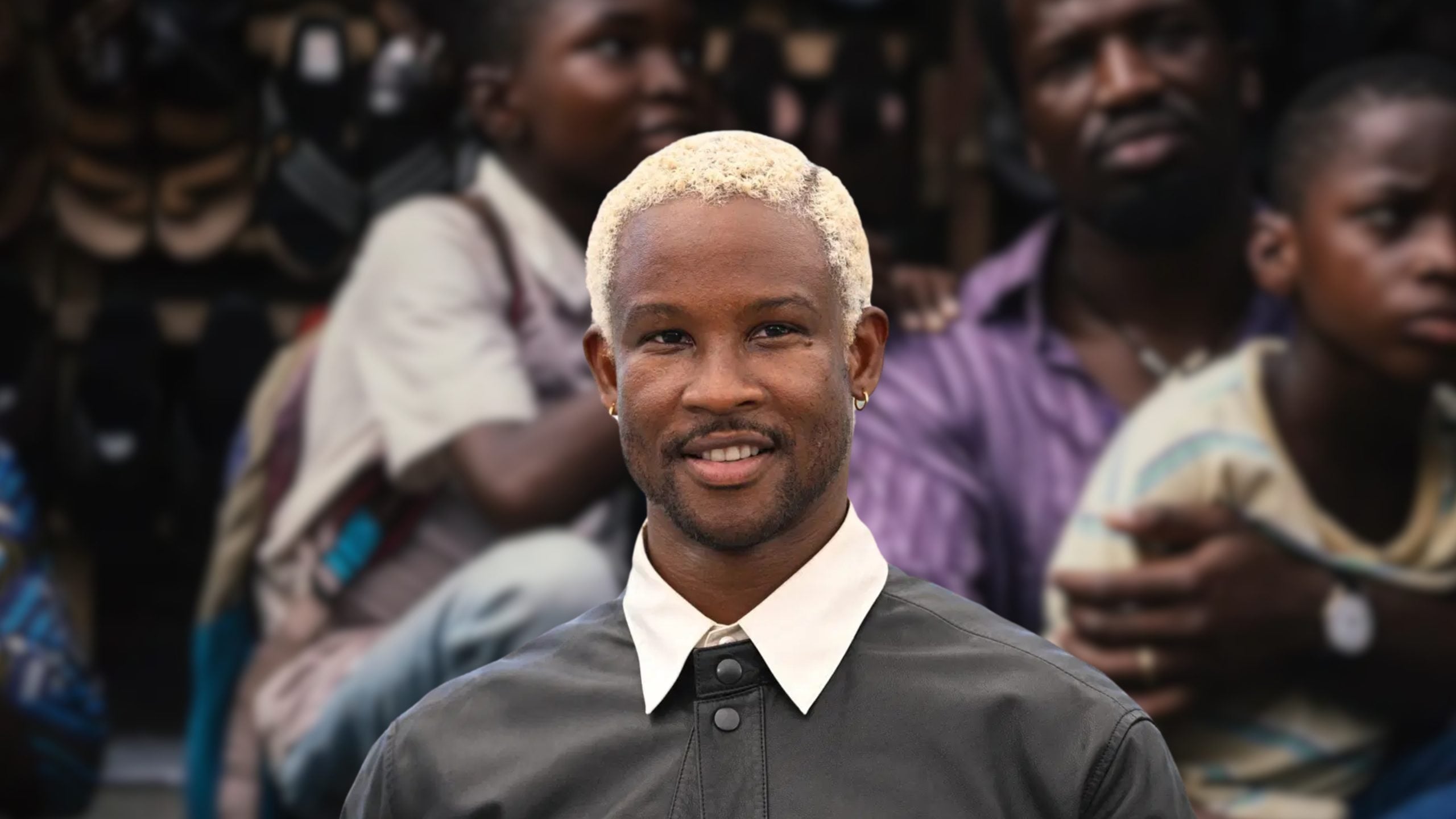
Interview with “My Father’s Shadow” Director, Akinola Davies Jr.


Hosted by
KT & Oti
Show Notes
Two young brothers explore Lagos with their estranged father during the 1993 Nigerian election crisis, witnessing both the city’s magnitude and their father’s daily struggles as political unrest threatens their journey home. My Father’s Shadow will be screening at this year’s Sydney Film Festival (SFF) on June 11th, 13th & 14th.
As suggested by Akinola, double feature watching of My Father’s Shadow & Eyimofe (This is my desire).
Episode Details
- Duration
- 0:00
- Released
- June 10, 2025
- Category
- Interview
- Hosts


Transcript
Transcript (5,732 words)
Full transcript of Interview with “My Father’s Shadow” Director, Akinola Davies Jr..
KT: Two young brothers explore Lagos with their estranged father during the 1993 Nigerian election crisis, witnessing both the city's magnitude and their father's daily struggles as political unrest threatens their journey home. My Father's Shadow will be screening at this year's Sydney Film Festival on the 11th, 13th, and 14th of June. Akinola Davies Jr., thank you so much for your time and welcome to the For Your Reference podcast.
Akinola: It's a pleasure to be here.
KT: Oh, wench. I guess before we even get into the film, accolades, accolades, accolades, credits, credits, credits, we gotta talk about the Cannes, um, selection of it all. I don't even know if it sounds too familiar or if it sounds great every time you hear it. First Nigerian movie in a Cannes selection. Um, we're big, big, big up today. That's what we're all about. Sounds great.
Akinola: Keep going. Keep it coming.
KT: And you're here, you're here on our little old nasty podcast that could. But how are you feeling in this moment? I.
Akinola: Uh, just really blessed and happy to be in a situation that the nasty podcast that could, would be up for interviewing me. You know what I mean? I think it's, um, making a film is extremely hard and tasking, and it takes a whole village to create. So I think when you have these moments, you really have to lean into enjoying them because. You know, a lot of the time, even just being in Cannes, you know, I remember the first photo call, one of the few black ladies who was involved in the whole setup was just like, just remember to enjoy it.
Akinola: You know, like, this is a moment. Mm-hmm. Like, smile through it. You don't have to be so stern and serious, you know? And, and once she kind of. Said that to me. I was just like, okay, cool. I'm gonna, I'm gonna enjoy the hell outta this because you know, the crew and the team back in Nigeria who maybe don't have the opportunity to travel and watch the film in these sort of spaces and these sorts of festivals, it means a lot to them to see me like. Enjoying the moment, you know, because I really, I'm really just a representative of all their hard work and yeah, Cannes really special. It's a, it's a place you kind of hear, it's up in the sort of echelons of what it means to make film and then to sort of. To get into Cannes, I feel it was like already a big victory to be the first Nigerian film in competition.
Akinola: Again, cherry on top of the cake. And then to have the reception, importantly to me, more importantly to me as a filmmaker, to have the reception that the film. Has. Mm-hmm. And the sort of impact that I was receiving from running into people on the street and stuff has just been really overwhelming in the best way. And then another cherry on top of a cherry, on top of another cherry was to get the special mention. So yeah, it's, it's, it's, it's quite surreal to be honest. 'cause you know, you sort of plan out a film and you're just hoping to sort of grow incrementally. And I think as an introduction to the world, it's been beyond my sort of wildest comprehension.
KT: I love that. And that could be a whole different discussion of standing in it and being proud of it. And the lens, it's, it's not. It's not pandering in any way. It's not, it's not western white friendly. It's literally a story that needs to be told, but it's told from the lens. 'cause representation is cool and cute, but you know who's writing it and who the, the, the, the, the lens is pointed at is, to me more important anyway. So the fact that you could stand in it and the film stands on it, um. To be in, you know, Cannes. It's, it's absolutely great.
KT: And, you know, you talk about a village and it's not the first time that you've linked up with your brother in regards to the screenwriting. Um, but in regards to the feature film of My Father's Shadow, um. It can only be that good and it can only hit that realness when you're really getting real. Right. Um, and, and with your brother, you know, talking about the process of, you know, a a, a memory and I guess a a, a hope and, you know, a sort of figure right. A, a sort of guiding light as well. Um, what, what happens if it got too close or is that a good thing?
KT: Is, is that, is that that currency that you're looking for when you're making a film?
Akinola: Yeah, I mean, to sort of your point, I think the lens is really important. I mean, who's tell, who gets to tell our stories? You know, I think for a long period as African filmmakers, you know, like the Ousmanes and the Diops and the, and, and, and what we're all, um. Sort of like up there in the echelons and really like quite militant in the way they sort of presented themselves in terms of the ownership and, and who gets to tell the stories. And I think somewhere along the lines, those stories kind of became a lot more. Dictated from an external lens, you know, and actually a perception of that's how we're meant to see ourselves and that's what we're fortified in terms of how we see each other.
Akinola: Because cinema is really powerful. You know? I think it's really powerful. You know, I think, you know, maybe I'm borrowing for from Nia again 'cause he's one of my idols. It's just saying, you know, like the camera's, camera's a weapon, you know? Being able to tell our own stories. In a world that's fastly moving towards everything, being a lot more visual has to be kind of something, a group of us, uh, kind of centralized and sort of owned for ourselves because it does so many things. Just let's put My Father's Shadow to bed for one side, right? Okay. We're gonna come back on that. We'll deviate, like sort of what it does for you. See yourself depicted in a manner in which. You can relate with what that does for like your spiritual, your mental, your physical health. I know that might sound quite ground to people who aren't sort of like cinephiles or obsessed with film, but just seeing yourself represented in a manner in which you can represent, which you can identify with, I think is really humanizing kind of mm-hmm. Grounds a lot of. What, what your, your mothers did. And your aunts did, and your fathers did, and, and, and sort of normalizes all those things for you, you know? Whereas, whereas opposed to like a different lens, you only like positions you at least through the nineties as Africa is this continent of just like starving people with flies on their face.
Akinola: Mm-hmm. And stuff like that. It's like we are, I didn't grow up in that reality. I'm not saying it didn't exist, but that. Coming back to My Father's Shadow, like working with my brother. We just really wanted to create the visualization of a place that we grew up in and that we recognized and coming to more specifically is like, is it too close? I mean, I guess working with a sibling, like the foundation of our relationship is like true for or not really being able to hide from the truth because we're brothers, we don't. You know, we don't fabricate. We don't need to fabricate things because we can hold ourselves accountable in a certain way. And I think just for me as an artist, the closer you get to truth is the more you get to like a real feeling of whether people love or hate something. And for me, I don't mind whether they love or they hate it, I just mind that you have an emotional reaction to it.
Akinola: Because I think that's what truth represents to me as an artist. I just want you to feel something. And I think if it's born out of truth. Not that it can't be denied, but it resonates more because people can acknowledge that that's the truth that they felt at some point in their lives. And I think, yeah, mining, mining, our personal grief hasn't been easy. Uh, I have to say, it, it, you know, the film is wonderful, but again, I, I just pay virtue to all my collaborators. But there's a lot, been a lot of handholding. There's been a lot of. Done over the course of making the film even for myself as, as a grown ass man, you know, I think it's, it's taken this amount of time for me to be able and my brother to be able to be comfortable enough to wanna sort of.
Akinola: Um, explore this topic for ourselves as men moving into the world in relation to how we treat women in our lives, how we treat our siblings, how we treat our family, how we treat our offspring. I'm not fortunate to be a father yet, but my brother is. And how we sort of like can bring, how we can take a little bit of accountability of like talking about our relationships with our fathers, what they had to go through, what we have to go through and not. Making it this like perfect cookie cutter experience because it's not, it's, it's warts and all. It's, it's messy, it's ugly. But at the same time, if we're not gonna do it, then we're leaving the work to someone else. So yeah, truth is very important to us, I'd say.
KT: And it's, uh, 'cause I obviously we're, we're independent film podcasters and film critics. And, um, the thing I would say is we're a, a lot of our cultures we're, we're natural storytellers, right?
Akinola: Mm-hmm.
KT: And it, it, obviously there are credentials and it's important to, you know, be schooled up on particular sort of techniques, but it's all stories at the end of the day. And I to be an expert on all stories, just because you watch a lot of films. Question I would question. Mm-hmm. You know? Mm-hmm. Like, how can you be an expert on experiences that you've never lived before? Right. Your understanding and your enjoyment of a film is within your sometimes very limited, very unseasoned scope. It's all very in there. Right. Um, but there was something that I just wanted to pick on, on what you said.
KT: Um, is there are different fights we need to fight, right? When it comes to telling our own stories, I'm Tongan and I'm Pacific Islander. Um, so there's, there's people that are willing to fight that narrative of whatever, sort of, like for me, like noble savages and that sort of thing. People are there to fight that. I'm not. I'm like, once you are here, let's talk about it. Let's get inside of the fale. Let's get inside of the house. And let's talk about it properly, right? Mm-hmm. So are different. There are different sort of narratives and different sort of fights that we need to fight and I, I think it's quite a beautiful thing that whether you needed to or whether you didn't it, that wasn't even a conversation.
KT: We are here and we're telling that story. If you have those sort of outdated sort of stereotypes about Nigeria, that's not even that. Like you need to do your own work, baby. Hundred percent unpack and then you can watch.
Akinola: Hundred percent. But I think that's what art is. I think. I think in what you guys are doing as an independent podcast, yapping is an art form, so it's not, you know, it might seem like such a simple thing, but you are having conversation and I think in those conversations as a generation, we're so like fortunate. Whether you find it good or bad, we're so tapped into each other that actually, like we're moving beyond that. We're transcending that we're just now. Claiming space in a, in a capacity that like intellectually, at least like performative for that side we can do, but for ourselves we can do as well, you know?
Akinola: Mm-hmm. And I think even coming back to the storytelling, you know, my film. Is a good film. Like I hold my hands up, I snapped on it, but at the same time it's also, it was really important to my collaborators saying that we really wanna try and represent a type of storytelling. You know, we wanna try and encapsulate people in the feeling it might have a lot shortcomings in terms of like your more traditional aspects, how you tell a story, A to B, to C to D, but like, I. Indigenous people. We've always told stories from the, from the dawn of time. That's, mm-hmm. That's what is synonymous with being a human telling stories, you know? Yeah. Everything is how you frame a story, and I think ultimately. What we decided to do in this film is we just wanted to tell a story that we'd be proud of and happy to read.
Akinola: And actually that just happened to be something that we have such a vested interest in, which is family, which is really about our community, you know? And I think, yeah, that's kind of a, a north star in a way, I guess.
KT: Yeah, and it's, it, it's interesting 'cause you know, we, we go through moments where. We idolize, or you know, we see our parents as superhuman. Mm-hmm. And we get to a point where you're like, oh shit. You don't know what's happening either. Like you, like respectfully in a good way. Like you don't know what's going on. You are trying to figure it out. Mm-hmm. Um, and this is what we see in My Father's Shadow as well. And I guess, um, for you and Wale, what was it like seeing the different, the difficult, and maybe even sometimes broken parts?
KT: Of your father in particular, um, for this film and how was it? I, I guess was it, 'cause there's always that need to like, not necessarily protect, but like you keep it for you. Was there a bit of keeping for you or was it some of it putting on the page as well?
Akinola: That's a really good question. I think. I guess with the film, like we didn't know our father, so our father passed when we were really young, so they gave us a scope to have a lot of creative license. I guess for me the real intricacy is like seeing what my siblings thought of the character we put on screen. 'cause obviously he is not meant to be our father. He is like a different character, but there's a lot he, um, sort of embodies, but equally like we didn't know him so. We create this fictional character and they watch it and they're like, okay.
Akinola: We kind of see it. But that's obviously different from the person that they knew as well. But I think a lot of what we tried to do again is just hold ourselves accountable. I think we could've, we could've taken a lot of like easy options, but I think. We had to sort of bring into the room in as much as possible, like where men were like relatively charming men, like where does that lead you? What sort of circumstances does that put you in as a father who's trying to provide for a family? Like what circumstances does that put you in? And I think we did have some debate about some aspects of the film where we really chewed the fat. Like should we put this in? Shouldn't we put this in? But again.
Akinola: I think it's, I think it's just all in service of trying to create someone who feels real as opposed to like a caricature, because we could have gone down the route of making f um, played by Ṣọpẹ́ Dìrísù, like very, like holier than perfect. Dad, no fool.
KT: Oh, he was a menace in these streets, you.
Akinola: That's what makes him relatable because for as much as. So for as much as like we can be these like really front facing, positive, progressive people, like we have our flaws, we have our hangups. Got that. Do we have the way we do, you know what I mean? We got our dog, we got the way you respond to things based on triggers and stuff like that. And I think for us it was just really important, you know, that if we were gonna only make one film, 'cause that's mm-hmm. That's the mindset we were in when we were writing. Like, look, if we're only gonna make one film, we might as well just go for broke. You know? We might as well just really lay it out on the line, because if this ends up being our only contribution to like African cinema or Nigerian cinema, we need it to be something that feels extremely pure in a way that we haven't seen before.
Akinola: And actually just having that as a North Star just made, didn't make those choices easier because like, I'm, I'm a grown ass man, like I said before, but in the editing process, I was grieving. I didn't even realize I was grieving. There was, there was a, there's an edit that no one will ever see that I was like, that's the film, you know, and then I had to get. Talked off a pedestal and me like, maybe you need to try and take, take a few days off and understand why you are fighting everyone you know, and I was like, okay, cool. I'm gonna go to a lake and just like sit by the lake for a few days. And I came back and I watched the film again. I was like, okay, cool. I need to create the best version of this film and I need to be able to let go of certain aspects that I'm trying to cling onto because I believe they represent this person.
Akinola: That's kind of really instrumental to my life. But you guys don't know, but I've let everyone in on this experience, so it's like as I'm a collaborator, as everyone's really invested in this, I had to find ways to just like let things go. And I think that's actually for. It's been a more of a, like internal personal journey for me is just like trusting the people that I've worked with, my producers, my execs, everyone just really like, they have my back and I felt very held making this story. And I think moving forward it's like, it's a good dynamic to have in these sort of relationships basically.
KT: Because you don't have to suffer for the art. Right. And the The art
Akinola: should be good. Yeah. You really don't, we can be held
KT: and we can be embraced. Yeah. Yeah.
Akinola: But I, but I think that's what we need. I think we need to be held more. I think that's kind of the, I won't get on a political soapbox, but I do think that's kind of where we're at in society is like mm-hmm. We're not able to hold space for each other, you know, like everybody's a bit. You know, everybody's a bit tapped in their own way, but it's like, okay, if I can understand why you are tapped and you can understand why I'm tapped, maybe we don't have to agree, but we can start looking for solutions as opposed to like just screaming at each other or whatever.
Akinola: And I think in making the film, I realize that like if you give people a little bit of rope to give them context about why. Something's happening and you bring them on site to sort of see like, this is what it's really like. You know, like our European point of view is this, but actually the reality on ground is like, you know, okay, I'll give you an example. There was loads of notes of being like, wouldn't the kids just ask their father like, what are you going, or what are you doing? I'm like, I don't think you've ever. Yeah. I was like, I don't think you've ever been an African child in an African house. You do not ask your parents those kind of questions. You know, maybe in Europe you do, and that's a privilege that you guys are afforded, but we were not afforded You would get a slap in the face or a Yeah.
Akinola: Or a, or, you know, or a rat. You wouldn't even see it coming.
KT: You'll just be on the floor. Yeah. You weren't just from, um, just quickly On Becoming a Guinea Fowl. Sure. Literally just did an interview of Rungano and uh, yeah.
Akinola: I love.
KT: Um, yeah. And I was like, thank you. Like that she actually said yes to an interview. Like it was, um, but she talked about grief and like, uh, for not the uncle in regards to the film, but mm-hmm. Like planning for the funeral. And she had, I think she said European, not white, but she had a European friend. I was like, why don't you just don't do it? And I'm like, that's not even a question. That's what I said.
Akinola: It's not even a question. Yeah, yeah.
KT: Right. So it's, I think it's just the calibrating of like cultural. Compatibility or, you know, that sort of understanding and, um,
Akinola: A hundred percent.
KT: But I, I, I'm all for it. Like, if we're gonna eat the whole meal, we're not gonna eat around the edges. And I feel like we would be very dangerous and we could talk for hours about, you know, but it is the whole meal. Um, and I guess it comes to nationhood, 'cause I wanted to touch on that a little bit. My partner Oti, he's Kenyan. Okay. Um, so it was interesting because he, he talks about, like in high school there was like a debate, like he was on a debate team of like mm-hmm. Once independence was gained, uh, Kenyan's truly independent, right?
KT: Mm-hmm. Or the colonial structure still in there. It's a whole conversation. Right?
Akinola: Yeah.
KT: Um, and in regards to My Father's Shadow, we're talking about not the same, but a similar of like we are at the intersection, right? At a boiling point of military rule democracy. Mm-hmm. And they call them mats, but I think in the subtitles it said buses, like in Kenya, they call them.
Akinola: Yeah. Um, yeah, we call them Mo Ghost. Yeah. Yeah.
KT: And it was kind of like, and also like barbershop sort of conversations. Like we had a sort of microcosm of different sort of, um, opinions and attitudes. One time there was a priest that got in with his Bible and he started preaching, but that's a different story y day. Nice. Um, but I, I guess I wanted to talk about that and the, obviously was very important and including that in the film.
Akinola: A hundred percent. Firstly, I'll say we have a big, big Kenyan, um, uh, ambassador within the film. Our script supervisors from Kenya, his name is, uh, Martin nte. He is fantastic, fantastic script supervisor. One of the unsung heroes is, there are so many in the film, but coming to your question about nationhood, yeah, I mean. I think there's like a parallel, you know, when the, the film was originally a short that my brother wrote, and it was just about the family aspect. And when we got into the idea of developing into a feature, we wanted to bring Nigeria into it, or we were thinking in terms of how do you make this, how do you expand it?
Akinola: And I think setting it in that time felt quite expansive because it mirrors. On a, on a micro level, you have the kids wanting to know their father, wanting to understand, and this dream of like getting to know their dad and being with them forever and X, Y, and z. On the macro, you have this nation idea and MKO Abiola, who was this kind of statesman that everybody was really like excited about and everybody thought, okay, this is gonna be like the father of the country. We're gonna move towards something really progressive. Like everyone in my mother's generation was like really excited and the enthusiasm was palpable because the military had just been brutal for like however many years. It's just been censorship, brutal dictatorship. Acquisition of like the country's resources and like filling their coffers with millions and, and equally being sort of cronies of the, the, the like, imperialist cronies effectively, you know, follow the, even though follow the c even though we were, even though we were like banned from the Commonwealth and stuff like that because of their heinous crimes or whatever, um, human rights atrocities and stuff like that.
Akinola: So we were made to scapegoat, but um. But, um, we thought that, that those two things really matched up really well, and it was really important because actually for a period of time under the military dictatorship history was, is, was banned from being taught in schools. Yeah. So actually the film kind of doubles up is this kind of historical like. Family heirloom for Nigerians because there's a period of our contemporary history that people don't necessarily know about. And that was another sort of, you know, you're dealing with memory, you're dealing a time that felt very sort of like plausible as a, as a, as a thematic for the whole film because actually this family's dealing with.
Akinola: Children like mem and memories and time, and then the nation is also dealing with memories and time and how people sort of like remember it. So those two things like felt pretty hand in hand. And we worked with like fantastic researchers to be able to speak and sort of like ask them about that period of of time to try and get back. But really and truly, I think like Nigeria's a really. Complex, beautiful, wonderful collection of tribal people, all like forcibly put into this place with each other. And that with, in of itself, in, in the context of Nigeria, is still quite young. It's like 60, 70 years old. But in the grand scheme of things, it's really young and all these kingdoms are very proud and.
Akinola: Forthright people, but then resources don't get distributed as equally and stuff like that. And I think there's a certain level of that period of time that the film set that people were thinking we were gonna reach a phase where like there's a lot more equity for everyone, you know, under this guy felt like Abiola was a, was a Yoruba, which is my tribe, one of the largest tribes. He was a Muslim, so he had multiple wives from different tribes. Mm-hmm. So everyone. Everyone is like buying into him because they were like, oh, you married our daughter from here and from here and all over the country. So he had this kind of like Venn diagram of like of of work groundwork he'd been doing in his personal life, in his business life to sort of come with the receipts of being this person, and by all accounts.
Akinola: Subsequently, he was also like smart enough to like undercut the British and the Americans, you know, so everybody was like, okay, this guy, he's not gonna take it from everyone. He's not gonna take it lying down. And to sort of have, yeah, to sort of have that period sort of stolen from my mom's generation, I, I probably won't, the closest I would. Maybe feel to that is maybe like quote unquote, like a Jeremy Corbyn in terms of a few years ago when we were all sort of voting and everybody was really coalesced in terms of the youth of this country to, to move in a different direction and then that the sort of assassination job on him was like pretty in depth.
Akinola: But I didn't even think that compares to what my, my mother's generation were, were dealing with and what they were sort of robbed off, but. Um, I think, yeah, I just think in terms of contemporary history, that is a real rupture in terms of the trust being lost in the political system before it was even born.
KT: Yeah. And, uh, I, I think it was interesting having, like, I. Like just subtle little cultural nods. Like even like piercing through to like my cultural sensibilities of like, let me hold a dollar. Like yeah, like if I got nothing, you get something. Like that's just, um, how it works. But, um, I guess reflecting, 'cause you mentioned Ousmane Sembène and there was a retrospective of him last year. It's like. Friends and lovers. I don't know why, you know, you seeing all the white films? 'cause we end up finding all the African and Asian. We, we find all the different, um, films. But there was a retrospective, and Mandabi was what I was thinking about watching My Father's Shadow because Nans was just trying to get paid to be honest.
Akinola: But I love that film, man. The, the, the, the sort of journey that that guy has to go on. Is that the one where he's just trying to cash this check for like
KT: Yeah, because he didn't have the identification for the money, or
Akinola: That's the one. Yeah. I showed my brother that film in our reference. I was like, bro, this is real. Because you have to go through so much bureaucracy just to get what, what you are owed, you know? And just like. All the pressure that comes with that. Like his wife, like telling people and taking loans and getting food and it's like, bro, we haven't even got this money and we've spent it already. You know? Yeah. Giving life advice away
KT: that you don't have to give away.
Akinola: Exactly. Yeah. Yeah, yeah, exactly. I think Sembène was so far ahead of his time, man. I think he was. Oh. An outlier, like Moolaadé is one of my favorite films of all time. Oh yeah. The subject matter of that film. When I watched it back, I was like, this feels like a sci-fi movie, but on a very grounded level. Um, and I would, yeah, even just to be, have a sort of a fraction of the career he had would be an absolute dream come true man. 'cause he's, he's the daddy.
KT: I guess you're the baby daddy 'cause you're on your way up. Down. I'm the baby daddy. You're the baby daddy. That's a soundbite. Yeah, that's, you're the baby daddy.
Akinola: Love.
KT: But I wanna, I wanna thank you so much for your time and wrap up with our final question. You pretty much answered it, but, um, we finish off our reviews with a recommendation. So what would you pair with My Father's Shadow as a double feature?
Akinola: Ooh. That is a good question. Um, it does it have to be new?
KT: It can be, no, we... Go anywhere you wanna go.
Akinola: Oh, cool. Well, I think I would, Ooh, so that's a tough question. I think I would probably have to reference another film coming out of Nigeria. I think it would probably be My Desire, called Eyimofe, made by another set of brothers. Um, it won. It won BlackStar Film Festival in the year Lizard won, uh, Sundance. It's an incredible. Triple story of like people sort of trying to, you know, get documentation to try and leave Nigeria. And it's, and equally I think it's within the same like Nollywood art house spectrum family tree that My Father's Shadow exists in. So I'd probably that probably say that, and I'd probably say Rungano's film as well, Becoming Guinea.
Akinola: I think that's like a sensational bit of, of cinema that needs to be seen by everyone because it, again, it's another. It's another metric of trying to hold your family accountable. It's not an easy conversation. It's not, it's not a sexy story, but it is an important one because I think we have to, in our communities. Previously we did much, this is probably pre-colonial. We did much better jobs of coming together as a community to hold people accountable and, and formulate systems for them to sort of, for their, uh, what's the word? Not recuperation, uh, what's, what's the word when you, um, when you sort of like fix people.
Akinola: Yeah. You know, for the, um, not restoration, but you know, the word when, basically the word for, for when people are restored back into the community. And I think Rungano's film is like a wonderful example of that. It kind of encompasses what it means for a family to be grieving in a different context and how. Important it is to kind of like not hide from these sort of taboo subjects. And I think she's a masterful, masterful, um, uh, auteur basically.
KT: Yeah. And, uh, I guess just very quickly, um, we had to go to a different media screening and then I came home 'cause we got these interviews I had a double feature of On Becoming a Guinea Fowl and My Father's Shadow. Um, and yeah, it was, it was a gorgeous. Tiring day, but it was a gorgeous, um, double feature watch. But, um, Akinola, I've taken all of your time, um, but to all the menace in the streets, to all of the baby daddies, thank you so much for your time.
Akinola: Amazing. Thank you so much, KT.
Related on FYR
Discussion
Loading comments...