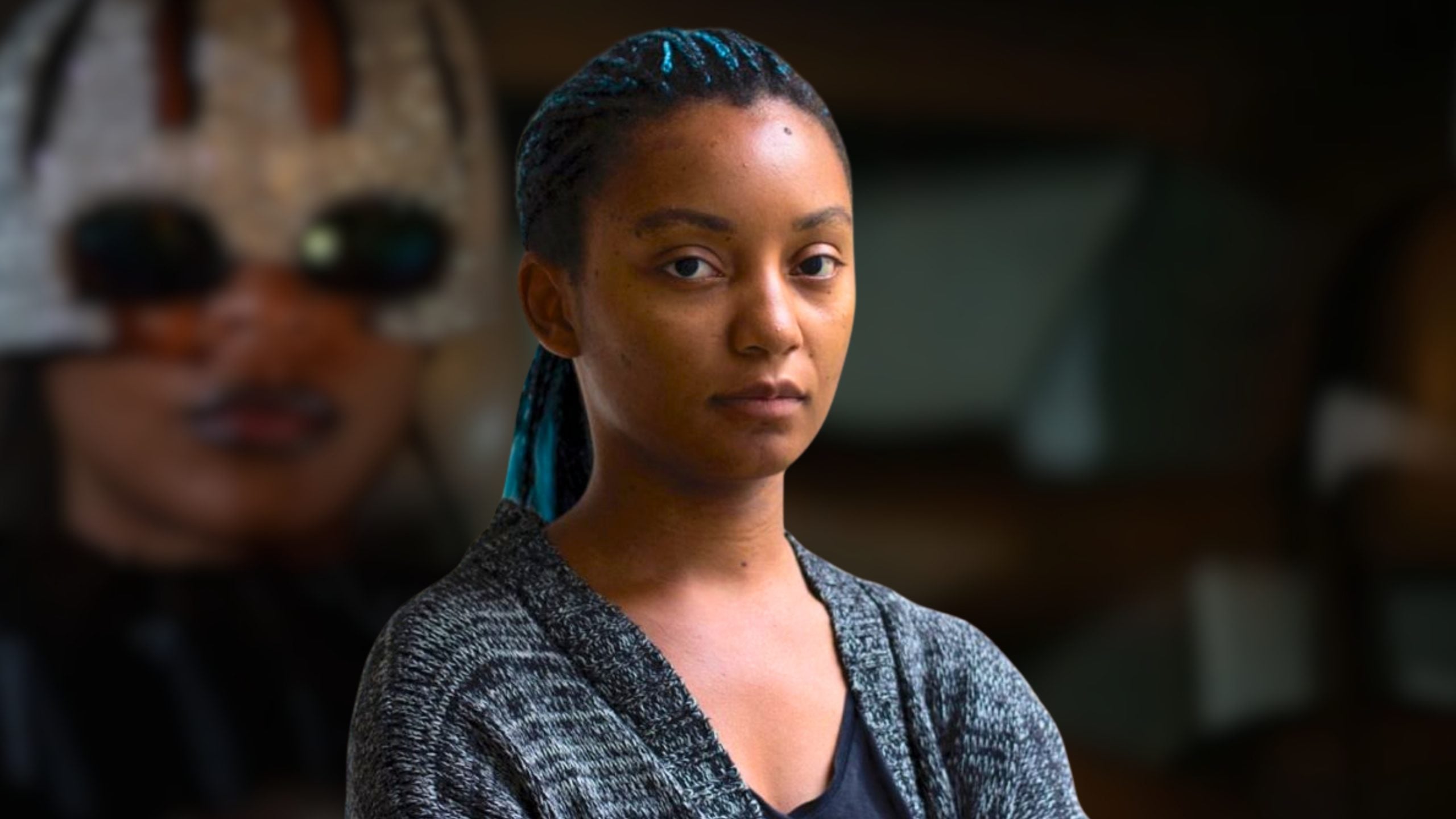
Interview with “On Becoming A Guinea Fowl” Writer/Director, Rungano Nyoni


Hosted by
KT & Oti
Show Notes
A Zambian family comes to terms with hard truths as the funeral of a relative sparks revelations and disputes. On Becoming A Guinea Fowl will be screening at this year’s Sydney Film Festival (SFF) on June 10th, 11th & 15th.
As suggested by Rungano, double feature watching of On Becoming A Guinea Fowl & Atlantics.
Note: this interview is audio only. For other video interviews check out our YouTube playlist.
—
Episode Details
- Duration
- 0:00
- Released
- June 8, 2025
- Category
- Interview
- Hosts


Transcript
Transcript (4,373 words)
Full transcript of Interview with “On Becoming A Guinea Fowl” Writer/Director, Rungano Nyoni.
KT: On Becoming a Guinea Fowl will be screening at the Sydney Film Festival on the 10th, 11th, and 15th of June. Today we have the opportunity to speak to. On Becoming a Guinea Fowl. Friends and lovers book them tickets. Let's all cry together and have a great time. I promise we will. Rungano, thank you so much for your time and welcome to the For Your Reference Podcast.
Rungano: No, thank you for having me. Thank you.
KT: I really enjoy researching, uh, leading up to these interviews. And, um, in one of the interviews you mentioned how you like to keep a distance, whether it's once the film is done or just in general, or I guess general sort of reaction. Um, so I do just wanna acknowledge, and again, thank you so much. I, I wasn't anticipating, but it's a happy surprise to be able to talk to you today.
Rungano: Thank you. Thank you.
KT: Um, I, I know it's not about the accolades and even feeling in your work. I wouldn't necessarily feel that that's necessarily the goal, but we, before we even continue, we do need to talk about, you know, the Cannes of it, or Best Director in Un Certain Regard. Um, you don't necessarily, if you don't want to talk about the accolades specifically, um, but how are you sitting with. On Becoming a Guinea Fowl, whether it's accolades or just in general. I just want to, I guess, check in in this moment now with you.
Rungano: Um, I think I only, it's, I only reflect on it, I guess. Yeah. Like when I have space, a bit of distance, um, 'cause I'm too embroiled in making the film, so it's really, I'm not objective at all. I'm either, actually, I'm always, I know where I am when I'm not objective. I'm just always looking at. The, the what ifs of it all. Like, I wish I did this, I wish I'd done that and, and all that stuff. But, but getting an award at Cannes is really, it's surreal. Uh, I wasn't there to personally pick up the prize, so it doesn't, I think it hasn't computed yet. Um, it computes for other people, which is really strange. 'cause I know people who got awarded at Cannes before me, like, you know, filmmaker friends that I.
Rungano: Like used to be, for me, it was like me getting the award. It used to be mind boggling. I'm like, what? What? I can't deal. I can't deal. And I used to hyperventilate, but, but then I got the news. I said, okay, that's, that's, yeah, that's, uh, that's great. I dunno what that is about
KT: Yeah, maybe. Maybe it's that anticipatory of like, what's next, wanting to stay in here,
Rungano: probably. Yeah. It's too wrapped in tension, isn't it? It's too, yeah,
KT: it, it feels too fleeting, maybe.
Rungano: Yes. Something. Yeah. And you're just thinking about what's ahead. It's true. You're thinking about what? What do I need to do next? But yes, you're not sort of in the moment. Yeah, that's
KT: Yeah. Um, and you know, we, we had a little chat beforehand and it was very interesting. So we're a TV and film. Podcast. Um, so myself, I'm Tongan and my partner, he's Kenyan, Oti. Um, and so we were both watching it and experiencing it from different levels of, I guess, experience in regards to On Becoming a Guinea Fowl and Shula's character. Um, and I would say women, but, uh, women. But I will talk about like my culture in particular. Um, there's a weight that our women carry, like. Especially as women, we feel it and we see it and ooh, like we don't have the time. I wish we did, but we'll get as much we'll get as far as we can. But there were so many moments in this that didn't need to be over-emphasized that were just there.
KT: And I, I guess I just want to say there was so much that I felt. A woman, as a woman with cultural sort of customs. And you know, sometimes the customs isn't culture, but it becomes the culture depending on who's saying it. Right. And, and I guess I just wanted to speak to that because it felt so tangible that weight that women, whether it's ourselves or, um, older women or even younger women, um, in our communities, hold and, and, and, and you feel that on them as well.
Rungano: And they really do. And part of me writing that story came from my friend, uh, visited me. Uh, and she's not Zambian, she's, she's, uh, she's European. She visited me and I was, uh, having, I was having a funeral with my uncle and I was having to organize everything and I was going through grief and organizing everything like you said. But the burden, the funny thing is she said she couldn't understand at all. It didn't compute, and I've known her for a long time and she was like, but. Why don't, you just don't, why don't you just not do it? You're obviously tired and stressed and I'm, I'm like, I don't have a choice. I can't not do it. It, it wouldn't, it didn't fathom compute to me.
Rungano: It's not even a question. It didn't compute in my head why I shouldn't do it. It didn't compute in her head why I should do it. So it was such different cultural things and I got that a lot in my notes and feedback, like, why can't she just say something? Why didn't you just tell them to F off? And I just thought. No, I, it, it's just, yeah, it's a lack of understanding, which I didn't wanna explain, I didn't wanna sort of handhold people through it, but I, I'm glad you got that. 'cause I think people who understand it or understand other cultures get it. Um, yes. Yeah. Otherwise she just looks kind of, yeah. Lost or, I dunno.
Rungano: Yeah. But
KT: well, it's
Rungano: she's burdened. Yes.
KT: Funerals are very interesting because it can also be a celebration of life as well. Like I think sometimes there is obviously it, it is a very negative and sad experience, but sometimes there is a lot of joy. Like our favorite joke is there's a family we only see at funerals. Like we don't know if they exist outside of
Rungano: Yes.
KT: Um,
Rungano: have those. We have those food. There's food flowing. Food. They come,
KT: Absolutely. They, we all have roles to play. Um,
Rungano: Yes, yes, yes. Yeah, yeah, yeah. No, it's, yeah. No. Mm-hmm.
KT: and, you know, I, I guess what's very important, and you know, you also talked about it as well, is the lens. Like the lens is so important. We talk about representation and it's like it's cool to see people that we wanna see or people that look like us, but it really matters who's behind the pen and not just that where the lens is being shifted. And I love that you didn't feel the need, and I don't think you needed to explain to people. What was happening, you know, there were obviously particular sort of, um, stuff, you know, in regards to the aunties singing or, you know, particular things that I didn't understand, but you don't need to get that to know emotionally where we are going.
KT: Right. Um, and I guess further to that lens was how centered in women it was, even though I guess the overarching sort of looming, ominous presence was about. An uncle's funeral. It really was centered on the women. It wasn't until the watchmen showed up that I realized there wasn't really like the presence of a man in the movie.
Rungano: No, really, literally, I, I experienced the same thing again. It is my funeral. It's a, not a funeral. Actually, it was with my, the same uncle whose funeral I went to before he died. I visited him. And we were just talking. He was talking about his, uh, child. And he is not a bad uncle, by the way. It's not based on him at all. He is a, he is a, he was an amazing uncle and he was talking about his life. Uh, he was just talking about some snip of his life and I was just talking. We were actually meant to be there, I have to say. Okay. I won't say anything. We were meant to be there to deliver some things to make him more, what is it?
Rungano: Comfortable, some illegal things. Um, so he just got talking, right? Um, and then I said to him, to my, my cousin afterwards, I've never spoken to my uncle alone. I've just realized I'm always surrounded by women. I'm always surrounded by women. I only relate to my uncle in terms of instructions. That's why we were there. We were given instructions to go and deliver something to him, but I've never spoken to him alone, and I don't know who he is. And I started, you know, not panicking, but just, I just started thinking about that and that's, that's kind of true to life. I'm always surrounded by my aunts. My uncles are usually sort of background artists in my life.
Rungano: I hardly ever speak to 'em unless somebody asks me to or they're sending me to do something. Um, so that's kind of, yeah, what I experience similar.
KT: Yeah. And in, in a Q&A panel, um, you know, it, it was a cute, cheeky little thing, but it pretty much tapped into how your process is. And a script isn't necessarily a part of what you would necessarily share of, you know, the, the making of a film. Even with, um, Susan, who is the lead as Shula. Right. Um, and I, I guess from that point of view. Performance wise, but even from an audience point of view, is that if you were to have a hope, if you have a hope, is that what you are hoping? That the audience just stays where we are, instead of thinking like, oh, what's gonna happen next?
Rungano: Yeah, and you know, I bring in, I bring in people. It's what you're talking about, about le seeing it through a lens, because I see it through my own lens, which is a specific background. That's not neither Zambian, neither. British, it's like a bit of all things, and for me it's important that I get the point of view of the people that are playing these roles. So we do a lot of workshop because I just don't wanna be the be-all and end-all. I know directors are supposed to be that the be-all and end-all. But I really like a collaborative space and, and it's that, it's, it's, I do, I do want people to stay with the characters, but for them to stay with 'em, they have to feel sort of authentic to them.
Rungano: It doesn't have to mean it's authentic. To everybody's experiences, but it has to feel, there's some texture that you get from other people inputting in their own thing, rather than being puppets of my vision of the world. Right? I, I really do get a lot of their input and that's why I don't give 'em a script. 'cause they're gonna see that and think, okay, this is what she wants and I don't want 'em to play for me. I want them to play for their character and what, what they bring into that character. So, and also because I bring in a lot of, um, actors who are unprofessional, so I need them
KT: the squabble up, the squabble
Rungano: And not
KT: scene
Rungano: sorry.
KT: when they were, when they were squabbling up in the last scene.
Rungano: Yes, yes. Oh, gosh, yes. That was all them. That was them completely. So you get the, the good bits and the bad bits, and then you try and figure out how to sort of bring the story to the fore. So this is kind of, yeah, it's really important to me. That's why I don't share the script with anyone. Um, yeah, I just don't want them to follow what I'm saying. It sounds really strange, but I just don't want 'em to do that. Which they do if they read it.
KT: I think it makes sense 'cause it's like this film is about women of the community, but it's just me talking. So I get what you're saying,
Rungano: You see? Yes. Yes.
KT: It makes absolute sense. And, um, there, there is, uh, quite a, there are lots of emotional, but there is a core emotional, I guess even for like a crescendo from like a storytelling point of view, um, which I won't necessarily get into detail for, but love feels like love, but sometimes it can feel like a cloak of who you should be and how you should be.
Rungano: Yeah. Yeah. And we understand that. I think we're always, if you're coming from a culture, strong culture, I think people understand that. You understand that. 'cause you are always between. People talk about, um, how they code switch, but you're code switching all the time. You code switch not just between, uh, white culture and your culture. You're code switching between your own culture too, uh, because of the expectations, what people I be on you and what you want from yourself, right? So, but yeah, it, it is, uh. Yeah, it's, it, it's complicated, but, and you, you're saying, yeah, love comes. This is why I was understanding as I was making the film, the, the women in there gave me so much.
Rungano: At one point, I, I even remember, I'm choking up now, but I remember breaking down because they made me understand. I. Parts of myself and my family that I've struggled to understand and they answered some questions for me and then I realized it was love, but I didn't know that. See, this is why it's good not to share a script, because they were like proper bad guys like James Bond, you know, stroking the cat. The aunts were all like really terrible and saying terrible things. 'cause all I was remembering is the highlights of all the terrible things that have been said to me. So I. Promising onto my page. And then they, and I would explain to them the scene, and then they constructed it. And I remember watching them do it, and I was so blown away by them.
Rungano: And I said, oh, you've given me a gift. I, I understand something I didn't know before I made this film, before I wrote this film.
KT: Yeah. And it's, but it's all wrapped up. It's all wrapped up in that, it's not like you hurt me, mom and dad. You need to apologize. 'cause that's never gonna, you're never gonna, they're together. They're tethered. Right?
Rungano: Yeah, you are tethered. That's the thing. This is a community of Tether and, and, and I live in a community. It's so funny. Zambia is a community of tethering each other, and, and UK is a community of being away from each other. Right. And, and. And they all come with a plus and minuses. So one is not better than the other. It's just for me that the tethering, I understand that. And it comes with its own. To be honest, I, my soul goes more to the tethered and trying to figure out how we can work together tethered to each other than being apart. I find that more difficult.
KT: Yeah, it was interesting talking to Oti about it because. For me, I, I grew up, I was born in so-called Australia, so I guess I had that reprieve if I wanted to like, dip out because I was not what a young brown. I was not what a young brown girl should have been. I was very rebellious. My nickname was Little Tēvolo, like devil, like, just, just because I asked questions. That's all. I all like devils to ask questions. That's okay. Um, not culturally though. It's not okay culturally. Um, but I had that reprieve where I could like, you know, I could come up for air, I guess, so to speak, of that sort of, uh, custom obligation and Oti didn't have that and it was so interesting of us.
KT: Um, I guess talking about. The ending. I don't want to go into specifics of the ending, but you know, this wasn't a documentary, this was a fictional story. Lots of realness, but this was a fiction, right? So fiction gives you that elasticity, and while I was fine with the ending, I, I guess there might be others that were like, oh, do we need that sort of hope? Right? And. For, again, for me, I absolutely understood it because at the end of the day, maybe this is the best that they can hope for. If it's keeping the family unit, there's a particular character, and I don't wanna talk about even anything about this particular character, but they mentioned I didn't wanna mess up what the family had, so this was something that I had to hold.
KT: Myself. Right. And I, I guess not necessarily the details of the ending, but I guess as you, as a storyteller, as a filmmaker, this wasn't a documentary, this was a fiction, there was elasticity, but I guess where did you teeter between, you know, grounding it in how we know. Sometimes things will never get better and we just need to find, strengthen ourself. If it wasn't for my sister, I wouldn't have gotten through a lot of shit in regards to my family. So, yeah. So it's, is it grounding it as well as hope, I guess. How did you feel in getting to that?
Rungano: Uh. So the ending changed a lot, uh, from the right original writing to where it was, it's the most hopeful I can be with my understanding of the subject matter that I'm trying to say, just because I used to get fascinated by, um, you know, I was, how do I answer this question? Basically while I was making the film, more so a lot of the women who experienced the, the crew and the cast, a lot of us. I'll say experience similar things to what happened here. And it feels bleak because it feels like a cycle that never seems to end. And it, and it comes as a, it rears its head in different forms. Um, and I find that in both sides, in UK and in Britain, it rears itself in, in different ways. So you sort of squash it in one way and then it comes back in a different way.
Rungano: Right? The monster just keeps appearing. But what I thought is you can never make change in unless you speak up, even though it's difficult to speak up. And it might not change. But change can never happen unless you do. So you, you called, it's really interesting how you said you're the devil and sometimes you're allow, you came up for air and sometimes I think it's people like you. Some maybe they allowed you to come up for air because you're so. It is the people that like, like with that energy. I see. And I see that in that, that, that make a little space for everybody else. 'cause the people that came before me, I only hear stories about the difficult ones, the devils the ones that were, were fighting from, from stories that have been told before.
Rungano: I never hear about the people that, you know, followed the rules. I hear a lot about the people that sort of broke them and they must have suffered for it. They must have paid a price for it. This is kind of what I also wanted to say, that you pay a price for it. You pay a price for being that pioneer, the one that sort of shook things up. But those are the only ones I hear about my family. Uh, and those are the ones that sort of keep me going when I'm like, wallowing my own self-pity. I'm like, well I didn't have to do that under British rule and all the culture stuff and ugh. And you know, so, um, yeah. So. It's those types of people that create a small change and incremental, because I think 20 years from now, what's makes me really hopeful is it's gonna be different.
Rungano: It doesn't, it just doesn't feel it 'cause it's so incremental. But 20 years before, it was very different. We couldn't have half of these conversations or enter the rooms that we entered through. So people did those. It, it didn't happen through just people had to push their way through somehow. It's the only. It's about the closest to hope as I get. It's just very slow. I think that's probably the only way I can say it. Change is slow.
KT: I think that's why I connected on this film because I, I agree. I feel like it was very hopeful and I feel like change can happen even inside of. Family unit, if not culturally outside of you. Find the people that you lean on and you give grace where grace needs to be given. Right. There's a, we can be hurt by like our maternal figures and our aunties, but we can also understand that they went through shit that they couldn't even verbalize.
Rungano: It's exactly what I, I kept saying and the discovery I made. I said, I think our mothers or aunts are trying to prepare us for a world that we just refuse to inherit. They had it, they wanna prepare us for it 'cause they know the realities of it, but we just refuse to play by the rules that they had to play by. And that's where we fight, right? Uh, and they, they know very well what's faced. And you do, you are faced with, with even to this day, pushback. Uh, people have to deal with vile comments. Uh, being, you know, bullied or, or spoken to in a certain way. They know it, they know that's the reality of the world, so that that's what they want to protect us from, but we just don't want to.
Rungano: Right. We want to. It's a, it's a generational for each generation. I think they have their own story. They have their own, own, own, On Becoming a Guinea Fowl to them that they, they could tell, you know, us tailor to and hopefully, you know, our daughters or, you know, in the future, people are gonna look at my film and go, weird, weird. a, that's a bit of an ancient film. Yeah. You know what I mean? Like that's. That's, that's, that's exactly, you know how I used to see women in Victorian dresses and that, and you think, God, that's weird that they had to put the, you know, pull their, all the intestines in to look good, I hope. Yeah. My daughter looks at this film and goes, oh, mom, that's, that's a bit of a relic. It's really dated your film. I'm like, thank you.
KT: I think it was the having baths two times a year and slathering perfume. That was confusing to me. Rungano. But that just
Rungano: Yes, really?
KT: yeah, just like that's a European thing. That's not an island thing,
Rungano: Yeah, it's, it's, but I, yeah, I think it's a European thing. 'cause I didn't have that. I, we were, yes. Yeah, it's different, right? Very different. It's true. One bath a year and, and, uh, but that still happens in some households. There some households where they have, uh, a bath day. I didn't know this.
KT: If you ever wanna start a podcast about that, I would be down.
Rungano: I will be there. Please do you start, you've got the podcast you started. I was shocked. I thought they meant they have a bath, but they shower other days. No,
KT: No,
Rungano: no. It's one. No.
KT: could only hope for Yeah,
Rungano: You only hope. No, no. It's one a day
KT: catch catch 'em on their bath day. That, that's the
Rungano: I like. Do they have a drought? What's happening anyway? Yes.
KT: Uh, but yeah, but that's exactly it. We can get into heavy shit and we can have a laugh as well. And, and that's, and that's that healing. At the end of the day. Um, but I've already taken so much of your time, Rungano, I want to thank you so much for your time and wrap up with our final question. Um, we finish off our reviews with a recommendation. So what would you pair with On Becoming a Guinea Fowl as a double feature? It can be a documentary, it can be another feature film, it can be your film. Just anything that you think would be good to pair together to watch.
Rungano: Okay. Uh, only because I'm a huge fan of her. I'm totally biased, but I really love Okay, wait, wait, wait. No, no, no. Okay. Yes. Mati Diop. There's so many. Choose from, uh, Atlantics is, is a great, uh, watch. It's a film, I think set in Senegal and it's really fantastic and she's one of my favorite directors and. Yeah, it mixes sort of like a ish vibe and, and, and set around a kind of a wedding upcoming wedding. So it's great. So it's on Netflix if anyone wants to watch it.
KT: A wedding and a funeral. I love it.
Rungano: Yes, it would. Exactly. That's whatever. Oh, that put me on the spot. You should blank out about these things. I'm like, oh my God. I dunno. What is filmmaking? Who, what di I don't know. Any directors. No.
KT: A moving picture who,
Rungano: What? I dunno. I panic. Who am I? Yeah.
KT: thank you so much for your time.
Rungano: Thank you.
Related on FYR
Discussion
Loading comments...