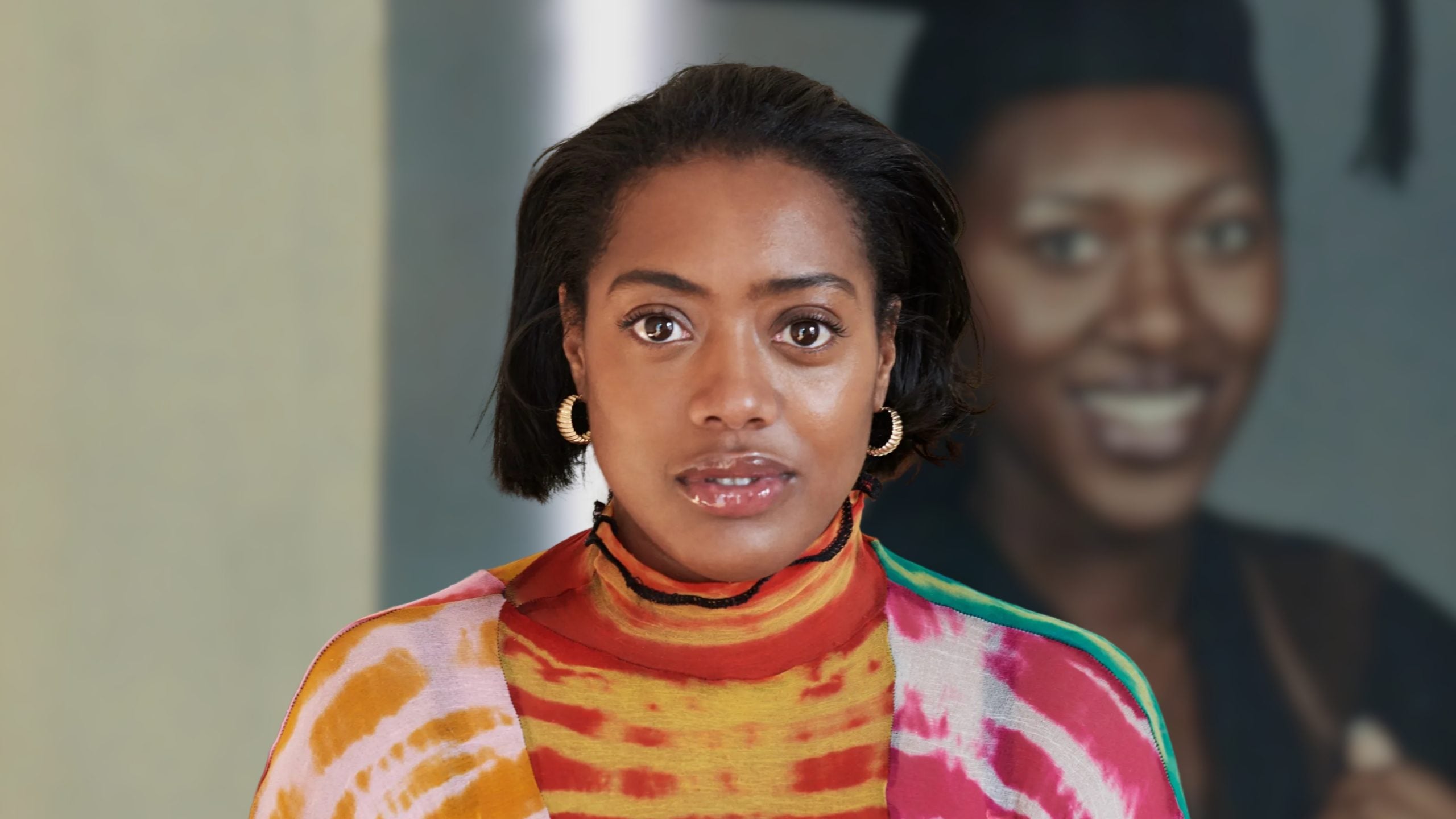
Interview with “Shadow Scholars” Director, Eloïse King


Hosted by
KT & Oti
Show Notes
An Oxford professor investigates the multi-billion-dollar industry of ghost-written university essays, and travels to Kenya to meet the “shadow scholars” who write them. Shadow Scholars will be screening at this year’s Sydney Film Festival (SFF) on June 13th & 14th.
As suggested by Eloïse, double feature watching of Shadow Scholars & Seeking Mavis Beacon.
Episode Details
- Duration
- 0:00
- Released
- June 4, 2025
- Category
- Interview
- Hosts


Transcript
Transcript (3,309 words)
Full transcript of Interview with “Shadow Scholars” Director, Eloïse King.
KT: An Oxford professor Patricia Kingori investigates the multi-billion dollar industry of ghost written university essays and travels to Kenya to meet the shadow scholars who write them. Shadow Scholars will be at Sydney Film Festival. Of all on the 13th and 14th of June, Australia was part of the band. So make sure you book your tickets, friends and lovers. Um, we are so excited to chat with Eloïse King today. Thank you so much for your time and welcome to the For Your Reference podcast.
Eloise: Yeah, welcome. Thank you so much. You're so excited to have this conversation.
KT: I am so ready to chop it up with you today. Can I just say on the low? Um, but before we do, I just wanna say congratulations, BFI, London Film Festival. I know it means a lot to you because of, you know, that's where you're from, but also it's a very prestigious film festival. Shout out to the special mention in the documentary competition and you know, we're making our way around in Film Fest. And we're making it to Sydney Film Festival. How are you feeling? Because this is a labor of love. This took years through the pandemics, through the panoramas, like, and here we are today. How are you feeling?
Eloise: That's such a good way to describe it. Um, I'm, we're so excited, like, I think. As a filmmaker, when you finally put something out, what you hope is that it will be received right in like lots of different spaces. And the fact that it's translated enough for us to be able to go to, as you said, London Film Festival, Copenhagen, CPH:DOX, Siki Ed, fur Johannesburg, and now to Sydney, we'll be doing Tribeca as well just before we come to you. So yeah, super exciting.
KT: Incredible. Um, like I mentioned earlier, so we're a TV and film podcast, so I'm Tongan and Pacific Islander. Um, and my beautiful, lovely partner, uh, Oti is Kenyan, and you know, and we, we have so many like loving stories. We were in like Kenya at the peak of Black Panther. As well. Um, incredible. So it's, yeah, it's, it, it's a lot of love all around. And, you know, as soon as we saw this on the program, like the opening program launch, I was like, we need to watch this. I'm very excited. So I'm, I'm even glad we get to, you know, chat. But we are a very, we are very black and brown centered, our podcast, albeit in a western country, we, the lens is important.
KT: Right. And it also speaks to Shadow Scholars as well, because it becomes more. Of just. Why do these students need it? Why are people writing these services? It becomes a holistic, comprehensive sort of view. And if you're gonna have the whole meal, baby, we're not eating around the edges. And that's what I really loved. Um, you know about Shadow Scholars because there is a through line of colonialism, and I don't know if you wanna scare people or how, how deeply you want to get into it today, but there is a through line of. Colonial structures that still exist and institutions that perhaps have some sort of, I wouldn't say, um, invisible, but I guess hard to sort of articulate ways that they're still caked into, you know, how we function, um, in a day to day.
KT: And I guess from a documentary point of view and a storytelling point of view, I imagine it was important. We very much appreciated it. But I guess I would love to hear from your point of view. How important was it to make sure there was context and history and it wasn't just students bad, writers bad. It's all bad.
Eloise: Yeah, yeah, absolutely. I mean, super important. I think one of the very things at the beginning was that I was just blown away when I found out. So Professor Patricia Kingori is actually very old friend of mine. We've known each other for many years, and we were having a very casual conversation in which she raised it. And when I heard that like. Potentially 40,000 people at the time they were saying, wrote fake essays for people. I said, how do real people write fake essays? And like my mind was worrying. So from the very beginning, I think. We had a proposition that just kept getting deeper because I think as a person of color, specifically, my experience of growing up in the global North, um, as a diaspora person is that you are always told from day one, you are always going to have to work twice as hard.
Eloise: And this is something that's really challenged and people. Who are not like from that background and who don't have that lived experience, not only sort of deny the possibility that that might be true, but also don't grow up hearing it. Mm-hmm. And so when I saw this story, like that was the immediate connection for me. I was just like, they are working twice as hard. I. Three times, four times as hard writing thousands of essays. And so rather than sort of even answer all of my questions before we went out there, we just said, let's go on this research trip and just find out more about what's going on. And naturally, like my lens is, as you know, a black director, my lived experience directly informs the way that I see the work, the way that I see these actions.
Eloise: But as you go through. I was surprised by how deep the layers of power go, and I think he used the right word when he said about invisibility because it's all of these ways that our lives are structured that you take for granted or that people take for granted. And once you start peeling it back, it's not just about, you know, race, it's not just about gender and it's not just about class. It's like the confluence of all of these things, especially when you then consider the geopolitics of it.
KT: It, it was very interesting to have a running commentary at a Kenyan correspondent next to me while we were watching Shadow Scholars and it was, it was interesting because. It is a very important subject to talk about, but it was also mentioned in the documentary, many overqualified, unemployed, young population in Kenya and Oti was like, yeah, of course they need to pay the bills. It was so interesting having the writers say that. I wouldn't say nonchalance, but it was very pragmatic of, of course I'm gonna do this. I've got the skills to do it. Um, and it it, it provided an extra sort of layer, I guess be beyond a headline, you know?
Eloise: Yeah, completely. And I think that was always my interest. And the same with Patricia. It was that not looking at this as just as a headline, and I think my work in general, I'm always really interested in sort of. What are the tensions of progress? When we see like a new legislation or we see that technology is advancing? Often there's a story particularly with like mark groups with marginalized identities, albeit from like the global majority often have like a very different experience going on. And so my first thing was like, you know, we've got these super smart people. You've got tech, the advancement of technology, people are able to pay their bills. That's great. But then. What's the trade off? You know, at what, at what price is the kind of being able to put food on the table today? What does that mean for tomorrow?
Eloise: What does that mean for their future job prospects? And that's one of the things I definitely sort of wanted to ask questions about.
KT: And it, it's, it's interesting 'cause it's a documentary, you know, it's true, but sometimes I don't even know what to say aside from serendipity because things were happening parallel in Patricia's life, in her professional life that were happening at the same time. And it's like, oh, this is so. Poetically perfect. You know, and, and so poetically heartbreaking. Um, and you know, there's a moment with Patricia and her mom, um, where she says, her mom always asks her two things, like, how are you and how are your grades? And it became like a melding of, as long as your grades are good, you'll be good.
KT: And it becomes a running commentary of, okay, you know, we're following all the rules. We are doing things exactly the way you want them to. We're doing it very amicably. But it's still not fair. Now what you know.
Eloise: A hundred percent. And I think lots of people can identify with that beyond, you know, being a black woman. But one of the things that she gets really upset about in the film that I really identified with, you know, watching this unfold was when she said, you know, first of all they say if you are woman, get educated. If you are poor, get educated. If you're black, get educated and suddenly this is gonna be the great equalizer. And then when you sort of get to that position, and in her case, you know, she's the youngest woman in 925 years to be a full Oxford professor. You know, that's a really significant achievement. But it also tells a story about lots of people being locked out, right? Because should it take 925 years for this sort of progress to be made?
Eloise: Um, we were super lucky, I think. I think it was just like. At first, Patricia wasn't actually even in the film
KT: and that's wild. Like doing research and like watching your interviews. I was like, 'cause it makes so much sense that she is, and I think it, again, it's like that serendipity of it just, it all worked out
Eloise: like the confluence of like time circumstances. So basically we began this project really just saying, wow, this is such an interesting story. We've known each other for a long time. We've really admired each other's work. What could. Being, you know, my filmmaking skills bring to the research that you have. I dunno how many people read academic papers, but I know that lots of people watch films, right? Yeah. We are sort of going along, we're researching with, I'm going out to Kenya, we're filming, we've met these incredible people who are really willing to talk to us. And then the pandemic happens. We continue filming for a period. And then in 2021, um, there was a ban, a travel ban, so we couldn't go there anymore.
Eloise: And that was a point in which I really. Worried. I was like, we're not gonna be able to continue making this film. And at the same time, statistically, I can see that like this work and this industry is going through the roof, it was like worth millions of dollars when we started and it was worth billions of dollars four years later. So you could really get a sense of like. How the circumstances of things moving online were changing stuff. But yeah, we were really fortunate in that she was willing with a lot, she was then willing to like become part of the story. And the reason was, is she said, had a conversation with her mom who you know is acts as this wise oracle really.
Eloise: It's almost like. The prophet of the film and she has a conversation and asks her mom, you know, does she think she should participate? And her mom said, well, you are doing this research all the time. Like, why would you ask people to do things that you're not willing to do yourself? And that was the kind of turning point in her becoming that's that's a
KT: mother's, yeah, that so gather you back to together
Eloise: completely like a very real, real moment. And so I think that opened up another layer of vulnerability for her and I think. Having, you know, really strong basis of trust in our relationship. And I'm really grateful, you know, that she did. We were able to then go on that journey together, which revealed even to me, just the inequity that exists for someone in her position. And I think that was a real eye-opener because we know it exists in all of our industries. It's not just a academia, is it? You are working hard and you feel like your ideas are being taken, that you're not being acknowledged and you're not being credited. Mm-hmm. But it then happened in real time on camera, and so that I think was a really powerful testament to like what the impact of the dispossession of ideas is.
Eloise: Yeah. You know, like never having the ability to claim something that you thought of that you came up with.
KT: It's like this is 'cause it's that mana at the end of the day, right? It's not just throwing something out into the world, it's what makes us right
Eloise: No, I agree with you. And I just think when you talk about ideas, there's so much context that allows us to, it's really sim first of all, I guess it's really easy to say these are just, you know, undergraduate essays or these are just, you know, sort of non-important diplomas when they go onto the world. People do the jobs properly. First of all, in STEM subjects, you know, we're talking about engineers, doctors, nurses. You would want to hope that they've done that work.
KT: Yeah.
Eloise: But even so. The way in which we come up with ideas is often so framed by our lived experiences. And that's what I try to kind of pull on when we go back to when we're talking to Oggi Iono because historically there are so many inventions that came from the enslaved people who are not allowed to patent their ideas. And then even in the subsequent years after when they were allowed to patent their ideas. But people, you know, the landholders, the plantation owners, the slave owners were sort of taking those away and then profiting from them. And so I don't think it's something that's just happening historically today we talk about ideas being the most valuable raw material.
Eloise: IP is the currency that everyone's talking about. And so if these, these ideas are just being shopped around and not. Sort of attributed to the people who came up with them, they're often sort of just disconnected from that route. Right? Like, do you know when you're in exams and do you have to show you're working out? Yeah. That's hard. Sounds it out baby. And they're like, you have to show your working out, otherwise you don't get the full points of the test. Yeah. And so kind of a bit like that, like how we come to these spaces of understanding are also an important part of it.
KT: And it's the transferring of knowledge is the transferring of power. 'cause you're right, it's, it's bigger than this conversation. It taps into everything and I'm so glad I, I know we don't have much more time, but like I'm so glad we touched into the ethics of it. 'cause I was saying to Oti, I was like, even the students like the. The fact that maybe it's antiquated, maybe it's not relevant to particular vocations, you know, like the essays and that sort of thing. Maybe there's a different way to achieve it, but there is a way that the institutions are, and it is a big moving machine, and I was like. Like we need to focus on that. Right. And then there was a, there was a section about ethics there and the embodiment, I guess of the ethics is a interesting conversation of itself.
KT: And I was saying, Oti was like, it's giving, like yelling at people for paper straws, but like ignoring corporations dumping toxic waste in black and brown communities. Like that's a really, really great
Eloise: analogy. I think that's a really great analogy and you know, hopefully as you said, this holistic approach allows us to, allows the audience to do some of the thinking themselves. I didn't want to. Force an opinion on anyone. You have like really various and varying viewpoints about the ethics. Patricia obviously has a very particular stance. The writers themselves then say, you know, what about the, what about the ethics? What do the students think? You know, I'd ask them about the ethics and obviously, um. Trisha Burham. Galland then says, you can't participate this and then not take responsibility. Talking about the writers, and I think a healthier way in general for the film to be framed is as like a conversation starter. Oh, absolutely. There was no. You know, it hopefully threads together lots of quite sort of nuanced ideas about the way in which power and structures allow us to think this is just the way the world is.
Eloise: But I think it also activates a sort of. You know us to be able to see that the writers aren't just passive recipients of aid. They're really innovative, interesting, intelligent people who given other opportunities would be able to achieve, you know, much more interesting and probably far reaching things.
KT: Absolutely. And we are the small axe and we're not going for the branches, we're going for the trunk. Friends and lovers. And if you know, you know, I think, I think it's quite clear what I'm saying. Um, I'm pretty sure you weren't filming during the time of the protest, but it's so timely, you know, and it is a universal and a timeless conversation, I guess is the way to say it.
Eloise: Yeah. It was super interesting and obviously it's unfortunate that there were, you know, lots of young people who went missing, young people who lost their lives in the protest. Um, and. Yet there was an extent to which as the film was completing, it felt like a real precursor in a conversation. You know, looking at a group of people who are really, who felt disenfranchised, really frustrated, but also that they were providing opportunities for themselves that the government weren't necessarily willing to sort of see through, or at least. There had been promises that weren't delivered on, and I think that's not just something that young people in Kenya are feeling, right? Like for the first time,
KT: well, we got Squid Game outta that, right? Overqualified, unemployed, like youth. Um, but I. I wanna thank you so much for your time. I feel like we could deconstruct de colonize for many more hours, but I want to thank you so much for your time. Um, we wrap up, um, we wrap up our reviews with a recommendation. So what would you pair with Shadow Scholars? As a double feature. It can be a documentary, it can be a film, it can be a TV show.
Eloise: Oh, fantastic question. I say Seeking Mavis Beacon. I'll say it one more time. Yeah. My recommendation would be to watch Seeking Mavis Beacon, which is about, uh, looking at the way that. Sort of Mavis Beacon was de detached from her identity, um, online. And it's a completely non-conventional, interesting, disruptive interventionalist documentary that speaks in the language of like the internet in a totally convincing and interesting way with a lot of heart. So I would recommend to see that.
KT: Thank you so much, Eloïse. Thank you for your time.
Eloise: Yeah, yeah. Thank you so much as well.
Related on FYR
Discussion
Loading comments...