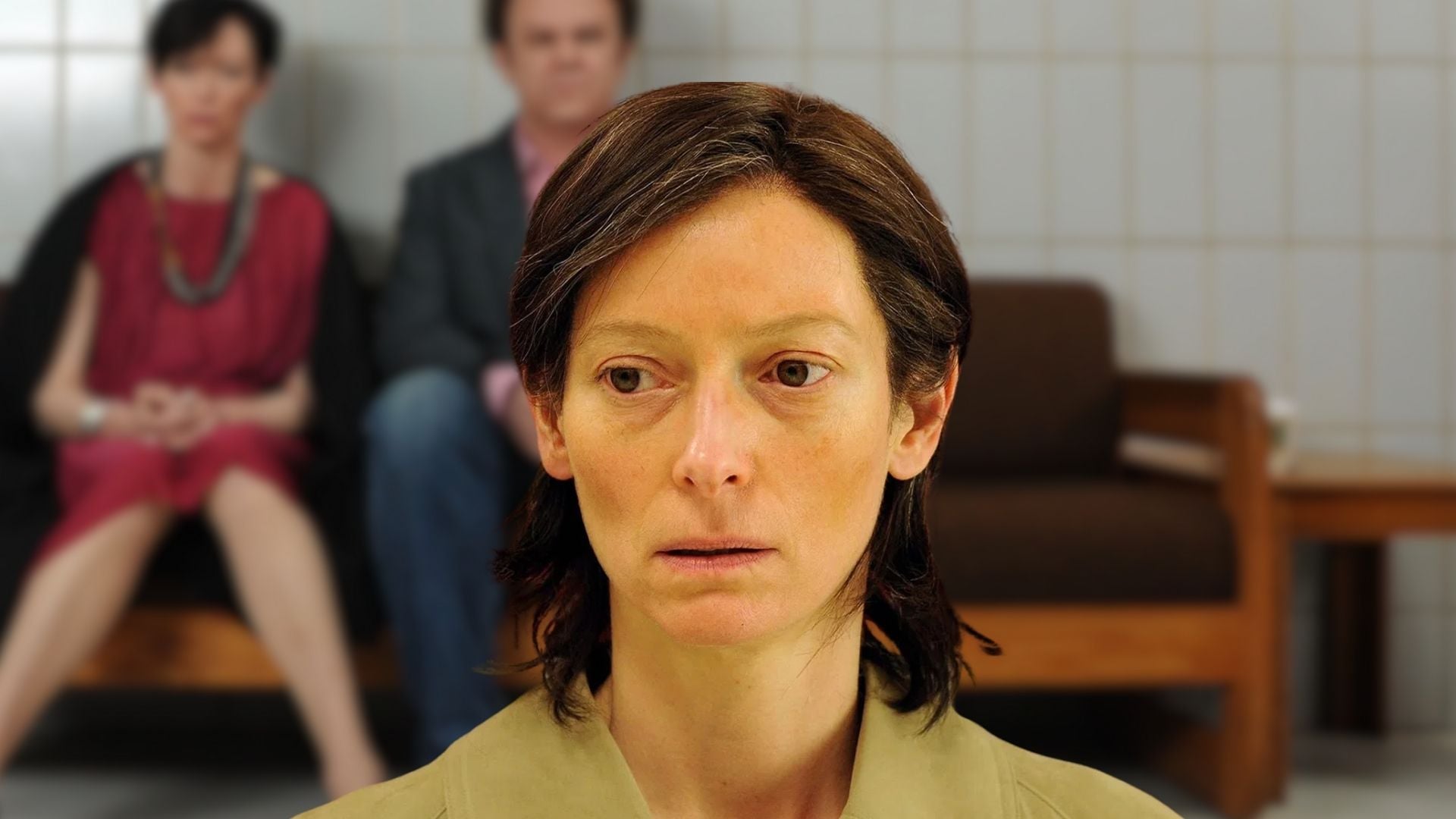
We Need to Talk About Kevin – Deliver Us From Eva


Hosted by
KT & Oti
Show Notes
Welcome to our Reference Degustation where, every February, we explore common and recurring themes of a writer/director’s filmography. Month long celebration of rough scrappy familial ties of Lynne Ramsay.
Wear the mask created to fool the world and hide from yourself. Shake off the oedipus feelings and find compassion in Soweto with We Need to Talk About Kevin this week.
If you’d like to watch along, we plan on covering the below…
Ratcatcher (1999)
We Need to Talk About Kevin (2011)
|You Were Never Really Here (2017)
Die My Love (2025)
Check out more tasty Reference Degustations…
2020 – Hayao Miyazaki
2021 – Taika Waititi
2022 – Quentin Tarantino
2023 – Takashi Miike
2024 – Martin Scorsese
2025 – Spike Lee
Tomato Meter
 KT
"Hard to watch but impossible to look away, Ramsay brings her signature unflinching lens to youth and family."
 Oti
"Dark and unsettling, We Need to Talk About Kevin keeps you on edge, even if its constant time jumps dilute some of the emotional punch. Still, it’s a gripping, nail-biting watch anchored by brilliant performances."
Episode Details
- Duration
- 0:00
- Released
- February 10, 2026
- Category
- Episode
- Hosts
Transcript
Transcript (6,902 words)
Full transcript of We Need to Talk About Kevin – Deliver Us From Eva.
KT: It's another week in the For Your Reference household. And are you hungry, Oti?
Oti: Always hungry.
KT: Watch out for the eggshells. It, it is another course. You know, Lynne does include food, but I don't know if I want to dine there. Mm. Uh, friends and lovers, thank you and welcome to another year of our Reference Degustation. Uh, we are very excited on the menu. We have covered Ratcatcher. Mm. Uh, do you remember friends and lovers on TripAdvisor where people made up a restaurant? And they created a big buzz around it. I think that's probably where you should go, not where Ratcatcher garbage collection's happening or not happening. we are covering, We Need to Talk About Kevin today, uh, and upcoming menus. You Were Never Really Here with Joaquin, and Die My Love, which recently. Came out. Uh, but we're very excited friends and lovers, if you wanna do your homework, uh, it'll be in the show notes, but we just mention what films we're going to be covering. Uh, let's get on with the tasting. Welcome to our Reference Degustation, where every February we explore common and recurring themes of a writer, director's filmography. This year, it's all about Lynne Ramsay, baby.
Oti: Mm-hmm.
KT: A month long celebration of rough, scrappy, familial ties. Welcome back to the For Your Reference Podcast. You got your host, KT,
Oti: and Oti.
KT: I'm doing this all out of order. Clearly. I'm very disoriented by this film. Wear the mask created to fool the world and hide from yourself. Shake off the Oedipus feelings and find compassion in Soweto with We Need to Talk About Kevin this week. Woohoo. Uh, welcome. Welcome friends and lovers. This will be a full big boy, uh, chunky review. There will be spoilers. Uh, boy, we're going to get into our first impressions, uh, which don't include. Spoilers, uh, just very quickly in regards to the cast. We have Lynne Ramsay, as well as Rory Stewart Kinnear, writing the screenplay based on a novel by Lionel Shriver, as well as Director Lynne Ramsay. That's what our tasting menu that we are doing this year. Friends and lovers, Tilda Swinton. John C. Reilly, Ezra Miller is very controversial, very disgusting. There's been allegations, there's been proper charges, uh, but we still use they, them pronouns. But we're specifically talking about Kevin, if you hear us, use he and him. but wow, this is a film.
Oti: Mm.
KT: Wow. but Oti. I am excited to talk about it. I, I, I really enjoyed our Ratcatcher review and I'm actually very excited, to get into this film and I guess seeing the layers and, and if there's any sort of correlation or, you know, similar sort of signatures that we saw in the first film. But, take us away. My love
Oti: Dark and unsettling, We Need to Talk About Kevin keeps you on edge, even if its constant time jumps dilute some of the emotional punch. Still, it's a gripping, nail-biting watch anchored by brilliant performances.
KT: Great, great. I was like, don't come from Soweto with your first dark and unsettling.
Oti: I had to put Soweto. The first thing
KT: we need to start a list, like I don't even remember the last time I was flabbergasted.
Oti: Mm-hmm.
KT: Anyway, hard to watch, but impossible to look away. Ramsay brings her signature unflinching lens to youth and family.
Oti: Mm-hmm. Wow.
KT: And that, I don't even think that encapsulates how I felt about the film, but it was solid. If you talk about solid films. Solid.
Oti: Yeah.
KT: 2011. It unfortunately, when it comes to like trigger warning friends and lovers when it comes to mass killings. In regards to like schools in America, it always feels timely. Unfortunately, like even friends and lovers, we did a full review on The Hunt, Lindelof's Hunt, not the Mads Mikkelsen Hunt. and unfortunately it does feel timely all the time, but I would imagine even during this time, you know, there, there might be moments where we might have felt, or I will speak on myself, that, that I felt like, ooh, okay. Especially for what we've seen in Ramsay's work so far could have been a bit scrappier, could have been a bit more, like the, the edges were rounded a little bit. but given the context and the, the way that the film is set in the US, I feel like some of it, not necessarily critiques I would have, but. Any sort of wondering that I have on where they could have gone harder, I can kind of understand maybe why.
Oti: Mm-hmm. I, I, I could see that. I think to me, I as well enjoy this movie. I felt like the aspects of the execution that felt a little bit too desired for my part. It was like getting into this movie. First time watch as well.
KT: Mm. Which
Oti: is weird because I've had people talk about this a lot. The movie itself, We Need to Talk About Kevin, but I'm not sure whether or not I fully sort of got there.
KT: Huh? Huh. Let's stay there. Let's stay there. Do you mean. Do you mean Kevin specifically, or do you mean the goal of the film? Or both?
Oti: I guess the goal of the film or what, what exactly what was the goal of the film?
KT: I don't think the goal is Kevin, though. I think the, I think that we need to talk about that conversation existed before Kevin.
Oti: Hmm. '
KT: cause whatever Kevin had, maybe we can't wholly give it to, uh, Eva's character, but it was inherited.
Oti: From James in Ratcatcher. Exactly.
KT: Wow.
Oti: Through line.
KT: Wow. A connected universe.
Oti: It is. Um, I guess because we go into, because
KT: do you think this film was about Kevin? I feel it's
Oti: about
KT: Eva was a product. Yeah.
Oti: It's about Eva.
KT: Yeah.
Oti: And. As much as the stylistic choices in, in, with, with, with the jumps and all infuriated me. I know it spoke on the emotional state of Eva rather than
KT: it wasn't necessary,
Oti: but, you know, I can understand. I can because
KT: I haven't watched Memento.
Oti: Mm.
KT: But I feel like a lot of Memento has to do with the back and forth, uh, plot twist, et cetera, et cetera. Actually no, the, I guess if I were to take my impressions, 'cause we only had watched Ratcatcher, Ramsay's, like first film in our household, I would think that she's a no nonsense, straightforward storyteller. This one. And we make fun of chewer. Tell in the eyes, have the eyes and the heels and the eyes. But we could actually tell which part of the story he was in. It was just Tilda with short hair, Tilda with long, long hair. Long hair.
Oti: Yeah. that's why like, uh, Kevin was interesting. Those, there was things being touched there that. Be it because there's a through line, right? And I know when we get to themes, we'll cover this better, but it's, you've got a family and, and children and parenthood being like foundational things in Ratcatcher and this.
KT: Mm.
Oti: So
KT: don't have children is what I'm hearing in both of those.
Oti: Yeah, exactly.
KT: Like play this in, what do they call in America? Sex education, physical education, PE. They call it in Australia, like fucking play that to scare kids.
Oti: Yeah. 'cause, 'cause I guess parenthood is, is hard. Same with Flanagan, you know?
KT: Mm-hmm.
Oti: Here we come with Eva. Sure. But what we were afforded with James was leaving and briefing and understanding James, what we come with with Kevin is.
KT: He already is
Oti: he, he already is
KT: like, you can't go back in. Like that's just, he just shouldn't be around people.
Oti: And that's why I didn't like he was already from being a bear bear.
KT: Mm-hmm.
Oti: Which was weird because why and how. I couldn't understand.
KT: No. 'cause then that's when we talk about Franklin, John C. Reilly's character. Mm. Like what's we, we'll obviously get into the themes in a second, but what I wanna say is. He, his passive, uh, parenting was not passive. And you talked about the baby, and that's why I'm mentioning Franklin, he believed the baby over Eva. Like, he's like, no, the baby's fine. The baby's not fussing at all after she spent the whole day trying to settle him.
Oti: Hmm.
KT: Like what's, what's the point? I, I say this as, as not a lover of all men, a lover of Oti, but, you know, uh, very famously known as a man hater. I don't think Ramsay likes men that much because No, no, no. 'cause she's willing to portray them in ways that they should be portrayed, especially the coworker, man.
Oti: Uh, you, you were clocking things with a coworker that I wasn't.
KT: Well, maybe you're the coworker. You don't think those emails get mailed to our address as well? Oti?
Oti: Oh my word.
KT: But it's interesting because when you don't feel the need to protect men as a concept, men as a species, you can actually get into the layers. And I'm actually, I didn't know that I would appreciate and get to look forward to that. Because she, there is a focus on like adolescents and young boys, and we can talk about Kevin and potential, the ancillary of it all. but yeah, I, I remember watching, watching this and I was like, I don't think she likes men. And I like it. friends and lovers. I'm going to say spoiler, spoiler, spoiler, because I want to. I want to actually have this conversation with Oti, so if you haven't watched it, go and watch it and then come back, uh, because we're gonna get into themes, so we're into a more structured sort of conversation. I wanna have this, uh, talking point now, my love. Do you think, and it's just how you feel, and then we can discuss broadly, but just in a snapshot, do you feel like this film. Has a sympathetic lens because we, by this point, I said, spoiler, we know that Kevin, not a school shooter, but a mass killing on school grounds. So it's not a mass shooting, it's just because he had a different uh, weapon. Do you feel like this film has a sympathetic lens towards Kevin's character and then we can think. Why it might be that way. Why not? But I just wanna know from you, do you think it was sympathetic or even just that it gave us more dimension than he's deranged and he's going to kill his schoolmates? Like what do you think?
Oti: I think it had a sympathetic lens more on Eva than Kevin.
KT: Okay. We'll come to Eva. But specifically for Kevin, if you think in context of the US. And the epidemic of, you know, 'cause it's like the little kids have to go through metal detectors and shit to that level. It's been normalized to that level. It's unfortunate, but it happens quite a lot relative to the rest of the world, right? You don't really see perspectives from the point of view of a young, like someone that is doing what Kevin is doing in this film. And potentially see different sides of him and how he was raised. That's what, that's more what I'm asking.
Oti: I don't think Kevin is getting any sort of, any sort of sympathetic treatment in how he's portrayed in this movie. It's we, I, everything we see is perceived through Eva. Yeah. And how she feels in a particular state and how. That that interaction with Kevin is
KT: Mm,
Oti: it's always one sided until it's not.
KT: Mm-hmm.
Oti: So when, when we come, when I'm looking at Kevin and he's going through, you know, his, his, when he had the fall
KT: Mm.
Oti: When, not the fall when Eva threw him, you know, fucking kids to the wall.
KT: Yeah.
Oti: It's, I didn't, I didn't understand Kevin up until. He went to the doctors and was like, nah, it wasn't my mom's this. I, I just fell from the table and I knew this kid, this kid has been playing this for such a long time, which confused me because I didn't, at some point I was like, okay, maybe it's behavioral issues. It's just, you know, it's gonna come and go. But no, it felt calculated from that get go that everything we've seen before was. Sort of which, which doesn't even make sense to me. How can a baby do that?
KT: Well, that's, I guess maybe that's all the leverage he had. It was manipulative, but maybe he just knew he wasn't gonna get the love.
Oti: He said the same thing I said. I remember watching this earlier and telling, oh, when you're watching it, Alia and I, and I said that Kevin knows that the mom doesn't love him.
KT: Yeah.
Oti: And we get a moment between the two where he says when the new baby's getting introduced. and, and I think Celia, and he was like, he was like, oh, what if I don't want a sister, her, or whatever. And Eva was like, no, you'll get used to it. You don't have to like it.
KT: Yeah.
Oti: And Kevin was like, oh, like me Then. How you get, how you used to me, but you don't necessarily like me,
KT: friends and lovers. I am ignorant to pregnancy and motherhood. But when we were watching this film, 'cause you could see that she didn't have that sort of maternal, like attachment to Kevin, but Man's was a whole teenager. And I'm like, it's, it's hard to know whether it is, whether it's like a long lasting trauma to Kevin's character. At her indifference. It's hard to know, nature, nurture, all of that shit, but she did not seem interested in him at all. Even when she was like, let's go out, I'll take you out and then we'll have fun and we'll have dinner. I was like, this feels weird. Like you don't even wanna be here.
Oti: Yeah.
KT: It's, it's hard though, I guess. but let's get into our common and recurring themes. We have a new one. I added a new one.
Oti: Mm-hmm.
KT: So this section is direction and stylistic choices. I added curtains.
Oti: Mm-hmm. Opening shot for both Ratcatcher and, uh, Kevin,
KT: I was being a bit facetious when I put it in Ratcatcher, but we've got it again. I feel like this is a motif for her.
Oti: Hmm. What do you think it means?
KT: Maybe it's the IUs of me, but I feel like it's like a o open kimono. It's like the window. 'cause I feel like the windows are always open,
Oti: always
KT: open in her films. The windows are always open, the
Oti: curtains are always flow.
KT: So it's, it's not so much that you're not letting people in because the window is open. It's more how much you choose to reveal. That's why I said the open kimono.
Oti: Okay. I agree with that. I can see that
KT: you,
Oti: I thought it, it, I took it as her trying to sort of invite us in. But with sort of a veneer of, you could sort of peer through, but not fully. I'm letting you in, but just a little bit
KT: uhhuh
Oti: and, and, and, and that's where we are at. And that's where I felt like I wasn't fully let in into Kevin. I wasn't even fully in that in Did you want
KT: That was a creepy world
Oti: into Eva as well. There's a lot of behavior. Kevin is, is pretty much a reflection of what Eva is.
KT: Oh, absolutely.
Oti: From mannerisms to everything. Yeah. It's pretty much stark. So that's how I took it. That's like peering. Peering through windows to the soul fan.
KT: You know what we should potentially also add into here? Unreliable narrators. I'll put that on the casting and characters. See friends and lovers we're doing this in real time. like, can we actually even, so we're not seeing all of the character, but even when we see them, can we even believe what they're showing to us? Love that. Okay. next one, di in direction and stylistic choices, minimal dialogue.
Oti: Uh,
KT: she don't do much dialogue.
Oti: Yeah.
KT: Compared to like Scorseses, Tarantinos, Spike Lees, she didn't really do dialogue.
Oti: Yeah, con con conversations were definitely limited. They felt more evasive, very, I don't wanna say violent, but it felt, it felt very confrontational.
KT: Yeah. Yeah, yeah, yeah. Absolutely. Okay. The, this is like a two-hander, so the first one is what is, and what could be, I guess we can put those together.
Oti: Oh. Uh, to me it, it's sort of, it's memory.
KT: Yeah.
Oti: And, and, and what's happening. It's, we we're taking back to Eva's sort of past and what she remembers of what transpired at certain points, because to me it, it felt like it was all triggered based off emotion where she felt a little bit of, uh, of aggravation and then beep. We'd go back and, and see like, I think get a bit more context to whatever's happening and then come back to reality. So it felt that way rather than, you know how Ratcatcher, we sort of got the semblance of hope of it wasn't really reality. This is more sort of fragments of memory that was sort of sprinkled around, you know, it was, it was like playing that game. You know how, um,
KT: Elliot Page.
Oti: Yeah. Was it in
KT: Beyond: Two Souls or something?
Oti: Or Rain? Heavy Rain. Um,
KT: oh, the one where you shower yourself with the controller?
Oti: Yeah.
KT: Mm-hmm.
Oti: Well, very apt description.
KT: Well, you might have remembered the kid not being picked up from school, but I remember the other scene. what is and what, and it's kind of evolving as we watch these films. Because what is, is the persona is the mask that Eva puts on. Mm-hmm. Because she doesn't know how to talk to people.
Oti: Mm-hmm.
KT: She just like, but she's like the way that she turns that switch. The, the scariest thing I think for Eva was Kevin saw her, he knew exactly that Eva was a f fake. She was, she was faking out there.
Oti: Mm-hmm.
KT: Because she felt the same rage that Kevin feels. She just doesn't allow it to manifest and act on it.
Oti: Yeah. I
KT: was hoping for a Promising Young Woman scene with that man from the Christmas party, but it was interesting because the, what is. Is what Kevin saw.
Oti: Mm-hmm.
KT: Kevin saw the way Eva was, what should be was exactly like, it was interesting. And you know what I really appreciate about Ramsay is how? 'cause you imagine there are billions of people in the world, so hundreds of millions of people. And even just since, since the time of people be having children. Mm-hmm. Right. And as much as there is maybe some sort of like layers of people's experience. Yeah, it's kind of not nice, I guess, quote unquote. It's not nice to say that it's fucking hard like to be a parent because it's like hurtful to the child. I guess it depends on how you say it, but just a general sentiment is you don't say that you regret being a parent and you don't say that it's hard, and you would prefer to have lived a life where you didn't have the kid. Mm-hmm. Right. And in, I guess in a different film, maybe as children, you're not allowed to say you didn't have the best parent. Right. So it, it goes both ways. But specifically in regards to this film, I really appreciated the way that Ramsay showed us a different view of parenthood.
Oti: Yeah,
KT: people might say it's dramatized. It obviously is, it's fiction. but people might also relate to it.
Oti: Mm.
KT: People might find some real shit that's happening in this film and very concerning behaviors. Maybe that's a way that, you know, like parents that are concerned about their young sons can, you know, find some sort of way to open up and have that conversation and get resources. Right.
Oti: Yeah, because it did feel like parenthood is sort of very isolating, not sort of, yeah. Yeah.
KT: But it wouldn't be isolating if both partners were present.
Oti: Mm. Yeah.
KT: But respectfully, we saw, we saw the best that hair and makeup could do for Franklin in the past. But even with that face, he does not look like a man that's going to help you at three o'clock in the morning when the baby's screaming.
Oti: No, he does not
KT: like. And then we even said it to ourselves, why did they then have another baby?
Oti: Because I'll fix everything else.
KT: Oh, baby lost the eye to find that out. That's a Old Testament shit. Violence is mostly off screen. I'm glad we have this as a theme.
Oti: Yeah. It's Matt. the event itself is sort of not shown. We appreciate that after, after the fact. even when he does take out Franklin and Celia, we still don't see it. We just see after the fact. Even
KT: Celia's eye.
Oti: Yeah.
KT: Like I just appreciate it. Yeah. It, it, it didn't need to be shown on screen, but I still appreciate it because there are many filmmakers that will do it for the shock and awe. Mm. That don't give a fuck about you and your safety, because sometimes people don't wanna see that shit.
Oti: Hello, doc Tanan from Jungle.
KT: Damn bro,
Oti: bro, man doesn't even have credit. His credit is all the way down there and he got some.
KT: Ripped to shreds.
Oti: Jeez.
KT: Yeah. No, fair man. so the violence is mostly off screen 'cause that's not the point, right?
Oti: Mm.
KT: Slow motion. Uh, after you every time.
Oti: Was it
KT: when in Ratcatcher specifically when he was like. Essentially blacking out this, the visuals of the film would be like slow motion. I don't think we had it in this, but did we have any other way to convey characters emotions?
Oti: I don't think we got a lot of slow motion or if any, I can't remember. Uh,
KT: but they did have an, I'm not learned enough to articulate it, but whenever we were in Eva's, like moments of distress, there was a way that it was being shown on film different to her, was it not clinical, but she had a very fake sort of facade where it all felt very sterile. There you go. compared to when she saw all the paint everywhere, right?
Oti: Yeah. Emotional paralysis, I guess.
KT: Nice.
Oti: Mm-hmm.
KT: you know what was also nice in this film? Mm. The music?
Oti: Yeah.
KT: I said, I don't know how to describe this. I don't know if it's just white filmmaking, but this felt very Reservoir Doggy. And then you are like, but you are like, Reservoir Dogs was in the nineties. And I was like, oh. Maybe it's just white people directing. Maybe it's the music they're cho choosing, but there was something that felt very like Americana. Is that the word?
Oti: Yeah. Definitely used music to punctuate a lot of the emotional stuff that was going on in the movie. I think every sort of emotional hit in the movie we got.
KT: I've got them my Shazam.
Oti: Oh, okay.
KT: Ham and Eggs, Lonnie Donegan. Everyday by Buddy Holly, Mother's Last Word to Her Son, Washington Phillips, and Nobody's Child by Lonnie Donegan.
Oti: There you go.
KT: I really, it was really interesting and, and there was a scene with, Eva and Kevin in the car where I'm like, man, this makes the Babadook relationship look much more healthier.
Oti: Mm.
KT: but it was used in a melancholy. Sort away, I think, 'cause it's like upbeat sounding music, but these people are going through it. Themes, children and youth.
Oti: Uh, yeah.
KT: Yeah.
Oti: We, we get to see Kevin Aaba growing up. you know, in,
KT: you know, what we didn't really touch on mainly now is, oh, you finish off.
Oti: No, no, no. Go for it.
KT: Him pooping and the diapers.
Oti: Yeah,
KT: so, so, so obviously we're speaking about ourselves. We're not, we are not diagnosing, we don't know, you know, diagnosis of Kevin's character in this movie.
KT: But for me personally, he knew how to go to the bathroom. That was just a way for him to, yeah, take control.
Oti: Yeah,
KT: okay.
Oti: A hundred percent.
KT: But how do they, or is this the ethnic in us? 'cause how did those two grown adults allow this kid? To take power in that scenario.
Oti: Mm. And I think that the, the cool sort of juxtaposition of how childhood is sort of portrayed here against Kevin, uh, no, against Kevin Bar with Ratcatcher is Ratcatcher. There's a sense of innocence
KT: because he's still younger.
Oti: Yeah,
KT: yeah.
Oti: Here, even Kevin as a kid, it's more. Kevin is threatening Kevin is dangerous. I dunno.
KT: Yeah. 'cause Ratcatcher was a whoopsy daisy. It was a big whoopsy daisy. Yeah. But it wasn't like, you know, a deranged soul.
Oti: And I guess here we could say childhood is sort of opaque, like the curtains.
KT: Wow.
Oti: Yeah, you get a, you get a morsel, a glimpse of Kevin. There are moments that actually had genuine connection between the two, but most of the time I was just looking through the curtain.
KT: If the curtains are opaque, what color are Soweto's? Beaded curtain
Oti: Oh, I don't know. Will be some, some
KT: by the right, Oti. Write the sequel.
Oti: I need to, we need to feel for Soweto.
KT: Wait, family. We've kind of touched on family. Is there anything else you wanna say in regards to family?
Oti: Mm, not particularly. It still plays a big factor in this similar to Ratcatcher. And I guess where in Ratcatcher, Flanagan was sort of present, surprisingly.
KT: Mm.
Oti: Because he interacted with
KT: me. He actually cared about his kids.
Oti: Yeah.
KT: He probably didn't do everything right, but he liked being around his kids.
Oti: But he, Franklin is very passive in everything.
KT: Do you think that's just the American dad?
Oti: Yeah. Maybe. Maybe Scottish dads is where it's at.
KT: Yeah.
Oti: Hmm.
KT: I guess, I suppose if that's the messaging for today, I had working class because of, uh, Ratcatcher. I don't think that's applicable here.
Oti: Oh no, I don't think it is
KT: just that money was a stressor, but I think money was only a stressor because she had to get another job, but that wasn't because they didn't have money. That was because of the circumstance.
Oti: How would you put then social judgment in terms of. Working class then, because a lot of this is the ostracization of Eva from Society of How Get cupping a lot of the blame for Kevin's actions and how being feeling ostracized. It's not really class, but it's sort of
KT: perception.
Oti: Yeah.
KT: Hmm. Interesting. But it's also expected, I don't think it was very nice the way that they were treating. And you would hope, you know what? Friends and lovers, it seems to be a very popular review on our podcast. Uh, The Beast in Me.
Oti: Mm-hmm.
KT: That scenario with Claire Danes' character.
Oti: Mm-hmm.
KT: Like you can understand it. You would hope that you are not the person that would go, like, threatened
Oti: up,
KT: be
Oti: 15, 15-year-old.
KT: Yeah. You would hope that you are not that person, but also. You can kind of see why they're like that. It's, it's not condoning the behavior. So in regards to Eva, it wasn't nice. Like even when she felt a whiff of someone she might know, she would abandon her trolley and have to like scurry back to it. So I don't think that was very nice for her. But, uh, is it, is it indictment of people as a whole? I don't think so.
Oti: Yeah.
KT: I think it's a natural response to a tragedy. Uh, death and grief and trauma and guilt. We can just put these all together 'cause it kind of works together.
Oti: Yeah. We see, we feel death throughout, you know, where it sort of Ratcatcher death played a part in terms of it being. Sort of the emotional throughput throughout the whole movie.
KT: Yeah.
Oti: Where here, death is sort of the constant bang, bang, bang. Like it's, it's, it's, it's right at the core of everything that's happening.
KT: It was simmering. Mm. Like it was, it was on its way there. I think, I think, I think death, and we're saying at the hands of Kevin, it was inevitable.
Oti: Mm.
KT: Because. Eva was never gonna face him 'cause she was never gonna face herself.
Oti: Mm.
KT: I don't think, I don't think there was any stopping Kevin from doing what he did to the dad and the sister because you see a lot of the time, just anecdotally, but a lot of the time you'll see parents or even specifically mothers. Scared to confront or, you know, have these hard conversations with their sons that they feel like they might be losing to radicalization.
Oti: Yeah.
KT: Being an incel further isolating themselves.
Oti: Hmm.
KT: So, I don't even know if Eva would like, obviously if she was there, I'm pretty sure she would stop it. But I feel like it's. We need to talk about Kevin, but it's also before that, like I said, the conversation started even before Kevin was around.
Oti: Yeah, a hundred percent.
KT: And I don't know, I don't necessarily wanna diagnose if it's a mental illness, et cetera, et cetera, et cetera. But what I will say is, even in the way it was conveyed in the film, I think it's more than just someone that had a child, whether they didn't want a child or whether they had a child before they were ready. It's more than that. Yeah. There's something going on with Eva. 'cause we saw it with the eggshells and then we saw that reciprocated in Kevin with the fingernails, whether it's OCD, whatever it is, there's something, the sauce is being, uh, passed down.
Oti: Mm-hmm.
KT: Right.
Oti: Learned behavior.
KT: Learned behavior, absolutely. Casting and characters curiosity, not morality. Interesting, interesting, interesting. I think that works here.
Oti: Yeah, it does. It does.
KT: Because you know what? You know what's also interesting? Usually for myself specifically when I'm watching a film, the morality of a character can get very frustrating to me.
Oti: Mm.
KT: Whether conflicting, whether lack of. Whether self-righteous, but I don't think, and I think this is credit to the screenplay and the performances, but I don't think I casted any sort of judgment towards Kevin. I think it was more just me understanding Kevin and being like, yeah, that's why he's like that. It wasn't, how dare he. Obviously it wasn't great what he did to his sister, but I, like you said, with the opaque curtain, I was just being given a glimpse as opposed to not necessarily passing judgment, but I wasn't as active as I would be in a film. Not to say I, I, I was engaged, but I wasn't as active in the morality arc. Does that make sense?
Oti: Makes sense because. Uh, with Ratcatcher, James is viewing the world, as you know, with curiosity and seeing it as broken as you know. It is.
KT: He was very young to understand.
Oti: Yeah.
KT: Yeah.
Oti: But I would say Eva's also looking at Kevin that way.
KT: Hmm.
Oti: Eva was looking at Kevin as something that's broken. That's something that
KT: ha.
Oti: There's this fear. There's this
KT: a disgust though.
Oti: Yeah,
KT: but it's like a disgust in herself as well. 'cause she made him
Oti: some disdain in there.
KT: Yeah.
Oti: If you might say.
KT: Yeah.
Oti: Yeah.
KT: A recoil.
Oti: Mm-hmm. Mm-hmm.
KT: Either Soli, unreliable narrator. We kind of talked about that. So we're presented stuff. Do we believe it? I don't think we believe Eva's facade because it's been made very clear to us. She's faking, like she's got as much rage. She just don't, she just doesn't let it, uh, materialize. But what do you think is real and true in this film? I think if there is to be any,
Oti: I think what is real and true is Eva's uh. Uh, guilt Eva's fear because, because she doesn't get for everything that's gone on in this movie, she does not get any absolution for anything at all. It's, there's no absolution for maybe how,
KT: or grace or kindness.
Oti: Yeah.
KT: Yeah.
Oti: So. What's real and what we are shown, because I can't even say that her recollection or her memory of what happened or transpired is the truth.
KT: Mm.
Oti: It's just how she perceived it.
KT: Yeah.
Oti: And I guess that's where we lie. You know, like Martin Lawrence is A Thin Line Between Love and Hate
KT: in what world? Would someone reference Martin Lawrence with this film?
Oti: Oh my Lord.
KT: You offer a unique buffet
Oti: always.
KT: Speaking of buffet.
Oti: Mm.
KT: I wanna talk about Soweto. 'cause you know, current, uh, social algorithms will make you believe black people have been in Scotland forever. Not just in the background, but right in the front before racist ass Mel Gibson was revealed as racist ass Mel Gibson in Braveheart, right? I need to talk about the characterization. ofWe, also the graces. It might also be in the book, so maybe, maybe Ramsay won't absorb all of, uh, our thought thinkings, but I just wanna hear your thoughts. We didn't get to watch, uh, the Morvern film that's before this one, but it's based in the uk.
Oti: Mm-hmm.
KT: If that makes any sort of difference, I don't know if there are any black people in that film, Morvern Callar or something like that. but I just wanna hear from you. We are very black and brown centered on this podcast. What did you think about Soweto's character?
Oti: Uh, Soweto's character, first of all, is the only one that sort of showed any sort of grace, compassion, yeah. And compassion to Eva, which I felt Eva was sort of taken aback by it.
KT: Mm-hmm.
Oti: Because she was like, oh, of all the, you can't walk. You are injured because of what my son did to you, but you're still talking to me as if I'm still human. And I think that's one of the first times we see anyone outside talk to talk to Eva that way. Hmm. So I found that quite interesting in sort of eye opening, but what sort of pulled me out was. Naming the character Soweto. I thought I'm just being childish, but come on now.
KT: It's not childish. It's
Oti: like,
KT: it's, it's wild,
Oti: uh, because then you think, oh, maybe this is in the nineties, you know, where a black character has to be called by the, you know, Soweto, just to reinforce that this is a black parcel, this is African man. You know, but there we go.
KT: It's just like, that's not even Boondocks like that. I don't even know what that was. But, last one for casting characters, rough, scrappy characters. I think the scrappy more applies to Ratcatcher because I, 'cause I don't think they were very scrappy, but it definitely, like there's no rounded edges. No here. Whew. the only, the only other thing I would take outta my notes is babies must be so stressful that a jack hammer was soothing to her.
Oti: Um, the Kevin was crying so loudly, nonstop that she just preferred a jackhammer sound and relaxing to that as well.
KT: Yeah.
Oti: Sighing like, oh, this
KT: is my jam.
Oti: This is my jam here.
KT: Just like, do you remember there was a time where so many people were listening to Regé-Jean Page doing the sleep meditation app. Mm. It was like that for her.
Oti: Mm, yeah.
KT: She had around about fat people.
Oti: Yeah.
KT: It was just interesting 'cause I feel like Kevin saw her. Kevin knew exactly
Oti: who she was.
KT: Yeah.
Oti: There was no curtain between, there was no curtain between Kevin and, and Eva.
KT: Yeah.
Oti: They saw each other's souls
KT: and that was too, that was too much more than she wanted to confront.
Oti: Yeah.
KT: Interesting.
Oti: And what, what was up with a, with a scene where she walked into Kevin walked on Kevin masturbating and lingered there for a hot second.
KT: Okay, so this is so, so I need to. I guess you can talk about your personal experience or not, but is that No, but is that like a very common thing in America or is it just like to yuck it up with shits and giggles? Like is it just funny American tv?
Oti: I have no idea.
KT: I never got caught flick in my bean.
Oti: Neither did I. Like, what are we doing here?
KT: What do you mean, Hartman? You got a bean as well?
Oti: Well, flicking my sticks.
KT: Oh my. But yeah, no, that's actually a very good question because when you said that, I'm like, actually, 'cause we see it, I haven't really watched American Pie.
Oti: Mm.
KT: But I know he tries to fuck a pie or he does successfully fuck a pie.
Oti: Mm Uh
KT: so I don't know. Is it, is it very common or is it just a, haha This is funny for a TV show movie.
Oti: Probably it's common. Maybe it's, it's a, she picked up some Americanisms in her writing,
KT: but then maybe it's like how in Ratcatcher they were saying no. In Ratcatcher, they were saying US people are uptight about the nudity. Maybe nudity is off the table, but watching your son Wink isn't,
Oti: yeah, maybe not because you close that door immediately. Not, not. 'cause it could be an accident, but
KT: Oh, she lingered.
Oti: Yeah.
KT: Well that, I dunno, I don't even know how much of this is the book and the film friends and lovers. I guess we'll leave that up to interpretation. If you've happened to read the book and you wanna succinctly talk about this specific talking point with us, I guess feel free to, but please email. Please email. but yeah, that's pretty much all the notes that I had. Do you have anything else? My love.
Oti: No. just, you know, maybe Kevin just needed to be delivered, uh, from Eva. You know, get some Gabrielle Unions in there. Get some LL Cool J.
KT: See the Kim? Is that the title?
Oti: Deliver Us From Eva?
KT: No, but I'm saying Is that what you want the title to be?
Oti: Yeah,
KT: lock it in. It might be too many characters, but we'll see.
Oti: Oh yeah, because the title itself is
KT: No, but I like Deliver Us From Eva. I like that. Oti is the only dimple daddy in this household.
Oti: Ah, okay.
KT: Actually, I do wanna end on one talking point with you.
Oti: Mm-hmm.
KT: This is from Kevin. When it seemed like it was some sort of documentary people watching people like me, you don't think they'll change the channel if all I did was get an A in geometry
Oti: Exactly.
KT: Because I don't even think like true crime podcasts were on the rise in 2011.
Oti: No, it was definitely on the rise back then. It wasn't, uh, at its peak yet.
KT: Mm.
Oti: But so true. People wanna watch the Mess. See all these documentaries, this bloody TV shows being made by Netflix, Peacock, Paramount.
KT: Oh wow. Are you doing a Hit 'Em Up? You're just naming them all. And if you cool with Peacock, fuck you too. Yeah. Like that um, show with Charlie Hunnam. No, thank you.
Oti: Yeah.
KT: Maybe this is the sanitize just as more roast, modern gladiatorial entertainment. You know, it's like a way to to to, to shield the masses I suppose.
Oti: Yeah,
KT: but it's true. It's absolutely true. There's so many, there's so many podcasts and documentaries about the lady that fed her family mushrooms. Why?
Oti: What? I said? Yeah.
KT: Okay. But that's my point. It it, it becomes content. Mm. Especially if it's like to do with like white people. Any, any other time, like was it missing white woman syndrome.
Oti: Mm
KT: hoo. Thank you friends and lovers for joining us another week in the For Your Reference household. Do you have any recommendations? So we just go off the set menu. My love
Oti: off the set menu.
KT: Set menu Ratcatcher. Perhaps if the chef is so generous. There's Morvern Callar, that's what it's called. Uh, We Need to Talk About Kevin, You Were Never Really Here as well as Die My Love.
Oti: Mm-hmm.
KT: How do you feel about the upcoming courses?
Oti: Oh, excited. 'cause I want to delve far into Lynne Ramsay.
KT: I don't know how I feel about Joaquin specifically. Mm. If he has the Khans to carry, I think it's something about his daughter going missing from memory.
Oti: Oh.
KT: but it seems like we're gonna get more ragged emotions.
Oti: Yeah. Let's see what cannot talk too much.
KT: Wow. Okay, on Twitter and Instagram and Bluesky we're @ForYourRefPod,
Oti: write us an email at hello@fyrpodcast.com.
KT: We're also on, I guess look at, look at yourself. Pull back though. Opaque curtains, right? Oti.
Oti: Mm-hmm.
KT: Uh, if you like to leave a rating or review and we'll see you guys on the next course.
Oti: See you.
KT: Bye.
Related on FYR
Discussion
Loading comments...