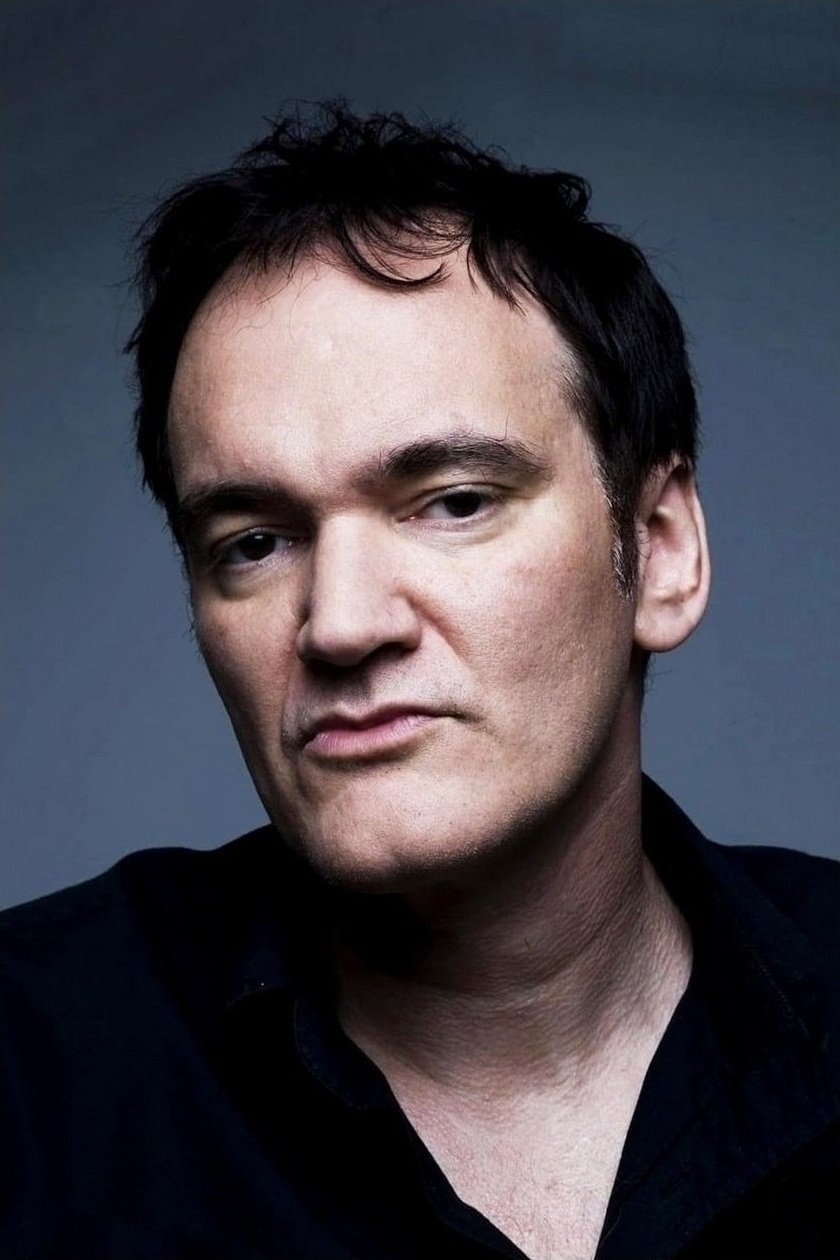
Quentin Tarantino
Quentin Jerome Tarantino (born March 27, 1963) is an American film director, screenwriter, producer, cinematographer and actor. In the early 1990s he was an independent filmmaker whose films used nonlinear storylines and aestheticization of violence. His films have earned him a variety of Academy Award, Golden Globe, BAFTA and Palme d'Or Awards and he has been nominated for Emmy and Grammy Awards. In 2007, Total Film named him the 12th-greatest director of all time. Tarantino was born in Knoxvi...
Films Analyzed

Theme Analysis
The recurring motifs and narrative DNA of Quentin Tarantino's filmography — each theme tested film by film.
Waiting for the n-word drop to see how first-time viewers react
Are Tarantino's race-related quips justified in this film?
White writer-directors writing characters outside their race
Pop culture references
Why does Tarantino insist on cameos (usually as a racist) when he can't act?
Feet
California/Hollywood/film/genre: a slave to pulp and grindhouse styles
Casting old favourites and reviving their careers
The reluctant hero
When does the stylized, hyper-aware dialogue become a hindrance rather than part of the charm?
Rewriting history
Does Tarantino cast good-looking guys who look like him?
Tarantino's approach to violence
QT-verse theory: films within films that interconnect
Is Tarantino the best contemporary director to match visuals and music?
Every theme on this page was commissioned by a patron. Want the hosts to chase yours next?
Join on PatreonThe Courses
6 episodesOne film per episode — each course a full deep-dive with its theme verdicts.
Director Trivia
Table talk from the degustation — context, behind-the-scenes, and the odd easter egg.
Behind the Scenes
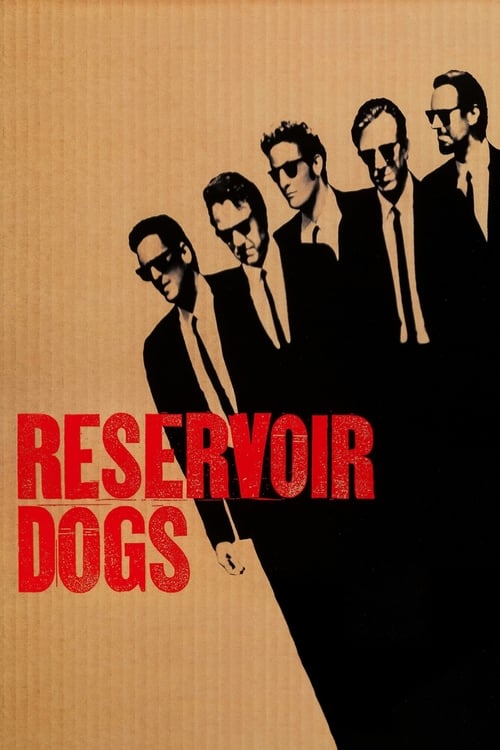
15The ensemble cast, full of mavericks for the time, includes Harvey Keitel, Tim Roth, Michael Madsen, Chris Penn, Steve Buscemi and Lawrence Tierney.
Made on a low budget, the film plays out in a single location for the most part and relies heavily on dialogue.
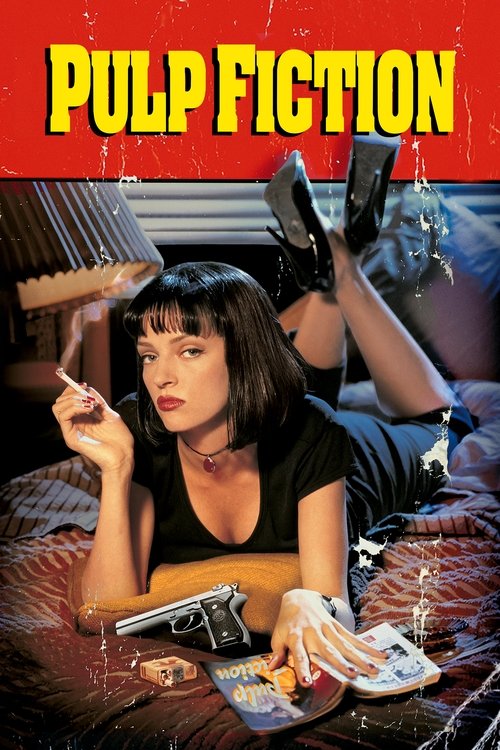
Pulp Fiction was written and directed by Quentin Tarantino, with notes from Roger Avary, and released in 1994, not long after Reservoir Dogs.
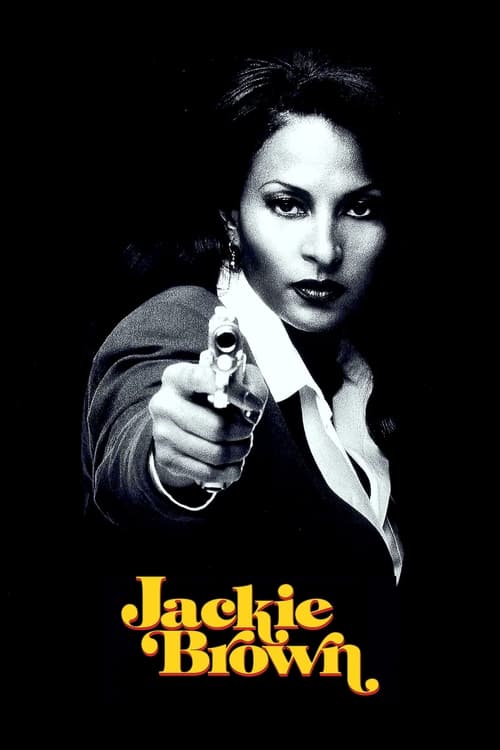
Jackie Brown is a novel adaptation: Quentin Jerome Tarantino directed it from Rum Punch, the novel by Elmore Leonard, on a budget of $12,000,000.
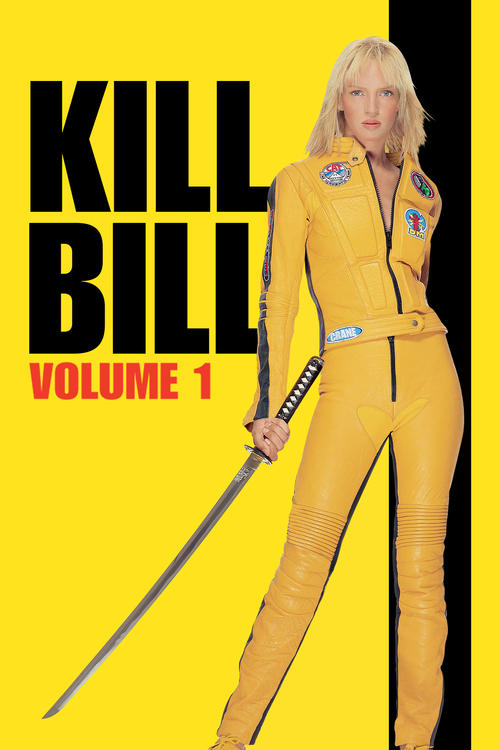
The film is credited as based on characters by "Q and U": Q for Quentin Tarantino and U for Uma Thurman, who also shares in the writing credit.
The film grew out of conversations between Tarantino and Uma Thurman on the set of Pulp Fiction about Fox Force Five becoming a film. Thurman had the idea of a bride all bloodied up being part of the story.
The script always had O-Ren Ishii played by a Japanese actress, but Tarantino saw Lucy Liu in Shanghai Noon and decided the role needed to be hers.
As KT tells it, Kill Bill's soundtrack is a collection of other films' soundtracks, all of it pulled out of Quentin Tarantino's own collection.
Inglourious Basterds was released in May 2009 on a budget of $70 million, a sum the hosts call quite a feat for such a cinematic film.
The cast includes Brad Pitt, Diane Kruger, Eli Roth and Christoph Waltz, whose turn as Hans Landa is the performance the hosts single out above all.
The R rating was given to a rougher cut of the film. After watching audiences at test screenings, Tarantino edited it down so as not to traumatize viewers too much, so the released version is not the cut that was rated.
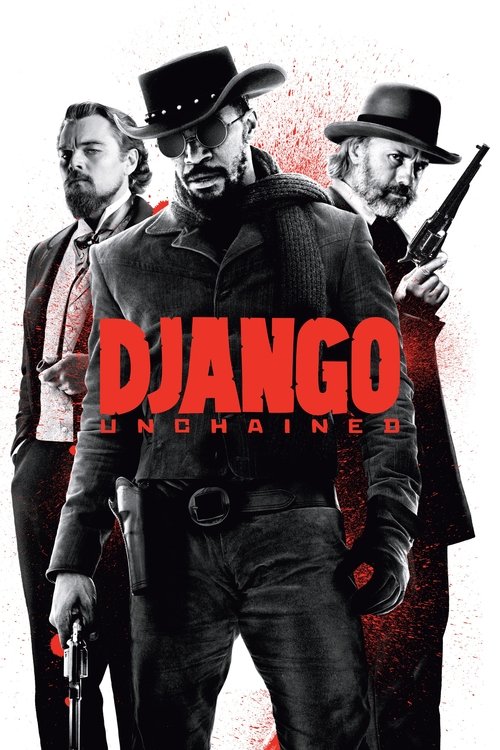
Tarantino wanted Will Smith to play Django, but Smith turned the role down because he felt Django was not the main character of the film.
Tyrese Gibson recorded an audition tape for Django Unchained that can be found on YouTube by searching for the Tyrese Django Unchained audition tape; he did not get the role.
Don Johnson plays Big Daddy, the plantation owner who explains to his slaves that Django is a free man but must not be treated like a white man.
Easter Egg
13The film opens with the characters talking about Madonna, and the dialogue also mentions Pam Grier, who later plays the title role in Tarantino's Jackie Brown.
One link fans draw in the QT-verse theory, where Tarantino's characters are related across his films, is Mr. Blonde to Vincent Vega.
Fox Force Five, mentioned in Pulp Fiction, points ahead to Kill Bill, one of the links the hosts raise when they take Rob's QT-verse question about films within films.
A rumour in the film has it that Marcellus Wallace threw a man out of a window for massaging Mia Wallace's feet, a moment the hosts call the origin of Tarantino's foot fixation.
The yellow suit worn by Beatrix Kiddo, the Bride played by Uma Thurman, is an homage to Bruce Lee, a pop culture reference that has long been known.
One of the tombstones seen in the film bears the name Paula Schultz, the kind of granular detail that fans of the interconnected Tarantino universe look out for.
Quentin Tarantino makes a very brief cameo: IMDb credits him as the first scalped Nazi, a character who is already dead and has no lines.
The film contains a reference to Charlie Chaplin's The Kid, and it makes pointed use of propaganda films within its story.
The film includes talk of The Three Musketeers around the character D'Artagnan, which Oti reads as a nod to the novel's author, Alexandre Dumas, who was Black.
Quentin Tarantino once again casts himself in a cameo in Django Unchained, this time playing an Australian character and giving himself an Australian accent for the role.
Context
11Reservoir Dogs was both written and directed by Quentin Jerome Tarantino, so it carries the undeniable voice of a director who also penned the screenplay.
Reservoir Dogs was Tarantino's starting point and opens the hosts' six-film Reference Degustation run, followed by Pulp Fiction, Jackie Brown, Kill Bill, Inglourious Basterds (the patron pick) and Django Unchained.
Rather than one plot, Pulp Fiction is built from four substories, each with its own main characters, and the film runs about two and a half hours.
Released in December 1997, Jackie Brown followed Quentin Tarantino's Reservoir Dogs, released in 1992, and Pulp Fiction, released in 1994.
Pam Grier is pivotal to the blaxploitation genre, and her earlier films Coffy and Foxy Brown have storylines similar to Jackie Brown's, so parallels can be drawn between them.
Pam Grier's screen work beyond film includes playing Amanda Waller in the TV series Smallville, according to her IMDb page, and a role in the TV series The L Word.
The song Across 110th Street is used repeatedly through the film, its lyrics speaking to the plight of the Black community.
The two volumes of Kill Bill were re-released together in 2011 as a single film, bringing the running time of the whole story to about four hours.
David Carradine, who plays Bill, starred as the master Caine in the TV series Kung Fu, and Kill Bill turns that good guy into a villain.
Inglourious Basterds made the six-film 2022 Reference Degustation menu because the podcast's patrons voted for it, even though Oti had argued for The Hateful Eight instead.
When Aldo Raine introduces himself to the Basterds, he says he is part Apache, laying claim to both his white American and Native American lineage.
Reception
7Reservoir Dogs was released in January 1992 on a budget of only 1,200,000 and went on to make a worldwide gross of 2,900,000.
Pulp Fiction was a huge hit for its $8 million budget, taking a worldwide gross of $213,900,000 and making Tarantino's name.
Against its $12,000,000 budget, Jackie Brown made a worldwide gross of $39,600,000, a disappointing return next to the 200 mil that Pulp Fiction took.
Each volume had a budget of $30 million. Kill Bill Volume 1 grossed $180.9 million worldwide and Volume 2 grossed $154.1 million, both less than Pulp Fiction's 200-plus million.
Against its budget of $70 million, Inglourious Basterds went on to make a worldwide gross of $321,400,000, a figure KT greets as splooshy and well deserved.
Django Unchained, written and directed by Quentin Tarantino, was released in December 2012. With a $100,000,000 budget it is one of, if not the most, expensive Tarantino films, and it made a worldwide gross of $426,000,000.
Spike Lee criticised Tarantino in an interview over his overuse of the n-word, an interview that patron Ben linked to the hosts during the Tarantino run.