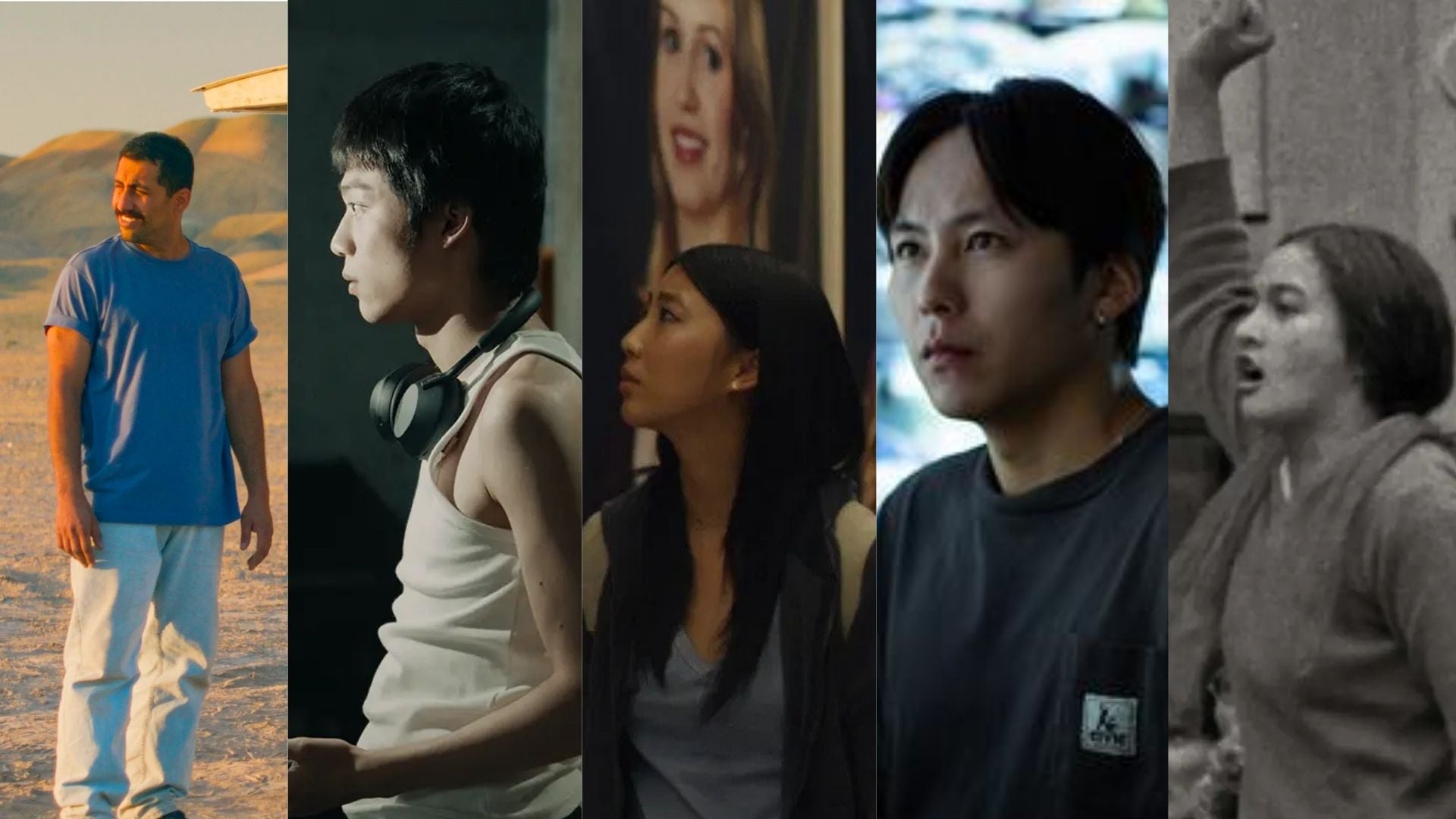
SFF – It Was Just An Accident, Happyend & Slanted


Hosted by
KT & Oti
Show Notes
We continue our SFF coverage by covering political commentary films across the Asia Pacific: It Was Just An Accident, Happyend, Slanted, Stranger Eyes & The Haka Party Incident.
Check out interviews we have for these films:
Also KT did a written review of Happyend over on Novastream:
Tomato Meter
 KT
"It Was Just An Accident embodies the inner conflict of what we can live with and what we need to release. Not what is right or wrong. Panahi’s ability to layer morality is impactful, deliberate and kind.Posted Jun 24, 2025"
 Oti
"It Was Just an Accident is bold in theme and rich in empathy, drawing you into its characters’ moral dilemmas and delivering a quietly powerful payoff."
KT"Slanted dabbles in the world of satire with body horror and finds its heart in the relatability of navigating different worlds. At times, the very format hindered the fullness of humanity that made it so brilliant.Posted Jun 24, 2025"
Oti"Slanted blends satire, horror, and comedy to explore identity and belonging with bite and wit. It’s sharp, personal, and a reminder that these struggles aren’t unique."
KT"Films can offer layered commentary and use of a focused world being a reflection of wider politics. Neo Sora goes further and becomes more of a house of mirrors in Happyend.Posted Jun 24, 2025"
KT"The storytelling style was very enticing and added to the allure of being watched versus being seen. A slow burn of suffocating surveillance.Posted Jun 24, 2025"
Episode Details
- Duration
- 0:00
- Released
- June 24, 2025
- Category
- Episode
- Hosts
Transcript
Transcript (6,975 words)
Full transcript of SFF – It Was Just An Accident, Happyend & Slanted.
KT: It is another week in the For Your Reference household, and we are continuing our Sydney Film Festival coverage. It's all happening. Oti has listened to the leak. Kendrick Lamar's verse, but I don't know if we are gonna have time. This is "Chains & Whips". Not that Jack Harlow shit. T. Uh, the previous, uh, Sydney Film Festival reviews that we did was Africa and black films. You could say. This is APAC, Asia Pacific films that we're covering today. Um, we are going all the way from Iran to Singapore to Japan, um, and also an as well. Are you, are you ready, Oti?
Oti: Ready?
KT: Let's get on with the show. Hey, friends and lovers, welcome back to the For Your Reference Podcast. You've got your most learned ever, so splooshy and nasty friends and lovers, KT
Oti: and Oti.
KT: Today we are covering films as far as we can tell. They are not necessarily available in cinemas, um, or on. You know, digital sort of streaming. Sinners is, though, friends and lovers. Are, go and watch Sinners. Um, and also check out our full review episode as well. Um, we will be covering It Was Just an Accident, Happyend, Slanted, Stranger Eyes, as well as The Haka Party Incident.
Oti: Mm.
KT: I guess just noting here, a lot of the films we were able to watch before the festival, because we were preparing for interviews, It Was Just an Accident, was one of the few that we actually got to watch in screening together. Mommy and daddy were there having a lovely time, um, and. Usually there would be an introduction, perhaps maybe even a Q&A. Um, but Jafar Panahi, given the circumstances that are going on in Iran, um, at the moment, didn't attend to Intro and also Q&A, his film. But I'm also very excited to speak about his film. Um, and there will be no spoilers, friends and lovers. But I guess just a note to say, um. All power to the people free all of the occupied nations.
KT: Take it away, Oti.
Oti: It Was Just an Accident is bold in theme and rich in empathy, drawing you into its characters' moral dilemmas and delivering a quietly powerful payoff.
KT: Wow. It Was Just an Accident embodies the inner conflict of what we can live with and what we need to release. Not what is right or wrong. Panahi's ability to layer morality is impactful, deliberate and kind.
Oti: Mm-hmm. It was. It is.
KT: And you picked this one. What a great pick, Oti.
Oti: Mm-hmm. I, I know I can see them, I can sense them, I can smell them. No, but, um, without going into spoilers, because this is, there should be a mandatory watch for a lot of people.
KT: Yeah.
Oti: Um, it has its light moments, but the message remains true. The themes are there. That you could explore and see and contemplate on and the things that you would even trying to empathize on, putting yourself in such a position or decisions that you would do as a person is quite an intriguing just journey to go through in this movie. And, um, because we had, we had thoughts, we had heavy, heavy thoughts on what we thought should have been done. Yeah. And, um, yeah, I just love this movie every little bit,
KT: and I, I think that's exactly what I want to pick up on. The should, right? Mm. Because there's what's fair, there's what's right and there's what's just, but there's also, who's got the fucking energy man? Like there's that. I, on a personal level, there's that trauma that you know you need to address, but man, sometimes a little sweetie treat and a little escapism is what's needed in particular, um, circumstances. I think what I really, um, love about this film is. We are so layered in the characters. I don't even wanna allude to too much in regards to the characters, but they very much, the film works from a storytelling point of view, but it also zooms out into the implications of what that could mean.
Oti: Mm.
KT: Right. I, I guess just the, a, a small offering, a small tasting, a small morsel to further exemplify what we're very broadly alluding to is, you know, you have a moment where, you know, the, the father, the mother, and the young kid, they hit an animal. Right in the car. And that kind of, it, it kind of sets the tone of the film of, well, that wasn't right, daddy. Like, you know, like there, there's so much layering to that which then flows onto the commentary in this film. And, um, you know, it's exactly what I said in my pull quote of,
KT: it's what you can live with, right? Because even if. you have been wronged, even if something has been done to you, especially in this film, it's, it's very intense, um, the actual events that are unfolding in the film. But if you have been wronged in some way, in a, in a just and ideal, and in a fair world there would be some sort of recompense, there would be some answering to of those that have wronged you.
Oti: Yeah,
KT: and what's so interesting in this film is it isn't even about when is that going to be repaid. It's just, you know what? I just have to deal with never being able to sleep, never being able to, like, always having to look behind my back. You know, like just because you haven't addressed it doesn't mean you've accepted it, whether it's in your body, your mind, or your spirit.
Oti: Yeah. And, and, and, and it brings up things that, you know, while, while growing up in Kenya you'd, you'd sort of learn in history classes or try and see how you'd be able to put yourself, like, so for example, Kenya's cult was colonized and all that. And then you had missionaries come giving you religion telling you, turn the other cheek, you know, forgive.
KT: It's very useful for oppressors. Yeah. Yeah. So
Oti: it's like that sort of a sneaky thing. Its own fucking tail where it's
KT: fall, fall in line. Mm.
Oti: We'll do this shit. But then there's this other side that will tell you, ah, chill man. Relax, turn the other
KT: cheek. It's all right. It's like I forgive them. It's like, I can't believe they did that to you, as if they're not the day. Oh my God.
Oti: Yeah. So it's, it's. Growing up and having that sort of, and this is why I struggle with a lot of that shit. So watching this movie, I knew what I would do in a heartbeat.
KT: Same.
Oti: And yeah. Yeah, it's definitely something that will get you going and, um, in a good or bad way.
KT: Oh, in the best way.
Oti: No, in,
KT: in the best way. Absolutely. And you know. The running theme of the interviews that we had for Sydney Film Festival and the running theme for the collection of films actually, that we're talking about today is people should stay mad. I feel like for a lot of the shit that's going in on in the world right now, we should be mad and we should feel that rage. Right, especially in regards to European powers that are, that are furthering the power and the stronghold that they have. It doesn't make sense that like at some point you need to poke your head out and see what the fuck is going on. Right, until it gets to a point where it affects you. But for, for most of those people that wait till it affects them, it's already fucking too late.
KT: No, really, and honestly, we need to care more. We need to care more about other people. Um, but I, I guess what I would say in regards to It Was Just an Accident. Rage isn't a bad thing. Rage is probably the more lasting and the more. Agent of change really.
Oti: Yeah. And, and I guess what you said is true and remains true even after this movie in what you can live with.
KT: Yes.
Oti: Because everything else is background noise. Uh, it just depends on what you can accept within yourself. Yeah. What you can go with. So yeah, this movie is a five out of five. It's, it's incredible.
KT: Oh, absolutely.
Oti: And
KT: because how are you gonna say that? You forgive your parents, but you can't show love to your children? I'm pretty sure. I think mathematically,
Oti: uh, yeah. Uh, it's not, it's one of those, um, things that we usually reference a lot from Astronomy Club. Yeah. Where you get the trauma, you're like. We got beaten as kids because, you know, and he didn't do anything to us only for that to overlay the trauma that he does at you instilling.
KT: Exactly,
Oti: yeah. It's that trauma
KT: buffering.
Oti: Yeah.
KT: It's like, I'm fine. I'm making jokes. And it's like, yeah, you're crying too, bro. Like, you're not okay. And we, um, but yeah. You know, and I, I, I guess the. The, the kind, warm embrace I would give friends and lovers is, um, you know, it, it, it can all feel a bit, uh, hopeless. It can all feel a bit, um, overwhelming, but there is power in community and I would say in there's comfort in the truth of reality of what's going on.
Oti: Yeah.
KT: So, you know. Love on yourselves and be kind to yourselves, friends and lovers.
Oti: Mm-hmm.
KT: Unless you're a dickhead, but you know, the, the dickhead will be on a different podcast. I'm, I'm sure. Um, next we are moving on to Happyend. This was a film, actually, I think this was a. Eight 20 screening, wasn't it? So I made sure to take a nap.
Oti: Oh wow.
KT: I had my vitamins and I took a nap to go to, um, a later screening. Oti hasn't had a chance to watch it surprise to no one. I need Oti to watch this as soon as it's available. Um, so we can have a full on discussion whether on the podcast or outside of it. Um, also shout outs to Alice. There. Um, and the team at Novastream, I did my little written review debut, um, on Happyend. I, I did a, a, a writeup for that. So, um, kind of a pervert if you need more of my thoughts, but if you
Oti: do,
KT: um, the link will be in the show notes, friends and lovers. So this is my pull quote. First impressions, obviously no spoilers. Films can offer layered commentary and use of a focused world being a reflection of wider politics. Neo Sora goes further and becomes more of a house of mirrors in Happyend. Oh, alright.
Oti: So for the people who've not read the article, the really good article you did.
KT: Okay. All right.
Oti: Tell us a bit more about this movie.
KT: So the premise of the film, um, is we are really just focused on a high school. Um, a group of friends, five friends, uh, the, the main, uh, friends that we focus on are Yuta, and he's Japanese, and the other best friend is Kou. And he's identified in the film as Zainichi Korean. Um, friends and lovers do your own. Um, big ball swelling research, but also even on our podcast, we did a full review on Pachinko.
Oti: Mm,
KT: we talked about Japan, colonizing Korea, and, um, many generations of Koreans in Japan. Um, I also, let me pull up my, um, very dusty, 'cause it's been a while, but let me pull up my learned, uh, reading glasses, friends and lovers. I read the book. Mm,
Oti: quite the Wonka Wanka.
KT: Speaking of the Wanka, if I can just like, uh, digress for a second. Min Jin Lee, who's the author, someone had a review for the book Pachinko and said how impressed they were at the English. In the book and fuck you. In the click you claim, you know who I'm talking about, friends and lovers, the demographics. Um, and Min Jin Lee's like, yeah, because I speak English. Anyway, um, let's get back to Happyend and the, the politics that we have in this film, not in regards to the Pachinko book. Um. But it's really interesting because they're best friends and they never needed to have to worry about the differences that they had to be, to be fair to Yuta.
KT: Uh, you know, the, the Japanese main character, I don't think he was necessarily a bad guy. I just think like he even did the whole like, oh, we're all the same. We're not different. And it's like, yeah, we are different. But I think it was more. Ignorance as opposed to malice.
Oti: Mm.
KT: Um, 'cause he kept wanting Kou to be okay, but there was an awakening and like we talked about, there was a rage that Kou was tapping into. Obviously a pretty gal, but he did find, uh, groups that would protest, you know, in regards to the police and the government. Right. Um, so there was a rage. There was a rage that was a. In awakening in him and he started to get really frustrated with Yuta, which was interesting because in the group of friends there's Ming and her dad's Chinese. Um, and then we also have Tom and his dad is African American from Chicago. So it was very interesting because frustrated as Kou got. Um, Tom was like, come on man, like we're about to graduate. And then you understand that there are different layerings of rage. And even personally for me, like even within the context of a podcast, I understand the different levels of rage and I guess the how far you can take it, right?
KT: Mm-hmm. Um, and at some point the mom's like, come on man. Like, can you protest in a cute way? We can't be moving like this out here.
Oti: Yeah.
KT: So it was interesting because like the, I don't think this is too much of a spoiler, but I guess just to exemplify the commentary that I'm talking about, the principal is obviously a wanker, but he has like a yellow sports car. And something happens to the sports car. So to have that level of disparity of wealth and the principal starts to call it a terrorist act that happened to his car, he starts to, yeah. So that's where they would implement a surveillance system, which I think they called Panopti in the film. Um, it, it wasn't just a surveillance system, it was also, um, like a point scoring system.
Oti: And assuming it, it, it, uh, targeted our melanated brother
KT: Tom. Um, yeah, so it was, it was very interesting watching it from that level, but it was very, and I referenced Spike Lee. Um, in Do the Right Thing, friends and lovers, we are just, we're just double, triple plugging ourselves. If you're nasty. Um, we did a full review on Do the Right Thing, but, you know, Do the Right Thing had a heat wave. Mm. And that was tapping into the racial tensions. This was an earthquake. So it was really cool Feeling it. Yeah. Feeling it in the background. Yeah. You're getting tantalized. Do you wanna check it out? A little bit of a tasting.
Oti: See director?
KT: Mm-hmm. Um, so it was interesting and clock it. You're not clocking it. Oti, you're not clocking that. I'm standing on political business. Oh wow. KT bebo. What's good? Um, but the interesting thing. In the film, just like every other cheat code that you understand from colonialism in this film, they were talking about how for the safety of people, there were increasing patrols, there were increasing police presence, and it always just happens to be violent every time the police turn up at these peaceful protests. Mm. Right. So it's literally. Anyway, it, it, it spoke to my sensibilities, it spoke to my movie watching sensibilities, and I had such a great time. There were so many layers to it as well.
KT: Oh, sounds like it, it sounds like something interesting that I'll be very keen to watch. Well, let's move on to the other side, taking the wrong lessons of Get Out, Oti. Um, we've got Slanted.
Oti: Slanted blends satire, horror, and comedy to explore identity and belonging with bite and wit. It's sharp, personal, and a reminder that these struggles aren't unique.
KT: Hmm. Okay. Slanted dabbles in the world of satire with body horror and finds its heart in the relatability of navigating different worlds.
Oti: Mm.
KT: At times, the very format hindered the fullness of humanity that made it so brilliant.
Oti: I feel like we a sting and
KT: a spanker tea.
Oti: I feel like we sort of have a similar thing going. Mm-hmm. Um, what I appreciated about Slanted is from overarching perspective, it's the story it's trying to tell. It's, it's the point. It's trying to drive home outside of. How far they got into the trenches of trying to show the messaging or trying to bring that objective out where I feel like where you had a bit of qualm with,
KT: you didn't have the same qualm
Oti: I did, but not to to to your, to your extent. I felt like I, I still understood. I still got where it was going in terms of, oh, okay. So we're going to remove ourselves from, we're going to delve into a bit more of the comedic bag a little bit to play this out in as much as like with the comparison of Get Out, I can't really see it like that to me.
KT: Okay. Spoiler, spoiler, spoiler. For Get Out. Okay. Because the premise of this film is transracial surgery.
Oti: Mm.
KT: Right. The tra the, um, the, the premise of Slanted is for transracial surgery. Spoiler, spoiler, spoiler. For Get Out. Go and check out our episode. Hi, Daniel Kaluuya. Hope you're doing well. We miss you when we love you. Um, he, he be keeping tabs. You don't think I see that, that specific London download as soon as we drop. Ah, all right. He's saying, Hey, KT, can I get a drop? I say, hallelujah. Yeah, Get Out. You find out that they are using black bodies, right? Whether it's for athleticism, it doesn't even matter. There, there's a, there's a, there's a gross sort of possessiveness that is had on black bodies, right? And that's gross and disgusting. That's the premise of Get Out this. Ah, because we can say what we think the messaging was and I don't, even if I don't agree with the messaging, right.
KT: Like I said, How to Build a Library. I don't agree with the way that they were moving. It was slimy to me.
Oti: Mm-hmm.
KT: But the way that the documentary was told is where I. Take qualm and I bear arms.
Oti: Okay. Yeah.
KT: And this is where I feel this way with this film. Even if the messaging is, well, no, I will agree. It, it is easier to be white in a lot of instances.
Oti: Yeah.
KT: And scenarios, right? Mm-hmm. Whether this film was actually trying to say that by being white. It is better full stop. Whether that, whether the film is trying to say that or not, I guess we can debate it or not, but the reason why I said taking the wrong lesson from Get Out is the protagonist wasn't necessarily challenged. That's what I'm talking about. I just wanted to be very clear in what I meant because I'm not here to be misconstrued. I'm here to be contorted by you, Oti, but I'm not here to be misconstrued.
Oti: Okay. Okay. I see that. I see the protagonist, I felt, and this is where she loved
KT: it
Oti: too much, and this is where you feel like satire played. You can go far even, but it wasn't even
KT: satire. She just loved being white.
Oti: You reckon?
KT: Be honest. Well, she didn't love being Asian. That was clear. Come on, stop eating around the edges of team. I, I have to believe that
Oti: there was some.
KT: No, but that's for you because you can't even understand how people could function like that.
Oti: I guess I'm bringing my proximal baggage into this, but still how the protagonist is challenging this in terms of 'cause because you get the, the, the, the fast to act where we get to see all this play out. And it's quite trippy. You feel like there's surely there's no more levels. She can go lower, but she finds a way and it sort of feels, and this is where I felt like, okay, so this, now we just fully being like. Not maybe to the level of Bamboozled, but we, we are trying to be some sort of
KT: No, but Bamboozled, you're still putting on a skin to shuck and jive. This was different. This was becoming,
Oti: it was becoming, but to me, I still feel it. Like
KT: how can it be satire if you are literally it,
Oti: you are ITish, you're not, it it right. You, you're not fully embodying. Yes. You can't look like them. You can't be, you can take on the body and all that, but there's still a difference.
KT: What if that episode in Atlanta where he thought he was a middle aged white man? No, I'm serious. Let's, let's finish the equation. What if that was actually taken seriously? It wouldn't be funny anymore. It'd be quite sad, wouldn't it? Oh, what if germs do came to life? It ain't za being white, but I love being white.
Oti: Come on, man. Uh, yeah. Well, again, what I felt that this movie was trying to say in terms of identity and acceptance is what I try to take. From it. However, they, the protagonist moved. So in as much as they moved weirdly, I was like, okay. I'm still seeing the end goal of what we are trying to see in the overarching sort of messaging.
KT: I'm gonna have to break code, friends and lovers, uh, please put a spoiler mark on this. Please utilize the time marks, friends and lovers, I just need. I just need to 60 minute you if you're nasty for a second. Oti.
Oti: Yeah.
KT: What do you think the messaging was in this film? I'm not saying what you think it was. I'm saying based on the main character and where we got to at the end of the film. What do you think that messaging was?
Oti: My messaging is still the same even at the end because I feel like she did f finally see that it wasn't the right thing to do. And she tried to get back. She tried to get back.
KT: Okay.
Oti: And, and that's the acceptance, right? You don't, she would
KT: still benefit and use her whiteness
Oti: from what,
KT: when you meet your consequences, that doesn't mean that you had growth. That just mean you had no more weight to move.
Oti: It's not the last shore girl.
KT: Friends and lovers in a world as the diaspora in the podcast when it was so great to chat, uh, to Amy as the diaspora in the podcast growing up in a western country, I ne I don't even know how. I don't know if it was the ancestors protecting me or I was fighting my own cultural battles, but I personally have never felt the experience of I want to be white, or I want to align myself. I need proximity to whiteness.
Oti: Hmm.
KT: Again, I definitely have shit that I am trying to, and maybe will never work through, but I'm, I'm working on it, but I never had that. And maybe that's the reaction that I had to this film. I feel bad, I feel bad when people feel less than, and their answer and maybe survival instinct is to be less or to dilute themselves in front of white people so they don't stand out as a target. Personally. I think they can see that you are not white, but I can understand why people move in particular ways. The way this film was made, it didn't feel like it challenged that in any way to me, right? It was just, let me get my, uh, surgery so I can say, fuck you, mom and dad and gallivant around. It wasn't a addressing the way the popular white girls were treating me and made me feel it was, how can I escape that and maybe have my own sort of power?
Oti: Mm.
KT: Which maybe is admirable, but I, I don't know, I don't think I, I necessarily got there with you and That's okay. That's
Oti: fine.
KT: It's not satire if it just is. And I guess the question that I would throw to you, Oti. Would you take the surgery to become a white man? Did you take the surgery to become a black man?
Oti: You know, I didn't.
KT: Is that how we're speaking jive right now? See friends and lovers, and that's how you do a satire right there. I enjoyed the film. I'm just talking about the specific points that we
Oti: No, I get it. I get it. I get it. I get it. It some shit was shocking to watch, but I I, to me it was the point
KT: because you know how people say subversive it, it's not subversive if it's just subversive. Yeah. Yeah, let's move on. Stranger Eyes. This is another film that I watched, uh, Oti, um, hasn't watched it. friends and lovers tap in if you've had a chance to watch it. The storytelling style was very enticing and added to the allure of being watched versus being seen.
Oti: Mm
KT: ah, a slow burn of suffocating surveillance.
Oti: Suffer getting surveillance. Indeed. Uh, expound,
KT: uh, so this film is from Singapore, and all of these films have broader commentary.
Oti: Mm-hmm.
KT: But if we focus on the main story. It kind of, it, it kind of becomes a kaleidoscope of experiences and stories. But the hook of this film is a young couple with a bear, like a, a young child. The baby goes missing.
Oti: Yeah.
KT: And CCTV footage is dropped off to them and they're trying to figure out what the fuck happened.
Oti: Mm.
KT: There are moments where we. Get a glimpse of both of the parents and, you know, no one's perfect, so, you know, they all have their vices, et cetera. So we, we learn more about them and it kind of zooms out in a way that I wasn't expecting when I was coming from the screening I said to you, um, I don't necessarily care for. And it can become a bit arduous when you have films that. We'll turn around in the third act, right? Mm-hmm. Or, uh, misdirect or, uh, ta-da, you know, like, I don't necessarily care for that because, you know, we should have been marinating from the first act. Mm-hmm. Right? And then we should be slow cooking that bitch.
Oti: Yeah.
KT: So it worked in this film. There was work that was done. But in regards to the zooming out of the lens, if you are, pardon the surveillance pun, I didn't see it coming. I wasn't expecting it. I was already satisfied with the offering, the tasting morsels that were already in the film. But I would also say I stumbled across the feminisms and it was very interesting because I didn't expect, 'cause you can kind of tell that a man made the film. But it was done in such an interesting way in the way it very gently put a lens on women and how potentially asterisk italics, uh, small caps, how surveillance and the tools of can be used for the safety of women. Hmm. But in a very real way, it can be used to further patrol, um, and, and inflict harm, um, on people.
KT: So it was very interesting. I really liked it. I, I was happy to go on the adventure that the film was offering to me. There's so much about. You know, there, there's so much conversation about the male loneliness epidemic.
Oti: Mm-hmm.
KT: I, I will, I will quote Trixie Mattel of maybe the male loneliness epidemic has something to do with the way straight men act. Like. Um, but I, I guess what I would say in regards to this film is it's so interesting to see in context of, you know. Countries having different struggles, and this one has to do with not necessarily loneliness, but I guess the way that households are set up and, you know, the, the, the freedom, the independence, but I guess the isolation, I. That you can feel as well. So I would imagine very specific themes to Singapore, but also a lot of universal themes in regards to the film. And I don't wanna, I don't wanna spoil like too much in regards to the actual, um, storyline, but yeah, there, there is an interesting scene that. I, I, I guess I will think of often, and it's to do with, like I said, there's a difference between being watched and being seen.
KT: And that really feels like a, a very strong theme, especially in regards to one of the protagonists in this film. So, very interesting.
Oti: Sounds interesting.
KT: But yes, very good. Very good. Um, let's, well, I hope
Oti: all these films come to stream sooner rather than later.
KT: And that's exactly it. Oti. Mm-hmm. Because my, my ideal watching condition is with you at home.
Oti: Mm.
KT: Um. However, a lot of the sad, lonely political commentary films I like to watch, they just make their way around film festivals. So I had to put my pants on and roll outside. Um, but let's finish off with The Haka Party Incident, bro. You think I had fire for Slanted? Oh man. Hold onto your Khans friends and lovers. Go Oti and bring your full Khans.
Oti: The Haka Party Incident offers vital insight into pivotal moment in Aotearoa's history. While its focus may feel skewed at times, it remains, uh, a powerful reckoning. With a past, with a past
KT: maybe reckoning means something else in different parts of the world. The Haka Party Incident does well to reflect on how Māori people were mistreated. However, the decision to include the very people inflicting the harm was frustrating and confusing, especially as though it was no accountability on their part.
Oti: Just boys, eh, just kids just doing a thing,
KT: and even if it was wrong. That's not who I am today. Fuck off. I don't wanna know who you were 30 years ago. I don't wanna know who you are now. Fuck off.
Oti: Uh, and this is where it, it gets me as, as a black person. This happens a lot.
KT: Yeah.
Oti: We get stupid ass perspectives that we don't really want to see from Green Book. I can talk about Green Book until I die, but. I do not care about some fucking driver.
KT: You don't have love for Viggo Mortensen offering fried chicken to Mahershala Ali
Oti: Bra. They bloody mate. Anyway, it, it, it's a perspective that we've seen make its way or it's been part of the industry for such a long time that. In this day and age, I don't care. Grew up watching that shit. Not anymore. I don't suffer movies like that. Yeah. So in an intimate space where you're talking about people's struggles and what had happened, I don't wanna see that shit.
KT: No.
Oti: I don't want to see someone saying how there were kids. They're not like that anymore with very little remorse.
KT: But were the Māori students less of kids? They were the same fucking age.
Oti: And, and, and this is where you might like the devil's advocate would be, uh, but then you get a fuller picture. Fuck the full picture.
KT: But the devils are the racist whites, and we're saying, well. We're saying that they don't need to be No. And and let's be very real about this, right. She Said was a great film. There was, there was like a little inkling, um, to a Harvey Weinstein character, however, and She Said is a great film. Friends and lovers, even the way it was shot like kisses, kisses, kisses, um, when, if, when, and if there is a documentary about Harvey Weinstein, you don't need to have Harvey Weinstein in there. You don't need to have Bill Cosby there. You don't need to have Robert Kelly there. There are too many P Diddy. You don't need to have them in a documentary if you're talking about the voiceless, especially if you're talking about power, right? And I, I guess friends and lovers, if you haven't seen the film, if you haven't read the synopsis, it's about a moment.
KT: In a university with a longstanding tradition of white kiwi, they're fucking European, but white, white people in. You can laugh, but you know what? You're not gonna stop me, are you?
Oti: No,
KT: exactly. And it's always a problem when I'm the devil's advocate, knock, knock, bitch. So anyway. These white students would put on grass skirts and and play savage natives as they would attribute to Māori people. The problem that I have with this film is you are giving so much love and and considered detail when you have the Māori students having the wherewithal. And the understanding that they need to video record themselves before they go and confront these racist motherfuckers. The same documentary that paid for archive footage to show racist savagery of white people dressing up as Māori being really gross and caricature and racist.
KT: The same documentary will platform these fucking middle-aged white men. So what is this for? And I guess you would pose the question like Green Book for example. I feel like white people need a way to, like, they need a pathway into a film or a documentary. So Green Book, it's a lens. They can be like, oh, ha ha ha ha, Don Shirley. Is such an immaculate, was such an immaculate talent. But no, we need to focus on the white fucking driver because that is the gateway that white people have into watching a film. Right? And that's how I felt about this. They had racist white people in there either for white people to feel comfortable. So it's not scary.
KT: Oh, it wasn't us. Come here and find out. Come, come here and find out friends and lovers or they watch it and they're like, oh, I'm not as bad as those white people.
Oti: Mm-hmm. Yeah, I hear you. Jeez. You said a lot. Um,
KT: I did. And I still have more to say. Who the hell gonna stop me?
Oti: Uh. Yeah, like there's heaps to cover and to talk about without needing to platform these guys, because it adds really nothing to the discussion,
KT: but it just shows that everyone is kumbaya and it's like, well then why show it if you're saying this is such a hurtful part and a microcosm of the way Māori people were treated. In their own land. If, if it is as important as you say it is, you're actually diluting it by, because if the white people that need these racist white people in the documentary, then they're not here to learn. And I think that's part what part of what I'm feeling frustrated with is, you know. Shout outs to whites, the ethnic whites, because you can be white and ethnic at the same time.
KT: That doesn't absolve you of your whiteness. But for a lot of us, and I guess I'll speak for myself and you're welcome to bring in your experiences, there is a humbling and necessary humbling that goes on when you. Navigate the world. When you navigate the world and you navigate your culture, there is a necessary humbling that happens, and through that humbling, you learn shit, right?
Oti: Mm-hmm.
KT: You shouldn't move this way. You, you need to be aware of your surroundings. You need to be challenged, right? I feel like in a lot of instances when it comes to Western sort of context, white people don't wanna be challenged. They don't wanna feel bad. They don't wanna understand the context. They wanna be Pauline Hanson and talk about how indigenous they are and ignore everything else in regards to the world. They wanna feel bad. They don't want you to make them feel bad. Right? And it's frustrating that this documentary shifted that uncomfortability, that white people need. All people need. But if we're talking about white people that don't understand the harm that they're inflicting on indigenous people.
KT: They, the uncomfortability was taken from white people that should learn these lessons and shifted back onto indigenous people, black and brown people white.
Oti: I'm with you. I'm with you.
KT: Like, make, make the film however you like, but it, it's not necessarily something that I would want to, that I would be here for. Right. There's a difference between how and friends and lovers. Thank you for not holding us accountable for not doing reviews for Sydney Film Festival last year, but we do need to get around to it. But, you know, we talked about the, and how, you know, the artifacts they would put, like, they would make the artifacts have like a voice and, and give, they, they would characterize the artifacts, right? Even though I didn't necessarily care for that. How I feel about that isn't the same as including white people, the racist white people that were inflicted the racism harm in that documentary because you also have these middle-aged white men saying, you know, in in what otherwise was an innocuous sort of event for the white people.
KT: Because we saw the differences of the pictures and the police reports, right? One of them that was very peace loving, described it as big brown bodies. Big brown bodies barrelling past and it's like, hmm. As a team that made the film, you were cool with that. You were cool with our people being spoken. And I say our, because I take on the beef talking about our people like that, one of the white guys said he was assaulted and he barely got a scratch on his chest. Shut up. And that is the harm that is inflicted. And you saw the reports and you saw how badly the Māori people were beaten in prison. Right. And you know, all of this. And you made that documentary like that.
Oti: I don't know what much I can add to that. You know, it, it, it just feels very restrictive. It feels very two thousands to go back there. It's like. Watching Regina King's movie. Um, one night. One Night in Miami. In Miami, and watching it from a perspective of the hotel fucking owner or some shit
KT: like, bro, we don't need that. But it's also like we never got to it, friends and lovers. But that OneFour documentary, why the fuck did they have the police there? Mm. The police are strong arming venues saying like they, they're not saying that you can't perform, but you, you know, the way these power structures work because you
Oti: know
KT: the only
Oti: one thing the police would gonna say in that documentary is one thing. So what's the
KT: point?
Oti: Those, yeah. Yeah.
KT: All power to the people.
Oti: Miss me with the bullshit.
KT: You ain't really wild. You were tour, fuck your white forefathers. 'cause they're not ancestors. Fuck you.
Oti: I don't think Kendrick said that, but Oh, cool.
KT: I think he did. I've got the lost tapes. You know, there are lost pages of the Bible Uhhuh. I got the lost Kendrick tapes, friends and lovers who, man, it felt nice to get the pen out, you know?
Oti: Mm-hmm.
KT: Thank you friends and lovers for joining us another week in the For Your Reference household. Um, you know, I don't necessarily believe we need to provide, uh, levity or offer you a proverbial cookie. Are you. Fighting against colonial powers is the sauce and spices for me. Um, so I, I guess the attaboy is Oti. Give, give our friends and lovers something to watch that they can watch. Since these films probably aren't available, what are you enjoying? What do you think our friends and lovers should be watching?
Oti: Oh, um, I'm watching Andor, which is interesting. You need to get into it as well.
KT: Look at me. I watch Rent-A-Girlfriend. Um. I'm sorry, I have to KT it up. Uh, there was a shout out to Cult 45. We love you guys, hope you're well. Um, they just hosted a panel as well at a convention. Um, but they recently shared a reel on their stories and someone was so exasperated 'cause there were showing all of these bumper stickers that someone has on their car and they're all Star Wars stickers, right. And there was also a Trump sticker on there. So they were like, oh, how can you have all of these Star Wars stickers and also vote for Trump? And it's like, of fucking course, because white people watch sci-fi to escape black and brown people. They don't apply that to the politics and colonialisms of life.
KT: Of course they would.
Oti: Mm-hmm.
KT: Hey, Drake, they are slow. On Twitter and Instagram, just the places where pod.
Related on FYR
Discussion
Loading comments...