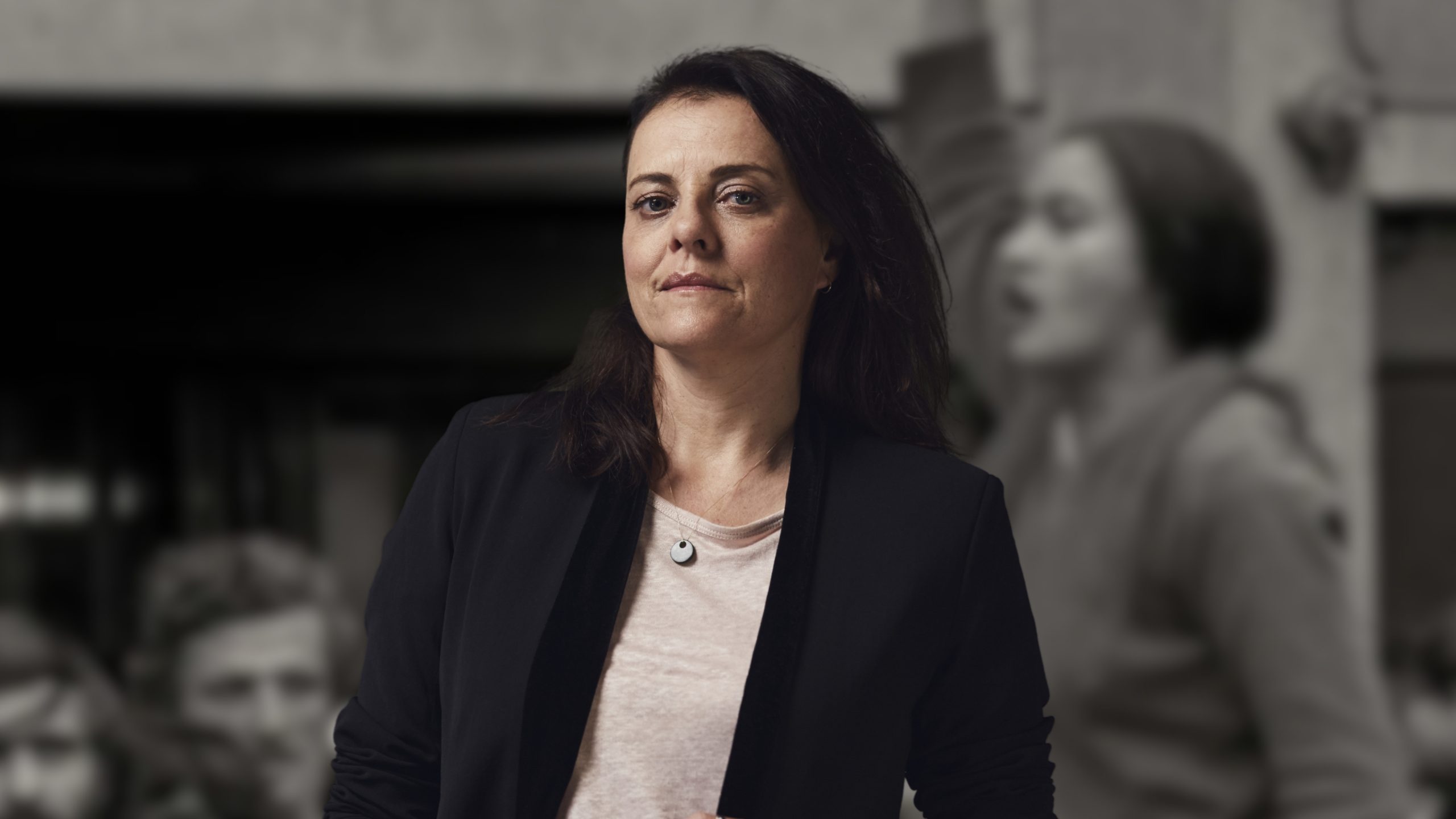
Interview with “The Haka Party Incident” Director, Katie Wolfe


Hosted by
KT & Oti
Show Notes
A three-minute protest staged in 1979 echoes across the decades as a potent indictment of systemic racism and a lens through which to re-examine Aotearoa’s national identity. The Haka Party Incident will be screening at this year’s Sydney Film Festival (SFF) on June 10th & 13th (two screenings).
As suggested by Katie, double feature watching of The Haka Party Incident & Patu!
Episode Details
- Duration
- 0:00
- Released
- June 2, 2025
- Category
- Interview
- Hosts


Transcript
Transcript (2,787 words)
Full transcript of Interview with “The Haka Party Incident” Director, Katie Wolfe.
KT: A three-minute protest staged in 1979 echoes across the decades as a potent indictment of systemic racism and a lens through which to re-examine Aotearoa's national identity. The Haka Party Incident will be screening as a part of the Sydney Film Festival. On the 10th and the 13th of June, two screenings on the 13th of June. Today we have the opportunity to speak to Katie Wolfe, who so many credits, directors probably right at the top of it. Um, Katie, thank you so much for your time and welcome to the For Your Reference podcast.
Katie: Oh, thanks so much. Thanks for, um, talking today. Yeah. We're excited for the film to play in Sydney. It's gonna be great. Yeah.
KT: Before we actually get to the film, while I was doing some research, um, in 2021 with the Auckland Theatre Company, I've actually never heard of Verbatim Theater. It sounds like a very. Interesting. Very cool for the performance as well as the audience. Um, but I guess before we actually get to the film, maybe they are two sides of the same coin, but I would like to hear a little bit about the theater piece, if that's okay?
Katie: Sure. So just for your listeners to understand that the, before there was a film, there was a play that I wrote and it was a piece of verbatim theater, which is. Uh, documentary theater and I'd, I'd only really seen maybe two or three productions of it. So it's when the act is on stage and they're, they're wearing earpieces and they're actually reenacting. Uh, the, the, the real, the, the real participants or speakers on stage, and it's just the most, I found it a very compelling type of theater. I absolutely loved it. And when I was given a chance to, I. I was doing a residency at the Auckland Theatre Company and they said they wanted me to create a new work. I, I thought, no, I'm gonna, I'm gonna create verbatim theater because I just love to give it a go Haka Party was the, the Haka Party Incident was the subject I chose.
Katie: And so that's how the, how the play came about. Part of making verbatim theater is that you actually, if you are interviewing people who, if they, if it is a, a contemporary, the contemporaries are still available to be interviewed. Um, you film them so the actors can actually study their body movements. So I already had all the footage and all the interviews before leading into making the film.
KT: Mm. And in an interview you talked about like time and place is also. Very important for art as well.
Katie: Yes. Right? Yes. Yeah. Yeah. I think I, I think that was very much, God goodness, this piece was made through the pandemic, so especially in New Zealand, we were in a lot of lockdowns in the Auckland, so there was this moment where we were just about to launch the play, and then of course he went into lockdown and then, and then it got delayed for a year. And in that time there was so much development in the piece. So I always wonder, you know, you know that when, when we bring new pieces of work into the world, that all those circumstances around them feed into that. So there's so, yeah, I, I'm very aware that the work is a product of time and place and that it's always, it's always the right time as well.
Katie: Like we, we, we had, sometimes we have very little control over these things.
KT: And yeah, 2020 really put us through it, man. Like we, I know, right, right.
Katie: I know. It was very, and then 21 as well.
KT: Exactly. It was a very calcifying um, time, but I think it was also a time to mobilize. As well. Um, and in regards to the actual documentary, the film, The Haka Party Incident, um, I, I don't think it's a surprise given the nature of your work. You're not, um, you don't necessarily shy away from hard to talk about topics, and it is, uh, it feels like it's very important for you. Um. What was it like making The Haka Party Incident specifically, because New Zealand is very much the benchmark for a lot of countries, but there's also this pendulum, this weird sort of pendulum that's going on, like a push and pull.
KT: Um, is the current sort of climate that Aotearoa is in right now, what was it like, I guess. Making the film or are you not even conscious of what the chatter might be? You're just here to tell that story.
Katie: Look, you're absolutely right. I do really gravitate towards hard stories.
KT: Let's do it. Let's pull up a chat.
Katie: I just thought of, and in this idea, this idea that is a benchmark in terms of our race relations and, but you know, it doesn't mean that we don't have the, the issues there. Um, but we have this thing in our country, which is Te Tiriti o Waitangi, the Treaty of Waitangi, which is this, I guess our benchmark about the striving for partnership between Māori and Pākehā. Mm-hmm. So, and it is incredibly, it is, ugh, God, we, we, we, you got. I have to say that when I started making The Haka Party Incident, which was back in 2017 mm-hmm. And then, and was delayed, that the, the politics have just become more and more interesting in our country. This seems really, really lively. The play for me is, and no, I should say the film for me.
Katie: And the play, of course, was very much about this intersection between Māori and Pākehā, where we actually meet and trying to talk about those issues. Trying to, through my work, allow people to go. Oh yeah, I've, I've wondered about that stuff, but I didn't know how to talk about it and seeing other people talk about it, other people finding language around it, it makes people feel safer to talk about those things, I think. Mm-hmm. Um, so we, I. I guess we are, yeah, we are in right now. There definitely is a, a swing back to much more conservative politics. Mm-hmm. Um, but gosh, there's so much energy around, um, and uh, that I think it's, it's still, it's still really healthy. I'm really surprised as well though, that. Which I'm, when I started making it, you know, it was very much a hidden history.
Katie: There's the other thing that we do have, I think that's, that's very much relevant in Australia as well, that there's histories that just getting talk about it.
KT: Over 60% said no, and I move accordingly.
Katie: Yeah. Right. Yeah. And it's just these things just get pushed aside and gosh, we're really good at forgetting. You know, we, the, I call it this willful forgetting that we just go, I don't wanna know about, I don't wanna know about.
KT: Well Katie, we're gonna start a revolution. 'cause what I'm saying right now is like. Because people don't care until it happens to them. But then it's too late. Yes. And we need to, we need to be angry and we need to channel that anger. I feel like it's very important to not get numb to things. Yeah. But we also need to care more. I think we need to care. Even if it doesn't, I. Affect us. And I think that's part of what we are seeing, you know, in Western countries, but in and as well as, yeah, so-called Australia as well. And this comes to the archival footage, which I guess it makes sense, but I didn't really think about how expensive archival footage might be in,
Katie: don't even talk to me about this. It's so expensive. That was the really, 'cause it was like, especially
KT: 'cause it's so important to have history. As well.
Katie: And it's all owned, like all the, a lot of the New Zealand archive was um, sold to Getty, so you are actually, which is an American company. You're actually, you know, actually licensing off this huge sort of corporation of Gettys, which I always feel whole wrong. You know, that's a whole
KT: documentary. That's another whole
Katie: documentary.
KT: Um, in regards to the archival footage, I wouldn't necessarily say I'm comfortable with it, but we've definitely seen on a global scale instances of very harmful blackface yellow face. Mm. This was actually, and I'm an Australian born Tongan. Mm-hmm. Um, but this is actually the first time I've seen broadcast television. Savage portrayal of Māori people, like obviously in a broader scale of like Native Americans. But this is actually the first time I saw it. And not to say that I'm used to the other, you know, racist depictions, but I was very uncomfortable. I, I guess also because, you know, Aotearoa is that benchmark of like, that's where most of our people are, you know, Māori, like Pacific Islander people and you feel like a sort of. Some vestige of hope. Right? Yeah. And, and there was another archival piece of, I think it was some sort of like discussion forum.
KT: Yes. He had a Alang man and he was like, oh, well you know the, it's not just a problem, you just need to assimilate. Yeah, in Aotearoa, he's saying this, yeah, you just need to assimilate. You need to educate yourself more. If we can invent a time machine so I can go and punch someone like
Katie: you have to go. I know that. I'm sure that that, that from the 1980s, I think he's passed now, so he is okay, but that, but goodness gracious, that guy, you know, sometimes the apple doesn't fall that far from the tree. Yeah. I still do hear those attitudes. Oh, absolutely. It's kind of really paternalistic, these sort of colonial attitudes. That, that we, you know, arrived here and we, you know, we're just going to, you know, we're gonna civilize these people, you know, we're gonna make, you know we are better than them and we're gonna bring them up into the world. That, that, that idea that we were, that. I guess it's, you know, almost, almost Darwinian in, I guess, uh, I guess in that sense that, you know, that, that, you know, the, the settlers here in and that were coming into Australia did have a sense that they were better, that they were, they were a superior type of person.
Katie: Mm-hmm. Um, and I, I do find that attitude. I, I still see it, I still see it today. It's very ingrained. It's wrapped up in
KT: a, in a well-meaning. Sort of package, but the messages of like, oh, you're so well spoken. Like, yeah, you're so articulate. You use three syllable words and it's like our three syllable word. Your forefathers. I didn't necessarily have this, um, question on the cards, but I guess just while we've been chatting. Film festivals are really cool. Um, you know, like my partner is Kenyan, so we're very black and brown. Um, and our podcast is very much centered on our experiences. But film festivals or just film in general is very white, like a lot of audiences, and it's just pretty cool.
KT: Like just they'll go watch any sort of topic and any sort of documentary, I guess. Do you, or is that not even a concern for you in regards to They'll go and watch a documentary, but I guess. Is there any sort of hope you might have that it actually pierces through, even in a small sort of way of like, oh, actually maybe there are some to get a more diverse audience?
Katie: You mean like as a, as a white audience? Do you miss that? What you mean?
KT: It's more like, I feel like a lot of people will go and watch documentaries, they'll watch films or film festivals, but do you have a hope that that might. Plant a seed in some sort.
Katie: Oh yeah, I know what you're saying. Hopefully, although I really hope that back at home there's going, the film is going to be streamed really, really soon. And I know that, and it's also is gonna be playing on Whakaata Māori, which is really, that's really I, where I really wanted to sit. So it's my hope that then I think that's where we, where we reach a wider audience. Mm-hmm. And I know, I'm really aware of that as a filmmaker. You know, like how often, you know, I'm, I go because I love movies, obviously being a Omega, but you know, I often have everything I go to the cinema and like I might be the only person you know in the cinema, you know, like, and you're going, well, you know, this is my industry.
Katie: This is like. Yeah, so we're really aware as filmmakers that yes, you know, cinema's really difficult. Film festivals are fabulous. You know, like we love, you know, love attending film festivals and your work going out into the world and having that cultural exchange. Just before Sydney, I'll be up at imagineNATIVE, in Toronto. Oh, nice. Which is an incredible film festival. Um, but I do hope that when, when The Haka Party gets to go out on those streaming platforms, that that's when it really finds its audience.
KT: Yeah.
Katie: It's really fascinating doing the play. We toured the play nationally, um, and we always sold out. So it was one of these things that even I was, and I was really, you know, I was really intrigued by that, that, you know, 'cause racism, racism is hard to market. You know, like you never sort of put on your poster, come and see this wonderful piece about racism. It's not, it doesn't attract an audience. But with Haka Party, I think there was a, I think there's a lot of word of mouth that involved, that people went along and saw it and they had that experience of going.
Katie: I think I can actually start to contextualize some of the things it's talking about in my life. I think that, you know, I really advise, you know, I, I could recommend it to you. So, yeah, because
KT: it's, I think it's contained as well. It is a microcosm, it's a total microcosm. I think people come in thinking it's this, and then it becomes a broader sort of thought piece, I guess, if you will. Um, and yeah, marketing race. But I think like, uh, you know, unfortunately we don't have the time, but I think this general conversation of like change and, and seeing people for people, is that uncomfortability, right? Yeah. And sometimes people try and shift that, I'm uncomfortable, it's your fault. And it's like, no, actually this is a time for learning. And we, yes, like Tongan, were like with Ani, like, we're gonna come together. What is the name? The word, yeah. Na. Yeah.
KT: Um, but I, I want to thank you so much for your time. You're welcome. All the best for imagineNATIVE, like that's just a, a gorgeous, I can only imagine. We'll be following along your journey, um, and also when you come to the Sydney Film Festival, but I want to thank you so much for your time and wrap up with our final question. We finish our reviews with a recommendation. So what would you pair with The Haka Party Incident? Um, as a double feature. It can be a documentary, it can be a film. It doesn't need to be seen in film festival. It can be anything.
Katie: I would probably put. Incident. My, you know, this, this is my favorite film of all time and I feel very sort of like, um, audacious to suggest it, but I would put it next to Merata Mita, the great Merata Mita. Māori filmmaker, um, uh, and her film Patu!, which is about the Springbok tour, right? Mm-hmm. So, and there's parts of little bit of Patu! that's in The Haka Party Incident, but it's sort of like you could watch The Haka Party Incident straight into Patu! and it's this incredibly sort of amazing rich five years of Aotearoa's history, 78 to about 83 where just so much was going on.
Katie: That would be a great double feature.
KT: I love that it's all tapestry of the resistance. Yes, correct. The power and also the joy.
Katie: Yeah. As well,
KT: Katie, thank you so much for your time.
Katie: Thank you.
Related on FYR
Discussion
Loading comments...