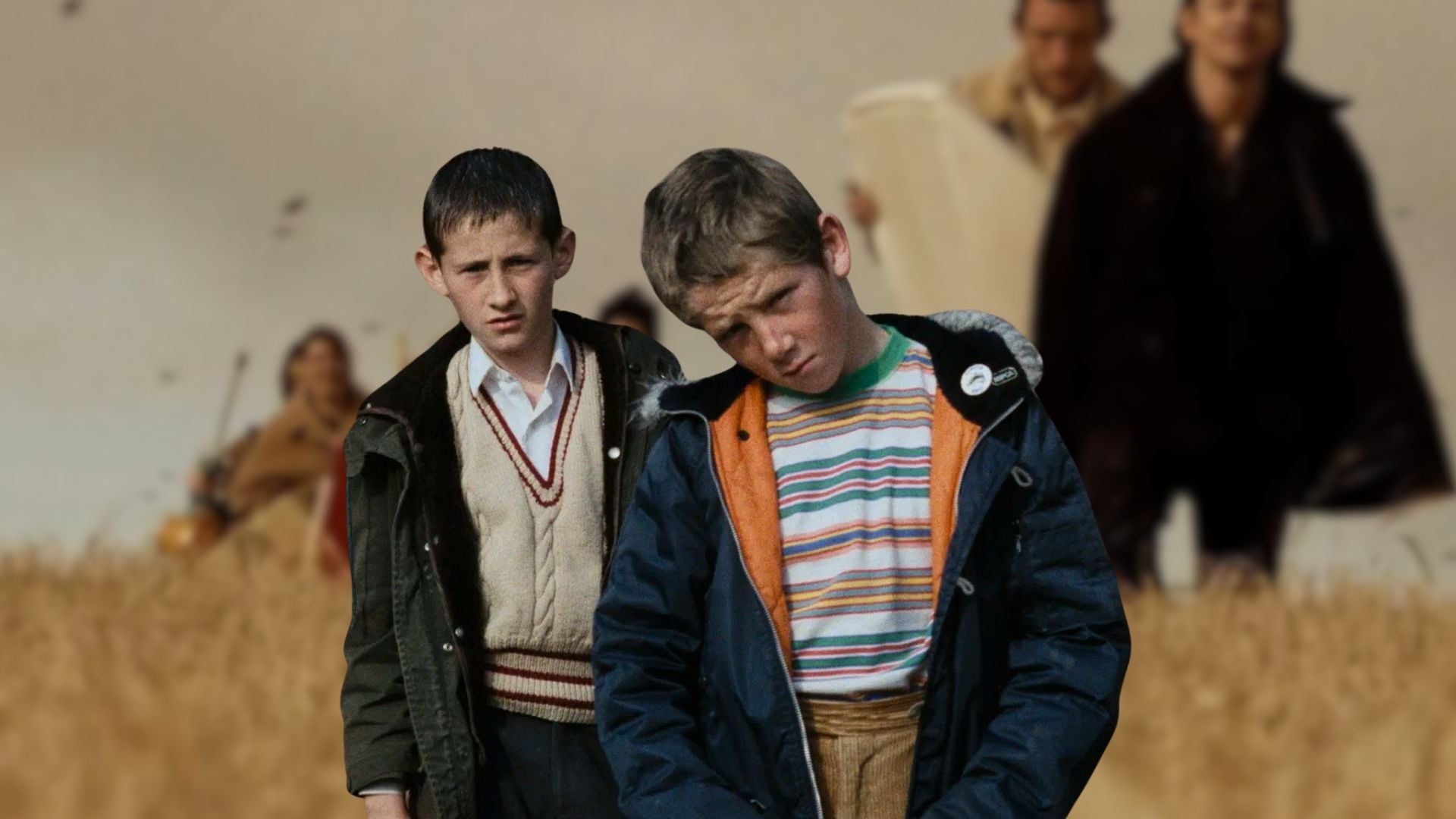
Ratcatcher – What’s New Pussycat?


Hosted by
KT & Oti
Show Notes
Welcome to our Reference Degustation where, every February, we explore common and recurring themes of a writer/director’s filmography. This year we found our way to Scotland with Lynne Ramsay.
Navigate the garbage filled streets to the canal of struggle and friendship? Hop on the bus with Ratcatcher this week.
If you’d like to watch along, we plan on covering the below…
Ratcatcher (1999)
Morvern Callar (2002)
We Need to Talk About Kevin (2011)
You Were Never Really Here (2017)
Die My Love (2025)
Check out more tasty Reference Degustations…
2020 – Hayao Miyazaki
2021 – Taika Waititi
2022 – Quentin Tarantino
2023 – Takashi Miike
2024 – Martin Scorsese
2025 – Spike Lee
Tomato Meter
 KT
"Ramsay focuses her lens on what is not could or should be in Ratcatcher. Context leans on establishing shots which give a lived-in feel. However, with minimal dialogue, it felt more portrait than narrative."
 Oti
"Ratcatcher pairs realism with quiet, lingering emotion. Some moments are unsettling without clear explanation, but its portrait of guilt, innocence, and poverty is deeply affecting."
Episode Details
- Duration
- 0:00
- Released
- February 3, 2026
- Category
- Episode
- Hosts
Transcript
Transcript (7,678 words)
Full transcript of Ratcatcher – What’s New Pussycat?.
KT: It is another week in the For Your Reference household. And whatever the Scottish equivalent sound of a air horn is, maybe it's a garbage truck. Uh, friends and lovers, welcome, welcome, welcome to our 2026. It might be our, our six. Hmm. Actually Reference Degustation. You're welcome to cut this out. Oti, if I don't name them all. We had Miyazaki. Mm. Taika Waititi. Mm-hmm. Quentin Jerome Tarantino. Mm. Takashi Miike. Mm-hmm. Martin Scorsese. Mm-hmm. Spike Lee. And now we have our first
Oti: Scottish Director.
KT: Who's also a,
Oti: you say it.
KT: Oh, it's our first female director, friends and lovers. If you are new to the For Your Reference Podcast, we are not new to female directors, let's just be clear. But this is our, retrospective collection of a director. We've learned that we love writer directors specifically. A foray into recurring themes and motifs of a director's filmography. This year we're going all the way to Scotland. Mm. I know there are different settings and different actors throughout, but we're in Scotland and we are covering Lynne Ramsay. Mm-hmm. Die My Love just came out. It was a busy time. We weren't able to make the media screening, so it will be very exciting to, you know, we, we try for these Degustations to choose directors. Where they have like overlapping interesting sort of interpretations of, you know, similar themes. Yeah. So I'm very excited to get into this. We haven't even watched Marriage Story, but I hope it's more than R-Pattz and, uh, Jennifer Lawrence yelling at each other.
Oti: Mm-hmm.
KT: But we've got, we've got some rough kids along the way. Before we even get to the, how are you feeling before we get into it? My love.
Oti: Good. if you're about to watch anything close to what the Ratcatcher offered. Yeah. Thrilled, pumped.
KT: Yeah, I'm really excited. So get your cloth napkins, friends and lovers. Have a look at the aire. Maybe not too close. Otherwise you might take him home or her. Hmm. Uh, and let's get into our first course of our Reference Degustation for 2026. Mm-hmm. Hey, friends and lovers. Welcome back to the For Your Reference podcast. You got your host. Maybe Braveheart. Maybe one of us may be haggis for the other KT
Oti: and Oti.
KT: Welcome to our Reference Degustation of Lynne Ramsay. A month long celebration of rough, scrappy, familial ties. Navigate the garbage filled streets to the canal of struggle and friendship. Hop on the bus with Ratcatcher this week. Hmm hmm. Hoo. Written, directed. Lynne Ramsay. We've got big bad Tommy Flanagan. Mm. Last time talked about him in Power. William Eadie, Mandy Matthews, Michelle Stewart, Lynne Ramsay Jr. And a whole bunch of cast who, you know, maybe Tommy Flanagan's character took him out because we can't see them on Wikipedia's. how are you feeling? We're get into our. Usual format for full reviews, friends and lovers like we talked about. There are gonna be some general, and recurring themes that we're going to discuss as well, but we're going to get into, at least for now. Non-spoiler, your or your first impressions. My love
Oti: Ratcatcher pairs realism with quiet, lingering emotion. Some moments are unsettling without clear explanation, but its portrait of guilt, innocence, and poverty is deeply affecting.
KT: Now you sound like David Attenborough.
Oti: I needed it.
KT: You sound like you're watching them through, through the grass and the canal with your binoculars.
Oti: Oh, this movie was trip on so many levels.
KT: Ramsay focuses her lens on what is not could or should be in Ratcatcher. Context leans on establishing shots, which give a lived-in feel. However, with minimal dialogue, it felt more portrait than narrative.
Oti: Yeah,
KT: yeah, a
Oti: hundred percent. Yeah.
KT: Yeah. General feelings before we get into the themes. I guess, did you enjoy it?
Oti: I
KT: did. You get it? Do you know what it's like to be poor now? Based on the critic reviews? Do you know what it's like to be poor or is that why you didn't enjoy it? Potentially?
Oti: I had flashbacks.
KT: Are we lad? Yeah. In Glasgow?
Oti: No, it was, well, I think my journey personally, I don't know. Growing up in Kenya and watching this movie now it's stupid. I know. But the base of me felt like, damn, for white people living like this, which is so, so fucking stupid, but just couldn't correlate that with,
KT: they don't all live like friends.
Oti: Clearly not, clearly not. My lens growing up was very skewed. but I, I enjoyed this movie. I think. How throughout the movie I kept on thinking Why Ratcatcher? Because
KT: it like the name of it?
Oti: Yeah. The name of it. Mm. Why, why call this Ratcatcher? So it was always playing in the back of my mind, trying to figure out or trying to see what Lynne was trying to show and, and. It got to scenes where I was like, okay, why? And I couldn't explain. I it like what's the correlation? Uh, but I still enjoyed this. I enjoyed this and I enjoyed sort of the, the how way of telling story.
KT: Hmm.
Oti: And it was sort of different from all the different six, five directors we've covered who are six six who are very narrative heavy
KT: men. Oh, oh yes.
Oti: And that too,
KT: the narrative swinging.
Oti: Yeah. It was sort of refreshing coming to, okay, maybe in this round of getting something different, if this is indeed hostile.
KT: Mm. Because this is so interesting 'cause we're building the stairs as we walk them. Yeah. Which is kind of cool and, and even as you were saying, it is very refreshing to be able to watch a film and it feel like a film. I think there is a very, I wouldn't necessarily say formulaic, but there is a very, an A24 trauma had induced way of telling stories. Mm. That, it's not scrappy anymore. Mm. You know, like as the 4K renders. I don't even know if I said that. I don't even know if that makes sense. Does word wise. Um, but as the 4K renders, so does the. It's not even need to sanitize, it's just this film was fucking scrappy and I really much appreciated that. Mm-hmm. you said you don't see white people, not like you don't see white people being poor. I grew up in Western Sydney. the only difference, like we were, like there were lots of white poor people around me. The only difference is those white poor kids called child services on their parents. Mm-hmm. Everyone else knew not to do that. you would hope they would take you away if you did that and not stay with your family. But, that even I told you, like there was so many scenes in this film where you had the scrappy little kids playing by the canal, playing by where? Where I live by the creek. And it looked like it could have been there. Mm. Like with a random fridge door floating down. Like it's just like, I get it. Like that made complete sense to me. I, it is quite interesting because I do like films to be a narrative, you know? Um, Sorry, Baby, friends and lovers, go and watch Sorry, Baby. I really enjoyed it, but I also. It's not a critique, it's more just my personal experience of the film. It just felt like there wasn't a narrative arc. Mm. And I like for my films to have a narrative arc documentaries. Fine. Right. And I guess we'll start to learn Lynne's sort of seasoning, you know, and, and you know, the way that she curates a dining sort of experience. So it doesn't necessarily have to be dialogue, even though we really love dialogue in the For Your Reference household. But if it's minimal dialogue. Most of what, like the context was conveyed was through establishing shots. I didn't even know what dad did for work. I just know he was slipping and sliding and every last around the corner, even ma knew that, right? Yeah. He was for the streets. Mm-hmm. Flanagan B for the, for the Madigans, you know? I didn't know what he did for work. I, I didn't even know if he worked at the factory. I thought, you know, I was saying to you, oh, by him standing there, it's showing that the canal is polluted by the factory. And you're like, that's not what, and I was like, whatever. Let me, let me, let me do my work. Let me get to work. but maybe it didn't matter. Maybe it was kind of like the Rugrats or like Ren and Stimpy, Cow and Chicken where the adults don't really matter in this film. But if the context doesn't matter, if the commentary doesn't matter. 'cause you could see they were poor. You could see the government, you could see that there were no, no one fucking cared about these people, right? Mm-hmm. I thought the little boys were the rats, but maybe just them living in these dilapidated, The Wire-esque, vacant esque looking apartments, maybe to me, I was like, maybe that's what it is. But that's not what we're getting into. Right.
Oti: Well, I guess when you say no one really cared, that's where. In my sort of lens,
KT: they didn't even care for each other. They were in a community.
Oti: Yeah. But that's where in my lens I was like, oh, if, if we are living in a, in a situation where there's rubbish everywhere and marque or really know this, I didn't know anything about this movie nor the setting that this was set during the bin worker strike.
KT: Yeah.
Oti: So to me it was, this is sort of the norm. Mm. And these is sort of the environment there is. And I was like, okay, cool. Because
KT: that's just where they live.
Oti: Yeah, yeah. And you know, Kenya, there's places where this is the norm.
KT: Yeah.
Oti: So I was like, okay, cool. And that's all I was
KT: like, did it feel like a prominent theme?
Oti: Yeah. It, it
KT: a prominent, setting.
Oti: Yeah. It didn't feel like a disturbance to the, to the, to the,
KT: yeah.
Oti: To the characters because it, it was so comfortable. Yeah. It was so comfortable to them it felt very. Intrinsic to them in a way. So when things, when you say that either the government or whatever didn't care, then I see council worker coming in and checking in. I was like, damn, that would never happen
KT: if, nah, but that's for control. That's not to help them
Oti: control, but
KT: that, that's stinky. Little boy James thought that he was, they were going to move him up. Move him on up.
Oti: Yeah. It might be controlled, but there's levels of separation where. You would never get a council worker going in Kenya, going to check or let me come and check how you are living.
KT: Yes. But if I bring my Western Sydney, Western country lens, I, the way I took it, mm, was council workers coming there to make a report that these people don't know how to look after the fucking animals, essentially. And that's a way to describe, to explain away why they don't get new housing.
Oti: Or I thought it was more, that's the way I took it. I thought it was more these people are either okay enough, they don't really need that new housing that much, or these people are living in such a dilapidated state that they are prioritized to go and move. I took it more as
KT: it's
Oti: not
KT: to help.
Oti: Okay. And that's why maybe you are here to, you know, pull it out because my lens is completely different.
KT: I'm, I'm the poor correspondent.
Oti: Yeah.
KT: Okay. Fair. Um, but I, I guess we will get into the themes, which does touch on, you know, working class and that sort of thing. But I, I guess what I was coming to is it didn't necessarily have a driving force in regards to. Like, say for example, Bong Joon Ho, he's very big on commentary and when he does commentary well via Parasite, via The Host. Hmm. The commentary is what makes it interesting and that's what drives the motivation of the characters, right? Yeah. Park Chan-wook, for example, like No Other Choice is the most recent one. People will very much talk about how prominent capitalism is in No Other Choice. I wouldn't even necessarily say that. even like Decision to Leave, for example. The commentary isn't the center, it's more the characters and the commentary is the context. Ah, so for this, if the commentary wasn't the reason of this film, and we are very much as focused on James, the character work wasn't necessarily layered, so it was more like we were just following him around. But,
Oti: uh, and maybe that's a stylistic thing that's tied to how, but in, yeah,
KT: usually that would annoy me, but it didn't, I, I didn't love the film, but I liked it.
Oti: Yeah,
KT: I didn't hate my time watching it.
Oti: Mm.
KT: I didn't care for the, the nude children scenes, which we'll get to. but yeah, just overall, I, I, I enjoyed the film.
Oti: Before maybe we get into the themes, did you have any thoughts on what Ratcatcher as a title meant in the overall narrative or the overall?
KT: Okay. Producer daddy.
Oti: Yeah.
KT: You notice you've
Oti: been this for a while?
KT: Yeah, yeah, yeah. Capture my rat tail, eh, uh, I. I think they were the rats, and I don't even mean that in a derogatory way. Like I think they were the rats. Like I think it wasn't until like as you see growing up in Western Sydney high school, Western Sydney, then you know, working in the city corporate and then you get to meet people that are probably. Have never have never been on pavement that mismatches the other. Like you get a different understanding of life and the life that you've lived. like say for example, if I am at a restaurant, unless it looks like a pube or something, if there's like a hair in my food. I probably would just depending on what, like, you know, I would probably just pick it out and move on with my day. Mm-hmm. Right. If I'm at home and there's like mold on the bread, I will pick that mold off and I'll keep it moving and I'll eat that bread. If I see a cockroach, it's not great, but I'm not gonna be squealing and asking someone to help me. You know what I mean? Yeah. Like there's, there's a certain level of, not that I would roll my eyes at, people that like. Uh, like, oh, I, there's mold on my bread. I need to move out post-haste. You know, but it's just, people have lived different lives. So when it comes to shit like this, I get it. I understand it, and I do feel like they're the rats.
Oti: Fair enough.
KT: I might be the rat of Western Sydney, who knows? But I, I do feel like they were the rats in some. Sort of, I guess in glorious pastd way, I thought the garbage disposal people were coming around them up.
Oti: Mm.
KT: but no. but I, I, I just saw it that way, like the, it's either you die or you find your way out. They're not gonna help you.
Oti: Yeah. I, I guess I took it pretty much the same way in that I assumed that the process of. Having or calling out Ratcatcher is you, you already messed up the state. It's already dirty. You've been infested. You already messed up.
KT: Mm.
Oti: So James or every other kid in that sort of environment is already messed up. And the way the movie ended sort of showed us there, it sort of a fleeting hope of escaping that.
KT: Mm.
Oti: So them being caught and removed from that situation. Even though the mess is already there, kids been like, one of the things he said is, I hope. James still continued acting and he didn't turn out to be some murderer.
KT: Yeah.
Oti: So that's, that's why I took it.
KT: So, so it wasn't, you are trying to hide the fact that you said you've never seen poor white people because, and you just wanna throw me under the bus. Isn't me talking about eating moldy bread enough? You have to bring back fine. I did. I did. I did say it. Hmm. Um. Okay, well let's, let's get into the themes. This is talking about direction and stylistic choices. It'll be interesting to see how we layer or add and remove as we continue to watch more of Lynne's films. Minimal dialogue.
Oti: Check, check, check. We, we barely get to hear a lot of the different characters say anything. James himself really not that much, but what lacks in dialogue sort of. We get a lot of, in his expressions, in just his interactions with other people and the characters, the environment says a lot. Yeah.
KT: I, I would have like, if, if you are not gonna use cayenne pepper, can you use something else? 'cause then the dish is mis missing some sort of taste. Mm. In that regard, in that flavor profile, so to say, do you, do you like a, A Single Man didn't have a lot of dialogue. Mm. But it was very emotional and impactful. Yeah. This film didn't have a lot of dialogue. I just knew they were in squalid uh, conditions because of the establishing shots. Really. They didn't seem like they wanted to leave this situation, let's just say.
Oti: And that's why I was confused.
KT: They just accepted what was,
Oti: and that's why I was confused with, with how comfortable everyone seemed with environment.
KT: Yeah.
Oti: As opposed to no
KT: one was like, Hey, this is fucked. Right?
Oti: Yeah. Like, brother man, let's, let's
KT: something like we're working for people that are having,
Oti: and that's why in violence, coming from a different sort of society from this was Oh. But the government did this, but then you tell me this is the norm. But no, but
KT: the government was one scene of a
Oti: council. Yeah, that was one scene. But then after the fact of watching the movie where I'm reading this was set during a strike, I'm like, oh, so Manum wasn't living like this. This wasn't the norm.
KT: The level of the housing
Oti: level of the hou fam.
KT: They took the rubbish away and the place looked the same.
Oti: I guess my levels of housing are completely different to the Westernized sort of level of housing. I'll be clean this place up fam. You. You are good. You are good.
KT: That's the mold
Oti: of the bread. Take the rubish shop. Yeah, take the rub. You are good. You are eating sha and bread over here.
KT: Yeah.
Oti: So if, if, if, if, if, if we're talking about that lens and that's why I'm like. It sort of after the fact of watching the movie and what I felt and then learning that everything wasn't the norm and this was just during a period of time where there a temporary strike. So
KT: you're saying they were struggling that hard?
Oti: No. All strikes come to an end fam. This is not the normal, but when it was being displayed, it felt like people were living in Yes, it squalor and everyone was accepting it as the norm. And that's why it's very, very conflicting. Very, very conflicting to me after the fact, not during, while watching it.
KT: But you're saying that wasn't their life? That was just the time.
Oti: Yeah, that was just the time.
KT: Hmm.
Oti: So it, it felt like, but even then it felt like, it felt like, you know how they do this, uh, slum tourism, it felt like slum tourism. That's how I felt after the fact.
KT: I feel like only you would buy a ticket while everyone else is going around the world. You would buy a ticket to Scotland for your slum tourism. I would like, show me they're doing
Oti: that.
KT: Do your little dance and local kids. Gimme your finger paints.
Oti: Oh, let me take a picture.
KT: Look, take with the local poor children. Yeah. Doesn't feel very nice. Does it, friends and lovers
Oti: send it. Just the guardian man after that fucked. Hey,
KT: Oti Attenborough, come here. Excuse, uh, Aquad, uh, near you. yeah, all that from minimal dialogue. There was a lot of dialogue just now. What is showing the environment? I, I feel like I've already, unless you wanna add anything. No.
Oti: Yeah. Very. Yeah. It, it gets mad.
KT: What could be different realities? Spoiler, spoiler, spoiler. This is where we're going to get in spoilers, friends and lovers. You know, researching, leading up to watching this film, there was talks of Lynne's signature being realism and authenticity. Maybe this is because I was a poor baby rat, maybe, but there was some hope in this that felt like, as you would describe, different realities, the what could be. Hmm. That was the end scene for me personally. I don't think that happened.
Oti: I don't think that happened either. And one of the more interesting thing you mentioned before was when you were talking about, uh, A Single Man
KT: Mm.
Oti: Was how they sort of showed the different, they used sort of color to show the different moods and tones or what was happening at the time with this. We didn't really get that. So my, to me, the realism aspect of it, of what I was seeing and what was, you know, reality versus what was expected was sort of different where I was like, oh, this is all happening in real time and this is pretty much is what it is. Up until the last thing, like you said, where I was like, nah, first of all, that boy ain't smiling like that. Nah, this is, this is, this is, this is not
KT: it. He's, he's bashing a rat's head
Oti: in. Yeah. Yeah. And I was like, okay, definitely I need to rethink a little, some of the stuff that I watched and I was like, okay. The last in itself for me was definitely did not happen. They did not move into that house. They did not walk through the field. The wheat field. That wheat field is hope. Is
KT: when you think about it, maybe the yellow and the bright. 'cause it wasn't a black and white film, but it was quite bleak looking. But when you had the bus, the bus was yellowish. Maybe that was the hope because
Oti: escapism. Yeah.
KT: Yeah.
Oti: Bus was yellow.
KT: He got dropped off to nowhere, but he preferred nowhere to where he was.
Oti: Speak on it.
KT: But that wheat, that was the hope for sure.
Oti: Yeah. Yeah.
KT: I don't, you know what? 'cause I don't necessarily care for,like that wish fulfillment, you know? the other day I watched It Was Just an Accident again, as a part of a media screening. It's coming out Australian cinemas and. Hi, Tim. Love you Tim. but we were talking, there was a few of us talking after the film and the question was posed, do you think it's real? Right. Go and watch It Was Just an Accident. I don't wanna spoil too much of it, but do you think it's real? And my point is it doesn't, like the ending scene of It Was Just an Accident. It doesn't matter. It doesn't matter whether the horrors were real. It matters in the film, but also in life in what you can live with. Mm. What do you decide? 'cause even if you're not dealing with it, your body will. Your mind will. Your soul will, right? Yeah. That's when that shit doesn't matter. And that's, that, that is a motif that I love. I don't necessarily care for these wish fulfillments, I wouldn't call It Was Just an Accident. I'm, I'm making a distinction, is what I'm saying. Friends and lovers. Now that I think about it, I am getting a bit annoyed because it feels like levity. It feels like, whether it's Lynne, whether it's how she perceives the audience, or whether the love she has for the characters. We need you to feel good in this moment, and we need you to feel like this family got up out of there.
Oti: Oh, I took it as the only way to escape this place, and for only, the only way for James to be truly happy with everything he's experienced so far was him drowning in that canal and dreaming of a better, of a better future for him. That was, that was his
KT: happy ending.
Oti: Really.
KT: Yeah.
Oti: That was his happy ending.
KT: Because that guilt.
Oti: Yeah,
KT: but that's what I'm saying. I, I don't like it. I don't like, like, it doesn't make me hate the film, but it's like, let the audience sit in shit that's uncomfortable. They've been living in shit that's uncomfortable. Well,
Oti: she, to, to be, to be fair, she gave us a lot of uncomfortable moments. So,
KT: but you know what I mean? Like, mm. I don't.
Oti: Mm.
KT: I don't feel better at the end of the film that there's a scene like that. I'm just like, ugh.
Oti: Yeah.
KT: Take the guardrails off. Yeah. I guess is what I'm saying. Um, next theme. Violence is mostly shown offscreen.
Oti: Oh yeah. A hundred percent. Um, those,
KT: I like that. I appreciate that. I feel like a lot of women do that. I appreciate that.
Oti: Yeah. Even from just George, even getting stabbed, we didn't get to see it. You know, those
KT: could have seen, it
Oti: was the only thing that we saw violent was, George slapping Anne.
KT: Yeah.
Oti: I think that was the only moment of violence. We actually saw everything.
KT: It, it didn't linger on it, but we did see him connect hand to face.
Oti: Yeah.
KT: That's why I'm saying I could have seen him get stabbed. Well,
Oti: yeah. From rat killing to. Uh, what was, uh, Margaret going through? Yeah. All the sort of traumatic stuff. It was all offscreen,
KT: but I appreciate that because it needs to be talked about, but it doesn't need to be gratuitous.
Oti: Yeah.
KT: She said, I May Destroy You. You know, we've talked about this, friends and lovers in the depiction of the themes without i, I guess the safety and then not feeling exploited.
Oti: Mm-hmm.
KT: Slow motion.
Oti: Are the start, I guess I'll the start with Ryan playing. I thought. I thought HBO was, was, was stuttering.
KT: Yeah.
Oti: Or we playing a wrong
KT: thing. The mergers. The mergers emerging. Yeah.
Oti: Because it was so awkwardly done as well. It didn't feel quite natural.
KT: Yeah.
Oti: Um,
KT: but it did feel like I'm making a film, I want
Oti: Yeah. Setting the tone.
KT: Mm-hmm. Music.
Oti: Yeah. Quite a lot. I didn't know children were such fans of, um,
KT: Tom Jones.
Oti: Yeah.
KT: I did not know Tom Jones was a Pied Piper. I thought, I thought he was just there for the mothers of the family. Me too.
Oti: Even from back then, I just thought
KT: I didn't even, like I know, I know it's Pussycat, but I didn't know that was supposed to be a sexy song.
Oti: Yeah.
KT: I didn't know
Oti: why would a grown man be singing Pussycat? That's not,
KT: no, but it was, it never felt sexy to me.
Oti: Oh wow.
KT: I know you thought he was a brother before you saw a younger
Oti: picture of you. I, I thought, I thought he was, I thought he was.
KT: yeah. Tom Jones. Interesting themes, children slash youth slash loss of innocence. I'm just going to say right now I was not comfortable with the nudity of the children in this movie. there's an IMDB quote that I can pull up right now. 'cause you know, this film's been out for a while. When the movie was released, director Lynne Ramsay defended the nude bathing scene between the characters of James and Margaret Ann from accusations by Scottish tabloids. Well, that the film contains underage sex. The scenes very innocent, actually said, Ramsay, maybe there's an element that's latently sexual. I don't know what latently sexual means in this context. Very like maybe there on the cusp. Mm. Really it's two kids having a laugh in the bath. When you're a kid, you do things that are pretty risque. The kind of things that no one will admit to their mothers and fathers, but we all did. I was very lucky to get that scene, but it was the toughest I've ever shot.
Oti: Ah, yeah.
KT: I just wanna say I don't feel comfortable with it. I, I don't know, and I don't care if that makes me a prude, because that just makes you a pervert. If you think it's, if,
Oti: if you think it's sexual, if you think there's any sexual in way that,
KT: no, no, I just. Don't like whether it's sexual or not, I don't need to see, especially 'cause she was like an A or B Cup in that bathtub scene and you saw her whole pubic region. I don't even knowing a, a woman directed it, I don't feel comfortable about it. That's not to say little kids aren't exploring and it's not natural and, and like, I'm not saying it's like everything is terrible, but I personally. Don't feel comfortable and I don't wanna see naked kids.
Oti: I guess to me it felt weird because of the age difference I, I felt, but
KT: that's what I'm saying.
Oti: I felt Margaret was a bit older than James.
KT: Yeah. She seemed older
Oti: because Margaret felt preteen.
KT: Yeah.
Oti: James was,
KT: his balls were still in his navel.
Oti: Yeah.
KT: Yeah.
Oti: It just felt weird to me. I was like, I don't know what that scene is for. Regardless of what you thought that what kids did. Probably a lot of our different childhoods. Sure. But it was not with a grownup. It was not with someone three, four years older than you.
KT: Yeah. Especially leading up to that scene. Margaret Ann was being passed around as well, so it kind of felt like she was gonna be predatory towards. James, like a cycle sort of thing. '
Oti: cause Margaret's neighbor said the same thing. They kept on getting younger as well, hinting at, you know what I mean? A repeated pattern. So for you to come and say, oh, this are just things that kids are doing like that. It wasn't because you yourself, like she just seemed like a
KT: madam.
Oti: Yeah. Yeah.
KT: Because
Oti: you yourself were said that it showed that in the movie that it wasn't just a normal thing
KT: because I, there was also a Reddit thread. And Europeans were like, no, this is fine. And they're like, Americans are prudes. Like, I don't know, like personally, I don't know, but one of my favorite comments on this Reddit thread, there's like dozens of naked preschoolers in Porco
Oti: bloody hell.
KT: I just. Given the context leading up to that bathroom bathtub scene, I don't like, I guess you could say it's innocent because, you know, like kids, you went to a boarding school, so I'm sure it's not out of the realm that, you know, young kids exploring themselves. But I wouldn't, I, I just don't think I need to see it. I don't walk into a a, a museum and see naked kids and be like, oh, this is art. Yeah, no. I would call security. I'll call security on the person that's standing there for too long.
Oti: I guess this scene doesn't get shot today.
KT: I don't think it's depraved. I don't think it's, like sexual, but I also don't think it's necessary.
Oti: It's not because what's, and that was in my quote, what was the motive? What was, what was it? Important for that scene. That couldn't have been like also changing in that scene that like anchored the movie to that specific point that was in a shadow without doubt, very important to the success of her storytelling. Of her messaging of this,
KT: and I feel like a lot of this film is through the lens of James. I don't think, her being a woman that it has anything to do with Margaret Ann. I think it's more James gets a moment of fantasy. He gets a moment of play. He gets a moment away from his harsh reality. I think we're both evaluating that maybe our childhoods were more difficult. We didn't get to see boobs, you know, as a reprieve from our hardships like we, in this film. But yeah, I dunno, like, I, I don't know.
Oti: A lot of people play doctor, uh, or house or whatever, but damn man, I don't know. It, it just felt it was very uncomfortable.
KT: Yeah. But this felt like the doctor in that gymnastics documentary.
Oti: Yeah, it did.
KT: It did. You know what I mean?
Oti: It did. I did.
KT: Um, but yeah, I think what I would also say to that, and maybe this is more, this more denotes to my childhood. It's weird to be so forthright and so ready to be, I don't mean explicit in a bad way, but it's just you are not, you're not hiding parts of that particular theme of childlike wonder and innocence. We only saw one instance of physical violence. Hmm. In the family unit. That feels very not real to me.
Oti: Yeah.
KT: The kids are acting like they've never been hit before, but statistically, you know, if DA has a bad day, I'm pretty sure it's gonna come home and smack around the kids.
Oti: Yeah. There's a level of, I don't know if I'd associated with poverty, but there's a level of
KT: I would, I, I'm just saying I would,
Oti: there's a level of. Behavior you'd expect from certain kids.
KT: Mm.
Oti: And all the Giuseppe kids weren't moving as if they were poor
KT: Gillespie.
Oti: Yeah. What did I
KT: say in Italy?
Oti: It's the same thing to me.
KT: We'll do poor Italians next year,
Oti: but you know what I mean? Yeah. Like it just felt like, and that's why everything felt like it was just
KT: because how are small kids smacking and beating each other up, but your parents' like, that's so
Oti: Yeah, and that's why me, me, me coming out and reading that, oh, it was set in a bin strike. I was like, of course. Don't show me those structures and say that they're dilapidated in any way. You're just not keeping your house clean. But if, if the government was like, oh, we'll pay the bin workers this, they'll clean the streets. You
KT: sounded like a slum lord though.
Oti: No. Like I'm rock bro. Top
KT: dollar for these apartments.
Oti: I, growing up, I lived in a worse place than that and I was like, what are you talking?
KT: Yeah.
Oti: What are we talking here?
KT: Well, I just talked about being cool with cockroaches and mold, so I think
Oti: bam. No, I was like, come on now. Come on.
KT: Maybe they did live in a better place than the both of us. Maybe. Maybe. Maybe. Poor is different.
Oti: I told you it. It was. It was poverty, tourism, trying. Pretend to say, Ooh, look at us, but now fa, three weeks from now, places cleaned up. Rats are gone. You're living life.
KT: But then you could also just like pick you blind as yourself. People think you're rich anyway. Get yourself a waistcoat.
Oti: Yeah,
KT: you'll be fine.
Oti: Yeah, right? Yeah.
KT: Like this world was made for you.
Oti: Yeah. But, but, but then again, the setting is, you know,
KT: nah, I don't did that.
Oti: No. I'm just gonna say, yeah. What poverty is a thing.
KT: All poverty matters. All poverty tatters. Yeah.
Oti: There's different levels, but I guess, you know,
KT: I think we're saying, we'll take white poverty any day.
Oti: Fab.
KT: Yeah.
Oti: You'll get the community. If it was a strike, you'd get the community picking up those bins and putting in a place until government fix
KT: it up. What can I just say? They're trying to make it, not trying, but in the film you can see they're poor. They're trying to tell the audience at their port, but they didn't wanna leave. They seemed pretty fine
Oti: because it was temporary. The SQU was temporary. I wish I didn't see it was, it was set because of a fucking strike. I, I, I'll just take the movie at its
KT: water. They didn't even need it. It didn't add anything. It removed.
Oti: That was, you shouldn't have said that.
KT: Just stop cosplaying our experiences
Oti: bra. Nah, but seriously though. Ah, nah, no. Let, let's just leave it at that.
KT: We just so fucked up. Um, family. I think we've covered family.
Oti: Yeah.
KT: I don't think you know what, because we're eventually going to get to Die My Love. And as far as I understand that is R-Pattz. It's Jennifer Lawrence, and I'm pretty sure maybe she loses a baby. Mm. But my point is that's gonna be more mature themes focused on adults. Yeah. I don't think Lynne could or even wanted to explore a family dynamic. Like, Everybody Hates Chris. Yeah. Like, uh, what was that new with Dulé Hill? It was like a, a remake where the son goes to Vietnam.
Oti: Uh, Wonder Years.
KT: Yes. Like, I don't think there was any interrogation of the family. Unit, maybe that's just not a thing. But it's interesting that a lot of the film is surrounding a family and you don't even know the inner workings of the family.
Oti: Yeah, I, I guess the most,
KT: because that slap came outta nowhere. He didn't seem like a violent man. He just seemed like he was dipping for the communities.
Oti: I, I guess in relation to family was, well, at least when it came to James' perspective. That was the sort of the source of tension and silence. Mm. Because he, in as much as he was, he's a silent man. He's a silent boy. Man was a church mouse in the family home.
KT: Yeah.
Oti: Everywhere he was around the family. It was just, you could feel the tension. There was silence and just, I'm here, I'm observing. I'm smiling a little bit. I'm chuckling, I'm out.
KT: Mm
Oti: mm
KT: Okay. Working class. We've talked about white poverty, uh, trauma. Is this white trauma or just trauma?
Oti: This is trauma. Trauma,
KT: okay. Not Whole Foods trauma. Mm.
Oti: It's definitely mad. Like,
KT: uh, but that was self-inflicted. If we can be very real and just focus on the film, a lot of James' trauma was self-inflicted and he didn't let a kid die so
Oti: fucking Well, he, he's a kid again, you know. Yeah,
KT: think, but you know when you're about to kill someone,
Oti: no, he, he thought, oh, drowning go playing. Because he turned around and wondering,
KT: nah, nah, nah, this Old Testament rules, bro.
Oti: No. He turned around, looked back, and was like, oh shit, why is Ryan not coming out?
KT: And then
Oti: man, then realizing shit's gone South was like, then you know your kid, you run away hoping. It's a dream. Something you just like, ah, you even saw the mom when the rent collector was coming up. He was like, eh, covering the ears.
KT: Okay.
Oti: See no evil. Hear no evil,
KT: okay?
Oti: Run from evil.
KT: Okay? I, I don't agree. I, I, you need
Oti: to give a kid a bit more grace in that.
KT: So trauma he can have, but not poverty.
Oti: It can be poor. Like there's poverty. Like you can tell that they've not paid rent for a while, so there's Yeah, but they
KT: still have a house to live in.
Oti: Yeah. Yeah.
KT: Death and grief, I don't think, because to me, I death, yes, but grief is a very present. Uh, experience. I wouldn't even say it's a mature thing 'cause a lot of us experience grief very young. But I don't feel, again, I'm not calling this film shallow, but it doesn't necessarily give us more layer 'cause we're following him around not living in his experience. Does that make sense?
Oti: Death was more a lingering presence than a plot even where, where. Ryan dies. It stays with James. This whole time. We see it affects him somehow where he like tries to probably just forget.
KT: Mm-hmm.
Oti: And just continue on with his life as if everything's normal. Up until when. What was his name? James? Kenny.
KT: Kenny.
Oti: Kenny comes out and says,
KT: Kenny's a psycho too though.
Oti: Kenny's a psycho. All those kids are psychos. Kenny comes up and says, I saw what you did.
KT: Yeah.
Oti: You think you're going to be, you know, you're gotta forget everything happened. 'cause Mando seemed as if he was living his life as if everything's passed. He could see some semblance of him trying to, you know, remember every time he's at the canal.
KT: Mm.
Oti: But
KT: ha ha ha ha.
Oti: Kenny will be a constant rem reminder that no fa Yeah. This is not just something you did and got away with it. Yeah. I am here. I know. How does that relationship work when they're older?
KT: Yeah.
Oti: How do, like to me, James,
KT: I think it's scary to think about how they grow up.
Oti: Yeah. It is. It, it is. That's where we get into a horror territory.
KT: Yeah. Scottish horror story. Guilt. We've talked about guilt, casting and characters. I wrote, I don't know how applicable this will be for the rest of the films.
Oti: Mm-hmm.
KT: Curiosity and not morality. And I guess this comes to like the nudity of the children.
Oti: Mm.
KT: It's not necessarily what the morality is around the circumstances. It's more about the curiosity city.
Oti: Yeah. And I guess there's a lot of curiosity when it comes to James and how he's navigating life. 'cause he is learning a lot of different things from the older boys as well.
KT: Mm. He
Oti: is observing. He is soaking everything in, you know,
KT: disgusting.
Oti: Yeah. Even just from how the dad behaves with the rest of the kids, he's super affectionate to the girls. He doesn't even dap him when he is like, you know,
KT: oh, actually I didn't even,
Oti: yeah. And he's there observing and just looking and they, they, they stare at each other. They're looking at each other, and it's just like a lot of people have that relationship with their dads where there wasn't, the affection wasn't there. Mm. It was more, oh, James, come here and watch football with me. No, I'm not interested in football, but I'll buy you cleats the next day and throw them in your face and be like, now you're gonna play soccer. No,
KT: I thought it was gonna be like, don't slap my mama. But no, he didn't.
Oti: But that was his form of sort of going against the dad as well,
KT: I guess.
Oti: But then this is where you're like, you throw your shoes at your dad, you know, you're not going to, you're not leaving that house. But that's why James and how he navigated life and that relationship with the dad sort of felt strange. Well, it's, you could tell there's, there's fear.
KT: He didn't seem scary though.
Oti: He seemed like those semblance of, I don't wanna cross this man. But why? Even if it's violence of scream, he
KT: didn't seem like, say for example, Furious.
Oti: Mm.
KT: From Boyz n the Hood. He was scary.
Oti: Mm.
KT: I don't, I don't see Tommy Flanagan. That's scary.
Oti: Oh. But to a boy.
KT: But he wasn't like he was of openly affectionate to the mom. That's talking a lot of shit saying you're one in a million or whatever. But there was tender moments, I guess is what I'm saying. So maybe that's why I'm saying that.
Oti: Well, I guess the tender moments were missing James. James wasn't getting any of those tender moments.
KT: Mm-hmm.
Oti: All of them were going to either Ann or Ellen.
KT: Mm-hmm. Mm. Okay. last one, because I, I assume we're going to see it throughout the other films. Rough scrappy characters. Kids swearing will always be funny. I think I, I think, not that I would have a running list of ranking swearing kids, but Scottish kids swearing. That was very fun to hear.
Oti: Yeah.
KT: You are fucking bastard.
Oti: I guess one of the things you said while we started watching the movie is it felt like they got these kids from the streets and just told them to read some lines, but
KT: that's a compliment.
Oti: It is. It is.
KT: If you want kids to be kids, you don't need them acting in commercials from two,
Oti: but yeah, some very scrappy characters for sure.
KT: Not as scrappy as the preschoolers in Porco Rosso.
Oti: Yeah. I dunno why we go to MDP Man.
KT: No, that was Reddit. Gather multiple sources. Oti. Uh. Hoo. Thank you friends and lovers for joining us another week in the For Your Reference household. Uh, this is a set menu, so all the recommendations will be a part of the course, on Twitter and Instagram. We're @ForYourRefPod.
Oti: Write us an email, hello@fyrpodcast.com.
KT: We're also on, we Are The World.
Oti: Yeah. Start better going to those, um, get, get twos and get some your slum tourism ticket.
KT: Why poverty?
Oti: Why poverty
KT: man, there are thoughts, but maybe friends and lovers, keep those thoughts to yourself because I, I enjoyed our chat.
Oti: Yeah. Yeah.
KT: And if you can save a white baby today
Oti: mm-hmm. See ya.
Related on FYR
Discussion
Loading comments...