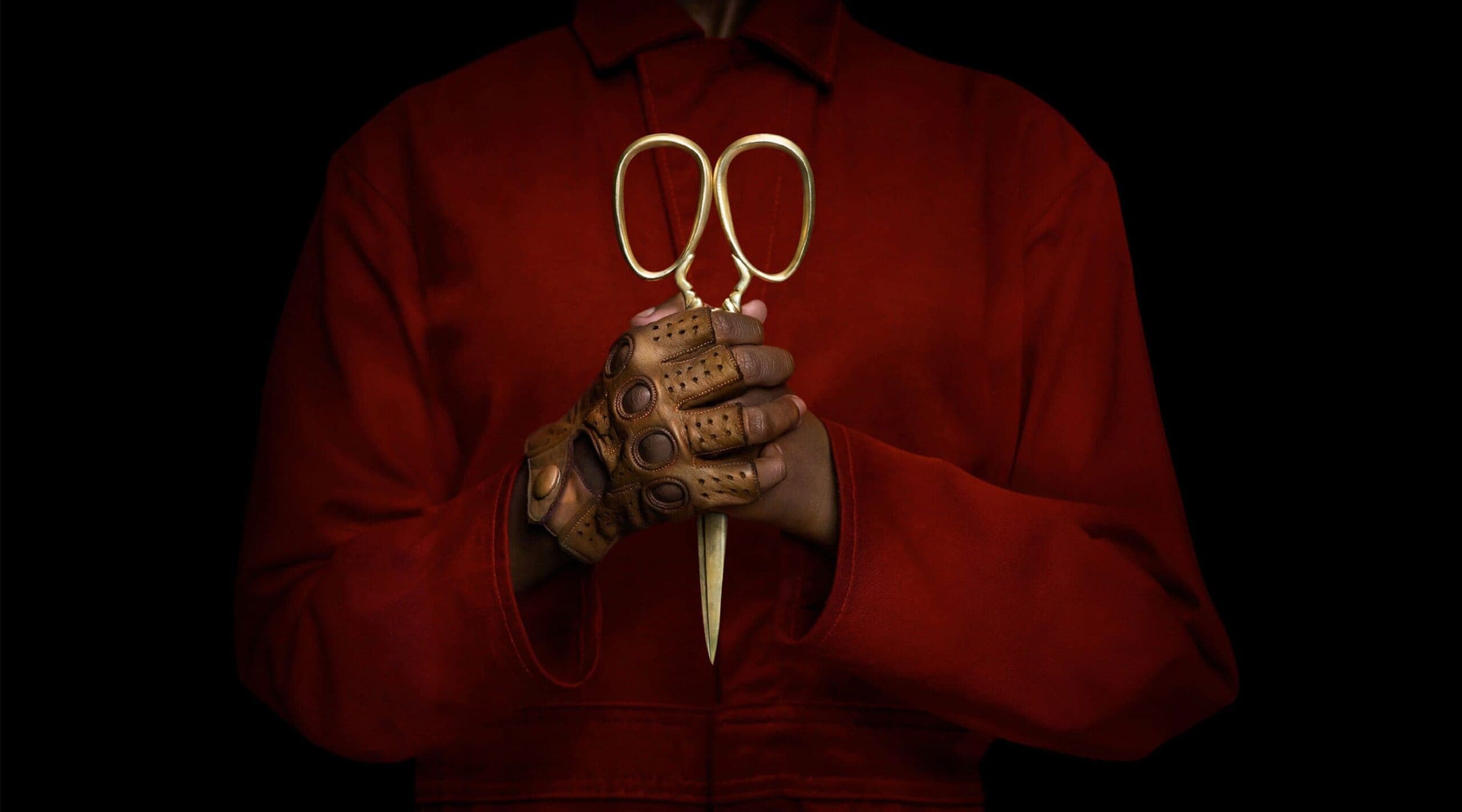
Us – Souls of a tether, undock together


Hosted by
KT & Oti
Show Notes
We discuss the highly anticipated movie Us from the mind of Jordan Peele. Join us this week as we share our honest thoughts and opinions about this movie that also create a broader dialogue of what makes a good story. Can a movie stand with cracks in the foundational narrative? What were the rules and logic for the world with the tethers? Share your thoughts with us.
Stats
Released: March 2019
Budget: $20,000,000
Opening Weekend: $71,100,000
Breakdown and Analysis
Core Narrative
So many foundational questions were not answered it made it hard to enjoy the movie.
If you’re going to bring your world to the table, make sure it’s fully cooked. If you create a world, you still need to live within the rules and the logic that was set up.
There is nothing wrong with leaving things open to interpretation however we should be given the resources to base this. Not stretch as far as theorising missing core parts of the narrative.
They introduced symbolism including, how it is intrinsic, or about povery or about United States. Example of an overarching narrative that introducing clear themes but leaves open to interpretation for the audience is Childish Gambino’s (Donald Glover) This is America, which is featured on this soundtrack.
Good storytelling takes us on the journey and have our investment before emotional moments. How could we care for her character when we really don’t know her? There were deeply resonating moments where Adelaide felt so much pain but we didn’t have the context to relate to her. From a technical acting point of view, Lupita excelled as well as the child actors.
Not allowing the movie to build up to this level of intense emotion was a disservice. If they had fleshed it out and made it more cohesive that she was suffering, we would know we should be feeling something but you are giving this scene for free. You need to earn my emotions, earn my tears.
Why was this happening? Where did it come from? Unanswered questions murkied the waters between what we were watching. The movie Purge beautifully set what the rules were for that world.
What makes a good story?
The secondary elements were essentially without fault, however the overarching narrative was not cohesive.
We’re all for rewatching movies but by end of the first viewing we need to understand it. Re-watching is a reward to peel back more layers. Like in Get Out, understanding Deer themes in the movie but maybe not understanding the symbolic significance.
Adding horror elements compromised the cohesiveness of the movie. It was cool to have classic horror tropes and other such references but this does not constitute a good movie.
The twist of Adelaide being switched wasn’t enough of a pay off because there were still foundational questions that were not being answered.
The pay-off shouldn’t be because you without parts of the story. It should have been there the whole time and it becomes an awakening moment. Mystery is because parts of the story is withheld.
General Notes
We know Jordan Peele is an amazing storyteller as seen in Get Out and also Key & Peele Make-a-Wish (S04E06). He knows light and shade, understands tonality and is able to convey feeling.
We wanted Us to be the sort of movie people talk about The Shining about. Everyone knows it’s a good movie but you still want to shout it from the rooftops.
This movie would have been much more interesting from the perspective of Red and underground.
Lupita’s scene will be used to exemplify her ability to convey and draw people in. Draw parallel with Daniel Kaluuya, but this didn’t happen until two thirds of the movie and we were given time to understand his character.
Both Lupita Nyong’o and Toni Collette (Hereditary) gave outstanding performances but the difference was Toni was propped up by the strength of Hereditary’s narrative.
Actors give as much as they can within the vessel they are provided.
Further tether questions
The whole story of the tethered was so fascinating and a deeper dive into this world would have better framed our understanding. Especially as it was the driving force of the movie.
- How are they tethered and how do they become untethered?
- When do they start being independent of the original?
- How do they know to stand in a line and build that wall?
- How do they know to attack others they aren’t tethered to? If they were revolting against their ‘originals’ how did they start killing others?
- How did Red orchestrate communicating to these beings?
- Red was bound to follow Adelaide’s actions. Where does the disconnect happen in the tethering? How can they be fighting each other if they move in the same way?
For Your Reference
Our suggestions on what you should watch in supplement of this movie!
Oti’s picks
KT’s picks
Referenced

KT's Picks
Referenced in this episode

Hereditary
"When Ellen, the matriarch of the Graham family, passes away, her daughter's family begins to unravel cryptic and increasingly terrifying secrets about their ancestry. The more they discover, the more they find themselves trying to outrun the sinister fate they seem to have inherited. Making his feature debut, writer-director Ari Aster unleashes a nightmare vision of a domestic breakdown that exhibits the craft and precision of a nascent auteur, transforming a familial tragedy into something ominous and deeply disquieting, and pushing the horror movie into chilling new terrain with its shattering portrait of heritage gone to hell."

Candyman
"In present day, many years after the last of the Cabrini towers were torn down, Anthony and his partner move into a loft in the now gentrified Cabrini. A chance encounter with an old-timer exposes Anthony to the true story behind Candyman. Anxious to use these macabre details in his studio as fresh grist for paintings, he unknowingly opens a door to a complex past that unravels his own sanity and unleashes a terrifying wave of violence."

Oti's Picks
Referenced in this episode

The Book of Eli
"In a violent post-apocalyptic society, a drifter, Eli (Denzel Washington), has been wandering westward across North America for the last thirty years. He finds solace in a unique book which he carries on his person and guards closely, while surviving by hunting small animals and seeking goods in destroyed houses and vehicles to trade in villages for water and supplies. When he reaches a village ruled by the powerful mobster, Carnegie (Gary Oldman), the man views Eli's impressive fighting skills and offers Eli a place within his gang. Carnegie presses his blind lover Claudia (Jennifer Beals) to send her daughter, Solara (Mila Kunis), to at least convince Eli to spend the night by sleeping with him. However, Eli proves to be the better man when he gently declines her advances. The girl sees Eli's book, and when Carnegie finds out he beats her mother until she reveals what she saw. Carnegie sends his gang into the wasteland to take the book from Eli, but the man proves to be a formidable foe as he makes it more than clear that if they want the book, they must first take his life."

Orphan Black
"SPOILER: Orphan Black follows outsider, orphan and street-wise chameleon Sarah. After witnessing a woman's suicide, Sarah assumes the stranger's identity - who happens to look just like her. Expecting to solve all her problems by cleaning out the dead woman's savings, Sarah is instead thrust headlong into a kaleidoscopic mystery as she realizes the dizzying truth - she and the dead woman are clones. As Sarah searches for answers, she discovers the chilling fact that there are more people like her out there - genetically identical individuals who were planted in unsuspecting birth parents and nurtured in completely different circumstances. With no idea who created the clones, she'll need to discover the reason in a hurry as an assassin is killing them one by one."
Episode Details
- Duration
- 0:00
- Released
- April 2, 2019
- Category
- Episode
- Hosts
Transcript
Transcript (10,035 words)
Full transcript of Us – Souls of a tether, undock together.
KT: Hey, guess what? We've got another your phrase or mine, and Oti is our enthusiastic contestant today.
Oti: Tell me what you've got.
KT: Alright. I have got an English proverb, and it says, a cat may look at a king.
Oti: What?
KT: Well, it's English. So
Oti: A cat might look at the king.
KT: Your first guess is your official answer.
Oti: Royalty can spot each other?
KT: No. The Egyptians might have worshiped cats, but that's not the answer.
Oti: Oh, what's the answer?
KT: An inferior isn't completely restricted in what they may do in the presence of a superior.
Oti: That doesn't make sense.
KT: That's because that's because you're in the presence of me, the superior. So that means I get to choose next week's episode. Let's get on with the show. Hi, and welcome to another episode of For Your Reference podcast. Today, we'll be covering Us, the long awaited, much anticipated movie from the mind grapes of Jordan Peele. He partnered together with Blumhouse. So the budget was upped from Get Out $20,000,000 in the opening weekend. It exceeded all expectation. It was on track to have about 35,000,000,
KT: and it essentially doubled that.
Oti: Wow.
KT: It's amazing. As far as IMDb tells me, it is the most that an original horror movie has had in the opening weekend. Yeah. Granted, we're not expecting blockbuster horror movies to be out there, you know. Yeah. Well, it's it's not the most easily consumable sort of movie like Avengers, for example. True. But sometimes people just don't wanna be scared out of their willies. So it it was a lot. It first featured in South by Southwest, but it was officially for release in America on March 22,
KT: and it just came out in Australia just this past week. Yeah.
Oti: And we went to watch it yesterday.
KT: Yesterday. So it's still fresh. It's still fresh in the memory. Yeah. So the cast that we have, arguably, the protagonist is Lupita Nyong'o's character,
Oti: Adelaide. Adelaide.
KT: And then we've also got Winston Duke as the loving, devoted husband, Gabe. And then you've also got the children
Oti: Zora and Jason.
KT: Yes. And a whole slew of characters. Elisabeth Moss is also in this as well. Took some time out of Handmaid's Tale to do another horrifying role. And a whole slew of other characters as well. I think a lot of people trusted in Jordan Peele because of Get Out. So on the back of that and all of the accolades, Get Out deserved. Check out our episode that we did a couple of weeks weeks ago of Get Out. But, you know, he he's got the clout. And,
KT: you know, even in his interviews on the success of Get Out, Jordan Peele was saying, you know, I'm just glad that I can just make movies now. You know, having to sell Get Out was a risky thing to do, especially in the climate in America. So the fact that Get Out was so successful, he was able to make this movie. And, evidently, with the boss box office sales, people trusted in Jordan Peele. So, you know, everybody had a lot of anticipation. What's it gonna be about? It was made very clear through interviews.
KT: This wasn't just going to be a story about a black family just because they're black. There's actually a message behind it. They just happen to be black. So, you know, we tried we definitely successfully avoided any sort of spoilers, but it was not easy. Wanting to learn about this movie and not trip into spoiler town was very hard. But it was good. We got there, especially because we had to wait a week in Australia. So trying to navigate that was quite hard.
KT: As with every episode we have, we are going to delve into spoilers. So get out, if you'll pardon the pun, and watch the movie, and then come back, and we'll have a nice little chat together.
Oti: Yeah. So what did the movie make you feel? Not even before that. Yep. I know there was a lot of hype. Mhmm. When Deservedly so.
KT: Deservedly so.
Oti: But that can become a double edged sword as well. True. There was a lot of hype on how Us will be received and how Us would do. Mhmm. And after the opening weekend in America and with all the hype that it just generated afterwards and breaking all sorts of records Yeah. I was really eager to get to Thursday so we can go watch it. Yeah. And trying to
Oti: a lot of things went through my mind on how Us would be like. Because I saw the trailer, we've had Jordan Peele talk about it, and there's a lot of information out there for us to consume on how Us would have double meanings or it will be open for interpretation to a lot of people and it'll give you an array of options to what you'd want to go with. Yeah, exactly. So I was really excited to go and see this and to experience this for myself. And making my way there to the theater,
Oti: it was a sense of excitement.
KT: Uh-huh.
Oti: And yet I was still a bit cautious.
KT: Really? I was super excited. I didn't have any
Oti: was cautious because I didn't we've been burnt too many times. Okay. When we've had when we've had, like, movies are getting all these rave reviews. And I'm like, oh, we have we definitely have to go and see this. And then when you go there, you're so disappointed because it doesn't resonate with you or you think that the storyline didn't meet expectations that was set. Mhmm. So down to my first question. What did you think of the movie? Just a general overview of what you thought.
KT: Well, at For Your Reference podcast, we likes to keep it real. So if we lose you in this episode, if this is all you hear in a sound bite, I feel like actually, I know the cinematography, the themes, the acting, the most of the secondary sort of elements that make a film were great. And even, you know, to an extent without fault. Yeah. However, I do feel like it was the only way when we came out of the theater aside from what was that? Were two were two words lacking cohesion.
KT: And I will explain what that means. But again, if if we lose you, and I'm sorry, but we would love to have you, even if we don't agree, lacking cohesion was a really big thing for me. And
Oti: I came out thinking, okay, I've sat through what ninety odd minutes of this and I didn't see the point. Yeah. The point of why it was laid out or why the storyline was the way it was set out to be. Specifically speaking about the tethered and the untethered group, Right? So we have these two groups, and we're meant to believe that the tethered people are clones. Right?
KT: Yes. So I think as far as we get in this movie is they started to experiment on rabbits and they slowly evolved into humans, which to some point they did find some success.
Oti: But humans who couldn't speak.
KT: Exactly. So they did get to the human level. You graduate up to humans in testing, but they didn't successfully be able to clone humans in their true form as complicated as we are.
Oti: Yeah. And there's this whole tethering aspect. Tethering being linked. You're connected somehow Yes. To the person you're cloned from. Yes? So from my perspective, when you tell me this person is tethered to the other person, there has to be a symbiotic connection between the two.
KT: Exactly and not just a one way sync one can't feel one without the other exactly so one doesn't have software issues without the other one having issues
Oti: exactly so it's interesting the way that they say that they're tethered but it's only one way That's not tethering per se regardless of whether the person is a clone. If I was a if I had a clone up there tethered to me, I would be able to feel their issues and emotions and whatever if they're feeling mine as well. At least that's the way I would expect it to work.
KT: Yeah and I think it's because we're very literal with this because we're IT.
KT: If two systems are tethered together, if one of them fails, what does the other one do? It fails. It crashes and it fails. And I guess that's because, you know what, that's essentially the foundation of what this movie is centered on. And I really wish that they would further expand and explore that world. And something that, again, maybe because we did have some snacks. So I think maybe while I was grabbing my fries, I wasn't paying attention. But they they talk about cloning. Right? And they talk about cloning humans.
KT: Where were the people that were monitoring and that were cloning?
Oti: I didn't see that.
KT: Because it seemed like they're in these destitute subway systems, which is also another theme that is introduced in this movie. Maybe because we're not American, we don't understand the context, but there were lots of things that I felt didn't really tie together at the end of the movie.
Oti: So from my understanding, it's that in America, there's a lot of underground Yeah. Subways, tunnels, whatever Uh-huh. That, you know, people would be there and you wouldn't really know. Yeah. So it resonated to a lot of Americans on that level thinking, oh shit I wonder what's This is scarier to me as a horror movie because I can resonate with the fact that there might be people under there in those tunnels and those systems and we wouldn't even know. So to me yeah, it's just not that big of a
Oti: situation to make me feel that I can connect to this movie on that level, that emotional, that realistic level to me. It felt it felt more untethered to reality than Get Out You know what I mean? Like I can believe that a scientist would a mad scientist would try to figure a way to put people's brains in other people's hands and it happens and I think there's actually been successful transplants out there not
KT: graduated to the level of
Oti: early instances definitely yeah so that tethered reality to me. For Us, the only thing that I felt might be realistic Uh-huh. Was the fact that was the fact that we had we had Adelaide. Yes. So that's Lupita Nyong'o, and she's playing she's been switched at the age of what? Or she when she was switched,
KT: She was young.
Oti: Yeah. Less than 10, maybe?
KT: Yeah. Less than 10. She was young.
Oti: They were in amusement park and they switched out Adelaide with the clone. Mhmm. So when they brought Adelaide back, she had problems adjusting society
Oti: because she was not aware of how things work. She couldn't talk, and her parents knew from the get go that something was wrong and not that not just from the fact that she couldn't talk, the other things that just made the mother freak out. Uh-huh. Where has my daughter gone? I just want my daughter back. And it wasn't it surpassed more than just the linguistic aspect of it. Yeah. So that made me feel like, oh yeah, you know, a mother's intuition is a strong thing. And we've had stories of
Oti: mothers knowing when something has gone wrong. Yeah, and that's fine. Yeah, and it's fine. It's like, oh, yeah. Cool.
KT: So so what you're saying is it was beyond, you know, physically wanting your daughter back. You think that she wasn't her daughter?
Oti: Yeah.
KT: Okay. Interesting.
Oti: I feel like she realized something was intrinsically wrong but she couldn't point it out because that's my daughter, she looks like my daughter, she's wearing the same clothes as my daughter. But she's not my daughter. Her hair is plated the fucking same way as my daughter, You know? So you would your eyes are telling you everything, but there's something inside you just screaming at you, this is off. Uh-huh. You know? And I understood that. I I got that. But
KT: so let's go back to that because, again, we did preface that there will be spoilers in this. So we found out that Adelaide wasn't Adelaide all along. Right? And she was when she went into that fun house, she was swapped out.
Oti: Oh, and that was the big
KT: That was the crux of it.
Oti: That was the crux of it.
KT: Yeah. And that was supposed to be the mind blowing splooching moment of oh, I've just had a reawakening and now my life has purpose. That was supposed to be the payout of the movie.
Oti: Yeah. Figured it out halfway through the movie and I was like oh my god. What do I do now? This I'll figure this out. This is this is it. And you told me I remember you telling me in the middle of the movie, like, is this it? Like Yeah. What else are we going to experience? Because it's up there for what? Yeah. 45 already? Uh-huh. And I'm like, okay.
Oti: Sell it to me. Come on. Come on, Jordan. Give it to me. Give me something that I know you can you're capable of. Like, it's not it's not on the Get Out level.
KT: That's what that's that's true.
Oti: Get Out Get Out was was amazing in itself. Us, in as much as there's different components as a whole, it just doesn't translate as a good movie. It's an okay movie.
KT: Yeah. And that's exactly what I wanna touch upon. So let's let's take a step back from the actual movie and talk about the orchestrating parts. Okay? It's very clear that Jordan Peele is an amazing storyteller, which we've seen in Get Out. Yeah. And even in the Get Out episode, I did reference a Key & Peele sketch where Jordan plays a Make-A-Wish kid. And we just watched it before this. I wanna pee in your mouth.
KT: Season four episode six of Key & Peele, it's one of the last scenes of that episode. But that showed quite succinctly that Jordan Peele is a fan of horror. Not only is he a fan, but he knows light and shade. He knows the tonality. He knows how to be able to convey feeling because that was what? Like a two and a half, three minute sketch,
KT: but you were shaken to your core. Right? You could feel it. And the the reason why I wanted us to watch that before we recorded this episode is just to show that he is capable, and he is capable of telling stories, which we've seen through Get Out. He's a fan of horror movies, and this movie, Us, follows the format of horror movies more than Get Out. If anything, Get Out's more of a psychological thriller, which personally,
KT: that scares me more. Like you said, if you can see yourself relating to something and it happening to you, that's something that resonates. That scares me more than the classic Yeah. Yeah. Yeah. Yeah. Yeah. The horror tropes. There's always a place for horror movies, and we definitely enjoy it. And I do feel like, you know, adding those horror elements to the underlying message well, we don't even know what the underlying message is essentially. But, you know, adding that into the narrative of Us kind of compromised the cohesiveness of this movie. Because,
KT: again, the the horror elements were there. When they went to Kitty's house Yeah. And they were all killing each other. One of the twins, when when Zora
Oti: Zora?
KT: And the son?
Oti: Jason.
KT: When Zora and Jason were going up the stairs and, you know, they had their little fire poker in their bat and they're walking towards the camera, behind them was one of the twins in a handstand. And I really appreciated that because that's so classic horror. Yeah. And it's a great trope. You know? There are some tropes that we don't invite into our household,
KT: but that one we do. And I was like, oh. Better look behind you, Felicia. What are you doing? But, yes, I really appreciated that. So, you know, it's just, you know, these moments that any sort of horror fan will enjoy. Right? And I really appreciated that. And, you know, there are so many elements that had such a unique voice Yeah. That Jordan Peele brought to it. You know, I Got 5 on It, iconic. And it will forever be referenced and tethered, if you will, to this movie. Even
KT: going back to Kitty's Place, when they play Good Vibrations, never have you ever thought of that in a creepy sort of context. No. Right? Yeah. It gave the Beach Boys some sort of
Oti: The soundtrack on this was amazing.
KT: Yeah. It was. And it's
KT: it will forever be something that will be referenced. And I think part of how I felt is I wanted Us to be the sort of movie that I talk to people about The Shining. Fucking love The Shining. You know what I mean? And it's like you just wanna shake people and be like, do you understand how good this movie is? Even though people already know, it's generally accepted that The Shining is an amazing movie, but you still wanna shout at them and tell them how amazing it is. I wanted Us to be that movie.
Oti: I wanted Us to be that movie. Is that our fault? A lot of my colleagues at work didn't understand. Didn't even know Us was out there. Yes. And I was going to watch it and be like, mate, you have to watch It's amazing. Yeah. And I would not recommend Us to anyone at the moment. Yeah. Just because I feel like there's a lot of things missing in this. It's it's
KT: I guess we if you wanna watch it, you can watch it, but don't go to the effort of putting pants on and going to the cinema.
Oti: Yeah. Just waiting on Blu ray. We'll be out in a few. Should be.
KT: So yeah. So the so the common horror sort of tropes were there. Even at the start when you have Adelaide's character as a child, her whistling in that fun house. There's nothing more creepy than a kid whistling or a kid singing. You know? It's it's universally scary. Right? So you've got those common common sort of horror tropes, which definitely were appreciated. The soundtrack was amazing. The acting was on par.
Oti: Oh my god. The acting was so good.
KT: It was so good. Lupita knew what she was doing. Yeah. But part of part of the disconnect that I had
KT: was we she had these, you know, deeply resonating moments and flashbacks. And she was feeling all of this pain, but we didn't know why she was crying. You know what I mean? Mhmm. It's I understand you're giving me a good performance, but because you kinda just thrust us into a world without any sort of context of how things work, I can't
Oti: And I guess that's Jordan might be saying that maybe that's him building up to the the twist of the movie because we have Red and Adelaide together when they just come to the house right and Red giving this speech of how she had to go through this heart of getting of giving birth to children cutting her own belly up because she had to do a c section on herself and it's frightening. Yeah. And you could see Adelaide crying
Oti: And one of that that's one of the one telltale moments. I was like, this is this is this is important. Yeah. I don't know why she's crying, but I'll keep it in my reference box, you know? Yeah. Like, I felt that that moment was important because Jordan might be telling us that, hey. Maybe Adelaide is not who she is.
KT: And she's about to be found out? Yeah. From a technical standpoint, I stan, and I love Lupita. So from a technical standpoint, from an acting point of view, she really brought her cajones to this role. And so did the child actors as well. Yeah.
Oti: But,
KT: you know, because it wasn't because the whole story of the tethered and untethered is so fascinating. However, we really didn't get it explained to us. So it kind of served in the backdrop even though it was the driving force of the premise of the whole movie. Mhmm. Right? You have this resurgence from underground rising and revolting against people, you know, upstairs, if you will. Yeah. So why is this happening? Where is it all coming from? A good example is The Purge. You know, let's ignore the fact that it's been milked
KT: for all it's worth Yeah. And and then some with some change. But The Purge set beautifully what the rules of that universe is. Right? You have the set amount of time. You can all the debauchery that you want. And then for the rest of the year, you're squeaky clean and you're perfect citizens. Right? Yeah. So we get that. Super cool. Let's move on. In Us, it kind of murkied the waters between what kind of movie we were watching.
KT: So I personally would have appreciated it. And I would love to hear your point of view because we're actually two different types of viewers. For me, I can suspend belief to a certain extent. However, if you create a world, you still need to live within the logic and the rules that you set up within this world. And, again, it's probably my problem. But when I was watching the movie, I appreciated all of the tropes. I appreciated the cinematography,
KT: but so many foundational questions were not being answered for me that I found it hard to concentrate on enjoying the actual movie. So and it's interesting that we have similar views even though, you know, you're completely opposite. You actually allow the creators, you know, free will and,
KT: you know, you allow them to do whatever. Even if things don't make sense, you kind of give them a pass, which I don't do. I kind of hold them to account. It's a creative process. Yeah. So it's interesting that you feel the same way to me even though you allow people more graces than I do.
Oti: Just because Jordan created this world of the tethered And I feel like this movie might have been more interesting told from the perspective of Red rather than Adelaide.
KT: Can you say it again for the people in the back?
Oti: Told from the perspective of Red rather than Adelaide.
KT: Amen. Amen, sir.
Oti: Adelaide and his and her family living the suburban life Mhmm. All wealthy seemingly based on where they are Yep. And fine. All good. Interesting black family. Yeah. And then that, you know, pay no attention to that. It's just another family. It's not black or, you know, they're not they're not playing to their race like it's which is good, which is commendable from Jordan, you know, it's not a black family. It's just a family. Yeah. You know, in a suburb and doing their thing. Mhmm. Cool. I'm done with that.
KT: Mhmm.
Oti: Okay. And then I think it's within the first ten minutes. The lights go out and the tethered family comes Uh-huh. And stands in front of the of the of the yard. Yeah. I'm like, cool. I'm liking where this is going so far. It's happening. It's happening. You know? So there's this moment where they start chasing each other around or even before that, Adelaide is telling the husband, Gabe Yep. That, oh,
Oti: I feel like something is going on and I feel you know? Telling her not right. We need to leave. Yeah. Not right. We need to leave. And Gabe is trying to be understanding but pushing it aside, brushing it aside. Uh-huh. You know? So the last go while Adelaide knows something is up and calls 911 immediately. Uh-huh. And Gabe is hesitant. Like, why are calling 911? I can't handle this. Yeah. I'm a man. And he goes out with his bat. But once he saw he sees shit is real Mhmm. He runs back inside. Yep. Cool.
Oti: I'm still game. Okay. We're still in the cinema. Still game. Alright. You know? So Gabe is supposed to be the comic relief in this. Yes. Yeah? Uh-huh. He's the guy we're supposed to laugh at and to laugh with. He's the jokester. Yep. Yep. Cool. Again, I'm happy with it. Still with the game. Cool. Alright. And we have a whole sequence in the house. They run and chase each other, and Adelaide asks Red, why are you doing this? Mhmm.
Oti: And Red goes into this spiel of how she's she's suffered to try and build this family just the way Adelaide had done, and you could tell a lot of emotion. And Lupita's acting is, ah, breathtaking.
KT: But to what cause? I would say. But why is she crying?
Oti: Why is she crying? Why is she crying? And that's when I like I told you, that I locked that moment in. So we have and they start chasing each other around, and we have all the sequence of events. And I've we've read we've read things that people say, oh, they pulled up the kid, locked Jason, locking himself up in a cupboard and making maybe he's also apart from of the untethered. Yeah.
Oti: I'm like, okay, interesting take. Uh-huh. Interesting take. But I'm not buying it. Yeah. I'm still not buying it.
KT: You're keeping your money, you're not buying
Oti: Yeah. He's just a kid. What? He's supposed to be what? Seven, eight? Yeah. 10? Mhmm. Not more than 10? Mhmm. Cool. I'm buying it. He likes playing in a cupboard. He's a bit weird, but what kid isn't weird? Exactly. So still with it. Still with the storyline. But from then on, it goes from chase to chase to chase. They go to the white guy's family, Elisabeth Moss's family, Kitty,
Oti: and we have amazing moments in that acting and, you know, storytelling wise, and you appreciate the horror tropes in that. Mhmm. Cool. Then we cut to them leaving and trying to run away from the house and Adelaide is apprehensive after well they've just ran over the girl from the underworld right Zora Not from the underworld, from the from the title. Yeah. They've run over Zora. Yep. And Adelaide gets out of the car. Uh-huh. Which I thought, interesting. Why would she do getting out of the car. She kept on getting out of the car.
Oti: And, like, if you're a mother in that situation, you'll be drive, drive, drive. Yeah. Get the fuck as far away from that as possible.
KT: But were you still in?
Oti: Nope. At that point, I was like, bitches from the underworld. She is Red. She is well, she's supposed to be the one from the from from the title.
KT: But are you still enjoying the movie at this point?
Oti: After I'd figured that out, I kinda just switched off. Like, no.
Oti: Not mentally. Just I was like, alright. I can see where he's I can see where this is going.
KT: You didn't need an update in your software.
Oti: No. I could see where the storyline was going. Mhmm. And that's where I was like, okay. So this is what they're going to have a big reveal about. I've pretty much seen it from then because there was no other any other logical explanation in my mind that this was why, like, any other reason why anyone from this world would do that.
KT: And the interesting thing about that is there's nothing wrong with being able to predict the ending. Right? Because, you know, we we've got a few IQs in our it's swirling around in our craniums. So, you know, there are times where we do predict the end before the end happened, but it doesn't sour the duration of that movie. Yeah. Because I still want to see the build-up. Yeah. I'm going to spoil a movie right now, so turn down the volume for a few seconds or a few minutes. The Boy. The
KT: Boy was one of those gems that we just stumble upon where we didn't really regard the rating because the rating is trash compared to how good The Boy is. Yeah. But when we watched The Boy, I didn't see that twist coming at all about our boy Brahms.
Oti: Yeah. Brahms was in the wall.
KT: Yeah. Because it's so often you have horror movies where it has a supernatural element. And for the whole time, we're like, okay. So this doll is coming to life. We've seen this before. Cool. Happy days, but I'm still enjoying this movie because it has that gravitas, and it's drawing us in. And then when that twist happened, my mind blew open.
Oti: Yeah. Another good example is The Book of Eli.
KT: Yes.
Oti: Where you where you have Denzel Washington, I believe.
KT: Yes.
Oti: Him transversing the world in in glasses and luring the enemies into the darkness. I did pick up that ending, though.
KT: You picked up the ending.
Oti: I And it didn't spoil the movie for me, though.
KT: It didn't spoil the movie.
Oti: And I was like, oh my god.
KT: So this is why and I felt stupid after that. And you didn't wanna admit that the twist was good. You didn't wanna admit it. Because I felt stupid. I felt cute. But that's good. Isn't it great? It's great. It's great feeling that.
Oti: But me realizing that Ali lead was they were swapped out, not Ali. I thought, okay. Maybe it wouldn't, you know, it wouldn't spoil the enjoyment of the movie because, you know, the build up would be great. Mhmm. There'll be an awesome well, the payoff is already there. Yeah. But I'd enjoy the build up. But no.
KT: No. I didn't And the personally, the reason why I feel like that wasn't a good enough of a payoff is because there were still foundational questions that were not being answered in the movie. Lupita was amazing, and we keep going back to that scene. But, you know, basic sort of storytelling, you need to make us care about the character. And how can we care about the character if we don't know anything about Adelaide's character?
KT: You know what I mean? We know that she's there. She's with her family. She has some sort of trauma or whatever it is, and you're already making us watch her have a breakdown without knowing why she's having a breakdown. And I feel like that was a disservice to the movie overall because if they had fleshed it out a bit more or, you know, just made it more cohesive in the sense that she's suffering a lot because all of that flashback stuff didn't happen until a bit after. Yeah. Right? So
KT: it's like she's crying and I know that I'm supposed to be feeling something, but because I don't really know you and I don't really know the lead up to this, it's like you're giving me this for free. You know, you need to earn my tears. You need to earn my emotions. And that just wasn't happening. And that alongside with the untethering, I just wanna touch on this point because they're tethered. Right? And we've talked about what we theorize is the tethering, is them having an intrinsic connection with each other. Right?
KT: What I don't understand is if it's them tethered to the other person, why did they continue to go out and kill other people that had nothing to do with their tethering?
Oti: That's what doesn't make sense to me. I got the fact that Red had anger for being swapped out and her anger to try and kill Adelaide and the family. Yes. I get that. But for the rest of the of the the world But why were people killing other people? That wasn't answered at all. Yeah. Why did they revolt against their supposed clones or whatever, partners or
KT: We'll just call them originals. We'll call them originals and tethers. Yeah. Yeah. Like, that didn't make that didn't make any sense to me at all. I didn't understand how like, what are what are the rules? What is the realm? Where are the boundaries in this movie? So at least we can be there and we can cheer people on and we can understand what's happening.
Oti: And that's why I said it would have been more interesting told from the perspective of Red and the entire tethered community or untethered community, sorry. That would have been a way more interesting story. That would have been a way more interesting story because we would have been brought into their world and their universe and why they're doing what they're doing because they have no control of their actions. They're seemingly moving and you know moving to the flow of however the originals are doing up there.
KT: Yeah. You know? And another thing about this because they they say they're tethered and with Red, she pretty much moved to the same motions of Adelaide, right, through her life.
KT: And I think from what I understand, it was an involuntary thing. It was more like puppets. So she was she was bound to follow whatever Adelaide's motions were. This is set on this notion. So if this notion is incorrect, then fight me. Right? But if if that's the way that the story is set up, then where does the disconnect happen in the tethering? Because you essentially have, you know, each of the characters fighting each other. But how can they fight each other if they're supposed to be moving the same way? Right? Yeah.
KT: And that's that's what really grinds my gears when it comes to movies or with TV shows. The the payoff or the moment shouldn't be because you withheld part of the story. That's not a good way to tell a story. The story should be there the whole time and, you know, it it just becomes a awakening moment for me, like The Book of Eli. Like, you're just sitting there the whole time minding your business thinking you're just watching a straightforward story and it just busts you wide open. Right? I don't I don't appreciate when
KT: the whole mystery around the story is because you withheld part to the story for me. And that's how I felt Us was. I am someone that needs to be fully immersed in the world in order to appreciate it. And the fact that there were fundamental questions that I had that weren't being answered, even though I waited to the end, they still weren't answered by the end of it. And I'm not sure whether this is going to be a franchise type of movie, but it didn't it didn't answer the fundamental questions
KT: that we're going through now. And, you know, something that I was saying to you when we got out of the cinema is I'm all for watching movies a second and third time. But by the end of the first viewing, I need to understand it. Right? Mhmm. I shouldn't need to understand that the second and third time. The second and the third time is a reward for me to peel back more layers of the movie that unfolded, which was the same as Get Out. Right? There were so many points of symbolism.
KT: Like, you know, talking about that deer and how it was woven throughout the whole movie. We didn't really appreciate the significance of the deer symbolism until we watched it a second or third time. But you know what? We knew there was a connection when Rose's father was talking about the deer, and they should all be decimated. Right? We got the premise of the movie in the first viewing. And, you know, maybe it's us. Maybe we're not bright. But for the most part, the story should be there. And for a lot of the reviews
KT: that we've been hearing about this movie or even about interviews, they talk about the duality of this movie and what the tethered symbolize. You know? It's it's intrinsic. It's yourself. It's introspective. But it's also about poverty. But it's also about Americans. Right? That's fine. You know, I'm all for movies allowing you free rein for interpretation. However, give us all the pieces we need for it. Right? If I fail in understanding this, it's because I'm a simple pleb, not because all the pieces weren't presented to me.
KT: And that's kind of how I'm feeling. Again, like I said at the start of this episode, all of the secondary sort of elements that make a movie were exemplary, but the underlying foundation of the narrative was just not there. You know? It's like you're you're making an amazing beef stew, and you put in all of these seasonings that you know is going to really bolster up the stew, but it's missing the beef. Like, where is the core narrative that we need to understand? Why even have the tethering
KT: metaphor as a horror movie? Why not just have it as a psychological thriller? Because there were so many questions that weren't answered in the world that you're presenting to us. If you're going to bring something to the table, make sure it's fully cooked. Maybe I'm hungry. That's why I'm talking about food.
Oti: Every aspect of this movie was really good. Uh-huh. We've talked about Lupita's acting or every the action was really good throughout Uh-huh. Across the board. Yep. Cinematography was good. Mhmm. You could tell that a lot of effort was put into this and a lot of money was put into this. Mhmm. Cool. Cool. Well, my problem is that there wasn't enough Mhmm. For me to grasp onto.
KT: Yep.
Oti: Even if the plotline was revealed or even if I saw where the the twist was going, I still needed other things to enjoy the movie regardless.
KT: Mhmm.
Oti: But I couldn't find anything because we spent a long time with them trying to chase each other and kill each other. Uh-huh. And that kind of just masks everything else about this which is supposed to be really interesting Yeah. The tethering process or the tethering, untethering. Like, why?
KT: You're waiting for the climax.
Oti: I was waiting for the climax. Yeah. But it didn't come.
KT: If you pardon the pun.
Oti: I just expected so much more.
KT: But it's interesting because you were saying that you weren't really enjoying it. Right? Because you're waiting for the climax. I was actually if you take all the parts apart, I actually enjoyed it. If you talk about, like, you know, the cinematography or if you talk about the acting, I enjoyed those facets of it. What I was frustrated with, I was trying to piece it together myself. And there's nothing wrong with theorizing and, you know, getting the cogs in your mind working. There's nothing wrong with that.
KT: An example of that is This Is America, which is in the soundtrack Mhmm. By Childish Gambino, Donald Glover. Right? Even when the music video came out, I forgot which late night host, but they asked him, what does it mean? And he he he purposely didn't answer that question. He was like, you know, it's whatever you want it to be. And at first, was like, come on. I love you, but don't be a dick. Like, just say what you think about it because you created this world. But when you watch This is America
KT: many times because it is layered, it's quite clear in what he's trying to convey. The underlying message and the core narrative is there, right? And then you know you get more secondary sort of elements a second, third, fourth time watching it, right? It's quite clear in what it's trying in the message that it's conveying. Mhmm. So that's fine. But it's a perfect way of saying, it's open to you. You can take what you want from it. However, I'm still steering this ship.
Oti: Mhmm. Jordan? Yeah. He's we know he has range. We know it. And he know we we know he's a horror movie fan.
KT: That's why Keanu exists.
Oti: He had he had trinkets of, you know, dick mates thrown in there for the horror fan. You know? Yes. And that's well and truly appreciated. That They gobbled them up. But that does not make a great movie. Yes. That's just something secondary to the main story. Yes. And everything that I've had people love about this movie is the little trinkets, and it's a little tidbits. Yeah. Don't make a movie. Yeah. It's good and fun. It's there. It's brilliant. You know? But who is it for?
KT: Because even Zora's character, a little sort of reference that they have is Zora wears, like, essentially bunny imagery on her shirt or her sweatshirts. So there's one where she actually has a rabbit, like a patterned rabbit on her shirt or sweatshirt. And then later on in the film, she has Vietnamese word that translates to rabbit as well. And, yeah, exactly. Those are the layers that you have, but I couldn't enjoy them because I didn't know where we were going
KT: because I didn't have the resources to pull together what the narrative was.
Oti: And what do you think about the theory that Jason, the kid, was also a part of that tethered untethered community?
KT: Well, that's just one of my endless qualms. Because to me, it doesn't even matter whether he was swapped out or whether he was not swapped out. How how does the realm of tetheredness work? How does someone become tethered and untethered?
KT: How do they know to stand in a line and build that wall, which is some more symbolism as well? And how do they know that they should go and attack the other one? How do they know that they can go and attack other people that they're not tethered to? Those are things that I was concentrating on and trying to figure out. If you give me enough, I will close my mind.
KT: Yeah. Not in that sense. But I I will shut my mind off for a second and be swept away in this world.
Oti: Assuming the the untethered are are just as intelligent as the tethered.
KT: Then why were they stuck on the ground for so many years? And why can't they Go up the escalator, man.
Oti: No credits. We're done. There are no gates. There are no gates. There's nothing. Just walk up. The only prison is your mind. Pretty much. Pretty much. Literally the only prison was their mind. Right? But they're supposed to be the only thing that wasn't transferred to the clones was the ability for them to speak. I'm assuming they're able to think because they thought enough to go to the world above Yeah. And terrorize everyone.
KT: Right? There's some level of of of intelligence in there. But then also, how did Red's character communicate to the tethered or untethered that they're going to rise up and revolt? That would have been a way more interesting narrative.
Oti: Yeah. True. Like a planet of ape shit. Like, just give give us something. Yeah. Exactly. You know, there's all these questions about this interesting world, but it's not addressed.
KT: Actually, Planet of the Apes is also another perfect example where you can have social commentary or you can have symbolism for the apes. Right? Yeah. And it was done perfectly and, you know, questions were answered. So I'm assuming the clones can communicate in some level their own way. But even then, how did they do it? And even then, how do you communicate? Was it just happening in America?
Oti: I think so.
Oti: I think so. I think it was just an American thing, not around the world.
KT: Right? It's an American thing.
Oti: Yeah. Because I was talking about subways.
KT: Yeah. Yeah. Us. But even then Yes. How do you but how do you communicate with everyone? Okay. Fred, Ginny, am I naming Harry Potter characters? It doesn't matter. We are going to meet on the first of next month at 10PM at this particular location. Like, how do these beings communicate with each other? How was this orchestrated?
Oti: They told us it's happening everywhere because when they're trying to call the police and using it wasn't Alexa. What was it? Ophelia. Ophelia. I was like, Ophelia, call the police. And she started playing Fuck tha Police. Right? Yeah. I'm like, okay. But then when they tried to call the police earlier, the lines were busy. Yeah. Every single line was busy and they're black on hold because I'm assuming everyone was calling in because there was an uprising.
KT: Yeah. But you can't just give us this isolated story and be like, by the way, this is happening to everyone. And I'm like, what? What? When? How? How? Why? Why? Where is this coming from?
Oti: Yeah. So another thing Jordan was so keen and most of the actors in the movie were so keen on pointing out that this movie wasn't about the evil sides. Like, it's not evil. It's just a darker side of them.
KT: Like, if you had gone through what they went through, it's understandable it's understandable the relatable villain which is relatable villain so everyone should have been relatable yes in that right we don't even know what they what they what what anything exactly so why am I why should I be relatable to them? Yeah. I don't get it. But even the core characters, I don't even know why I related to them either.
Oti: Well, they're supposed to be the protagon well, Lupita is the protagonist. Uh-huh. And we're taken through her journey and why she is the way she is. Okay. And that's told in the first ten fifteen minutes of the movie for me at least. Uh-huh. Like I got enough from that to understand, okay, and I saw, alright, this woman
KT: Or was it enough for you to feel when she was crying?
Oti: No. Yeah.
KT: No. It wasn't. And I know we keep focusing on that point, but that will be the moment that people talk about when you reference Lupita's ability to convey and draw people in. It's essentially I guess you could draw parallels between Daniel Kaluuya, my king, which we stan in this household, when he had that tea, you know, with the teacup scene, when he went into the Sunken Place and that tea came down. Mhmm. Right?
KT: People are going to draw parallels between that because you have that emotional pull, but that didn't happen until, like, two thirds of the movie until we understood and we were invested in the movie and in Daniel Kaluuya's character, Chris. Yeah. So if you contrast it that way, hopefully, it's a bit understandable where I'm coming from.
Oti: It is. It is. And there are calls for Lupita's performance getting some sort of accolades Mhmm. Which it should. Like, she did great with what she was given. Yes. But does it beat Hereditary's?
KT: Toni Collette. I was I was actually oh, we are on the mind grapes today. I was actually going to reference that because Lupita had an outstanding performance in Us. And Toni Collette, exemplary. And we love Toni Collette. She's an international treasure just like Lupita. Tell where her dirty you could tell But that's not Lupita's fault. It's not Lupita's fault. But Hereditary had a cohesive story where it had layers that tied up and made sense. We're going to spoil Hereditary as well. It's essentially symbolism for mental health. Yeah. Right? Yeah.
KT: It was it was quite clear as we continue to go throughout the movie. We understood. We didn't know that that's where the destination, but we definitely were given clues and hints, and the payoff was so satisfying. It really was. It was very satisfying. The way she was so rude to her son. It was exemplary, and the performance was amazing. And, you know, we talk about this a lot in our podcast. You know, actors give as much as they can give within the vessels
KT: that they're given. So in that sense, Lupita did very well in Us, the same way Toni Collette did very well within that vessel. But then if you if you evaluate it as an overarching sort of narrative, do they stack up? They don't. So let's make sure that we've captured off on all of the characters. Even though we did pretty much talk about it, but let's make sure we don't miss anything. Winston Duke's character, Gabe, and also Abraham, some hearty names for a hearty man. You know, even watching Black Panther,
KT: I did say that within that vessel, Winston Duke gave a lot to M'Baku, our Nigerian prince. Yeah. And I was very excited and satiated to see what roles he will take next and how he embodies them. I think he played the role quite well.
Oti: He did.
KT: I think he did quite well. He's still on my list of up and comings as well.
Oti: He did quite well. He he played the father figure, the protector quite well. Yeah. He was there when the family needed protection. He was there when to provide comic relief. Uh-huh. And he did that the best he could, and he was fine, you know? Like, it wasn't
KT: He's not polarized by his role as M'Baku.
Oti: No. No. You could tell there's some he has range as well. Yeah. Like, there's some dimensions to him. Mhmm. And I was happy seeing him perform. Yep. Like, it was nothing outstanding, but it was good.
KT: Yeah. Right? Mhmm. And then who else would we talk about? So you've got Zora, who's played by Shahadi Wright Joseph.
Oti: Well, she she she gave some amazing performances at the start as well. Like
KT: And in the in the credits, in the opening credits, they said introducing. I hope it was her name because she she had a very good performance in this movie. She gave a lot.
Oti: She gave a lot in this movie. Than someone her age. Yeah. Like, I I I would I would shock that maybe this perhaps is her first acting role. Bloody hell, she really gave her all in this. Yeah. Like, she is my next standout after Lupita. She really gave a lot.
KT: She'll also be playing young Nala in the new Lion King movie.
Oti: Nala's gonna be great. Yeah. Mhmm. We have Jason, a kid. He looks a bit
KT: He's played by Evan Alex.
Oti: Yeah. He's a bit weird,
Oti: but all kids are like that. That, you know, and you could point to the fact that maybe that made him part of the untethered.
KT: But as a as an actor, that kid excelled. It's like he I don't know if he has if he's watched horror movies before, but he was fucking creepy. When the when Red's family infiltrated the house, you have him, you know, putting his head on Red's lap like a little puppy. Like, how do you teach a kid to do that without scarring them essentially? Right? He really did that role very well. And you know, it's something to be said when you need to act off on yourself as well.
Oti: Yeah. Because that's not easy. It's not easy. And we see that so much with in Orphan Black. She does such an amazing job in that. Mhmm. And she plays, like, 10 different characters Yeah. By herself, and it's just amazing. So kudos to Jason for pulling that off.
KT: Yeah. I think one of the good things about our podcast is we don't give ratings. Yeah. We don't give ratings for things that we watch. It's more, you know, a conversation, if you will. And the interesting thing about Us is, as far as I can tell, it's the first box office go to the cinema movie that we've reviewed.
Oti: Yeah.
KT: It is. Current and of the time.
Oti: Yeah. And I think who else? Have we missed anyone?
KT: I don't think so. There was Elisabeth Moss, and she's she's very confident that she did she did well. She did what she did good with the movie. Yeah. But just in closing, I I do wanna make this very clear that this is our feedback is coming out of a place of love. We really wanted this movie to be so iconic. And the soundtrack is iconic. The acting is iconic. The lighting, not so much. But, you know, it it had all of the seasoning, if you will, but the hearty meaty parts were not there. Mhmm.
KT: Right? So I I guess it's important for me. I need I need the narrative to get me off, and it just wasn't there.
Oti: Yeah. Well, it's a good enough movie for you to take the day out and go and watch it. You know?
KT: Oh, so we are going to put our pants on and go to the cinemas for this?
Oti: You can put your pants on to go and enjoy an okay movie. It's not going to blow your pants away, but it it's going to be sufficiently entertaining.
KT: It I think it's
Oti: For the casual viewer.
KT: If we ever foray into rating movies, that should be the scale. Do I put my pants on to go to the movies, or do I keep my pants off and watch it at home? Yeah. I guess that's a different sort of movie.
Oti: Yeah. I think earlier we said just put you keep your pants off and watch it when it comes out on Blu ray. Yeah. But that's a different sort of movie, isn't it? Yeah. But just because it's it's confusing because I love Jordan Peele so much.
KT: So do I.
Oti: And I'll follow him through his
KT: We stan a strong king.
Oti: Through his old journey, and it just upsets me that I didn't enjoy this as much as I wanted to enjoy it. You know? And I feel like that's I I don't want to put it on
KT: what's the best way of saying this? Like Just say it. That that's the best way to say it.
Oti: Like, it's it's a movie that you could tell is trying to break away from the mold of being put in a box of, oh, it's a black movie or it's it's meant for this niche market. It's not. Yeah. It's not. It really isn't. Mhmm. It's just a horror movie. Yeah. But regardless of who's acting on it, it's a horror movie. Yeah. And kudos to you Peele for making a movie like that, and it's such a good attempt for his fast horror flick. Mhmm. And if this is his if this is his starting point,
Oti: then I can't wait for what will come out in future. Mhmm. And I think that's fair enough to say. Yeah. Totally. So
KT: let's let's close off with the reference to the bible. And since since it's been a while since we've been to Sunday school, I might just pull it off the Internet. Oh. So this is the King James Bible. So this Jeremiah eleven eleven verse is peppered throughout the movie. And again, it wasn't lost on me the themes that they had in this movie. I just couldn't appreciate it because there were fundamental questions that weren't being answered. But again, I picked up on it. I saw it. But let's let's just close off with the verse. Okay?
KT: Therefore, thus saith the Lord, behold, I will bring evil upon them, which they shall not be able to escape. And though they shall cry unto me, I will not hearken unto them. What do you think about that? Well, I think we're crying out to Jordan Peele, but he's not hearkening unto us.
Oti: Yeah. There's a lot of references to the Vos in the whole movie. There's someone wearing a hoodie of the black flag, and it has, like, four bars, eleven eleven, take that as you may, but that does not I'm good movie make.
KT: It's just one of those good
Oti: Well, that's that's secondary things to the overall foundational narrative. Yeah. So you can't come at me for saying a movie is good because it had such stuff. It it just doesn't work like that. Yeah. So, anyway, an okay movie, good attempt by Jordan Peele in a horror genre, which is, you know, it's really difficult to make a good horror flick. Like, it's I think people underestimate how much it takes to do it. Like, you could sit through hours and hours of horror movies and just grind your teeth at how ridiculously bad they are. But the good ones
KT: Also have a story.
Oti: Stick out.
KT: Yeah.
Oti: The good ones stick out like a sore thumb. So good attempt. And, yeah, I think now we'll do For Your Reference.
KT: Yes. So if you're new to our podcast and you also stay till the end of the episode despite our hashtag unpopular opinions, this is where we cite our sources, and we also reference other movies and TV shows that you might enjoy.
Oti: So I would recommend watching The Book of Eli because
KT: Nice.
Oti: Its plot twist
KT: Yes.
Oti: Changes the whole outcome of the movie.
KT: Yeah. But you you still foundationally understand the movie as it continues. Yeah. You understand the movie without just adds a layer. It adds a layer that blows your mind. Yes, please. And you understand, oh, wow. The whole movie?
Oti: Like, it's Yeah. You know, that's how it's supposed to be. If it's if you're guiding towards a plot twist that would change an overview of the entire eighty, ninety minutes you've watched Uh-huh. Then that's a good plot twist. If it doesn't, you need to think rethink about what exactly you're aiming for.
KT: Well, I I guess the crux of it is the plot twist shouldn't make the movie. Yeah. It shouldn't. It's like falling in love with an attractive person like Oti without fully appreciating the person that they are. Yeah.
Oti: True that. So what's your reference for this week?
KT: I've got two references.
Oti: Oh, for fun. Give it to us.
KT: Oh, can I do no? I can't do three. I'll do two.
Oti: Yep. Your limit is two.
KT: Okay. So my limit is two. Hereditary. Amazing. Again, the plot twist didn't make the movie for Hereditary. It stood on its own. Even if the plot twist wasn't there, that wasn't what was, you know it didn't withhold the story. It allowed us to have everything, and it gave us so much more. The payoff was delightful, Hereditary. The other movie that I will reference is Candyman. So this also
KT: is a full circle because Jordan Peele is executive producing the remake of Candyman that's coming out. It's also another example of a movie that does have social commentary woven throughout it as well.
Oti: Yeah. Oh, good. Very good reference.
KT: Thank you.
Oti: And with that, you can follow us on our socials, Facebook, Twitter, Instagram, and you can
KT: Listen to us on our podcast or wherever you are now, but also iTunes,
Oti: Spotify, TuneIn, Stitcher, all of that fun sort of stuff. And remember, anytime you want to write us, you can get us at hello@fyrpodcast.com. See you. Untether yourselves.
Related on FYR
Discussion
Loading comments...