
Upgrade – Better than the rest of STEM


Hosted by
KT & Oti
Show Notes
Jesus Robot take the wheel! Join us as we immerse ourselves in the not so future of Upgrade from the brain child of the SAW franchise, Leigh Whannell. Naturally (or unnaturally) there’s talks about robots, manually overriding systems and always in for a good time with a Blumhouse produced film.
Summary
How far has Logan Marshall‑Green come since we saw him in 24 as Richard Heller?
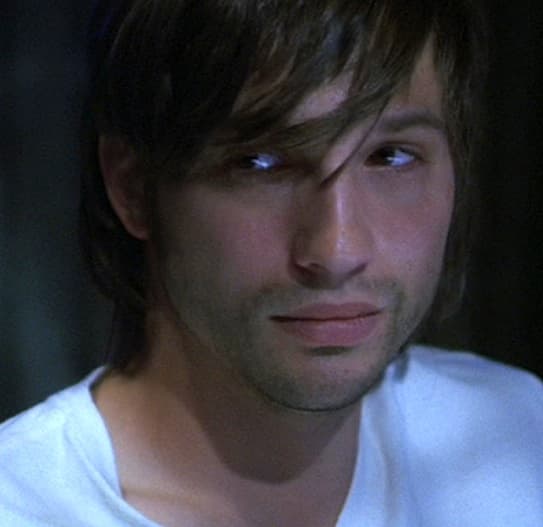
STEM, an AI chip that get’s implanted into Logan to help him gain control of his limbs after his spinal chord got fractured. We are introduced to Logan as a “man’s man”, eager to resist what society has readily embraced…technology.
It paints a picture of a society flirting with dystopianism where the privileged are so reliant on technology for everything, from driving to making pizza and at the end of the extreme spectrum a people deprived of the advancements technology has afforded the affluent.
Breakdown and Analysis
- Is society ready for AI on STEM’s level
- Small budget, big performances
- Practical effects vs CGI
- How amazing are Australian produced/directed films
For your reference
KT’s picks
Humans The Matrix Detroit: Become Human
Oti’s picks
Referenced

KT's Picks
Referenced in this episode

Humans
""Humans" is set in a parallel present where the latest must-have gadget for any busy family is a Synth, a highly-developed robotic servant eerily similar to its live counterpart. In the hope of transforming the way they live, one strained suburban family purchases a refurbished synth and discovers that sharing life with a machine has chilling, far-reaching consequences."

The Matrix
"Thomas A. Anderson is a man living two lives. By day he is an average computer programmer and by night a hacker known as Neo. Neo has always questioned his reality, but the truth is far beyond his imagination. Neo finds himself targeted by the police when he is contacted by Morpheus, a legendary computer hacker branded a terrorist by the government. As a rebel against the machines, Neo must confront the agents: super-powerful computer programs devoted to stopping Neo and the entire human rebellion."

Oti's Picks
Referenced in this episode

Venom
"After a faulty interview with the Life Foundation ruins his career, former reporter Eddie Brock's life is in pieces. Six months later, he comes across the Life Foundation again, and he comes into contact with an alien symbiote and becomes Venom, a parasitic antihero."

Deus Ex: Human Revolution
"After a shadowy black ops team kidnaps several scientists security manager Adam Jensen was sworn to protect, he must harness the power of his new-found cybernetic augmentations to save their lives."
Episode Details
- Duration
- 0:00
- Released
- March 6, 2019
- Category
- Episode
- Hosts
Transcript
Transcript (10,699 words)
Full transcript of Upgrade – Better than the rest of STEM.
KT: Welcome to a new mini segment that we're doing before the main chunk of our podcast called Your Phrase or Mine, where essentially we play on the cutesy little puns and idioms and phrases of the world where the other host has to guess either what it means or what the origin is. They can even make up the origin. And if it's funny, that means they win. The prize is getting to choose next episode.
Oti: Alright. So I'll give you an African proverb.
KT: Okay. You do know Africa is not a real country.
Oti: An African proverb.
KT: Oh. Oh, nice save. Nice save, Charlize.
Oti: So origin is from South Africa. And so here it goes. You're scratching a big lion's bollocks with a short stick.
KT: I, in my educated guess, will surmise that this saying means what you're doing is to no effect and has no consequences because your short stick is doing shit off for those lion's big ass balls.
Oti: No. It definitely will have consequences because all you're doing is looking for trouble, which you for sure get.
KT: Even with a small stick.
Oti: Yeah. You're just pretty much pushing your luck. Might as well get a long stick.
KT: Hello, and welcome to For Your Reference podcast where we give our hot takes and general banter on movies, TV shows, and also documentaries. Today, we'll be talking about the film called Upgrade, which was released in 2018. South by Southwest Film Festival came out in March. Everywhere else, it came out in June of last year by the director and writer of Leigh Whannell. Sorry if I'm saying your name incorrectly, who was also the cocreator of the Saw franchise, and also his first director credit was on Insidious. Yep. So definitely got some, you know, some great credits
KT: under his belt. It'll be great to talk about whether stylistically any of those films have carried on to this movie. But, you know, there's some little tidbits that we'll touch on later on in this podcast. Box office details. So the budget for this film was $5,000,000, either more or less. Who knows? But 5,000,000. It made it pretty much back in its opening weekend, just under 4 and a half just over 4 and a half million. And then it grossed just under $12,000,000, which is amazing.
Oti: Pretty good. Right? It is quite impressive.
KT: Because even the way that we came across this film was, you know, just scrolling on the streaming services and coming across this movie. But, yeah, definitely great that we found this movie and we watched it. And, hopefully, if you haven't seen it, probably don't listen to this podcast until you have, but we'll definitely recommend that you go out and see this movie. So just a quick sort of synopsis in regards to this movie. We have a you're essentially not necessarily in a dystopian sort of future, but we are living in a world where technology
KT: has crept into pretty much every aspect of the human life. And then the main protagonist that we have is all about, you know, getting his hands dirty. It's all about the human interaction sort of guy. So he's our blokey bloke that we get to know at the start of the film. I guess if you're still listening to this and you haven't seen it, I won't put any spoilers. But something happens to him. He does become a quadriplegic, but there are other things that happen to him that inadvertently make him the best subject to
KT: allow himself to be tampered with and have a chip inserted inside of his body. So that's the main sort of crux for this movie Yeah. Pretty much. In regards to the cast, we have Logan Marshall-Green, who plays the main protagonist that I was just mentioning, Grey Trace. What I'm also appreciating as a fellow Aussie myself is it actually has a whole slew of Australian characters
KT: in this movie, which is great because I I would hope that Leigh being an Australian in Melbourne, but, you know, we still we still love him because he's Australian even though he's not from Sydney. I would hope that, you know, he's trying to open up opportunities for great Australian talent. So Asha Trace, who plays well, the character of the protagonist, she's an Australian actor. Eron Keen, what did you think of him just in a sound bite?
Oti: He gave me L vibes from Death Note.
KT: Oh, is this the first reference of anime we have on For Your Reference? You're welcome, guys. So the character of Eron Keen is played by Harrison Gilbertson. And he's Australian. So kudos to him for being Australian. But he was born in 1993.
Oti: Oh.
KT: Yeah. Which makes him, like, 26 years old. So I think that puts it a bit more in perspective in regards to his acting chops. Yeah. They're quite mature for someone his age. But, again, we'll get more into detail about the characters. But I thought that was quite a cool sort of shout out that he is quite young, and he had a role with such depth as well. So we've got a lot of other characters. We also have Fisk. And as far as I can see from his IMDb, he is also
KT: Australian. Actually, I had to go to a few websites. It was like australianplays.com for me to identify that he was Australian. So this is great. You know? And it definitely is considered an indie film, and I'm glad that there still is talent out there that can be put to the forefront forefront, but it's an independent movie. But you understand what I'm saying.
Oti: Yeah. Definitely. It's it's it's great to see that they produced a movie where you didn't think that the acting brought it down. And for the world of me, I would think this was high budget. The shooting was great. We got a really cool camera angles, especially during the fight scenes. And, yeah, it's just it was just a well made roundup movie.
KT: Yeah. And I'm just in general in regards to movies and actors that aren't necessarily known, I feel like sometimes if the star is too big, it can kinda get in the way of the story.
Oti: Are you thinking Johnny Depp playing Tonto?
KT: Is anyone even allowed to speak about that anymore? Or even still on the topic of Johnny Depp, Transcendence.
Oti: Oh, yeah. Yeah.
KT: Transcendence kind of felt like, you know, the equivalent of a stocking stuffer. You know? Like, intelligence has been quite a popular topic for a while now, and it kind of felt like they were just trying to fill the mold of what's popular and, hopefully, what will sell in cinema.
Oti: Or the way they brought in what's the actress's name that plays Black Widow in Marvel movies?
KT: Scarlett Johansson?
Oti: Yeah. They brought her in to play, Ghost in the Shell, and there was so many things wrong with that. And I feel like they've just brought the star power in an in an environment where you really didn't think that Scarlett Johansson will play this really well. You know?
KT: She's actually done quite a lot of AI movies because there was that Lucy movie as well. Yeah. So even before going through the movie, you know, we've talked about Leigh's essentially, you know, rise to eminence with the Saw franchise and also Insidious. I was watching an interview with him and also with Logan, the main actor for this movie, just to see, you know, how this actually came about. And he was talking about how, you know, as a filmmaker, as a creative,
KT: you're constantly trying to think, can this be a movie? Can I create this into something that people would wanna watch? And he had this constant recurring idea of what if a quadriplegic had a chip because he was essentially incapacitated from his neck down. And that was essentially just a thought that he had. And then he just went about his best life, but it kept coming back to him. And he started to, you know, essentially
KT: flesh that out and see what that would look like. One of the influences that he drew from was the first Terminator movie. Mhmm. Because in the climate of its time, it wasn't necessarily big budget either. True. Yeah. It's I guess it's hard, especially if you're a bit younger than we are. It might be hard to imagine a world where there isn't The Terminator and you don't have those classic sort of tropes that exist because of the Terminator.
KT: But yeah. So Leigh talks about how James Cameron is able to create a film that feels bigger than it is. Oh. And even, you know, even watching Upgrade, I didn't feel like it was in want of a bigger budget.
Oti: They definitely utilized all the resources they had wonderfully.
KT: Yeah. And that's exactly it. And Leigh was also saying that sometimes it's nice to have that sort of boundary so you know what you're working with, and you can get a bit creative with it. But even, you know, even without that, we've watched a lot of indie movies and a lot of indie sort of horror films. And, you know, you'll have a scene that has super high tension, and then they'll literally just cut. And we'll both look at each other and be like, they probably didn't have enough money in the budget
KT: for, like, an explosion. Or even TV shows, for example, Designated Survivor with your best friend, Kiefer Sutherland. You know, 24 has come and gone, and there's even been a reboot, which I think is already gone then it has come, if you pardon the pun. But even Designated Survivor, we were watching the first episode together, not necessarily a spoiler, but it shows, like, an explosion that happened that essentially kills the whole
KT: I don't really know what they call it in America. Congress? Yeah. It it it kills all of the congress. So, essentially, it's conveying to the viewers that Kiefer Sutherland is the only remaining designated survivor. But the way in which they portrayed it was Kiefer Sutherland looking through the window, and you'll have, like, a little poof of, like, red flames, and that was them exemplifying the explosion,
KT: essentially. And the the reason why I'm bringing this up is, you know, you can watch things without knowing what the budget is, without knowing who the director is, without knowing which powerhouse studio it's coming from. And you could you know, the the moment you start to doubt, you know, did they have enough budget or, you know, was this really the right move to do? It gets in the way of the story. And when we were watching Upgrade, I didn't feel that at all. I felt like everything made sense. We'll talk about the cinematography.
KT: But just in general, in regards to the way that the story was written, I think that was quite well done.
Oti: Yeah. And on the flip flip side of that, you have shows like Lost where you never really had TV shows that had the amount of budget that Lost had, and you could tell from the get go that this guy had had money to make this show from the explosion, from the plane crash, and you could you were just mesmerized. You're you're thinking to yourself, am I watching a TV show? Like, it was so mesmerizing at the time, and I think that's what hooked a lot of people to just stick and watch Lost, and the storyline was amazing. The first season was one of the best intriguing TV shows
Oti: seasons that we've had so far. Past that, I don't really want to comment beyond that because it will be dividing too far from what we're discussing on today. But, yeah, definitely. It's just you can tell when a show has a big budget or a movie has a big budget, you know, and the expectation goes up exponentially. But if you don't have that budget, I think the expectation would be, I just want a good watchable movie. We're not expecting the world out of it, just something possible. And I think Upgrade went far and beyond what they what people expected from it.
KT: Yeah. And just to pick up off what you're saying, and I promise it is related, with a show like Lost, you know, we're watching a interview literally a couple of days ago where the creators of Lost were saying, okay. We're pretty much ready to wrap up this season like, this series in season three. And ABC was like, lol joke. No. You're going on for a million more seasons. Right? And that's when success becomes pretty much a double edged sword
KT: because you've got this creative idea that you had, but then you also have networks that are trying to make money off you. And even watching the interview with Leigh, the director of Upgrade and also the writer, you know, they were asking him, you know, are you setting this up to be a universe? Which, you know, Marvel is in his own little world. I kind of cringed when the audience members which maybe you should never get audience members to ask questions at forums like this.
KT: But, yeah, the audience member was essentially like, are you setting this up to be like a universe where we're going to have lots of sequels, which I get. Like, you're excited and you wanna see it. But at the same time, let a movie be a movie, a stand alone sort of movie.
Oti: Yeah. Don't it's like trying to go down the M. Night Shyamalan way with Unbreakable and creating this universe from Glass and
KT: Mhmm.
Oti: Or the second one, unbreak those Unbreakable, Glass
KT: No. No. No. It was Unbreakable, Split Mhmm. And then Glass Yep. Upcoming Glass. But, yeah, I guess success can be a double edged sword, especially when, you know, the services that you're being played from obviously wanna get as much from you as possible,
KT: which I think is quite common in a lot of at least in TV shows, a lot of American sort of formats where they try and get as much as they can out of you, and you kinda just get tired of the show by the end of it. Yeah. Not like The UK three episode and you're done kind of thing. I love me a good miniseries. I must tell you. I must tell you. But yeah. So the those are essentially the influences
KT: that Leigh was talking about. I just wanna touch on this before we dive into the actual movie. Upgrade was released through Blumhouse Entertainment. And the interesting thing is without knowing much about sorry, Blumhouse Productions, we didn't really know much about this particular production company. But whenever we watched the movie and we saw that logo with Blumhouse and then the lighting in the corner of the wall, we're like, okay. This is gonna be a good movie. Right? Yeah. It kind of had this and, again, with without even having any sort of context,
KT: it had this reputation, at least between not even a circle, between our life. It it we knew that we were into something good. And, you know, even through doing a little bit of reading, Blumhouse's whole model is being able to produce quality, essentially, horror esque sort of indie films under a particular budget, usually under $5,000,000. Right? Did you know that? No. Yeah. So this is quite interesting. So I just wanna expand on this a bit. According to Wikipedia, so, you know, don't me if it's incorrect, The low budget model began in 2009,
KT: so they've been doing it for ten years now. Do you wanna guess what the first movie was? What was the first movie? The budget was 15,000. Does that help?
Oti: 15,000.
KT: Cheap, horror ish to make in 2009.
Oti: No. Can't think of anything.
KT: Paranormal Activity.
KT: Yeah. I know. But think about it at the time. It would have been very pioneer.
Oti: How much did you say? 15,000,000?
KT: No. 15,000.
Oti: Oh. 2 Oh my oh, yeah.
KT: It was made for 15,000, and it grossed a 193,000,000.
Oti: Wow. That's just cheating, isn't it? No. It's not.
KT: No. It's not. Let the underdogs have their day in the sun.
Oti: Well, for for for all the praise Paranormal Activity gets, I just couldn't stand it. I did not buy into it. And
KT: Why?
Oti: That's a talk for another day. Okay. For another day. Yep.
KT: Yeah. So that's essentially just to give you a little taster, that's where Blumhouse started. I'm just going to mention a lot of other movies that have come out of this powerhouse, essentially, The Purge. For what it was, when The Purge first came out, it was great. It's kinda being milked for all it's worth now, but, you know, for its time. Insidious, Whiplash, which isn't necessarily a horror, but there you go. The Belko Experiment, which we've watched. Yeah. I liked it. It was really good. I think pacing was an issue,
KT: which, just to make it very clear, if a movie is over two hours and it's not a cinematography epic like Lord of the Rings or Avatar or, you know, anything of that sort of ilk, it shouldn't be two hours. You should be able to tell your story within acute ninety minute sort of frame. Right? But going back to that, so you've got The Belko Experiment, Unfriended, which we didn't really care for. The Visit, Get Out, which we will definitely do an episode
KT: one of these days, maybe close to when Us comes out. It's March already. Yes. It is March. It's coming up. Jesus. It's coming up. It's coming out March 22 in America. I think it might come out a little bit a couple of days later in Australia. Yeah. But yeah. So Get Out also, Split, according to Wikipedia, has also come out of here as well. So lots of arguably box office smashes have come out of Blumhouse. And, you know, we have our Friday night horror movie night in our For Your Reference household,
KT: and we've definitely stumbled across these. And welcome, super welcome, and super surprised. One way that we actually watch things, which, you know, when when not that iconic, so I'm pretty sure other people do this as well. When we're trying to scroll through movies and trying to figure out what to watch, we essentially watch the trailers. And I guess, you know, just in general, especially with horror films, the ratings can be quite confusing. Right?
Oti: Yeah. We never really go with the ratings. No.
KT: And we I think we gave it a grace of, like, if it was rated as six on average, we'd still give it a go.
Oti: Yep. That's an alright rating for a horror movie. For horror movie. Yes. For other movies, that is a great rating. Like, that horror movie is six. It's not easy to get that rating. Yeah. Definitely. Six is definitely possible. Anything below that, then you're just treading on dangerous grounds on whether it'll be good or not.
KT: Yeah. And the way that we watch movies is when we're trying to figure out what we wanna see or what we're about to watch that night, we watch trailers. And then once we see a trailer and it hooks us in and we wanna know what's going to happen in this movie, we don't look up ratings. We don't look at the actors. We just watch the movie.
KT: We strike the iron while it's hot. Because once we start to go down the rabbit hole of researching and reading reviews, it'll put you off the movie, essentially. So we'll have a look. We'll narrow it down to around three to five different sort of movies, and we'll just watch trailer after trailer after trailer. And whichever one without even thinking, whichever one just grabs our attention, that's it. You know? No time to do anything else. You need to have your snacks with you because we're watching the movie now.
KT: We need to build off that momentum because once we start to read reviews and all that sort of stuff, it pretty much puts you off. So, pleasantly, that's how we came across Upgrade. Yeah. Right? Yeah. And, you know, we we will obviously talk about the movie in a second, but I was pleasantly surprised. And not even surprised. I genuinely enjoyed this movie. I think with the whole wave of artificial intelligence, there's been a lot of movies that have come out.
KT: And for no rhyme or reason, literally, just to be able to compete and to be able to get some of the, you know, slice of the pie, if you will. Yeah. And, you know, even talking about TV shows and their mega budgets, Black Mirror. Right? I feel like Black Mirror needs another word because even when you talk about anthology, it's not necessarily its own separate world every time there's a different episode. But, essentially, you know, when you have Black Mirror, they're they're short films, and they're self contained. They're in their own world.
KT: And, you know, you don't need any sort of precursor to watch a Black Mirror episode. And I guess that talks to, you know, our the culture of technology, how we're constantly building off streaming services and also TV. You know, TV quality is going up as the years years go on. You know? Maybe even five years ago, you know, movie actors would shun TV actors, and it's hilarious that there were even different types of actors. And then you see all different sorts of you know, even Scorsese is getting onto the streaming platform as well
KT: and directing his movies through Netflix, I believe. So it's it's really a changing sort of time. And even in that interview with Leigh, he was talking about how, you know, how do we get this movie seen? How do we get this movie heard? How do we get attention to this movie through all of this diluted sort of media that's going on right now? And, you know, have you did you ever hear of Upgrade before we stumbled across it that day?
Oti: No. No. Just came across it. I was like, looks the snobs read well. Yeah. And we'd watched, I think, Ex Machina a few months back. And Yeah. The concept just intrigued us, and we're like, yeah. Let's give it a go.
KT: Exactly. And I I guess this is a part of, like, sadness because then you wonder, you know, what else am I missing out on? If I'm not looking for it, how do I make sure that this sort of content comes to me so I'm not missing out on such great, amazing pieces of film? And now for the moment you've all been waiting for, but hopefully you enjoyed the banter along the way, we're actually going to talk about the movie. Again, spoilers into spoiler town as we venture into this movie. I wanna first
KT: talk about the overall general feeling of the film and also the cinematography.
Oti: What did you think about that?
KT: I really appreciated the wide sort of shots that they had in the movie because it really spoke to The Expanse, if you will, which I believe is its own sci fi world. But, essentially, it really painted this picture of we are in the future, but at the same time, there's this feeling of desolation and disconnectedness from that human sort of connection that you have as well. So I really did appreciate the wide shots even though between you and I, a lot of it was shot pretty much all of it was shot in Melbourne, Australia.
KT: And then they'll have, like, signs as if to suggest it was in America. But, you know, the shout out to, you know, all of the people behind the scenes, like scouters that go out and look for locations for this movie because it really, for me, painted a picture on not not just the society at the time, but also our main man's story and what he's going through, Grey.
Oti: Yeah.
KT: All of that desolation that he felt inside of himself. So I thought the wide shots were great. I also thought the camera angles were also great. I think it was Unbreakable that we were watching. I just the the camera angles just got way too distracting to me in Unbreakable. Like, they would have Samuel Jackson's character and Bruce Willis' character, and the camera will be
KT: in between, like, a sort of fence, but it would blur in and out. And to me, that's like, okay. Like, I can see that you know how to capture a moment, but it gets distracting. So I felt like Upgrade didn't have that. Every camera shot made sense. Also, the coloring really spoke to me as well because you had there were a lot of, like, yellowish sort of hues, and there was vibrancy, but not to the point of overwhelming you as well. Everything made sense inside of the story, even the soundtrack as well.
Oti: What did you think about the score?
KT: Well, it was barely there. Right? Yeah. Not necessarily that it was barely there, but it it interwove itself so seamlessly that it wasn't demanding your attention. You know? I feel like a lot of the time soundtracks or scores for a movie, it becomes so jarring. Or, you know, it's like, oh, I'm playing music now. That means I'm moving to a new scene. And, you know, for me, that doesn't really do much for me. So I really appreciated how there was a light and shade inside of Upgrade, and the score reflected that as well.
Oti: Those are very good points.
KT: Thank you. I'll just pat myself on the back. You feel free to do so as well after the show.
Oti: So if I could talk about the main character and how I got to know Logan Marshall before he got into Upgrade. Upgrade. Yep. So we have we have a young Logan Marshall playing Richard Heller from 24. He was really young then, and he was annoying, and I really didn't like him. He was a very, very annoying character.
KT: Hang on. This this goes back to our Black Panther episode because just because you don't like someone doesn't mean they didn't do their job as an actor. Was was this a hateable character?
Oti: He was just a spoilt teenager.
KT: Yeah. So he was hateable. So he did his job.
Oti: So I think there were other roles between that, but then he played Ben McKenzie's brother in The O.C., and he was just a douchebag there. Like, he he was a bad guy. Like, you know, Ben McKenzie was playing Ryan Ryan, I think. Ryan Atwood. Yep. And he he had his issues and he had his problems, but in he he was a good guy. His intrinsic nature was just he's good. But Mhmm. We had Trey or Logan just he was just a bad character. He was a bad seed. And then
Oti: the next thing I saw him in was in this amazing TV show called The Traveler, which was so disappointing because it's only got it got canceled after eight episodes and I swear we were all devastated how such a great show and such a great concept would get canceled in I mean, episodes. Mhmm. And in this, he also had a he he also had a brother called he he also had a brother in Matt Bomer. So you could see that he's had great brothers.
KT: Matt Bomer is the Suits guy?
Oti: No. White Collar guy.
KT: Yeah. He he he has picked his picked his role as well. Let's be honest. They're all a dime a dozen. You get they're all interchangeable. I'm sorry. I will send you a gift basket, but you're all interchangeable. So this is our attempt at giving play not necessarily a play by play, but trying to follow the more traditional format of a review for a film. And just to give our initial first thoughts. So this film opens on a garage where you see a lot of greasy instruments panning out into a car, panning out into
KT: Grey, the protagonist of the movie. So you're seeing, you know, he's a real manly man. He likes to get his hands dirty, and he's essentially working on his car, You know? Being the blokey bloke that we all love to love. Yeah? So you you get that sort of juxtaposition when his wife stumbles along in her smart car. Right? So I guess it didn't really seem out of place, the opening scene, until you saw the wife stumble along in her car. What I would think what I would like to know,
KT: which is just for my curiosity because Oti knows I ask, like, a 100 questions even before the credits have started in the opening sequence. Don't tell no what. But how far in this sort of futuristic society did they progress? Because, you know, even Leigh, when he was being interviewed about this movie, he was talking about how the producers wanted to make every single aspect of the movie look futuristic. And Leigh was like, no. That doesn't make sense. You know? There there should still be busted up Toyotas in the front of, you know, streets because
KT: not everything is fully futuristic. Right? People need to take some time to get on the wave. Mhmm. Right? So, you know, just as a little side note, trying not to let it distract me from the movie, but I was just wondering how far is it in this society where, you know, even later on, when they first walk into at least in the movie, when they first walk into the house, everything is fully functional. Everything is fully automated in regards
KT: to the house. You know? Greeting the owners of the house Yeah. Even telling them they're out of something menial like eggs, for example. We still live in a day and age where I try and beckon Google to add something to my shopping list, and I still don't know, you know, after a week of saying it, trying to decipher what I said to add to the list. I'm pretty sure I didn't say more balls to the shopping list. I'm pretty sure I said small balls a week ago, but, you know, it's its own thing.
KT: But just trying to understand the whole context of how futuristic is this world that we have here. And we will, I promise, we will talk about the movie. But something very interesting when I was watching interviews, especially with Leigh, is they kept referring to this movie as sci fi. Is it really sci fi, though? Right. I feel like in this day and age, you can't necessarily call this a sci fi anymore because we are well, we're dabbling. Right? We're dabbling in what it means to be smart
KT: sort of homes, smart sort of cars. You know? Not that we'll ever experience it, but Teslas have their own driving cars, self driving cars. You know? You also have Alexa. You also have Google. And I'm assuming Siri Siri also has her own sort of combating equivalent as well.
Oti: Well, you have Ubers and Googles doing their self driving cars, And I feel like one of the issues for me was that we had we had when they were driving Uh-huh. And Trey re and Grey Ria They were in the wrong area. Right? Grey Rialas are in the wrong area. And so they've clearly advanced so much into self driving cars that the manual override isn't there anymore.
KT: And yeah. But also at the same time, I really don't think we'll ever get to a point where we fully trust True. Exactly. And that's Because, like, there'll always be a time where you will want to override it. And just from a safety point of view, there might be there might be a reason why you need to override a system. So I don't don't foresee a time where we completely say, Jesus oh, Jesus. Jesus, robot, take the wheel, and I will let you have all of the commands. You know? Even later on,
KT: still early on in the movie, but later on, we see Grey trying to overdose. And he physically couldn't because the robot wouldn't let him, which maybe that was good that it didn't get overridden. Definitely good. But the fact that, you know, machines have their own sense of self and they couldn't be overridden, I think it definitely started to creep into our reality because, you know, you have I, Robot that came out in the early two thousands with Will Smith. And, you know, even during that time, it was pretty scary to think,
KT: oh, you know, artificial intelligence. It was still like a kind of Jetsons sort of vision. Right? Remember with the bebop bebop with the robot? So I feel like we've progressed too far for people to continuously use the same sort of tropes.
Oti: Yeah.
KT: Otherwise, Leigh, you are a queen, and I won't take anything away from you because I love this movie. But, yeah, that that is a constant trope of machines will take over us. And I think what people don't realize is artificial intelligence and machine learning has been going on for years. And, hopefully, with time and with, you know, exposure to what's out there, it's been happening for a while. You know? You have surgeons that are trying to conduct, like, micro microsurgeries and which wouldn't be able to be possible or even to be able to print organs
KT: through three d printers. Right? That would never exist in a time where we were still trying to figure out what robots are. But we're not the robotics podcast. But I I guess I just wanted to point on the fact that how far we are and how accessible, you know, apps that we use that have a peppering of machine learning or sort of AI, it's not that far from the future. Right? We saw that demo with Google when they were doing calls to book an appointment, which was done through the AI.
Oti: The most impressing me the most impressive thing about that demo was that it it understood different accents.
KT: And nuances Yes. As well. And I guess that's the true achievement of machine learning and of artificial intelligence because two plus two will always be four. Right? Mhmm. But if you say two plus two in a different accent, will it be picked up? Apologies. We're both in IT, so I guess this will sweep us away into another conversation. So let's rein it back. If you guys are interested in having a little techy sort of podcast, then let us know. But For Your Reference, this is a movie, TV, documentary type of podcast.
KT: So what else did you enjoy about the film?
Oti: I liked the great chemistry that Grey and Asha had Mhmm. Because I'm introduced to them quite early in the movie. She was in it for, like, five minutes. You could tell. You could tell. In this scene of her being shot and dying and and Grey just laying on the floor, not being able to do anything about it Mhmm. I bought into it. I bought into him loving this woman because we've seen we've seen many scenes where
Oti: I don't really feel the chemistry. I don't really buy the you're sad that this supposed love of your life has died. Uh-huh. But despite the fact that she's been in the movie for about, what, five minutes, and I could still feel the chemistry between the two of them, I feel like that's a great achievement. I thought it goes to the kudos for the casting director for that.
KT: And it's like you were saying earlier, you know, sometimes with independent films, you kind of have a little bit more patience to allow it to woo you. Right? And I think I was also experiencing that as well because we didn't know much about Asha's character. But when it happened, when she died, I didn't feel like it was a cheap shot because, you know, when you watch movies or you watch TV shows and you see a character die and you're like, oh,
KT: you are deliberately trying to pull at my emotional strings. Yeah. I really didn't feel like Upgrade did that. I felt like it was natural to the story. It was definitely a shock, but it made it it it made sense, and it didn't leave me wondering why are you doing this to me? I was enthralled in the movie, and I was watching it and going along with, you know, what was to come. You know, even Fisk is Fisk's character, which we didn't know was Fisk at the time,
KT: but, you know, he made this comment talking about, you know, you humans I'm paraphrasing. But it was like, you humans don't appreciate your inferior and all this bullshit before he shot the wife. Right? That was quite a powerful moment.
Oti: No. He didn't he didn't say, you humans. He was saying, do you look down on me because I'm uneducated?
Oti: Yeah. Because more of where the region that they found them in Grey's old neighborhood.
KT: Yeah. But, you know, even that moment, I was just like, ah, he must have shot he must have shot the wife in anger. Right? So I kinda just, like, let it go. But that's that's such a common sort of theme that you see in movies. That movie of a bloody death of rampage. Going out and going for broke. And, you know, speaking of Archer, it reminded me of the episode where he had the microchip, like, inserted in him as well. But, again, we we need to talk about the movie. If you love Archer,
KT: let us know. It might be a separate segment. But what else did you love about the movie?
Oti: I love the Grey's character. Well, at least Logan's Logan picks these characters that show his emotional range, and they feel a bit vulnerable. Uh-huh. Like, you just wanna give them a hug, you know, like it's Like our Joaquin? Yeah. He's he's a sort of character like queen. That. Did you notice that? Yeah. I did. I'm coining that. I just let that go. I'm coining that. And, yeah, it had a lot of great comments in it. And one of the funny ones that I thought was was when he said, you saw that?
Oti: You thought I was invalid, but I'm a fucking ninja. That made me giggle.
KT: But yeah. But then STEM comes after as well saying, technically, you are not a ninja, sir.
Oti: Well, to me, he's all he'll always be a ninja.
KT: Also, little tidbit with the interview with Leigh. He was talking about Logan's character, Grey, and also the character of STEM. And he was saying that the way that they decided to film it was they would have the character that was playing STEM be on set, but in be in a separate room. And the guy playing STEM and Logan's character, Grey, would literally just riff off and play on each other.
Oti: So they didn't do that postproduction?
KT: No. Which is quite interesting because usually, that's literally what happens. Right? Yeah. So, you know, a lot of the reactions that we saw from Logan's character, Grey, now we know were quite authentic. And they were talking about, you know, just in general, a lot of the scenes that they had, they try to make it authentic as possible. So wherever they could fire a gun, they fired a gun, which I think is a lost art as well. You know? Practical effects. Practical effects. But,
KT: you know, I feel like it's kind of a lost art as well. Like, wherever you can put CGI, just put it there.
Oti: I feel like if if there's an opportunity for a director to use practical effects, they'd do that.
KT: Not necessarily so. Or at least according to Logan, because he was meant Grey's character. He was mentioning that he's been on a lot of sets, big budget, low budget sort of sets, and that doesn't necessarily happen anymore.
Oti: An example of where they over relied on CGI is Ryan Reynolds' Green Lantern. That was ridiculously bad.
KT: Has he not redeemed himself from Deadpool?
Oti: He has. He has.
KT: But yeah. Moving on. The exposition in Upgrade was second to, I guess, Ex Machina. I was gonna say second to none.
Oti: What do you mean by expositions?
KT: The exposition, essentially, the whole I guess it was more of like a subplot of Grey's character and STEM and the internal conflict that Grey had about machines because they made it quite clear in a in a not so in your face way.
KT: They made it very clear that Grey isn't the sort of person that, you know, he lives and breathes technology twenty four seven. You know? He's working on his car even when his wife was like, let's just zap a pizza. And he's like, no. Let's make one. Right? They really, you know, they really conveyed because they didn't they didn't it wasn't too obvious, which I really appreciated. But, you know, they they painted a picture that he's the sort of man that still appreciates that human sort of interaction.
Oti: Yeah. Right?
KT: And I guess it and I know I'm about to branch off to another reference. But it it really makes you think how far, how low do you need to be to be able to accept something that speaks against the inner workings of the fiber of your being. Right? Like, this guy didn't really like technology at all. He kind of kept to himself in his own little manual manny man sort of world. Right? Another another example of that that comes to mind of someone that's so desperate to continue their life the way it is is
KT: Heisenberg, Breaking Bad, which we do not have time to go through today. But, you know, just quickly, Bryan Cranston's character in Breaking Bad, he was a high school teacher. He had no money, no benefits, and he had cancer. Right? And that's what pushed him to the edge to essentially make the blue crystals that we all know and love from that show. And it was quite interesting to see that dynamic between Grey and also STEM where he slowly allowed STEM to override and take control of his own actual body.
Oti: Yeah. Most of those came out of desperation of him not knowing what to do in those particular scenarios. And it's understandable.
KT: But what But it took time because even even then, when he was in the hospital bed and Eron came to him, like, he was pretty much resided to the fact that why do I need to keep living? Right? So
Oti: Well, he just lost his wife. So it's understandable that he would be resigned to just seeing his life out.
KT: As as important as his wife is, it was also his reluctance to embrace technology. Right? Mhmm. So there's this constant push and pull of Grey and STEM trying to reconcile, not necessarily STEM, but more Grey of, you know, I'm assuming, what makes him human and how much of his humanity does he need to sacrifice in order to be able to survive? Right? So the first instance that you have of that is him visiting that apartment. And can I just say, I know I've said it
KT: well, a lot to you, but for the first time in the Black Panther episode, I don't necessarily care for action scenes?
Oti: Oh, this was tastefully done. I agree.
KT: I feel like a lot of the time, action scenes are kinda like porn. I'm just like, is there a story?
Oti: While you're watching porn, you're not going there for the story. Yeah. But I do. Oh, the delivery man came in late.
KT: Yeah. I want to know, did he source his sausage from Italy or not? Oh, dear. But yeah. So the the point of the sausage man is to say that the action made sense in this movie. So, you know, much like the time I I figured out that I actually do like Shiraz wine, I just like the expensive kind, I I do like action scenes, but it needs to be done in a way that makes sense. And it's not not necessarily gratuitous, but it's it fits in with the story that is being told.
KT: Right? Like, we get it. We've seen helicopters blow up. Right? We've seen car chases go to the maximum. Like, how many Fast and Furious movies are there now? Like, nine? Yeah. And then now you have a spin off with The Rock and Jason Statham. Oh, dear lord. You'll be seeing that by yourself, by the way. I'm not gonna watch it. Okay. But, like, action has been done before. But I felt like in Upgrade, it was done in a way that wasn't jarring, that made sense.
KT: So the first time that we see him allowing STEM to override him was in that house. And it actually reminded me of I'm not sure if you guys play games at all, but it run it reminded me of the Telltale sort of games. Essentially, where you have a finite amount of time where you need to action. Otherwise, you've essentially lost it, and it'll have consequences through the rest of the story. So the first time that he was hiding behind the cabinet and STEM is like, you've gotta attack now while you have the upper hand.
KT: Right? Yeah. And Grey was just standing there, and he was seeing the timer, like, run out. And the timer ran out, and the guy that was about to die saw him in the reflection of a wall Off the TV. Yeah. Yeah. Yeah. He saw him in the reflection, so he lost that point of advantage.
KT: And I'm like, well, you know, we've played these games so much. We're like, okay. You know, you've lost this moment, but you've got it again. Right? And then Grey was, like, backed into a wall, and he had the opportunity to grab the knife or to keep going. And it's like, what do we do? Right? That sort of, like, intensity that we feel when we're playing games,
KT: I felt that in that moment. And I'm like, Grey, you need to do something. You know? You need to go as well. And, you know, there was a sign where he did hesitate, and he couldn't look at this guy actually dying because it was way too much for Grey. So you start to see well, not even in there. There, he's completely opposed to the idea of even witnessing another human die. The second example that we have is with Tolan.
Oti: The Blockbiker.
KT: Okay. Right? In IMDb, he's also known as Tolan, but good for you. Yeah. It's alright. So you have that fight in a bathroom, I'm assuming, where things start to get a bit dicey, and it gets to the point where Grey allows them to override him. And, you know, even through the sound, even through the reaction of Grey, you could tell that it was, I wouldn't say inhumane because that's a bit too on the nose because STEM isn't humane. But it it you could tell it was unnecessarily savage in that moment.
Oti: Yeah. Because once he looked at Tolan and he got shocked, he didn't believe that STEM could do that to another human being.
KT: Also, the fact that he did that to a human being. Yeah. Not necessarily mentally, but physically. Physically. Yeah. He did do it. Yeah. Yeah. And we saw that coming to a head at the end of the movie or near the end of the movie where he did it to Fisk.
Oti: Yeah. But then when he did it to Fisk, it wasn't STEM controlling him. It was he he he had gotten to a point where this is the guy that killed my wife, and I'm going to be the one that killed killed her. And STEM thanks him for that.
KT: And it really plays on that sense of humanity. Like, who am I if I'm allowing my emotions to take over me and, you know, this isn't my first rodeo, if you will.
Oti: Yeah. Well, I guess it it also goes to show that in as much as Grey had allowed STEM to take control of his actions, he was battling a psychological warfare in his head of the consequences and and what it meant and the effects that it was having on him as a person because he I feel like during the whole period, he became desensitized to the brutality of what STEM was doing to the point where him just shoving Fisk's head down a
Oti: broken piece of glass and you know, just meant nothing. And you could feel you could see no emotion whatsoever in his face. It was just blank. It was just a blank stare.
KT: But between you and I, you were secretly cheering. Right?
Oti: No. Not really. Like
KT: If I died if I died and you found the person that was responsible for my death, you wouldn't feel satisfied?
Oti: I would feel satisfied but knowing the reason of why he did it, like he saw he saw Grey as a brother in a different kind of race. And although his motives and his reasons were all a bit skewed and it was because they were paid or he he had an ambition to take him under his wing and the fact that he was telling Grey that
Oti: your weakness is that you're becoming too emotional is you're too emotional, you'll never surpass me and Grey pushes him to the edge of where he becomes emotional and that's where he becomes weak. So he proved the point. He proved the point. Yeah. And it's just after that, I felt like Grey just changed for me. He he he no longer was this vulnerable little pup that I just wanna cuddle. It was more like this guy's already broken.
KT: But you still wanna cuddle?
Oti: No. Not really. Stay far away from me, you know? Like, it just
Oti: it just shows the effects of what he witnessed or what his actions through STEM made him turn out into someone who really didn't care much about.
KT: But this is a lost life. This this touches on a theme that we've talked about as well. He's the relatable villain with the relatable origin story. Correct?
Oti: He's not necessarily a villain. STEM is the villain.
KT: Sorry? You just said so.
Oti: I didn't say he's a villain.
KT: So he did shitty things, but he's not the villain?
Oti: He killed someone that killed his wife doesn't make him a villain. He killed a lot of people, but I don't think he's the villain in the classical sense of Killmonger being a villain. You know what I mean? He's
KT: Oh, okay. Oh, so BC Jordan makes a
Oti: He is just a guy going through romp you know, going through his own rampage trying to kill who trying to track down whoever killed his wife, and he meets all these shady characters who try to kill him, and most of it is in self defense. Mhmm.
Oti: And you get to a point where he's getting to Fisk and he's he doesn't need STEM anymore to push to pull that trigger while not
KT: Well, arguably, that's this was all an orchestrated plan by STEM No. STEM. Order for him to take over. What's his name? Grey. So, yeah, this was no. No. No. No. You're saying as if Grey consciously did it, which he did to some extent. He did. But it was to the point to get him to,
Oti: you know To break his mind according to STEM.
KT: Exactly. So he he achieved exactly what he wanted. So before we wrap up, I thought it might be good to, first of all, talk about any sort of memorable quotes or moments that you had in the movie, and then, you know, any sort of comments that you might have in regards to the characters. So I wanna start it off. I really liked Tolan's character. I know he wasn't worth much, but I did enjoy his little burn of, if I were to hurt you, you'd wake up in the past.
Oti: Yeah. I thought I thought it was a bit corny.
KT: It was. But the the movie afforded that because it wasn't abundant in corny sort of jokes. Right? True. Any sort of dialogue you like?
Oti: I already told you my favorite quote from the movie, which was to him being a ninja. So,
KT: yeah, I don't have any of that. I was trying to give you a chance for redemption, but it's fine. It was still a great one. Something I also enjoyed with Grey's character when he was in the hospital bed for the first time and he was talking to Eron, he said something to the effect of, I'm not looking to restart my life. I'm looking for the off switch. That's woke as AF.
Oti: Super woke. Super woke.
KT: And then there was also some comments that were made near the end of the movie with, I wanna say, Billy. What was the hacker girl's name that she said wasn't her name? Or was it Jamie? Jamie. I think Jamie sounds right. Right? Yeah. And then she made a comment about, you know, there there were these people that were playing VR, but essentially, the sound bite was, you know, the fake world is a lot less painful than the real world. Yeah. Which, you know, it can be a bit cheesy. It can be a bit too
KT: cushion embroidery, but I I enjoyed it. And then later on in the movie, someone else says it. Is it Eron's character?
Oti: I'm not sure.
KT: Or is it STEM's character? Near the end of the movie, someone else utters that phrase again. And just encapsulating the whole movie, you know, we've watched a lot of horror. I wouldn't really call this a sci fi. We've watched a lot of AI movies that become onerous and become, you know, too too heavy, too bloated to want to watch. But I feel like the unique ability that Leigh has to be able to portray this story like it's fresh, you know, in amongst the world of the Black Mirrors was definitely commendable.
KT: Upgrade to me has a rewatchability value. We've watched it twice so far, and it's only come out, you know, less than a year ago. So that definitely speaks to the quality of the film. The the way they were shot, the way that they had the soundtrack or the score as well was quite commendable. Any sort of characters you think grabbed your attention?
Oti: Fisk was interesting. He gave all this he gave a weird sort of vibe, and I feel like he be uncomfortable, but you couldn't not watch him. Yeah. Does that make sense?
KT: Yeah. And he was believable. Right? Like Yeah. It's like, I I don't ever wanna see you Yeah. Outside of the context of this movie, please. If we meet you, Daikali, please let me just walk on the other side. Well, you probably won't get a chance, but yes. Yeah.
Oti: Yeah. So Fisk's one. Of course, Grey goes unmentioned. He was amazing in this. Mhmm. Yeah. I think those are the two standouts for me in this.
KT: Eron doesn't get any accolades?
Oti: Yeah. I didn't really think that much of him.
KT: Really? Yeah. You don't think he had any sort of depth of character?
Oti: I felt I was gonna like him when the movie started because he gave me some sort of L vibe from Death Note. Yeah. But that quickly disappeared after this after the first scene, and then we saw him in his laboratory. And it was just
KT: When you when you eventually found out that he was essentially superseded by his own creation, you don't think that, you know, looking back at the scenes, it kind of added some more sort of color and dimension to him?
Oti: No. I just thought this punk ass man.
KT: You just want your Michael B. Jordan and everything, don't you? Yeah. Jesus. Well, I really enjoyed Eron Keen's Eron? Eron Keen. Oh my. I enjoyed Eron Keen's character. He kind of reminded me of a love child between Mr. Robot and Mr. Mercedes.
Oti: I think another character that I liked was the home assistant. I don't know if they Ah, yeah. Yeah. What was what was the name? No idea. Well, right after Asha dies, and I think it's it has to be days afterwards because we have Grey coming back home, And the assistant says, is Asha gonna join us for dinner? We have we are living in a world where STEM exists. You're a dick. And you want to tell me that this assistant can't look up if who's dead. How is that a good moment? You're a terrible person.
KT: Good moment. I'm just saying she did that intentionally just to be a dick.
Oti: Do you think so? Well, you're living in a world where it's fully automated, and you want to tell me it doesn't look for through the death database or whatever it is. Kara? Kara? Is it Kara?
KT: I think so. Because in brackets, it says voice. So that was voiced by Abby Craden.
Oti: Oh, well, she had to be a dick then because there's no way other way to explain why she'd ask about Asha weeks after the incident or weeks after her passing.
KT: What's another interesting thing, even though we need to wrap up, is when they when they had the first accident before the wife just died, someone have overridden the system, which, you know, it happens all the time. But once the crash happened, even though someone had overridden the system, it's still called emergency services. Yeah. So if you're overriding the system and you know you're about to hijack these people, wouldn't you disable the ability to contact emergency services?
KT: I guess that's just protocol like The computers are dumb. No. If you can hack something
Oti: if you can hack something You can pretty much disable. Yeah.
KT: Yeah. Right? Yeah.
Oti: Well, otherwise, the movie would have ended because we won't have the footage No. Of the drone.
KT: No. The movie kept going even though the emergency services were called. They just did it quickly.
Oti: No. I'm just saying because Grey wouldn't have anything to follow-up on. If there was no drone footage, then where do you go from there?
KT: Yeah. But STEM still would have found a way to you know, they could have been, like, CCTV cameras.
Oti: Oh, we're going to Person of Interest territory now.
KT: Oh, what a shame. And on that topic, we've got into For Your Reference, which is the name of this podcast. So as you've noticed, even when we're talking about one movie, we tend to reference other things that have similar themes that might have done it better, that might have done it worse. You know, we're essentially citing our sources. So, you know, if you've tried this, this is what you should also try as well.
Oti: Yep. I'd go first. So I would recommend Ex Machina.
KT: How did you know? Take it. Ex Machina. I think the same with, like, Vikings with Game of Thrones. You would assume that if someone has watched Upgrade, they would have watched Ex Machina before.
Oti: Right? Yeah. Well, not necessarily. If you missed it, definitely go watch it. It's a great movie. Talking about the ubiquitousness of AI being pretty much everywhere, AI being God, and yeah.
KT: It it also plays on the emotions of men as well, which we're not gonna get into today. But just as a little side point, like, piggybacking off of yours, it's definitely a movie that you should watch because it is similar. In its own right, it is good as well, obviously. But if you wanna see a evil genius, if you will, with a kick ass lair, Upgrade definitely has one, and Ex Machina also has one as well.
Oti: Yeah. And my second reference would be Venom because it has Tom Hardy, and he he looks so much like Logan. Credit Logan
KT: because when we first watched Upgrade, that's all we could talk about. All we could talk about was the the Tom Hardy brother that we never knew existed, and we didn't even mention it once in this podcast. So congrats to Logan.
Oti: Yeah. And it would also be because Venom is also controlled well, Venom is controlling Tom Hardy, and it's similar plot points, although different angles. You have supernatural you have scientific gooey stuff from, I don't know where, controlling Tom Hardy, and then you have STEM controlling Logan. Similar plot points, different kind of storylines, but yeah.
KT: Cool. So just continuing on from where you're going, mine's a TV show. So if you enjoyed Upgrade and you really, you know, wanted to more to know more about, okay, this is my normal life, but I wanna add the addition of, you know, technology and the expanse of it and how it affects day to day life. Humans. Oh, that's cool. By Gemma Chan. Yeah. We'd love a strong Gemma Chan. So Humans is definitely a show that you should try and give a go if you haven't already. And
KT: I'm gonna say something really cheeky now. The Matrix is artificial intelligence, which you wouldn't really call it that because it was pioneering for its time. But if I was the one to introduce the Matrix to you, you're welcome. You should go and watch the movie.
Oti: Well, just get out of the under the rock you're living in. Yeah.
KT: Just don't don't imagine Laurence Laurence Fishburne's daughter in his face is all I'm going to say. And the You're shinny. I am introducing so much today, and everyone is going to get educated. Okay. And the last thing that I'm going to reference is actually a game that we played on our PlayStation. And I did mention Telltale, but what I'm going to recommend oh my. What I'm going to recommend if you enjoyed Upgrade is Detroit.
Oti: That's a good that's a good reference.
KT: You're welcome.
Oti: Thank you.
KT: That's that's what I'm here for.
Oti: Yeah. As well as Deus Ex, which has a similar sort of storyline. But yeah.
KT: Yeah. So Detroit is quite good. Not just that the concept of it is good where you have, you know, decisions that definitely inform the narrative, which we painfully understood as we played the game. But, you know, even the functionality, the graphics of it was definitely great as well. So if you dabble in console or PC gaming, definitely check out if you enjoyed Upgrade. So thank you so much guys for tuning in to this episode of For Your Reference podcast. Feel free to follow us on our socials. We're on Twitter, Instagram, YouTube.
Oti: And write us an email at hello@fyrpodcast.com. Thank you, and see you next week. Bye.
Related on FYR
Discussion
Loading comments...