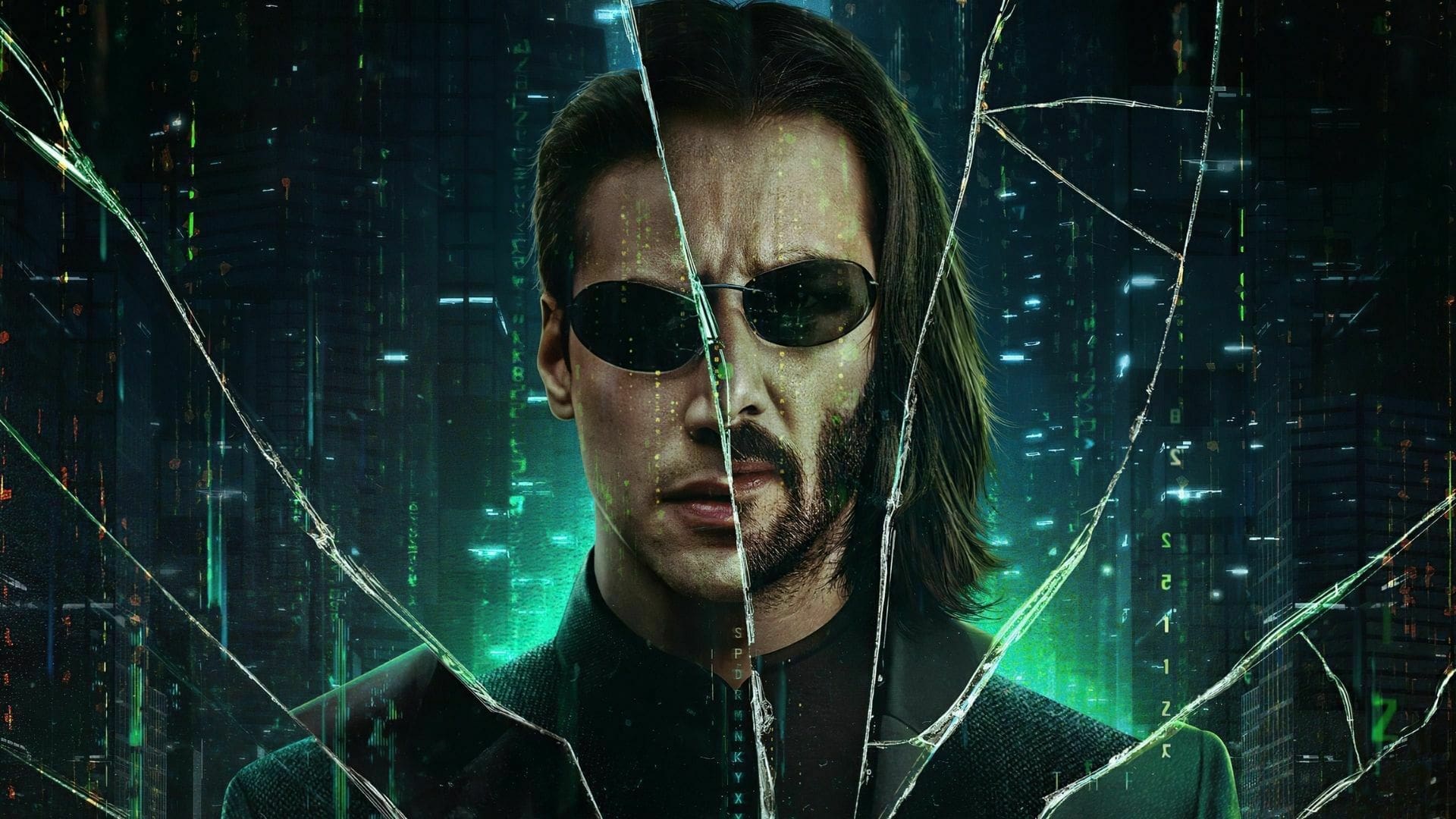
The Matrix – Lost in the source


Hosted by
KT & Oti
Show Notes
Jack in with sentient machines, meta narratives and déjà vu. Jack in with sentient machines, meta narratives and déjà vu. Tilt your head back and open wide as we deconstruct The Matrix films this week.
Referenced


Episode Details
- Duration
- 0:00
- Released
- January 11, 2022
- Category
- Episode
- Hosts


Transcript
Transcript (9,021 words)
Full transcript of The Matrix – Lost in the source.
KT: Howdy from the darkest timeline. It's KT with another PSA. I've actually got two things to say, and it's very similar to our Halloween PSA. The first thing is, it's okay to be wrong. It's okay to feel a way about something, be it film, be it your idealistic views, and it's okay to change them. And it's okay to be challenged by the media that is cinema. You nasty fuckers. Let's get on with the show. Hey, friends and loose pill pocket lovers. It's the For Your Reference podcast with your host, KT.
Oti: And Oti.
KT: Jack in with sentient machines, metanarratives, and deja vu. Jack in with sentient machines, metanarratives, and deja vu. Tilt your head back and open wide as we deconstruct The Matrix films this week. Woo hoo hoo. How are you feeling, Oti?
Oti: I'm excited about this.
KT: I am very excited, but not since Godfather have I felt trepidatious about covering particular films. Oh. Wow, wow, wow. Friends and lovers, welcome, welcome, one and all. If this is how you've entered the For Your Reference matrix, get your Jupiter's cocks ready and welcome. Also to say spoiler, spoiler, spoiler, you can read all of the, you know, general stats and information. I really just want to get into the tantalizing detail of it all. And there's obviously a lot of trivia tidbits and that sort of thing. But I really want to focus on discussing the entity
KT: that has been presented to the world from the beautiful, lovely, ever eternal Wachowskis. And there's there's so much to pick at that there's really no need unless you enjoy film history. Shout outs to Em, our pod twin from Verbal Diorama, she does that very well. But we're really going to get into some really meaty discussion. So, Oti, have you got your adequate amount of loose pill pockets?
Oti: I did.
KT: I've got a lot to say about Morpheus but we'll definitely come to him and all of the characters. I was trying to figure out how to,
KT: I guess go about dissecting the trilogy now quads of it all. And they are some very glutinous quads, might I say. So I'm thinking we do general first impressions on how we felt about each of the films and then we talk about the themes because that will naturally, you know, draw from, you know, the better examples and the not so great examples. And I guess also at the same time, you know, we talk a lot about trying to just enjoy the film for what it is, trying to not get too influenced
KT: by a lot of the dialogue or, you know, whatever people might be feeling, any sort of umbrages, any sort of Delroy Lindel quarrels people might have. I I kind of just try to stay within if I'm going to do extra research, like in our most recent Succession episode, it is out of the mouths of the creators. So I I I don't see that as cheating. I kind of see it as
KT: like you're reading a book. So if you haven't read the book, you can still enjoy it, but you're not necessarily going to get that deeply resonating sort of factor. But what I will say is, you know, if we're getting if we're kicking off first impressions just generally, I wasn't aware of the transness in the first film in particular, and then obviously flowing out into the trilogy. So let's just focus on how
KT: we received each film. And then I guess at the end of the first impressions, we can talk about adding those layers and whether it worked or whether it didn't work for you. So how did you feel? Where was a strapping young Oti when The Matrix first was introduced to you? How did you feel generally about Matrix? I would love to know if The Matrix had bandwidth in Kenya. And how did the first film feel to you?
Oti: It did have bandwidth.
Oti: I think back then, Ayang, Oti was running their own sort of neighborhood video store. So Your Blue Cinema? Yeah. Yeah. All that included. But, wow, I think the the time I watched this, I was so taken aback. Everything felt new, fresh, and just the laudating alone, I think it was in the trailers.
KT: Because you've talked about kung fu and how you enjoyed kung fu. So was it kind
Oti: But it felt different, you know? Yeah. Like, it felt it felt new even though we've watched it many a times.
KT: But I'm saying the sensation when you first watch, like, a martial arts film, you're like, oh, shit's here. Shit's going down.
Oti: But it felt different. And I was so taken aback by everything, the effect. I loved it. Mhmm. I think Keanu then became one of my favorites. Woah. Even before, like, I think that was my introduction to Keanu. Mhmm. And what a great introduction you could have to an actor. Yeah. Absolutely. And it led me down a rabbit hole of me watching everything that he's ever done afterwards.
KT: Seeing what they did to Jada's face in the most recent film was definitely payback for Will Smith not taking it. Yeah. Because we know J to be keeping it tight.
Oti: That's not fair.
KT: First time I've watched the first film, it was only recently, I would say within the last five years, I watched The Matrix for the first time and I was absolutely blown away. I loved it. It was great. I didn't necessarily, identify that there were parallels to the trans experience.
KT: I will talk about it after, but just focusing on watching it for the first time. You know, being a young brown girl in Australia, being having the the the the arms embracing, but also the arms constraining and tethering you to a world of culture, to a world of religion, I definitely felt restricted in particular ways that I could navigate. You weren't molded to move this way. Your decisions are guided, destined by your parents, by your clergy,
KT: and that sort of thing. So that really resonated with me in the first film. And I guess when when we talk about the concept of the matrix, that's kind of what I was dealing with. Because as a young girl, as a young woman, as a brown woman, as someone that was brought up in the Mormon church, there were it wasn't necessarily anything about individual personal feelings. It was about upholding the traditions and the rules, even if they begged to be questioned. Right? So every time I was experiencing,
KT: you know, the red pill, the blue pill sort of situation that resonated to me on that level. I also like the concept of it being pills as in it's a conscious choice, which I'll come to and that's kind of where I wanna draw towards the fourth film. But I kind of like how it was a conscious effort and it was like you had to choose to enter the Matrix, to uphold the Matrix, or to break free from the Matrix. So I was really, really impressed by it. Like you say, the the the mixture
KT: and even when even when we were watching it again leading up to watching the most recent Matrix Resurrections, we even mentioned how a lot of them, especially Agent Smith
KT: and even with Neo, when they would fight with each other, it felt very anime. Right? The most dangerous characters in an anime barely have to move their head when they're in battle, right? Like, it was like a mixture of kung fu, was a mixture of anime, it was a mixture of, you know, a whole litany of what the world has to offer. So even from a storytelling point of view, it was interesting. And there were so many elements that made the first film so great. And then we move into the second film. So again,
KT: like I mentioned, I did watch interviews specifically with Lana Wachowski, and we'll come to that. But I guess just staying in what we knew and what we consumed it as, how did you feel about the second film? Did it kind of feel like the second season of The Wire when we watched it for the first time?
Oti: No. Weirdly not. I think the first time I watched the second one, Reloaded, I enjoyed it. I loved it.
Oti: The Wire to Dready Agents, I felt it. I was like, cool. You know, people are having a laugh about it. Is The Matrix the only place you'll allow white dreads? I fucking loved it. And I think when I watched it just a few days ago, it's sort of this is why I hate going back to things that I thought I loved because I was like, what the fuck am I watching? Yeah. And
Oti: it didn't resonate. And I haven't even you know, this is first impression. I know we we are going to talk about what the creator thought about all this, but.
KT: Oh, that was that was very dogma of you, the creator. Actually, no, that's very on theme for the second film as well. Yes. Continue.
Oti: And I thought, okay, I can hear your words, but I couldn't see it. And it just felt so taken away Uh-huh. From what I love from the first one. And I fucking hate myself a lot because I think growing up, I always held us, oh, Matrix is one of my favorites, because I loved pretty much all three Yeah. On the first watch, even the second watch, because I've watched it multiple times. Okay, bro. And and is what and this is why it's so infuriating to me. Yeah. Yeah. Because having watched it just a few weeks ago,
Oti: it's changing my perception of what I thought was an undeniable sort of great work of a trilogy that worked together to something that I'm a bit shaken on.
KT: Friends and lovers, sometimes the PSAs are directed to you, but perhaps the PSA was directed at Oti. It's okay to be wrong. It's okay to have yourself challenged by cinema. It's fine, but not at the expense of of and and I think we've had these discussions before. You know?
Oti: Should rewatching a movie make it elevated
Oti: to, you know, a better higher rating than you initially watched it, you know, the first time? Mhmm. And to me, I've always been on the side of, at the first watch, it should give me a sense of, you know, something of give me an emblem of greatness in its first interaction with me. You know? But if I missed out on the first one, which I didn't because I thought Reloaded and Revolutions were pretty good until I rewatched them when I'm much, much older now. You've been jaded by the world. And I'm like, what the fuck?
KT: I think your your Matrix plug outlet has been used a bit too much.
Oti: Yeah. And it just saddens me to an extent.
KT: But I would also say on this because we watched Mortal Kombat, the OG Mortal Kombat, and you had so much fun with that. But also in this sense, just because you really loved something when you first watched it and you don't necessarily love it as much now, it doesn't take away from that experience, I would say.
Oti: I think it tarnishes it for me a forebea. Because if if if I was in a question, someone's like, oh, hey, dude. Name some of your favorite movies. And I'm like, rethinking everything that I've that I've rewatched. I can't put The Departed. I can't put The Matrix because, you know, it's first infuriating.
KT: Yeah, I suppose. But I I didn't really like the second film. I didn't really like the third film.
Oti: Or the first watch.
KT: Well, and and and Friends and Lovers, you know, I'm still trying to decide how I feel about, you know, releasing another cut even though we understand the circumstances around Snyder not being able to finish the Justice League. And I think between Oti and I, we can agree that the Snyder cut is much better than the Whedon cut. Right? I don't give a lot of I
KT: guess I consider it. I guess I'm conscious of it. But the the end result is the end result. I I don't tend to spend a lot of time giving tax to circumstances, but I will lay them here because what was laid out in the first film of The Matrix was the control in the Wachowskis' hands, being allowed to create what they wanted to and the vision that they had set out. The second film felt like there was some Interference. Absolutely. And as far as I understand, like anything in in work sort of circumstances
KT: where someone else is bankrolling whatever you're working on, there is that sense of obligation, there is that sense of having mainstream appeal, there is or maybe just people people just like having perfume sex orgy scenes. Right? There are a lot of tits, there are a lot of ass, like, cool. Fine. Give me a Spartacus, but give me also a storyline as well. So if we're talking about the overarching storytelling in the second film, I really enjoyed it. But a lot of it got diluted by unnecessary
KT: scenes and unnecessary characters that we were following. But again, I don't do it a lot but I do give graces to the Wachowskis because, you know, maybe the world wasn't ready to accept the Matrix in its full form because you see a lot of androgyny in the first Matrix. Right? And even with my twenty twenty eyes, you could see that there was straddling the heteronormative world and just unbridled love and passion. Like you could definitely see the duality between those worlds in the original Matrix.
KT: But the second film, I do feel fell victim to it. I do like the idea of questioning the powers that be, being the Oracle. I really enjoyed that because I'm all about holding institutions to account. I really enjoyed that. But again, I just think it got diluted. If we're talking about the actual storytelling and seeing what the potential could be, If I could be KT Gordon Ramsay, all of the elements were there, but they fucked it up. Like it just like didn't fully deliver itself, but I liked the concept of the second film.
KT: The third film, there really wasn't it kind of got taken over a lot more, which was unfortunate. But shout outs to Nathaniel Lees and we recently saw him in The Legend of Baron To'a as well. So shout outs to our Australian, New Zealand, Pacifica friends and lovers that understand that reference. But as a trilogy,
KT: it was only really the first film. Like, the first film is really the only film that stood on its own. And I think for a lot of the time, no one really paid attention to the second and third, which is really interesting to me. I didn't know you liked the second and third as much as you did because I certainly didn't. But the trilogy, it's the same thing like when I mentioned Godfather. I only really regard the first two Godfathers. When it came to the trilogy,
KT: I only really regarded the first one.
Oti: I see that now. But even when I was trying to get you to, you know, I think it was a few years back, I was like pushing you to start watching The Matrix. I was so excited for you to delve into the world, especially when you go outside of the first one, which is well beloved. And diving into the lesser loved ones and Reloaded Revolutions, I was like, you know, be patient with it because I think there's something in there, which is interesting because it wasn't up, well, maybe five years max.
Oti: But having watched it now and looking at Revolutions because I I struggled. I really struggled getting through it even though I knew everything that happened. When I say nostalgia plays a big part in in in my everyday sort of enjoyment of something that I've watched before, especially my childhood. Mhmm. This is
Oti: one of the most popular things. Yeah. Like, it's if you mention it to someone randomly, they're gonna know about it and they're gonna enjoy it and you're gonna have a great discussion. Yeah. It's like it's a it's a fucking classic conversation
Oti: icebreaker. You know? Yeah. Or how how well how much do you love Matrix Reloaded? You know? How much do you love Revolutions? It's it's it's just
KT: Why are you why are you releasing your audition tapes? I'm sorry to tell you. They casted Yahya.
Oti: I'm just like, and that's the struggle. Right? Because sitting here and thinking that even having finished Revolutions, having watched Revolutions, I was like, it was arduous to a point. Uh-huh. It felt like your classic money grab sort of thing. You know? Yeah. If you're investing in crypto, felt like those sort of new coins that just, you know, pew pew, a lot of social, so and they rug pull you. It felt like that.
KT: I think you've been lost in the source because I don't even understand what you were saying. But yeah, I guess the trilogy was left alone and then we come to Matrix Resurrections and the title is apt because Lana Wachowski talks about how she was dealing with the loss of multiple loved ones in her life. And, you know, Neo and Trinity, there was comfort in that. And she was started writing, Lilly didn't necessarily get involved in particular with this film. But it was it was a catharsis and it was
KT: it was her choice, which is important to talk about, right? And that's kind of one of the themes that I wanna come to in a moment in regards to the meta timeline but we get Matrix Resurrections And I think what is on everyone's hot little tongue and ear tips is how did you feel about Matrix Resurrection, sir?
Oti: The Satan heals all wounds. I think by the time this came about with all the sort of vitriol they read online about people not wanting it back and danishing the matrix Uh-huh. I was eager to see what they're gonna do with it. I was excited. I think, fuck it. Hollywood is gonna make money from shit, so might as well get your favorite IPs from your childhood back. I enjoyed it to some extent, but I think having seen how the third one finished,
Oti: I didn't know what they're gonna do with it. You know? And having to bring him back with forgetting everything, I was like, I really don't like that sort of aspect. I feel like it's a crutch used so, so many times. Uh-huh. Mate, that's the only gripe that I had with the movie. But every other bit, I think, it was quite enjoyable. Up until to a point where we had Trinidad and Tobias, like, fuck sakes.
KT: Like, what did you even want then? I don't know. I don't know what I wanted. This should have been a soft insertion for you considering considering you're probably in the very rare minority that enjoy the second and third, this should have been a soft insertion for you.
Oti: I know, I know it should have been easy.
Oti: I was sitting there thinking, okay, she's flying now? Oh, cool. I don't know. I'm a simple man, mate.
KT: A simple man with short film concepts. Okay. So I guess watching Matrix Resurrections, I hadn't done a deep dive into interviews and that sort of thing in regards to Lana Wachowski and her goal and her vision behind the Matrix. However, being a film podcast for almost three years, I I was I had a periphery of the fact that there was some sort of transness parallel to The Matrix. I didn't read into it because I didn't wanna read into it just so I could watch the film eventually from when it was first announced.
KT: But in recent years, that has been sort of the general sort of periphery for all that are embedded in film, so to speak and discussion and dialogue and that sort of thing. So I didn't really know anything about it aside from reading a bit about the Wachowskis. However, if I have ever felt a washing over and a cleansing of my soul and being resurrected in cinema, this is where I found it. This is where I find my congregation. And this is why films are so fucking special and they're fucking great.
KT: And I'm not to the point where I need to mute the film bros. And even though Oti is realizing that he is sentient, but albeit a film bro, I loved everything about Matrix Resurrections. I I every so often rewatch the scene where Bugs is talking to Neo about how the Matrix was something so special and they took it and they trivialized it. And, you know, there were so many themes that you could see resonated on levels that perhaps weren't for us specifically,
KT: but you know that it means so much. And we talk about, you know, the Taika-isms. Jojo Rabbit didn't necessarily work for us, but in a lot of Taika Waititi's filmography, he doesn't show us the full gut punch. However, if you have the experience, you can fill in the gaps. And we also talk about Boy. They don't have, you know, It's a Wonderful Life open punching kids in the face. But
KT: when you're watching Boy and, you know, if you're like me and you can fill in those gaps, it resonates all the way without having to show it on screen. Right? This is where we enter the Wachowskiisms. Because when you watch the Matrix films, perhaps the inferior second and third, but when you watch the Matrix films, there is so much consideration to the world that has been created known as the Matrix that even if you aren't trans or part of the LGBT community, there are other layers that you can resonate with.
KT: If you're just, hey, cool, bro. Take a pill. Go into computer land. Then fine. That is absolutely fine as well. But I can only imagine how much healing and how much it meant to trans people to watch the Matrix films and then see it crumble before their eyes by people that only wanted to take it on surface level. And that's what it was so I loved it. I loved it. I loved it so much. And it was a merry-go-round, and I've watched it three times.
KT: And I just I I just this is this is the perfect, lovely, beautiful thing that I love about cinema. Period. Full stop.
Oti: I I I love the the aspect of having a growing having a community rally behind it and getting messaging and, you know, representation. We know that it's key. We've always screamed it at the top of our lungs. I get that aspect of it. I hear an Oti, but No. No. No. But if you had not told me because I don't go looking for what the creator says or what they thought the messaging that they're trying to deliver, I've done that
Oti: very few times. I think Enemy is one of the ones that I just had to go and look what the creator actually thought he was doing. Uh-huh. So for Matrix, I never bothered. I took it as, you know, as you'd call me, a surface, you know, a film bro, surface level, you know, sort of kind of Yeah. Yeah. Verbalize that, sir. Cool. But if you had not mentioned that there's an added layer of transgender community or representation in the movie, I would have never picked it up.
KT: Yeah. But but that's what I'm saying. So that that's what I'm saying. So there's the Taika-isms and there's the Wachowskiisms where even if you don't have that experience, you can still resonate with it, but it's going to hit more if you do have that experience. That's what I'm saying.
Oti: Cool. And we I think we watched you told me that, I think, after we'd finished watching the rewatching the first one. Uh-huh. And I started going back through all the scenes and trying to make sense of it because I couldn't still understand how. You know? And, you know, KT is patient. She walked me through it.
KT: Are you is this the equivalent of you being Tom Hanks in The Da Vinci Code and you're trying to gain the meaning of The Matrix? You're gonna look for some symbols, Oti? The code is Apple, mate. What are you guys? But the point the point of what I'm saying, Oti, is, you know, it's it's for everyone to enjoy, but it's not going to resonate as much for you. But that doesn't mean that the film isn't bad. That doesn't mean it's withholding the story.
Oti: That's just layers, bro. Cool. And I'm I'm all for layers. I'm all for layers that maybe I couldn't decipher or even pick up in the movie, and that's fine.
KT: Well, I guess if we want to straddle something
KT: a bit more lighter, let's talk about the casting in Matrix Resurrections. Does any of your abacus equations equal Yahya to Laurence Fishburne?
Oti: I'm not sure what the the Yahya direction. It felt weird.
KT: But can we just say he's had a lot of iconic roles within the last two years?
Oti: Can't Morpheus and he can't Morpheus and Candyman in the same year. And Watchmen. Yeah. Well, fair enough to him, I think. He did fine, but Morpheus in my head was all the oh, older gentleman, you know? The wise guy. He's just young.
KT: There was a bit too much pep. There was a bit too much pep. Laurence Fishburne played it very straight, which was very interesting because Hugo Weaving played Smith very straight, but somehow that nostril digging works between the two of them. Usually, there's a there's a sort of shift, but both of them played it very straight. But yeah, Yahya, I'm not necessarily I don't know. I I'm still scratching my head. Like, it's not to do anything with, talent and acting ability, but I just don't agree. But I really enjoyed Jonathan Groff as Smith.
KT: You would think that you would want a Hugo Weaving performance, but somehow, our spitting king man from Hamilton was able to completely take me away. He brings it.
Oti: Oh, absolutely. Absolutely.
KT: But just generally, I really enjoyed Matrix Resurrections. I think we don't really do it a lot, not numerical wise, but where would you what would be your top to bottom of these films? Oh,
Oti: top would definitely be the first one. Matrix, the OG. It's one of the best. And Resurrection would come in second because the second and the third one, I still think, even despite the fact you've told me about what all what what the meaning is or what the messaging was meant to be, I still couldn't really see that to a completion or or take into the aspect of how the second one was so much action scenes. It felt weird. Right? Yeah. But
Oti: you know what? Resurrection will come in second because I think it's it's it did a good job in in in just from a standard movie storyline perspective. Uh-huh. And it would follow with, my third would be Revolutions and then Reloaded.
KT: Okay. I'm the same for you, but I would swap Reloaded and Revolutions.
Oti: Reloaded will be your second. Your third?
KT: Yes.
Oti: Oh, you like your white dreaded people,
KT: And because we won't spend a lot of time on it, I feel like we're gonna spend more time with the first and fourth film. I wanna hashtag justice for Locke because I really liked Locke and I don't think he gets his due.
Oti: Locke was a dickhead.
KT: You're a dickhead. How about that? You wanna bring some rudimentary commentary?
Oti: There you go, sir. No. Like know what Locke is? Yes. You're wagging that finger at me again. Yes. Locke is is is the is the African leader appointed by the British colony, happy to serve the people while still being oppressed. And he's like, but we're doing well. Let's not rubble the nest.
KT: What do you mean you wanna be free? Freedom?
Oti: What do you mean? I'm I'm I'm I'm the boss. I'm getting my pay. You know? Wow. Let's let's let's stall the common line. Let's keep the status quo. That is fucking Locke. Locke is the problem, and people like Locke are the problems in society. Fucking rat fuckers. I'm just saying. I'm saying, I
KT: Usually, colonization is in my deck of cards, but there you go, Oti.
Oti: Well, I can't really fucking fight you on that. Right? Yeah. Locke is a problem. He gave that energy to Niobe in Resurrections. I'm like, me?
KT: Well, what I will say is Morpheus would never listen to anyone and that's always going to be a problem in a particular operation. And he never really I don't know. Morpheus reminded me of Raiden from Mortal Kombat. Like, what is your purpose, bro? Either help or piss off.
Oti: But Morpheus was helping. It's supposed
Oti: talking you're about helping. You're saying who he was helping. He was trying to bring the people of Zion to their feet to fight, to believe in something, you know? Did you not cry when he made his speech in Reloaded?
KT: Don't worry about it. Mind your business.
Oti: I'm just saying, Locke was happy to maintain status quo. Not let's not rattle. It's working. This for for peace is is fine by me, you know, and to what degree and to what you know? And and I believe, generally, Morpheus was trying to shock the system, and that's that's a very good thing.
KT: Yeah. Absolutely. But that's only in the instance that he's right. Morpheus will never Morpheus will never fall in line unless he's the one at the helm. But that's a different no. Let's not turn this into a militant film discussion because that's not where
KT: I wanna go. But you've said a couple of things and I'm gonna need to pull you up on it and anyone else that is fighting with these qualms. There is the the component of expectation. Just because it has now been shared that there is more than surface level to the film, it doesn't take away from what you experience in the film. Not you necessarily because we've tried to KT, Bobby Brown exorcist that toxic masculinity out of Oti.
KT: But there is this toxicity of, oh, this is for trans people? Fuck that. This is my film. And it's like, no. No. Fuck off. Films don't fucking belong to you. Especially if they weren't for you, you fuckers. Fuck off.
Oti: Again, it's fine for people to perceive how the movie how they wanna perceive it. Uh-huh. Regardless of what the creator's intentions are or not. You know? When we're watching you brought up a lot of Taika-isms. But when he when he was talking about Jojo Rabbit didn't sit well with us, but his intentions were fucking different. You know? It doesn't matter. At the end of the day, people are gonna have their own perceptions of things, and that's just a fact.
KT: And and here is what we come to. Here is what we come to, Oti. With a dodgy Google search and watching half of a twenty minute YouTube video Oti, I am going to attempt to explain deconstruction to you Oti. So this is exactly all of the threads, all of the James Cameron in someday we're going to have Avatar two tentacles. Right? Yeah. So there is the Matrix films.
KT: Where does the meaning lie? Does it lie in the films as an entity? Does it lie in the Wachowskis that wrote it? Or does it lie in the audience that consume it? Where does the meaning lie? And that hopefully, friends and lovers, will whet your palate to the understanding of matrix, the Matrix as a concept. Lana Wachowski talks about the trilogy of the films, how they had a purpose. They set out to do it, and I guess depending on how you feel, you agree or you scorn
KT: it. But essentially, the first film and this was very interesting because I didn't even realize this either. But Lana Wachowski talks about how, you know, people talk about the Matrix as society, as the rules culturally, religiously, whatever it is. These are these are what we are bound by as humans. But she was perplexed that people didn't even apply that to films because essentially films are little matrixes.
KT: Whether you buy into it or not, when you watch a film, when you watch a TV show, you are introduced to the premise of it, the rules are explained to you and how the characters are bound by those rules. So even films are a microcosm of the matrix. Right?
Oti: I read. Yeah. Okay. Thank you.
KT: Thank you. Our our residential farting straight man on Q-Force representative. Thank you very much. So so that is the matrix. Right? So it's it's literal input to our ears and our eyes and hopefully our hearts. We just sit there and accept whatever the film tells us. Right? And that's supposed to also mirror near Neo's experience throughout the trilogy. The second film is, okay, we've got these set rules. Now we question them. Why is it set up this way? Where is the power shifting? Who benefits
KT: from the rules being set that way? Right? So that's us as an audience. That's also as Neo as well. And it it really becomes that dynamic sort of shift. Whether you felt that, and I guess that's what what Oti is saying, whether you felt that watching the film, that was the intention of it. And then the third film is breaking free of The Matrix. Right? And that's kind of the sort of trajectory
KT: that we're looking at at the three films. And it was really interesting because I, again, I didn't think of films as a matrix, but it's true. Whether you buy into the rules or not, you sit there, you get shoveled shit and you enjoy shit. Sorry, did you say Marvel? You keep asking for fan service, thought I heard Marvel. But I really, obviously, it doesn't change the way I feel about the second and third film. But it really does help to, you know, fill in the gaps of the intentions and unfortunately, creativity being stifled
KT: for whatever reason. Right? And I guess, you know, maybe for no reason, but for all of the reasons, Issa Rae was eventually given free reign and she could create five seasons of a show that she loves and she's proud of in Insecure.
Oti: Yeah. And she was proud and she knew what she wanted to deliver and she refused when they wanted to control her into the sort of into the mainstream sort of mindset of who she should cast or
KT: Yeah. But you also need to have power and it also needs to be beneficial in dollar signs from a network point of view. It's the same thing when, like, Academy Awards or award bodies pat themselves on the back for having the first black, the first Asian, and it's like, that's embarrassing. Like, if it's taken the 2020s to have this milestone, then that's fucking shame on you. Right? So it's what I'm saying is sometimes creativity gets stifled. Hopefully, we get to a point where we can have, you know, more unbridled, fully realized storytelling. But I do feel like a lot of the Matrix trilogy
KT: was stifled by it. So I wanna talk about, and we kind of already have been talking about, but I wanna talk about Matrix as a concept.
Oti: I agree with you. Like books, movies, all mini matrixes. You know, we were set up this world and we live by the laws of that world. But when you brought up the deconstruction theory, in my mind, and hopefully a lot of people would agree with this, whatever movie you watch, it's up to the audience on what the meaning lies. Because you could have movies like Cuties
Oti: that had their own fucking intentions.
KT: Do we have to have movies like Cuties?
Oti: Like, it's it's it's the perfect example of it, isn't it? The creator had one thing in mind, but the audience was like, what the fuck? Or at least most of the audience.
KT: You are talking about African chicken Georges.
KT: You are talking about vulnerable young girls. What am I supposed to say to that?
Oti: I'll give you an example of where the power lies in terms of the messaging.
KT: Mhmm. I I feel I feel some very strong man holding right now, man strong arming me, but it's okay.
Oti: No. No. No. But it's true. You know? And words mean a lot. Whatever you put out there, people will consume it differently. Uh-huh. And you cannot say, oh, your intention come back and say, oh, this is the meaning all along. Fine. I can and, like, I can accept that. I can understand that. I even at some point, I could go back and revisit it and see maybe, oh, I picked this nugget up, which I missed initially. You know? And that's the whole fun of movies and and storytelling. I love what the the Wachowskis have done with this. And
Oti: hearing them talk about them being either being stifled and not being able to tell the story the way they wanted it's sad it is sad because I think maybe
KT: but even then they're not outrightly saying it but it's insinuated
Oti: It's insinuated, heavily insinuated.
KT: But even if you pull the quotes of the first Matrix which I'm not gonna do now but feel free to do a Google search, there was a lot of dialogue of, you know, we don't belong here, only if you belong here you'll be safe and that sort of thing. There was a talk about vulnerability for people and it was there but it wasn't hitting you over the face, right? So I like it, I it, I like that it sits with me as well. I wanna go to the next theme and it's the meta timeline.
KT: And we've kind of already talked about it and I guess, you know, you can really just talk about it in Matrix Resurrections but you're kind of missing the whole picture because I guess, well, how did you feel about the meta timeline in Matrix Resurrections before I go my KT Broflovski rant?
Oti: I think it was a bit too overhanded.
Oti: They overused that so much.
KT: KT Broflovski rant loading.
Oti: No. Like like every aspect was like, oh, when the president would love it, like, we all may drink. Now we're gonna do come on now. It felt a bit too much in your face. Being self aware is fucking key, but throwing out throwing it in every fucking sentence is a problem. Well, was Space Jam. That wasn't necessarily this film. I don't agree. Don't you think they did it too much?
KT: Well, let's just say this. The first like, the first sort of forty minutes of the film, I didn't think I was going to get anything out of this. And I think I cried like three, four times separately throughout the rest of the film because I felt so much watching this film. But, yeah, that felt very on the nose to me. But once you realize, it's it's kind of like the greater early seasons of Community. Right?
Oti: No. It's like everyone wants to be fucking Community now.
KT: But what you don't understand is, in this case, Warner Brothers is a machine, and it's going to continue to churn out these sequel babies, these reboot babies, these remake babies. And in recent memory, there are only two great examples of me witnessing the success of trying to revive something. And that's this Matrix Resurrections and it's the Chucky TV show. There's been so many duds in in trying to revive stuff, whether it's a money grab, whether there's an earnest attempt, I think Will Smith's Bel-Air kind of straddles both of them, but I guess
KT: time will tell. But I understood what was happening there. And that's when we get that really emotional scene between Bugs and Neo saying they trivialized it in a game, So much meaning, so much hurt for so many people, and they turned it into something so fucking trivial. You know? I I loved it. I loved it. I loved it. And it's it's not even one of those, I'm not Adam McKay and fucking Don't Look Up. I'm not saying you didn't enjoy it because you don't fucking understand it because that's that's some highbrow
KT: snobby snootery that I'm not into. Right? I'm a wanker. I'm not a snob, though. But what I will say is it hit me in all of the levels that I needed to fill in any good film that I enjoy. And the meta timeline, I think, worked very well because,
KT: you know, it couldn't be done again. And, you know, Lana Wachowski talks about it as well, very cutely shading anything that they did in the first Matrix has been done so many times by other people. So there's no way they could have done it in Matrix Resurrections. Even when you see the fighting scenes, they're different, Right? The revolutionizing of a mixture of fighting styles that we see in the first Matrix, so many films you can think of at the top of your head has picked up off of that. Shout out to Chad Stahelski
KT: for seeing him, the handsome Chad of it all, Oti in his snotty Reddit corners of the world. But I really enjoyed the meta timeline. From a storytelling point of view, it was interesting because it was something different. When we saw the scene with Trinity, I was like, okay. Even when Yahya sorry. Loose Pill Pocket Morpheus was he was essentially saying the same lines because we had watched the first one very close, you know, essentially every night until we watch Resurrections.
KT: So that dialogue was exactly the same. And I'm like, are we literally going to get a make for make like film again? And then we see Bugs, right? And it kind of, it turns a shift. So we're seeing the film that we know that we've known for decades, but we're getting a spin to it. Right? Yeah. I enjoyed that component of it. From a storytelling point of view and also from just a commentary point of view of how much of a legacy Matrix has had on everyone.
Oti: I get your point of view, and I think it's my second favorite in the franchise. So goes to show you that it had some coherent storyline. I did enjoy it to some extent.
KT: I guess, just going back to that question, because it is an interesting question about where does the meaning lie. For you, does it depend on the piece of art? Is it on a case by case basis? Where where do you think the meaning lies?
Oti: I think that meaning sits with the audience and how they consume whatever story. I think the creator can be can use their tools for storytelling that would convey what they want to. But best case scenario is everyone gets it or most of the people get it. Sometimes, if it's not as clear or, you know, if it if it requires some
Oti: deeper level of of digging to get the meaning, then most people would not get it, would miss it. So to me, the meaning comes from the people watching it and how they consume it and how they take it based off their experiences, based off words or whatever moment or whatever. Even the mood they're in when consuming it plays a part. So it's it's a huge variable. The creator can can mold and and
Oti: try as much as possible to have this meaning. And and be it that they, you know, release it twenty years after the fact, and they say, oh, this is what we meant all along. Fair enough. But I think most of the time, people would take their own meanings and say, oh, this is what he meant. And, you know and the classic example of this is is the Bible. If you have people writing all those stories, and at the end of the day, you have different people
KT: Denominations.
Oti: Pulling out their own
Oti: passages to pass out their own meanings and to rally people behind that. So it's all a tool, man.
KT: And I think it also talks about like ownership.
KT: Right? Like, once something is released, does it still does the ownership sit with those that are consuming it? And I hate to mention the biggest Horcrux, but I would say Harry Potter lives in the power of the fans that enjoy Harry Potter because it means so much and you don't necessarily wanna give power to she who shall not be named. Right? So I get what you're saying, but it's definitely interesting sort of more so and maybe we'll chew on it offline if you're nasty. But it's definitely something that's interesting. But
KT: you did mention something that I don't necessarily agree with about. Yeah. I know. Very rare. Just about the fact that storylines that just get created, the meta timeline is a response to how the world received the Matrix trilogy.
Oti: Which could have been done in a sentence. I'm just saying.
KT: I don't think so. I think I think it was clever the way that Matrix Resurrections did it. There was there was a very conscious sense of we put our baby out there and you unfortunately toddled and Tiara ed it. So it can only have existed in the time that it was released and it was in response to it became bigger than Ben-Hur, Matrix, when it was such an insular resonating sort of premise. And again, like, even just me simply, I resonated on it as well because there are so many constraints
KT: that we have in our day to day and how we conduct ourselves.
KT: Do we wanna continue it? Is that what we wanna do? And it becomes a conscious decision. So I really enjoyed that.
Oti: Cool. I can't argue with that. I think you've watched it three times now. Yeah. So I've only watched it once. And for my taking, it was a bit overused. I got it, and I felt like, cool. You know what? Move on from it. But if if I needed to rewatch it to appreciate it more, maybe that's just the case.
KT: Yeah. But you don't have to. Like, you watch it the way you want to.
KT: Because the power is with the people.
KT: I'm so sorry to tell you, Oti, but Daniel Kaluuya was casted for Judas and the Black Messiah. I'm I'm sorry they didn't tell you.
Oti: I'm shooting my shot. Come on.
KT: I'm I'm sorry they didn't tell you that they've already filmed it and released it. Friends and lovers. This was a very Matrix Resurrections take on the Matrix films this week. Don't know. Like, we definitely could have talked about characters. We could have talked about the slick fighting choreography, but this is definitely where I wanted to stay because there's so much layers, there's so much complexity.
KT: And, you know, you love Black Mirror so much. We both love, well, particularly the earlier seasons of Black Mirror. And this is essentially a real life Black Mirror. It is a commentary about modern consumption, about wanting more and getting frustrated when your fan service doesn't get delivered straight to your love places.
Oti: I don't fully agree with that.
KT: Because I don't think you see as much depth as I do in this film.
Oti: Fair enough. I think to me at the very least, I felt like two and three was super commercialized, be it they have meaning or other hidden messages. Fine. I can accept that. But all that comes after the fact, Mhmm. At least in my watching experience.
Oti: And I'd need to sit with that and to start and see, okay. So the next time I watch Matrix, I'll have this in mind. And I'd have a different sort of lens watching it or I'll be looking for different things.
KT: You know what, Oti? Like, you're the kid in the playground that comes with a William Regal four ring knuckle.
KT: Like, I'm here being really open saying, if you don't understand it, that's not why you didn't enjoy it. And you're just like, I have to like it the first time.
Oti: No. Don't. No. You're coming with me with an energy that, a, I need to understand this based off the creator's words after the fact. While I spent whatever it is, whatever it's her movie, it's her IP. Fair enough. But the messaging is out there for people who watched it ages ago who took it in a different way, and that's not a bad thing.
Oti: And I me having to sit and rewatch so that I can understand where that is coming from after the fact, it's not an issue.
KT: But that's not what I said, bro.
Oti: So what what are you saying?
KT: I'm not saying that everyone has to toe a line or everyone has to understand or or accept whatever the creator says.
Oti: No, because I'm saying I enjoyed it even without doing all of that research. Fine. And it was fun. And like I told you, the second and third movies in the franchise were one of my favorites. Like, I think even in one of the episodes in in our in our earlier podcast, I've referenced Reloaded a couple of times. So
Oti: it's it's not me saying that I don't like you. I hate it. No. I love the franchise. It's only became an issue when I had to sit down and rewatch the whole thing. Was like, hey, this is not as good as I thought it was.
KT: Yeah. No. I get it. But I think what I'm what I'm trying to say is you love you love Black Panther. Right? It's the first episode on our 100 plus podcast that we have. Yeah. So how would you rate it out of 10 just to humor us?
Oti: Probably a nine.
KT: Okay. What if you found out Wakanda was based in Kenya?
Oti: A 10.
KT: Well, there you go, friends and lovers.
Oti: I think this way you also take a bit of the messaging and the context and what what Black Panther I think was at the forefront was more than just what was on the storyline or what was just being
KT: Yeah. But but that's the Taika-isms of it all. That's what I'm saying. So if you have a particular frame of reference, it's going to hit you more than it's gonna hit other people, but it doesn't mean that it can't be enjoyed by all. Couldn't just you couldn't just let me have my sixty minute journalism, couldn't you?
Oti: No. No. No. Not at my expense. I won't have that because at the end of the day, I did love the franchise. I still love semi love the franchise. I thought Resurrections was quite enjoyable. You threw African dictators at me. You threw protecting vulnerable young girls at me. Let me have my moment.
KT: Let me have my fucking moment.
Oti: That was just me painting a picture that the creator's message doesn't mean shit when it hits the audience's ears. Because at the end of the day, it's them that they have to translate it into whatever resonates with them. But that's a philosophical debate because it's there's no right or wrong answer. The highway to hell, mate, paved by good intentions or intentions nonetheless. Doesn't mean shit. I'm just saying.
KT: And this, friends and lovers, is what happens when you get straights trying to discuss the complexities of a world that wasn't theirs.
Oti: Oh, fuck off.
KT: You've got last word man syndrome, don't you?
Oti: I do.
KT: Can I plug out and never plug into this matrix again, this Oti matrix?
Oti: Plug out, mate.
KT: Feel free to continue in Oti's matrix. We're gonna finish off in a segment we call For Your Reference, Oti.
Oti: Having heard everything that was said today, I wanna give everyone a homework. Go read what the creator says about this movie, what they wanted and what the message they wanted to put forth, and then rewatch The Matrix. And hopefully, we can all be in the nirvana that is in KT right now.
KT: Look at Oti breaking the For Your Reference Matrix. Yeah.
KT: I am going to reference a very recent watch for us, and I'm sure will be a upcoming episode, Doom Patrol. Nice. Danny Street is the safe word, friends and lovers. If you'd like to know Oti's safe word on Twitter and Instagram, we're at ForYourRefPod. Write us an email at hello@fyrpodcast.com. We're also on did you know insanity and love have the same passion podcast if you like to leave a rating and review. And we'll see you guys next week. See you. Bye.
Related on FYR
Discussion
Loading comments...