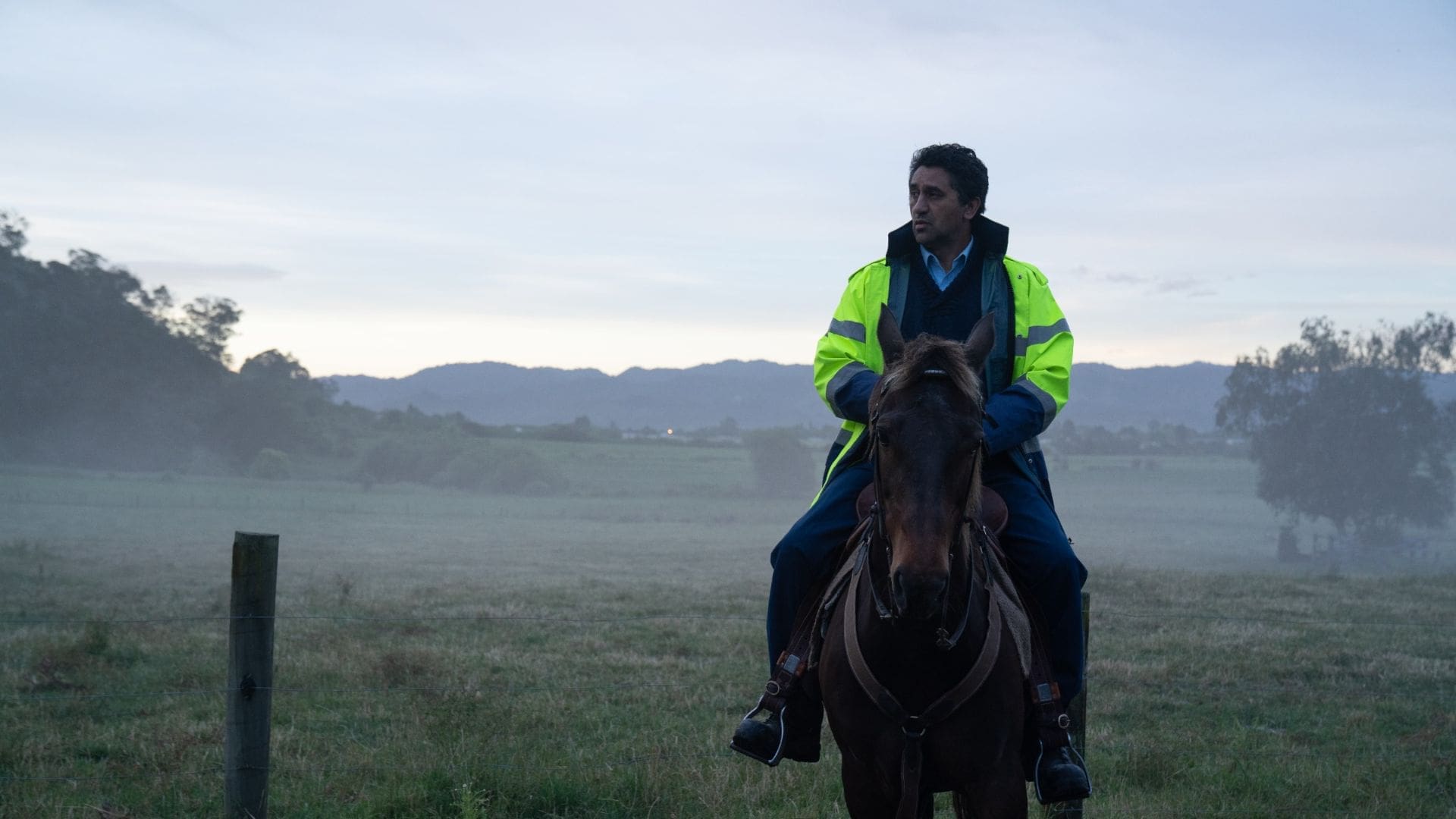
MURU – First Raid Kit


Hosted by
KT & Oti
Show Notes
Dive into the waters of community, legacy and peace through centuries of rich history in Aotearoa. Prepare for the Aunty ambush with MURU this week.
Referenced


Oti's Picks
Referenced in this episode

Episode Details
- Duration
- 0:00
- Released
- October 18, 2022
- Category
- Episode
- Hosts

Transcript
Transcript (7,494 words)
Full transcript of MURU – First Raid Kit.
KT: It's another week in the For Your Reference household, and it is another edition of Indigenous storytelling, Oti. Very exciting. If you are listening in a linear timeline and you are based in Australia. Muru is currently out in Australian cinemas. Also very excitingly Muru has been selected as New Zealand's official submission for the 2023 Academy Awards. Nice for best international feature film and between us, perhaps we're endorsed by us, right?
Oti: Mm-hmm. fully dissolved.
KT: Also the Asia Pacific Screen Awards have announced that Muru is the winner of absolute cultural diversity award.
Oti: Woo.
KT: Woohoohoo, are you ready for a revolution? Let's get on with the show. Kia ora. Friends and conflicted lovers. Welcome back to the For Your Reference Podcast. I'm here, KT
Oti: and Oti
KT: dive into the waters of community, legacy, and peace through centuries rich history in Aotearoa.
Oti: Mm-hmm
KT: Prepare for the ambush with Muru this week. Wow. Woohoo. How are you feeling? Oti? We literally just watched it. Before we get into general start information, just an emotional checkin, how are you feeling? My love.
Oti: I was a bit weighted down by it all. I think just seeing how everything transpired and, and it shook me. To my core and um, yeah, that's why my head space out at, at the moment.
KT: but it's important to talk about it, right?
Oti: It sure is.
KT: Yeah. Cause I know, um, even very recently in Django you talked about not wanting to see black people suffer on screen. I think that extends to Brown people as well, right?
Oti: Yeah.
KT: Um, but it was definitely done in a way that it absolutely needs to be talked about. And I'm glad it was portrayed in a way that was done with care.
Oti: Mm.
KT: Um, while we are here, I just wanna lay my love and appreciation to Tearepa Kahi as well as Tame. Thank you so much, uh, for your time. I had a nice stour, um, having the interview and definitely go and check that out if you haven't already. Um, we're gonna get into general start information. Written and directed by Tearepa Kahi, produced by Kahi, Tame, Selina Joe, Executive producers Timothy White, Richard Fletcher, Cliff Curtis. My heart. Your heart.
Oti: Mm-hmm.
KT: Everyone's heart. Kelly Rogers, Tearepa Kahi, Greg Hamilton, Ying Ye, as well as Ryan Hamilton. What a stacked, stacked cast We have Cliff Curtis. Well continue to give all the kisses, uh, friends and lovers in rt. Tell Uncle Cliff that KT says hi. Jay Ryan, Manu Bennett. Oh, we need to talk about, uh, Kim, your not Manu specifically, but I will say just to bring some levity, I will say if, if, if man's throwing down, I just, no one's going to beat him like in a fist fight.
Oti: Yeah.
KT: In a fist fight, even if we're talking about Crixus, if we're talking about Manu, like no one, no one can go toe to toe with him. Um, and then we also have Simone Kessell as well as Tame Iti. Wow. Okay. Well let's get into the portion of first impressions. Uh, Oti. Um, I had the opportunity to watch it before doing the interview, so I have watched it twice now, and this is the first time literally hot off the pain, but also the, the, the joy as well.
KT: Um, how are you feeling? Did you know anything leading up to this? Um, and where do we find you now? My love,
Oti: I didn't know much about it. I think he talked to me about it after he'd watched it the first time. And for my impression at least, I thought it had to do with the dawn raids. And you saw eloquently put to me, not everything is, you know, not every raid was the dawn raid. In New Zealand there's
KT: unfortunately there's more than one type of raid in New Zealand.
Oti: clearly, uh. So I really didn't know much about it going in and wow. I think just getting exported into the sort of environment and seeing how it's been filmed so nicely and, and the characters, you know, from seeing how I resonated with. With Rusty, you know, we've had so many people in our, in our lives that, you know, through our sort of growing up who are all Rusty, so
KT: well even, uh, Tearepa as well as Tame talked about at many points in life they were Rusty as well.
Oti: Yeah. And it just, it's one of those things that just took me aback. Uh, Cliff got his character. Wow. Uncle Taffy, Can I call him that
KT: Of course you can.
Oti: Uh, bloody hell, like I think all the characters played well off each other. Um, even, you know, I, I didn't really appreciate Kim's character in this, but there's a lot of Kims in our lives in
KT: Who are you fighting?
Oti: We know Kims, you know,
KT: unless you are
Oti: If you don't Kim, you're a fuck Kim. No, but, but seriously, uh, wow.
KT: Fuck you in the Kimmy you claim, right?
Oti: But wow. I think by the end of the movie I was just, I needed a few moments to just compose myself. Uh, I think I've seen it all. And then you hear stories about different cultures and different people who are going through a lot of shit as well, and you're like, Fuck, you know, man, you'd expect better. You'd hope for better. you, I know, I know. I think naivety is a cloak that we all use sometimes.
KT: you saw, you saw that infographic of all the wars that happened and was started at the time of Queen Elizabeth in power. Yeah. Come on now. I
Oti: that. I
KT: been knowing.
Oti: we've been knowing, but I think sometimes when it's not really on my daily feed, I sort of pretend it's not there, rightly or wrongly.
KT: It's, it's a way of survival.
Oti: Yeah. Yeah. Um, but it's worth telling. It's worth knowing, and I'm glad that I'm expanding my knowledge.
KT: Mm-hmm.
Oti: and getting to know about, you know, more about this. So I appreciate that from this angle. And I think it was a very beautifully made movie and one that you could come out of it. Not only learning, but enjoying to some degree, um, and at least knowing that the story is being told by the people, um, for the people. And that's all we ask.
KT: That is absolutely so important cuz you talk about how, Cuz even for me, like, if we go into my first impressions, there were many, many, many scenes, obviously, um, many of them having Kimiora in there, but there were many scenes in here, especially when it was Maori to Maori where I felt so fucking uncomfortable.
KT: But it wasn't like King Kong level of uncomfortable. because friends and lovers, no one said it was going to be easy to talk about these sorts of themes, but we need to talk about it. And I'm glad that it's being done. But you're right. If you look at the tapestry of cinema, if you're talking about real world events, a lot of it's going to encompass a lot of, you know, First nation pain.
KT: And that's why it's important to have, um, indigenous storytelling as well. Uh, I remember reading the headline, um, about the police raids in 2007. Um, I love that this film was poured out. You know, it was interesting because, um, you know, even the tagline at the start of the film, Spoiler, spoiler, spoiler, Auntie Ambush.
KT: Auntie Ambush, Auntie ambush. Um, we're obviously going to talk about the film, but, uh, in many cases when we talk about things that I feel like are very important and also, you know, deliver a lot in quality, I would invite you if you want to stay friends and lovers. I, I think it's. I think it's easy. Um, it's not necessarily fair, but I think it's easy for a global audience to just take on face value whatever portrayal is being given.
KT: You know, I'm, there's obviously a whole different case study of a. Black cinema, when you start talking about the Spike Lee, rest in love and peace and power, John Singleton, Regina King, um, you know, Jeymes Samuel, you know, there's a, there's a difference when you have those behind the lens that are telling the stories.
KT: Um, and the reason being is because there is that experience and there's also that knowledge and that concern for the understanding of history. And we see that at the start of Muru where. You know, it talks about in 1916, you know, with the prophet Rua Kenana, it's not just in 2007, they just happened upon these terrorists in the bush. Mm-hmm. It's really fleshing out that story. Like if we, if we wanna understand it, let's actually understand the story and go beyond what the actual headline is.
Oti: what, Yeah.
KT: These are the custodians and the indigenous people of Aotearoa. So there's so much more story. And you know, one of the themes that I have on here is the loaded language of the police and the STG, and we will get to that. But I love how it gave a lens and it gave a focus on the Tuhoe people.
Oti: the,
KT: Um, in the production notes that were sent to us for Muru, it talks about Tuhoe because of the, where they were situated and because of the nature of the landscape being, you know, mountainous and um, that sort of thing. They were one of the last tribes to experience like European contact.
KT: So obviously the resistance, um, can speak to that as well. Uh, but let's, let's get into the film. We've already talked about indigenous storytelling. Um, you know, people talk about New Zealand, and we even mentioned this in our run of Taika Waititi, um, with Boy and Hunt for the Wilderpeople in particular. Um, you know, New Zealand is doing great in a lot of regards, but it's not, um, impervious to, you know, any sort of blemishes in its.
Oti: in it,
KT: Albeit short apparently, according to the rest of the world. Right. Um, and a lot of that has to do with Maori people. And this film really does center that. And very interestingly, this film was made in support of the government.
KT: Yeah. So, you know, a lot of rights are being wronged or, you know, there's definitely a long journey, um, to continue to take in regards to that. The first thing that I wanted to talk about, um, was the balance. Educating and not telling too much because we talked a bit about this in the Panthers, which is another New Zealand series, and we do have an episode on that, Friends and Lovers.
KT: Um, we talk about how it's not necessarily, um, the responsibility of like the Panthers, for example, or even Muru. To educate us. However, if it is being shown on a global scale and most people aren't familiar with the stories, it does become a barrier to that emotional sort of resonance. So I just wanted to talk at least from your point of view, how did you feel about the way educating the audience and the balance of it not being too much was met?
Oti: no. Like I mentioned in my first impression, a lot of these things that I didn't know about, and I think they took me through a journey of discovering exactly what was happening without it film being done in a sort of heavy handed way. Yeah, and I think that's one of the most important things, because at least at the end of the day, you sort of get that.
Oti: Oh, the main narrative that the journalists and then, then the politicians will push. Yeah. You know, and that's what many people will just go by, like you said, just the headlines, you know, even the day and age of such fucking scrolling Twitter, that's all you get. Uh,
KT: your source,
Oti: But understanding that there's a whole different aspect and a narrative around that's being built and that's being pushed that we don't really get to hear much about, and that's what we get to see.
Oti: Yeah. We, we pull that veneer away and we see people being just ostracized based on fucking. Ridiculous shit. Yeah. You know, it's the charged language of it all. That just took me aback. Yeah. I think also the most important part of it is, like you said, the government's helping to sort of make this as well, is the acknowledging that may shit was done.
Oti: That's wrong. Yeah. And that's the only starting point we can have and starting to amend this sort of. Relationship with people. And I think when you're telling stories like this, you, you also create moment of levity. And we had that in, you know, when we had Taffy interacting with the kids or even with the aunties. You
KT: Mm-hmm
Oti: it's one of those things that you get to see the sense of the people that you get to learn more about them as well.
KT: you couldn't pull wool over Miatas eyes. Like
Oti: Yeah.
KT: He had a sense of the world, like so sad that he was so young, but he knew what was up. Yeah. He knew what time it was.
Oti: Yeah, I think that the sort of end scene of it all just broke my heart, man. Um,
KT: gonna be the same.
Oti: Yeah, He, he, he is not gonna be the same and everything affects everyone differently. Majority of the kids, uh, probably just gotta walk out. Remember a day they were dropped in a bus, but others were gonna be like, Fuck man, the shit is ridiculous. They killed Taffy. They took everything away that I knew. The stability of it all that locked me in a bus called me fucking, um, Hostile. Oh yeah, Yeah. Uh, but I think they did balance it.
KT: Wait for Oti's MTV Unplugged, the criminalization of Oti. Um, but you're right, there was a natural centering, There was a natural balancing, um, of levity, and you're absolutely right. There's so many universal themes. Even though it was very specific to the Tuhoe people, there were very specific, like, there were very like universal moments where, you know, even you from Kenya, even me, Australian born Tongan, like there were definitely moments where we could resonate as well. Are you ready for our favorite topic, Oti?
Oti: Mm-hmm.
KT: Personal gain versus the community? Are you, for your own people, when it's time to show up, when it's time to pull up, are you for your own fucking people? And obviously there's characters we can talk about, but how do you think it was explored in the film?
Oti: We get very contrasting characters in Taffy and Kim. Mm-hmm. And Taffy is all about the people and the community and helping build Yes. And improving the people. I
KT: it down. I wrote it down. He said, Why are you here in my community and why was I not informed Exactly.
Oti: And you juxtapose it against Kim. And you know, the sort of base instinct for me where watching it was like, fucking Uncle Ruckus.
Oti: You all But there's a sense in Kimiora where I felt like, Bra, why are you hating your people? Yeah. Why is this hate coming from, Let's dig deep into that. You know, he needed a fucking session with a therapist to, to dig deep through that situation. Yeah. Because there's so much going on there. That I was like, fundamentally I can, I can sort of see and understand and sort of pick at things, try to pull it apart.
Oti: But geez, the level he went through even up until the end, I don't even think his character growth was zilch. The fact that he was brought down and he didn't fucking kill everyone at the end is not growth. It was just me. May you've lost, Just let it be. It
KT: of, it kind of turned into a white savior with Gallagher stopping.
Oti: I don't even want to chip in it like that. I think it's bigger than that.
KT: It kind of, No, but like, give me all a kind of, you know, Cause you know, we, I literally referenced King Kong earlier. Um, and you know, especially if black and brown people aren't in the room in films that want to portray black and brown people, you know, we kind of portrayed as those savage natives, right? Mm. And Kimiora kind of became that. But on the side of the white institu, It's like, What are you doing my friend?
Oti: He did. He did. And I think that's one of the things that we really didn't know about him. We didn't get to dig deep into who made him this way, what's happened
KT: he was watching very early in the film, um, with him and Gallagher. He was watching a video of Tame Iti, and in my head, maybe it's wrong for me. Naturally, I assumed he was like, you know, he's the man. Like, that's what I thought he was watching the video for. But no, he wasn't. He was doing a recon.
Oti: Mm. Yeah. And he was so against it all. Yeah. To the point of he knows everything was bullshit, but he still, he still just kept on
KT: like doing nothing would've been better than what he did.
Oti: Yeah. Like even, even at the end when even we get to the end when Taffy is in a call with Gallagher and the rest of the guys and be like, the guy fucking shot himself, you know? And your guy shot our cop. Yeah. So what the fuck are you guys doing here? Yeah. That was the moment of say, fucking self reflection. We would be like, Oh man, we fucked up.
KT: But I think that's, I think that's more of the caveat, and that's more of the premise of the film being a response, because unfuck unfortunately, in this. They don't just shake hands and, you know, cuddle the care bears. Like, that's not like the, the government and the police won't admit that they made a mistake
Oti: and, and they had so many moments in the movie. People told moments where you're like, This is where you pull back. Yeah. This is where you pull back.
KT: like, Now's your chance guys.
Oti: Now. Okay. You didn't take the last chance. Okay. Now's the time.
KT: We're trying to reroute your violence.
Oti: And they didn't take any of
KT: Nah And they were fucking black ops man. Like they were all, they were all swatted up. Like really? In this community, you need to be that strapped up.
Oti: Yeah, and I think also talking about are you, for your people, we also need to talk about the aspect of Rusty because he also questions the people. Yeah. He's very angry and to me, rightly so, and I've mentioned this so many times
KT: Wow,
Oti: a lot of shows that we've covered
KT: people. Look at you leveraging
Oti: I remember covering when we did Red Now and I was like, Okay, you know what? A lot of the time the community are like, Oh yeah, we are for the people. Sometimes you get people who either A, are misunderstood, they lash out for one reason or another, and the community just looks back on them. They don't do shit. They get caught. They don't do anything until it's fucking too late either. They fucking end up.
KT: Mm-hmm. And
Oti: and that's when they're like, Oh, let's do what happened to, Okay. We loved him. No, the moments
KT: You don't want the dollies.
Oti: I don't want the fucking dollars for you to realize that you could have done something because then that's too late. Yeah, and I think it shouldn't get to that point. And I understand there's so many wrongs happening on both sides that you shouldn't really look at the community, but I think. Ignoring it as well is part of the problem.
KT: Hey, I didn't know Kimmy's Manu Bennett. Is he
Oti: I just think Rusty had a point in at the start of the way being, Where are you guys? You're all here sitting, holding Kumbaya, talking about being together in the sense of community, but where are you when everything else was happening to me, I got arrested. No one showed.
KT: Mm-hmm.
Oti: I got, you know, I got into trouble here and there. No, none of you showed up. So where is this sense of community now? You know,
KT: I, I would point the lens to the government. I know you are looking at me, but I would point the lens to the government because you're right. A lot of the sentiment at Rama was. Frozen in time, but it's because it keeps fucking happening even without them knowing. The paranoia pays off because they were being surveilled, right? Yeah. So they're still dealing with the wounds of the I, I guess, the demise of their prophet Rua.
KT: You know what I mean? Like they're still trying to grieve for their ancestors and their kin. So unfuck, unfortunately, that means Rusty kind of falls through the cracks because they're talking in, I guess, past theologies as opposed to present pain. Um, however, what I would say is what Tame Iti was saying was, this is where we do it without police hand.
KT: It might not have been the right approach. It, it might have been the placards a little bit too late. However, it's not for the intervention for the boys in blue. It's definitely not for like the black ops level, STG level to come and, and cause and, and you know, have lasting pain on innocent children in Tuhoe.
Oti: I agree with you. I agree with you, but I also hold the community up to better standards and regard in terms of practicing what they preach at a whole. Because at the end of the day, if you're not there for the people, then what the fuck meant? If you're only there for the people who you feel that. Towing the line and who you think are goody shoes, then that's not a community aspect of it. You don't, you don't, you don't go to the, you don't go to the top while you leave people behind,
KT: Friends and
Oti: either all make it or you don't.
KT: Friends and lovers. I have indigenous tech, so I will never, with my whole chest say what you are saying.
Oti: I will say it because I see it in my own community. I, I've seen
KT: You don't think I have Kims in my community.
Oti: I see it. I call it for what it is. And I think that's the most I can do. And I think people should also call it, because at the end of the day, if you all fucking ignore it and wait for shit to go down so badly that it's irreversible, then may, it's too fucking late.
KT: So you talk about it for your own people. You might not look like the colonial settlers, but you are going to different cultures and telling them what to do. So you sound like it.
Oti: No, I'm not telling them what to do. I'm calling it the way I see it. Um, um, I can't just sit back and pretend that I can't air my opinion on this because it's something that I've raised and I've seen it in a lot, a lot of stuff. And I call it every time
KT: You do.
Oti: it's not so I have to be consistent as well.
KT: Yes. But be consistent in your own space. Be be consistent in your sweaty parts of the interweb
Oti: Uhhuh. All right.
KT: I dunno. I will always lean on the broader conversation of systemic inequality, especially when we're talking about Maori people and their fucking land.
KT: Like if we're not gonna have that conversation, Then let's not have it. And you know, it's, it's something, It's something that I, If you wanna talk about what you talk about, it's something that I talk a lot when we talk about indigenous storytelling or stories that center indigenous people. Sometimes it's a for the fale you know, sometimes when, even if there are themes and it's to be enjoyed and watched by everyone, there's some nuance.
KT: There's some conversations, lanor, that is for the fale, which is the house. You know, sometimes it's not, and even now we can be seen as external sort of voices cause we're not Maori. But if I talk broadly about like brown people, or even if we talk about this podcast, there are some nuances that our audiences that aren't necessarily our life experiences would understand.
Oti: I, I see this and I agree. I agree with that.
KT: Okay. Well I wanna continue on. Are you, for your people? Um, you know, there's a lot of talk about Taffy, understandably so, because he is the protagonist, but I kind of feel like every Maori character has this sort of conflict. Are you for your own people? And we've talked about Kimiora. I wanna talk about Maria. I was not a fan of
KT: Potaka too, but like Maria specifically, I didn't necessarily care for. It's not as if their assignment was in like Auckland, for example. So it could have been their targets, could have been anyone right there. Were specifically going to Tuhoe to specifically whether there was any sort of evidence or not.
KT: They're gonna stick around and find something. So she knew. She knew what they came there to do and I didn't care for a conscience coming later on. We were annoyed at Kimiora, but at least we knew where he stood. Like he wasn't trying to like wriggle out a situations. He was with his whole chest, safe, self hatred, but at least he was doing it with his whole chest. I didn't care for Maria gaining you a conscience halfway through and talking about the kids because why now?
Oti: Because people are put in situations that they can reevaluate and be like, This is fucked up and this
KT: Interesting.
Oti: I said, and I said the same thing. They got so many opportunities to be like, Mate, this is not right. Let's pull back. This is all right, let's pull back. So I'm gonna afford Maria the same opportunity and the same coy of her seeing a situation and being like, Wait, this is fucked up. This is not what I signed up for. This is not right.
KT: Hang on. But then how about Rusty's parents and everyone that was at Ramma because you didn't give them any graces. Why are you giving Maria graces?
Oti: I just think it's different with, with Maria as a character, you have to take your moments of growth, and this was. And when she saw the situation on the ground that this is not right. At least they had this fallacy around of a, the terrorist cells and all that shit, but when you see it on the ground, putting kids and locking them up in bus because they're fucking hostiles, if that doesn't shake anyone or say if this is not right, at least she had the capacity to see that moment and. There's something wrong
KT: But how about the Tuhoe people? They could have helped Rusty after they decided not to help him. Where are the graces there? You're doing some jive talk and Oti to let me lies.
Oti: Uh, I know you're fluent in Jive. You
KT: I speak jive
Oti: Oh, Airplane, man. Fuck
KT: Check out Airplane episode. Friends and lovers.
Oti: Uh, my qualm was more, you can't call, you can't call yourself a community and leave other people to, to, you know, Flo alone. That was my issue. But this was what we saw here with Maria. She at least accepts the a, she fucked up and she wants to do something different.
Oti: And even when, even when Taffy locked her up in the car, she still was like, No, I'm not gonna be bitter. I'm gonna take this because I know this situation is all created weirdly, and I'm gonna help Taffy. I'm gonna tell them what you know. They're not gonna believe you. They're gonna try and cover this up. At least she went out of her way to help a situation that she created.
KT: I don't agree with you. Like I wanna make it very clear that I do not agree with you.
Oti: Okay. Tell me, tell me what you took it as then.
KT: No, because for me it's like you're picking and choosing which Maori people you wanna stand with. like it doesn't make it doesn't make sense. And even for me, why are you standing with the ones that choose to be inside of white institutions instead of those that are in their community mining their business? That doesn't make sense to me, mate,
Oti: because I'm giving people the opportunity to grow.
KT: Yeah, but you're choosing which people? That's That's that.
Oti: Anyone who's grown that I've disregarded.
KT: That's that jive talking.
Oti: didn't
KT: you didn't you hear the quote? Let the white man fight the white man's war. You're fighting the white man's war right now. Forget about jive. You're white talking.
Oti: Wow. All You're ridiculous.
KT: Hey, I'm just calling a white spade as a white spade man. I also speak jive. Um, while we're continuing talking about are you, for your own people, Potaka. Thoughts, feelings. First off, I do wanna say that I, I don't like seeing indigenous people dying on screen, especially when the ratio of them dying is much higher. I don't think there are any white people that died in this, right?
Oti: Mm-hmm. I don't think so. But Potaka bra, come on now. You know it. It's one thing
KT: But I was telling you back in April,
Oti: It's, and this is where we get the difference between Potaka and Kimiora. Potaka lives within the community.
KT: Oh, come on man. Come on. Come on, Bill O'Neal.
Oti: what did I say?
KT: Continue. No, you continue. Continue Potaka. Speak to your crown's. Court
Oti: Potaka lives within his, within his community. He polices them. He knows them. He knows everything is bullshit, but not, he still goes out of his way and helps these people. Helps, helps his people be arrested. Be subjugated to this shit. He listens while they use the fucking charge language and says
KT: So does Maria. Maria hears the charge language to your motherfucker?
Oti: She does, but the difference is Maria isn't within the community. Oh.
KT: Oh
Oti: Potaka is right there, bro, with them.
KT: Are you telling me pre-colonization, your people didn't have divides against each other? They did.
Oti: They did. And those are the fucking scams of the fucking world. I tell you.
KT: Well wait till I have your scheduled Finding Your Roots. Oti, do you really? you truly know your ancestors
Oti: You've
KT: long
Oti: Oh dear mate I'm not gonna sit here and try to defend what Potaka did. At least at the very
KT: of I, but I'm defending neither of them.
Oti: no, no. At least he also saw a moment where instead of just going and shooting Rusty, he wanted to talk down Rusty. He was like, Yeah, let me chase him down. I know this shit is gonna be, Cause Taffy was like, Bra God, get Rusty. Don't let anything happen. At least he saw that this shapes escalated and he also took that moment to grow. Okay, so we're talking about Potaka, Maria growing within the same sort of time.
KT: I'm not doing this with you, Oti,
Oti: at. least everything bad Potaka has done, at least Christianity it to a moment where he tried to do something good for Rusty and he died for that.
KT: Interesting, Interesting. You'll be case studies for many millennia to come. Oti, I should have made, um, Silicon Valley reference for, I should have made a Jian-Yang app for this native, for not this native. This native, not this native. Oh man. The arbitrary lines in the sand that you draw. Oti.
Oti: Man I, I'm just trying to be, uh, as fair as I can be, uh, here.
KT: Okay. Um, I do just wanna have a little, um, same talking about the. Which I also mentioned in the interview as well, a lot of healing, a lot of, you know, even when Taffy was learning about his dad being kidnapped, um, he also went to the water. He also went to the water as well as a sense of, you know, re-energizing and gaining that sort of healing before you take that next step. I just wanted to see what you thought about that.
Oti: Yeah. Um, uh, that was interesting to see. I think it
KT: You have something against the water too. Was it, was it too native for you,
Oti: you,
KT: Did you question the waters motives or what?
Oti: It was good to see the sort of the, the, the connection between the people and nature and the land and water. It was good to see that they still held some traditions, you know, taking them into the water in terms. Trying to bring down, uh, Rusty's temperature cause he was getting quite a high fever.
Oti: You know, it's all that sort of aspects of people who thought, eh, these primitive people don't have no, don't know how to live, you know? and a lot of those things maybe now are sort of eroded. We don't get to see it as much, but it, it's good to see that it's still there. People are still practicing, you know, the cause people have been living for fucking centuries are here. Yeah. You know, they need, they know how to survive.
KT: but not in peace. Right. In conflict
Oti: Oh, of course. Otherwise, I would, we know how to be civilized. Um, but yeah, I, I think I enjoyed that. I enjoyed that a lot.
KT: um, something that I wanted to touch on, which we've kind of already touched on already, but, um, as its own, the youth was at the crossfire, you know, um, we've talked about the kids on the bus.
KT: Um, we talked about Miata and. Just sad, like, everything he had to say. Like you could see that he'll never be the same. He had a sense of what the world was. He had a real sense of what the world was. Um, and we also see that at the end. But there were definitely some moments about Rusty as well. Um, I think about the one where Taffy's cord to come and check on Rusty, because, you know, and we all, we also talked about this recently in our Rez Dogs episode.
KT: I don't believe young people should be locked up for being fucking young.
Oti: mm-hmm.
KT: it, might also expand to like destruction of like public property and that sort of thing, but it's not to the level of maximum security, especially if we talk about the high proportions of indigenous populations in, you know, juvie or in jails.
KT: If we're gonna have a real fucking conversation about adolescent and making your way in the world, a lot of the things that you even talk about Rusty going through isn't specific to Tuhoe. It's, it's just the adolescent sort of experience, right? Yeah. Of trying to make your, make your way through the world, not being understood and wanting to be loved, firstly and foremost, right.
KT: Um, and we see that scene with Taffy as well as Rusty. And it was very emotional. It was emotional watching it the first time. It was emotional, watching it the second time, you know, when it was very clear he was upset, you know, right after Taffy dropped him off to his mom, his mom started spouting exactly what you are saying, spouting stuff that's culturally accurate, but wasn't necessarily talking about him as a young person.
KT: Um, and he was. You know, even to the point where he's saying to Taffy, They don't want me, they don't want me. That's fucking sad because even Taffy knew at that point this kid might be right, but what, What do you do?
Oti: Mm-hmm. Yeah. There's not much you can do. And I think that's where we sort of need to grow as communities where we understand the sort of need to adhere to what, you know, the forefathers on all that. Yeah. What's been passed down about times have changed. I think this, because I, when I used to watch movies and see relationships people had with their fucking parents, I was like, What is.
Oti: It seems so fucking. I think it's good to, to see that change and I wanted that for us. I wanted him to be listened to him, to be understood him, to be able to express himself and not feel like, Hey, they just want me to be in this world, or they don't want me at all, you
KT: You know? Yeah.
Oti: It feels quite conflicted in that regard. He, he feels like no one wants him. No one loves him. And it's hard, even when Taffy was trying to go and get Rusty while toward the medical sort of center station, and one of the aunties was like, Nah, leave Rusty to the people who love him.
KT: Oh man, my heart. Cause that's what, he doesn't need to be locked up. He doesn't need that hard sort of
Oti: Yeah. Yeah. He's
KT: a fucking kid, man.
Oti: Yeah, a hundred percent man.
KT: That moment got me. I also give my best wisdom with my BOMs out, but that's a story for another day. Um, let's move on. We've kind of already talked about it, but I just wanna frame it a bit more. I wanna talk about the language of the police as well as the STG and I guess through further extension, the government. Um, it brings me to one of the scenes where they have the briefings and you have, I believe it.
KT: Um, but you have another Maori STG officer. Um, and the briefing is talking about NATO and in, in, in a, in a criminalized sort of sense because again, friends and lovers, and we also see it in Australia as well. You can't criminalize white New Zealand by acknowledging the pain of Maori people because that means perhaps the power pedestal that they're on was gained through violent means.
Oti: violence. Mm.
KT: Perhaps it wasn't done. Shaking hands and per Yes, definitely through treaties, but it wasn't through nerve resistance. It wasn't through happiness. And again, cuddling care bears. Right. And we see in this briefing, they're really trying to paint this narrative. And then we also had the footage of Rusty shooting that shotgun.
KT: Right. Or what? I'm not a gun's expert, but he, He shot some sort of gun, right? And they were trying to feed that narrative of Tame Iti radicalizing, this youth, this minor, right? So they're really trying to spin the story. And something that I thought was done very brilliantly in this film is, you know, even with Taffy, when he found Potaka running away in his little camouflage suit, um, with Potaka as well as Maria, he was looking straight at them.
KT: He wasn't talking to Gallagher. He's like, Do you believe this shit we're talking about 1916? Like, do you understand what happened on that day? He was talking straight to them. You know why? Cause that's where the main accountability for knowledge transference is.
Oti: A hundred percent. And it's, it's hurtful because you expect better from the people who live through that. You know, It feels very awe because I, uh, I live in the master's house. I don't have to go through all the other shit, you know, At least I'm elevated a bit from
KT: I made it out. What's your problem? Yeah, yeah, yeah.
Oti: yeah. Come on now, be better. Yeah. And I think that's what is so frustrating and infuriating about all this. Yeah. You know, seeing other Maori people do that, you know, be part of such a charged conversation. Them putting up clips of, you know, Making the plotting, making their narrative stick together with a fucking thread. Yeah. You know,
KT: cause it's weak if you know what the truth is. It's weak.
Oti: weak. As you know, uh, say
KT: nothing is to further that narrative, I
Oti: Domestic terrorist, terrorist sells. Yeah. What
KT: like, can we calm down?
Oti: Hey, hey. Sometimes when I was like watching that, I was like, Could you, can everyone just calm down for a bit?
KT: Like, can, let's
Oti: take a breath.
KT: Like, let's just call it what it is. Right?
Oti: Mm. I just wanted them to relax, sip them whatever it is they drink and see what they're trying to build here. Yeah. Because the language they used is not helping situations at all. When Rusty was being chased after it was, Hey, he's got a weapon, he's got a bat. He shot someone. Yeah. He's armed
KT: with a weapon. Yeah.
Oti: Like, can you calm down, man? Yeah. You can clearly see someone's carrying a broom. He rides a horse past you. You see, it's a. Or some sort of bat.
KT: Yeah.
Oti: What, what bats have you seen? Looks like that.
KT: escalate, but it's like they're, they're already, like, they're, they're getting things ready. They're setting stuff up so that through, through mistake or otherwise, all of their actions will be justified and exactly. I don't know, like maybe, I don't know, like cuz it's, there's obviously a lot of devastation in the United States, but it feels different when it's portrayed like in New Zealand, it feels like story lines that you would watch in The Shield, you know,
Oti: something Shane would be talking about endlessly.
KT: But you know, I guess it also talks to the injustice and police corruption, um, and the sustained sort of, um, you know, colonial powers that be. Um, you know, there was also phrases of local military operations, and I remember when we first started watching the film, you said, Is this paramilitary? And I was like, Don't talk to me.
KT: Like, I was like, I was. Let's just watch the film. Let's just watch it. I don't know, like personally, I just wanna lay my love and Splooshies to our friends and lovers that have made it this far into the episode. Um, because usually you guys are the real ones. They're the ones that, uh, will love and care for us forever.
KT: Um, I don't understand how, you know, even, you know, Uncle Taffy was talking about Bush talk, right? Them joking or maybe not joking about the Prime Minister, and it's like those. Are more violent and more threatening to the white institutions than the actual white violence that sustain art. You know what I'm saying? Mm-hmm. Like you brutalized all of these people and you are worried about these tiny little words. Fuck off.
Oti: fuck cried off. It's annoying as I think the language is such a big factor in all this, because once you change and des escalate a lot of things, then calm heads will prevail. But once you start using language like that, there's only one where this shit goes, you know? And, and we see it too many. Yeah, Too many fucking times. Um, yeah, just, just calm down, uh, and realize that you're speaking about people here. You know, lives shouldn't be that easy to discard,
KT: Something you need to understand is to some people or people aren't people,
Oti: Clearly not, man.
KT: and that's the fucking real word of the day. Oh, thank you so much, friends and lovers for joining us another week in the For Your Reference household. Should we go for a happy meal after this, Oti?
Oti: we should
KT: Uh, we're gonna finish off in a segment we call For Your Reference. Oti.
Oti: I'm gonna reference Judas and the Black Messiah because we see a lot of overlaying themes between the two movies. Uhhuh, I think it's such a different sort of cultures, but still the same, same fucking shit. Okay.
KT: Uh, I will ref, I will stay in Aotearoa, uh, and I will reference Boy, again, the highs and the lows, but a lot of love to be shared around. if you'd like Oti to share his love around on Twitter and Instagram, we're @ForYourRefPod,
Oti: right? That's an email, hello@fyrpodcast.com.
KT: We're also on Oti Jive Takin. Podcasts if you like to leave a rating and review, and we'll see you guys next week. Bye
Related on FYR
Discussion
Loading comments...