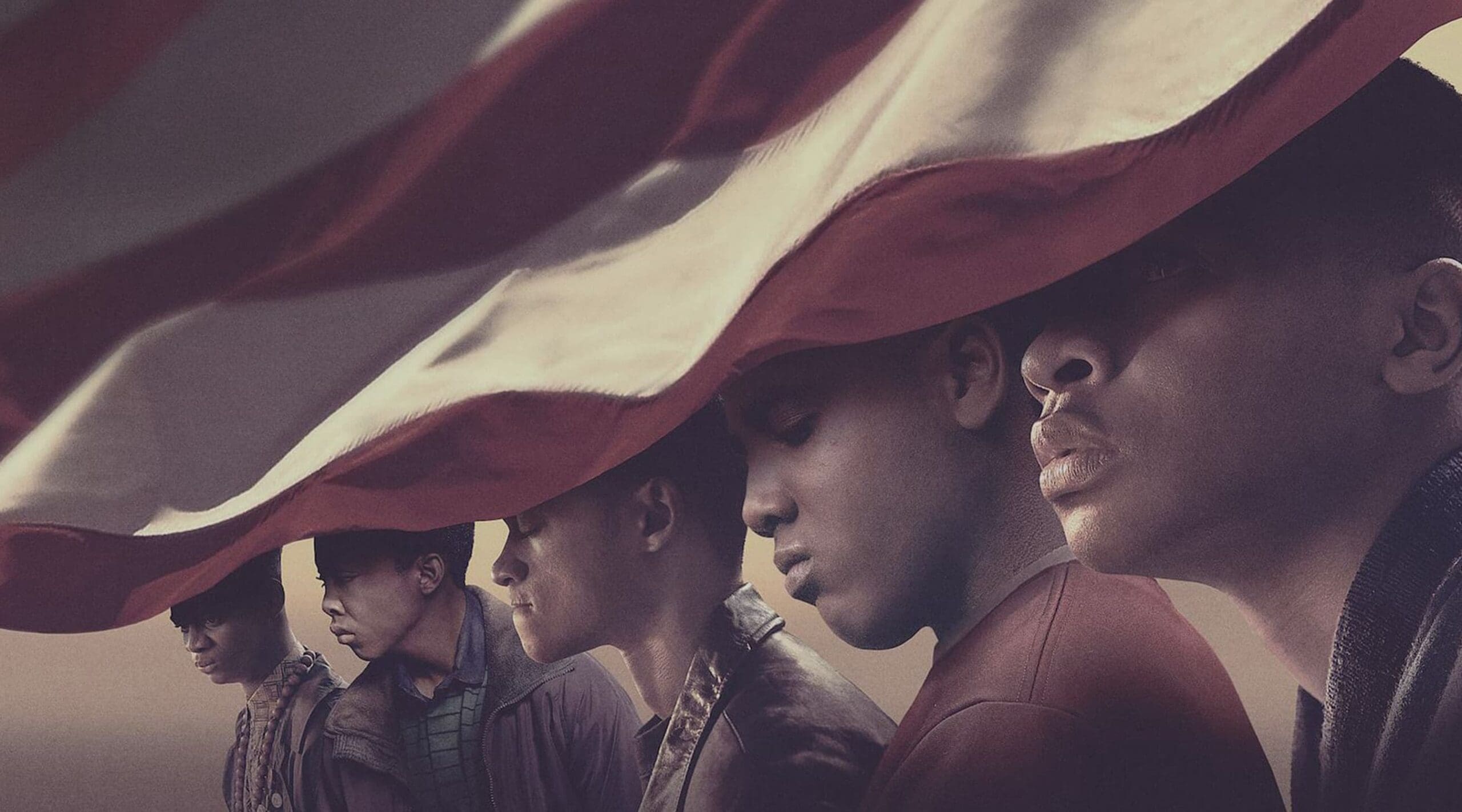
When They See Us – A crucial and essential watch


Hosted by
KT & Oti
Show Notes
As a Tongan/Aussie woman and a Kenyan man, what do we know about life as African American youth? Nothing but When They See Us is a necessary watch for everyone.
Stats
Released: May 2019
Network: Netflix
Oprah Interview: June 2019
Breakdown and Analysis
- We talked a lot about Yusef and his friendship with Korey. It wasn’t demonstrated through the series but it appeared as though they wasn’t much acknowledgement on the differing circumstances between the 2 boys.
- Noone can mess you up more than your parents. This was particularly evident between Antron and his father.
- The guilty charge of the Exonerated Five not only effected these young men but also their families. A touching moment in the series surrounded Kevin and his sister and how she felt guilty enjoying her life while he was locked up. It was not warranted but she blamed herself and didn’t allow for happiness.
- The relationship between Korey, Marci and their mother was so real and cut so deep.
- Even after watching this and watching the following up interview with Oprah, I am still trying to comprehend how Korey got through his time in Prison.
- It was powerful to hear Michael K Williams talk about his experiences growing up at a similar age in the same city.
- Niecy Nash really shined in this series as portraying Korey’s mother.
Unrelated but vital points
- 90s and early 00’s all are headlines. It is further fleshed out through those that raised you, teachers that taught you and churches you congregate in.
- Sometimes toxic people exist within your support network. It’s important to ensure your sense of self is not being compromised by the overaccomodation of these toxic people.
- With recent miniseries covering high profile cases like OJ, Gianni Versace and the Menendez brothers, you can lose sight of the fact these are real people. Especially in the case with When They See Us. It was already saddening and to add the layer of true life makes watching difficult but necessary.
- The world still needs Oprah and I’m glad she’s on our screens more often again. Noone else can delicately navigate deep subject matter and make it light. Only Oprah.
For Your Reference
Our suggestions on what you should watch in supplement of this TV show!
Oti’s pick
KT’s picks
Referenced

Episode Details
- Duration
- 0:00
- Released
- June 18, 2019
- Category
- Episode
- Hosts


Transcript
Transcript (10,674 words)
Full transcript of When They See Us – A crucial and essential watch.
KT: Hey, everyone. Today, we are talking about something that is so essential and is so necessary. If you've listened to a few of our episodes, you will understand the flavoring and the style of our podcast. You you might get some semblances of levity today, but we are going to be covering quite a heavy sort of subject matter. So if this isn't for you, completely understandable. But, yeah, like I said, this is a completely necessary and essential viewing experience that we believe everyone should go through, so that's why we're covering it today. This is For Your Reference. You got your host, KT.
Oti: And Oti.
KT: And we are covering the Netflix series that came out in May of thirty first called When They See Us. And most recently, on the June 12, there was an interview with the actors and the real Exonerated Five essentially goes for an hour, and it it's quite healing. I I think it's a nice debrief from the miniseries.
Oti: It is. It is. It was quite sad listening to the five members. I'm just talking about their experiences and them watching the show and how they felt afterwards.
KT: So Yeah. Yeah. So we'll definitely go through that. So I guess just be aware, You'll probably get a different type of episode than we usually do. But, again, we'll we're still us, and there are many dimensions to us. Like, I'm sure there are dimensions to you guys. So, thanks for staying with us, or thanks for checking out our other episodes if you're not going to stay with this one. Just some general stats. So like I mentioned, it came out in May 31. It's directed by the amazing,
KT: just every all encompassing Ava DuVernay. And then we've got quite an expansive cast. Very impressive. So we'll just cover the main cast. By all means, feel free to check out the full list. But let's just cover off with the Exonerated Five, as they now have been coined by Oprah, and we always obey Oprah. Let's go. So Raymond Santana, the younger version of him was played by Marquis Rodriguez, and the older version of him was played by Freddy Miyares. Sorry. Apologies. We also have Kevin Richardson who is played by Asante Blackk.
Oti: What a name. What a name.
KT: What a kid, especially in the Oprah interview.
Oti: So for those of you who don't know, Asante, Swahili meaning thank you. Yes. You're welcome.
KT: For your reference. I am telling you, once we finished that interview, I was on Ava DuVernay's Twitter, and then I stumbled across Asante Blackk's Twitter, so we are following you. So shout out if you're listening. Probably not, but that's fine. Yeah. So Asante Blackk plays the younger version of Kevin Richardson, and the older version is played by Justin Cunningham. Yusef Salaam is played by Ethan Herisse as the younger version. And then we've got Chris Chalk as the older Yusef. For it's Antron McCray. We have Caleel Harris as the younger and Jovan Adepo
KT: as the older Antron. And lastly, we have Korey Wise, who is played younger and older by the same actor, Jharrel Jerome. This cast, wow. I I hope to continue to see them as time goes on, but Jharrel particularly just blew me away.
Oti: He was really good. It's quite an amazing ensemble and it's just intricacies, you know. It's it's it's the little things that they convey in the acting that just gets you. You get someone like Jharrel playing Korey Wise and Yeah. You could feel his pain. You could see his how he's struggling and him being in solitary especially and how he portrayed that. It was Yeah. Mind numbing, somber, and just quite a good performance.
KT: Jharrel is 21 years old. To be able to, you know, to to allow us a glimpse of Korey Wise's world and that isolation, to be able to portray that and to convincingly lay out what that might feel like for us to feel that emptiness, for us to feel that sorrow, no no accolades are enough True. For Jharrel. But, yeah, for the whole cast, I I think also just some side notes, Michael K. Williams is always bringing quality,
KT: and his presence was very much felt in this series. We also have Niecy Nash, Vera Farmiga, Felicity Huffman, and, you know, a whole a whole bunch of other people. But what a series. What a miniseries. Yeah. Let's let's go into, first impressions. There's really no need to mention spoilers. This case has happened, already, and this has come out. I guess if you don't really wanna know about the miniseries because you haven't watched it yet, then by all means, come back to us. But let let's talk about the Central Park 5 case as it happened.
KT: Did you so in 1989 and then later on in 2002 when they were exonerated, did you across the pond in Kenya, did you hear about it? What did you know about it?
Oti: Nothing. Nothing? I knew nothing about this quite until recently because I think there's a moment you were telling me about the Central Park Five, I think, a few years ago. Mhmm. But that was just in passing. But then when this came out and you told me about it, it was information to me. So I had to read up on it, had to see what was going on because I had no idea about this case whatsoever.
KT: Yeah. I was fairly young. I was quite young when they were exonerated. So, obviously, I I wasn't at an age where I could comprehend the intricacies of the corrupt justice system and all of all of that complex shittiness of the world. I I didn't understand that. All I knew was there were five kids that were being accused of something that my brain couldn't even comprehend. And it wasn't until later on when I was, you know, finishing high school that I found out that they were actually exonerated.
KT: When I was a kid at the time, I just heard that, you know, they went into court. But it's sad. I I think it's one of those things that in this in this world well, even in in the nineties and the early two thousands, you know, all you ever know is headlines. Right? Especially if you're at a formative age, you form your opinions from, you know, the people that raise you and from the school you go to and the churches that you might congregate at.
KT: So, you know, headlines are essentially just headlines. And to watch When They See Us, it really brings back the humanistic side of the story.
Oti: It does. It really does. And there's so many nuances to this. Like, five black kids get arrested Yeah. For rape. And in the media, the way it's played out, you just the assumption is they're guilty. Yeah. Straight off the bat, you know. Yeah. And I think
KT: even to that extent, maybe they were wrongfully, you know, charged or convicted. But I think, you know, not being American and not being African American, I think there's something to be said about the the word privilege gets overused a lot. Right? But if you think about, like, the inequity of it because, you know, the the stats are there about people that are wrongfully convicted in The United States. A whole proportion of them are African American men. Mhmm. But if you just say in general, right,
KT: like the Making a Murderer series, I can't remember what the family's name was. But, you know, when you talk about people that are wrongfully convicted, the chances of the case being reviewed, unfortunately, might be down to your skin color. And that's what's unfortunate because no one's really checking for anyone, you know, depending on the circumstances. Does that make sense?
Oti: It does.
KT: But I really hope it does.
Oti: You have those organizations which try and right some of these wrongs Yeah. Like trying to get innocent people exonerated. So there is some effort put in place
KT: But those are Band Aids on a broken system.
Oti: True. But then again, the system will never, in itself, try and admit that they're wrong.
KT: Well, the the theory of the justice system works. The theory of it. Right? Even in ancient Roman times, you had courts, you had judicial proceedings. It it makes sense theoretically. However, what we start to see in When They See Us and in in in many, many, many cases of similar sort of circumstances is it gets colored by wealth. It gets cover it gets colored by privilege, and it gets colored by corruption. Because when we were watching this, I got really frustrated because it was like,
KT: okay. So the system makes sense. You've got the police that, you know, oversee the community that are supposed to protect and serve as you see in so many TV shows and movies and hopefully real life. Right? And then if people are doing wrong, then you move them on to the courts where you have prosecutors, where you have judges. And if, you know, if it's determined that people are guilty, they go into jail, hopefully, for rehabilitation. But we know that doesn't necessarily equal that in reality. Right? But you've got this system that should theoretically work.
KT: What it doesn't account for are
Oti: Biases.
KT: Yeah. People normal people that are racist, but they happen to be in a position to arrest and to be able to take advantage of the power that they have over the general sort of public. You have the prosecutor where, you know, she was using her position to essentially she she created the whole narrative herself. Right? And she worked backwards from that. So the system that you have, it's like you need to you know, you tell normal citizens, you need to operate within the system without acknowledging the fact that
KT: the system isn't there to help anybody. And as much as from what I can gauge in and this is a stupid way to gauge it. But from what I can gauge in American TV shows and movies that I watch, you know, the police and the FBI hate each other. Like, the pro prosecutors, lawyers hate the police. Like, it seems like they all hate each other. But at the end of the day, to uphold the illusion of justice, they will protect people before they protect the public. Right? That's that
KT: kind of what it seems like to me. And something that I definitely wanna talk about while we're watching When They See Us was the fact that the justice system does not exist to effectively govern all people. Right? What it's become is a machine. And if you've got money, then you have some sort of hope of exonerating yourself. If you don't have money and if you're from, like, a lower income sort of area, you're fucked. And, you know, watching the first the first episode
KT: was so hard. Like, I even told you, I need, like, I need a couple of days before we pick this back up again. That first episode was so heartbreaking
Oti: It was really heartbreaking.
KT: The most infuriating
KT: ways. Like, I was so angry, but I was so upset at the same time. And also layering the fact that this is based on a true story, and it's very, very rare for these sorts of biopic sort of documentaries. It's rare how much involvement the actual people had to this this series. Yeah. Ava seemed to spend so much time cultivating their truths. Mhmm. And and to have that is so essential. Right? Yep. But that first episode was really hard to get through. And what was really, really breaking my heart was seeing the parents
KT: of the Exonerated Five Mhmm. And how they were so ill equipped for such a situation. Raymond's father had to go to work. There wasn't even a question about that because if you miss work, you lose your job. Yeah. So the grandmother was left with Raymond, and she had to leave the room in the interrogation. And more and more in that first episode, you know, there was no parental guardianship. There wasn't anything about consulting a lawyer, and it's just so unfair.
Oti: You know what you know what the the main theme of this was? Ignorance. Yeah. Ignorance of the law, ignorance of your rights, and it's so clear cut. Like, a lot of parents aren't a lot of people aren't in the position to be able to, you know, they're struggling to provide walking long hours just to get food on the table. So but you really, really need to know your rights Yeah. To be able to navigate such a thing because especially in a system where blind lady justice is only
Oti: can apparently only see people of color and and your social status, then you really need to be aware of what your rights are in case something like this happens, in case you need an attorney, in case you're arrested and you don't know what to do, you know you need to know what the police are capable of doing and what what grounds, And just to be able to say, I need a lawyer. I'm not saying anything without legal representation. I'm waiting. I'm underage. I'm it's just
KT: But in that turn,
KT: it makes the judicial system sound like a troll under the bridge. Like, you need the right password. Otherwise, you're not going to get access to the right help. You know what I mean? Why does it need to be a game of being able to receive the right help and the right counsel? It you I guess you could talk about, you know, overpopulation and under resourced. I guess you could talk about that. But at the end of the day, the system is supposed to and supposed is a very dangerous word.
KT: Right? But the system is supposed to be helping people, but you need to know the right ways to finesse the situation. You need to have the right money. You need to, you know, grease the right hands. Like, it's just wrong.
Oti: It is wrong, but sadly, that's the reality. Yeah. You know? So unless something drastic happens and unless people are well are more informed of what their rights are, it's just a losing battle.
KT: And I think one of the most heartbreaking things was watching the Oprah interview, which we would recommend you guys watch if you haven't had a chance to, is when she actually interviewed the Exonerated Five thirty years on from the ordeal, you could still see that they were they were still dealing with it.
Oti: Yeah. They're still dealing with it. And the most heartbreaking moment was when Antron McCray was talking about how he'd never forgive his father because I don't yeah.
KT: Let's talk about it. Because I think we had different perspectives of this when we're watching the show.
Oti: Yeah. Michael K. Williams, who plays Antron McCray's father Yeah. Was left was guarded out by the police and was told that you need to convince your son to confess
Oti: and then we'll let him go. Well, was threatened. He was threatened that if you don't do so or it was implied if you don't do this then we'll tell your employer that you have a record. Yeah. And that essentially means that he loses his job, he can't provide for his family. So in that, he takes it upon himself to convince the son to confess to a crime he did Yeah. Not
Oti: I didn't agree with that.
Oti: To the point where he got so aggressive when the cops came in. He threw a chair across the room. No. Because in his Damn it. Yeah. Admit. Confess. And the son was like, okay. Yes. I did it. And now, Antron McCray's father is like, oh, now I think we're ready to go home or whatever. Yeah.
KT: It's a I guess it's a hard situation. And as you start to grow up, you realize that your parents didn't have a handle on shit. Right? Your parents, like, you you know, you start to see you see your parents as these godly figures that, you know, are perfect, and they know Yeah. How to assist And they they did protect you, and they know how to execute every situation. But, you know, as you start to realize, your your parents aren't that, and they are human, and they are flawed. And in his
KT: warped sense, he thought he was helping Antron.
Oti: I didn't agree with that. What a moment to find out that your parent is actually human, you know, when you desperately need them to step up.
KT: Because what what what would have been the alternative? He would have lost his job. I don't really know how hard the job market was at the time, but he would have lost his job. For an ex-convict, let's just say, that's it. You know?
Oti: No. But if he if if he had done it the other way and not made his son confess, he would have lost his job, but his son wouldn't have been in prison.
KT: Actually, no. To be fair, they probably would have found a way to warp him back in.
KT: But, you know, as as we continue to watch this series, you saw how Antron's father, the guilt and the shame of what he had made his son do literally made him ill. Right? So who won in the end? No one won, but Antron lost a lot. That but that is a very fucking real situation because okay. So so we disagreed on how that was handled. But if you fast forward on to later in life because he left. Right? He left the family. Yep. He just even even before he left, he was already absent minded.
Oti: Right? He didn't go to the son's hearing until halfway through when he went to testify, and he pretty much convicted the son right then and there. His testimony alone was so Just damning. Yeah. Just damning. Yeah.
KT: You say that, but then you also believe that Antron should have forgiven him. And this is but this is something that we should definitely pick up on. And it was it was interesting to see Antron talk, like, the real Antron because you could see that pain was still there. Yeah. And I don't blame him. I do not blame him either. Let's let's fast forward. So we we get to a point where Antron is released from jail, and he's back home to find out that his father's back home. Mhmm. Right? And
KT: we we we talked quite a lot about this moment because you were all about the path of forgiveness, but I could definitely understand how Antron was feeling and what he was saying as well because there's there's no one else in your life that you would continue to have around you except for your family that continue to treat you like shit,
KT: that continue to let you down, that treat you in ways that you would never treat anyone else, but because they're blood related to you, you continue to let them in your life. And for me, personally, maybe another day, we won't go through it, but, personally, that's dead wrong. That's dead wrong. Just because that was Antron's father, Antron just has to automatically forgive him. He spent his most formative years in prison for something he didn't even do. And I don't believe that Antron's father thought that Antron did it, but,
KT: you know, what again, who am I? Who am I to say? I don't know anything about being an African American man. Right, living in the late eighties in New York and how corrupted the system is. So I I can only talk from my frame of reference that, you know, in a lot of senses, may be ignorant and may be naive. But on a human level, I can understand why Antron didn't forgive his father, even to this day, because we were watching the Oprah interview,
KT: and he still, to this day, does not forgive his father. Yes.
Oti: I think I was coming more from the point where his dad is on his deathbed and
KT: Oh, so it's like, okay. I'll just forget every all of the shit things you did to me.
Oti: No. You could you could clearly see he regrets everything he's done.
Oti: He's he's very ashamed. And to what point do you hold a grudge regardless of how it may it affected his life? Because he he lost a better part of his childhood to this, but I just thought he was a bit mean spirited. Like, I I don't know. I I would have I would have just even if I don't forgive him fully, at least to give him the sense of peace
KT: A why then?
Oti: Before he departs this world.
KT: Why?
Oti: I think it was just a decent it was a decent thing to do.
KT: Yeah. Well, my why was just more my my perturbeness. It wasn't necessarily you. I don't I don't expect you to give me a perfect answer. I'm just so exasperated by this. I'm just
Oti: And I get it. Like, I understand fucking child. He trusted his father. I understand that.
Oti: But then again, you're on your deathbed. And if giving this man a modicum of peace before he dies, surely that's not well, I can't speak to what what's enough, but I I would have just thought that you could do that. Like, it's not it's not hard even if you don't truly forgive him. Just say the words, hug him, hold his hand, you don't even need to apology, you don't even need to accept anything. Just be there.
KT: That's a lot. It is a lot. Let's let's leave this because we're we're definitely not gonna agree with each other. Yeah. And neither of us are right and neither of us are wrong.
Oti: The only thing I would say in regards to this particular situation He's justified to feel however he does feel. He is justified. He and however he wants to handle the situation
KT: Yes. Or how he handle it. I'm more thinking about our listeners, but, yes, I agree. If just if people are treating you like shit, including your family, self care is so important. So just make sure you look after yourselves. That's I just wanna because I know we're not going to agree on this, and we're such different people. And for me, the fact that you're so accommodating to people that wrong you so much
Oti: Well, they're they're dying anyway. What more? No. Sorry.
KT: No. No, sir. Sorry. Let's stop. We're gonna go around but, really, it's like, oh, so I can be the biggest dickhead to everyone, and because I'm dying, everyone's gonna come kiss my feet? No, man. It's not let's stop. We're we're really really not going to get anywhere. But, yes, we care about you guys. Just make sure you guys are looking after yourselves is my main point. Don't overextend yourself with people that don't fucking care about you to the point where you're losing your own sense of self. Right? Yeah.
Oti: I can agree with that.
KT: Oh, okay. Well, it's nice of you to agree with me. That's quite lovely.
Oti: You're welcome.
KT: I know it feels great. And I I did say we were going to have some levity. Apparently, it's our foundations crumbling. But what's new, guys? What is new? Okay. So who else do you wanna talk? Is there anything else you wanna say about Antron
Oti: No.
KT: That we haven't covered?
Oti: No. Not really. Okay. I would like to talk about Yusef.
KT: Okay. If before we talk about Yusef, let's talk about Yusef's mother. First of all She is great. She's amazing. Good for her because she was the only one out of the five that managed to get him out of that room before he signed anything. Yeah. She knew her rights.
Oti: Well, that that doesn't make anyone the other people less. Doesn't make any people less.
KT: But she yeah. She was aware of mission. Yeah. Yes. So the what I wanted to bring about Yusef's mother is,
KT: I guess, it's not really portrayed in When They See Us, and that's really the only frame of reference we have. Maybe there I think there is a documentary as well, but we haven't watched it. We don't know about the actual lives. But the way that it was presented in When They See Us, it didn't seem like maybe she didn't need to feel guilty. But Korey went with Yusef to the station to make sure that they would be home in time so Yusef's mom doesn't get angry at Yusef. Right? Yep.
KT: And maybe I I focused on that too much, but it didn't seem like Yusef's mom had any sort of acknowledgment or appreciation or appreciation. Remorse is too strong. Thank you. Thank you. It didn't seem like she had any of that in regards to Korey's mother. Yeah. Or Korey. Right? You know, as the series went on, we started to see Korey's mother, you know, go on extreme sides of the spectrum in regards to her as a person and as a byproduct, the way that she was as a mother.
KT: But and and they did make mention that they're not close, Yusef and Korey's mom. They they did mention that. But it didn't seem like there was any agony for her that, you know, Korey, who ended up having, you know, the longest time served and arguably the most painful journey, it didn't seem like there was any sort of, you know, recollection of that. In the interview with Oprah,
KT: Yusef did make a mention that, you know, I I will do anything for Korey. And that was quite nice because I felt like that wasn't exemplified through When They See Us. True.
Oti: I think and I appreciate that Yusef's mother wanted to do everything she could to get Yusef alive after prison Yes. To get Yusef through prison. It's understandable any mother would do that. Yes. But to what extent would you completely shut out the one person that was there for your son? Yeah. He was begging for letters. Just a letter from Yusef
Oti: would be enough to know that, you know, he is looking for that connection. Yeah. He didn't have anything. Yeah. The mom wasn't going to visit Korey all that much because it was so far out. And she just said no. I'm trying to get my son out of prison. Understandable. I'm trying to get my son reacquainted into society. But
KT: But I think in her in her focus on trying to get her son out of prison, it wasn't isolated in, if it was possible, to help others along the way. Yeah. And that that's really all I wanted to bring up because it it seemed like such a small thing, but it just really kept nagging at me, especially because when we when we continue to watch two and three, we're like, where the fuck is Korey? And the last episode so aptly focuses on Korey
KT: and how heartbreaking that was. But we will come to Korey. Let's talk about Yusef.
Oti: Yeah. So I don't know to what extent the documentary covered, but from When They See Us, Yusef gets released. And I think they go to some sort of meeting and where they meet up with Kevin. Yeah. And they're talking about where Korey could be. So Yusef has been out for quite some time and I would have assumed at least you could try and find out the one guy who was there by your side when you needed him most. You've not heard from him for years. Yeah. No sort of communication. No nothing. Are you out and about? And
KT: Like, maybe he tried, but that wasn't shown or
Oti: It wasn't shown. It wasn't made clear. Yeah. And to me, just it felt really wrong. And if I was Korey, I would be really, really pissed. I would be angry. But you can tell he has a different kind of heart to mine. And I think the
KT: the the resources he dug within himself to find to survive for thirteen years has probably allowed him to be able to get through Yeah. Because he was he was in solitary confinement for the better part of that period. So so we'll talk about Korey. Yeah. Let's let's continue on Yusef before we move on. Yeah. It's just I don't know if it's a mask to the world, but when we were watching the interview Oprah's interview, it seemed like Yusef has dealt with this more than the rest of them.
KT: Like, it seems like he's more at peace. Maybe it's his religion, but it kinda seems like he's more adjusted.
Oti: Yeah. He he definitely seems the better adjusted among the group. But my other thing that I really got pissed at him for, even though he was a kid, he left Korey right after he was released from jail after the mom came. He completely forgot about Korey. Granted, he's been sitting somewhere for several hours being grilled, but once you told, you know, you can go with your mom, and you let Korey just sit there, pretty much forgot about him. Yeah. Just
Oti: that was a bit too much, man. I I I'm I'm not as good a person as Korey is, and I would be holding a grudge till the day I die.
KT: Fair enough. So is that the only reason why you wanna talk about Yusef? Because that's the only thing you're mentioning.
Oti: Because he bloody pissed me off.
KT: Okay.
Oti: He really did piss me off. He
KT: It's a weird dynamic when you're the one in rage mode.
Oti: No. Because it just speaks to someone's character. He says he's religious and whatnot.
KT: That's very common, my love.
Oti: But to what extent then? Yeah. Know. Extend your hand to blood in Eiba. Have you met the world? Who was there for you when you're struggling? Have you met the world? Where is that verse in the Bible or in the Quran? Quran. Just go and get them, man. You know, it's
KT: But there is inherent hypocrisy to religion, and we're not going to cover that today.
Oti: Alls I'm saying is Yusef pissed me off and
KT: Yeah. We know. It's not all you're saying. We know.
Oti: So oh, and he has 10 children. But, well, he's been through stuff, you know, as well, and I'm not taking anything away from him. Just that I feel like he could have handled this way better. He was almost 16 as well. His his I his his bus ticket or whatever said he's 16 even though he was 15. Right? Yes. Do you remember when you're 15? Barely. Oh, I can remember. And I was a bit competent to some degree to remember a friend. Wow.
Oti: Just fucking annoying.
Oti: Korey went through a lot of shit, which we'll get to, but anyway, let's go to someone else. We can talk about Kevin, the youngest one. Yeah.
KT: Can we talk about Kevin? Let's talk about Kevin. Kevin was the one that was beat up. Right? Yeah. That night? Yep.
Oti: Hit by a helmet with a cop. And they tried to pass it off as he was crushed by the lady when they're raping her.
KT: We
KT: well, I I saw you, but I'll speak for myself. But I I could see you in my periphery. I got quite emotional watching When They See Us. And it it the the pain, we will never understand, but on some level, it is universal. Right? What particularly stuck with me was when Kevin had a visit from his mom and from his sister, and they're all trying to cheer him up, and they're talking about him. And the sister first of all, she's fucking solid.
KT: Oh, she's she's amazing. She's amazing. She's quite amazing. But the fact that she continued to blame herself for making Kevin's actually, no. Kevin wanted to sign the paper. But in any case, she she blames herself for that whole ordeal. Right? And, you know, she's she's explaining how, you know, people were treating her differently at work, but she just tried to focus on herself and whatever's gonna help her get through the day. And then it turned into this brown sugar loving basketball story When she's talking about
KT: when she's talking about how this guy comes into work and, you know, it's just like it's just a nice pick me up. Right? Or in the rom coms is what you call a meet cute. Who would have thought I would have referenced the meet cute in When They See Us? Welcome. It's For Your Reference. You never know what you're gonna get. But, yeah, she she talks about her experience, and she says, you need to find hope. You need to find your thing. Yusef has his religion.
KT: You need to find your own thing. Right? And she says that she was waiting for him for three days, And it's really cute, and it's really light. And you can see Kevin really needs this interaction. And then it gets to a point where Kevin's like, oh, so how was it? Did you go on a date? Did you ask him out? What happened? And his sister really just heartbreakingly, so blatantly said, I feel like while you're in here, I shouldn't
KT: have any fun. I shouldn't be dating. I shouldn't be experiencing anything because you're in here suffering. And that really struck a chord with me because sad. These are kids. Right? But it's also their families that are going through this.
Oti: Yeah. True. And she got through that because I think she said the mother talked to her that you could spend all this time wasting your energy on feeling guilty or you could live your life and be happy, and at least finally she did decide to move on. She was not to blame there.
KT: But it doesn't matter because as humans, we always try and find Yeah. True. Fault within ourselves. True. But
Oti: there were two cops, two grown ass men in that room interviewing a 14 year old as if he was some sort of adult. The audacity that even a judge would allow this in you know, I don't even understand this bloody American system anyway. Yeah.
KT: Far I don't think most Americans do. Far out. It's fucking ridiculous.
Oti: You could allow a kid, 14 years old, in a room with coppers to confess without any guardian, without a lawyer. Yeah.
KT: Oh my god. You would think once people knew those facts that it would be case closed. We don't need Hercule Poirot to come here and solve the mystery. It was a mishandling of justice.
Oti: Yeah. Farrah, there's a few more steps before they even get convicted. Yeah. What the fuck was happening in between? Yeah.
KT: And it was a very opposite experience to watching The People Versus OJ. OJ has joined Twitter, by the way. Oh, yeah. Follow him? No. Thank you. Are you sure? No. And if you guys have a buy him a glove. It won't fit.
Oti: Then he's he's innocent, mate. Yeah.
KT: Personally, if you guys are following us on our Twitter, please don't like and retweet OJ. I don't wanna see him on our timeline. But, anyway, just to just to give a contrast, watching The People Versus OJ, like the Central Park Five, you knew the verdict of OJ. Right? But, you know, you you still watched it, and you're like, how the fuck did this guy
KT: how how is he innocent? Because while you're watching The People Versus OJ, you're just like, how the fuck? Like, how with everything that I can see with my eyes watching this, how? How was he innocent? And, you know, that that was a little tussle while we were watching it. But on the flip side, more more sadly, watching this, it was so blatantly obvious that this was not handled correctly. Mhmm. But they still they they were still determined to be guilty. And what I don't understand was and it is a portrayal,
KT: so we don't know a 100% for sure how it was handled or what was said behind closed doors, but it didn't make sense how okay. By default, we're just going to blame these kids out of nowhere. We're not going to investigate. This is we're just going to run it the way that we wanna run it. Right? Felicity Huffman's character, Linda Fairstein. I just I don't understand. Was it was it because there were too many cases? Was it because she had a racial bias? Like,
KT: why was it so clean-cut? And why was she so hell bent on making this a case that wasn't a case? The only funny thing about fabricating cases was McNulty with the homeless people in The Wire. That got fucking morbid. But you know what I mean? Like, that's the only and I I guess it's also, like, fictional sort of crime shows. And I think, you know, watching The Wire, but that is it it still has semblances of personal experience. But if you talk about Oz, for example,
KT: Oz is an amazing show. And it has dark moments, but it also has light moments as well. But a part of a part of me feels guilty enjoying Oz now because these are actual stories in When They See Us about kids that went through that sort of system. You know what I mean? It it just it's a bit more sobering, for lack of a better word. Yeah. It is.
Oti: It really is. Let's talk about Raymond. Raymond.
KT: Raymond. He's He's Puerto Rican. Right? Mhmm. I wonder I know it's semantics, and it's probably nitpicking, but I wonder if it bothered him because a lot of the reports in the media and even with Oprah, they kept saying five black guys. Do you think that bothers him?
Oti: I don't think it does. He's a person of color.
KT: Yeah. No. I'm not saying, like but I don't know. It was just it was just oversimplifying. But, anyway, yes, let's talk about
Oti: Well, I don't think it bothers him. But yeah. It's hard to deal with a lot, especially after coming out because I think in prison, he was dealing some sort or he was some sort of subclub.
KT: Showed the progression, the graduation of his sort of criminal ish behavior.
Oti: Yeah. Yeah. And and when he came out, he struggled finding a job, and he fell back to what I think he knew or what he thought was comfortable with him, and that was drug dealing, which he gets arrested for.
KT: I do think that possibly and I don't wanna be insensitive because these are real lives. Right? But I do feel like it was a bit possibly oversimplified. Like, obviously, I don't know what the truth is. I'm not saying as soon as Raymond came out, he started doing criminal things again. But it it just seemed it it so he he tried his best. And then when he's when he was with his girlfriend and they wanted to get a new place and he couldn't make the rent, that's when he started
KT: doing it, which is fine. And and, again, I can't really talk to what the truth is, but it kinda reminded me of Straight Outta Compton. Like, just just a bit more cleanly sanitized. Like, it just fit very neatly. And, again, these are real lives, so I don't wanna be too insensitive. But when they showed everyone coming out of jail, it all just seemed like it was quite easy to transition out of that when, you know, by all accounts, it wouldn't be. Right? They were so young. They'd spent time
KT: for something that they didn't even do, and then they have to try and fit back into the new world. It might have just been a production decision because they wanted to just succinctly, you know, capture these lives, and they didn't have time to stretch and expand these stories. Or it might also be a sense of these are their personal lives, and this is all that they wanna share. But I just wanted to make a point when we're watching When They See Us,
KT: when they were coming out of jail, it just seemed like they just perfectly transitioned into normal life, which I think is also, in a sense, a discredit to their suffering. Yeah. But, again, it's their lives. Maybe they didn't wanna share everything, but it just seemed like things were too perfect. The and seeing that Raymond relapsed, for lack of a better word, I was like, that makes sense.
Oti: Mhmm. Right?
KT: Yeah. We do. That makes sense.
Oti: And I always struggle to try and find a job with a record, and he did. He well, we were shown everyone went through some when they left prison, when they got released, but not to an extent where probably to show it probably seemed a little bit too simplified, but they did try and address it to some level or to some degree.
KT: But I think that's part of the problem because, you know, they you talk about jails being a place for rehabilitation so they can come back into normal society. Right? Yes. So they so they come back into normal society. But there aren't any structures that are in place to to transition them back into a normal life. It's like, go like, you know, you were a criminal, but you served your time now. Go and be a good person. Go and get a job. But then you can't even get a job. Like,
KT: where was the where does the hand meet the other?
Oti: And they did cover this because they're explaining to I think it was still Raymond. His PO was telling him, if you want to work here and you tick the box that you're a convict and they've already had a convict in the kitchen, you you too you cannot associate with other convicts outside while you're on parole. You can't work there, so what do you do? You tick that box and then you can't work there. So it's it's a it's a problem that needs addressing because prison needs to be a rehabilitation,
Oti: but that's not the case. People probably most of the time come out worse than they went in.
KT: And that's exactly what we're talking about in When They See Us. Like, from from what we understand, from what we see, prisons, it's like the laws of the jungle. Right? Only the strongest and only the fittest survive. So if you're a lovely soft person when you go in, if you wanna make it out, you kinda need to harden up. And sometimes that also means, you know, getting into dodgy shit. And I don't know what the stats are,
KT: but, you know, there there are people that go in for light crimes, and then they get involved in even darker shit while they're in prison. Yeah. Yeah. I'm sure there's probably a Last Week Tonight with John Oliver. He's talked about incarceration, so I'm sure the stats are there. Yeah. So head on over to our best friend John Oliver's website for more resources.
Oti: Antron and Kevin pretty much said the same thing with Oprah that they had to do shit they're not pleased with in prison just to survive. Yeah. Antron said that he's become completely broken from what he used to be. He cannot recollect whatever that kid was anymore. That's not him. He's Yeah. He's admitted that he's broken, and he's that way. He doesn't want to do therapy.
KT: But that's also something that I wanna touch on as well because he is further along than most in the sense that he can recognize that he doesn't have enough resources within himself to repair himself. Yeah. Right? But because there's still that stigma of I'm a man, I need to cop it, He he just he acknowledges it. His wife acknowledges it. But he just he just doesn't wanna it it's just I guess it's just too far or too real. And that's sad because, I guess, with time, you know, mental illness or, you know, seeking help
KT: professionally will start to be more widely accepted. But I guess, you know, in the time that he grew up and trying to figure us things out or maybe he just feels like, you know, I'm okay ish the way I am now. I don't wanna have to resurface under Yeah. To grab everything.
Oti: Yeah. And he says he lives next to Raymond anyway so he could go there and when he needs when he needs help.
KT: Yeah. And a a support network is so vital.
Oti: Yeah. And another thing is
Oti: Raymond was used they made a deal with Raymond that Raymond would confess to being a witness Yeah. And then implicate other people. Yeah. And when they're trying to when when Linda was trying to map all this out, she realized she cannot try all these five boys at the same time. Yeah. She would have to split them, and not just split them randomly, strategically split them so that she can get a conviction. She used, you know, there's some flexibility
Oti: in the in this justice system that just boggles my mind in what you can and cannot do. It works for people that
KT: that want it to work. White collar crime isn't shunned upon the same way blue collar crime is.
Oti: True. Well, we've just had that coaching teacher. He was sentenced to one day in prison for racketeering. He got $600 to get people into a uni. Yeah. And one day, one day in bloody prison.
KT: That's what I'm saying. And
KT: let's let's let's let's make things light for a second. I always said with The Purge. Again, I know it's being milked for all it's worth, but the first Purge is quite great. Anyway, if we existed within the realms of the Purge, I would white collar crime the shit out of that night. I wouldn't even would I go around stabbing people? Like, I would embezzle so much money. That's what I would be doing during the night of the Purge because that doesn't get shown, but that's the most satisfying for me, stealing everyone's money.
Oti: Yeah. Yeah. Jesus Christ.
KT: And then there was Korey. Again,
KT: accolades to Jharrel for his outstanding performance of Korey. That last episode will continue to stick with me. Personally, I don't know or maybe I just need time. But, personally, I don't know if I will rewatch When They See Us or at least I need a gap of time because I cried multiple times in all of the episodes.
Oti: Yeah. We especially had to pause the fourth episode multiple times just to give ourselves a break to see what he's gone through. As a 16 year old, he was sent to Rikers. Yeah. He got beaten so much, and apparently, there's so many things they've left out because they can't speak of it. Yeah. And you could see you could see in his eyes, you could see in his eyes he's been through shit. Yeah. And it's affected him. I feel for him so much. My heart goes out to him.
Oti: He had what he's what he had to endure in his life, one should no one should be able to go through that. No one should go through that.
KT: And even watching the Oprah interview, Korey is such an intrinsic person. I don't know how much of that came out of his years in solitary or if he's always been like that. But you can he doesn't say much.
Oti: Yeah. He's he's a man of few words now. Yeah. For sure. But not even that cliche.
KT: You can you can just see that there's so much depth to him. There's so much pain, but there's also so much strength in his character.
Oti: I I don't mean it in, like, oh, he he says a few words, but when he says it, it's important. That's not what I'm talking what even a man. I know. Like, I feel like his personality changed completely from what he used to be or what we've shown in the show from what we from what we see him now as. Yeah. They showed it. They portrayed him as as as this extrovert sort of character. Broke him down. And to see the man before you in the Oprah interview, that's
Oti: you just feel like there's a disconnect. That's not him. And you could see his struggle, you could see his suffering, you could and when he speaks, I I couldn't handle it. Yeah. I started tearing my I couldn't I I can feel his pain even now.
KT: And Oprah moved on
KT: when she was asking a question. And Ava's like, actually, Korey has something to say. Right? I think that's when they were talking about Linda. Yeah. And he's saying she was just doing a job, but it caught up to her. Yeah. Right? I you know, like, when people go through such traumatic experiences, you know, and people are like, you know, how did you get through it? A lot of the sort of common responses are, you know, I don't even think about that. I just try to get through what's in front of me. Right?
KT: But I genuinely don't even know how Korey got through those thirteen years. And at every probation review or whatever you wanna call it, he kept not wanting to admit something that he didn't do, which is very admirable, but I also my heart also broke for him as well. Shout outs to Logan Marshall-Green for playing the guard that Korey really needed.
Oti: Yeah. Korey did really need
KT: Every time those two were on the screen, instant tears. Just but it's it's heartbreaking, but it's also heartwarming at the very same time. Because, you know, progressively
KT: through episode four, you started to to lose trust in people in regards to Korey. So when we saw Logan Marshall, Marshall-Green's character, I'm like, okay. He's being nice, but when is he going to take advantage of our boy? Yeah. Right? Like, when is this going to happen? And I was constantly on edge for Korey. And it's nice to see that, you know, it's nice to see that there are people embedded within the prison system that genuinely are there to help Yeah. That aren't using the little authority they have to overpower people, which we saw with quite a few of the guards.
Oti: Yeah. And even Korey when when Marshall brought in some books for Korey to read, and Korey is like, I will look after you. I will give you the blessings after I leave here. Marshall was like, no. None of that. None of that. Yeah. We even speak of that.
KT: Oh, and then when Korey was like, I like it when you call me kid. Oh my god. Just fatality. Done. We were done. But I I do just wanna touch on this because we are wrapping up for time. You know, we've seen quite a few prison shows and movies, and the way that they portrayed isolation in When They See Us, I think, is one of the most lasting that I've ever seen. You know, the most common sort of isolation sort of
KT: scenes that you have is, you know, the camera spinning around, and they're just going crazy and putting poo poo on the walls. Like but what I really appreciated about When They See Us is, yes, he's there by himself, but he's imagining talking to his little lady love. Sorry. I forget her name. Mhmm. The one that he was having dinner with that night. He saw his mom, and heartbreaking, he saw his mom say things that she would never say to him in real life Yeah. As a way to heal. Mhmm. Right?
KT: Also, shout out Niecy Nash. I personally have never really seen her in serious roles. I know she was in Cleaning House. Cleaning House. Clean House. And she kind of did comedian sort of stuff. But who knew that she had so much depth to her? And let's talk about Korey's mother before we run out of time.
Oti: No. Even even before that. Sorry. Korey
Oti: has these hallucinations to keep him going in solitary confinement. And one of those is his relationship with his brother Norman
KT: or Marci. Marci. Thank you. Thank you. So
Oti: after this moment and Marci telling Korey how much she'll always be there for him and she loves him, he gets called out of solitary confinement to go and see the bishop Yeah. And he's told that Norman was shot or rather Marci has died. Yeah. And after that, it's a downward spiral. He has no he he can't picture Norman anymore. He can't picture Marci anymore. It's it's it's all broken down. Yeah. And he's clinging on to at least a visit from the mother who's alright.
KT: Niecy Nash. She played the hell out of this character. She did say something very poignant in the Oprah interview saying that, you know, in in regards to her playing Korey's mom and speaking to Korey's mom. You know, even though something happened years ago, doesn't mean it's in your rearview. And she was saying even speaking to Korey's mom, it was literally on the surface, her pain and what she's gone through. Mhmm.
Oti: Yeah. She agrees that she wasn't the best mother. Uh-huh. She knows that. She accepts that.
KT: And then Are you we sure? It seems like she didn't. Do you mean before she was religious?
Oti: After. Nah. She came back to visit Korey after he she's religious. Yeah. But she said That conversation was quite crap.
KT: That was so wrong. It was really, really wrong. Your son is She wouldn't say I love you.
Oti: Yeah.
KT: She wouldn't say I love you. And it's like, do do you think just because you're saved now that all of your wrongs are right and the way that you know what? I guess the takeaway is no one can fuck you up more than your parents
Oti: True that.
KT: Aside from the judicial system. But in in very real ways, your parents can fuck you up in in sometimes irreparable ways.
Oti: Mhmm.
KT: Right? But it's it's incredible. It's incredible that Korey got through his jail time. Yeah.
Oti: For sure. And the fact that he wanted to be transferred to a a different jail Closer to where the mother is, only to be sent farther away. Yeah. He said this to Marshall. He said that I'm gonna put in my transfer because I have used up all my bad luck. Surely nothing else bad can happen from now on. Yeah. That fourth episode really took something to watch. The fact that he lead that's his life, far out, man. It's just heartbreaking. It really is heartbreaking. So
Oti: You know what they need to do? Oh. They need to set up a GoFundMe for him because I feel like I need to donate something. Oh, it's just just something to show that your life is appreciated.
KT: You know, instead of charity, how about we support his business?
Oti: Well, still, I feel like I need to give something.
KT: Where did where
KT: did that where did that high spirited nature go in disobedience? Don't be rocking my friends. T shirts, mate. And that, my friends, is the millennial age. What are you?
Oti: All I know is he this man does not need to walk another day in his life, for sure.
KT: Okay. Are you are you okay now?
Oti: Yeah. I'm done now.
KT: Okay. Perfect. And every every one of the Exonerated Five, except for Korey, left New York. He's the only one that's still there. Yeah. Right? So that's us, guys. That's When They See Us. We we went to places, places that in some senses we didn't have a frame of reference for. But hopefully, you guys appreciate this episode. In in ways that we might have misstepped, We hope that you guys forgive us and understand our intention of bringing up this episode.
KT: If you also aren't African American, but you can still resonate with this story, I feel like this is something that everyone should consume.
Oti: Yeah. It's for everyone. Because
Oti: everyone needs to know their rights. Everyone needs to know how fucked up the system is because it's not gonna change otherwise. Is it? Yeah. And before that, we need to just talk about Linda now because she has gotten some slack. Apparently, she's not off social social media. Well, stepped down. And she stepped A lot of she stepped down from a lot of board positions and stuff. But Farrah, if there's any sort of I don't even wanna say justice in this world, but Jesus Christ, she needs to But pay yeah. She she
Oti: something needs to be done. Either someone just some legal shit. She needs to be in jail for something. What she did there was not legal.
KT: Yes. But that I guess that's a conversation for another day. Also, Ava was saying this has nothing to do with Linda. These are the stories of the Exonerated Five. So whether she does whether she does get arrested or not, it's not really the focus of this documentary, my love.
Oti: I know. It's just frustrating.
KT: The the your frustration and exasperation is exactly the response that people should be feeling when they're watching this documentary because it's not right.
Oti: Yeah. No. You're right. Go vote for people who make a change. Me.
KT: Bloody hell. Can we not end this on a political note? It's not.
Oti: Fuck. Anyway, it's just frustrating. It's just frustrating. And as from someone who is from a society where law, means shit all, just man, if if you have an opportunity, just I don't know. Pick up a book. Do something. Okay.
KT: So Oti has taught us a valuable lesson like the end of this episode. Sometimes, like life, it isn't tied in a pretty bow, and it just ends in a mess. What what do you want from us, guys? We're fallible humans talking about some really heavy shit. Okay? If you wanna hear some fun stuff, we've got lots of other episodes that cover that. But this was a very essential dialogue to have and to contribute to. And we we couldn't let the time go by without talking about
KT: When They See Us. So I'm very glad that we did this today. And if you're still listening to us, hopefully, you're glad that you joined us along this journey. If you guys have any sort of experiences that you wanna share or if if you wanna correct us on anything that we've said, we'll more than humbly accept that as well because we're really just having a chat after we've watched the series and the Oprah interview. I also want to
KT: let's end it on this note. Let's have a nice little pretty bow that we end the episode with before we go to For Your Reference. The cutest thing in the world is Oprah Winfrey. And the cutest thing about Oprah Winfrey is she thought she could quit the world, but she didn't realize that we still need her. We're trash. We still need Oprah. Right? She retired. She has a magazine. She has a network, and she slowly started to do interviews on her network. And I'm so glad in this platform with, like, with Leaving Neverland.
KT: And now When They See Us, no one else can tackle such heavy subject matter with real people that actually experienced it and create light moments like Oprah did. She talked about how four of them had wives, right, after the settlement money. And she made a joke with Korey saying, I'm sure all the ladies are hitting you up now. No one else. Don't at me. Only Oprah can do that.
Oti: Oh, yeah. I can do that.
KT: Oh, at you or come out. Oh. Again, I just ended it so beautifully. Sorry. Fuck out of here, man.
KT: Yeah. Sorry. Someone someone collect your boy, Oti, because he's wilding out here. Jesus Christ. Are you see? And this is why we should rebrand as daddy would because he fucking I can't deal with you. Let's finish before you reference.
Oti: Alright. My reference for this week is Serial, the podcast, because Sarah Koenig goes into super levels of investigative journalism to try and figure out what happened to Hae Min Lee and how the case was handled and if Adnan is innocent or guilty. It's just it shows you the role journalism has to play in the justice system, something that it failed to do in When They See Us. So I feel like if someone saw the story unfold and thought this is alright, then surely our journalists are failing us, and that day they did
Oti: in the conviction of this case, not raising awareness, not seeing that these things don't fall into place like this. Anyway, listen to Serial. It's really, really good, and Sarah Koenig goes above and beyond trying to figure out exactly what happened. But there is a miniseries. Is it HBO? Forget that. Listen to the podcast.
KT: Oh, look at you breaking the mold. Is this the first non?
Oti: No. Actually, I've referenced the game.
KT: Oh, reckon? So we we Are acting weird?
Oti: I'm to tooting my horn.
Oti: Oh, this little poppy pop syndrome. Wanna see the big man win. You know what?
KT: You know what's gonna happen? If no one's listened to any of our other episodes and they just wanna hear about When They See Us, they're not gonna know about this tall poppy pop and what the fuck we're talking about. But if you've listened to us for the first time hi, guys. That's this is a really late welcome if you're a first listener. But thank you for sticking by. For your reference, not a whole reference to Unbreakable Kimmy Schmidt, but if you've watched Unbreakable Kimmy Schmidt, they do a sort of satire on the documentary
KT: style where Jon Hamm's the cult leader, and that's quite interesting. And they make a they make a quip at how it changes verdicts, documentaries. But in some ways, they can be quite useful. So what I'm going to reference this week is much along the same vein with you I mentioned earlier in the episode, Making a Murderer, talking about the Avery family. But that's it. That's it, guys. We've got the Serial podcast segments of Unbreakable Kimmy Schmidt and also Making a Murderer. Thanks for staying with us. Hopefully, our unraveling was somewhat,
KT: you know, provide some levity to you. Otherwise, we love you either way. On Twitter and Instagram, we are @ForYourRefPod. You can send us an email.
Oti: At hello@fyrpodcast.com.
KT: If you love us, subscribe so you can get our episodes hot off the press, and leave us a rating and review if you also want to as well. Yeah. See you and read a book. Thanks, guys. Hi.
Related on FYR
Discussion
Loading comments...