Sirāt & The Voice of Hind Rajab


Hosted by
KT & Oti
Show Notes
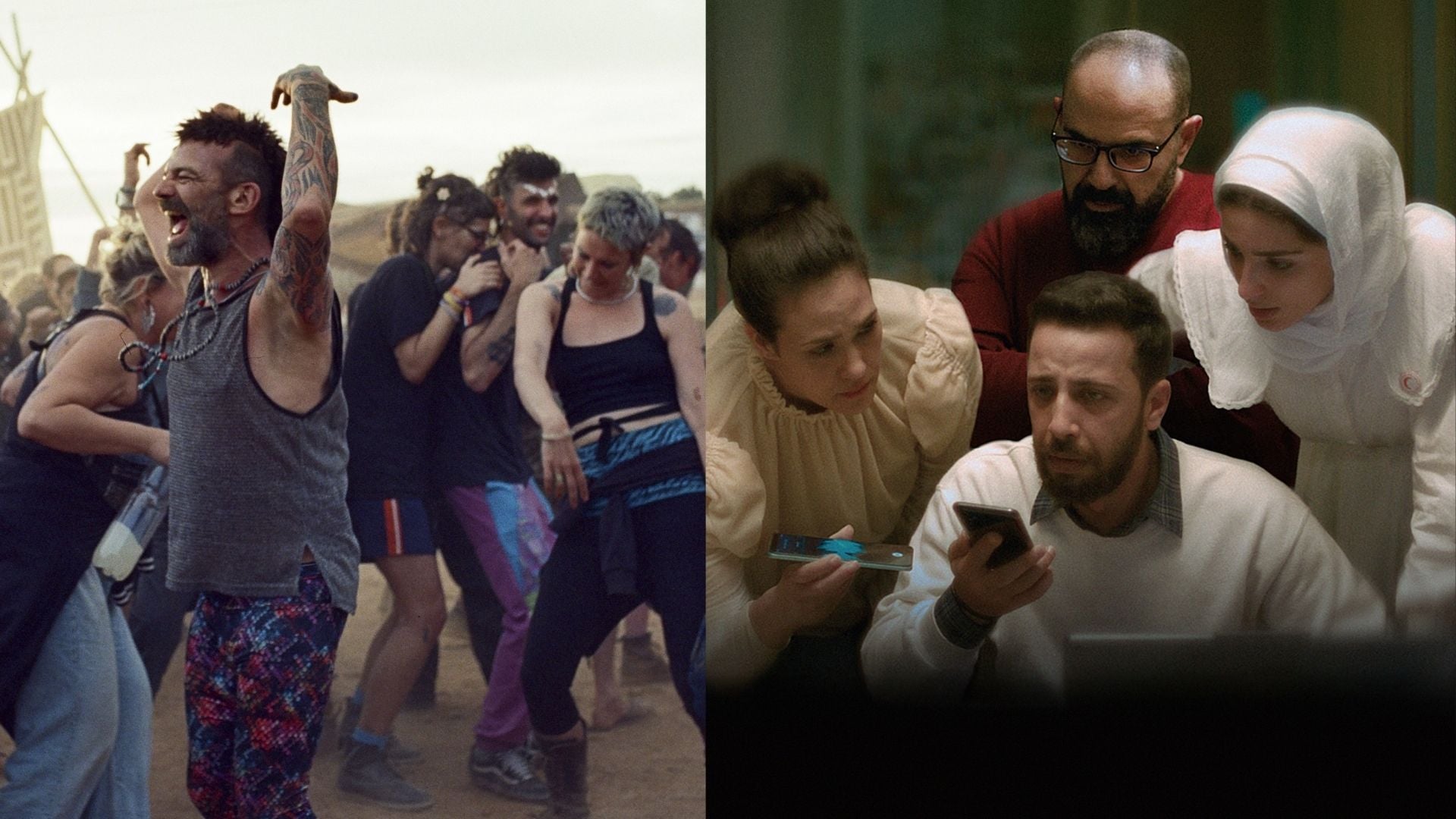
In the first solo Reference Max and first solo podcast eppy, I review Sirât & The Voice of Hind Rajab.
Tomato Meter
 KT
"Sirāt achieves its biggest impacts through its sound design but ultimately leaves the story feeling incomplete."
KT"The Voice of Hind Rajab leaves no room to hide from real time horrors. While there is an intricate imbalance to do what is right, the tragedy for Hind and many others continues as the world watches on."
Episode Details
- Duration
- 0:00
- Released
- March 17, 2026
- Category
- Episode
- Hosts

Transcript
Transcript (2,679 words)
Full transcript of Sirāt & The Voice of Hind Rajab.
KT: Hey, friends and lovers, it's another week in the For Your Reference household. This is a new kind of thing that we're trying to do. It is still going to be a Ref Max, friends and lovers, and it will just be me rocking the mic today. Mommy and Daddy are still doing well, and Daddy has a real job—well, so do I—
KT: And he's not able to join us today. Maybe we'll have a post-Oscar reaction; you're more than welcome to check out our predictions, we actually did pretty well. It's still a Ref Max, I don't think I'm necessarily gonna spoil anything today. I might need to put a bit more structure into it because I don't necessarily have Oti to bounce off.
KT: These particular films I wanted to talk about today, and to keep that feed popping and to keep it fresh for you, friends and lovers, here we are. Grab a snack, grab a beverage, and love and sploosh you kindly for venturing into a new format—seven years of the podcast, why not? Let's mix it up.
KT: Today I will be reviewing Sirāt as well as The Voice of Hind Rajab, also off the back of the Oscars as they were nominated as well. Again, no spoilers, I will do the similar sort of format that we do in Ref Max and also for our full reviews.
KT: It's interesting because I really enjoy podcasting, and I enjoy discussing it with people, or particular people, especially with Oti, because as much as I have layered, recurring thoughts, they just happen inside of my mind, so to then share that out when it's just me, it's going to be interesting. I hope it doesn't hurt, I hope it feels good, friends and lovers, where you wanna put these beautiful words—or maybe salacious words, who knows? I guess we'll see how we go. Thank you again, very much appreciate all of the love and support.
KT: Again, I'm only going to be covering two films today, and we do have a lot of screenings and screeners coming up. For today we have Sirāt. I feel like it's going to be very similar: talking in themes, was it cohesive, did it deliver what it intended, and is there any follow-through? So I guess let's see.
KT: I'm gonna start off with my first impressions and my pull quote: Sirāt achieves its biggest impacts through its sound design, and ultimately leaves the story feeling incomplete. I said it in the Oscars prediction: I do feel like saying a film is "not for you"—or if someone enjoys a film and they assume that you didn't enjoy it because it "wasn't for you"—I do feel like that is a cop-out. Storytelling is our experiences, so if a story is told in a compelling way, even if it doesn't necessarily resonate, there is a way of connecting with people.
KT: This was just—I said it in the prediction—sweaty people barely catching a rhythm in the desert. Maybe that's not the point, maybe they're just out to catch a high, I don't know. The sound was cool—I'm glad I saw it in a media screening in the cinema, not at home—and I don't think that was enough to carry the heartbeat of the storytelling of the film.
KT: And a lot of what I'm hearing about it is that: cool, and what else? What else do you have? Can we see each other? Can you see yourself? Can we face each other in this political climate? Who knows, we'll never know, we're too busy trancing—is that what it is? Did I do a thing? I apologize to the communities of desert raves. I don't hate it, I think it's great that people enjoy it, and I do feel like to enjoy it is either to relinquish the obligation of narrative storytelling and/or catching a vibe, and I guess that's okay as well. Yeah.
KT: The last thing I wanted to talk about in regards to Sirāt was its commentary, or its presence and lack of follow-through. In the film, peppered throughout the film, there's a military presence, and if I were to be generous, I would extrapolate the presence of the military—i.e., oppressive forces—coming at a time that people are trying to celebrate and have a release and experience some sort of freedom. And that is already generous on my part, if I'm being perfectly honest; I don't think even to that superficial level it was being done in that film. Maybe that wasn't the intention in the film.
KT: It's the same thing with Weapons: it doesn't need to say anything beyond the moment, which again is catching a vibe, it doesn't have to—and if you're going to hint at it, if there's a Ying Yang Twins whispering track in the background about some sort of "we're enjoying our lives now 'cause life is fleeting" and whatever else, it never really pulled through completely for me anyway. For me, I didn't necessarily enjoy it. Again, is it a bad film? No. Could it have used some narrative muscle? Yes. I'm not gonna argue, I don't feel passionate enough; if you love it and you think it's the best film around, more power to you, my friends and lovers, just not necessarily for me. There's nothing really to talk about beyond that.
KT: What I really wanted to focus on, and specifically pretty much why I wanted to do this solo Ref Max, was to talk about The Voice of Hind Rajab. We are currently living in a climate where globally there are multiple genocides going on—we're specifically focusing on Palestine in this film, and even in Sudan, even a lot of the colonial or soft powers that the Western powers are utilizing. Is this the time where we take a deep breath, friends and lovers? Because it's so frustrating. And I think if you've been with the podcast for a long time, there is so much overwhelm at the moment, and there has been a lot of overwhelm for me and for a lot of us in this world.
KT: And then it kind of comes back to how I feel about films in general. Let's talk about Sinners and One Battle After Another: I love stories, films, even people that are able to bring their whole self, not in spite of themselves, and Sinners is absolutely that. Sinners is a great film because it is rooted and because it holds that pain. It isn't a lofty escapism—and I do love a lofty escapism as well—when I'm talking about films that really reach me to my core, they are films that have weight to them, that exist beyond the time that we're in: past, present, future.
KT: And One Battle After Another wasn't that, right? It was, "Oh, yeah, there's some weird racial shit, and you see it's a good film, right? You can see it was filmed really well, right?" I never really prescribed to that sort of thinking; I kind of get frustrated at even having to have conversations with people that do, because again, it trickles out into the real world.
KT: We all want our sweet treat at the end of the day, we want that sort of joy, we want that sort of reprieve, and it is the cost of that convenience, it is the cost of not at every moment looking at the real-world horrors that are going on, and how our convenience to ignore even for a moment affords this violence to continue.
KT: And The Voice of Hind Rajab, it was heartbreaking, and it's supposed to be. Coming out of the screening, it really felt like: what the fuck are we doing here? What are we doing, that a narrative film of a young girl in her final moments in occupied Palestine is how we're digesting these real-world horrors? And at the same time, I remember the timelines, I remember those voice clips of Hind asking why no one's coming to save her.
KT: It's not even a discussion of whether it's right, whether it's exploitative, whether it dilutes the real-world horror, because this is how we're experiencing news, fake news, misinformation, joy, on-the-ground reporting: through our phones, through our screens. And this film finds a way to hold both truths: to hold that all of this is unfolding at the convenience of our hands, and it can also be told in a format through film. Because across so many different genres, so many different tones, that's really what a film should do: it should shift culture, it should shake up culture, it should wake people up, essentially.
KT: I got straight into it, I didn't even read my pull quote! So before I continue: The Voice of Hind Rajab leaves no room to hide from real-time horrors. While there is an intricate imbalance to do what is right, the tragedy for Hind and many others continues as the world watches on.
KT: What answer is the right answer? Something that I really appreciated in this film was how real it was, aside from the real events, just the way it was written. I think a lot of the time we got used to a Marvel storytelling format, or just in general: there'll always be a bad guy, there'll always be a big bad, and there's always rooting for the underdog or the person that's meeting opposition, that's just trying to do the right thing. And while this film kind of hints at it, I would say if you're looking, the layers are so much deeper than that.
KT: It's not necessarily who the big bad is, it's not necessarily who's stopping Omar from doing what he needs to do—Mahdi, for example—it's taking a step back and actually looking at the intricate sort of structures. And I understand if in our world we're too busy, if we're too tired, if we don't have the capacity, it is a lot of layers to understand that this is all fucked and we're the only ones that can help ourselves and help others.
KT: And it was really interesting exploring that through this film, because you have Omar's character, and if anyone was frustrating me in this film, it was him specifically, because so much of guilt and grief and sadness is necessary and you need to get through it to process it, and I think Omar was outsourcing a lot of that to Mahdi's character when he was also in the same position. Because in this film we have Mahdi, who is more like the team leader of the call center in the Red Crescent, and then you've got Omar, who's a call taker who receives the call from Hind, and he understandably is specifically focused and invested in emergency services getting to Hind.
KT: At this point, it's a red zone, it's a no-go, and this is where it's fucked, friends and lovers, because it's even demonstrated in this film: the Red Crescent coordination goes through Tel Aviv, so when you have Israel attacking, red-zoning inside Gaza, and Israel is also who you're asking permission from to have a safe route to save people, you are actively resisting and you are actively giving away the route in which you are hoping to rescue people. That's how fucked it is! In a dystopian film, it would feel too on the nose that an authoritarian presence can have that much control, and again, the world co-opts it for many other reasons—read greed, read resources, read shared gross, disgusting interests.
KT: So when we have the core of the film of Omar making Mahdi the big bad, as if he is Israel, oh, it was—ugh! Because at that point, I just wanted to shake him up. I'm like, bro, you wanna fight someone, this is not where the fight is, personally, in my opinion. It was interesting from a narrative point of view, it was fucking frustrating, and I guess it added some more texture to it, because Omar spat back something to the effect of, "You are the reason why we've been oppressed," something like that. I'm like, you can't put that on Mahdi, man! Because even if you remove Mahdi from the equation, who's the big bad now? It's you at some point! It's just so frustrating, and again, there's so much complexity to it.
KT: This film was heartbreaking, it had real clips in there, and it was also written in a great way. I think it's already hard enough to get people to pay attention, and even when people do have the capacity or do try to have the capacity to pay attention, if it's not delivered in a gentle way, they'll feel like they're attacked for trying to do the right thing. And I don't think a true film's responsibility is to coddle the audience; I think it's to put everything on the table so we can see it for what it is. How we fracture and how we come together is our responsibility, and to be given the information, whether it is through journalism, whether it is through the arts, that's something that unfortunately is becoming rare, and it's something that we should hold onto as well. I don't personally have any qualms reviewing fully and bringing my whole humanity into the podcast, and I also understand it's not necessarily a safe time to do that.
KT: Closing thoughts for The Voice of Hind Rajab: it was beautiful, it was heartbreaking, and so fucking necessary, and I'm glad the film exists. Whether you can digest it is not a fault of the film at all, and it also poses a lot to linger on as well. And there's a lot of discomfort—you know, friends and lovers, during the Sydney Film Festival with the reviews, there's a shift that's going on where by talking about hard-to-talk-about topics, there's a discomfort, and instead of addressing that discomfort, it's just being offshored to the people that usually the harm is being inflicted on.
KT: So I think at the end of the day, we all do what we can, friends and lovers. In the broader context of things, specifically in so-called Australia, the President of Israel, around the time that I was watching the screening, actually visited Australia. I don't have any children, and I have no qualms if a good chunk of my taxes were to be contributed towards education and transportation and nourishment for children; instead, a big chunk of our taxes goes towards the funding of defense, military, even parts that are being used by the Israeli army to genocide Gaza. So whether we try to or not, there is a complicity there. And what do we do? We call out, we call our Member of Parliament, we do as much as we can, and we keep our eyes open and we keep our hearts soft and warm, and that's how we move through life: not ignoring the pain of others, holding that and acknowledging it, even if we don't have the capacity within our own selves to push that change. I would strongly recommend it to friends and lovers if you haven't had a chance to watch it. Just like the film, just like real life, I don't owe you levity, friends and lovers, and if you have stayed with me, I very much appreciate it.
KT: Thank you for testing out this new format with me. You are welcome to give feedback and critique the format; I will not be going back and forth about Israel in the feedback, just about the format of the way it's being reviewed. Friends and lovers, thank you so much. We are still on Twitter, Instagram, we're @ForYourRefPod. You can also send us an email at hello@fyrpodcast.com, and I don't even know if Apple still does podcast reviews and ratings—no, it does, I think it does, let's believe it does, let's believe in humanity, and also don't be a fucking dickhead! Thank you so much, love ya, appreciate ya, and we'll see you on the next one.
Related on FYR
Discussion
Loading comments...