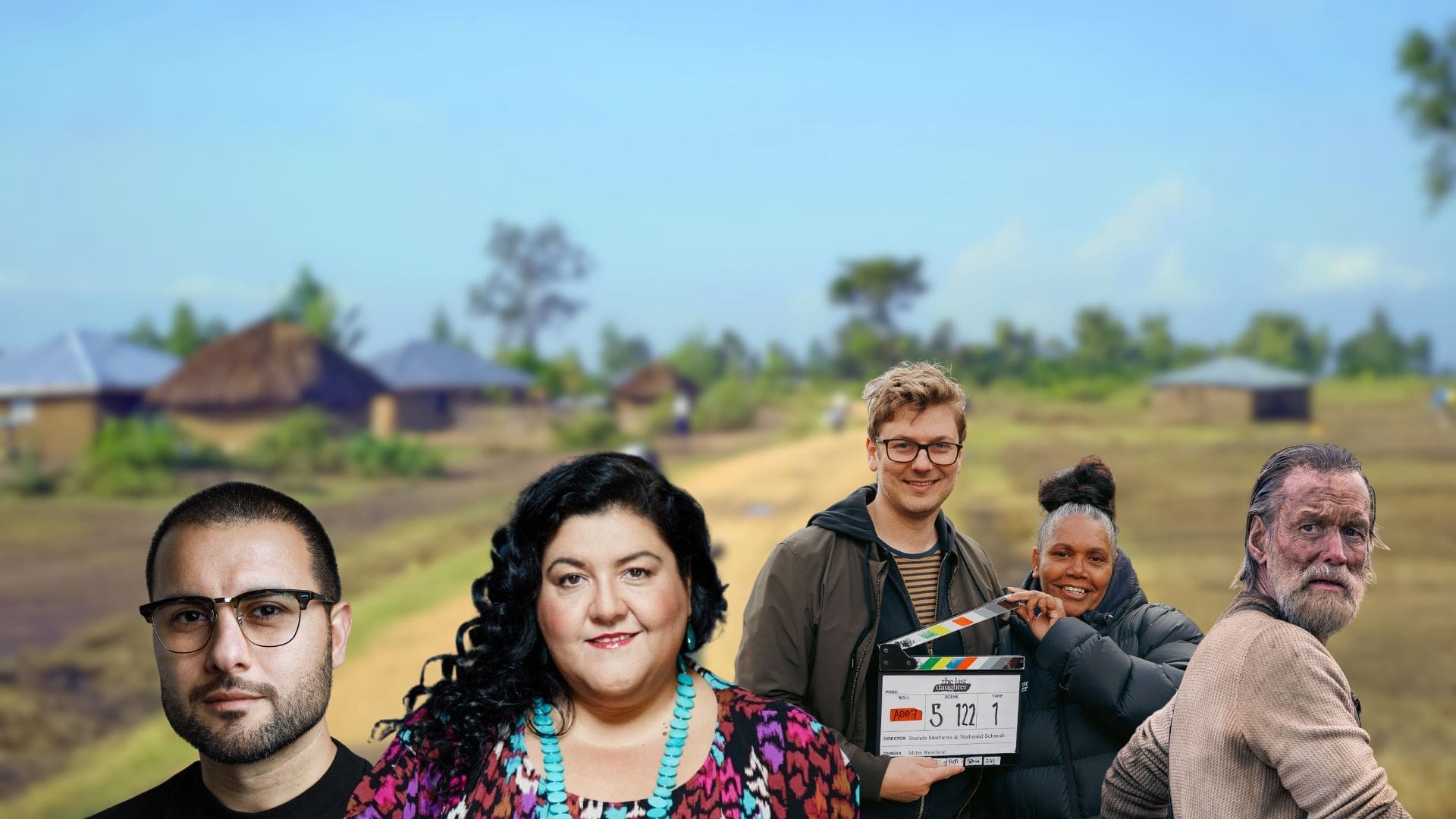
SFF – The Last Daughter, Kindred, Sisu, Tennessine & Free Money


Hosted by
KT & Oti
Show Notes
We kick off with Maria Lewis’ short film, The House That Hungers and dive into SFF coverage, The Last Daughter, Kindred, Sisu, Tennessine & Free Money.
More information on these films is available on the Sydney Film Festival website.
Tomato Meter
 KT
"Compelling shots throughout however there were no emotional tie-ins for me to care about his survival.Posted Jul 04, 2023"
 Oti
"It had a charming brutality to it.Posted Jul 04, 2023"
Episode Details
- Duration
- 0:00
- Released
- July 4, 2023
- Category
- Episode
- Hosts
Transcript
Transcript (5,879 words)
Full transcript of SFF – The Last Daughter, Kindred, Sisu, Tennessine & Free Money.
KT: It's another week in the For Your Reference household and I've missed you, Oti.
KT: Um, I know you're behind the scenes and thank you for, um, all of the coverage on Sydney Film Festival, but it's nice to get back into our review bag.
Oti: Yeah, it does feel a bit weird.
KT: Uh, thank you, friends and lovers. for joining us on this journey. Our first media accreditation to a major film festival in Sydney Film Festival. It's very exciting. Our chonky boy will need to be split in half. Let's get on with the show. Howdy ho friends and lovers. Welcome back to the For Your Reference podcast. You got your host, KT.
Oti: and Oti.
KT: On the docket today, we will be covering, uh, five out of the 10 films as well as a short film, Oti. Yes, ever so lovely and ever so splooshily, um, for those that have been wondering what our hottest takes are, I will say right now when Project Greenlight comes out, just watch it, me in the tweets, the spills, the instas, because we have a lot to say about that. But, um, before we get into that, we're still inside of the Sydney Film Festival dimension, but even before we enter that dimension, um, right at the top of the show, I just want to say that I am a super stan of Maria Lewis. She literally does everything, um, as the kids say, she ate it all up and she left no crumbs.
KT: So to my fellow Maori Pacifica women love, um, shout out to Maria Lewis. This short premiered in the Sydney Supanova around the time of Sydney Film Festival. It's called The House That Hungers, um, for this, as well as all of the films that we're covering, if it is available, um, there will be information in the show notes or feel free to reach out to the creatives because we're nasty. We love to love on each other.
KT: So let's get on to The House That Hungers thoughts, feelings.
Oti: Oh, the twist crammed into this. Yeah. It was magical. I think watching it and thinking that, uh, they could pull this off in a short. It definitely created a hunger in me for wanting to see this, um, as a feature film. It did. The characters are interesting. And then you get this overlay of, um, you know, the creepiness that's happening. We don't want to spoil it, but it just, it was just woven so nicely.
KT: Yeah. Oh, absolutely. Um, I loved how determined, how discerning and how deliciously nasty it was. It was such a great show and you're right. It didn't overstay its welcome. And if anything, it made you linger and yearn for it. For more, I will say that perhaps I am, as much as I am an indie gal, I'm not necessarily an auteur, um, sort of interpreter because you got what the messaging and the symboling, like symbolism was straight away. Yeah.
Oti: you've got what the podcasts.
KT: I, and I just have my hands in my pants. I don't know what's going on. Um, but it was giving like Promising Young Woman. It was giving, I'm on a rampage. I'm having a good time.
Oti: Yeah. And understanding what was going on or what I thought was going to happen when it did turn, there was still other twists that made it even more obscure or even more mysterious rather. It was a, it was a good watch.
KT: Yeah. Um, shout outs to everyone involved and we love you, Maria Lewis. Um, let's get into the films of Sydney Film Festival. We did cover two, um, first nation and they were both documentary films. Um, so we're going to go right off the top of that. I will give my review, but you know, Oti, you've also, um, edited the interview and that sort of stuff. So if you have any thoughts, feel free to jump in with that as well. Um, the first one we're going to. Um, kickoff with is The Last Daughter about Wiradjuri woman, Auntie Brenda Matthews. Um, I had the opportunity, she co directed, I had the opportunity to interview the other co director, Nathaniel Schmidt, um, on the process.
KT: It did start off being about the process. Of documentary filmmaking, um, because full disclosure, I wasn't sure how two non-Indigenous people could have a deep sort of conversation about the film. Um, and then as the interview sort of continued, we were able to really get into the depth because as far as I could tell, Nathaniel was bowed about it. And you can tell the difference is absolutely there. So, um, what I will say about the documentary film is. It comes at a time where our country is continually dividing those that want to talk about and face the Indigenous history that we have, and those that would prefer not to. Um, even within that sort of Indigenous history, we have the Stolen Generation and continuing on from, you know, the disgusting, in quotes, safety for these Indigenous children.
KT: Um. And even within that conversation, these are stories and, you know, Kindred as well, but, um, you know, these are stories that don't necessarily get explored when people are already scared to approach it broadly as a
Oti: Oh, that's interesting. I remember Um, while I was watching the interview and thinking that the care that was put in, I could never imagine going through something like that or having the need to feel the need to feel the reconnection, you know, uh, it's pivotal and it's a journey I'm glad she got to do.
KT: Yeah. Um, it's definitely one of those things where, you know, we talk about this a lot. We, you know, outside of like, you know, films, narrative films and TV shows. We do enjoy watching documentaries and it, it can be, um. A precarious sort of balance when we, I guess, when you watch a documentary film about someone's life, because it's only going to be as, as deep or as vulnerable as the actual person that the documentary film is about. So if they're not ready or willing to go there, um, then there's a, you know, sort of blockages. And, you know, even going back to another film festival, SWANA Film Festival, where I talked about Miguel's War, um, that was also another great example of going all the way there, you know, even in moments that were hard, um, to confront, you know, even in this, um, specific documentary, The Last Daughter, um, you can see when Brenda's talking to her mum or to Of course she was hurt.
KT: But it's that it's the melding of the identity that makes us, that is worth exploring. And I'm so glad, exactly like you're saying, I'm so glad there was so much cultural sort of safety and care that was put into the making of this film. And I would strongly encourage, definitely go and check out their website as well. They've got lots of resources as well, especially if you're interested. Um, we are in the midst of NAIDOC week or even just in general, um, for workshops and educational sort of things.
KT: Uh, let's move into the next, uh, indigenous, uh, documentary film that we watch as a part of the Sydney Film Festival. Um, I had the opportunity to interview Wadi Wadi woman, uh, Gillian, Jill Moody. Um, and this documentary is about her as well as Wonnarua man, Adrian Russell Wills. Um, it's very much a love story to their individual lives. They're friendship and how that overlaps as a life, um, and the life of those that they love around them. It was really cool. Um, it felt more of like a slice of life sort of situation. I think Jill was saying that, you know, the initial sort of cut was like four hours, which makes sense because, you know, when you're distilling your life, even if it's for a short amount of time, there is so much richness to it. It was interesting because they both talked about how, you know, their upbringing and being adopted by white families were, you know, sort of childhoods and adolescence that even white people would be jealous of.
KT: And as a brown person, I was also jealous of because they were in those sort of, you know, whenever, you know, friends and lovers that aren't in this country, whenever you think of like that sort of Australian experience, they were living in those sorts of areas. This, what is it, Home and Away? Summer Bay, it's been a while,
Oti: I was a Neighbours boy. So Ramsay Street?
KT: whatever it is, if it's on this television in this country, it's reflected off my eyes and into the sun.
KT: But, um, it was so interesting. To hear how their lives intersect, even though there were two very different lives, there were two very different experiences. Um, Jill, you know, like very lovingly and, and, and, and I love this for her. She had two loving families. And being able to explore that, um, Adrian had a bit more of a different sort of experience as well. So, um, friendship, love, kinship, that's really what this documentary is about. And, um, absolutely. If you do have an opportunity to see it, you should go and see that as well.
Oti: Oh, that sounds interesting.
KT: Um, let's move into something that we've both seen, uh, usually in our Ref Max, yeah, you're, you're smirking at me. You're giving me a manly smirk. Friends and lovers, Oti's giving me a manly smirk. Um, we usually don't do spoilers, so we can stay to non spoilers, um, to keep our Ref Max sort of format. So our nasty friends and lovers don't get spoiled. Um, but I am talking about the film out of Finland. Sisu and I would also like to note that Sisu means Jesus in Tongan. Maybe that will come into my review. We'll see.
KT: Charming? Of all the words?
Oti: It did. It did. I couldn't, I couldn't point my finger on it when he started watching it, but I was enthralled throughout. Yeah, it had this sort of charming brutality to it. Um, watching Aatami traverse, uh, you know, trying to keep his gold. I thought that how it was laid out, you know, the pacing felt right. I didn't feel like any, we lingered too long on any particular scene. Um, it had a really cute dog.
KT: You know, the charm is because it was nary in sight.
Oti: know, but I found it quite interesting just how even the interactions at time, he doesn't even speak that much, but a lot is done and conveyed by his silence and grunts.
KT: I, I wouldn't say we have a tangible audience in Finland, um, but who knows, there might be Finnish people in other countries that are listening, friends and lovers. Um, I don't know if this is Finnish filmmaking, but I'm picking up on what you're saying about the dialogue. Barely anything was said within an hour. However, The, the key qualm that I have with this film is that there wasn't any compelling motivation for the protagonist to continue his John Wick rampage. Um, I don't prescribe to gender roles, friends and lovers. Um, but I did say many a time, you know, without getting graphic and without, I guess, spoiling question mark.
KT: There were a lot of close up, disgusting, gory sort of moments. And I turned to Oti and I said, I don't prescribe to gender roles, but this is a man. I have no business watching this film. It had visually compelling shots throughout. However, there were no emotional tie-ins for me to care about his survival to live.
Oti: Did I mention the dog? is
KT: I Am Legend
Oti: was the emotional tie-in. You can't praise John Wick having a dog and carrying the
KT: Come on, piss off. Are you saying this is the same Okay. Okay. Okay. Okay. So, so if we distill this film, it sits in the collection of protagonists. That, um, are the untouchable, are the invincible, you know, against all odds, they managed to survive when everyone, you know, dies. Right. But what's the point? That's what I was saying throughout the film. What's the point of surviving if there's no reason for you to survive? Chill, bro.
Oti: Full on vengeance?
KT: Nah, bro. Is
Oti: Mad Heidi style? Mad
KT: is great. We love Mad Heidi, but.
Oti: We love Mad Heidi. Without the campiness.
KT: No, but there was no, like, there was no reason for this film. There was no reason for Sisu. You can't explain it because it wasn't fucking there, bruvs.
KT: You've never said this for Belly.
Oti: Because Bailey tried to get at me it was personal
KT: I took it personally.
Oti: uh but yeah like i think a lot of people watching the watching this will appreciate will enjoy it um regardless of whether you think you'll get get anything out of the movie or not or whether you think that can,
KT: But nothing was happening. Nothing was being described. Um, no, no, miss me with that mess. No,
Oti: Uh, yay. Shall
KT: shall we move on?
Oti: Let's move on.
KT: The next film we are covering is from Iranian Australian filmmaker, Amin Palangi. Um, I'll say it here, friends and lovers. Um, before we started the interview, um, you know, just making sure that a video interview is fine and that sort of thing. Um, I also asked how to pronounce his last name. Um, because I don't think I've ever said it on the podcast, but, um, in my language, palangi means white person who I like to address a lot. Um, and when I was asking him, Hey, I just wanted to check, um, how to pronounce your name because of my language, like palangi means something else.
KT: And he's like, yeah, I know it means white people. Oh, friends and lovers. And you know, when you're interviewing, it just, it like removes the barriers and you know, you're going to get to a moment of relating. And it was also one of my favorite, um, sort of interviews in the Sydney Film Festival. Um, I, if we get time, Oti, in our Christmas special, I kind of want to do a compilation of all of the interviews of the key sort of question we've been asking recently of what would you pair, um, as a double feature, um, in talked about Burning, the South Korean film. I feel
Oti: know, it's one of my favorite movies.
KT: Yeah. And I feel like I'm not going to change how I felt about it, but I want to experience it again.
Oti: Experience watching Burning again.
KT: Yeah,
Oti: Yeah. Cause you're closing your eyes watching it. That's why I didn't appreciate it.
KT: Oh, okay. Um, but going back to Tennessine, um, if you think about those sort of dynamics where you have a potential sort of triangle, understanding the shifting dynamics of a relationship, romantic or otherwise, it really pulls on these sort of tethers. And when we're talking about Iran, um, You know, even if you read the description, it's not a spoiler. Um, you have two different characters and, you know, understanding what life looks like for an Iranian woman in a country like Australia and to have, you know, that sort of different relationship sort of dynamic. So it was very interesting. Um, but also I did say, cause Tennessine is like on the, it was, he called it the table of elements, the period of table.
Oti: Mmm, periodic table.
KT: Sure. Um, I don't know, do you Science Walter Whites Anyway, but, um, you know, there's dialogue about the female as Oti would say. Um, character being like, nickname is Tennessine and Tennessine means harmful chemical, unstable substance, I was like, bro, if Oti ever did that, I'm smacking him all the way to the metaverse.
Oti: bit of
KT: You're going to feel that, uh, being rain squats on you.
Oti: me. Oh,
KT: it was a, it was a gorgeous film. It was beautifully made. There is a lot of focus on the visuals, um, and how that sort of interplays to the dissonance and the desolation. Of the themes, you know, in the sort of changing of ways. And, you know, we talked about, you know, culture, Iran, we talked about gender. Um, and also Amin was open to talking about gender. So you need to do your work, Oti.
Oti: I can't, I
KT: in
Oti: I'll show
KT: my love. I'll show you the real agenda,
Oti: Oh, wow.
KT: but we also talked about, um, just universally how scary it is to think that you have your person and through whatever sort of circumstances, you don't have that person anymore. So some real shit, essentially. Um, so let's move on to the last on our docket. Um, are you feeling like some Kenyan joy, Oti? Also, how did it feel having a Tongan and a Kenyan film in Sydney Film Festival the first time we ever went?
Oti: Quite special.
KT: Okay. Well, let's talk about, um, Free Money. Uh, so I guess just quickly friends and lovers for those that aren't familiar with this documentary. Um, it talks about the concept of giving the concept of donations, the concept of not for profit and charities, and potentially giving it a new. Sort of approach. So instead of, uh, I guess donating to, you know, fund towards like schools, for example, the money was going directly to those in the community. Take it away, Oti. Thoughts, feelings?
Oti: I thought it was an honest take into trying and delve into the bigger issue of how charitable organizations work and an aspect of giving directly, giving money directly to the people. Uh, it raised a lot of concepts, at least in my head of what. is and what should be done. I think it's sort of, it's interesting in how it got laid out because at the end of the day, the people doing the free money, um, they, GiveDirectly, people who are responsible for giving these villages money for free. Um, I, I don't think in as much as. I could see the idea. I don't think it was fully baked in
KT: the were well meaning white allies,
Oti: though, though causes and effects of the didn't want to acknowledge that I was left wandering throughout the movie or throughout the documentary. It's, it's, it's definitely something that needs to be covered because at the end of the day, we remember being in the middle of the pandemics. and people donating and the charity organization being like, bruh, this is all going to our administration. We can't allocate any money directly to one specific thing. And it's, it's, it's the, it's the, it's the belly of the beast stuff with charitable organizations, you know, um, but there has to be a middle way.
Oti: There has to be something that yes, organ charity charitable organizations need to change how they operate. But also we need to be able to hold people accountable for giving people money for X number of years
KT: Yes.
Oti: then not having a sort of plan on how A, that is used and B, what happens afterwards. Yeah. You
KT: we're staying on the T, you can't just
Oti: dip in and, and, you know, and walk out.
KT: Okay. So I want to have a real conversation, but let's leave it to a second. And I want to give, um, a review of this. It, it initially introduces well meaning. Allies and donors, and it quickly becomes a reluctance to self-reflect on the the harm in centering the goodness of donations, as opposed to acknowledging that the remnants of colonization is rife in this world. You're not telling me they're right in the way with their colonial ancestors, or do they call them forefathers? Hell,
Oti: Happy
KT: Happy 4th of July. Friends, lovers.
Oti: I hear that. I think they, they're so studious, they're like Harvard graduates or whatever. But at some point, you need to understand that an experiment, however you want to frame it or call it. Are
KT: you as in me or you as in GiveDirectly?
Oti: Okay. They need to understand that there has to be consequences to whatever actions they do.
KT: So let's talk about this because as we were watching the documentary, You know, we, we joke about it because it's so fucking prevalent. And because people don't understand taking pictures with the local children doesn't fucking do anything aside from make you look like an idiot. You know, whether we're talking about volunteerism, whether we're talking about slum tourism. Part of what was frustrating me about this documentary is it just, it just gave a facelift to the existing model of giving right? I'm such a great person because I'm donating money. Say less bro. That's it. Just say you're doing it for your own selfish purposes, right? Surely you're giving money. Yeah, cool.
KT: But you're doing it for your own gratification. You're not actually doing it. To help the people that you're giving the money to. And the reason why I say that is because it has that, um, it has that sort of selfish lens without actually realizing, you know, like you started to see the, you know, sort of sleep of royalist agents all around the world when the queen died, right. I'm serious. And it's like, Oh, you know, it's. Someone's grandma. And it's like, fuck that. How about all the other grandmas and all the other children and everyone that fucking died at the brutal means of the colonial crown, fuck off. Right. And the reason why I say that is because there has been so much harm and ongoing benefits.
KT: To those that benefit from the crown and from colonization that them giving money to like African countries is them patting themselves on the back. Fuck off. The wealth in which a lot of these Cumber-fucking-batches have gained throughout this world is at the detriment of people in Africa and those that the world. Fuck off.
Oti: Jesus. I didn't know I'm getting hot tip KT.
KT: I am on spill and I'm sure they're going to kick me out soon, but this is, this is the fundamental, this is the fundamental issue that I have with people donating to charities. If you want to do it for yourself again, say less, bro, that's for you, how it should be and how it actually is for those that are Dr. Umar certified. I don't think he'll certify me, but if you're Dr. Umar certified. If anything, it is righting the wrongs of, of, of, of privileges that you benefit from. Right. If you had nothing to do with colonization, why do you continue to benefit from it? You see what I'm saying? So that's, that's fundamentally, anyway, that's, I came with that watching the documentary, right?
KT: And what was frustrating with me in this documentary was it wasn't being challenged until our fella, our number one guy. Larry Madowo showed up because that gave me some credibility for the film. Otherwise, it almost lost me.
Oti: I hear you. I think so. Here's like, we can all put everything that's happened with history in Aaker, it's all there. It's being we, we know the effects. It's hard in African countries and all that, but what's happening here with GiveDirectly in as much as it might be Ude, I don't know. Well,
KT: what I'm saying, is it in isolation?
Oti: I know it's not in isolation, but I can still see, or I can still realize and accept that there is a problem with how NGOs, non governmental organizations run in Africa and how charitable organizations run in Africa. There's definitely a disconnect. We've done a lot of, uh, volunteering back in the day, you know, where we worked with NGOs and all that. There's a disconnect on how that is set up and how it's supposed to help the community. and how everything just runs. It's so wrong. And people know that for a fact.
KT: It's, it's so this is when I said, I wanted us to have a real conversation because, you know, even going to Kenya, you don't seem to have, like, you seem to be all goods with the Peace Corps, you seem to be all peace with the Peace Corps, like it doesn't seem to bother you that there are, there is a prevalence of NGOs, even if they're not necessarily doing anything or making any sort of tangible change. In balance of the funding that they receive for those that they should be serving.
Oti: And I know that a lot of policies are being raised to try and curtail that. What's happening though, at least with In reference to this documentary with GiveDirectly, I think rather than give money for free, it can be an investment. But with every investment, you need to have a plan. And with that plan, help people realize what they need. Give them, give them a... Give them an aid in how they can manage their lives better. You just don't drop... And it's not even a lot of money. It's what, they're being given 22 a month. And maybe in the rural areas of Kenya, that can take you a fair
KT: further than Nairobi
Oti: But once I start hearing a kid trying to plan his life and seeing how he's going to go back to the main city in Nairobi, how's that care, bruh? Nah, that's not what I'd make anything. That's not even dinner, bruv.
KT: Can I challenge you on something though? You said that they need to be given a plan. I believe in self determination.
Oti: to be given a plan, walked through possibilities of what they can do with the money.
KT: Okay. But I, I believe in self determination. So in that sense, I don't agree with you. Um, I would say where it starts to fray is when you try to understand what the intentions are, or maybe the boardrooms were getting sick of presentations because even while they were trying to do this experiment, they kept like, they expanded into different countries as well.
Oti: Yeah, they're doing different continents. So I just want a situation where aid is provided for people who need it. Maybe it's
KT: don't you think that has a colonial lens in saying aid needs to be provided as opposed to acknowledging that a lot of, a lot of the, um, geopolitical sort of situations in Kenya, Africa and beyond are at the hands of Western powers?
Oti: Yeah, but how do we get away from that? Empower the people to get out of poverty. Empower the people to find new opportunities.
KT: a systemic deliberate thing that they are in poverty. So why is the onus on you give me aid as opposed to I'm doing this out of the kindness of my own heart? It's a re centering darling, at least in my opinion.
Oti: we can all be Dr. Umar's Anga, Anga, Uga, Uga, or the injustices of the world, but that doesn't change how things operate right
KT: Well, whether I'm angry or not, it's still the same
Oti: and right now, many of the governments can't provide that sort of aid to the majority of the people. So it comes from third party organizations to come and, you know, we've got to fund this, we're going to help that. We're going to donate this. It's not a bad thing to accept donations. It's not a bad, like, but with me, I want them to not only just stop at here's 22 is, hey, you know, let's say from a business perspective. You could do ABC. You could buy a cow that will, you'd be able to milk. You'll be able to, uh, sell and you can breed and you can get X, Y, Z and 10 months down the line, you can start opening up.
Oti: You can open a butcher. You can start providing meat. You can then buy a motorcycle and then. A 10, 15 year plan. They're giving these people 22 a month for 12 years. That's such a fucking long time without any sort of controlled environment. And this is a bigger picture view to me. I just feel like there has to be an onus, even if it should be an option. It's not mandatory for those who wants to, to get into the planning of it. Let them join in, let them enroll rather than, Oh, here's 22. Uh, you'll probably be able to feed yourself nicely and do other stuff that will supplement your current income without having to worry, you know, and
KT: I'm, but what I'm saying is I'm zooming out and I'm looking at the matrix of GiveDirectly, they obviously chose a rural village so that they would be able to cover it because we see an example of a young man going into Nairobi for university and that, like you said, it took him nowhere in regards to finances. Right? And we also see those that, you know, slip through the cracks, whether it's a clerical error, whether it's any other sort of instance, there were young people that were left off of the list. And that dramatically, because again, it's, it's that presence of hope, right? And then you also had people in the neighboring village that were just on the cusp.
KT: That just missed out and they were struggling too. So it, it becomes a vanity project at that point. And that's what I'm saying. They're sitting there in their stuff in their, in their nicely conditioned, um, offices in the US being like, Oh, let's randomly choose this village and let's just show them how good we are at giving money directly to the people. And it's like, you're not actually making lasting change. You're not actually doing anything. And you know, even the end card that they had in the film as well, it was very discouraging.
Oti: It was, um, all I've got to say, there has to be control measures around it, set that mean, The model can't work as long as you empower people to use it properly, give them an option, give them an option to, to, to visualize the future in a way that they never before. Give them the tools that they're able to understand that. I can achieve X, Y, Z, if I plan myself correctly. If I did
KT: see instances of that, of even just being able to go to school. We did see instances of that. I think what you're saying is it's not a tangible amount of money.
Oti: No, no, no, no. You
KT: were people dreaming of, of, of life beyond
Oti: Of course people were dreaming life beyond. And I'm not saying it's not for everyone. I'm saying, like with every investment, help people come up with a plan, a concrete plan, let them do projections and understand how 22 a month will take them and how if they save it or do whatever, if they put it in stocks, I don't know, something.
KT: But you're putting the onus on the people. That's, that's what makes me feel icky.
Oti: putting the onus on the organization to provide this platform. Okay. GiveDirectly, you need to open up these centers and tell people, Hey, we can help you plan and focus your future.
KT: Yeah, okay.
Oti: It's giving power to the people. It's not putting onus on the people.
KT: But that's, so it was a microcosm of giving finances to the people. So in that way, it did meet the directive, but it isn't lasting and it isn't genuine.
Oti: Yeah, well, we can debate this a lot. I think there has to be a better way of going about it. I think how they're doing it currently is quite dangerous.
KT: say something dangerous? Cause you're saying, you know, like any sort of investment to me, to me, humanity, isn't an investment it's for the sake of people. You're not going to, like, it's not something that you do to get an ROI. It's something that you do because it's humanity.
Oti: do an investment on the people, for the people to invest in themselves, to invest in a plan that they can foresee, to invest in something that they'll be able to say after 12 years, once this is Once this is done, then I know I'll stand financially. I know what my plan is. I have goals. I have targets. I have my two, three, six year plan. And once the funding is done, I know where I'll be financially. At least I would have focused it that much. And currently I don't think there's tools available for them to be able to do that for themselves. So whether you want to be all technical about it, I just think it's how you help people get out of poverty in a better way, rather than just slamming 22 and being, yeah, cool.
KT: Yeah, but wasn't Larry Madowo also talking about how, you know, there was an NGO that came and told the people to build their own houses and they'll come and put the roof on and they never turned up. Like these become like, you know, the tumbleweeds of, of white goodwill of Western goodwill where they think they'll try and do something and then they don't. And there's no, it wasn't even mentioned in the documentary. I think it was Larry that said it. There's no, um, consequence to not following through on what you're promising as an NGO.
Oti: Yeah, I agree. I agree. I just think there's smarter ways to go about it. And that's it.
KT: Okay, you know, I'll concede to you, um, because this is not just a story about black people, but it's specifically about Kenyan people. Um, but yeah, like I think also what I would say is whether I'm angry or not, it doesn't change the facts, Oti. Yeah. So get mad.
Oti: no point getting mad when we know the situation,
KT: us a DMX. Oti is not where the hood is at apparently.
KT: Oh, were you expecting, um, Free Money to have so much real estate, Oti? Well, I guess this can be a case study when you start your NGO. Thank you so much, friends and lovers for joining us another week in the For Your Reference household. Um, also thank you for all of the love, whether socials, whether listening, whether subscribing, whether checking out the video interviews, um, it really means a lot to us. We are literally a two person nasty, but a two person operation.
Oti: approach.
KT: Um, if you'd like to see how nasty on Twitter and Instagram and spill where for your report,
Oti: Write us an email at hello@fyrpodcast.com.
KT: we're also on King Kenya, no tea podcasts. If you'd like to leave a rating and review, I will see you guys for the second half of Sydney Film Festival. Bye.
Related on FYR
Discussion
Loading comments...