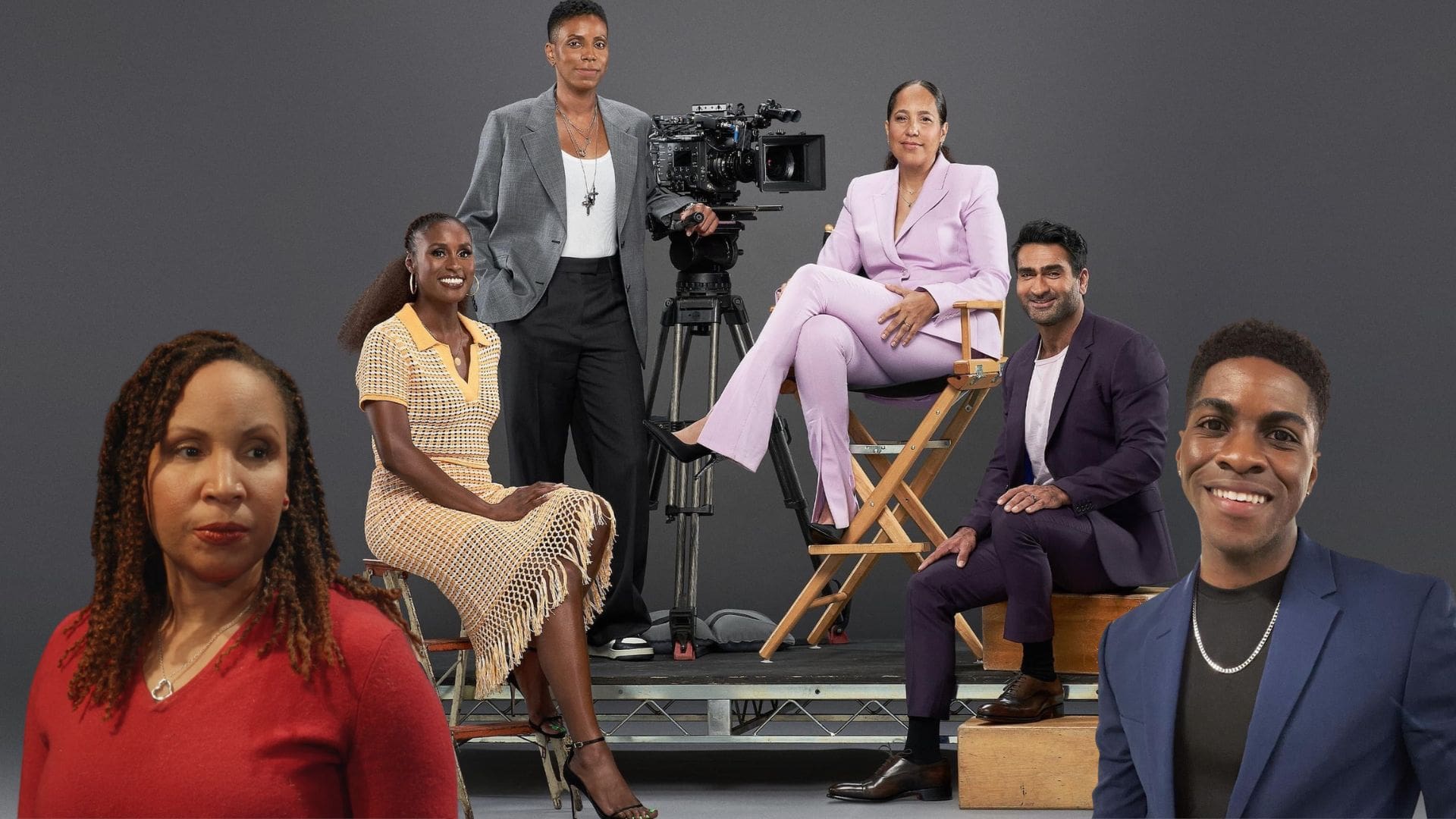
Project Greenlight, Mickey Hardaway & Shadow Acting


Hosted by
KT & Oti
Show Notes
In this week’s Reference Max, we cover the rebooted Project Greenlight, indie film Mickey Hardaway and indie short film Shadow Acting.
Tomato Meter
 KT
KT"As a film lover I loved the opportunity to learn just how much is involved in being a director. Sheds light on the importance of owning and telling different stories but also keeps it frustratingly entertaining for the audience.Posted Aug 22, 2023"
 Oti
Oti"Project Greenlight offers a refreshing dive into the world of cinema. The behind-the-scenes look, combined with a diverse lens is captivatingly fresh.Posted Aug 22, 2023"
KT"Marcellus focuses his lens on mental health, particularly for Black men. While the lines between reality and thriller blur, the motivations of the protagonist continue to conflict each other.Posted Aug 22, 2023"
Oti"Mickey Hadaway artfully navigates the often overlooked importance mental health and therapy for black men, weaving a thought-provoking story examining resilience and inherited struggles.Posted Aug 22, 2023"
Episode Details
- Duration
- 0:00
- Released
- August 22, 2023
- Category
- Episode
- Hosts
Transcript
Transcript (5,731 words)
Full transcript of Project Greenlight, Mickey Hardaway & Shadow Acting.
KT: It's another week in the For Your Reference household. And it is another edition of Reference Max, where we cover screenings and screeners that we have been given access to. Let's get on with the show. Howdy ho, friends and lovers. Welcome back to the For Your Reference podcast. You got your host,
Oti: 4
KT: Oh, I've been saying life has been lifing since June, Oti.
Oti: It has.
KT: It has. So much so that you are not interested in talking about Gran Turismo today. Maybe on a Patreon segment. Uh, welcome, welcome friends and lovers. We hope you've all been well in the chaotic firestorm that is not Florence Pugh's bosoms, even though we do love them. Are you triggered Oti? Ne'er another titty in sight, am I right? We're pop culture wankers, friends and lovers. on the docket today, we do have a get it right, get it tight, sort of, uh, offering today, which is very nice. We also have a couple, upcoming as well for Reference Max, but you know, like a good nasty wine, we need to decant it.
KT: We need to let it breathe for a little bit. This, uh, first one that we're going to get into has actually been out, for a little while now, I think just over a month. but I definitely wanted to spend some time in talking about it. Uh, I guess we'll decide whether we talk in spoilers. I'm fine not getting too close to the clit of spoilers, friends and lovers. So we might just keep this non spoilery, but we are talking about the rejacked Jackson Jack off. The rebooted the remake Project Greenlight, I think it's called, A New Generation with the beloved love and lauded Issa Rae hashtag Never forget the glory that was Lovebirds. We also have Kumail Nanjiani with soup.
Oti: a love our soups.
KT: And also shout outs, love and splooshes to Gina Prince-Bythewood, also a throwback to our very recent episode of Swagger with Reggie Rock Bythewood.
Oti: Rockbite.
KT: Okay. Uh, so I guess let's get into it. We both didn't really know anything about the original Project Greenlight, but I guess just give a bit of a background, and I guess your thoughts as well. I
Oti: The things that I thought were mystical, or I would never figure out how things are done in certain regards, and this shed a light on that. we saw the behind the scenes politics as well, which we knew exists, but seeing it play out in front of us was, was wild. I think even in, in terms of even the casting choices, I was like, well, you know, it's wild how things or how decisions are made. You could see, you could, you could, you know how they're made from a, listening to people justify their decisions is something else altogether. And I think seeing such a diverse cast in this was refreshing for me. Apparently this used to be something back in the day. And I tried to go back and look at some of the things.
Oti: Yeah. I was like, females. No females
KT: Affirmative action policies.
Oti: at the top of the
KT: Love it! As a film lover, I loved the opportunity to learn just how much is involved in being a director. Sheds light on the importance of owning and telling different stories, but also keeps it frustratingly entertaining for the audience.
Oti: Yeah.
KT: Well, we're absolutely going to get to it. You know, it's, it's been out for a while, friends and lovers. but again, we don't need to spoil it too much, but I thought like, I didn't really have a grasp of what the show was. So I got very confused when they pretty much told us in the first episode that Meko was the winner.
Oti: Right? I was like, oh, then what is this?
KT: Yeah, yeah, yeah. And then it actually becomes the craft, the actual filmmaking, which, oh, Oti. Oh my, oh my, oh my. and then I guess there's a part of you, that wonders. Did they choose Meko because they knew that they would have these sort of producing Rachel UnREAL reference moments of getting messy, frustrating us as viewers and that sort of thing, or is it tangibly just watching it as it happens?
Oti: I feel like we should have been given the opportunity to see most of the screens, uh, for the auditions, because they only highlighted the ones they liked, and out of those selected, Meko stood, stood out. I can't deny that. Yeah,
Oti: that also is everything as well. Right? Mi
KT: she was the only choice.
Oti: Yeah. true. Uh, but the decisions to go with Meko presented, there were people who had question marks around that and rightly so, and we got to see it, or at least they felt a bit justified in their decision or their apprehension much later where they're like, ah, bloody hell. Because it's one thing to present yourself as one thing.
Oti: And if I'm, if I'm a writer director, then I need to bring my righty ness and my directy ness
KT: Yeah, because you came with the hyphen. Exactly. You said writer director. You didn't just say you were a director.
Oti: Yeah, I just, I can't just come now and say, uh, this is not my process. Uh, I'll just figure it out on the fly. Or I'll think about the directing and the shooting of it. Or I'll do it while we do it live. You know, when we're shooting it, we'll see how we go.
KT: I want to come back to something that you mentioned earlier in your Rotten Tomatoes quote. You talked about the importance of diversity. if we are what is perceived to be as diverse, praising diversity, is that the ultimate goal? Riddle me that, Oti Batman.
Oti: Because, and I think watching Project Greenlight also showcased some of the issues in the industry as well. Where if we do get a diverse cast or diverse lead, then, then they don't want to hire. Someone who's less experienced from a different background because they, this is their, this is their
KT: Just say Meko, because we're talking about But how does that, you are literally on a show that amplifies underrepresented voices.
Oti: That rubbed me the wrong
KT: this opportunity. You were, you were given a portfolio of perhaps not the most well versed, perhaps not the most experienced. You also have Issa Rae at the helm with Hoorae Productions, who are known, you know, we talked about Insecure, how all of the, all of the crew behind the scenes were women. Black women. and we talk about the importance of that. You are on this show produced by Issa Rae and Hoorae Productions. And you have the gall to open your mouth and be like, I think we need the best people for the job. Then you should fuck off then. Why
Oti: But I also think the Mandema Toure should have voiced their concerns earlier. Mm
KT: Montreal. So, okay, so one of the notes that I had when we were watching the screeners for this was I don't know how much of this is producing, and I don't know how much of this is them having problems with Meko, but I would also say, you know, Hoorae Productions literally don't miss all of Insecure, Rap Sh!t, which hopefully will, you know, it's coming out not too long now, I would imagine that the pride of the production is more important than the theatrics of the drama. Of this particular show. But I don't know, I can be convinced either way. Where are you landing with it?
Oti: Cause it was brought up, Meko brought it up. She felt that this was being overly produced and
KT: like it's, it's the show first before
Oti: Making Meko's project work for her and which was wild because every aspect of every aspect or a little advice that she was given, she literally just ignored.
KT: that she was a Gina in their life, I think. Because that's the only person that Meko listened to. Right?
Oti: So, you know, and I think Gina unintentionally made Meko a bit more hard headed.
KT: I think it's because Gina was sharing her experiences, but she's at a point where she's the boss now. I feel like there needs to be a discernment of the advice you give to the ones that are coming up. Yeah, you shouldn't just be add water, you know, and then it's the same thing. Yeah. You need to navigate that thing differently. protect your vision. You don't have a vision. You just started.
Oti: But I think Montreal was the closest to calling out every aspect that, or at least every issue we saw and felt that needed to be raised. Montreal was there to do that.
KT: Absolutely.
Oti: But he was not even there for the most part of it. He showed up
KT: he is very high level. That's why
Oti: Yeah, it was, it was such an intriguing process. Just seeing how everything went. Uh, Meko's avoidance of writing any sort of...
KT: note,
Oti: They got a round table.
KT: and she just out. But it's like, they were giving so many different angles, so many different perspectives, and she didn't listen to any of
KT: I really, personally for me, I really got a lot out of this because, you know, as much as we are to quote a Logan Roy from Succession, not serious people, we are film lovers and we're absolutely film wanker. But we don't have the traditional sort of education of understanding what filmmaking looks like. So personally, I really got a lot out of watching the series and seeing what it takes to be a director and how the director, I always thought a director was someone that always just sat in front of the camera. Without actually realizing that the director is involved with, it's pretty much like, like top, right. You're, you're, you're part of the orchestra. You're conducting the orchestra, you know, whether it's, location scouting, whether it's casting, whether it's, you know, anything to do with the budgets, VFX, like everything.
KT: That is involved in a film. A director has a hand in, which also makes me feel better. Friends and lovers. When we come on here, talk our shit. And I talk shit about directors because it's like,
Oti: it's great. Yeah.
KT: You know, you are the Agatha Christie, red herring, if you will.
Oti: Oh, facts.
KT: Friends and lovers, if you haven't had a chance to watch Project Greenlight, especially if you've watched the original, would love to hear your thoughts on that and how, you know, A New Generation comes into play as well. But if you haven't watched, Project Greenlight: A New Generation, please do. Our DMs are always. Open for this sort of nonsense. but I, I kind of want to close off with this, Oti. There was an opportunity to screen essentially the first sort of rough cut of the film.
Oti: There
KT: And, you know, we love and sploosh at Issa Rae's altar at every opportunity we can. Right. But she is human. So I'm sure there are moments where she's like, what the fuck is going on? And we kind of, perhaps, maybe, see a glimpse of that in that screening.
Oti: Every note that was made, you could see it in the movie and how it represented, it just felt, and I think this is one of the discussions we had afterwards, was, would you have preferred watching the movie before you watched Project Greenlight?
KT: I should have watched the movie first.
Oti: Exactly. Because I was in the camp of definitely watch Project Greenlight before you watch the movie, then you can appreciate everything that was put
Oti: and then we watched the movie and I was like, yeah, I should have watched this first. To be honest with yourself.
KT: Well, you know, it's always good to be honest with yourself. It's always good to be able to have moments of reflection, speaking of moments of reflection, we're moving on to the next, uh, that we have on the list of Reference Max. shoutouts, love and splooshes to, uh, an independent filmmaker, Oti, this time.
Oti: Oh, nice.
KT: This is a feature film from Marcellus Cox, an independent filmmaker. it is about a psychological, uh, drama in regards to a young black man. And we'll obviously come to the review. Currently it is available on Apple as well as Prime Video friends and lovers, if you do want to watch it. but Oti kick us off with your thoughts.
Oti: Mickey Hardaway artfully navigates the often overlooked importance of mental health and therapy for Black men, weaving a thought provoking story examining resilience and inherited struggles. I, I had a, it was a mental journey with this. Uh, my, my mind was playing gymnastics. I kept on moving from one side of the spectrum to another on how I felt about the protagonist. And at the end of it, it left me thinking, and I think that's... And I think for every movie that you want to watch, you want to be able to leave the cinema or whatever, if you've watched it at home, and you say that you spent X number of minutes thinking about the effects it made.
KT: It has to evoke something.
Oti: Right? And I felt like this evoked something in me that I wanted to dig deep and understand and fully realize in myself why exactly I was feeling that way. Because That the themes covered in this, uh, are quite heavy and those you can empathize with the protagonist to a point can empathize with everything the society has put in place to keep certain people down to some degree, and then you can also take into account the decisions made by the protagonist, be it right or wrong, and all this cumulated into a battle within myself on how I felt.
Oti: About their protagonist, not necessarily the movie. I enjoyed it. I thought the artistic style taken was good and I love the characters. I love the characters outside of the protagonist where I had a more tumultuous relationship with.
KT: Well, Marcellus, you know, maybe there's a spinoff with Oti Hardaway. It seems like you had just as much quandary and quarrel, as Mickey had.
Oti: Maybe they're the imparted me with Mickey.
KT: I think his final form was Delroy Lindo in Da 5 Bloods.
Oti: Oh, fucks.
KT: think his name was Paul.
KT: Marcellus focuses his lens on mental health, particularly for Black men. While the lines between reality and thriller blur, the motivations of the protagonist continue to conflict each other. And I think both of our quotes pretty much encapsulate how we felt about the film, because there's so many layers. There's so many layers in regards to the film, the messaging, the protagonist. And I kind of want to get into, a little bit in that, but I also want to agree with you that I loved the styling of this film. you know, we're not going to do any spoilers, but I will say, you know, I'm just like Morty from Rick and Morty.
KT: Like, don't show me a scene that happens later on in the story. I do appreciate a linear story. but it made sense. Sense here, it made sense in this film. and I'm glad that the, the, the, the choice of storytelling and the choice of, I guess, a way to hook in the audience, happened at the start and it really helped carry, throughout the rest of the film. But let's talk about, you know, like mental health for black men, because that's really what the core of this film is.
Oti: Yeah, uh, I think a lot of the times it's neglected, uh, there's a, there's a facade you'd put and think that you're fine when you're not, and it's fine to reach out for help, uh, Mickey does, and we're not going to go into spoilers too much, but the decisions he made Up until to a point I felt they were the right ones. Yeah, I, everything that he'd been through, I could empathize and it was really hard seeing him having to struggle the way he did. You know, with, with very little support with teachers knowing that he is struggling, but they could only do so much. And I think
KT: I was, I was saying that watching it, but you were like, there's only so much they can do. And
Oti: There's only so much the teachers could do, you know, there there's, yes, they'll try and intervene here and there, but what else can they do? And I think this also brings a discussion point on the systems in place. What systems are in place to, you know, help people like Mickey, because it doesn't seem like there was a lot because everyone seemed to know exactly what was going down. And no one really had any tools to help. And this all brings us into the, the, the journey of Mickey. Because we're taking through his grade school and high school years. And I feel like a lot of the fundamental aspects of him. As a person probably, or at least any relationships he would have formed would have happened in his university years. And I just wanted more of that. I wanted more of that because then in my mind, I could sort of try and justify where we ended up.
KT: Well, maybe it's just like Jesus. He was a baby and then he was an adult. You don't need to know what
Oti: that.
KT: between. You're not getting Mickey Hardaway the formative years.
Oti: in the
KT: but I absolutely agree with you. I think something that I would say, it's not necessarily about mental health. I think it's just about having, similar sort of upbringings where, you know, I guess you can call it whatever you want, but it's the, we don't say we love you, but we give you clothes and food and we house you. And that should be enough for you to know that at least we can tolerate you, sort of attitude. I think what we're talking about is layers. In this film, because while Mickey's character had been through a lot of shit, and can we be real, way too much shit that a kid had to ever have gone through,
Oti: Facts.
KT: but we always talk about living at the intersection, friends and lovers where you're only young enough to not learn about race. If you have the privilege of not learning about it.
KT: and the reason why I say that is, you know, it is a trauma response and we do love Astronomy Club, that I hopefully is still on Netflix. but, you know, we talk about those remnants of like being beaten as kids. Right. And, you know, we can put a little trigger, warning, but I'm not going to go into too much detail. But the reason why I mentioned the context of our. Separate upbringings. Me as a young Tongan girl, you as a young Kenyan boy, having very similar sort of experiences in that way allowed us, or perhaps made us more frustrated with Mickey's character. You know what I mean? Perhaps if people had different life experiences, they would just be like, Oh my God, like poor Mickey without also discerning the accountability of his own character.
Oti: Yeah. And I think this speaks more to us as, as you know, as people. And I think one of the things we had talked about, I think we were watching, we were watching Ethan Hawke's The Black Phone, where he had a scene with a white kid being beaten and the cinema just went quiet. Yeah. Because it was quite uncomfortable, in this scene because you rarely get to see that shit, you know? Yeah. So in this scene, we get a lot of scenes like that, and. It's, it's harrowing. It's sad. And you just want to grab Mickey and pull him out of that situation, but there's, there's sort of a resonance.
Oti: There's a, you
KT: Camaraderie. It's like, I got you, bro. I've been there.
Oti: And it's hard, it's hard to, to, to, to take out Mickey in that situation or to try and put him in a situation where he grew up that way. And all the decisions he's made that while are revolving around that trauma, you could sort of understand, but those scenes in this, I don't know how we're going to talk about it because I feel like we need to, the decisions that he makes. from his professional point of view that I felt were completely off the mark for someone who has carried himself in a certain way professionally, knowing exactly what he wanted to do, but also completely missing the mark.
Oti: agree. And, and I felt, I felt, I felt a disconnect. I was like, Bro, what is this? Yeah.
KT: you've, you, you're trying to find your own safe refuge and you're rejecting opportunities to allow yourself to create that refuge for yourself.
Oti: Yeah, and I can get that there's, there's things that he will probably struggle being open with. I thought that's what therapy would come in and, you know, try and bridge that gap.
KT: we need to talk about that therapist, but we'll... the Jon Hamm of therapies, eh? the Jon Hamm yeah, the Jon Hamm. but let's, let's stay in that moment. You were talking about his job. You were talking about his girlfriend. I think essentially what you're saying is he was moving mad fam.
Oti: Not necessarily mad, but the aspect of his decision making that felt lacking, especially for a character that we've seen has moved in a certain way, has built some sort of tolerance and resilience in spite, and we know all of that has mental effects. Yeah. And him being in therapy, I saw, you know, he probably didn't even, I think it was the girlfriend's possession at some point. And I was like, good, talk this out. Yeah.
KT: Yeah.
Oti: And I love that for him.
Oti: hmm. What do you think about the timings around therapy and the responsibility of a therapist to either see that there's a deeper underlying issue or to always be by the clock?
KT: Uh, okay. So, I'm a big advocate for therapy, friends and lovers. I would also say if you are black, brown and indigenous, you know, having a therapist that has similar life experiences, will very much help you in your journey. To healing, uh, I guess also take note of the fact that I didn't say can empathize with your experiences. I'm saying people that have similar experiences to you, because how, how are you going to, talk about the woes of systemic racism when your therapist doesn't understand how they're contributing to it?
Oti: Wow.
KT: so let's come to this therapist. And again, friends and lovers, it is available on Apple and Prime. So, we're definitely talking about it more than we usually would on a surface level, but we get steep friends and lovers. We get
Oti: Good movie! Just go watch it and
KT: What I would say about this therapist. Is well, I'll go to the question that you were specifically asking. like I even told you, like when I booked my therapy sessions, it makes it very clear that this is not an emergency critical service. If you're in need of immediate assistance or care, you need to call the emergency numbers, right? So if you take it from that point of view, therapy is a lifelong, longterm on unlearning. Learning, nurturing, unraveling, right? So it's, it's only ever going to be effective if you're being consistent with it and if you're allowing, if you're allowing the sort of, realizations that you come to and the goals that you're working on, if you allow them to Sim Simmer.
Oti: Sima!
KT: Sorry, Oti, with the keys to my bimmer. I needed to put some levity in there, but you know, you need that time to stew between your sessions. Right. So going back to your point and the aggravation that we saw in the film, I would say that denotes more to Mickey as opposed to whether therapy works or not. I would also say, and it isn't too much spoiling, but this really frustrated me, Especially for someone that really believes that, you know, therapy is such a great thing and they're all doing it. So why can't we let's heal together, friends and lovers. I'll meet you where it's nested. But the therapist was doing like a dick measuring contest on who's had more trauma with their daddy. I was like, my guy, take the certificate off the wall. What's the point?
Oti: I'll meet you where you went through the same thing.
KT: If there's ever a format where your, your trauma is all about you, it should be in a therapy where you're paying hundreds of dollars for one session.
Oti: Yeah. Miss me with that. I'm not here to sit and hear about your experiences. Listen to me. Yeah.
KT: like, Yeah. yeah, no, no, that was, that was absolute nonsense. But, something that I wanted to say before you came to the therapist is I love the presence of. Like figures in his life that were men that weren't his father, because as much as you say that the systems weren't working the way that they should have been working, et cetera, there were definitely people that cared enough.
Oti: Oh, yeah.
KT: It feels as though we have a unique lens in that we can hold and nurture the trauma, but we can also identify behaviors that have nothing to do with the trauma.
Oti: Can sort of delineate. And maybe, maybe that's wrong. Maybe that's wrong of us trying to delineate the effects of the trauma that he's had and the decision making or the impact it's had on his decision making. But all in all, Mickey is, is flawed like many of us are. And he took an initial step in his healing that I hope that a lot of us would be able to take. hopefully we do find that right therapist.
Oti: And the healing can be coming down because I think this movie is beautifully made and it talks about issues that needs talking about.
KT: But I would also say credit to Marcellus and the team because usually this sort of shit will piss me off. And I'm like, no, this is important that black men go to therapy, but I can see this film as a film. This is separate, whatever's going on in this film, you know, is outside of that. But, you know. Like, it's so, it's so interesting now that we get to like interview on the podcast, because like watching this film and discussing this film, like, there are so many things I would love to know about the making of Mickey Hardaway.
KT: Well, let's move on. Uh, we have a short by Laurence Law Watson. It is called Shadow Acting. This is a 17 minutes short. I believe there is a screening coming up in New York, uh, friends and lovers. We will put the links in the show notes, but it is a 17 minutes short that explores an acting class, particularly, the dynamic between the acting coach Anton and one of the lead sort of actors or the more experienced sort of actors, in the team named Stella.
Oti: I found it quite intriguing, quick witted, edge of the seat engaging. the run time was, is 17 minutes, and I didn't feel as if I'd sat watching it for 17 minutes, which I think is a testament to how it's been delivered. Usually with shorts, I know exactly where they're gonna end up, or at least I've tried and prided myself that I have that knack. With this, I had no idea. it had such interesting, dialogue and, and I felt Stella was the window for the audience, Stella was us, or at least Stella was me in this, asking the questions I would have asked, dealing, or at least creating that exposition that we need to know more of.
KT: or
Oti: And just being the window and the soul for this, and everyone else is just high. Yeah, I could never be an actor, but yeah, go for it.
KT: I guess the first thing I want to start off with is, you know, the beauty of cinema and how cinema can come in many different forms and many different formats, you know, with the increasing, focus on production in television. Television as well as short series are regarded as cinema, at least in my opinion. you have feature length films, and then you also have short film, which is also a part of cinema. I've had the opportunity to watch a few short films, mostly as a part of film festivals that we've covered on the podcast, friends and lovers, whether it was the SWANA Film Festival, as well as the
KT: Pasifika Film Festival, and also Sydney Film Festival as well. So, I really love short films and the insular world that can be explored through a short sort of narrative.
KT: There were two particular short films, uh, that I watched in the SWANA Film Festival. one of them being Rest in Peace, and it talks about being in a war torn country, and the losing of, and the forming of identity. and that even transcends into, you know, new lands, and new adventures, and losing those. that you loved as a part of growing, as a part of survival, as a part of moving on. And that was a claymation short. and within that, it was an insular story. You had a start, middle and end. You had highs and lows.
KT: and I really appreciate, love and laud, the format of short film. I do have a lot of lovely. Great praise for Shadow Acting. but I would say that I don't, I feel like this felt like more of a scene of a feature length film as opposed to a short film, which isn't necessarily a bad thing, but I would say in this instance, it didn't feel like this was everything that needed to be said.
Oti: It wasn't, but it left me wanting more. And I think with any essence of a short film or a scene, if you wanna put it that way, is to be engaged enough to want to delve into the lives of the characters. Well, having. At least your interest picked enough to wanting to find out more. Uh, with this, I felt that it did deliver, that I felt like I wanted to know more about, about Stella, Anton, and even the rest of the cast. Yeah. You know, they had this outstanding performances, you know, digging deep with the emotions and cause,
KT: I was waiting for Tyler Perry, not, not just Tyler Perry, Tyler Perry, Tyler Perry from Boondocks.
Oti: Before you
KT: Well, for your reference, friends and
Oti: but
KT: and all of his oiled up classmates coming along the side. but let, let me talk about the actual short. I agree with you. I feel like the production was very high, in this short film. It was shot very crisply. We were very much for the most part set in one scene. You know, there are moments where we're into spurts, especially when we're following Stella's character, but for the most part, we are focusing on the one scene. it may just be the meta ness of it all. that they're acting for me, that it felt like a scene as opposed to a short film. But irregardless of how I feel about the particular format, the acting was very spot on.
KT: there's so much fun dialogue in this short and, you know, aside from the fact that it is 17 minutes, I wouldn't want to take away from the experience of watching it as well. So what I will say is there's a lot of fun dialogue in this. particular short that I won't take away by describing in this particular review, but I will say it really denotes to that push and pull of creating art for the art to be valued by the audience. And sometimes they can very much be a disconnect in that sometimes the creating of the art becomes more important than the accessibility.
KT: It really speaks to overarching themes that I think both of us clocked very early, like some, something's going on here. Someone's leaving with something.
Oti: Something's a little something. I'd love to delve into Stella, the character, because you could see there's a lot in there. And even Anton, you know, how did he end up as a coach? Because he's talking a big game, uh, you know,
KT: you saying he can't back it up?
Oti: Can't he?
KT: I don't know, I guess we'll see in, in another installment, maybe.
KT: But I do, I do wonder what it is like to be the acting coach, but to not be the actor. Because I don't think it was denoted to how illustrious or lack thereof his career might have been.
Oti: The way Stella carried it, carried herself, you could tell that maybe there wasn't anything there. Right? So we'll see. We'll
KT: it seems like she was the most decorated in that room.
Oti: Cuz.
KT: Oh, yeah. Oh, that reference.
Oti: That was low.
KT: Yeah. It's always an interesting time when the tomatoes come out. Ooh, ooh, ooh. Wow. Well, reflecting on what we've covered this week, Oti, would you rather be a director, go to therapy, or be an actor?
Oti: Uh, I think I'd be a director, because I just can't do Ooh!
KT: Ooh, very nice. Got your hands in all the pies, Oti. If you'd like to, uh, contribute to Oti's first filmmaking GoFundMe on Twitter and Instagram and Spill, we're at fyrpod.
Oti: support. Write us an email at hello@fyrpodcast.com
KT: We're also on Black Men and Everyone, but Black Men Should Go To Therapy podcast, if you'd like to leave a rating and review and we'll see you guys next week.
KT: Bye!
Related on FYR
Discussion
Loading comments...