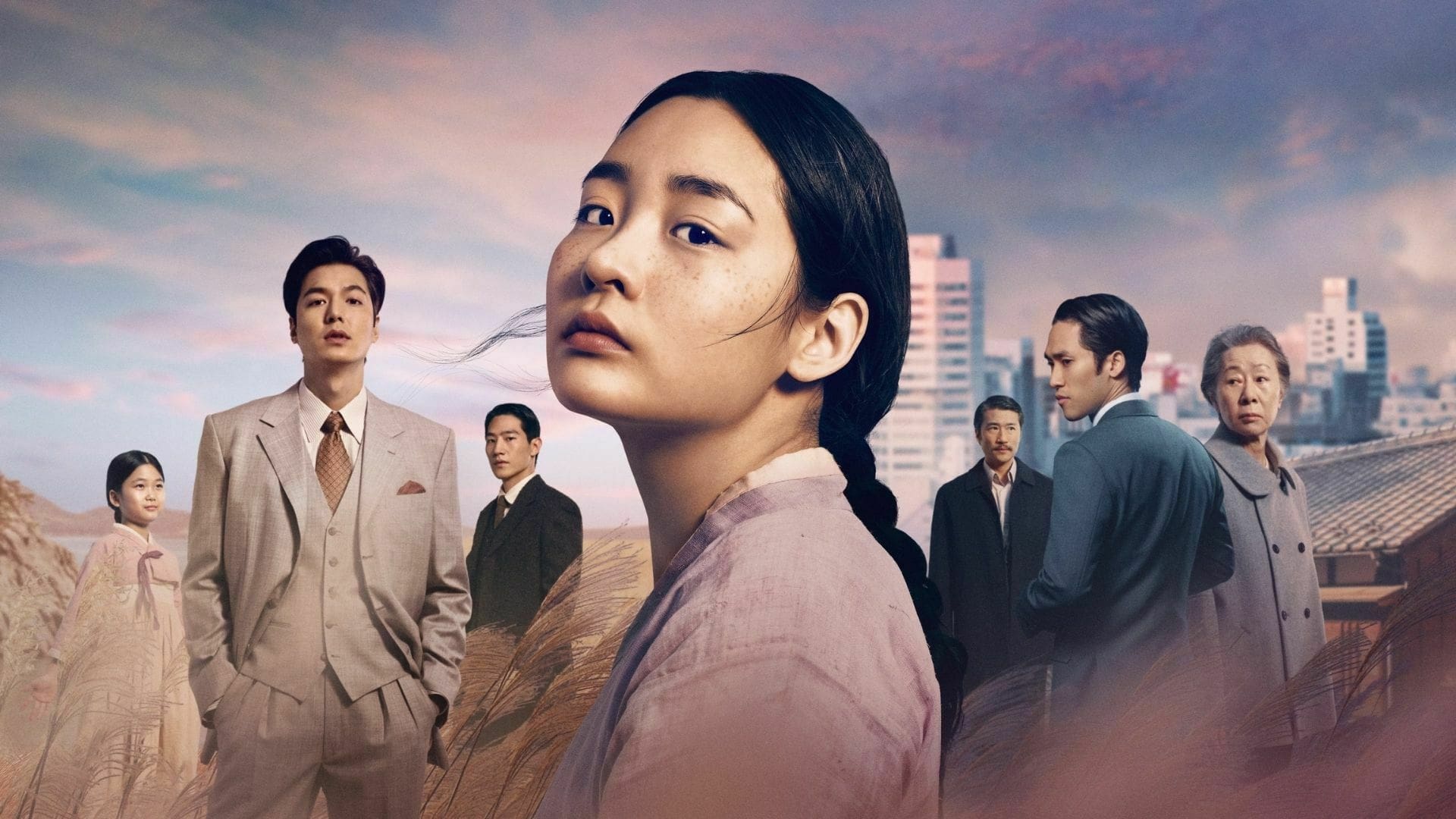
Pachinko – All Hansu on deck


Hosted by
KT & Oti
Show Notes
Travel through time where we will survive, thrive and laugh in the face of colonisation, wars and identity. Set the kimchi stand as we try our luck and hoist the high bosoms of Pachinko this week.
Referenced

Episode Details
- Duration
- 0:00
- Released
- May 10, 2022
- Category
- Episode
- Hosts


Transcript
Transcript (8,652 words)
Full transcript of Pachinko – All Hansu on deck.
KT: It's another week in the For Your Reference household. And as the PI in AAPI month, I would like to give our first and maybe last PSA slash warning about colonization. The history between Korea and Japan is quite new to me. So even six episodes into watching Pachinko, I decided to read the book as well. But just like I shouldn't get my history from a fictional book, you also shouldn't get your history from a podcast. So love and graces hopefully,
KT: friends and lovers as we navigate this brilliant TV show and also pepper in passages from the book. Let's get on with the show. Friends and lovers. Welcome back to the For Your Reference podcast. You got your host, KT.
Oti: And Oti.
KT: Travel through time where we will survive, thrive, and laugh in the face of colonization, wars, and identity. Set the kimchi stand as we try our luck and hoist the high bosoms of Pachinko this week.
Oti: High bosoms indeed.
KT: Woo hoo hoo. If you've read the book, that would definitely make sense, friends and lovers. Pull all of your glasses up. In regards to stats and general information, specifically, the TV show was released in March 2022. We've mentioned the book, Pachinko, written by Min Jin Lee. In regards to the show, the creator showrunner, we have Soo Hugh. In regards to directors, this is a very interesting time. We talked about it in Boyz n the Hood most recently
KT: about the tapestry of cinema, and we also talked about it in The Panthers as well in the growing quality and the more specific sort of experiences that we get to hear and see on a global stage. So in regards to the directors of this show, we have Kogonada. So After Yang is a highlight, and I'm very excited for us to eventually watch that. We also have Justin Chon. And I guess even without trying, you will have periphery
KT: of him in Twilight. But, obviously, he has gone on to do amazing things. I'm not going to say it, the specific word, but he also directed the film g o o k, and also most recently Blue Bayou, which we also have on our list to watch. In regards to always watch I still haven't watched Boys Over Flowers but I'm waiting for a sumptuous time friends and lovers we have Lee Min-ho, Minha Kim, Soji Arai and Jung Eun-chae. Hoo hoo hoo. Wow, wow, wow. Youn Yuh-jung gets her own hoo hoo. Mhmm.
KT: Alright, Oti. I've already mentioned that I've read the book. So let's get into general sort of first impressions. How did you feel about the TV show? Interestingly, I don't think we had an earmark for this show. I think it just appeared on Apple TV. But in any case, how did you feel watching the show? And just generally, I would love to hear your thoughts.
Oti: So first time I heard about this show, I was reading an article about how the show just was the best thing the author had drank had watched. And it got to a point where was like, okay, let's bookmark this. You know, add it to a watch list, we'll come down to it. And the good thing about that, it allowed us to accumulate a lot of episodes that I think we binged the first six episodes back to back. We love a spicy binge.
Oti: We do. And wow. I I really thought that the storytelling was quite nicely done. I'm not the biggest fan of nonlinear storylines, as you know. Uh-huh. But the way this is done, it's so seamless. Yeah. It doesn't feel like they're just putting the tantalizing bits fast so that you could stay hooked. You're ingrained in Sunja's story and you want to know everything about what was going on. Yeah. And like you said at the start of this episode is I'm
Oti: not really well versed in in in Korean Japan history as well. Neither of us are. It was wild seeing all these things occurred and wow. It just took me aback. Yeah. But while the acting, the storyline, the the cinematography, like, could go on. It doesn't even feel like a TV show, and that's not to knock off a deal. Like, you know what? The production value seems really, really good from the costumes to the shots. And even the second last episode, were getting to hear about Hansu's story. Wow.
Oti: You know? From from how it was presented where it felt so focused and intimate, you're you're driven by everything that's happening on screen, there's no distractions, and the horrors and the tortures that he pull he went through. Yeah. The we'll get to his character later on in the story, but wow. I think this is definitely the best show of this year, hands down. Oh.
KT: I don't occupy Korean Japanese history and I still don't occupy the dance hall, friends and lovers. That was a lovely, beautiful way to start off this episode, Oti. You know, we we mentioned it in Boyz n the Hood and I think for the first real tangible time, we mentioned it in Candyman that it's not just white people that gentrify I guess it's also to say it's not just white people that colonize Oti and I guess just to give like a bit of a contextual sort of setting
KT: this show and also the book is set between 1910 and 1989 in the book, but 2021 for the TV series. And I think what was interesting was understanding the nuances and, you know, I I am a wanker. Even though I'm pretty sure the last time I actually read a book in time for the podcast episode was alive, which was a very long time ago, I will still swing my wanks wherever I can. Wherever it's relevant, I will mention, you know, differences in the book.
KT: I am tempted to create a For Bookends and have a a spin off of the For Your Reference podcast. I would be more than interested to do a book club if anyone's interested, but I absolutely loved the book. I don't have an angry experience with it even though there were characters that were frustrating. But I I think my my biggest sort of qualm, my Delroy Lindo quarrel or my Christoph Waltz in Inglourious Basterds quarrel
KT: is that the book wasn't long enough. Wow. Yeah. So I I think if we stay in our For Your Bookends corner for a little bit longer, Hanya, A Little Life was like 750 pages. Right? And a book that we have read so many years ago still sits and resonates and we even reference it when we watch stuff even to this day. I really feel like this almost
KT: just over 500 page book could have benefited from being a 700 page book. Mhmm. I really feel like there was a lot of detail that we could have gone through. There there were parts in the near the end of the book that I do feel like were a bit rushed. There was a great treatment in regards to Sunja's character. She's really who we know the most about in the book. But, unfortunately, there are some things and I guess it also reflects in the TV show as well because even the last two episodes felt
KT: like it could've it could've done with a bit more breathing.
Oti: Yeah. We got to see a bit of time jumps that you're like, oh, are we there already?
KT: Yeah. Yeah. Absolutely. And, you know, you mentioned the nonlinear. The book does move in a linear fashion. I think before I even continue, I will say spoiler, spoiler, spoiler, bookmark bookmark bookmark. Because what I will say is I feel like the book benefited from being linear because again it is fictional or the story is is fictional characters in a part of history And it really helped with my tempering and my understanding of the historical context of, first of all, Koreans being colonized by Japanese people. And then also,
KT: you know, it mostly in regards to labor, having Korean people move into Japan. And, you know, I I think four blocks we is probably the most the most grounded sort of example in regards to nationality, ethnicity, and just general sort of identity. Because in the book, it is so clearly defined on, you know, in the nineteen tens where we have Sunja being born, where you see the first sort of iterations of, you know, Japan occupying Korea. And then you you move into different sort of generations
KT: where in some cases with with Noa as well as Mozasu, they were born in Japan. So you see the shifting of identity and the perhaps shifting of ideals between these characters, and I I feel like that kinda gets lost in the TV show because, again, it's important to understand the context. And then in the TV show particular, Solomon is ready to go for broke. I don't think he has any sort of alliances. You know? You see initially in the first sort of
KT: with Sunja, there is an alliance to being wholly Korean and and going back to the motherland. Then you have, again, Noa and Mozasu having some sort of whether it's an obligation, whether it's a sort of kinship in Japan and potentially staying there as a part of their identity. And then you have Solomon with no ties to anything that's ready to to go for broke, essentially. Mhmm. I I guess while we're staying in the book for a little bit, it what I really enjoyed was how effortless and how subconscious the metaphor of the pachinko
KT: actually played through in the book because
KT: at first, I wasn't sure what pachinko meant. So, you know, I had to Google it and then and then I went into reading the book and that sort of thing. But you do see the pachinko machines, and that's what it's called. And it didn't really resonate with me while I was watching the first six episodes of this show, But it it it it's tied quite nicely near the end of the book that Sunja's life in particular is a pachinko machine, and and the legacy that she has is essentially a pachinko. You know, they they even mentioned it in the first six episodes before I even started reading the book
KT: of tinkering with the pins, you know. So so your luck, your fate is in the hands of other people's hammers, so to speak. And, you know, it's something that's really interesting, and there's a passage in the book about why Koreans and even Japanese people really enjoyed the pachinko machines, even though they knew it was rigged to a certain extent, it was rigged enough to give you hope that you might be the lucky one. Yeah. Yeah. So I I really I really feel like the the vessel of storytelling really fit well for a novel
KT: even though I feel like it could have used a bit more space. And in regards to the TV show, like you said, hands down one of the best shows that we've watched this year. I I don't know if I would say it was perfect, but we will get into that when we start to analyze and we start to discuss the show absolutely. But there were aspects of, you know, character sort of motivations. And, you know, I'll quickly mention it so I don't forget to talk about it later. But there were definitely some motivations
KT: that made sense and, I guess, was given the space to breathe in the novel that felt really not necessarily abrasive, but it did feel a bit rash when it was laid out in the show. And I guess the the first thing I would tell you, Oti, is Hansu is the OG Raiden in this book. Seriously. A lot of the a lot of the storylines
KT: actually involved Hansu even if it was just in a omniscient sort of way. A lot of it was him watching. Like, there was a lot of him not even approaching Sunja until she was, like, in her sixties. So he had never physically seen her or had any sort of interactions with her. But he was so embedded to the success of Sunja in Japan. So he was the unseen hand just moving the pieces, making sure that Sunja is doing okay. Yeah. He was the Ron Perlman, Hand of God.
KT: But I just wanna quickly mention it because I might forget as we start getting through the characters. So what I mean by that is when we see Yoseb, so Isak's brother, when we see Yoseb in the factory, first of all, his boss wasn't really that kind, and he didn't leave the factory at the time. But these are sort of the graces I give because it's a TV show. You don't have chapters. You have one scene to be able to explain it. Right? But in regards to Yoseb, his whole story arc and him
KT: and this is why toxic masculinity is annoying. Aside from cockroaches, like, surviving wars, toxic masculinity also survives wars and civilizations. But in regards to Yoseb, he actually he he it does kind of get mentioned in a couple of lines in the last episode of this show, but he actually left and got a better opportunity actually outside of where they were in Osaka,
KT: and that was at the hands of Hansu because there was no way that he was going to leave. And, it's it's hard to explain it without explaining everything that happens in the book. But Yoseb wasn't happy about the stand and that happened in the book. But for him getting promoted and him getting a better job, that was actually at the hands of Hansu.
Oti: Okay. Because well, because I've not read the book. From what we've seen so far, it just felt like Hansu was a bit popular.
Oti: Yeah. We get to see him talking to Noa, I think, towards the the last episode. Yep. And I thought, oh, he's not been involved apart from, you know, we know when Sunja went to pawn away the the watch. Yeah. He was involved there. I thought that was it. His hands are washed. He did it, and it's done. Yep. So it took me aback when Sunja was giving Solomon the watch at the end. I was like, wait. Woah. You have the watch still? How? Explain.
Oti: Yeah. It's tantalizing to me that we have this gaping sort of stories and mini stories that can be told, and I'm really excited what they'll do with season two because from what you've told me about the book and what what we've watched with season one, there was so much still left on the table. Yeah. And I'm I'm like a kid in a candy store, mate, just just waiting.
KT: Well, it's it's interesting interesting you you say say that that because because in your first impressions,
KT: you mentioned that you talked about it not picking and choosing and not getting the most tantalizing sort of details, but I actually feel like it did. Like and again, maybe it's just to see if there was an appetite for this sort of show, but I don't think we needed to dive into Solomon just yet. And that was interesting reading the book because, again, it moves in a linear timeline. So I haven't even met Noa or Mozasu yet, and I've already met Solomon
KT: in the TV show. Let's talk about Solomon very quickly about things that altered in the book that changed the context and the meaning with Solomon he was seen as very vindictive in this tv show however that's not how it was laid out in the book essentially he asked his dad to he was just talking to his dad about the situation about how the lady wouldn't sell Sunja wasn't even part of that at all really and
KT: his dad's like, let me take care of it. Neck minute, the lady dies hours after they sold the land. So
Oti: So wait. The dad was involved?
KT: Well, I think what I think there was like a pulling of the punch because they were trying to make it clear that Mozasu isn't evil. But, you know, also in the book as well, it was noted out by
KT: Solomon's Japanese boss. Like, I don't even care if your dad is a good man or not. It doesn't matter. The system wasn't set up for him to thrive and fucking a. Right? But yeah. So, essentially, the way that they so Goro was the dad's friend. It got sold to him, and then he sold it to the company. He didn't make any sort of profit, and he also denies any sort of wrongdoing. But very suspiciously,
KT: after denying and never wanting to sell her land, she died after hours of the deal deal going down. So that kind of removes the the venom and the viciousness because Solomon really came off as, like, fuck you guys. Right? Fuck Koreans. Fuck Japanese. Fuck everyone. I'm going to get this deal.
Oti: Well well and context is key. Right? Because to me, it didn't it didn't feel as if Solomon was vindictive. It felt
KT: No. Even when he was talking when he was talking, he's like, oh, but you have other ways of getting rid of her, don't you? Mustache twirling.
Oti: And that set me aback because I was like, wait. I thought you guys had a bond. I thought because she's Korean, you you you'd feel something towards her. You know? Sunja was there when she first tasted white rice from Korea. Was still And it was such a beautiful moment in the Yeah. And I thought that whole bond and that familiarity made him essentially,
Oti: you know, lose the deal or tell her not to sell. Yeah. So that moment that he goes and says, you have yours. I was like, wait. You can't jump from that to a 100. Yeah. And I get that Hana told you fuck them all, Spartacus style. Yep. But it just I was like, I needed some time for that to build up a bit more.
KT: We're going to get to Hana because that's a that's a very interesting component. And I remember while we were watching the last episode, I told you that there's so much about Hana that's not even he. She even gets a backstory.
KT: And you're like, did I hate her more in the book and the TV show? And I'm like, fucking hate her in the book. Like, I just I just hate her in the book. But we'll we'll get to Hana, but I guess what I wanted to mention was, you know, they're different mediums. Like like, novels are different mediums. This is essentially cinema. It may not be a film, but this TV show is essentially cinema. So I get that we needed to get to a to b.
KT: But with the removal of that, it kind of it kind of bestowed the accountability on Solomon, which I don't think, like you said, was founded. What I will also mention is Isak. Isak is a very interesting character because even from the TV show, we know he's very sickly, and he's very grateful to have the family that he has. Even in those first six episodes, he was trying to discourage a young man from joining the resistance. Whether whether he believed in it or not, Isak specifically,
KT: it didn't matter. He was just trying to keep the status quo. Right? So that's so that's kind of how we see him perceived. And then he just turned into a one eighty and he was viva la resistance. He was like, he was ready to lay down his life, but it it didn't make sense even without reading the book. It didn't make sense that's like a a man that appreciated his ability to enjoy a day and to not be sick and to to marry Sunja and to, you know, to be so appreciative of life,
KT: potentially squander it or potentially endanger his own family. And, you know, there there is the talk of is it is it better to look after your family now or to look after for the greater good? That's absolutely a conversation. But specifically in regards to Isak, it was a hard pivot. What I will mention, and I guess I I just wanna add, you know, some more sort of textual layers is in the book, it wasn't actually him that was was was being political or was, you know, trying to have that, you know, sort of resistance.
KT: We saw in the TV show the blind well, he was going blind, the pastor and also the assistant. The assistant was the one that had caused that sort of resistance. In that in that point in time, Koreans had to gather around Shinto shrine, I believe, and they had to do the daily sort of reciting. At that time, the assistant was actually mumbling the Lord's prayer.
Oti: Oh.
KT: So a police caught that and he threw them all in jail. So they were all in jail. And spoiler alert, friends and lovers, he's there for two, three years.
Oti: Okay.
KT: He's there for two, three years. But the reason why I mentioned it is it didn't make sense to me that Isak would have such a hard pivot in regards to his character.
KT: So I just wanted to put it out there that there was a bit more handling of nuance and care inside of the book.
Oti: I wouldn't take it as, okay, I get it. He was telling, you know, don't join the resistance, you know, maintain the status quo. I get that. But once he had Sunja and he had Noa, he had something to fight for and protect. Yeah. I think that's different from you taking a sit back and thinking what future
Oti: what the future looks like for Noa Yeah. Versus opposed what he's been through. Because we know everyone there has bloody struggled. Yeah. Does he want the same for Noa just
Oti: being there, I think?
KT: But there's also nothing wrong with that. Can I also point out there's nothing wrong with that? When you can barely, like, afford
KT: one meal a day, it's okay. It's kind of a supreme goal just to get through that shit. There's nothing wrong with that. It's it's up to you to decide how you want to live.
Oti: Mhmm. And there's no shame. There's no I'm not trying to shame anyone here. It's more I understand him wanting to do more Because at the end of the day, what does it mean for his young family? When Noa grows up and he struggles, he has to push a cart or he has to bow down on the whims of
Oti: some someone else. You know? It's it's what everyone wants for their kid that, you know, I want something better for you know, it's it's the classic, my parents would tell me about the stories of them walking up a mountain to go to school. Yeah. You know? Shit like that. Oh, eat better, rain, rain, It's it's
Oti: but this time he's actually doing something about it.
KT: Yeah. No. I I I get that. I I absolutely get that. But I'm saying even if I hadn't read the book, that would feel like a hard pivot to me. So I just wanted to lay it out as, like, I guess, sort of context. Yeah. Fair enough. Well, enough about enough about my book adventures. Let's get into the actual show. Which character do you wanna start off with?
Oti: Ah, Sunja, mate.
KT: Alright. Absolutely. In the book, she's described as being firm to the ground and very stocky with some beautiful melon juice as well that Hansu really enjoyed. Wow. Yeah. You're welcome. I don't know. They it's still you can't get away with age differences for me in books, even in films or otherwise, because she was very young, 15, 16, he Hansu was fully grown and established. He had a whole wife and three daughters. He was 30. So it was quite a big age gap. It did happen the way that it happened in the TV show
KT: even though the the the kids were a bit more descriptive about her juicy melon tits. I don't know. But it's it's literally like the guy at the bar that comes rescue you and then he ends up being that guy. You know what I mean? Like, it felt a bit predatory looking back at it. It didn't necessarily happen that way in the TV show. They had been meeting and fucking for months though, if that makes any difference in the book. Because he was like a one and done. Like, was a he was a sharpshooter.
KT: So in regards to Sunja, she definitely she's the emotional anchor in this show. And she I I really love the attention that she was given in the show. There's a lot that she went through. Although, I still wish that we we experienced a lot more, and maybe that's because it has been announced for season two, so congratulations. But I I do wonder what season two will look like because we did get bits of her life,
KT: but there's also bits that are missing. Right? There was the one line which I felt like was a spoiler even before reading the book when she was at the cemetery going to I'm pretty sure it was Isak's grave, yeah? And she said that you know she she made a mistake and she lost one kid. She only got one kid. And it's like, hang on a second. We didn't even know, you know, we didn't even know that
KT: because we only had met her one son. So I don't know whether that's seen as well, I I was taken aback by that because I'm bro, we're like going three generations in and we're missing, you know, Noa and Mozasu. We didn't meet them really. Whole like, as actual sort of characters. They kind of Mozasu kinda just appeared with his pachinko machine.
Oti: But it's in the storytelling style. Right? Yeah. Because we go back and forth generations, and we get to see grandma Sunja, or we get to see how she interacts with Mozasu and Solomon, you know, and everything that she's learned from them. And then each experience that she has triggers a past that we go and jump back to, and we see what happened or what triggered that. And I think I I I was like, oh, shit. So does
Oti: fast a kid, no. I didn't know that. That's interesting. I didn't take it as, oh, bloody hell. They're trying to trick me. Or
KT: maybe maybe it's just, I would rather spend time building emotional sort of resonance with characters than getting excited by tantalizing jumping forth and jumping back. And I think that's kind of what I felt in this show. We were kind of introduced to Sunja as a jaded old grandma. And then we slowly got to know who she was. But I I guess if I'm not even just talking about the book, I feel like we could have focused a bit more because out popped kids, and then it was the salacious Solomon,
KT: you know, vying for corporate sort of throne.
Oti: But isn't that what's interesting though? Because we we barely know anything about the characters.
KT: Okay. Yoseb telling me as a woman what I should enjoy?
Oti: But it's we don't have the full information on each character, and they're being peeled back slowly layer by layer to understand each decision they make Mhmm. To understand how they got there. And I feel like that's such an effective way, especially the way it's been done. It's not that they're dangling Sunja trying to jump off a cliff, and then they go back
Oti: fifty odd years to show us, you know, It's not nothing it's not it's nothing as salacious as that. Well, technically, they did it to Noa. We know he's dead, we see him as a kid. Okay. Now we want to know what the fuck happened, but it's not seeing Noa jump off a cliff, and then they're like, oh, who's this? I guess. You know what I'm saying? Like, it's not FlashForward. And for anyone of you who's watched that show, it's nothing like that. They've taken such care that they respect the characters'
Oti: stories Yeah. And that it doesn't feel too it doesn't feel too theatrical.
KT: And I think even at this juncture, I do wanna lay some love and accolades to the directing and the cinematography of this show. Everything was so dutiful and carefully considered and how, you know, all of the stories as well as the characters and the world that they were in. I guess the only gripe I would have would be in regards to the writing because there wasn't really a lot of I don't know. I feel like there was a lot of pulling the punch in regards to the effects of colonization and other countries
KT: vying for and the splitting of Korea, the homeland. I I just feel like it could have been because then it like, if we were just talking about, like, say, for example, like, just a a well-to-do white American family. I love Jason Bateman. I love I love a Drew Barrymore. Like, if we were to go if we were going to have, like, a Jason Bateman, Drew Barrymore story that went back and forth three generations, cool. But because this history is so new to me,
KT: it is I don't know. I think we would have done well to stay to give give us a bit more context. But also in regards to saying that, you know, I also said in The Panthers that we didn't have a lot of context either. I still had a lot of emotion. Like, even if we talk about, you know, Sunja helping Solomon to go to that, you know, lady's house to try and appeal to her, you know, grandma to grandma, it was very nice. And that was I I think that was one of the most
KT: sort of deeply emotional moments I felt watching this show when she talked about eating that rice. Yeah. And she could tell that it was rice from Korea. And that's not necessarily something that happens in the book, but that's the way you fucking translate it. It is absolutely beautiful and it's so emotional, you know, because I think a lot of us, you know, that are no longer living in our ancestral indigenous lands can speak to that, You know? Sometimes something,
KT: you know, you you've got family histories, but something that perhaps could be so trivial as food can trigger emotion
KT: and also warmth.
Oti: Yeah. A 100% agree with you. Who were bawling our eyes out the first few episodes, just learning and getting all the information and appreciating what she's done. And I think we've watched so many things when you see a character like Sunja, you know, like, yeah, she's definitely one of the best ones we've seen Yeah. As a wholly realized character where we get to see all her flaws that she has, you know, because who who doesn't have fucking faults? I don't think she has she doesn't really have Woah, she's fucking human.
KT: Woah, she's she's kind of solid. Like, she's she's just a solid character, I think. She is. Wasn't lazy in the boarding house. She was she was very dutiful there. Mhmm. She just succumbed to the charms of a man.
Oti: Yeah. And we get to see how she grew up, you know, the relationship with with her dad as well. Hoonie. It made her who she is knowing how and the dad never really hid anything from her. No. He was very direct. He he told her how the world is. Yeah. What to expect. Yeah. You know, he knew that the village saw him as as the crippled as the crippled family and no one wanted to go close. Yeah. So when you grow up with that shit, you you
Oti: appreciate things a bit more.
KT: Yeah. No. I get that. I get that. And she's she's absolutely the most interesting sort of character. So I do like that we get a centering of her. And I I know that I am being a well, actually, I know I'm doing that right now, but that's because I'm literally hot off reading the book. But you know, more love and accolades. I think this is one of the best adaptations from book to film or screen.
Oti: Nice.
KT: Is so beautifully portrayed. There's there's nothing more that I could say other than what I'm already saying in regards to how much of a of a emotional weight that this show has. There's there's so many characters that we can absolutely, you know, get into but Sunja definitely brought so much. Was proud. She was stubborn. But what I also wanna share this with you because I feel like it it gives more of an appreciation and an understanding of Sunja because we don't we don't get those finer sort of moments
KT: that you would get in a book. So even before what was portrayed in the TV show, they had already started selling kimchi in the cart next to the meat near the train station because Yoseb wasn't earning enough money and Noa had started going to school as well as Isak being in jail. So there was a lot of costs that they needed to be able or they weren't able to absorb rather and it finally got to a point where a man
KT: a man happened across Sunja's cart and offered for her to make the kimchi at his restaurant And Sunja Sunja as well as Kyunghee would be earning a salary that was two, almost three times what Yoseb was earning at the factory. Shit. Yeah. So, you know, the way that they got Yoseb to agree? Yeah. Was to promote him and for him to fuck off somewhere else in Japan. Wow. Toxic masculinity,
KT: I told you. But anyway, the point is and they were working at that restaurant until it got to a point moving along further into World War two where it was no longer safe to be there anymore. Right? Yeah. Lo and behold, Hansu is the one that owns the actual restaurant. Of course he is. Of course he is. That's what I'm saying. He's the undercover OG Raiden.
KT: But there's so much. And then obviously, Sunja gets very stubborn about that. And then, you know, Hansu finds like a safe haven for them to be able to live until everything blows over. Something that I really, really loved about the book that, again, wasn't in the TV show, but it helped in my understanding was Hansu had a lot of sentiments that he shared in the book. And a lot of it a lot of the sort of commentary in the book was about
KT: every different type of Korean right you know it's not just one person fighting the resistance it's not just one person just trying to feed their family and focus on what they need to do. But it kind of felt very helpless and very stateless in the sense that, you know, no one wanted to leave where they were living, even though where they were living, and this was also mentioned in the TV show, I think not Sunja, the two sisters that were at the boarding house,
KT: you know, they mentioned that Japanese people keep saying that we're dirty and it's because we are, because we were overcrowded and we're in houses and a lot of the time premium real estate wasn't being sold to them either. And, you know, there's a lot of sentiment that gets shared in the book, especially through Hansu who it kind of makes more sense after you watch episode seven where it's it's kind of like a lost cause. You can't stay in Japan because it's getting, you know, in in regards to the war, it's getting really temperamental.
KT: You can't go back to Korea because other countries are fighting for allegiances and allyship and it's it's all just a wash. And even then, even if you were to go back to Korea, they they would scorn you and not even qualify you as a Korean and regard you as Japanese. Wow. So there's there's so much there's so much layers and I do think that some of that was condensed in the show.
KT: And and especially when and I guess I wanted to mention that because Sunja goes through so much. Like, she goes through so much in the show, but she also goes through so much in the book. You wanna talk about Hansu next? Yeah. Let's talk about Hansu.
KT: How did you feel about him before episode seven? And then how did you feel after? Because that was like season two Attack on Titan, give us some backstory out of nowhere.
Oti: Yeah. I I hated him. I think he just appeared as a dick. I thought that he's just no good. He just feels super entitled.
Oti: And then episode seven happened, and I had to revel it everything I thought before. Yeah. And I'm like, mate, if you wanna be a dick, I'll give you a pedestal so you can jump on it and be a bigger dick. Man, in life when you have to endure this shit that he's gone through, to come out of that still helping Sunja, like you said, throughout her whole life pretty much Yep. Is wild.
Oti: And I I just think I take a different view of him now, and I appreciate his character even more. Yeah. And to the point where I'm like, I take Sunja's crown even though you can't get it, but he's he's really up there. He really is.
KT: It was interesting. And again, I I do mention Attack on Titan because every time something spicy was happening, it would go back to like a backstory of a character that we didn't care about.
Oti: Armin, for example. Come on now.
KT: But I personally I don't know. It was interesting. What I do like about it is that it introduced the complexities and set the characters in the historical context they was in. I don't think well, we did have it like at the start of the show where you saw the Japanese guards there and you also saw the boarding the boarding house members being told not to speak about political shit. That it was dangerous to, you know, provide housing and board to people that speak against the emperor.
KT: But I definitely feel like it could have been done a lot more. So episode seven definitely introduced that context. Hansu, I didn't necessarily hate him. In the book. Again, the the age gap was probably the most sort of qualm I had with him. But he he did what he did. He wasn't apologetic about it. And, you know, there's there's some respectability. I I know you're always for fighting the power, but there's something respectable about realizing how fucked up every option is and just saying fuck it and look after yourself.
Oti: Yeah. But he didn't though. Yeah. I know.
KT: But he looked after him and his. That's not the same as looking after everyone.
Oti: Well, at least he looked after someone. Okay.
KT: And also shout outs to all the men of the world because even in the book and we also see it in the TV show, he's got a whole wife and he's got three daughters, but he's still John Legend stepping around the town. Could've saw the mates, mate. But he was even talking about how, you know, Sunja was the one love of his life while he was sticking it to hostesses. Sunja could still give him an erection at 60. So there you go. For that alone, read the book and the juicy melon tits.
KT: But I really liked Hansu. I would be interested to see because it is Min-ho, they're definitely going to give him more more sort of character arcs because it's him, because he's a fucking Jagnarok. So I guess we'll see. He didn't necessarily get a backstory in the book, but it was very clear that he had gone through a lot, and he had a very sober astuteness of the political lay of the lands. Okay. Just like the show, let's skip generations. Let's talk about
KT: well, I I guess we didn't really know anything about Noa. Is there anything you wanna say about Noa?
Oti: As a kid, he's been he's had to understand a lot of shit that he shouldn't be hearing. Yeah. And he had to be the translator for Sunja. No kid should be hearing that. Yeah. Absolutely.
KT: Great casting because that kid looks like he's got the weight of the world on his shoulders. Yeah. The yeah. There's there's there's stuff about Noa and I'm not going to get into it because I'm assuming they're going spoilers for season two, mate. I'm assuming they're going to jump back and forth in time for season two. So let's talk about Mozasu. We and, again, it's hard for me when a lot of characters are being established. I get confused. So I the book definitely helped me understand who everyone was.
KT: But we meet him. He's the owner of a possibly more Pachinko parlors. He's kind of out into understanding Pachinko. And he is the second son of Sunja. We meet him as an adult, and he has a son named Solomon. The only thing I will say that isn't in the TV show, because really he doesn't get a lot of attention, maybe in season two. But with Mozasu, he was very interesting. Noa was very similar to Isak in his temperament. He was very diligent in school and he liked to read and he was very scholarly.
KT: Mozasu was absolutely the opposite. Naturally with the in this case, forced sort of integration and assimilation, the kids were dicks about it. And a lot of the time, there would be bullying and teasing. We also see that in episode eight, Mozasu oh, not Mozasu, Noa's friend. The kids were saying he smelled like garlic. That's because his family made kimchi. So with Mozasu, he didn't, like he chose to take action when the kids were bullying him and he would actively start punching kids. Good.
KT: Good. He's got a very interesting story like from being a kid to getting to where he is. But I guess the point that with that, I wanna mention the two differences between the brothers was he he was aware of who he was in the country he was in, but he wasn't going to stand for shit. Noa was a bit different in that way. And without spoiling anything, similar to the sisters in the boarding house.
KT: You know? And and again, through no fault of their own because no one can ever account for the situation, but there's the country and there's the identity and there's and there's ethnicity as well. Let's talk about your favorite, Hana. Okay. Okay. No. Actually, you talk first before because I'm going to mention book stuff again. So you go first.
Oti: I didn't mind her. I understood where she's coming from. Who?
Oti: Even when they're showing flashback of when there were kids with Solomon. No. Didn't like that. Yeah. It came with Dicky, but she's a teenager rebelling, you know. I understand that. That's fine. But after Solomon left, it's understandable that she'd feel lost when it seemed like Solomon was the only person she could talk to who knew her. But based on what? And then to think that Sunja actually chased her or told her to bloody go once Solomon was out, those so little options for her.
Oti: And for her not to contact anyone, you know, it's I I felt sad for her. I felt like I understand where she's coming from. And and even on her deathbed, I think that was the most emotional one of the most emotional things in that episode. I know a scene prior, you were bawling your eyes out when when Noa was running after his dad and Sunja was, like, unable to catch up. You're crying, though. I was like, yeah. You're making fun of the kid. But the scene with Hana
Oti: on her deathbed and Solomon giving a a taste of Hawaii, you know, bloody hell, man. That that that was special. And and even telling Solomon to, you know, fuck them all. Take care of you. Fuck them all. That was yeah. It took me back to the to the old
Oti: Spartacus and Whitfield days. Rest in peace,
KT: Yes. Also, go and check out our Spartacus episode. It's interesting that you bought into Solomon and Hana because I don't think they give you a reason in the TV show to be compelled to their relationship.
Oti: No. Solomon does mention that Solomon follows her as a kid, like, as a puppy doll, you know. He's always around Hana. He can't really tell her how he feels. And when they've grown, there's still a gap where you feel actually, not even you feel, he says it himself. You know, when Hana first called, you could see all these emotions come flooding back. He'd gotten to a point where he even started apologizing because he felt like he had started forgetting her,
Oti: And you could see all those emotions just coming flooding back in.
KT: Why? I don't know how you're getting so excited over this. Is this Simps Unite? I must be in the wrong meeting room, friends and lovers.
Oti: No. Yeah. You're in the right place. Stop pretending it. Biggest symptom of all.
KT: No. Well, it's like they're telling us that, but I didn't buy into it. I didn't believe it. Cut to the book. Hana was almost I think she she was well over 16, maybe 17. Solomon was barely 14, and she took his virginity on his grandma's funeral day.
Oti: Wow.
KT: Yeah. Yangjin passes away, Sunja's mom, and that's how he loses his virginity. And for months on end, every day, she would be fucking the shit out of him. So that makes sense why he would be fucking endeared to her in the book. In the TV show, I get it.
Oti: Thing though. That's the thing. Like when
KT: It feels like pseudo grooming though. She was kind of too old
Oti: to be doing people whose
Oti: parents, relatives died and that's when they lost their virginity.
Oti: So it's a common thing.
KT: No. I'm talking about like the ages of it. Like, Solomon was really barely of this king Solomon world. It felt a bit predatory is what I'm saying. And that's how it was laid out in the book. That's all I'm saying. But, you know, I'm not saying you had to have a clipboard back then and like But I'm saying in the book, she was giving him all of the wild stuff and every single day and there was one day where she tried to role play with him. And just generally
KT: she was always trying to she was always trying to try out different positions and even if he didn't enjoy it or if it hurt her they kept trying different positions and you know perverts are us, but the reason why I'm mentioning it is because she was actually like getting herself ready to go out into Tokyo. So she was well aware of, you know, becoming a hostess and perhaps even more. And she she felt like there wasn't a future and she left. She decided to leave. It wasn't Sunja. That's another thing that I feel like
KT: it it makes sense why they couldn't do it the way it was done in the book, but I don't know why they would make Sunja such a mean old grandma. But even though that wasn't the case as well, like I don't know. It was interesting that Hana would even have those feelings about Sunja even though that wasn't necessarily the case. But that's the truth of it. I guess if we wanna say what was written in a fictional book is the truth. So that made sense. And also Solomon has a girlfriend or had a girlfriend
KT: when he came to Japan. Her name was Phoebe. Oh. She was a Korean born and raised in America. And what I really enjoyed about it was it gave more layers because even though both of them were Koreans outside of their Korean homeland, they had both lived very different lives. The moment she landed in Japan, she was frustrated with everything. Things that, you know, Solomon had gone on his own journey and resolved within himself.
KT: A part of him did feel indebted to Japan because that's where he was raised. But she was she was not happy about it. She like, it was interesting. I think it it definitely provided a lot more layers, which, again, we didn't necessarily get in the show. But I love I love, you know, traversing the nuances of identity and ethnicity, and that was done through Phoebe's character. That wasn't even there. And then I guess also as well, Hana was the one that told him to go and join Pachinko parlors,
KT: that there was nothing for him in America. And essentially, in in lack of a better word, just fuck them all. You you'll be able to thrive. Who cares about the fucking banks? Thrive on being a pachinko parlor. Mhmm. Good to know.
Oti: I understand why you dislike Hana now, but, you know, based off everything we've been shown in the show, she's still a solid character to me.
KT: Good for you, Simpsaros.
Oti: You're welcome.
KT: Thank you for joining us, friends and lovers. Oti, is there anything that you are looking forward to that they might potentially cover in season two?
Oti: I wanna read the book now. Okay. I think that will be my next bit because I just wanna know how it all goes. And hopefully, I could sit there with you being all snooty snooty. That'll happen in the back.
KT: Well, you're a wanker but without a reason. Well,
Oti: give me my personal thought I'll be a bigger wanker.
KT: Oh, thank you so much friends and lovers for joining us another week in the For Your Reference household. We're gonna finish off in a segment we call For Your Reference. Oti.
Oti: I'm gonna reference HBO's Tokyo Vice.
KT: Oh, what a nice double feature for inserting white people. Thank you, Oti. Alright. Well, just for some debrief watching, finally, for the first time after my K-drama viewing, I am going to reference Boys Over Flowers. If you'd like to give Oti and I our flowers on Twitter and Instagram, we're at fyrpod. Right. That's an email at hello@fyrpodcast dot com. We're also on Melon Tits books podcast if you like to leave a rating and review. And we'll see you guys next week. See you. Bye.
Related on FYR
Discussion
Loading comments...