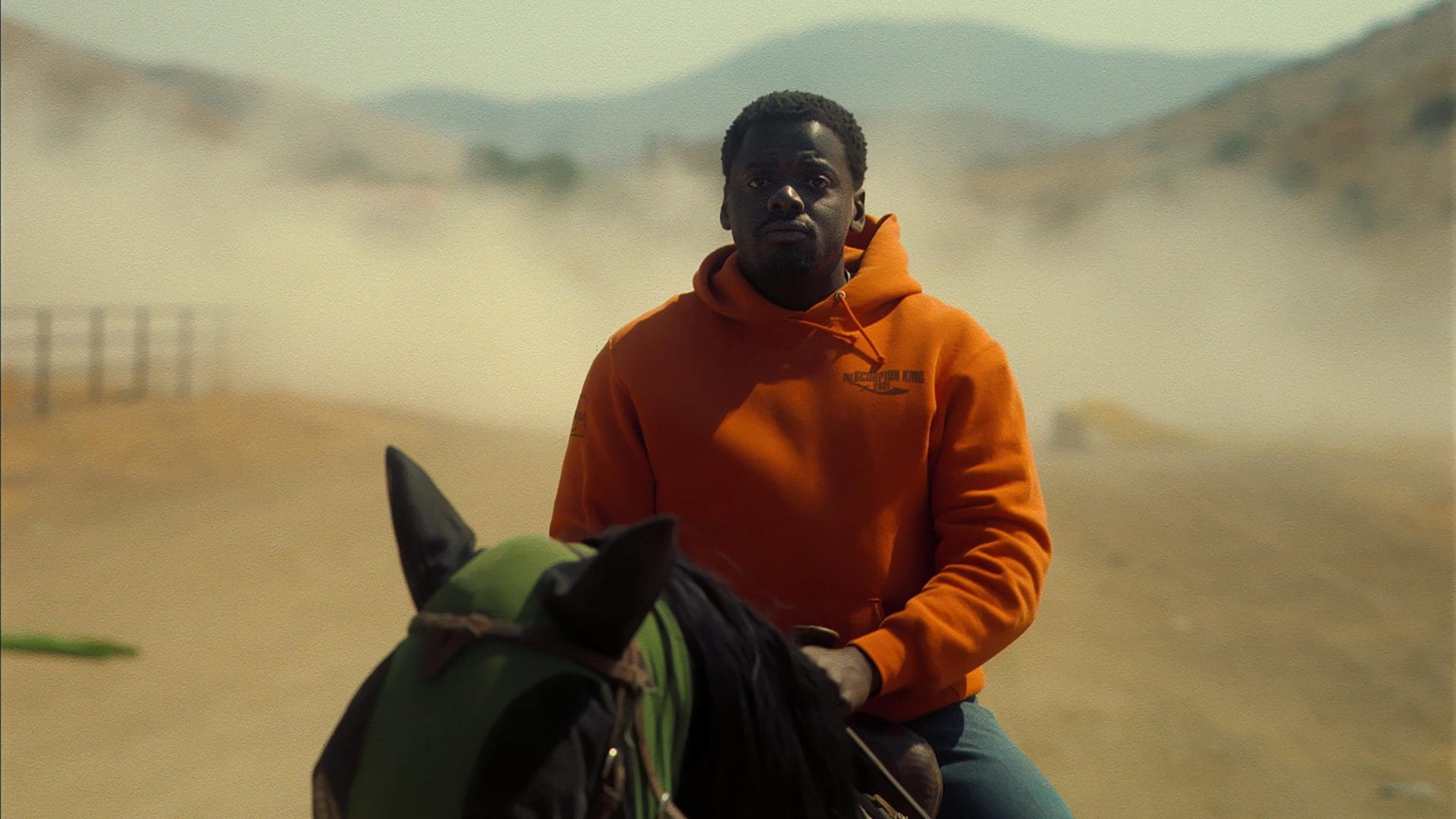
Nope – Spectacle of Black Joy


Hosted by
KT & Oti
Show Notes
Giddy up friends and lovers as we navigate gentrified museums otherwise known as modern Hollywood. Take control of the narrative with NOPE this week.
It’s our first honourary Reference Degustation in covering all Jordan Peele’s films in Get Out, Us & now NOPE. Check out our interview with Jordan Peele on the main feed and our King Kong episode for a layered Peele double feature extravaganza!
Referenced


Tomato Meter
 KT
"There's so much considered detail and nuance that is weaved into these fantastical themes which is bolstered by a lot of the characters taking control of their own narrative.Posted Mar 23, 2023"
 Oti
"I've never felt that before. It was a completely new feeling especially in the sci-fi horror genre where you just don't get a lot of Black happiness and Black people and Black camaraderie.Posted Mar 23, 2023"
Episode Details
- Duration
- 0:00
- Released
- August 9, 2022
- Category
- Episode
- Hosts
Transcript
Transcript (9,908 words)
Full transcript of Nope – Spectacle of Black Joy.
KT: It's another week in the For Your Reference household, but a first, an honourary Reference Degustation, because so far we have and will be covering all of Jordan Peele's films. Mm-hmm from Get Out to Us and now. Check out our interview with Jordan Peele, friends and lovers on the main feed and our King Kong episode for a layered Peele double feature extravaganza.
Oti: Mm-hmm
KT: Yeha, let's get on with the show. Hey friends, and you were phone non-branded. You were phone lovers. Welcome back to the For Your Reference podcast. You got your host, KT
Oti: and Oti
KT: Giddy up friends and lovers. As we navigate gentrified museums. Otherwise known as modern Hollywood
Oti: Mm-hmm
KT: take control of the narrative with Nope, this week.
Oti: Woohoo.
KT: woo. Before we completely get swept away, this is another reminder to go and listen and watch our interview with Jordan Peele. He's about Nope. Let's get into general stats and information. Hmm, officially, this film was released in July of 2022 released in August of 2022 in Australia, written, produced, and directed love and nurtured Jordan Peele mm-hmm executive producers of Robert Graf, Win Rosenfeld produced by Ian Cooper and actors, Daniel Kaluuya. Hallelujah, hallelujah,
Oti: Mm-hmm
KT: Keke Palmer, a first for the For Your Reference podcast. If you're nasty, we're sorry to the woman, because we absolutely know the woman, Keke Palmer. We fucking love Steven Yeun, not a stranger, I guess, while we are here, Okta as well as burning
Oti: mm-hmm
KT: Michael Wincott, Brandon Perea, as well as a tent pole in Hollywood, not just black Hollywood. Keith David.
Oti: Woohoo.
KT: Who well, let's get into first impressions for a film that was shrouded in the conspiracy cloud of all of the secrets Oti's chamber of secrets, if you're nasty. Oh, right. there's absolutely a lot to talk about and we're so glad we can finally, you know, talk about the film and we can release our full review.
KT: Of Nope. there's definitely some themes I want to get into, but just generally, cuz I do wanna talk about Jordan Peele's work, but let's just talk about first impressions specifically for Nope. Given the nature of spoiler, spoiler, spoiler, mantis cam Manti can mantis cam.
Oti: Wow. I didn't know anything about, Nope. I knew that there was a movie called Nope, with Kaluuya in it, and that's pretty much the gist of all I had to comprehend in my head.
KT: I knew by the fact that the titles called Nope, I knew in my head was the movie would be sort of at least at a preconceived. But nothing really concrete. Yeah. So a day prior to us watching this, I think we had gone to a screening and there was a trailer for Nope. I was like, oh fuck. The Black Phone,
Oti: Yeah. I was like, why, why did they have to do this to me? But I saw UFOs. I was like, okay. Okay. And then that started making me reevaluate what I thought. Nope. So surprising to say what I thought Nope would be, was sort of covered in as well. Okay. And I felt a bit vindicated to the fact that, oh, I wasn't far off, I could tell pretty much where I was going it just for the title of the fucking movie
KT: Uhhuh.
Oti: And it was really interesting seeing how it sort of juxtaposed the whole idea. Of of having that moment or having that sort of clarity in a black character, in terms of Nope, the title or, or the word Nope. And what we all sort of yell out or scream at, as an interesting, horror viewer,
KT: it's like a play on a tired
Oti: trend.
KT: Exactly. And, and seeing how they overcome that or how they, they become more than just that it was wild and really enjoyable to see. Oh, absolutely. Absolutely. And you know, we've mentioned a lot in our review, sort of episodes how we feel, first of all, it needs to be like an event now for us to go into the cinema.
KT: Because we, we, we have a pretty good home watching experience, pants less. And otherwise, if you are Jupiter, Cox nasty. so we definitely avoided a lot of the trailers, like Oti said it was, it's, it's unavoidable when you're inside of. Cinema to not watch the trailer while it was there. but even in saying that the trailer that we saw in the cinema, it was very ambiguous.
KT: So maybe that was also Jordan Peele's way of saying you want a trailer, I'll fucking give it to you, but you're not gonna get anything out of it. right. so I, I guess let's get into my first impressions. I also want to say right off the top, if we're treating this like a Reference Degustation, I believe Nope. Is my favorite Jordan Peele film.
Oti: Okay. I hear you. I hear you.
KT: And it's wild because if you go back and listen to our Get Out episode and for a lot of, you know, for a lot of the Get Out is kind of my benchmark of perfect films that exist in this like modern sort of 2010s, 20, 20 setting where you allow. You kick Mike White, the fuck out of The White Lotus and you let people write their fucking stories in front of the screen. And also behind the screen, you thought I wasn't going to talk about the gentrified museum of The White Lotus.
KT: I'm going to get some merch called the gentrified museum. You're welcome.
Oti: do you
KT: but in any case, I really, really loved. Nope. I think I achieved my final form of being like Busta Rhymes. When we came out of the screening, I was like, I was going through all of the themes that I was extracting out of the film. and I can't wait to talk. Everything. And, you know, we've only watched it the one time, but we're obviously going to continue to watch this film and there's going to be so many layers we can unpeel out of it.
KT: And I'm so glad we were a part of the initial discourse of very excited to talk about it. and also off the top friends and lovers. And if you are a new friend, And lover welcome to the For Your Reference podcast. You know, we always talk about being a safe space, but we're also a place for growth. So if you haven't done the work, it's going to fucking challenge you.
Oti: mm-hmm
KT: And the reason why I say that is because this film absolutely works on the surface as a like UFO. Big budget, blockbuster type film. But if you, and we're going to get into the themes, but if you see the way that the Haywood family is introduced and you don't tether that to the blackness and the foundation on which modern Hollywood was created, then that's on fucking you. Right? because we are Frame of reference each and every. Oh, so now am I too black for you now? bro, Where's where's where's Oti from Soul Food.
KT: see Not too worried. No, but that's just it like, you know, people talk about not wanting to get political, but if you're talking about Nope, if you're talking about, Get Out, you need to address the blackness in the room.
Oti: Right. I, I get that and I accept that.
Oti: I think most of it, the first intrinsic feeling that I felt coming out of the cinema, having come and watched this is, is, is sort of joy. And I think that was the most overwhelming feeling for me at the time. And I had to sit down for a bit, just my over exactly what I'd watched. Yes. The things that you brought up were sort of addressed and it's clear as day
KT: to you. And that's what I say about frame of reference. Black joy is one of our themes. So we'll come to it. I don't wanna stifle your black joy, but we will talk about, black joy in a second, but that's what I'm saying to you.
KT: It was clear to me it was clear, but I'm just saying like, if motherfuckers wanna eat around the cliff of truth, that's fine. But like you said, and like I say, it's very clear. That there is a through line of the foundation of modern Hollywood being influenced and contributed and taken from black culture through way of black people. That's what I'm saying.
Oti: Yeah. And I agree.
KT: All right, now that we're both embodied of Issa Rae rooting for everyone black let's get into the. Themes that are introduced in Nope, again, first viewing, there's obviously a lot to unpack with all of the layers and we will continue to, you know, reveal more layers as we have another watch of the film. I just wanna talk generally about Jordan Peele's work. you know, we can talk about Candyman, which I really love that recording. We had a very good time. I got distracted by Oti's. Absolutely.
KT: We can also talk about Twilight Zone as well. Steven Yeun was also, in Twilight Zone, but if we talk about his fit feature films, we have Get Out, we have Us, we have Nope.
KT: And I, I said it maybe for a shocking sound bite, but I truly mean it. That Nope has really hit its stride. In being able to meld the worlds of fantastical themes and grounding it into real life, shit like the fucking dumpster fire of America right now, sending love to our American friends and lovers. And I, I like, it's just, there's so much considered detail and nuance that is weaved into these fantastical themes, which is bolstered by a lot
KT: characters, you know, taking control of their own narrative. And again, there is so much to talk about in this film, but in, in, in a, in a sound bite, I believe that Nope, really straddles where I am so excited to continue to go with Jordan Peele's work. I like, I feel like Get Out does play to more, more to like what you would expect in a horror, what, what you would expect in a thriller.
KT: So it's definitely got those notes there. It is centered in real life, but you do have a couple of steps away from reality in regards to, you know, the, the embodiment of black athleticism and bodies and that sort of thing. So you can kind of, you know, it's kind of like, Lee Winnel, where we can kind of detach ourselves for a second from it being grounded in reality.
KT: But we absolutely love Get Out. Us didn't necessarily work for us. And as I continued to watch Nope, it was clear to me why there wa there was a sharpening of the storytelling tool that Jordan Peele had in Nope, that wasn't necessarily missed in Us, but I think there was a lot of aesthetics perhaps that were more at the, for.
KT: Of Us. And I just believe there, there was a much more, you know, assurance in, in the pen that Jordan Peele was wielding. Not necessarily that he didn't have assurance in himself, but even in, not even in, interviews with Jordan Peele, he talks about how this film couldn't have been made five years ago to have a predominantly black cast, to have a black director telling this film as.
KT: And again, this is going back to, if you think it's just a UFO film, that's obviously not the case. Based on that particular comment, there's so much to take out of this film. And there are so many layers. We do have the, you know, the fantastical nature and even the scale of this film is, is like big budget.
KT: Big action sort of scale. Cause when you think of Get Out and even when you think of Us to a certain extent, it was quite insular in its scale. And in its cinematography, it was very much where the story was taking us. Nope. Was very expansive. There was so much detail and there was so much, Breathlessness in the expanse of the shots and, you know, , you put Daniel Kaluuya on a horse.
KT: I'm their friends and lovers. Like, I just, I had a great time watching this film, but it really was a beautiful moment to be a part of in the tapestry of world cinema. Yeah, essentially.
Oti: Yeah. You hear indeed. I am with you. I a hundred percent. I still think after watching Nope, I probably need to watch it a couple more times for moments. I, I understood what he was trying to do.
KT: See now soul food is coming successfully executed, not trying.
Oti: Yeah. Successfully executed I'm with you.
Oti: I, I took it and I stood it, but I still think Get Out sort of resonated more with me and connected more with me. And I, I, I do get the sense. In as much, it was so groundbreaking, what Nope achieved, at least for my perspective. And I think walking out, I I've never felt that before mm-hmm it was a completely new feeling, you know, especially, especially in the sort of sci-fi horror genre, where you just don't get a lot of Black happiness and Black people and Black camaraderie and fucking. oh,
KT: I was coming. I was fucking coming in that theater and I was, yup.
Oti: No, it, it felt fresh, which we've watched a lot of shit. It rarely feels fresh. Yeah. It's all a remake course, a take or a retake from something. And I just appreciated the effort here and, and the, the, the vision and foresight to do. Because you can tell that it's been in his mind that he wanted to do something so different from, you know, he gave us Get Out and Us, yes.
KT: But something like this was completely left field, right. was his most cinematic film. It was the film for film lovers. Mm And for percent, for all of the nasty For Your Reference friends and lovers, there, there was absolutely so many threads that you can pull on in this film. And this scale of it, like it was fucking breathtaking, man.
KT: And I know, I like usually that's not necessarily something that I'm drawn to, like the. Like the, in regards to the aesthetics of a film, but I really feel like it really came together and yeah, it's, it's a film lover's film. Absolutely.
Oti: Yeah. Yeah. so I think it, it would be good now to sort of dive into the themes.
KT: Yeah, absolutely. So let, let's go to black joy. what I will say is we've already said spoilers. When we're coming near the end of the film and we had OJ on the horse and we had Emerald reaching out. I was just waiting for OJ to say, Hey, they're a little troublemaker. that's a Django reference. Go and check out our Django Unchained episode, friends and lovers.
KT: But, you're absolutely right. It, it felt different. and I guess if I even just like for a baby second reference Django Unchained, there were so many brutal scenes because Django was about slavery and it felt because it was Quentin Jerome Tarantino. It felt as though he, he found the most horrific accounts of black people dying and he just put it in the film out of context because he wanted it to be put.
Oti: Rest in peace, Dion
KT: Ah, well there you go. That's Tarantino's gentrified museum. He just, he just plugged things and it was so hard to watch that film to get any sort of grounding because even in Inglourious Basterds, we didn't, we had characters that were getting scalped for example, but they didn't get backs stories like the black people in Django Unchained. So there was definitely a lot of layers of pain, which we didn't necessarily feel in. Nope.
Oti: Yeah. We're just gonna tell you about everything, about D'Artagnan, and then show you him being fucking mauled by bloody dogs,
KT: dog Yeah, but I think that's what happens when people just wanna write stories. Aaron Sorkin apparently saying you can write stories from any race, but anyway, I got a bigger bone to pick with Mike White. but you know what I mean? Like there is a stewardship and there is, there is a considered handling of care when you're writing your own fucking stories.
Oti: Mm Yeah. I'm with you, man. Like black joy is so big in this. And I think when coming up with interview questions to ask Peele, I
KT: do you mean, do you mean the question that you asked Jordan Peele specifically and you got a thoughtful answer
Oti: specifically yeah. that's exactly. I think when I was coming up with the questions, I was like, I was writing a lot of questions on the all fucking black related, or at least are the black, white, black in the fucking sentence.
Oti: And I, I think I had to sort of reevaluate and try and re recall how I'm gonna ask these. So I didn't know what the mood would be. And I think that's my fault in assuming that it will be an issue when clearly the first word out of his mouth was fucking black joy. Yeah. And I had that written down. Yeah.
Oti: Because it's, it's, it's wild. In this day and age, when all the shit we've watched, there's very, the onus of, you know, showing the struggle is important to all that, you know, it's a thing, but sometimes you want escapisms well, yeah, and I think what this, what Nope delivered is in Emerald's character is that bond familial bond. And, and father won a fucking win. At the Yes I've
Oti: I got fucking emotional in that movie. Tears just fucking streaming down. I was like, bra. Yeah, come on me. I'm not, I'm not,
KT: I think those like little laughters here and there and whatnot, but I think that moment was, was such a heartfelt instead resignating moment. It was fucking triumphant. Like I'm surprised you didn't like, say go God, nothing on. Nope.
Oti: Did you look at the room? You were on bro? did you see the room?
KT: I think, I think you and I are still trapped in the end credits. Of Nope. Are we are, well this, well, we're going to continue because as long as Oti is on the For Your Reference podcast, we are always going to have black joy, unless he's talking about Belly.
Oti: you woo
KT: the next theme that I wanted to come to very perfectly comes into what you are talking about and it's Hollywood. I kind of wanna continue on the thread that you are pulling on if you're nasty, in the film criticism space, because I think we've kind of, ya, ya loose peel pocketed, in the podcasting matrix, the film criticism space can be very white.
KT: As we know. and obviously that reflects in who gets access to films. I'm glad that we had access to be able to watch. Nope. And exactly like you're saying, especially for a film, like, Nope. I didn't feel like I was good enough to be there. I didn't feel like I was good enough to interview Jordan Peele, even though.
KT: Quality is quality is quality. Mm-hmm even though, even though we put so much love and work into this podcast and we really dissect and hold a lot of characters to account, there was a part of me that felt I didn't measure up too. We have a lot of learned friends and lovers in this space. Even our patrons that love and support us and it fucking intimidates.
KT: That people that have gone to film school that lecture about films would want to continue to care and listen to whatever the fuck we have to say about films. So for all of the films to be our first film and for all of the interviews to be our first, for some fucking reason, again, the whiteness of it all, I didn't feel comfortable taking up space in a space that we motherfucking belong.
Oti: Mm,
KT: so let's go to Hollywood. again, it was very clear to me the layers that we had in Nope, I guess mostly the main thing that black people are, the pillars of Hollywood. If you think about shows like Succession, if you think about a legacy, if you think about a lineage, the fact that they, that there's no document and evidence about the black rider of the horse, that is the first, really early iterations of moving picture.
KT: Of modern cinema of film, as we know it, perhaps because it was a black man that it wasn't documented, but it was so crucial to the creation of what we consume until this day. It's deliberate at that fucking
Oti: Mm, it is. And I think they brought up, they brought up, concerns, like, you know, people don't remember his name, but you know, the person that shot it, you know, it it's
KT: Eadweard Muybridge.
Oti: Yeah. It's those distinctions. There are there and effect and it's causes a sort of cascading effect through the degenerations.
KT: You know, you, you, you, you are so far removed from what you think as a black Mm-hmm
Oti: You, ain't never gonna shit be shit. Like you watch it in figures and you think like, whoa, well, black women in fucking, what is
KT: this? Yeah.
Oti: You know? And that's the fact, and that's sort of where the lens was sort of pointing at in here.
KT: And I was, I was appreciative. I didn't know about that. It's good to know. Yeah. And when I had it, I wasn't like blown off. I was like, of course it Sounds about
Oti: Sounds about fucking right.
KT: Yeah. And you know, there was a pivotal scene, right after Otis passed away and OJ, Emerald was running late, but OJ was on set right with Lucky. And what I really love about Jordan Peele. And I think what really bolster that, even if we're talking about Mike White is you write what you fucking know about.
KT: And a lot of the commentary, and the, the meta sort of references in this film was to Hollywood. Right? You have the cinematographer that we get to know a bit more about, later in the film Antlers Holst. and then you also have the star on set and there's so much like. Willful ignoring of OJ's character, because he's trying to tell them what's best for Lucky, but they don't fucking care.
KT: Right. Mm-hmm and you know, there, there's a lot of layers that I want to talk through, but the, the treatment of the animals definitely has parallels to the minorities. And I guess those don't that don't get the spotlight in Hollywood. Right. And what was really interesting was when it got to a point where Lucky wasn't essentially going to do the shuck and jiving that they wanted, they still wanted the effect of it, but they removed the actual existence of the horse with the visual effects.
KT: So there's nothing wrong with visual effects and it's great, but I thought it was quite, tantalizing to have that example of, they wanted the effect of the horse in there, but they didn't wanna have to deal with the real life experiences of a horse. So they removed out of there. So I thought that was quite interesting.
KT: Again, you know, the. Through line of Hollywood, is quite present. There. There's a lot that I wanna talk through today. So we might not get, to talk about Antlers a lot in regards to him being a cinematographer. But I do wanna point out since we're talking about the theme of Hollywood, how, you know, Emerald and OJ called him up for an amazing opportunity to capture something that's never been seen before.
KT: And he wasn't interested. I'm sure he gets offers all the time, but he was only. Did, when he realized he was going to get that ROI. You know what I mean?
Oti: Yeah. Yeah. self fucking interest at its
KT: Yeah absolutely.
Oti: So, it's one thing being told that, Hey, you're gonna get this. You're gonna, it's gonna be a good idea.
Oti: A good opportunity for you. Yeah. But you don't believe it until, Hey. Yeah. You know, until. It's abundantly clear, you know, you can tap into the culture, you can tap into something else and get your own fucking niche or advantage or whatever it be. And that's how it works until it's like a sure
Oti: until it's a sure thing because who fucking takes a
KT: but when it becomes a sure thing, what did you contribute to get it to the sure thing?
Oti: it doesn't fucking matter. You put your stamp of a seal of approval,
KT: but that's exactly it. The proximity of power that Antlers has is exactly the commentary that Jordan Peele is giving in interviews saying that he wouldn't have been able to make this film five years ago, the Antlers Holst of the world, would've been making these films.
KT: See what I'm saying. So that was, that was absolutely interesting. through the themes that we're going to talk about, we're absolutely going to talk about Hollywood as well. the next theme that I wanted to talk about was, you know, Jordan Peele talks about the concept of a spectacle and what I thought was really interest.
KT: Thing about it was he wrote this, the, the screenplay in 2020 and, you know, descending into a continual fucking dumpster fire that the world was going through. There was a lot of feeling of release in this film, and I definitely wanna, you know, Kind of cultivate that particular line, but in general, you know, this film is all about spectacle.
KT: You know, they talk about UFOs in this film. They even talk about how it's, even potentially rebranded. So people aren't as shocked anymore. It takes the buzzword away from it, but it's still ever present. It's still omnipresent. You know, it's still that big eye in the sky. It's later on called, uh, Jean Jacket by OJ. I have a theory here. Oti,
Oti: Come on, lay it on us.
KT: My theory is that the UFO isn't necessarily a UFO, but it's H.
Oti: all. Why is that?
KT: Okay. Agatha Oti Christie. I will play this game with you. so essentially the way that I, the way that I consumed Nope on the multilayers that is presented. So if you're not picking it up, it's on fucking you.
KT: But what I, what I picked from it was essentially the UFO, the presence of the UFO was Hollywood, right? We talk about the sentiment all the time of wanting black culture, wanting to profit off black culture, but not necessarily wanting black people or the presence of danger of black people. Right? So in the UFO, you, you see them sucking up particular items, particular people.
KT: So that's kind of how I see the entertainment industry in Hollywood of all of these sort of stories. Right. I don't know, friends and lovers. I talk about having gaps in cinema, but there are some films that I'm not necessarily interested in watching, like Dances with Wolves, Kevin Costner, sorry to this man.
KT: I do know this man. you know, even with Rutherford Falls, Janna shared a post the other day because there was a genuine article saying that Rutherford Falls might be the reason why Yellowstone isn't getting the attention as much as it should. Yeah because there were, there were lines that were being, parallels that were being drawn to Yellowstone and the fictional TV show that they have in Rutherford of overly caricature, portrayals of first nations, native American people.
Oti: Oh,
KT: So, so there are some things that I'm not necessarily interested in watching, you know, even Breakfast at Tiffany's, the portrayal of Asian people, and unfortunately black and brown face and yellow face still happens to this day. But you know, when we talk about Hollywood, it's really just picking people's fucking pain. Look, look at the academy awards, right? All of the black actors or most of the black actors Lua, most loving, but company included, they get their big breaks outta slave.
KT: Let's talk about the BAFTAs Daniel Kaluuya hallelujah. Mm-hmm Michaela Coel. Damson Idris when you talk about like the up and comers, you'll see so much diversity in like the new talent of the BAFTAs, but when you start getting to like best actor sort categories, it's all fucking white mm-hmm. Can we talk about it? Or is the eye gonna suck me up into the sky?
Oti: You gotta get sucked up, but you might enjoy
KT: it, but I, I, I guess what I wanna like continue to excavate because I am an archeologist, but I'm an ethical one. So I'm not Indiana Jones or Tomb Raider. hell, I'm fine. Jordan Peele bringing this out of me or is it
Oti: you fucking dragging every other fucking leave?
KT: People's char heroes alone. Okay. Oti Pepé Le Pew. You like if you are fine with not holding to account the caricature and sometimes willfully dangerous stereotypes that were embedded into your tin. then fine. See, wow. See, I don't need a rhyme book for all of these racist, caricature stereotypes. They're all just coming out of the do mot.
KT: Do you see how fucking easy it was? Mm-hmm and we're not talking about Cosby, but in Kamau's documentary, they talked about how Bill Cosby was one of the first black actors. So they got white people to, to literally use black paint as a stuntman. Mm-hmm that's as much as I will say about Cosby, but there you.
Oti: yeah, I hear
KT: Spanish flyer otherwise but what I will say is, you know, feel free to face it or not. I did say Oti, it was a safe space, but it is for growing. I did say that, if we talk about the hierarchy, unfortunately there is a racial hierarchy, especially in Hollywood, but even the world, but we'll stay inside of Hollywood.
KT: Um, where. You have specifically in Nope, you have the Haywood family who, again, you know, Emerald was even saying they're the only black ranchers, you know, like even that in and of itself in modern times. But if we go back to the foundations of the Haywood family, it doesn't make sense that they're not more prominent in the scene.
Oti: this Yeah. Like fucking black jockeys, the, the first ones to fucking win races, first ones to fucking do it. Yeah. Where are they now? They're a Chas start, pull up from the sport. Yeah. Find me a fucking black jockey now.
KT: And you think about basketball and football? It, it, it just happened that there was athleticism. You think they really wanted to let young black athletes in there? Watch people see their favorite team lose and hear the racial slurs. And you'll absolutely know that they didn't want that.
Oti: mm-hmm
KT: see. Welcome. Welcome to the matrix, Oti. Thank you Talking me, so you see the Haywood family, where if we talk specifically about them being ranchers, Where their talent and what they have to offer is completely being detached from who they are.
KT: Right. Even to the point where they get like a digital VFX horse, because they didn't wanna have to deal with that. So that works on that layer. Yeah. And then even if we're talking about Ricky "Jupe" Park as an Asian. Unfortunately, they're kind of seen as like the model sort of minority, the amicable minority, right?
KT: So he was able to leverage his pain and his trauma, but still be embedded. You see what I'm saying? He at least gets his foot in the door. There's not a lot of white cast in this film. And I dunno if it was deliberate, but to me it felt deliberate that really the only presence of a white character outside of Hollywood was his wife.
KT: And they created a whole fucking amusement park on his fucking trauma. You told me she wasn't a mini UFO. I'll wait. Oti. so, I, I personally, yeah, you're welcome. They, they, they don't, they don't take you to QAnon, but they take you to truth. That's where my conspiracy corners take you friends and lovers. but that's genuinely how I feel about the UFO sort of spectacle or Jean Jacket. Thoughts.
Oti: You've raised a couple of good points. I can see where you're going with it. I think your theory does have a bit of weight to it,
KT: Cause I'm pretty sure I gave you at least 10 separate examples.
Oti: You did. You did just because you could pull examples out of your ass. Doesn't mean it's correct,
KT: But you like the source don't you the sauce.
Oti: and I give credit to the sauce. see. Attribution is fucking key motherfuckers.
Oti: Anyway. I hear what you're saying. I think for me, I wanted to believe in just the spectacle being a spectacle, because I love the sense of adventure that it brought about. Yeah. And this is where it got us the sort of Nope. Meaning like, you know, when I hear Nope, I was. Yeah. We'll have fucking moments of clarity for, for OJ and for him to be presented in certain scenarios.
Oti: And they'd be like, yeah, fucking Nope. Which was the case, but he took it farther. He, he, he, he chose to be purposefully ambitious and adventurous. Absolutely. In trying to get, not only that bug at the end or what it symbolized to capture the moment in history where. This would change their lives. Yeah. But also just fucking why not? Yeah, absolutely. You've
Oti: seen that before. Yeah. You know, if, if it's not him being sucked up by the UFO, the first one, you know, he he'd probably be third one, just because to break the trope. , but he'll never reach the end. He'll never be successful to achieve that or even to dream that big. Yeah. You know, and that's why just the position comes in for me, you know, the, the I'm daring you as a fucking black character to say no in this moment.
KT: Yeah. Though, exactly moment where I would all scream, Nope in the cinema. Yeah. But then I felt like we had to be very quiet. Like if we, maybe if we were in like a, a bigger cinema or if we were, if we were AB at home, we definitely would've had a more visceral reaction, but it felt like we were sitting in church.
Oti: It, it felt like we had to behave in a certain way. Yeah. based on the surrounding and that's fine. I still enjoyed it intrinsically and I was still shouting it, yeah, inside. So it doesn't matter. At the end of it, it was up to OJ to break free from the shackles of what Nope represented.
KT: Absolutely.
Oti: And to bring us joy adventure.
Oti: And happiness at the end of it. And I think the UFO was there to be that tentacle where it's like, Hey, I'm weird. I'm wild. I've been here now. This is your opportunity to see what you can do for me as a black character. And because he says, I think that this was one of the moments where I loved in the movie where OJ comes up and says, I'll be the one to tame. Huh
Oti: I'll be the one to train him because I can do it. and they showed him, they showed because they showed moments. He is very close to the he's very close to the ranch, his animals. He's very proud. Yeah. He's proud of what his father has achieved. Yeah. And he was very clear about that. Yeah. He said, despite my FA my father being a fucking hard man.
Oti: Yeah. Being fucking hard to love. He still build something that's worth protecting because against all fucking odds. And, you know, once he said that, you know, the kind of shit he, dad had to go through the kind of shit he had to put up and put a smile on his fucking face because otherwise that ranch will be normal.
Oti: He got business when it was against everything Uhhuh and for OJ to come up and say, I understand over, he was a fucking hard man to fucking love mm-hmm , but I will not abandon whatever he's created. And this UFO? Ain't got nothing on me. Hey, Denzel Oti,
Oti: what else, what else do you want from that moment?
KT: Outside of fucking joy and happiness and just doing your fucking back flips. Yeah. Ah, got me. Got me so hard. Billy Oti Blanks
Oti: and I love that. I love that. I think that's what the UFO, for me symbolize the, the, the audacity to, to dare or to dream big, you know, if it was, if it was a fucking advertisement right now, I'll be fucking Matt Damon daring you to be brave because fortune what
KT: favors Matt Damon,
Oti: exactly
KT: friends and lovers gets you podcasters that can talk about layers in Nope, but also reference fucking South P. Oh, I love it. I absolutely love it. And I love to see it. And, I like that you co-sign thank you for endorsing my theory about Hollywood and all of the less than savory portrayals. I don't think this is gonna stop people touching my hair and calling me Moana, but baby steps, Oti.
Oti: we can't have a love one on me back the fuck down.
KT: Well. I think, I think, yeah, there's definitely a lot more to you fucking.
Oti: Yeah. You're getting too happy. You had to bring you down, mate.
KT: Wow. Is that where you got outta this
Oti: I'm in Australia. It's called what fucking poppies pop syndrome. There it is.
KT: Tall poppy syndrome. Yeah. Okay. You can, I'm pretty sure you should be redirecting that. Not towards another minority, but it's okay. You definitely were not watching this on the layers that it was afforded
Oti: Well, I still need to do the work. So
KT: You do you absolutely need to do the work? I, for lack of better word, I called it victims. I didn't know what to call it, but it's essentially everyone that became victim to the UFO. I call it Hollywood. You call it breaking the shackles of expectation. Right. but it that's essentially the theme that I wanna talk about. I talked about like the detaching of black people and, you know, Asian people are still embedded in regards to Ricky.
KT: What I thought was really interesting if we talk about. The spectacle being the UFO, being Hollywood in my particular theory. And we talk about the victims again, this is coming back to all of the examples. When I talk about black people, first nations people, and also for my fellow brown people being portrayed without any sort of co-signing at all.
KT: Right. We're now coming to a, perhaps a revolution right now where we're seeing, like, even if we talk about like, Black creatives, black show runners Insecure. Issa Rae Robin Thede as a part of the Issa Rae deal with Black Lady Sketch Show Quinta Brunson with Abbott Elementary. Even most recently, we're watching Phoebe Robinson's Everything's Trash.
KT: Like it's, it's unfortunate that maybe the trend is that black culture and black showrunners are, are marketable now, but at least what we are seeing is the more taking a risk and taking a chance for black stories that are intrinsically about black issues. Right? Yeah. And we say it a lot of times on the podcast, it is a black film.
KT: I don't think it's a derogatory thing. I think it's more about the audience. If they think it's a derogatory thing, but it's a black film, but it, it can be enjoyed by people that aren't black. That is the through line that I feel absolutely.
Oti: Okay. Yeah. I'm with you.
KT: I, I, I think it's a film. I think it's a film. it should be enjoyed by um, sorry. There's nothing on my list for the theme of black dicks, just black. It's too big to feed on the page, mate. can we get to where we, where we need a go, sir?
Oti: It's I, I get your, your sort of sense of victims and the sort of trauma. It, it, it, it encapsulates and it monetization. I understand that. I, I just think that because we got shots of the victims being sucked up. Yeah. And then having no way out, it was pretty much dead on arrival at that point. I still think once the sort of, because the, the aspect of the UFO is. It spat out anything that he didn't like or anything that it could, it could hurt him. Right. Anything that it could exploit fully.
KT: Oh, interesting. Layers, motherfucker. Do you speak it? This is just no, but this is just calcifying my theme.
Oti: I know. Oh, bloody hell mate.
KT: but essentially what I wanted to come to when we talk about the victims, cuz you're saying right, and that's exactly what we see of OJ's character. He was never seduced by the eye. So he was never really exploited in that particular way.
KT: Right. If we're talking about this theme, so the reason why I brought out black show runners and black creators, or even Donald Glover as well for Atlanta, So something that I thought was really interesting and that's why I wanted to bring the themes. And, you know, even Donald Glover with Atlanta as well, is there, is that confidence or if, I guess if we wanna be more cynical, the, the being able to market black creatives and black stories.
KT: Right, right. But in any case we're seeing, and again, I talked about Michaela Coel. I May Destroy You. We're seeing black creatives, black show runners, being able to create their stories and take up space in H right. So this comes back to the film that I thought was pretty compelling and it was kind of solidified by a lot of the characters again, taking control of their own narrative.
KT: Especially if I talk about Ricky, he found a way to monetize his trauma. because if the UFO Hollywood sort of entity is going to continue to tell these fucking caricature stories, then we are going to take control over our, our own narrative. And that's what I saw in the final scenes of the film, which were very compelling. And you talk about getting very emotional. I got very emotional, I think maybe four times watching this
KT: film Thank you. and, and in the final scenes, That was where I was. I, I just really, you know, I'm not part of evangelism, but I am looking forward to Honk for Jesus with Regina Hall and Sterling K. Brown, which is also Jordan Peele and Daniel Kaluuya produced. I'm not into evangelizing, but I think that's the closest I've ever experienced to completely succumbing to the.
Oti: to wow.
KT: Oti gets all my seed money, but otherwise like watching this film in the last few scenes. When I, because I was operating from the theme of these characters, like, you know, if we're talking about OJ and Emerald, or even if we're talking about Ricky being aware, Of the inevitability of surveillance, the inevitability of, Hmm, you sound like you had a terrible childhood.
KT: Let me make that into a fucking film. Hmm. You look like you'll make a good maid, Octavia Spencer, let me take you out and center a white savior. Julia Roberts, you look ready to be a white savior as well. Hmm. District 9, Neill Blomkamp. Let's get Sharlto Copley and have another white savior. Hmm. Let me pluck all of these aesthetics. Get with it or get out you fucking prawn.
KT: but my point is, if we're aware that Hollywood is going to continue to tell stories that aren't theirs and you're aware that there's going to be a continual surveillance of who you are and of your genuine pain and trauma, the least you can do is take control of that.
KT: Yeah. And that's what I saw, particularly with Ricky's character. I wouldn't say that the film was lacking. I was just very interested with Ricky's backstory. You know, what I thought was really interesting and that's why I call it the gentrified museum being Hollywood, because when we meet Ricky, you know, he kind of takes us to his pseudo sort of museum and friends and lovers. We all know how I in particular feel about. Stop taking bones that belong to people and living culture and put it in your fucking museum.
Oti: Yeah.
KT: go and listen to our Mystery Road, episode, friends and lovers. If you want to hear more about that, but essentially he's talking about an SNL skit and how funny it was, but you see those flickers of a flashback, right?
KT: So you see that there's something more bubbling beneath the surface with Ricky's character, that he hasn't necessarily been given this space to be able to heal from that shit, nor will he be given the. To do that. So again, that's my interpretation of him being aware that people are always going to be morbid and curious again, why I fucking hate true crime podcasts, because it's wanting to feast off that morbidity because your life is so fucking boring.
KT: Fuck off. I'm coming for everyone. Oti really. But we, we see so much layer and we see so much dimension in what the inevitability of the decision that Ricky made of. Okay. So you're going to treat me like an animal in the zoo. Fine. I'll monetize it. And that's where you see the little museum with the memorabilia that he has.
KT: And this is bolstered in the example where Ricky is telling Emerald and OJ that I think it was a Scandinavian couple. Paid like tens and thousands of dollars to spend a night in there. And he kind of played it off as a joke, but you know, they're getting off on that shit. I don't know if we're gonna cover Where the Crawdads Sing, but I've heard many things about the author, but that's what I'm saying.
KT: If you can get like a Hollywood film being made by an author that is quoted as saying love Africa, to shame about the people, then fuck Hollywood mm-hmm and the click they claim.
Oti: Yeah, indeed. I'm with you there. I'm with you a hundred percent.
KT: I kind of want to, you know, they, they're still kind of the victims, but I kind of wanna focus on the animals. You know, earlier in this review I talked about the feeling of a release and, you know, again, we don't know what the intentions were. And Jordan Peele is very gracious and he kind of lets people have whatever they want to have as an interpretation. There was the layer of, again, people being exploited by H.
KT: Which we talked about. but there's also animals being exploited by Hollywood. And for me, I kind of took it on the level of that bare primal animalistic sort of need to fucking release, man. Like if you even take to, into account that there was, this was written in 2020. If we think about like, unfortunately like even in like New York in really.
KT: The, in the thick of the moment where they were using like ice trucks, cause they were over capacity, the mortuaries and that sort of thing. When you think of how devastating it was for everyone, but even particularly in America to go through so much in the pandemic with George Floyd, with black lives matter, you know, sort of protests and also school shootings that we're seeing here.
KT: Roe v. Wade, all of this is making me wanna puff my chest and go and fight people. You see what I'm saying? So that's why I talk about that primal, animalistic nature of a feeling of release. Because when we see all of the animals, like Ghost was the first example of just fucking running through that field.
KT: I'm like, yes, please. I wanna break the ya. Ya loose peel pockets matrix. I wanna, I wanna opt out of the matrix. I wanna just run into the Bush and never come back again. You see what I'm saying? Like, sometimes it just feels. Too fucking much, this colonialized capitalistic fucking world that we live in is just too fucking much
Oti: Yeah. And I think there's different ways you can take Gordy's outburst or, or, or
KT: oh, Gordy's party. Oh
Oti: yeah. Gordy's red wedding.
KT: There's multiple ways you be Gordy.
Oti: there's
KT: multiple ways you could take that. I think at the, at the sort of base interest interest level. Is, he was fully fucking deserved to do that. Yeah. A lot of the time when we look at SARC and whatever and how they handle the animals there. Yes. And then you read a story about an elephant trampling on its fucking trainer. I'm like good, bro. you go. Good. There you go. Yes.
Oti: I'm not gonna feel sorry for you, bro. Yeah, no. Yeah, no,
KT: but like, it, it works on layers as well, because even if we talk about Gordy, the Chimp, it's not natural to put animals in a TV set fucking life. It's not fucking natural. So like you say, When we go full red wedding on your ass, , don't be fucking surprised. And I, again, on a, on a primal animalistic sort of nature, and just wanting to yell at the fucking sky since 2020, it was the release that I fucking needed.
Oti: Yeah. Probably people out there thinking, oh, how, how fucking sad to lose those people that way.
KT: I'm like, you know what, sometimes you bring situations upon yourself. Yeah, whatever it is, you want to think that changed the time Gordy is his mind be it, the UFO made him fucking go BA bizarre against all his natural instincts, but it's the basis that it's not natural for Gordy to be in that fucking environment. to continue to be exploited.
Oti: Yeah. Yeah. I'm with you. I'm with you here. I, I think looking back at that scene and seeing Gordy react that way, and even the interactions between Gordy and the family, we saw he was closer or Ricky paid more attention. and even when Gordy was going BA bizarre Gordy was about to go fist bump Ricky.
KT: Yeah. Just because that relationship had already did nothing to him. Yeah.
Oti: Ricky did nothing at all. So it's it's it's it shows you it's it's not that Gordy lost his mind. Gordy was already fucking pissed already. He just needed that extra motivation.
KT: I hope that 12 year old girl from air force one was there. That's what happens when you treat people like animals at the zoo? if
Oti: the postmaster generals there, everyone would've walked out of that out, out of that set alive. And that's a fact,
KT: I like, I absolutely agree with you. And, you know, even when we talk about Lucky, where we had, you know, Ricky kind of making a show and dance and you had all of the audience there and they were all getting Homeland zapped, I was like, fucking, yeah, you came here because you wanted to go get a fucking animal. Fuck you.
Oti: Yeah. And the, and the best part is that Lucky is the only one that fucking alive at the end of it. So good on you, mate.
KT: True OG.
Oti: Yeah, yeah, yeah. I loved how they did, that animal's bit, because I think a lot of the times we, we tend to see things one way and this is comforting us to see that there's multiple facets as well, and that things that we need to pay attention to.
KT: Yeah, absolutely. Absolutely love it. I do have some references and what I think is really interesting is, again, we've only watched this once. A lot of the notes that I had was pretty much what we're talking about today. So can you, can you just imagine poor Oti at the end of this film and me just dumping everything that I felt about this
Oti: Mm-hmm
KT: I'm the taxi driver. Yeah. Speaking of taxi driver, you know, when we're talking about Gordy scene, it kind of reminded me of Joaquin Phoenix's Joker. Oh, that talk show sort of moment. We're not gonna spoil it. but we do have a Joker episode if you want to go and listen to that, Oti did not respond to my Lady Gaga news about Joker 2.
KT: So that will remain to be seen if that will be a main episode review. but going back to, the Joker, there are references that are drawn from Robert De Niro's, The King of Comedy. So I'll be interested to watch that without having any sort of periphery of that particular reference. I, I, I couldn't help her think about Joaquin Phoenix's Joker when we were watching Gordy scene.
Oti: Anytime I hear Kings of Comedy. I just think of Bernie Mac, rest in peace and power.
KT: Well, there's your black text. There's your black joy.
Oti: You cannot say to a black bang Kings of Comedy.
KT: I no fucking mentioned Bernie Mac. Yeah. but yeah. So is there anything else you wanna discuss? I've got some other references that I felt throughout watching the film, but is there anything else you wanna discuss?
Oti: to no, go for it. Let's see the references made.
KT: Okay. so just while watching the film, I couldn't help, but notice parallels. they're not necessarily going to be a For Your Reference reference, but these are the references and sort of tasters that I felt watching. Nope again for the first time, but we are going to watch it again.
KT: So we're very excited to watch it again. I immediately thought of The Simpsons episode of just don't look. Where you had a lot of those sort of statue figures coming to life, but if you didn't look at them, then they wouldn't really come to life, which kind of feels like Toy Story. But the messaging of that just don't look, sort of episode I, I felt was quite striking, kind of worked on the layers of Nope.
KT: Black Mirror. It's the first episode about the prime minister being coerced into fucking a pig. Cause if we talk about a spectacle, I thought about the prime minister and how we had one of the characters being able to escape because everyone was so fixated on whether the prime minister was going to fuck or not. babe.
Oti: He fucked though.
KT: So yeah. yeah, that's a, that's a Porto Russell for another reason. O. and then the other one that I thought of, which is like a lot of people said that it wasn't a funny episode cuz it wasn't supposed to be, that was the fucking point. I'm referencing South Park again, the Britney Spears episode.
Oti: Mm yeah. Yeah. That was, a bit too close to the truth mate.
KT: but even if you think about it, if we talk about like exploiting people, it's exploiting that pretty pop sort of stylet and everyone not being able to look away from it and absolutely not doing anything about the situation. And I guess, you know, feeling the need. To have that sacrificial sort of lamb. And I guess, yeah, you could even say that there are sacrificial lambs in Hollywood, especially when you have non-gender film bros being like, it's just a movie, bro. Why are there black people in my sci-fi film?
Oti: you can see a fucking green person. As soon as a black person walks in mate, it's an Nono
KT: so, so those were like the sort of like flavorings that I was feeling while I was watching. Nope. But there we are friends and lovers. there any final thoughts that you have my love?
Oti: If you're fine of the podcast, you know, we, we, we go hard on feelings and emotions and everything that evokes in us, I think Nope was the best sort of example of what that solely meant or encapsulated. I think talking about it and experiencing it in such a way that not only was.
Oti: Sad for a moment, but came out feeling quite happy and appreciative of how far the industry has come, how far, we are willing to push, the boundary and should redefine to redefine what Black means and what it can be shown. Because if I was a fucking kid, I'd fucking love this. and beyond, so man, I, I think, I think this is my favorite for the. Yeah.
Oti: And it'll be for quite some time.
KT: Yeah. I don't wanna take anything away from you, but I don't necessarily think it's progress. I think it's, it's, it's the. It's those that are in power continually. Like if we, if we use a Succession reference, like the dinosaurs of Hollywood, just holding onto the power that they have, because really if we're in the 2020s and we're still getting like the first trans women to win an award, MJ Rodriguez, we fucking love, like, if it takes that fucking long, then that's just a reluctance to allow people to have space.
KT: That's not necessarily kudos is what I'm saying.
Oti: well. Uh, yeah. Yeah. You know, take it however you like. I think just being an opportunity to be alive and to see this, to appreciate it in all its glory. I loved it. So however that is progress or not, I'm there.
KT: Wow. This really just proved that, you know, in the Belly universe, I am the DMX rest in peace and you are the Nas.
Oti: oh, bloody hell
KT: Friends and lovers, thank you so much for joining us another Mo there week in the For Your Reference podcast. usually we do finish off in a. For Your Reference sort of segment, but this is an honorary Reference Degustation. As we have covered all of Jordan Peele's films. So instead of referencing or recommending other films, we'll reference Get Out, Us, Nope. And from the man himself, Jordan Peele the original 1933 King Kong.
Oti: mm-hmm.
KT: If you hear me before you see me, I got King Kong in my. if you would like to see if King Kong ain't got nothing on Oti on Twitter and Instagram, we're @ForYourRefPod.
Oti: Write us an email at hello@fyrpodcast.com.
KT: We're also on stop wearing other people's fucking skins to write your own fucking stories. If you're not compelling, just sit the fuck out podcast.
Oti: compelled
KT: If you'd like to leave a rating and review, and we'll see you guys next week.
Oti: See ya.
Related on FYR
Discussion
Loading comments...