Black Panther – Wakanda accent is that?


Hosted by
KT & Oti
Show Notes
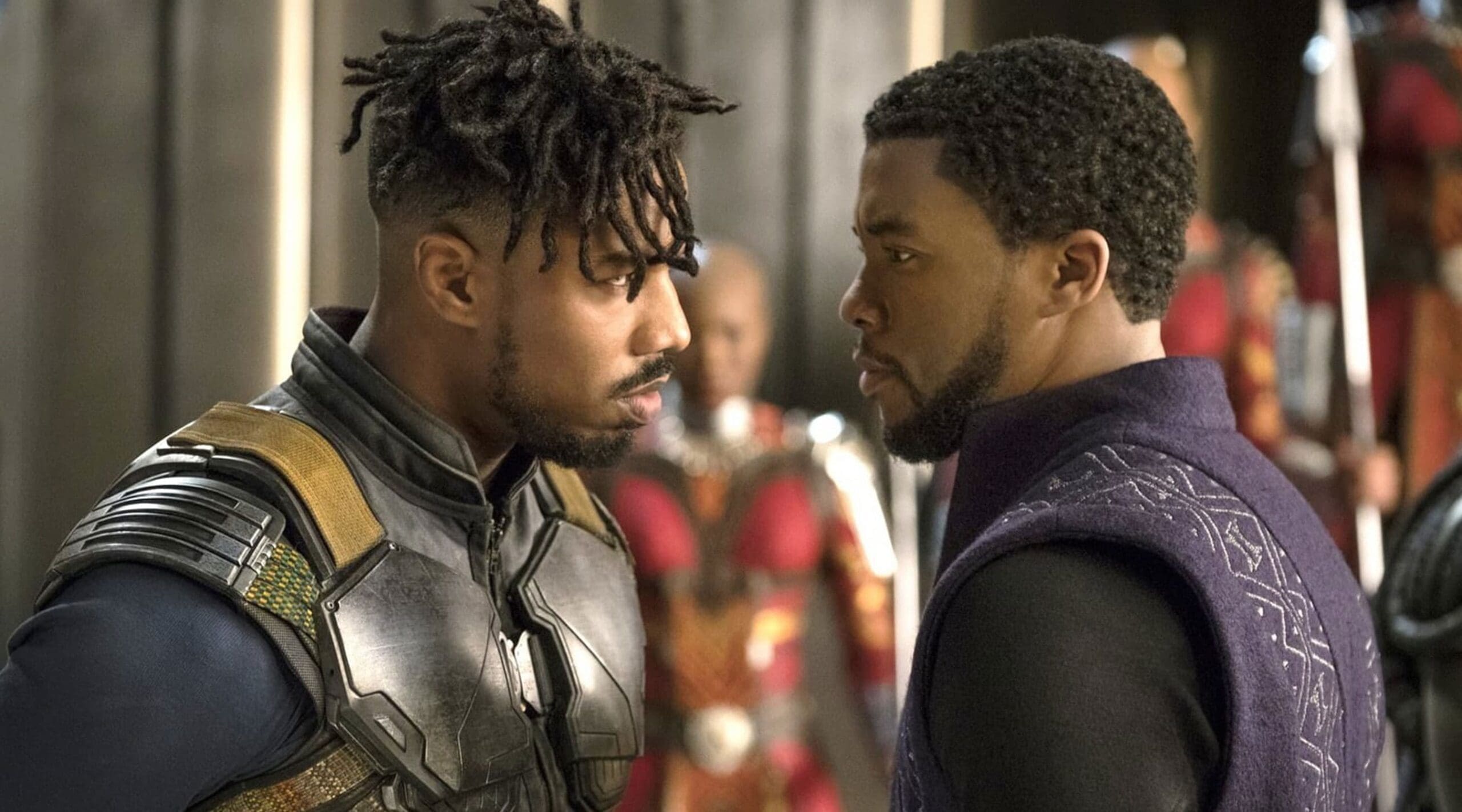
In the lead up to the 91st Academy Awards and it’s 7 nominations we mine for vibranium as the explore Wakanda for all things Black Panther. Beware of all the spoilers as we talk about the Batman spectrum of violence, the Nolan complex, why Forrest Whittaker should stay away from accent heavy roles, Samuel L Jackson has tenure for all Uncle Ruckus roles, who we think are up and comers and so much more!
Stats
Released: February 2018
Director: Ryan Coogler
Budget: $200,000,000
Box Office: Opening – $202,003,951, Gross – $1,346,913,161
Breakdown and Analysis
- Main point of debate was trying to reconcile the light hearted nature expected of a Marvel movie but also the cultural significance of Black Panther.
- Before getting into the details we are already distracting by Forest Whitaker’s terrible accent. Yeah we said it. Fight us. He had practice in Last King of Scotland so no excuses for him.
- Would he still be Killmonger if T’Chaka had taken him back to Wakanda? Did the King’s decision help to form the vengeful villain or was he always destined for a blood bath? Even though we couldn’t reach a consensus on this we agreed that Killmonger was the relatable villain.
- Oti discovers that for a smidge of time he was referred to as Black Leopard.
- We enjoyed the decision on making M’Baku is Nigerian. No powers, no suit-o!
- Oti shares insight into W’Kabi’s fickle self interest. The person that can be bought out, the betrayer, represents what’s wrong in Africa right now.
- We also dived into whether W’Kabi was the weak link? If not for him, would Killmonger have had an audience with T’Challa and Co?
Unrelated but vital points
- Heath Ledger’s joker
- Joaquin needs a hug
- The Batman spectrum of violence
- The Nolan complex – gritty superhero movie
- Oti ranks Jamie Foxx naturally charismatic Jamie Foxx
- Idris Elba deserves all the roles
- Jeff Bezos and all the qualms
- There will be no besmirching the Skarsgards in mine household
- Let me defend Kaluuya in this court of law!
- Samuel L Jackson has all Uncle Ruckus roles in perpetuity, he’s got tenure
- Michael B Jordan needs to Bradley Cooper himself
Referenced

KT's Picks
Referenced in this episode

Get Out
"Chris and his girlfriend Rose go upstate to visit her parents for the weekend. At first, Chris reads the family's overly accommodating behavior as nervous attempts to deal with their daughter's interracial relationship, but as the weekend progresses, a series of increasingly disturbing discoveries lead him to a truth that he never could have imagined."

Hotel Rwanda
"1994. In Rwanda, the classification of the native population into Hutus and Tutsis, arbitrarily done by the colonial Belgians, is now ingrained within Rwandan mentality despite the Rwandan independence. Despite the Belgians having placed the Tutsis in a higher position during the Belgian rule, they have placed the majority Hutus in power after independence. Paul Rusesabagina, a Hutu married to a Tutsi, Tatiana Rusesabagina, is the House Manager of the Hotel Des Milles Collines in Kigali. The Milles Collines, owned by Sabena (the national airline of Belgium), is a four-star hotel catering primarily to wealthy white westerners. Paul, who knows how to work the system to run the hotel effectively for its guests and for Sabena, is proud that most of the Caucasians who he meets in this professional capacity treat him with respect. After a specific incident, the relative calm between the Tutsi guerrillas and government-backed Hutu militia takes a turn. Paul's thought that the native population as a whole who are not directly involved in the conflict will be protected as the UN peacekeeping forces and thus the world is watching doesn't happen as the western world largely evacuates from Rwanda and abandons the natives. Such begins what will become a genocide of the Tutsi population. Paul, who is able to get his immediate family to the hotel which is still largely seen as a place of sanctuary, will have to use the considerable skills he has used to run the hotel as well as he has instead to keep himself, his family and any others taking refuge at the hotel alive, whether they be Hutu or Tutsi. Meanwhile, Colonel Oliver, a Canadian heading the UN peacekeeping forces, and Pat Archer with the Red Cross do what they can to assist Paul and to get people to safety first to the hotel then out of the country, while field journalists, like photographer Jack Daglish, try to bring the genocide back into the global media to have the world once again care about what is going on."

Beasts of No Nation
"Follows the journey of a young boy, Agu, who is forced to join a group of soldiers in a fictional West African country. While Agu fears his commander and many of the men around him, his fledgling childhood has been brutally shattered by the war raging through his country, and he is at first torn between conflicting revulsion and fascination Depicts the mechanics of war and does not shy away from explicit, visceral detail, and paints a complex, difficult picture of Agu as a child soldier."

Episode Details
- Duration
- 0:00
- Released
- February 19, 2019
- Category
- Episode
- Hosts

Transcript
Transcript (10,178 words)
Full transcript of Black Panther – Wakanda accent is that?.
KT: Hi there, and welcome to For Your Reference podcast, where we give our hot takes on what we're watching and how we feel about it. Our first episode covers Black Panther, which is timely leading up to the Oscars. But because we had such a great conversation, it's going to be broken into two parts. So this first episode will be the first part of the discussion, and the next episode will be the last half of it. And we might even talk about the rest of the Oscar nominations. Hi. Welcome to For Your Reference podcast
KT: with your host, KT.
Oti: And Oti.
KT: Yeah. And today, we are going to be talking about Black Panther. We know it's been out for literally a year now, but it is quite timely because the Oscars are coming up and it is nominated for seven Oscars. So, this is the first episode of our podcast, so we are quite new at this. But just to make it very clear, we are going to have a conversation. Obviously, it's going to spawn off Black Panther.
KT: If you're looking for a play by play in regards to the actual Black Panther movie and you want all of the nerdy tidbits in regards to the Marvel movies, there are quite a few podcasts that do that already. We're really gonna talk about our experiences and what spawns off on that. I guess before we even get started, I just wanna give some stats in regards to the actual Black Panther movie. So as you guys know, this movie came out in February 2018. It was directed by Ryan Coogler. And as far as I understand,
KT: he hasn't directed any other Marvel movies. His other credits include Fruitvale Station, which was his first field feature film, and then also Creed and also Creed II. So Black Panther arguably would be his biggest box office sort of smash and smash in every sense of the word, which we will get into in a moment. So the budget for it was $200,000,000. From what I can see on boxofficemojo.com, it's saying that it made it back in that opening weekend, which is quite an achievement. So good for you, Coogler.
KT: And in twenty six days, it managed to hit the 1,000,000,000 record of box office sales, which again That's amazing. That's amazing. Congratulations. So Ryan Coogler directing. You've got Chadwick Boseman as T'Challa. And you've got a whole slew of guests in there. Or T'Challa as
Oti: Challa. Challa. Yes.
KT: I think it's safe to say never ever rely on Forest Whitaker when you're trying to look for pronunciations.
Oti: Last King of Scotland, right? Oh my god. Yeah. I have no idea. His agent must be amazing. He's a good actor. We're not taking anything He's away boy's
KT: got as the kids say, he's got the clout. Yeah. But For his name alone. Accent? Nope. No. Just just just don't don't even bother. Even in Butler, he was American, and he struggled to do that accent. I don't know.
Oti: Oh oh,
KT: I think Jordan Peele does his accent more better than he does his own accent. So yeah. So we're talking about Black Panther, cultural phenomenon, worldwide smash, box office. But, again, it's still a Marvel movie, and I guess we'll get to that and what that means. But yeah. So that's the intro for Black Panther. We've watched it, I guess the first time we watched it was in the cinema. Yes. Wasn't it? Yep. I I think
Oti: after it just came out in Australia, we went to go and watch it. So it was still packed? Yeah. It was. And the second time was in Kenya?
KT: We didn't no. We didn't watch it in Kenya, but we watched another movie. However, Black Panther was still going strong. So we were in Kenya at the end of March and Black Panther had been around for a couple of months already and it was still chockers. Like it was still full to the brim. People were still going to watch, rewatch Black Panther the sixth and the seventh time in Kenya.
Oti: And that just tells you the story of how big Black Panther has become worldwide and how much support it has. And I guess that's why we're we're we're going to talk about it as our first podcast.
KT: Yes. So you're welcome. We're giving you guys more exposure for your movie for Black Panther. I guess part of part of my qualms that I'm failing to reconcile with Black Panther is, you know, we're talking about a movie that has so much cultural significance. And in that sense, it does deserve all of the accolades. However, on the same hand, it is still a Marvel movie. We are still talking about a fictional universe. And at the same time, like, I'm I'm glad for the hopefully, steps and advancements it's going to make for African Americans,
KT: but it really is still talking about a comic book in a fictional universe.
Oti: Well, it does. But it does touch on some side subjects that you can we can actually relate to. It talks on slavery and it talks on the world, the powers that be the the superpowers, The USA's and The UK's not lifting their fingers when the world around them is falling to shit like you have Wakanda.
KT: And arguably Wakanda did the same shit.
Oti: Yeah. Neglected everybody. And that's why it's it's showing us and that's why it's showing how Killmonger is coming to the fold. He's he's not going to become, the new Black Panther just to sit on the on the wayside and see how the world is falling to to bits. He wants to be part of that revolution. He wants be part of making that change happen and to empower people his people people that have struggled for
Oti: such a long time and when you have a country that has such so much power and and so much technical technological advancements you want them to be able to play a part in world affairs. It's only the right thing to do. I understand.
KT: But at the same time, let's make this very clear. What T'Chaka did to Michael B. Jordan's character was shitty. Right? Even if T'Chaka had taken Michael B. Jordan back to Wakanda, he still would have turned out as the tyrant that he was in this movie. Movie.
Oti: No. He would I completely disagree with that.
Oti: There's no way Killmonger goes back to Wakanda as a kid. He won't even be Killmonger then. He would he would have found somewhere he belongs. He would have found a home, a family. He would have been second in succession to become Black Panther.
Oti: There is no way he turns into a villain.
KT: Hang on. Let's let's let's double back on that a bit. Because when T'Challa was being sworn in, they said the oldest of T'Chaka's two children. Who was the other oh, Shuri. Yeah. Or do women not matter in the line of succession?
Oti: Probably not. Not from an African context. No. No. No. I would I would say definitely not.
KT: Not at all? Not at all. Okay. So Killmonger would have been the second in line. Yeah. Okay. But somewhere along the line, he would have found out definitely by Forest Whitaker's character because he would have snitched either way. You would have found out. If you ask him enough, he would have told you. So if Killmonger found out so he was taken to Wakanda. He didn't know anything. But at a certain age, let's just say for the sake of argument in the movie, the age that he's at, he was living in Wakanda and the same age that he's at in the movie,
KT: he was living his Wakandan happy best life. Right? And then out of nowhere, oh, by the way, your uncle killed your father. Are you telling me he wouldn't Killmonger and go on a rampage?
Oti: No. I feel like they would have managed it better. And they would have he would have known something happened to his father because he was there. He was at an age where he could make observations about such stuff he would be able to tell something had happened to his father and that's why he was going to Wakanda without him and whether or not he would have turned against T'Challa or T'Chaka for that matter is irrelevant in terms of
Oti: he didn't feel the love and I believe the way he grew up without any family is what molded him into who he is right now. He was left on the wayside to fend for himself.
KT: Hang on. That's another thing because they talk about
KT: I don't remember. N'Jobu? N'Jobu. Sterling K. Brown. Yeah. The This Is Us man and the OJ man. They talk about him falling in love with an American woman, yet we never see her in the whole movie. Is that she probably died. Where?
Oti: Charles? That's convenient for your argument. It's not really convenient. It's just It's convenient for what you're saying. Her storyline is not relevant to this at all. We don't need her to be in this movie for us to relate to her.
KT: For for what exactly? It is relevant in the sense that he might not have grown up alone. Because, apparently, this lady was the bee's knees keeping him in America, making him betray his Wakandans
Oti: because he wasn't just for women. Was because Sterling K. Brown wanted to do something more than what T'Chaka wanted to do. And that's why he he was sourcing arms and you know.
KT: Yeah because he saw the suffering of African Americans and wanted to be able to help. Yeah.
Oti: So it's it's not a matter of him being fully in love with this lady and not wanting and wanting to renounce his Wakandan heritage. No. Sterling K. Brown pretty much wanted to do what Killmonger wants
KT: well, was about to do. So he's following along in his father's footsteps. I think, in any case, Killmonger was destined for revenge and the bloody path of rampage even early on. How do you feel as Michael B. Jordan as Killmonger?
Oti: He was alright. I've seen a lot of reviews where people are saying he's the best villain. I wouldn't put him as such. I've definitely seen way better acting from even Heath Ledger's Joker was such an iconic character. Yeah. And you could tell how much effort he put into it, into his role, into into just who he wanted to portray the Joker as, and he could feel it. As a side note, they're remaking the Joker with Joaquin Phoenix.
KT: We like Joaquin. Yeah. We do. We stan a strong Joaquin queen, but I'm not sure how I feel about it.
Oti: It just seems too soon. And I'm pretty sure if we look up The Dark Knight, it probably was ten years ago. We've had our fair fair share of failed jokers a lot. I'm willing to give Joaquin a go, and I'm sure he'll do great. He's a great actor, and he'll bring his own twist to it.
KT: He has this this overwhelming constant theme of desperation. Like, you just wanna give that man a hug. Like, everything's gonna be okay, Joaquin. Scarlett Johansson will be there for you or whichever woman you're attaching yourself to in whatever movie you're in. You'll be okay. Everything will be okay, Joaquin. Like, you just wanna make sure he's okay because he is quite a stellar actor. And isn't that what you want to do with the Joker?
Oti: Like, you just wanna give Joker a hug sometimes.
KT: But let's talk about the iconic pencil scene. Right? When the Joker has got all of these henchmen and he gets the pencils and he like shoves it through his head. Come on now. That is iconic. It is iconic. Exactly. So I guess, you know, just I guess no one will ever forget Heath Ledger's Joker. Yeah. Well, it's sad. Even him, like, pulling his head outside of the window like a little doggy
KT: from the car chase scene. Remember how much hype there was about seeing Jared Leto's Joker in Suicide Squad?
Oti: You know what? I complete you know what? You know what? I completely forgot about that. That was one of the most
Oti: ridiculously overhyped characters that I have ever like, I it was just such a big underwhelming feeling when you're in the theater. Like, you're expecting something more. I expected I don't know what I expected. I just knew it was something good. It's just going to be good. I expected Heath Ledger good or even better.
KT: No. You need to think of it in the context of this was DC's
KT: sort of answer to Avengers, like, what, five years later after the Avengers came out. And they're trying to set up multiple sequels upon sequels upon sequels. And I think that's part of my thing. Like, I've got superhero fatigue. Like, stop trying to bend me over with no Vaseline trying to pump all of these sequels in me. Right? Like, I get it. You wanna get as much money as Marvel's getting because I'm sure Marvel's getting quite a lot. And DC are quite young in that regard. You know? They've only just started
KT: with their sequels that they're coming up with. So you weren't really going to get the same substantial bitey performance from Jared Leto that you would from Heath Ledger. Right?
Oti: Well, yes. But then again Heath Ledger was a standalone like he had no previous experience with it and and we read articles about how he tried to get into the character's mold and how he He was very method. He was very method. Yeah. Like Daniel Day-Lewis method. Yeah. Super method. And I feel like Jared Leto, when you're reading articles and he tried to do the same I believe it was I just expected more, and it was a complete a complete failure anymore.
KT: Let's not remove Jared Leto's credits because Dallas Buyers Club. Can we talk? Can we talk? Dallas Buyers Club. I know he has this pretentious shit about, oh, I can't watch myself on the screen. That's its own thing. Right? I'm pretty sure he jacks off to his own performances. No problem. Because he's amazing. I've never really listened to I would. I would. You would, and you do. Yeah. That's great. We all do. Everyone does. But,
KT: yeah, like, he is a phenomenal actor, and I guess it depends on the vessel. Right? It depends on the character that you have. And in regards to that actual Joker, Jared Leto just wasn't it. He just wasn't it. He even had the traditional like green hair trying to fill that stock standard sort of mold of what a Joker should be. You know, trying to turn the bad the good girl bad with Margot Robbie. So I don't even know how we got here.
Oti: We're talking let's backtrack. Talking about iconic iconic villains. And and Yes. And how much hype JB, Michael Jordan or sorry. That's okay. JB what what? He will never listen to this, so it's fine. We can call him whatever we want. Wallace.
KT: Wallace. Actually, yes. So let's go back to that because when we were watching The Wire, which I introduced you to, by the way. Oh. Let's make this very clear. I introduced The Wire to you and all of its intricacies. So when we saw BC Jordan, as you like to call him, when we saw him in The Wire, his performance was so without malice, without any sort of pretension. It was a perfect role for him at the time. And I'm sure he was, like, prepubescent at that time. Like, he was a fetus. He was
KT: literally starting off in his career. And we were like, where where the fuck is Wallace? Because he's amazing, and we need to see him again. And I don't know. Like, now that we've seen him, I've seen him in we've seen him in Fruitvale Station. Which I also was good in. He was good in like, I feel like if you see BC Jordan in a movie, you know he's gonna be good. Right? He's going to tick the box. He's gonna be great.
KT: But is he someone when you're talking to other people, is he someone you're going to put on your top list of actors?
Oti: Is he the is he a Denzel Washington? Like, you know how black how how movies try to find the the next Denzel? Yeah. The next black actor who just tick the boxes for everyone? Oh, is he white and friendly? Oh, that's him. Is he not gonna offend anyone? Oh, is he Will Smith? You know, you went from Denzel, Will Smith, Jamie Foxx,
Oti: and we're still trying to find that most likely
KT: I think Jamie will send you a gift basket because you're crediting him in the same breath.
Oti: No. Seriously. Jamie Foxx is Acting wise, though. Jamie Foxx has What is Jamie?
KT: Okay. Ray Charles. Ray. We haven't watched that together.
Oti: Jamie Foxx was amazing in that. And that's that's what solidified him as an a list actor. After that, no one took him seriously. And I believe going into watching Ray, I was like, what nonsense is this for more than cast Jamie Foxx? But Jamie Foxx is a naturally charismatic guy.
KT: And where I saw that natural charisma was in Django Unchained when he was hanging upside down. And I saw
Oti: Oh, that's charisma over there.
KT: His twig and berries. I saw it all. And it was it was quite charismatic. But going back to so we're talking about iconic African American actors. And does BC Jordan, as you like to call him, does he stand up to the cloth? Is he cut from the same cloth?
Oti: I don't agree. It's it's still too early for that to be the case. Do you think it's the roles? Definitely. Definitely. I feel he did quite well in Fruitvale Station. Fantastic Four. I'm not even going to talk about it because I feel like the whole movie was a mess, and you won't be able to tell out the good performances. Well, you're not really based off the direction and the script that was. You're not really watching a movie like that beneath surface level. Exactly. Exactly. And, well, the other strong
Oti: thing maybe you'd be able to get from his chops was, Creed.
KT: Really, though?
Oti: I know. When when the Creed came out when the first Creed came out and we had, Sylvester Stallone get all the plaudits, Roomba. And and he'd even he didn't even mention, BC Jordan in it. That was like, come on, man. Adrian. He's the he's the starring of the movie. It's like you only had a total of twenty minutes all combined in the entire movie.
KT: Do you think that's more dangerous?
KT: Because that was unconscious. He didn't consciously forget BC Jordan, but he unconsciously did. Do you think that's worse? Yeah. That's If you undeliberately try and, like, diss someone or just forget them?
Oti: That's definitely worse because it just says a lot more about what he doesn't think of you as a as a
KT: But I guess you could argue that was his franchise. Franchise. That was Stallone's franchise. So maybe he was just thinking about himself and Adrian.
Oti: Oh, probably. Probably. But then again alright. So we're coming into trying to put in context what BC Jordan as Killmonger in Black Panther and all the plot it is getting. I believe it's being taken up at least a bit too far. He wasn't that great in the movie. He I can understand him from a character perspective on how I can relate with Killmonger and what he stands for in the movie. Yeah. And I'm so into that. Like,
Oti: they give us a villain who we can re all relate to or at least someone with a little bit of more melody in this. His origin story was very understandable.
KT: Yes. And I think he gets a lot of well, not him, but his character gets a lot of graces because you're like, yeah. Actually, if I was left and you went on your little alien ship and left me alone when I was a little kid and I had to fend for myself and I found out that you killed my father, then yeah, you deserve it. You can go on a rampage and it's okay. That's fine. But what I found it hard to, I guess digest is we're literally talking about a comic book movie.
KT: I know the actual Black Panther comics from what I've read, but not from the comic, but from what I've read, it does have Black Panther sort of influences and also historical context. But then they kind of recanted and then they changed his name to like Black Leopard because I guess it became too on the nose. And then he came back to becoming Black Panther. But just coming back to
Oti: Wendy, is Black Leopard a thing? Yeah. How would that even happen? Oh, the pots just became
KT: all big and nobody's all I I don't understand the political climate of the time, but I do know that for a smidge of time, they did change it to Black Leopard. I'm almost sure. I will check. Wow. I didn't hear that. But it it I think it just hit a bit too close to home. So, you know, we're talking about this fictional universe where Captain America vomit. Where Iron Man he's okay. You know, where you have all of the different heroes exist. Right? But it's not really real. And you have Black Panther.
KT: The good thing about it is it's one of the most standalone movies that I've ever seen since the start of the Marvel franchise, which is amazing. I think they might have done it for mass appeal. Like you don't need to know what Iron Man was eating for breakfast to know what's happening in this movie right now. Right? Because they wanted to be able to have this movie appeal to everyone, which is fine and which is cool and I'm down with. But with Black Panther,
KT: we're still talking about a comic book. You know what I mean? Wakanda isn't a actual place, but as far as we understand, it's somewhere in East Africa. Shout out.
Oti: Shout out to East Africa over here.
KT: Even though they were speaking Xhosa, which is in South Africa. Yeah. Yeah. It's it's all kind of muddled, but that's fine. But we're talking about a comic book movie. And for the first half of the movie, it literally operated as a comic book movie. You've got the origin story of T'Chaka, the king. You've got the origin story starting to be set up for fishmonger? Fishmonger. BC Jordan's character. So you've got Killmonger. Yeah. Killmonger. He
Oti: could a could be a fishmonger if you want. You wanna correct me?
KT: You really wanna Going correct
Oti: by the going by where Wakanda is placed, it's highly likely there was a fishmonger in there was a fish there was a fishmonger. Fishmonger.
KT: There was a fishmonger in the family, so it's highly believable. Yeah. So the first half of the movie really felt like a Marvel movie. Like, you know, if you've watched at least one, I think Black Panther is the fifteenth, sixteenth, maybe even eighteenth Marvel movie that they've released, babe. Yeah. A lot of movies have come out. So the first half of the movie is literally what you would expect. So they've got origin stories.
KT: They've got all the angst, and they've got all of these action scenes, which I personally don't care for. But, you know, if that's what if that's what you want to watch, if you want to watch some things like explode and people walking away from it, then you can do that. But that's not really I'm not about that life. So you've got that. That's the first half of the movie. And then it kind of transitions into a holistic approach to society and it becomes this big mirror.
KT: And I guess that's what's kind of frustrating to me about Black Panther because if you take it for what it is, it's a good movie. Right? I'll watch it again. But it's it's kind of become more of that outside of the movie. It has this cultural significance, which I believe it should. It deserves all of the cultural accolades. However, that shouldn't be in addition to how you feel about the movie. The movie should be the movie alone.
Oti: True. But then what point is making a movie where it's just about killing and, you know, having this nonsensical action sequence without addressing what's happening in society and I feel like Black Panther be it as it may a Marvel movie tackles this aspect in my opinion very well. We have Killmonger going into a well advanced country and in this case Wakanda symbolizes a first world country because it it's well is, you know, regardless of where it is in in geographically. And he's trying to get them to act.
Oti: Yeah. He's trying to get them to help other people, not not just to focus on on on themselves Yeah. And seclude themselves. Mhmm. And that's what's been happening in Africa for the longest of times. We've had people suffering in African countries and dealing with stuff that shouldn't be even a thing in the twenty first century. Uh-huh. And and other people are just turning a blind eye. Yep. And it's the way the world is moving into this alt right or whatever you want to call it and everyone just wants to
Oti: seclude themselves and be by themselves and stuff everyone else. Yeah. But with Wakanda, you can get to see at the end of it, you get to see T'Challa and was it was it with Lupita? At the end where they're going to New York or was it with her sister? Can't remember. But Shuri. Shuri, the sister. Yeah. But Yeah. They buy this building in America, and they want to have this outreach and try and help in as much as they can. Uh-huh. But in Africa where Wakanda is, he gets to in real life,
Oti: people struggle, people suffer, there's genocide and no one lifts a finger. Yep. It's the way the world is. And if other countries can take a stand and do something about it, you know, it's it's you don't even need to commit money or anything. You just need to show that you're well aware of what's happening and raise awareness. And once it's out in the public domain, I don't feel like a lot of these African leaders who are trying to just be in it for themselves would actually take a step back because they're doing this
Oti: under the umbrella of not being able to be you know like no one will able to see what they're doing because no one pays attention to Africa unless there's a starving kid with some flies on their mouth you know.
KT: Or unless there's oil.
Oti: Or unless there's oil. Yeah. You know so Black Panther shows us that countries with greater greater resources Uh-huh. Better technology can do something to the world and help. But they didn't.
Oti: In the movie. They did. They did at the end. In the context of the movie. You can you can tell that they're going to change their ways at the end of it. Mhmm. And you have T'Chaka, T'Challa's father, who was so old school and who doesn't really want to break away from the mold of what tradition has passed on? Yeah. And he is so into his ways that he decided to leave a kid. His own brother's
KT: That's that's his own thing. So he grew up hang on. He grew up in a generation of it doesn't even matter. If you're fathering five other children to five other different women, you do not divorce. He's from that generation. Right? Yeah. You could be you could be a father and see your face and all these little babies, but you're not going to divorce with your wife. Your wife, husband, once you get married, that's it for life. Him abandoning a kid in Oakland, California in 1992 is its own thing. Don't even don't even
KT: don't even try to attach that to him in his ways. That's something else.
Oti: No. It's him in his ways. It it's it's more it's more him
Oti: not wanting the repercussions of what that meant.
KT: Self preservation.
Oti: And it's been like that for know, culture means more. The perception means more than what someone else in a different situation would do if, you know, a good person would do. So it's it's just a matter of, we really don't wanna do this because
KT: That was a shitty thing to do.
Oti: Yeah. Yeah. It it is a really shitty thing. And if I was Killmonger in his place, I would rain rampage on Wakanda. I would not let that city down. I'll
KT: Which is what he did.
Oti: Well, not not to the extent I would go to. Yeah. He got beaten by by by T'Challa, which I don't really believe because he beat T'Challa the first time quite easily.
KT: I guess it, like, from a screw battle? ScrewAttack? ScrewAttack. Well, no. No. No. Just Death Battle. From, like, from that from that point of view, it makes sense because as far as we've seen guess the only action we've seen from T'Challa before Black Panther was him trying to run and save his father during that UN conference. Yeah. We don't really know what his resume is. During Black Panther, they made it very clear that Killmonger is not here to play. Right? He's been in the American forces in whatever capacity for years.
KT: And he was I think the quote from, Martin Freeman's character was he was playing it like a video game, and he got coined Killmonger because he was so ruthless in the way that he killed. So when you think about it, I guess it makes sense. As far as I could tell with T'Challa, he was a royal man and he didn't really have any sort of combat experience as far as do you know if he had any?
Oti: No. I don't. All I know is that he's smart or at least they try to plant that seed in us that he's smart. Because Smart don't have muscles, babe. Well, true. But, you know, he's he's a he's a different kind of breed, guess, where he he both has the the the psychological nuance and the and the physical strength to to battle it out. Yeah. No. He's not your average Well, he's strategic.
KT: There's, like, there's different people in combat. You have, like, strategic characters, and then you also have full on brunt and brawn sort of characters. I don't think T'Challa is that loud. Why why would you why would you put Batman in that? Because he's he's quite strategic, but he he can go down brutally. Well, I guess, are we talking about Ben Affleck? And I think he recently excused himself. Which
Oti: I feel is sad because I think I wanted to see a standalone Ben Affleck Batman movie.
KT: But let's make this very clear. Ben Affleck is a great guy. Oh, he's a great guy. Argo was a great movie. But so so the point the reason why I bring up Ben Affleck is he was kind of if you talk about the Batman spectrum, which I'm so sure some lovely person on the Internet has already created. If you talk about it on, like, the most faintest sense of violence, you've got, like, Adam West's character.
KT: And we fucking love Adam West. Oh, Adam West is But you've got him like the kabam. Wa pow. Sort of Batman. Right? And then we've got Christian Bale, which at one point you would think he was the most extreme Batman. Right? Yeah. You really would. I would say he's the most iconic, but that's for another podcast. But right at the end of the Batman sort of violence sort of spectrum, you have Ben Affleck because he actually used weapons Yeah. Which was quite controversial.
Oti: Well, Batman I feel like Batman never
KT: And when I say weapons, I mean gun.
Oti: Yeah. That was a bit out of the mold, I feel. But I guess every Batman character has to bring their own thing. You don't have to rely on on on source material from 50 ago to be true to you know? I think that bring your own Batman to to to to the script. And that's why that's why we're getting people getting flack for trying to suggest that, Idris Elba can be James Bond because fuck no if you had a black James Bond character
KT: because James Bond is supposed to be white. His angle, oh man. Just say Idris Elba all day, every day, in every capacity ever. He could play Madea, and I would fucking support that.
Oti: Well, they're killing off Madea. Oh, at least that's what we're trying to do. They're trying to pass out anyway. We are not the Madea podcast.
KT: I'm sure that exists somewhere, but that is not us. That is off brand.
Oti: Oh, we say Madea one more time until Aperio will be standing behind us.
KT: I think Jordan Peele is producing that Oh, yeah. Which we need to talk about, but we're not talking about Jordan Peele today. So coming back to Batman, I think it falls into what I call the Nolan complex. Because ever since Christopher Nolan came along, he gave us cinematography gold.
Oti: Well Right? But then you get people complaining that Batman has become too dark and superhero movies have become too dark.
KT: Hang on. That's literally the Nolan complex,
KT: which I am coining on this podcast channel. So before that, I think the Avengers where where is the timeline? The Avengers would have covered now coming out by by then. Right? Or just after. It would have come out just after. Yeah. So what was what was preceding Batman? Spider Man? Which Spider Man? Andrew Garfield? Fucking hate him. But you no. Tobey Maguire. Tobey Maguire, Spider Man. Yeah. Yeah. Right? So Christopher Nolan had a vision for Batman. And by God, by the end of his series, we saw that vision, didn't we? Yep.
KT: And I guess what became the problem is people tried to copy that formula. But what they did is they times it by a 100 and it became something that was so indecipherable, so unrelatable that what was the point? Like, even Henry Cavill? Superman. The Superman. Became so gritty. It's like, I don't wanna see Russell Crowe in this capacity. I wanna see him with Tuggers on South Park. Like, I don't wanna see him here. But it progressively became
KT: grittier and grittier. And then somewhere along the way, the Avengers came along and they made it super light and whatever. But I guess that's kind of the problem with superhero movies because they're trying to copy on the formula because of the success of Christopher Nolan's Dark Knight series.
Oti: Yeah. But Black Panther isn't dark by any stretch of the imagination. It just covers social It has It mentions social moments that become way too heavy to carry.
KT: You just dropped way too many truth bombs that we cannot carry in this light Marvel movie. And, again, I'm going to have another gripe with Marvel movies. Why does there always have to be a joke for everything?
Oti: They're trying to lighten the mood. No one's goes to the super no no one goes to watch a a superhero movie and go there all grumpy and everyone's just sad.
KT: Exactly. We're talking about a superhero movie with slavery and oppression weaved successfully or not, weaved into the undertones of this movie. Because when we're talking about M'Baku challenging T'Challa, you know, it's fully tense. We've got that rhythmic sort of music from Ludwig, which we'll talk about in a moment. You know, it's all getting really tense. What's going to happen? Will he be king? Will he not be king? Is M'Baku gonna overthrow him or Like, what's like I think he decided that M'Baku was gonna be Nigerian. Yep. M'Baku is Nigerian.
Oti: No powers. No.
KT: But then within that moment, you have Shuri saying, oh, I'm so tired. Can we just go home and I'll take my headdress off? Really? Like, what do you want to be? And that's what I was pointing to before we went on a 100 tangents is what kind of movie do you wanna be? Because you are, as brand, a Marvel movie. However, you want to be everything at the same time. You wanna be all of the dialogues all at once. And I know we have a lot of catching up to do in regards to progression,
KT: especially in regards to the Oscars, but this isn't it. And if it is it, then let's not have little jokey jokes just to fill the time.
Oti: You know why it feels different to you?
KT: Why?
Oti: Because a black director was at the helm.
Oti: That's why. That's why it feels so so ridiculously different from everything else about Marvelous and Madame.
KT: Hang on. It because a black director was directing, or is it because me as a non black person was consuming that?
Oti: Because you as a nonblack person was consuming that. I feel like some of the nuance was lost in you. Okay. Like Let's let's let's let's unpack that. You know what? We had we had one scene where you really didn't like it, where at the end of it, kill Chella was about to I think they just fought with Killmonger. It was I mean, yes. Was dying. Forty minutes. Yeah. Yeah. And and Killmonger mentioned that he'd rather die He'd rather die than be one of those people that stayed on the ship.
Oti: Yeah. He would like to be like one of the ancestors who jumped off the ship. Yeah. And you really took qualms with that.
KT: Yeah. Took all the qualms. All the qualms man. I went to Amazon. All all the qualms deliver ASAP.
Oti: That's why you have the Jeff Bezos problem, isn't it? He has no more qualms, man. You mean the top of my head looks like a penis? Anyway, we have we have we have one of the strongest statements.
Oti: It was. I agree. And and it just paints a picture of who Killmonger was as a villain. I would rather jump off a ship than be enslaved. And that goes to show that he would he stood by what he believed. And and I it's just so admirable because a lot of us would or at least I I would like to think a lot of us would. I agree. Right? I agree. And and you can see it just brings together everything that he was as a character, and it it just consolidates everything
Oti: that you've seen from start to finish. Ever since we saw him at the at the museum, looking at the masks and and and
KT: Having a white lady out out of masks. A white lady tell him what the artifacts are. Oh, yes.
Oti: This is from the nineteenth century from Benin. Okay.
KT: Hang on. Hang on. Let's hand off. Put your hands up if you felt sorry for that white woman being poisoned by her, what I'm assuming, was a soy caramel latte. Is your hand up? No.
Oti: My hand is not up because there's so much there's so much going on with the world right now. And just the other day, we we we what did you listen to? We had, the French a French museum wanting to give back all the artifacts that they took from Africa, and there was such a major uproar about it. Oh, they wouldn't know what to do with them. They were made to disappear. We as white people want to preserve them. We know better, and we have to keep them because if we give them back,
Oti: they will just go to shit.
KT: Which I think calls back to a line of Andy Serkis, who we fucking love.
Oti: Oh, Andy Serkis. We fucking love Andy Serkis. His accent was top notch. His accent was top notch. Let's talk about He's one of the few accents in the movie that I actually like. We'll talk about accents in a moment. But Andy Serkis made a comment
KT: about it, talking about you savages wouldn't even know how to use vibranium. And I know that's not like a 100% correct, but it's it's the essence of what he was saying, which again speaks volumes to society. But let me come back to my point. And it says a lot. Okay. This is this is the longest ass boomerang I've ever seen in my life. But let me bring the boomerang back. Okay?
KT: Alright. Jidenna this shit then. Jidenna. We fucking love Jidenna. But he needs to know his lane. Okay? So I'm not coming for everyone today. Alright? So we're talking about Black Panther. So with let's go back. So you're talking about the quote where he says, I would rather die than be enslaved and oppressed like my ancestors. Fucking woke. Right? That's woke as fuck. Right? And then twenty minutes before that, you have Shuri's character seeing saying like, woo woos, which is literally a meme. Right? Like, what kind of movie do you wanna be?
Oti: You can't just all be you can't have a movie that's just all serious a 100% of the time. I understand pick your moment. But it seems out of place. If you It seems have out of place. It was a fully serious moment with T'Challa and and Killmonger dying. I do. And even when he's look you know, he's bleeding to death Yeah. He's like, no, mate. I don't want your help. I would rather die than be prisoned.
KT: I understand that. But arguably, there are two different movies in Black Panther. I feel like The first half of the movie was all action, all origin story. And then the last half of it was like, oh, we gotta we gotta live up to the hype now.
Oti: You know why people loved Black Panther so much? Why? Because I feel like it spoke to them, and and and they could see how it correlates with reality. It's not like watching Captain America where you're like, oh, this guy's, you know, yeah. Yeah. I don't really care about the spies coming here. You know, it's just it felt less detached from reality than other superhero movies. Mhmm. And you could see
Oti: where they're going with it, and you could see what the director was trying to put on the place, and and and it just resonated with me on so many levels. I could see why Killmonger was why he why the way he was.
KT: But have you actually read as a kid
KT: in Kenya, did you actually read the Black Panther comic?
Oti: No. I didn't. Did you read any comics back then? No. But I was aware I was aware of Black Panther growing up. And
KT: Through other cartoons? Through Yes. Other
Oti: And I didn't think they were black for some weird reason. I just assumed it was a white guy and you can't blame me. Growing up we saw a lot of white superheroes and and even Black Panther. I just assumed you know this is just a white bloke in Africa like Tarzan saving all of us from ourselves.
Oti: Yeah. And and and you wouldn't really blame me. And
KT: Although we do like the Skarsgard family, so don't besmirch them in my household.
Oti: Yeah. But then there's this all problems with Tarzan.
KT: That's just a we'll talk about that later. Like hang on. Hang on. Hang on. We stan the Skarsgards, don't we? The Skarsgards are amazing. Okay. Good. Continue.
Oti: I'm just saying that growing up as a black kid in Kenya, and you would watch these programs and watch these superhero movies or cartoons, and it's all white people. And even when you got Green Lantern, they took them back, man. Like, it's just
KT: Hang on. In in Kenya, as a kid, was he still black, or was he already white?
Oti: Green Lantern was black growing up. Well, the Green Lantern Was it Seth? Because I remember seeing Green Lantern in Justice League Uh-huh. And he was definitely black. So so There was some melanin. There was some melanin. So whatever that happened, I don't know. Anyway, I think I'm losing my train of thought here. Well
KT: We're talking about Black Panther as a kid. Yeah. So you'd
Oti: see all these movies and then you watch it now and you see a black superhero doing awesome awesome things And you're like, shit, man. If I was watching this as a kid thinking, bloody hell. I can see someone who looks like me on TV Yep. Doing these amazing things. Mhmm. Far out. My I would have dreamed bigger because I was like, oh, I wanna be a game developer growing up. Wanna In be Japan? Oh, in Japan. I would be killing it. Oh, but then and then, you know, for whatever reason,
Oti: my dad didn't really buy into it. And and and I It wasn't the mold that you were making. The mold. Yeah. You know? And there was a lot of things that he he just associated with white people and it's their thing and you're not really allowed to crossover. Uh-huh. And I feel like if we saw more people like Black Panther growing up, black black people that you could actually relate to and see oh this guy looks like me
Oti: I could probably do this as well. Yeah. I will just make you dream that much higher. If he's doing that, then fuck's sakes, I can do it too. Yeah. And and and we have there was a lot of racist comments about Black Panther after it came out. Like, people in Asia, were some comments saying that it was unwatchable because the movie was too dark. And I'm like, you know Life is dark. Life is dark, man. Yeah. Fuck sakes. All of us are trying to live for that penny. Yeah. You know?
Oti: So if that's what you go to a movie and say, I I have no words. I have nothing to say to that, really.
KT: And that's fine. And you don't have to say anything to that. But everything that you're talking about now has literally nothing to do with the movie. It's all of the cultural significance that Black Panther has, which again, I do agree. All of the accolades culturally that Black Panther has received and will continue to receive, it deserves. But if we even talk about Oscars for a second, Black Panther, a Marvel movie, has been nominated for seven Oscars. Seven Oscars? I'm going to dive into them. But just generally,
KT: when you watch Black Panther, did you think, oh, this is Oscar worthy?
Oti: It felt different. It felt that I could resonate, and I could put things from society for or however farfetched they seemed to me. Like, I could draw parallels. Like, you know how Kaluuya's character, what's his name in the movie? Well, we have Kaluuya's character. I'm looking at I feel like he symbolizes
KT: Wabak W'Kabi.
Oti: W'Kabi. He symbolizes, like, 90% of African leaders right now. They are flaky as shit. You get you in what minute, you're talking to T'Challa about not wanting to to interfere with other countries. Yeah. And then Killmonger comes, gives you a gift. Yeah? The gift can be can be simple as this. One, he will whatever he was given, which was Ulysses Klaue. Yep. Yeah? Because Yep. He killed he killed, his parents or whatever in a fight. Uh-huh. Or his parents died as a result of a fight that he started. Yep.
Oti: Or it could be a bribe. But then he goes completely one eighty and says, ah, mate, I'm with you now. I'm with you. Let's take let's let's make our mark on the world. Let's go and help everyone else try and revolt.
KT: It's so completely out of character. You also had that dialogue near the start of the movie. One of the first few scenes that we saw of W'Kabi, Kaluuya, which we fucking we fucking love him. Kim talking about, you know, why do we need to help other countries when we're kind of got our own set up? So that's what you're talking about. Right? So he goes from that to one eighty. Yeah. And and and I I could draw parallels because it's exactly what
Oti: America's government has been doing to Africa for and the whole world for ages. Yeah. Well, you you have countries like overthrowing Patrice Lumumba and having him assassinated Uh-huh. And getting a somewhat addicted like Mobutu Sese Seko in in place who would favor your policies and whatever. Mhmm. And whatever he does with the country, that doesn't matter to you because heck no. African affairs, don't really care about. It's just more more you can get out of the country as a resource. And Kaluuya represents that kind of symbol in African society,
Oti: the person that can be bought up, the betrayer of sorts. Mhmm. Like he he stands for what's wrong. It sounds a bit too harsh, but I feel like Kaluuya stands Black Panther is everything he wanted to be. Kaluuya stands for what's wrong in Africa right now. You Not Kaluuya W'Kabi. You get to easily turned Yep. Just so you can satisfy your personal you know, you can you can At the turn of a coin? Exactly. Like like, it's it's just ridiculous. Yeah. And and whatever he's done, he he's brought this Killmonger into the society now.
Oti: And now Wakanda has to deal with that.
KT: Hang on. Are you saying without W'Kabi?
KT: Because I would not call him a weak link, and I will fight you if you ever try and say
Oti: He he definitely brought Killmonger into the fold.
KT: No. No. No. No. No. No.
Oti: He brought Killmonger into the Without
Oti: without kill without without W'Kabi's backing, Killmonger would have been killed the minute he stepped into that field.
KT: We will deal after this. But for now, you will not call him a weak link, not in my household. He is. But let's go back to it. If it wasn't for W'Kabi's backing, would Killmonger have been allowed to even have an audience?
Oti: I don't think so. The minute he's crossed the border, I feel like he would have been killed. So you think he strategically knew where W'Kabi was?
KT: No. Come on now.
Oti: Yes. Killmonger knew about W'Kabi, and that's why everything. Is the all knowing? He must have done research or some shit because how else would he know that bringing Ulysses Klaue's body to him would get him an audience? How else? He was the weak link. And even in Widows, he was weak as a shit. What? I have a I have a problem with I am sure. Daniel Kaluuya's agent. The roles he's making Kaluuya take I is
KT: was not ready for this. I'm just saying,
Oti: Kaluuya, you need to find a better agent.
KT: Kaluuya, Kaluuya, I will be your agent, and I will take care of you professionally.
Oti: He can't take roles that just, you know, in Widows, he's a weak link to to Paper Boi's character. What's his name?
KT: Brian Tyree Henry or something. Henry. Brian. Hang on a second. Hang on a second. Let me let me defend Kaluuya in this court of law. Okay? Kaluuya's character, W'Kabi, was understandable. The fact that you were able to identify how many corrupted politicians in your lifetime that you can resonate with Kaluuya's character just shows how amazing of an actor he is. But that's another discussion. I wanna have a whole episode where we're talking about Kaluuya. I feel like Kaluuya will get typecast now.
Oti: Hang on a second. Oh, man. We need an uncle Tom. Oh, hey. I heard Kaluuya's there. No. Samuel L. Jackson is there.
KT: Samuel L. Jackson's oh, I don't remember his character. I just call him Uncle Ruckus in Django Unchained. He's pretty much got that role until perpetuity is what they call it. Yep. Yeah.
Oti: So hang on a second. He's lot of Daniel for that
KT: Daniel Kaluuya is an international treasure. And if you wanna fight me on it, at me. Okay?
Oti: Me. At me. I've watched Kaluuya from the days of The Fades, and I've loved him. I'm just saying, he needs to stop taking these roles that just suck.
KT: But arguably arguably, Kaluuya's role as a turning on a whim to provide his own self interest against T'Challa has much more dimension than a lot of the other characters in Black Panther. Black Panther. And maybe that's what Kaluuya's looking for. Black who? Killmonger. Oh, come on. Come on. Killmonger was all rage. What finesse did he have?
Oti: He is entitled to have the rage he had.
KT: He is entitled. However, it was literally zero to 100. He was like DMX through the whole movie.
Oti: And so would I be.
KT: So you would be the same way as well.
Oti: Yeah. But I'm I'm a 100 all day every day. That's just my thing. I'm just saying.
KT: Okay. Let's take a step back for a second. We talked about Michael B. Jordan and how he's good at every role that he does. But even the roles that he does aren't that challenging. What do you mean by Hang on a sec. You even said it. You know, rewind the tape to, like, twenty minutes ago. So Michael B. Jordan is amazing, and he's great. But he's not really choosing the best roles to be able to exemplify his repertoire of skills. Daniel Kaluuya. He does choose roles where he can expand
KT: and stretch. You might fucking hate his character, but the way that he delivers it is so convincing and there is so much conviction in what he does as his role. My first introduction to Daniel Kaluuya was Black Mirror. Poignant, harrowing performance. Don't me. Okay. Daniel Kaluuya will stand the test of time. Are you telling me if we're talking about actors, because if we're talking about actresses, Lupita Nyong'o, you are at the top of our list.
KT: Lupita Nyong'o would be at the top of like actresses of our time. We're not talking about Denzel's because you can't really compare people to Denzel. He's in his own little bracket. Right? But if we're talking about actors of our time that are iconic, who would you list?
Oti: I'd say
KT: You would not list Michael B. Jordan. No. You'll do it to spite me, but you wouldn't. List him as an up and comer. But that's what I'm talking about, people to watch.
Oti: Yeah. He he definitely be there then. Come on now. He would. Come on now. Who who would you put on your list if it's not? Daniel Kaluuya. Well, it's not a list of one, is it?
KT: But who else would you put on there?
Oti: He's definitely there. He's just getting started on getting roles. Well, we've seen him on Creed. We've seen him on Fruitvale. We've seen him on Black Panther. He'll be given more. And the more roles he gets and I feel like
KT: And he also has that Fahrenheit 98
KT: movie, which you don't wanna watch yet.
Oti: Well, just
KT: I think 98 is a boy band. That kinda makes sense. Yeah. It does. It's about the burning of books, I think. Yeah. I think so. Yeah. It's a it's a it's a HBO movie. But but let's be honest. Okay? If if we're just, like, naming actors off the bat, Kaluuya would come to your mind before Michael B. Jordan does.
Oti: Probably not. I'm just saying. Fake news. I feel like Kaluuya has been doing this longer.
KT: Oh, come on now. Don't do that. Don't do that. He has been doing this longer. Yeah. But I know where you're going with this. Keep going then.
Oti: He had his own series, Kaluuya Uh-huh. In The Fades. JB JB. JB Jordan. JB Jordan had what?
KT: Thirty, fifteen maximum episodes on The Wire, and he wasn't even that it wasn't even regular that much. Like His his role in The Wire, I would say, has been his most pivotal role as Wallace. Until I see something that supersedes Wallace, that is what I will know him for.
Oti: You don't think Killmonger supersedes Wallace?
KT: Nah. It was pure rage.
KT: Like, he didn't have he didn't have depth of character.
Oti: Did he did he make you feel did he make you feel like, oh, me. I get you. I get you, bro. I feel your pain. Did he make you feel understand? Like you can see why he's angry like that?
KT: I could definitely see why he was angry.
Oti: Then he did his job, mate. That's what a good actor does. You get away of the movie and you feel like, oh, mate, did he do anything for me? But once you come and think about it, oh, he's
Oti: made you think. He's made you feel.
KT: He didn't make me think because I knew from the start. Once I knew they left that poor kid in Oakland, California, that was it for him. I actually didn't need an update in my software in regards to how this character development's going to go. Because dare I say, the development stopped there. He got older. He got bigger, but he was literally the same character. Winston Duke, who played out M'Baku Thik. Right? I
KT: think he might be an up and comer. And the reason why I say might is because because the role that he got, he excelled in every boundary that was allowed for him.
Oti: Winston Duke was amazing. But his role is more one dimensional than
KT: But that's what I'm saying. So I can only give him accolades within within that realm that he was given. The same with Michael B. Jordan. I think he needs to get better roles. He needs to stop doing things that appeal just because he's a young handsome actor. He needs to Bradley Cooper himself.
KT: Right? So you have you have Bradley Cooper,
KT: like, on The Hangover. Right? And he became this pretty boy. I wanna be with this fella. I wanna lay in his bedchambers. You He's what I'm all about. And then he made himself all ugly and did all these other movies like Limitless. And then he did like, I think like 10 movies with Jennifer Lawrence. But he needs to kind of not rely on his looks, which is it can become a problem is all I'm saying.
Oti: He's not relying on his looks. The roles that he chooses,
KT: You think you he chose Creed
KT: to show his intelligence? No. He did it to show his muscles. He worked out to be He he didn't. Good for him. But that's that's not what we're here for, sir. That's not what I subscribed for. Okay. So let's just go back for a second. If we're talking about, like, the new up and coming actors, Daniel Kaluuya always be on my list. Always.
Oti: I mean, Daniel, he'll he'll never achieve what he set out to be because he'll always be an up and coming. Even up everyone is 60 years old. Oh, Kaluuya is still up and coming, mate. I promise. I promise this is gonna happen.
KT: You're a dick. You're a fucking dick.
Oti: Oh my god. But Oh.
KT: So you just you just you just blown out the candles of everyone's candles of all the earth. Okay, guys. That was part one of our amazing discussion in regards to Black Panther, the Oscar nominations, and how we feel about the actors and actresses. Hopefully, guys enjoyed it. Stay tuned for the second part of our conversation. You can also visit our website. We also have Twitter,
KT: Instagram, and also YouTube. You can write us an email at hello@fyrpodcast.com.
KT: Thanks, guys. See you.
Related on FYR
Discussion
Loading comments...