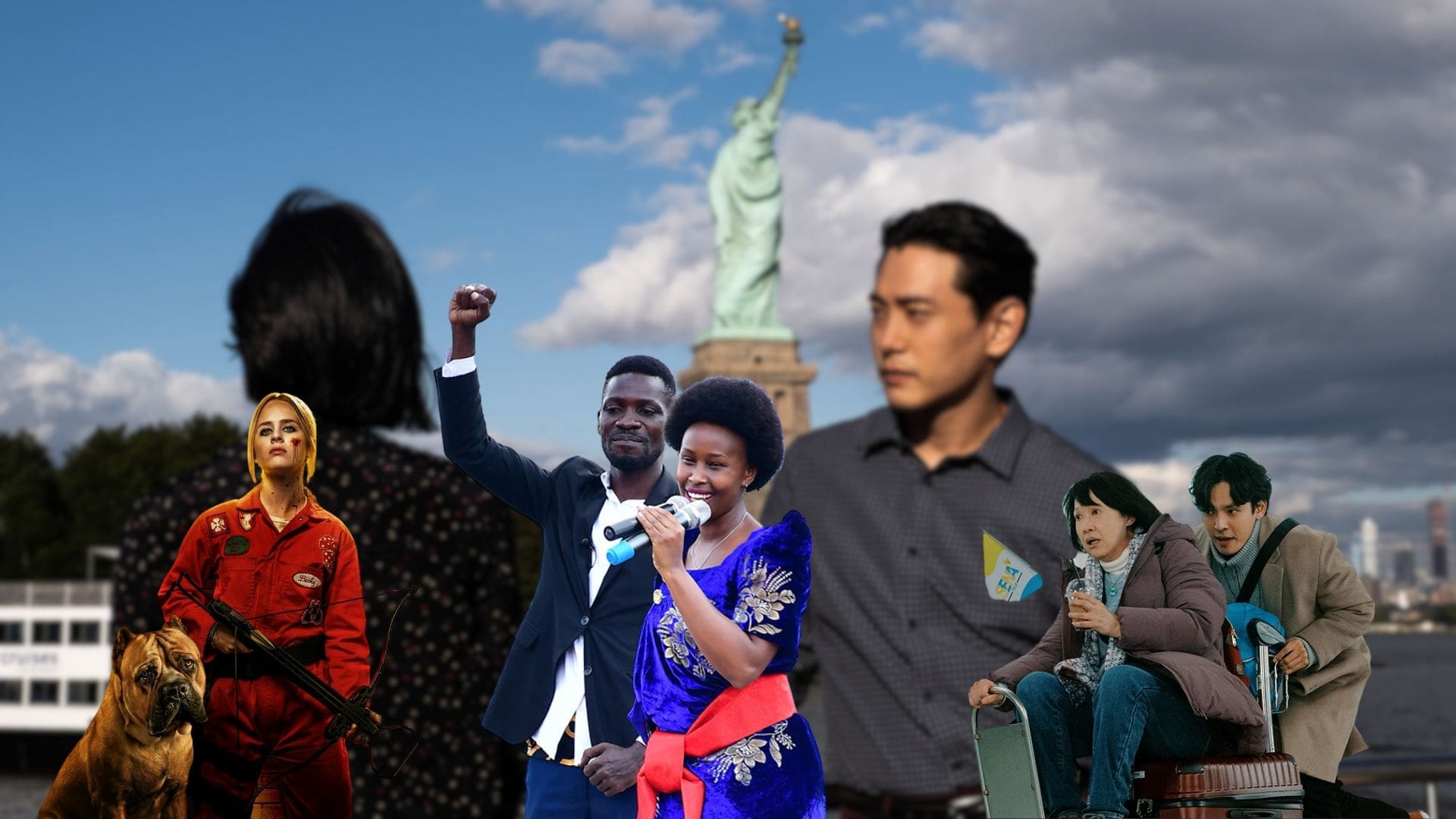
SFF – Love Road, Past Lives, The Wrath Of Becky, Ajoomma & Bobi Wine: The People’s President


Hosted by
KT & Oti
Show Notes
We round off our SFF coverage with Love Road, Past Lives, The Wrath Of Becky, Ajoomma & Bobi Wine: The People’s President.
Episode Details
- Duration
- 0:00
- Released
- July 9, 2023
- Category
- Episode
- Hosts


Transcript
Transcript (5,170 words)
Full transcript of SFF – Love Road, Past Lives, The Wrath Of Becky, Ajoomma & Bobi Wine: The People’s President.
KT: It's another week in the For Your Reference household. It's another half of the Sydney Film Festival coverage and we are wrapping it up, Oti. Get it right. Get it tight. Let's get on with the show. Hey, hey, friends and lovers. Welcome back to the For Your Reference podcast. You got your host, KT.
Oti: And Oti.
KT: We have on the docket today, closing off our first coverage for a major film festival in Sydney Film Festival, Love Road, Past Lives, The Wrath of Becky, Ajoomma, as well as Bobi Wine: The People's President.
KT: We were in the motherland in the first half and it definitely gave us much fire.
KT: So I guess before we heat it on up, let's stay in this country. so this is a film that I watched in the lead up to the interview with Ulysses Oliver, but you also did the interview as well. So feel free to chime in my love. Um, this is Love Road. Ulysses also produced Tennessine, which we talked about in the first half of our Sydney Film Festival coverage, friends and lovers. they're definitely different, but they both kind of tackle, I guess, sort of romantic relationships. And this one's a bit more toxic than the other. It was an interesting film, I think it kind of sits in the sort of trend that we're seeing now of the Marriage Stories, of the Malcolm and Marie's, where at least for me in particular, sitting there watching this couple fight and being like, why the fuck are you guys together? Like, was there any sort of semblance of love?
KT: Like, I know things can probably, you know, and maybe even understandably so, sour and get toxic by the end of it, but it's like, you're all one upping each other, and what's the fucking point?
Oti: Yeah, wow.
KT: I think for me personally, you know, there was a theme of grief, um, that was peppered throughout the film. I kind of latched onto that a little bit more, only because, you know, we do love Al Green, but some people don't need to stay together. but I think in way of like Australian filmmaking, getting an idea of the expanse of aerial shots and I guess how that, links to the dissonance of a couple of a dynamic of, I guess, the shifting and morphing of the individual and the couple as you live and breathe the life of the relationship, I think was quite interesting, but yeah.
KT: Like again, some people don't need to be staying together is all I'm saying.
Oti: Of the point, man?
KT: yeah, exactly. which I think kind of comes into the next film. Um, again, this isn't, this isn't necessarily to the level of, I guess, umbrage and conflict, but it does talk about, couples. So this is Past Lives. this is a film that I think, you know, unless Talk to Me is going to be the A24 darling, you know, people have been keeping their eyes on Past Lives for a while. and it is very exciting. If it's not already in Australian cinemas, it will be soon. first directorial debut, I believe from Celine Song. You know, what's really interesting about this and, you know, while we're here, shout outs, it's always nice to talk shit on the internet and the grams. Uh, but it's also nice to meet face to face as well.
KT: I had the opportunity of having lunch with Nick and Peter, who, uh, you know, Bonafide critics in their own, you know, demand as well as publications and that sort of thing. I also shout out to Billy. Cause I also met Billy, on that day as well. And it was interesting because, you know, I, I think I might've said this was Squid Game. How like you can't trick me with the sort of K wave and making it look great and then you can't trick me into thinking that something's good if I don't necessarily feel a particular way. I don't necessarily think that's what happened in Past Lives but I would say I can understand why people love this film.
KT: With all of their Letterboxd, I guess, as long as we have it hashtag Film Twitter feelings, but I definitely had some qualms, in regards to Past Lives in this format. I'm not going to spoil anything, but there are a couple of. Themes and things that I want to talk about, in regards to Past Lives. I guess for those that aren't aware of the premise of the film, it's two young kids in Korea, I think they might've been like 10, 12 years old. And then the girl's family moves to the U S or to Canada, but essentially they move away from Korea. and the whole film is set from. I guess sort of the interconnectedness of what could have been, what they do have and what they can potentially sort of rekindle. I think that in and of itself can be quite interesting.
KT: And I think even just going along that sort of format for a film is always quite interesting. But, I don't know, Oti, you know, when you watch things and the protagonist or the core sort of, subject is about writing. There were moments in this film where, you know, a character would outrightly pat themselves on the back on like a certain particular sort of dialogue or writing and it's like, well, duh, you wrote it. So
Oti: Like,
KT: like, if the character is saying the writing is good, that's, that's kind of you doing a little mini jerk off. And I don't know, like maybe for those that are writers, you know, you get a fellow sort of kick, coming out of that. But for me, I'm just like, really my guy.
Oti: Oh, did it, was it so distinctive that it took you off, enjoying the movie? Or is it just bits of points where you noticed, oh, this arcs
KT: I think I had some other irks, some other qualms, so it wasn't necessarily my foundation of my qualms, but it was just like, come on guy, non gendered guy, but I'm like, come on guy. Also, uh, in regards to the film, when I talk about particular sort of characters, so you have these two young Korean, you know, uh, a little girl and a little boy, and then they grow up and you see them, I think like in the early sort of twenties. And then you jump forward in time where maybe they're in their late thirties and they're in their. 40s. So you have three very distinct sort of time periods that you're moving through. and it, it might even be in the trailer, but I won't go into too much detail in case you consider this a spoiler. Um, but there is a white character that is the love interest for one of them.
Oti: Oh, what a spoiler!
KT: Yeah, because interracial loving is a spoiler, right Oti? That's why I spoil all over you if you're nasty.
KT: But the reason why I say that, that white character is the writer. you know, there are other writers in this, but the reason why I'm talking about him specifically, he's like, Oh, isn't this really interesting? thing. Your first one true love is coming back. And it's like, bruh, you're the one that's being cucked. Why are you, why? And I think he said, he said something to the illusion of, I wish I could understand the language in which you dream. And I'm like, Oh brother, you thought you were saying. Something, you know, I don't know. Those moments were a bit cringe and it's like, I don't know. Cause I, you know, I'm 10 toes down looking at the screen. So you don't need to tell me you're white, sir. I know you don't need to say that potentially you're ruining the first true love. I know
Oti: Wow. I
KT: can see it. You don't need to point it out. But I guess also another qualm that I had, in this film is, you know, I kind of, you know, talking about Love Road, or Malcolm and Marie, or Marriage Story, there's a lot of like, I'm shouting at you, we needed to communicate, but I'm just going to be bitter until it all falls apart, you know what I mean? That's kind of like the dynamic that we're seeing, honestly, for a lot of straight romance sort of films, right? Yeah. And this film is kind of the opposite of that. They're not shouting, like that white character, for example. He's not shouting, but just because you're not shouting doesn't mean you're not processing what you need to process.
KT: You're seeing your life change before your eyes and be like, Ooh, this will make a great screenplay, really? I don't know, maybe, maybe I shouldn't distill what I believe real world experiences are into this one character, but I just found it very interesting that all of the characters did it like, I guess the point is it's okay to be frustrated and it's okay to be mad about, I guess, you know, whether it's, far fetched or whether it's grounded expectations of what a relationship should be.
Oti: Oh, I agree with that.
KT: Like, you know, Oti said when we were covering Free Money that anger does nothing, but it's still an emotion.
Oti: It is an emotion and people are fully, within themselves to express it in whatever way they feel.
KT: people or someone specifically.
Oti: Just the way you're expressing your emotion about this movie right now, you know?
KT: important, You know, and if we're establishing what the world are, if we're establishing what the rules are, if we're grounded in reality and we're not, you know, flying around on dragons, even though hashtag dragons have feelings too, like I need you to move in ways that make sense.
Oti: Hmm. Yeah. I know we've watched a few things recently where we thought the protagonist didn't move based off, you know,
KT: So just to understand it, it's like you might get, or even then, like, if there is a scenario and because we're talking about relationships, like if there's something going on in your relationship that you can't control, and it doesn't matter how you feel, that's what the outcome is, that's fine, but you can still feel a way about it.
Oti: Oh,
KT: Like they were just to understanding and they weren't expressing, any sort of emotion. So, sorry, it was dream in a language you dream in a language. I don't understand, but still,
Oti: So without any sort of spoiler, was that character development at the end of it?
KT: I wouldn't necessarily say so. but if we, if we operate in, because movie then I
Oti: I
KT: and they talked about the concept of in-yun, I think it was called How you are intrinsically linked. No, like, you know, kind of like a soulmate, sort of, like a soulmate sort of concept. And of course the white guy is like, am I your, your ass? Ha ha ha! Go away! Like, I just, it was just very interesting, but I wanna, I wanna end on something positive that I guess no one will really talk about or mention, and if they do, cookies to you. Jojo T. Gibbs is in this.
Oti: Oh, really?
KT: Yeah, very quickly, but our Hattie from Twenties, and she, she's everywhere, so it's great to see her and, I guess that's my way to smile at the end of this. Again, it wasn't a terrible film. I just wish the characters moved in a way that made sense. In a, in a world where audiences are understandable, that emotions will still be felt even if the outcome is not in their favor.
Oti: Oh, yeah.
KT: Well, let's move on to something we've both watched. Um, this was really interesting. It was one of the latest sort of screening sessions as well. but I guess we didn't even know that this was a sequel.
Oti: Yeah. I just saw the poster and thought it looked really cool. And I thought it would be a good idea for us to go in and watch it.
KT: So it's on you. So this is an indie horror flick and it's called The Wrath of Becky.
Oti: Yeah, well, here's the thing.
KT: Here's the thing. We haven't even started and you're, here's the thing.
Oti: Just because we didn't watch the first one, I knew there was a Becky movie. But I felt, I wasn't bothered to watch it for this.
Oti: No, there's, there's, there's... If I
Oti: to watch it does become inconsequential because they do a really comprehensive recap within the first 10 minutes. So, that's something that plays to its strengths because then we get... The tone is set on what to expect with the movie and what we need to expect from the characters as well. Uh, from a storytelling point of view, I thought it held my interest sort of faintly. I felt that there were characters or there were moments within the movie that I did want to see how it progressed. And they left enough crumbs for me to want to follow the trail.
KT: Okay, Hansel, Oti, Gretel.
Oti: but that's only to a point because I felt like there's a lot of other things within the movie that were happening that distracted me from that, that made it seem a bit E too campy, or it felt like they're trying to be something, they're trying to be artsy just for artsy sake.
KT: I would say more the latter because I think we're quite open to camp.
Oti: I don't even think it was camp like that, like there's,
KT: Ridiculous.
Oti: there's levels of campiness that, you know, the, be it intentional, you know, where like, uh, we just covered Mad Heidi, that was campiness to the max.
KT: It was very effective.
Oti: With this, I felt like they felt the need to add extra beat of campiness in areas where they felt they would get a reaction and it fell flat most often than not.
KT: Would we say it fell flat or it fell flat for us? Because it was a very receptive
Oti: True, it was a very receptive audience, but I don't know. And this is the thing, right? In a theater, when I'm watching something and there's this interactivity with the audience where they Laugh at everything. They gasp at everything. They react to every jump scare. It sort of takes me out as well, you know, because so I'm not sure how much of that is to blame as well because it does play a part in my total enjoyment of a movie. Where I feel like if moments, if every silly moment or every jump scare deserves a reaction from the audience, then it's sort of the laugh track, you know?
KT: every silly moment or every jump scare deserves a reaction from the screen, but I feel like this film benefits from an audience, but that's only if your base foundation is good in the first place. Right? So I think, I'm picking up what you're putting down, but I think the biggest qualm that I have with, Wrath of Becky is the pretension. It's the pretentiousness in this film. you know, we, we talk a lot about horror and how you can, you know, link social commentary and where it works. Obviously, we're talking about Get Out. Obviously, we're talking about. You know, even Hereditary to a certain extent. We're even talking about Seed of Chucky with Glen Glenda, right? So it can absolutely work. I'm not saying that it doesn't work, but when you, I don't know, like, you know, with, without spoiling it too much, I will say, I guess how it was introduced to the audience.
KT: You know, Mad Heidi is a young girl and her parents died. and it has sort of linkages with the sort of people that you would think would storm the Capitol on January 6th. Right. So I'm not saying you can't have a revenge story with social commentary, but what I am saying is it didn't work here.
Oti: Yeah, and you know what I'd compare this with? the Betty Gilpin movie, The Hunt, where they wanted to sort of talk about sociopolitical stuff that's happening and you'd see it in the movie. Regardless of what the director said afterwards, but with this, they go through the same route, but I felt like it felt a bit too preachy at times as well. Yeah. And I'm like, I, I don't judge or I, we can have feelings for whatever political side you want to lean towards, but it felt, it felt too much.
KT: Well, even, even when the film was introed, it's like, don't worry, the bad guys are bad. And it's like, okay, fine. Now what? If that's the case, you stay on your sweaty side of the internet and I'll stay on my dead side of the internet. You know what I mean? Like, you know, The Good Fight is a great example of, you know, teasing out the sort of, political beliefs to, I guess, the people that you may love. but you're right. It was very much let's bring them here so we can hate them. So it's okay to go through those gnarly, gory sort of kill counts.
KT: And it's like, I feel like we could have done that even without that attempt at social commentary.
Oti: Yeah, yeah, because they could have just been bad guys for bad guys sake and that's cool.
Oti: into all this political nonsense that's happening.
KT: Avengement, our Scott Adkins, our pre chonky boy.
Oti: Yeah, yeah.
KT: Like it can absolutely work. I don't know. Like, yeah, I think because I wasn't latched on when the audience was loving it, I'm like, oh man,
Oti: It did have some really exciting scenes though. at least it or sequences that made me, you know, pack up a bit and that's to, to its credit.
KT: Nice. let's move into Ajoomma. So I had the opportunity to interview Shuming He and, it was really cool. It was really cool to learn more about the process, but specifically in regards. So this film, this is a very, very sweet, heartwarming joy, film about a Singaporean widower, who was obsessed with K dramas, which very relatable.
KT: What?
Oti: Wow.
KT: Oh, we don't need subtitles for my nonsense, friends and lovers. But, you know, you talked about Red, White & Brass being such, like, it was just so much joy. You know what I mean? We love to be able to dissect film on all of the layers. And sometimes you, you get more of the depth in, I guess, grittier sort of, you know, Like more sort of dark, morbid sort of themes, but sometimes it's nice to watch a film that's just fun and happy. There were definitely some themes that were explored through this film that were hard to sort of confront. Grief was definitely at the forefront of that. you know, we also have the fraying and the attempt at mending a relationship between a son and mother. but there's so many great moments that I really enjoyed in this film.
KT: And, you know, Oti, whenever you, like, whenever you walk into a film, especially if you know nothing about it, you're really just putting the trust into those that made the film, just whispering, please don't hurt me, baby. I just want to feel something. I just want to feel good. and that's what Ajoomma absolutely was. There were definitely some sort of like hijinks that went on in the film. but it was so nice. It was like being wrapped in a hug. and it was really cool as well, to talk about. The different sort of languages. There was like Singaporean, Chinese, Chinese, characters as well as Korean characters.
KT: So it was a really cool melding, of cultures and cultural misunderstandings, and I guess, cultural joy.
Oti: Yeah, that sounds good. I think a lot of the time we get the sort of movies where they balance the tonality between well, grief is somber and hard to talk about, but it's how you balance and need to weave it with something lighter and how, you know, it's the push and pull sort of dynamic and how it's all done. And I think based off the interview, you could tell that a lot of thought and, process was put into it as well.
KT: nice. Uh, well, let's end our Sydney Film Festival coverage with a documentary film called Bobi Wine: The People's President. So this is a documentary film set in Uganda. You know, what was the other one that we watched recently? Shabalala, uh, from the South African Film Festival. so this is another instance of a musician, a figure, in African music. And also, you know, In general, I, I guess let's, let's get your thoughts and feelings. This talks about the sort of music career that Bobi Wine had slash has, and I guess moving into his path into politics.
Oti: Yeah, it was interesting because I remember, uh, you know, back then, uh, listening to some of his music. He was definitely popular. And when I heard that he was getting into politics, I was just laughing it off because, you know, a lot of people have attempted
KT: Yeah,
Oti: yeah, it's a thing that people try and it rarely succeeds. But
Oti: Always. It's always something related to the people. and I think that's what he really wanted to connect with his fans and, you know, everyone he's used to or where he grew up. So there was always that connection and it was very interesting seeing how he campaigned and how he Rallied people, not only to want more, but to demand more from their political leaders,
KT: Yes.
Oti: you know, from poverty to corruption, these are things that they can easily be dealt with, you know, even things like just having a democratic elected leader, you know, so it's, it's, there's all these issues that are cyclical and you'd have to find people like. Bobi Wine who wants to break that cycle, you know, in as much as it's, it's dangerous for them personally, in as much as it's, it's frustrating. You just have to continue, you know, each effort and that's what really revolutions are based off. You know, it's never just one moment. usually it's a, an amalgamation of a lot of things that happen.
Oti: And finally we'll get to a straw that will break the back and hopefully just transform the region.
KT: Cause they were talking about the leader at the time.
Oti: Museveni.
KT: Yeah. And, Bobi talked about how he looked up to him in the way that he brought democracy to Uganda and how, you know, through whatever sort of, political career, it's kind of becoming a regression in regards to ideals or, you know, giving back to, and having the best interests of the people at heart.
Oti: Yeah, because, you know, he, he kept, and the weird thing is, Museveni himself was a revolutionary as well. So he came into power and he's just not left, you know, people grown men, you know, uh, all they've ever known is this one president. And he keeps on changing the goalposts every time, you know, he reached his tenure to, like, 70,
KT: Yeah,
Oti: so there's always this shifting of goalposts and he just wants to be in power until he probably dies. And when that happens is probably take it to someone else in the family. So it's, it's a weird process. It's a weird situation, but it's up to the people to stand up. And I think we saw Bobi Wine do that. And, and this is the thing, because in the news, we'd see, we'd get all these stories about how he was arrested, how he, you know, And people will protest outside the prison, release Bobi Wine and all that.
Oti: He'll get stories that he's, he's exiled in, in America, but watching the behind the scenes of that is quite brutal. cause you, you'd assume, of course they're having a tough time, but seeing it and what it does to the family, what it does to his kids and especially the wife. It takes a lot. It takes a lot. I think that was just so refreshing to be able to see that, that other side.
KT: Yeah, and I think even the way that, you know, I guess in this sort of sense, the media was kind of used to his advantage because it is that sort of, it's that ongoing conversation of, you know, people should be able to, you know, live out self determination. They should be able to handle their own affairs. However, sometimes there are instances where, you know, outside sort of powers and influencers need to step in. And that's kind of what we saw with Bobi Wine. Right.
KT: Was it CNN? So he had to go like to the U S and they had like press conferences, and this sort of thing. And was 70 was, wasn't he talking about like what he thought about this Western sort of media?
Oti: Yeah. Like he's... He doesn't really give a shit. he, he, he will pass whatever bill he needs to pass. He even blamed gay people, you know, for, for the uprising and all the problems that caused deaths of tens of people, you know, so you could just see where he's at. He doesn't care. And that's just his vibe.
KT: Was it this documentary where you were saying they brought the gayness to this? Sorry. It's, it's only funny because it's so fucking ridiculous, but yeah, I think it was in this documentary film when they had it, but, in this documentary, like during the filming of this documentary, it talks about, you know, upholding the constitution and that sort of thing until he got close to the age of what was written in the constitution, which I think was 70 or 75. And it was so like, it was so uplifting. And I was so happy to see Bobi Wine campaigning with the other, sort of elected officials. And then you see them going to vote for the constitution and I don't know, maybe it's like, yes, I know it's a documentary, but I thought because documentary movie documentary film, we're going to have like a triumphant moment where they all stand together against corruption or otherwise to
KT: Let me have this one second. You know, to, to uphold the constitution because it's, you know, like outside of his actual life, but the life of his career is essentially met its natural end.
Oti: Yeah. Uh, I wish documentaries, in real life followed that trajectory. Well, we could just drop an X mark in and, you know, shift the plot.
KT: But did you know that's what was going to happen because obviously the way that they cut it It sounded like there was hope like there were some yeses some no's like did you know?
Oti: Yeah, I knew it's Uganda. It's it's not going to change that easily. And if it did, everyone would have known about it.
KT: Interesting. Something also interesting you were saying, during the film, I think, I think it was in the lead up to campaigning or even even him qualifying to get enough votes to be able to run. Right. It was somewhere along there. Where mysteriously the, like access to like the internet broadcasting, television, all of this sort of stuff, just mysteriously, you know, coincidentally all became unavailable and there was a blackout. Yeah. And what did you say to me?
Oti: Of course, that's how it's done. You know, you, you suppress the spread of information and keep people in the dark so they don't know what's happening. And then once you've done everything you needed, uh, behind closed doors, then turn everything back on and it's sorted.
KT: Hmm. I guess this is more just, for my interest in your schooling in Kenya. Did you, was there much sort of, whether it was history or whether it was just general sort of education, Was for example?
Oti: Yeah, it'll be something you'd watch on the news. you'd get to learn about leaders from the past. But yeah, it's something that you always keep up to date on the news because that's just what we did in our household,
Oti: It does, because it's quite similar to what, Bobi Wine is, and he does have a documentary and he has written a book, Unbounded, which is sort of interesting, you know, you always get to, you always get to hear about the, the highlights of, The moments where people are either arrested or where they protest or where they run a rally, but the behind the scenes of all that and what transpires is quite interesting. and sad. and I think if a lot of us watched that, then maybe we could start having a open conversation on how things can change.
KT: Yeah. the reason why I referenced Boni's documentary is because I guess we also keep in mind that documentaries are open ended and especially when we're talking about whether it's Boni, whether it's Bobi, they're literally fighting against a system, you know what I mean? It isn't just a face or a concept or a sort of political sort of ideal. It's inherently not servicing the people. And they are from the people. So, it's definitely an interesting sort of parallel of these sort of two documentaries. But, the reason why I referenced the two of them is because, you know, as a viewer, especially because it's so fucking dark and sad, it's like you want some sort of like, you want to hold on to something, but then you realize this is a lifelong and many lifelong battles.
Oti: Yeah, it wouldn't stop with, Bobi, but at least he's, he's spreading the word and he's getting people to demand for their rights.
KT: Yeah, absolutely. Ooh, hoo, hoo. the first half we ended really, well, I ended really mad about NGOs. This time we ended really sad about political standings. Which do you prefer, Oti?
Oti: Neither.
KT: Oh, well, I guess we've got The Wrath of Oti, am I right?
Oti: On our way.
KT: Uh, thank you, friends and lovers for joining us, wrapping up, our coverage for the Sydney Film Festival. if you'd like to, I guess, you know, talk to us about anything we've covered or just talk in general on Twitter and Instagram, we're at ForYourRefPod.
Oti: Right. That's an email at hello@fyrpodcast.com.
KT: We're also on all of the podcasts, if you'd like to leave a rating or review, and we'll see you guys next week.
Oti: Bye.
Related on FYR
Discussion
Loading comments...