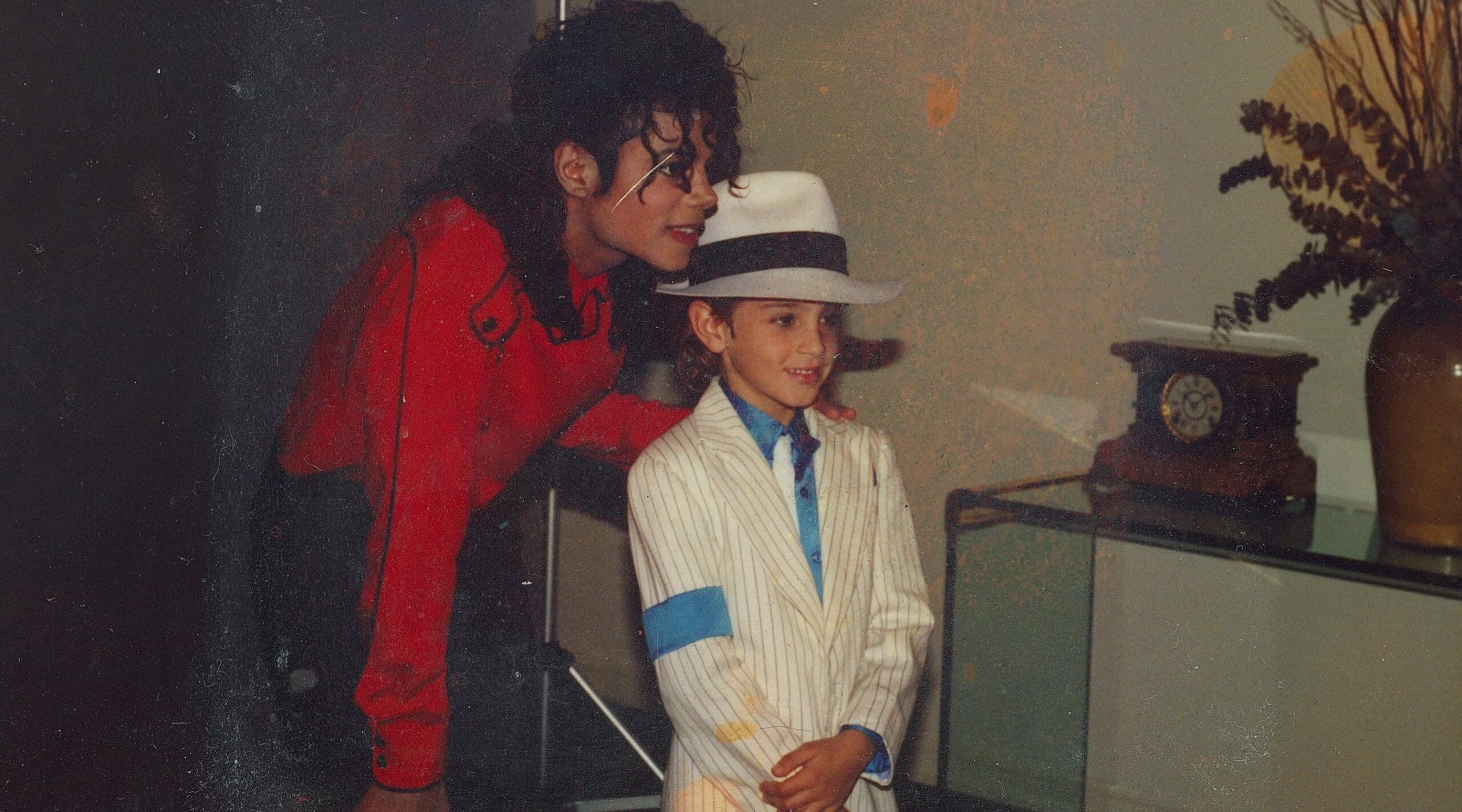
Leaving Neverland – Panning Michael’s ‘Jolly’ life


Hosted by
KT & Oti
Show Notes
In this week’s bonus episode, we talk about HBO’s docuseries Leaving Neverland. Join us as we sift through complicated topics covering grooming, predatory behaviour and treating celebrities beyond reproach.
Summary
We’ve listened, danced and enjoyed Michael Jackson’s music growing up. We idolised him and we brushed aside any criticisms directed at him as merely being a slander campaign.
Wade Robson and James Safechuck give an account of their time with Michael Jackson and what transpired behind the closed doors of Neverland. Director, Dan Reed helps them tell their story in a safe space without distractions that would be in the form of the Jackon family while still asking questions that us as the viewers, might be screaming at the TV.
They detail graphic accounts, that drove us too tears, on how Michael Jackson touched and molested them whilst their parents were in another room under the same roof. KT sights while wondering what the mothers were doing while this was happening. Surely, you can tell if something has happened to your child?! That’s what we’d all love to believe but the sad truth is, that’s not the case more often than not.
Harsh realities
When do you choose to believe a sexual assault victim? Isn’t it meant to be innocent till proven guilty? The court of public opinion has spoken and has convicted you before you get your day in court. Whilst this may be true in some cases, the rule of thumb that both KT and I follow is to;
Always believe the sexual assault victim, unless proven otherwise.
KT – PODCAST HOST
But the world cannot bend to our will nor would we want to impose it. The sad truth is, Michael Jackson is bigger than these accusations. Did we need a four hour documentary to see that his behaviour was far from normal, dare I say predatory, albeit in retrospect?!
I stopped listening to Michael Jackson since I was in my early prepubescent years. As an African-born kid, I could’t understand why someone so many people looked up to decided his color of his skin was not ‘beautiful’ enough. If he can be made to feel this way, what chance did I have.
I decided, rightly so, to cut ties. And when the rumors surfaced, I wasn’t surprised nor bothered enough to care.
Realisations
Wade says he couldn’t comprehend what had happened to him until he had a child. That was his lightbulb moment, when everything just clicked. He couldn’t picture himself hurting his son the way Michael hurt him. That is not how you show love.
At this point in the documentary, KT and I believed the emotional accounts of both Wade and James… [dont know how to finish]
For your reference
This week’s “reference for Leaving Neverland is:
KT suggest’s Spotlight keeping with the theme of sexual abuse that get’s covered up and ignored.
Oti suggest’s watching Lifetime’s Surviving R.Kelly. Undoubtedly this week’s reference are on the depressing side, but some topics do need to be discussed and the stigma that keeps victims quite and afraid to speak out, crushed.
Where to watch
USA – https://www.hbo.com/documentaries/leaving-neverland
Australia – https://tenplay.com.au/channel-ten/leaving-neverland
After Neverland (Oprah Winfrey’s interview with James, Wade and Dan Reed) – http://www.oprah.com/app/oprah-winfrey-presents-after-neverland.html
Referenced


Episode Details
- Duration
- 0:00
- Released
- March 12, 2019
- Category
- Episode
- Hosts


Transcript
Transcript (9,735 words)
Full transcript of Leaving Neverland – Panning Michael’s ‘Jolly’ life.
KT: Hello, and welcome to For Your Reference podcast where we talk all things movies, TV shows, and also documentaries. Today, we'll be talking about the two part series called Leaving Neverland that came out this week from HBO. If you haven't heard much about it, it essentially centers the lives of two men recounting their childhood with Michael Jackson and the abuse that they endured. As you can imagine, the subject matter for today will be quite heavy, so you probably won't get a lot of sort of banter out of us today.
KT: But there were quite a few things that came up during the documentary, and, you know, there are a few things that we wanted to unpack today and the experiences that we had. So before even getting started, I guess it would just be good to set the scene before we even talk about Leaving Neverland. For a lot of people, Michael Jackson was, and maybe to others, still is an icon. Michael Jackson had so much reach, and his music meant so much more than music that even, you know, people in the most remote areas
KT: knew who Michael Jackson was or at least knew his songs. So I guess just to to start us off, I just wanted to cover, you know, what our first impressions or, you know, the first time we heard Michael Jackson and, you know, was was it a part of our childhood at all?
Oti: Yeah. So growing up in the early nineties, Michael Jackson was everywhere. Like, you can't escape him. He was broadcast in every radio station. He had cassette tapes of Michael Jackson, LP albums of Michael Jackson. He pretty much everywhere, and you couldn't really escape him. And I remember growing up and seeing or reading that he had decided to change, alter his skin color. And Yeah. I feel like that's where I drew the line with him personally because growing up as an insecure black kid, and here you have the biggest he was pretty much the biggest
Oti: Yeah. Celebrity that could be. He even transcended that status. He was an icon. And for him to try and change and to so that he could appear white, to me, it just didn't rub me the right way. And I just didn't indulge myself in any Michael Jackson music afterwards. I Yeah. Just stayed away. And when the rumors about him starting to surfaced of him abusing kids, I was really didn't even pay much attention to it, but I was like, if he I was like, nah. Doesn't really register with me. Like, don't really care. So
Oti: my view was quite to the extreme and not a lot of people quite to the contrary, people still loved Michael Jackson. He still people still regarded him as black. And even till now, like, you have a a whole lot of hordes of black communities rallying against Leaving Neverland, the documentary Mhmm. Trying to discredit Jimmy and Wade.
KT: But what what was the general sort of feel in Kenya? Was Michael a very big presence? Was he being played a lot on the radio?
Oti: Oh, definitely. He was being played a lot. He was a great
Oti: artist, and his songs were quite popular. And you could not escape a day unless you really, really tried to go a day without listening to a Michael Jackson song. Yeah. It was I think it was pretty much just a given that everyone is a Michael Jackson fan. Yeah. Like, you'd have to you you won't be asking someone, oh, have you heard of Michael Jackson's song? Like, it's a standard. If it's out there, you've you you assume that everybody's listened to it. Yeah.
KT: Yeah. Exactly.
Oti: And what about you?
KT: So growing up, I was born in the early nineties. So Michael Jackson was already you know, he was already in his prime, and he had quite a few hits out at the time that I was growing up. But there was always Michael Jackson playing, especially at family gatherings. You know, it's Michael Jackson, UB40, Bob Marley. That's pretty much the mix that we had growing up. So it was always not not so much in the forefront, but it was an accepted backdrop for my childhood. And we absolutely loved Michael Jackson because of
KT: I guess it's you know, without being too on the nose, it is like this fantasy land, like Neverland. You for for whatever struggles and forever whatever worries you had, you know, listening to Michael Jackson's music transcended race, and it transcended, you know, not not not the super heavy shit, but it helped you get through stuff that you're dealing with. You know, my sister was obsessed with Michael Jackson. She really loved the way that he danced and the whole sort of fanfare. So every time Michael Jackson would play at a family gathering,
KT: she would be in the middle of, you know, the whole huddle doing all of the Thriller moves and all that sort of thing. So and, again, that was a normal thing. Like, Michael Jackson was just an accepted part of the family life childhood experience. But something that I thought was quite interesting that you brought up is even before, you know, even comprehending the child molestation sort of accusations, you were pretty much done with him before that.
Oti: Yeah. Like, I didn't understand why he'd make me feel less of a person or less of a of a of a human being. Yeah. Just because I'm of a darker skin, it made me really come to the forefront, oh, I'm black. Like, I'm different. Yeah. And I just couldn't buy into the idea that this is okay for anyone to of that magnitude to have such an effect on me as a young boy.
KT: Like Yeah. Especially because his Black or White song was while he was transitioning to become white. Right? Yeah. And Is that is that irony? Did I learn what irony means now?
Oti: You
Oti: have learned irony. Okay. Because you have this music video. It's black. It's white. You know? And you'd see an array of of every different type of person. Except you as you are. Black or White. Yeah. And and he he he was clearly white now, and I I didn't know how to take that. Yeah. Especially coming from a really, really religious family and where we taught about the Bible and growing up reading the Bible and how they depicted black people in it and looking at someone else changing
Oti: their skin color and their appearance, I was like, oh, wow. Like, is this is this wrong? Is this a sin? Like, it it just hit me the wrong way or the right way. I don't know. Like, whatever.
KT: Remember in my in my Mormon Bible upbringing,
KT: people that were evil turned black and people that were righteous turned white.
Oti: Yeah. And these are the kind of questions that are kind of swept under the rug. They're not really meant to try and understand what it means by that and you can't really ask the church or whoever it is because it's seen as a taboo. Yeah. Like, don't question, you just take it as it is and then forget it. You know, you just focus on bits and parts of the Bible where it says, oh, all's fine and well. Yeah. But in the controversial bits where it might seem as if they are sort of accepting
Oti: things like slavery or not really under saying that black people are cast from the Cain generation. Like, it's just
KT: We definitely need to have a separate episode on that.
Oti: And it's it's quite a lot of things that just didn't sit well with me, and then Michael Jackson changing. Was just
KT: But but even even talking about Michael Jackson, even without talking about the
KT: accusations about, you know, touching kids, I think because even that, like and then there were rumors about a stage falling on him and he needed to get skin grafting. And whatever the reason was, he continuously got lighter and lighter. So I really don't and it it's not a skin condition because the rest of his family stayed the way that they were when they were born. I know. But just coming back to that, it's it's that whole sort of debate as us as a society continuously putting celebrities on a pedestal where
KT: they are, you know, without question. And, you know, they kind of live above the law, and they live about any sort of ridicule because, you know, it was weird. For whatever circumstance that he suddenly became white, it was weird, but it was like, you know what? It's Michael. He's he's helping people through his music. He's healing people through his music. Let's just leave him alone. And that happened a lot throughout Michael's life and through a lot of other celebrities as well. Yeah. And You kind of just you kinda just brush stuff off because
KT: they're famous.
Oti: And the documentary about, what was it, Living with Michael? Yeah. In 2003. It tried to explain the reasons as to why it all happened, and it it it gave you a psyche as to who Michael Jackson was as a person, and he's upbringing, especially under Joe. And it painted a picture, and you could I could real like, I could understand what he did, you know, why he did what he did.
KT: It was very timely because I think the second trial was maybe 2005. It was very soon around the time of that documentary, and that's exactly right. Because I was born in the early nineties, the only sort of context that I had of Michael Jackson was his music, and that was it. Right? It's and then this 2003 Living with Michael Jackson documentary came out, and I was in primary school, like, moving into high school. And it was shocking. Right? Because this was the day before
KT: Internet becoming such an integral part of our lives. So we really did get our information from TV. And I was quite young. Like, even my parents were like, you okay. Watch bits of this, but you you shouldn't be watching all of this. Because it was essentially besmirching Michael Jackson, deservedly so, I would say, now. But, you know, it was talking about Michael Jackson, but then it was also trying to humanize him as well. And especially watching Leaving Neverland, a lot of what was said in that documentary and even just throughout,
KT: all of Michael Jackson's friends and his family would be like, he didn't have a childhood. And the more that we watched Leaving Neverland, that phrase started to crawl on my like, under my skin.
Oti: Yeah. And it doesn't make sense when someone has done all these things and their justification is he didn't have a childhood, so it's okay for him to sleep with children. Because he's rich and because he's famous and because he's Michael Jackson. Take away the the the money, the fact that he's, you know, this huge celebrity, take away all that. Yep. You would never allow a 30 year old man No way. To sleep with children Yep. In whatever capacity.
KT: It's just not right. Yep. So, yeah, so let's let's talk about that in a moment. So we've talked about, you know, what it was like growing up and what we know Michael Jackson for. And then you have that 2003 documentary. That was also to help, I guess, explain away all of Michael Jackson's weird behavior or Wacko Jacko as a lot of media tabloids called it. So you have this stage of, like, you've enjoyed Michael Jackson. Why I enjoyed Michael Jackson's music for so long in my younger years, and then we see this documentary
KT: and then him having Blanket over the balcony and doing all of these weird, ridiculous things, eventually leading up to his death Yeah. And his legacy. And I don't think even at that time, there was a big shift in how people felt about Michael Jackson. You know, curiously, there's you know, even with R. Kelly's recent documentary, you know, people have kind of really known for a while now. And, you know, there's that Boondocks episode of R. Kelly as well where you kind of you you you accept it, but I think Michael was kind of
KT: he kinda superseded normal human life. Right? So he was never going to be questioned or at least he was never going to be removed from people's day to day lives, in quotes, just because there are allegations of child molestation here and there. You know what I mean? Yeah. So a lot a lot has happened. And I guess because of Michael Jackson's legacy, even through his own like, even while he was still alive, it allowed it allowed people to just continue to enjoy and listen to Michael Jackson's music guilt free without any sort of regard
KT: for the victims. Okay. So now it's time to dive into Leaving Neverland. There are spoilers, but, you know, if you've come to this podcast, I'm sure you've at least done some reading in regards to the documentary. So before we dive into it, I just wanted to bring up a quote from James Safechuck, which is one of the men that is covered in this documentary. And it's something that he said at the Sundance Festival while they were screening Leaving Neverland. Forgiveness isn't a line that you cross. It is a path that you take.
Oti: That's a walk.
KT: It is. And in that four hours that we got to know James Safechuck as well as that one hour with Oprah, you could really see that he was struggling with this, which, you know, we'll talk about. But for him to be able to say something that's so thoughtful and so self reflective, it it just speaks volumes, really. So James Safechuck first met Michael Jackson at a Pepsi commercial, and I believe he was around 10 years old at the time. Yeah. So that's where James Safechuck first met Michael Jackson.
KT: The other man that Leaving Neverland focuses on is Wade Robson. So Wade Robson, I think he was he was definitely less than seven, maybe five. He was brought up in Australia, super obsessed with Michael Jackson. His mom was very supportive, so they went to pretty much any sort of talent show he could enter himself into. And that eventually led him to a dance competition in order to be able to meet Michael Jackson. But because he wasn't old enough to compete, they offered for him to dance to dance with Michael Jackson
KT: on one of the nights of the concert. So that's how both of these men first met Michael Jackson.
Oti: Yeah. Actually, he was entered into a competition because he was too young. They just gave him an opportunity to dance before the competition kicked off. And he was so good, And they just gave him the they gave him the win. And they said, yeah, you're the winner. You're gonna meet Michael. Listening to Wade in the first part of the documentary, I I have to admit, I found it not that not unbelievable, like, just couldn't connect and I'm probably that's not the reason why they made this documentary in the first place.
Oti: But there was just something in there, maybe I don't know. I couldn't I couldn't put my finger on it. But compared to how James Safechuck, gave his story and gave his account, you could see he was really struggling and battling. And just because from Wade's perspective, it didn't come across as as that doesn't mean that it didn't happen, doesn't mean that anything he said is a lie or he's not affected by this. It's just a perception.
KT: And I think that was that was a great thing about this documentary because all of your sort of preconceived notions about Wade Robson, if if you give this Leaving Neverland documentary a chance, it will, hopefully, will, at least for us, change your opinion or your perceptions on Wade Robson and, you know, his motives or, you know, whether you believe he's telling the truth or not.
Oti: And Because just for the record, I think we need to say that we actually believe Wade and and Jimmy and James. Yeah. Like, I find it completely believable that they were abused by Michael Jackson. And just because someone is a great artist doesn't mean that they can't be bad people.
KT: Well, I by default, I'm always inclined to believe the victim.
Oti: Yeah. And that's a rule of thumb that many people should go with.
KT: Yeah. And sometimes sometimes you get bitten like with Jussie Smollett, but it it doesn't matter. By default, especially with women, but even with children, I'm always inclined to believe the victim or even men, grown men in general. I'm always inclined to believe the victim. And with Leaving Neverland, it was so beautifully made, if you could use beautiful in this context. The way that the documentary was laid out was quite well done. I also appreciated how sobering the the whole experience was. You know, most of the time with these sort of, like, expose type
KT: well, this isn't. But most of the time when you have, like, expose type documentaries, you've got a whole litany of theatrics that goes on. So, you know, for example, in that 2003 Living with Michael Jackson documentary, There was a lot of theatrics of, you know, Michael Jackson's childhood, how he didn't have a childhood, him and Bubbles, the chimp, you know, holding Blanket over the balcony. Like, there were there were lots of, you know, lots of things to keep you engaged and lots of sort of stimuli
KT: in regards to the documentary that they chose to make in 2003. And a lot of documentaries do that as well. They get all different types of light and shade, if you will, in regards to 2003. But what I really appreciated about Leaving Neverland is it was very sobering, and it was very intimate, and it was very personal where you allowed well, Dan Reed allowed Jimmy and also Wade to just be in themselves and just lay it all out and
Oti: To tell the truth.
KT: Be able to give
KT: their truth. And I feel like that's something that's so important. And you can start to see that it was quite healing to them. As a viewer, it was very heavy. Even when we first started watching it, we had to take a few days to watch this documentary because as good as it was, there wasn't any levity, which I'm sure Jimmy and Wade never got to experience for twenty years.
KT: Know? It was something that they had to hold in and they had to keep for so long. And I'm so glad that they were able to tell their story. But, you know, as as a viewer, it it was quite heavy because there wasn't any sort of levity. There there were different tonal shades in the documentary, but in the general sort of theatrics to keep the, you know, stimuli going, Leaving Neverland was more of, a sobering account.
Oti: Yep. And and we've had the criticism that Dan Reed didn't allow for Michael Jackson's family to be on this, and I see no reason why they needed to be there. No. While all this was happening, the family of Michael Jackson were not there. They wouldn't add anything to it rather than saying Michael Jackson was a good person. Yeah. Which means nothing in this in this context. And I'm glad he stuck to his guns and just used Jimmy and Wade's story. So he probably he just gave them a platform to tell their story, and that's
Oti: what was needed. We just needed to hear from them without any distractions what and that's what Leaving Neverland delivers. It's quite sobering, and you would feel that, like KT said, that it took days for us to be able to watch this. Yeah. And and throughout, we were crying with Wade and Jimmy, and it was really hard to take. Some of the descriptions were quite graphic and putting
Oti: yourself in such a situation where you you hear these things and you can only feel sorry for someone who has experienced it, and it was it was really sad. Yeah.
KT: But even filmmaker
KT: Dan Reed was saying, from a journalistic point of view, you're not really gonna gain anything from bringing in the Jackson family. And from what we understand, there was a period of time where Michael Jackson was isolated from his family. And even even the family do admit that he did have and he did sleep with children. And I I don't remember who it was, but in in the documentary, they have an excerpt of a just just a man saying,
KT: you know, he might have just been sleeping with kids in the bed, but I don't believe after ten years, that's all he was doing.
Oti: And
Oti: that's what that's what I don't get. Why put yourself in a situation where you sleep with children? Well, you're a grown ass man. It makes no sense for the people that are around Michael Jackson to allow this, his family members to know what what's going on and to think, oh, this is normal. Michael didn't have a childhood. So he can do whatever the fuck he wants to do.
KT: So let's talk let's talk about this. Let's talk about because, you know, the it it is sad. It it is definitely sad, and it's devastating, the fact that even after ten years, James particularly was still shaken up by this, and this will continue to affect him and also Wade for the rest of their lives. But let's let's talk about, you know, the people that should hold
KT: quite a lot of responsibility and quite a lot of blame. And this in this case, particularly the mothers of James Safechuck and Wade Robson.
Oti: Why do we even stop with that? Like,
Oti: they were looking for the best possible opportunities for their children to grow their careers, to set them on a path where they will be successful in life. And along that path, you also get enticed by things and you get to meet your favorite celebrities. You know? And you get to go to these fancy dinner parties. You get to stay in these fancy hotels and resorts, and and it rubs on you. And and it's also part of Michael just grooming them because the victims aren't just James and Jimmy. Michael Jackson made sure that he created this.
KT: He brought the whole family along for the journey.
Oti: Family along for the journey
Oti: to the point where Wade's mother decides to pack the bags and leave.
KT: Think to go to Colorado or to go continuing to venture, I think, Grand Canyon.
Oti: Yeah. Well, they'll continue like to leave Australia to go and move to
KT: Oh, you we're we're talking about that? Okay.
Oti: Like, I'm I'm just painting a picture of how intense this was. It wasn't just a matter of them being lured by small things. Like, Michael made sure that they felt included in everything and, like, Wade's mother felt she had a connection with Michael as well. Mhmm. You know? So it's it's as sad as it is that they failed they did fail. They did fail their children.
KT: Yeah. Because on on paper, which which may come off a bit judgy, but on paper, anyone would be like, yeah. But why? Like, and how did did you allow so much access to your children?
Oti: It's with Port Jackson.
KT: But then
KT: as the documentary starts, we hear about how he's so friendly. He's so nice. They'll go and visit Neverland. We're like, okay. Fine. I understand that. And, you know, all of those reasons, I would say excuses, but all of those reasons that you were just giving, fine. But when they when Michael Jackson started to ask the mothers about sleeping in the same bed, that's where I stopped those graces. Because in in no other, like you said, in no other circumstance would a grown man in his early thirties, would it be okay
KT: for him to sleep with a child, whether sexually or not? That makes no sense at all. And I just I don't even understand it until this day. Surely, Mike yeah. Sure. Michael Jackson at the time was very magical, and, you know, he transcended human life. But that's still your child, dude. Like, I know you're getting paid trips to go to America, and, you know, you've got these trips to go to Neverland. And he giggles, and he'll he'll he acts just like a child, but you have a child. And that just never
KT: made sense to me beyond for for for Wade's mother, I would say perhaps opportunity, perhaps even greed. For James' mother, I kinda got more of the vibe of she just felt like she wanted to help Michael, which in any case, the end results were the same. You know? Their sons were abused, and it wasn't great. But, yeah, that's definitely something that I failed to reconcile of he was great, and he was lovely, and he was charming.
KT: But the moment you let him sleep in the bed and you weren't around or you were in the next room or, you know, everything was locked away from you, that that's unforgivable, and that's not right. Actually, no. We'll we'll we'll talk about the healing and closer to the end of the documentary later. But you definitely see how it affects the rest of the family. James' mom was talking about how it kind of divided her from her husband
KT: at the time. I don't know if they're still together, but that definitely caused rifts, but nowhere near as close as Wade's mother and Wade's father.
Oti: That was just such a sad tale. Yeah. You know? Listening to that, and I'm so sure that Wade's mother is regretting every decision she made at the time?
KT: I wouldn't say so because
KT: even at the end of the documentary and then the follow-up with Oprah's interview, the mother is refusing to listen to the sexually explicit details that happened to her son. And to me, that is unforgivable. That is not that's that doesn't make any sense in any context. For you to truly love, for you to truly care for your son, you need to know what he went through so he knows that you're in the trenches with him, and you are going to help him out of those trenches.
KT: How can you truly be there for your son if you don't know the the the extent of the degradation that he experienced?
Oti: The mother is she feels like she put Wade in the trench.
KT: She did.
Oti: And she did. She just is finding it hard to reconcile all the actions that she did while trying to figure out you know, trying to do what's best for the family at that time at that point in time.
KT: You know? Which which is understandable. And, you know, I'm not a mother, but I can only imagine how she must be feeling and the overwhelming sense of guilt because she uprooted her life. She turned her marriage upside down for this to happen, for this to work. Right? I understand that. But no matter how much pain she's feeling as a mother, is is your trepidation in hearing the sexually explicit detail, is your preciousness more important than your son's journey of healing?
Oti: No. I don't agree with the decision not to listen to this, but at least I can understand where she's coming from.
KT: Well, she's coming from the fact that she wants to ignore it and she doesn't wanna face it.
Oti: I don't think she wants to ignore it. I feel like if she listens to it, she thinks that that will be the end of her. Like, she knows what happened. She knows. But then getting the graphic details, I think it will just break her. I feel like it will break her. And as she fears, it will break her as well.
KT: It might break her, but it might make Wade a bit more whole.
KT: And as a mother, isn't that what you want for your children to be a little bit more whole?
Oti: Yeah. And I guess they should start going to therapy together and trying to, you know, figure this out because it's I don't think it'll just be a matter of the mother coming to terms in a week or so being, oh, now I'm ready to listen to the details of what happened to you.
KT: And then she she made a comment to Wade saying when when Wade was not wanting to testify. And the mom said, I'm going to ask you one more time as an adult. Did Michael Jackson do this to you? I didn't like that. Because does that mean your love stops? Your love does not stop for someone. So why do you stop checking in?
Oti: No. It was more of maybe she thought she was being pestering. Like, I'm just gonna ask you this one more time. You know? Like, just indulge me. You know?
KT: And then when Wade was recounting the first time he brought it up in therapy with the mom. And the first thing that she said to Wade was, why didn't you tell me? Why didn't you tell me? Listen here, lady. A parent's role is not expecting the child to come to you. A parent's role is always being ready. So once your child, after twenty years, is starting to reconcile and he's ready to be vulnerable and open up about such a disgusting detail in his life, your job as a mother is to be ready to accept what your child is about to tell you.
Oti: Then again, to be fair to Wade's mother,
Oti: Jimmy's mother knew for way longer before she had to face the details of what happened to Jimmy. Jimmy did tell the mother way earlier.
KT: He just said that Michael Jackson is a bad man. Do you mean around the trial?
Oti: Yeah. Michael Jackson is a bad man, and the mother put one and one together. She she could imagine the worst possible things that could have happened to to Jimmy between now and between then and the time they did the documentary where it was. Asked Jimmy, does he want to talk to someone about it?
KT: No. But I'm telling you, she did not know the details. She did not know the details of what happened to Jimmy.
Oti: Yes. But she had an imagination. At least she knew something had happened, and she had all these years to come
Oti: to peace or to come to terms with whatever might have happened before watching the documentary and now really knowing the graphic details.
KT: Wade's mom was told in 2013. That was six years ago. Well, let's let's continue because there's a lot to cover in this documentary. You can get kind of a taster of what we how we're feeling and how we're tracking in regards to this documentary. And this is definitely why we wanted to record this episode to start off with because it brought out quite a lot of discussion that we just had to, you know, air out. I just wanted to touch upon some of the some of the moments in the documentary that just gave pause
KT: that we should definitely mention. Michael Jackson had just gotten a cassette tape cassette tape type of recorder, and this is with James Safechuck. And they're I'm not sure where they were coming from or where they were going, but they were on the jet. And Michael Jackson had asked James to ask him anything. So James very innocently just said, what was your best part about the trip? And Michael Jackson said, with you, being with you, you are the best part of the trip. And he was talking about how
KT: he feels at home when he's on the stage and he's out performing, but none of it well, essentially, it's I also like being with you. And that language, the language that was used
Oti: So predatory.
KT: Right? Very predatory. And I would imagine that or maybe not. Maybe James didn't have a chaperone on this particular flight.
Oti: No. The mother was there.
KT: Well, in any case, it wasn't as if he waited until he was in a dark corner with these kids. He was quite open with his loving sort of language.
KT: You know, there was a point where they were talking about Wade's family having a fax machine. And, you know, Michael would write these notes saying, I love you so much. I can't wait to see you, Applehead, or whatever he was writing. So he was quite open. Little one. He was quite open in his language. And I just wanna spend some time talking about this because it really starts to it it just it just makes my skin run cold.
KT: Because, again, for so much, the narrative was Michael Jackson didn't have a childhood. And maybe he didn't, but that became the go to thing to explain away anything that Michael Jackson did that was questionable. Any weirdness. Oh, Michael Jackson, do you have a childhood, so it's okay for him to sleep with kids?
Oti: It's okay for him to call kids for eight hour long conversations.
KT: Yeah. Oh. Yeah. So so he didn't have a childhood or, you know, he's just like a child and all all these sorts of things as well. So, okay, fine. That's that's that's one side of the story. But as we continue in this documentary, what unfolds the sexually explicit, which we're not gonna go through super detail, but the sexually explicit details that both Jimmy and Wade were accounting, which were very similar, was so morose, was so perverted that no one that genuinely functioned in a childlike
KT: sort of manner would ever dare to dream to think. The things that he was making these men do as children was perverted, and it came from a mind that is not innocent and is not pure. And as we continue to watch the documentary, I couldn't help but see Neverland as essentially a trap for children and a way to lure children into buying into it. And he's a cold and calculating pedophile the way that he continued on with these children. He continued to rotate them. He continued to destroy lives, and it wasn't right.
Oti: Yeah. Did did anyone think it weird that Michael had different kids rotating year on year? Like, what the fuck was that about?
KT: Exactly. And if it was if it was James and they just clicked from the commercial, which, again, that is beyond the stretches of imagination. But let's just say, you know, James, Michael Jackson, hit it off. So James became a permanent fixture. And, you know, even as James grew up, like, he stayed close with Michael Jackson, that would make sense. But for him to continually have intense connections with young prepubescent boys made no sense to anyone. And even the argument that a lot of his family, even himself
KT: and all of his famous friends would say is, you know, it's just innocent, like sleeping in the bed with Michael. It's just innocent. It's just a sleepover. Even that is deplorable. Even that as a 30 year old man hanging around all of these children and letting them sleep in the bed with you is is beyond appropriate. It's it's kind of like, you know, if you've like, you're kind of minimizing what you've done. Right? The extent of what you've done. So, you know, if you steal a car,
KT: just say you stole a tire sort of thing. Do you know what I'm saying? Yeah. It's still terrible. It's still disgusting. It's still unforgivable. But worldwide, everyone just accepted that he slept with kids. Whether you believed he was guilty or not, you still believe that he slept with kids. So without anything else, that is full on evidence there. It's still not enough for people to treat Michael that they the way that they would treat any man of his age without his riches and without his fame.
Oti: Yeah. And in his first trial, his key witness was a seven year old kid. Yeah. Let that sink in. You're convicted or you're being accused of molesting a child, and your key witness you Yeah. You bring is a seven year old kid defending your character. How fucked up is that?
KT: But how how can you even accept the testimony of a child that's still And that's what I don't understand. Even into your early twenties, you're still developing your prefrontal cortex. So I don't I don't even understand how you would rely on a testimony of a seven year old kid.
Oti: It's know, that's just probably a different discussion for another time. You know? Like, that was just so despicable to me. Yeah. And in no way was Wade supposed to testify at that. No. No single way. No.
KT: And I just I wanted to spend some time talking about his escalation as a predator. Let let let's just let's just go off the assumption that James was his first sort of experience with a young child. Again, we don't really know anything, but just let's just base it off that because we're talking about Leaving Neverland, and it's somewhere just to base our discussion. K? If Michael Jackson has these desires, he definitely has the means. And with with the parents onboarding, he also had the opportunity
KT: to do so. Yeah. So if he wanted to do it, he'll do it. Even with Wade's mom, he said, I always get what I want. Mhmm. And sadly, he got what he wanted even while the mom was in the other room in the same sort of vicinity. Right? But I just wanted to talk about the escalation of his predatory depraved sexual appetites were. So if we start at the timeline of James Safechuck, he meets Michael Jackson at a Pepsi commercial, and it's the regular sort of grooming sort of patterns. Right? So, you know, obviously,
KT: he's super famous. James Safechuck wasn't necessarily a super fan of Michael Jackson at the time, but he was he definitely had that charm and that presence. So he, you know, he would start to have gifts. They would go on trips. Michael Jackson would insert himself into their everyday life, coming over, sleeping over. James' mom would bake cookies, even wash Michael Jackson's clothes. So he was really integrating himself into the family, really entrenching himself into the family, talking to the family for hours. So he's really putting in the hard yards for this grooming.
KT: And as we start to see in the documentary, he's putting in so much effort because of how much he wants to get out of this kid. Right? Yeah. So he you know, and and it's this is months. This is months of them talking every day. If not talking every day, you know, having trips together. And it it wasn't relative to Wade's experience, it wasn't for, I would say, at least a couple of months, from what I can remember, that Michael Jackson started to, you know, make his move, so to speak, on James.
KT: So it really was building that sort of relationship and building that trust with James. And it's essentially grooming. But, you know, having James in a headspace where what they were doing was okay, and it was a way that they showed love. And then once he had him on board, that's when things started to get more perverted. Just just to illustrate a point, I'm going to mention one of the explicit things. James and also Wade talked about how Michael essentially got off on these kids bending over and spreading their cheeks. Right? And
KT: for all of the years that we were told he's so innocent, he's a child, you know, he didn't have a childhood, that right there undoes everything. And it just puts a morbid light on Neverland and all of the fanfare and, you know, all of that sort of cutesy things that you just explain away, essentially. Because for someone and, you know, I was even saying this when we were watching the documentary. It wasn't just that act that was getting Michael Jackson off. Like, compared to Michael Jackson, a grown man, these were children.
KT: These were, like, little bodies. And just I I obviously, you you know, you're wired a different way, but I can never understand how how that even how that even happens because it's such a small body. How do you look at such a, like, a child and and that becomes such a sexual appetite? And the reason why I bring that up is to to just illustrate the point of he wasn't what the public perception was. Right? So you have James Safechuck, and he was when Neverland first started. So that's why I'm starting with him.
KT: And then Wade. Right? So they fly they they fly family well, most of Wade's family out. And in Wade's first sexual experience, you know, oral sex happened that night from memory. So even at that point, he's already escalating. You know, he spent all this time trying to groom James and, you know, mold him into what he wanted and making James think that's what James wanted. And he spent this time setting the foundation. Granted Wade already had this deep adoration for Michael Jackson.
KT: You can start to see that he started to become more bold and more brazen with what he wanted. And even, you know, initiating those sexual acts, the first night that he tried anything, he tried to go as far as he went with James in that one night, in that short period of time. And, you know, cut to Jordie when they had the sleepover. And, you know, they were talking about how Jordie and Michael Jackson will just disappear for a while and then come back and disappear for a while and come back.
KT: From from what I could understand and from from what I surmise, it had escalated to the point where Michael's not even trying to get them in a stage where they're comfortable. He's just trying to get what he wants to get from these kids. You know? And as the years go on, there are allegation and there's evidence of him using sedatives Yeah. With the children. And that's and just just in that painting of a picture is the escalation of his predatory behavior where he was continued and he was enabled.
KT: And we talked about this even in the R. Kelly documentary. There were so many yes men. There were so many enablers that were around him that allowed this to happen.
Oti: True. Like, I don't understand how, for whatever reason, you could have witnessed or you had an inkling of what was going on other Neverland Ranch. I'll not say or do anything because I am so positive. People knew, people suspected, but they never came forward for one reason or the other. And this outrage, this fallacy around the fact that how can you besmirch an icon like Jackson is so ridiculous. End of the day, he's a fucking human being. Yeah. As all we as all of us. Mhmm. Like, it makes no sense. If he's done wrong,
Oti: he should pay. Granted, he's dead, but shit, man. It's it's it's too ridiculous. You can't criticize someone because of a fucking song they sang. Yeah. To what end?
KT: Even to the point where they would send death threats on behalf of Michael.
Oti: Who in their right mind will sit there, think, oh, I'm gonna start typing on my bloody keyboard Yeah. Send a fucking death threat to a victim because of what? He spoke the truth about someone who sang a song? Yeah. It's bloody ridiculous.
KT: It is. And that's that's a society that we live in, unfortunately.
Oti: Then put a jetpack on my back and fly me out of here.
KT: Can I come?
Oti: Oh, bloody hell. It's it's so Wade, people are finding hard to believe because he tried suing because he said that Michael Jackson has not done anything to him for Twice. You know, twice. But then again, he was a kid. At the time he did said it the second time, was 23, but
KT: he he saw Michael Jackson as a hero, as a god. But he went through so much trauma. And he went exactly. When you go through so well, I can only imagine. But when you go through so much unprocessed trauma and mentally, you're still that kid that's in in adoration of Michael Jackson, then it makes complete sense.
Oti: And even after the fact he said that he didn't really even think about register that he was bad, like, it happened to him as a kid. Yeah. Like, he didn't know what was going on. Yeah. He didn't know it was wrong. And until you think about it, when you're all removed from the situation and say, hey, this is fucked up. And it wasn't until Wade had a child that he could see, hey. Something's not right here. And Jimmy. Yeah. Like, something's not right. I have a kid, and I feel this much loved
Oti: for him. And But how do I love? How does love exactly. Yeah. I cannot picture what happened to me happening to my kid. Surely, there is a disconnect somewhere.
KT: But I think that's part of, like not to say that they have dissociative identity disorder, but that's usually how it starts to form because in order to get through traumatic experiences, you kind of, you know, you kind of sit, like, behind yourself to allow yourself to endure it. So I think a lot of it was them. And I know Wade said that it's not repressed, but I feel like a lot of it was compartmentalized.
KT: And it was it was in a compartment that was never visited for a few years. Yeah. True. Or at least at least the at least the doubtful parts of the experience were kind of buried away for them to be able to function. And exactly like you're saying, because having a child, especially a son, it forces you to look inside yourself and try and make sense of what happened to you.
Oti: Yeah. True.
KT: But it is definitely interesting the way that they told both stories in parallel so we could see how eerily similar both of their stories were. They they both arguably handled it quite differently. It it it might it might be that James was groomed for so much longer that he felt more of an effect, or it might just be that because they're two different people, they process things differently. I just wanted to take some time talking about Wade in particular and how he responded to all of this. It was really sad to see
KT: with Wade's family, You know? So Wade, his mom, his sister Chantal, moved to America, and then his older brother, who was, like, ten years older, and his father stayed in Australia. And it was heartbreaking to me to see Wade's dad's mental health deteriorating and him being diagnosed with bipolar and really seeing that eat him up. And even his older brother was affected by it, and you could definitely see that as well. Yeah. And then, you know, Wade started to reconnect with his father again. And
KT: it was I think it was when Wade's older brother was going to just visit Just to visit the family in his family in The US. The next day, his dad commits suicide. Yeah. And that was such a low point. And the the interesting thing about this interview and the good thing about this interview is, yes, it's about their relationship with Michael Jackson, but it also helps illustrate that this was someone that had a whole family, and his whole family got affected in terrible ways. And the family were going through shit.
KT: And it's so sad that the father died that way. And then you have Wade where he I think he did grieve briefly, he was pretty much back at work the next day. Yeah. And even when that happened, I was like, okay. You know, maybe he's just that type of person that just needs to immerse himself and, you know, just to be able to get through that's how he's going to grieve. I'm like, okay. And then in the documentary when Michael Jackson died, they were talking about how much of a wreck Wade was.
KT: And to me, that was that was really quite interesting because, you know, at at first, I was like, okay. When his father passed away, maybe that's just him trying to deal with it, immersing himself in his work. But that didn't happen when Michael died.
Oti: No. He got quite sad. He cried. But the thing is he had such a close relationship to Michael since he was young, since he was five. He was introduced to this man who was so dominating in every aspect in his life and Mhmm. Though this bond and whatever bond they formed, it was so close and so special to Wade that losing Michael even after the fact just made him sad because he still loves Michael. Yeah. You know? Even they were talking about how
Oti: weird it is right now. Like, they'd they're still thinking as if they're betraying Michael in some way coming forward. Yeah. It's ingrained in the in this in who they are.
KT: And that was interesting because Jimmy used a lot of present tense. And he even when he was talking about Michael, he said, he does this. He does this. And he he essentially disassociated himself. At least when he was retelling what was happening, he kept saying you instead of I. Yeah. And and that was quite interesting, but it was also really heartbreaking because where we're currently at is ten years after Michael Jackson has died. And this man is still struggling to accept and to move forward with his own life.
KT: Yeah. And that's the effect that Michael Jackson had to who knows how many men now. Yeah. And it was really troubling, and it was really upsetting. One of one of the really upsetting moments in the documentary was with Jimmy when he was talking about how they had a mock wedding ceremony. What? And the ring and how they wrote their own vows. And that that really just that really got me because everything was out the window at that point.
KT: Michael Jackson was cold and calculating, and he knew exactly what he was doing. James was already under his thumb, but he further solidified his loyalty
Oti: Sure. Yeah.
KT: Through
KT: this. And James was talking about how they would go to jewelry stores and pretend they're buying it for a woman. All at the same time, you know, they would say that Jimmy has a similar sized hand, so he'll be putting on the rings.
Oti: Yeah. And it just goes to show you the state of mind of Michael Jackson. Yeah. This is not some man child. No. No. No way. No way. Farthest from the truth. This is such a conniving Yeah. Person. Like, he he he was so fully aware of what he was doing. Yeah. He had planned everything. He was he was calculative.
Oti: He was he knew every single thing. Exactly. And and to pass it off as he just loved children, not buying it. I saw this documentary, and it just made it I believe them. When the rumors came up, I believed it. Yeah.
KT: And one of one of the self reflective things that I came across in this documentary was, you know, by default, we were going to watch Leaving Neverland. We were we were always going to watch it. Right? But I didn't expect any sort of self reflection during this documentary. And, you know, the first night we watched it, we watched one hour of it, and I felt so disgusted. You know, I never thought I'd come to a point where I would wanna perhaps not consider, you know, even listening to Michael Jackson's music. For me,
KT: I I I you know, he's such a big icon, and he transcends everything. Right? In that first hour of Leaving Neverland, I felt in my core that I don't really I don't need that at all. It's it's there's just no way to detach the two.
Oti: Yeah. And I'm not even struggling to detach the two because I detached myself from him a long time ago. It's just it's just a way of I guess, people need to come to terms for whatever Michael Jackson meant to you. I'm not saying how you should process this information that's presented. All I'm asking for is understanding for the two victims and possibly even more that have been their lives have been turned to be bits and they're struggling to cope. You know, it's it's such an a frustrating situation.
Oti: And watching this, I was gutted. I was sad. I am still sad. And someone that stood for so many Righteous. Righteous things and trying to help people of the world, all the children, you know, it just puts everything in perspective. If you can separate the artist from the man, good for you, but I cannot in this instance, and I'm just done with anything Michael Jackson, really.
KT: Yeah. And I also think it's very important that, obviously, if you love Michael Jackson, you're not going to listen to what we have to say. But I feel like we shouldn't really fall into the trap of reacting to a headline or reacting to something that we have no context on. If you've made it this far and you do support Michael Jackson, I would implore you to at least watch Leaving Neverland before forming any sort of opinion on it. But let's let's leave it at that. We're we're not the documentary,
KT: so we do need a little bit of levity. So let's let's leave it at that. Let us know, if you had any sort of similar, experiences watching this or if you just wanna continue the conversation. I just wanna end this particular conversation. Before we talk about For Your Reference, I just wanna end this off with a quote from Dan Reed during Oprah's interview. And he said, documentaries exist to tell complicated truths. And I think that's exactly right. You know, I I I've said this in other podcast episodes. If you if you wanna change
KT: the way that people think, the way that people feel, you do it through music. You do it through movies. You do it through documentaries. You do it through media. And I felt I I definitely felt changed by watching Leaving Neverland without being too dramatic.
Oti: Yeah. Me too. And it's it's something that I look back on and possibly try and hopefully, it'll educate a lot of people to try and get the patterns of grooming. It'll show people that they need to be more vigilant on who's looking after their children and trying to listen to their children, to try to understand what's going on and not just accepting people at face value just because they have money and they're famous and popular because that means shit all in this world. Mhmm. So just be careful out there. There's a lot of
Oti: people with a lot of malice, and you never know. So just look out.
KT: And if you're going through anything that's particularly hard to get through, please talk to someone, whether it's a loved one, or a professional. You know, everyone's story is important and everyone deserves to be heard.
Oti: Yeah. No matter who it's against, they could be the biggest people in the world. And we we've come to see that even in religion, they're facing this the same issue, and they've been facing this issue for ages. So don't shy away. Don't feel like it's you you you've done something wrong. You definitely haven't, and speak out speak out your truth, and someone out there will listen, and, hopefully, some action will be taken.
KT: Beautiful. So now we've got into the For Your Reference segment of this episode. Oti?
Oti: So I'd recommend watching R. Kelly's documentary.
KT: Surviving R. Kelly?
Oti: Yeah. Surviving R. Kelly. I think it was on Lifetime. Just goes to show different stars, same issues, and it's just give it a go.
KT: Yeah. Because beyond the headlines, it's important to get the detail. And even with Surviving R. Kelly, you were hearing from the victims in detail what they had endured. So it's very important to give that platform to victims. So that was a great recommendation. What I'm going to reference isn't a documentary, but it is based on an account, and that's the movie Spotlight. We've talked a little bit about the Catholic church and the powers that be and how they continue to harbor and allow the perpetuation of abusing young boys, particularly in the Catholic church.
KT: So Spotlight does that quite beautifully. And, again, that definitely affected us as well. So those are our recommendations, our references for this week. Hopefully, you guys keep well and you take care of yourselves, and we'll see you next week.
Oti: Yeah. Don't forget to write us at hello@fyrpodcast.com.
KT: Perfect. Bye, guys. See you.
Related on FYR
Discussion
Loading comments...