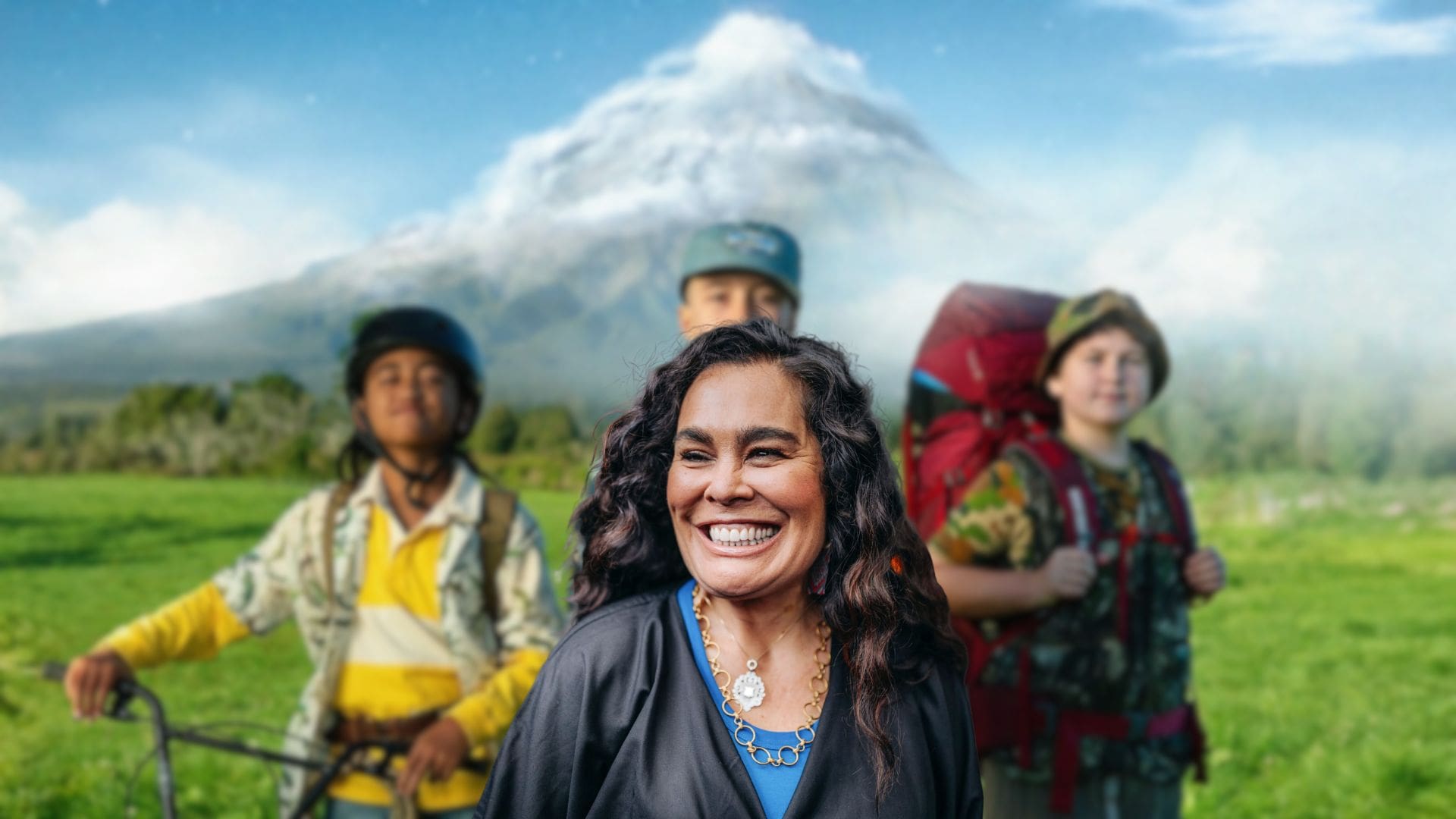
Interview with “The Mountain” Writer/Director, Rachel House


Hosted by
KT & Oti
Show Notes
Rachel House is a filmmaker, actor, writer and beyond that has performed across stage and screen centering humour, heart and mana. The credits speak for themselves, Whalerider, Boy, Hunt for the Wilderpeople, Moana, Thor series, Heartbreak High to name a few.
Her directorial debut, The Mountain, is colourful drama about three children discovering friendship’s healing power through the spirit of adventure.
The Mountain will be in Australian cinemas from Thursday June 27.
Episode Details
- Duration
- 0:00
- Released
- June 25, 2024
- Category
- Interview
- Hosts


Transcript
Transcript (3,494 words)
Full transcript of Interview with “The Mountain” Writer/Director, Rachel House.
KT: Rachel House is a filmmaker, actor, writer, and beyond, that has performed across stage and screen, centering humor, heart, and mana. The credits speak for themselves, friends and lovers. Whale Rider, Boy, Hunt for the Wilderpeople, Moana, the Thor series, Heartbreak High. Now we come to The Mountain, her feature directorial debut, which is a colorful drama about three Three children discovering friendship through healing power and the spirit of adventure. Rachel, thank you so much and welcome to the For Your Reference podcast.
Rachel: Friends and lovers. Thank you. So I listen to your podcast all the time. So I feel like I know you guys anyway. Um, I will never not. You're looking at me like I like I don't know you, but when you've got someone in your ears a lot, yeah. It's strange, isn't it? It's strange.
KT: Well, you were in your ears and you're in my heart. How about that?
Rachel: Babe? Oh, I'm so sorry.
KT: We're just going to love on each other, which is
Rachel: love, love, and thank you for your tautoko, your support. It was, um, so wonderful to see both of you there that morning. And I just, Oh my gosh, I love how it's just like, you know, can we get a photo? And he's just like,
KT: no, we're very, we're very opposite. And I guess complimentary. Oh, but it made me,
Rachel: it made me, I wanted to, to sort of, you know, carry that with me that, that, that just that wonderful, like, No, just the no, the no of it all. I'd like to do that more. Yeah, well, we're saying yes today, hopefully. Oh no, yes, yes. I just, I don't know, I just love that, that he would, he, he would just would not be swung at all costs to come. Yeah,
KT: and you, you see how like, staunch I am. It's like, it's always a tasty, spicy time with him.
Rachel: Tasty, spicy, baby. I love it.
KT: Well, I, I want to come to the, where, where we met you, uh, at the Australian premiere at the Sydney Film Festival for The Mountain. Um, and you have directed stuff before, but in regards to a feature film, um, and also the acting coaching that you've done as well. Something that I really loved was the opening credits, because you have the usual sort of directed by, but yours was something along the lines of made by heaps of people, including Rachel House.
Rachel: Yeah, I, I just, yeah, it's funny because that's caused quite a, quite a, I didn't mean for it to be quite a sort of, I don't know, political, not political, well maybe it is, I don't know, I, I just don't, I just don't believe that a film can be made by one person. And I think it's
KT: kaka
Rachel: and I, I, um, I've never believed it. I mean, I've, I've been working in this industry for years. And, and I just think we need to be clear about our contribution and also the fact that, you know, you cannot make a film without a huge collaborative team. Um, you've got to have someone steering the ship, but, um, I just don't like that wording, a film by.
KT: Yeah, but it's so interesting you say that because I received it in the way that I think you intended it and it's interesting to hear that it became such a bother because I think at the end of the day, like, even like, it was so good hearing interviews, um, researching for this and talking about the actual premiere and Taranaki as well, we make these stories for our people and that's where they should be. And that's how I took the title credit as well.
Rachel: 100%. It's made for the people by the people though, you know, so, um, yeah, I just, I, I, I feel really proud that, um, we did it because there was a bit of back and forth about it. And I just said, but it's, that's not true, a film by one person, go on, you know, um,
KT: it's very opposite of how we are and how we love and how we nurture, right. We all build, we all come up together and it made a lot of sense to me anyway. There you go.
Rachel: And that's all that matters, that it made sense to you.
KT: Yeah. And, and it was so nice having that moment with you, um, you know, before the actual film, before we even got to watch the film. Um, but I need to tell you now that this is my favorite watch for 2024.
Rachel: Oh, thank you. I saw, I saw your post about it, darling. And I, I got a little bit teary. It's just, it's so, I was so keen on, um, being on this podcast to be honest, because I No, no, because I, I don't, I want to, I want to hear more of these perspectives, you know what I'm talking about? I feel like we inundated with particular people's opinions.
Rachel: And I'm, I'm, what I love about your podcast is that I'm hearing, um, the perspectives that I want to hear actually on, on our work. You know, so, um, thank you for having us and thank you for supporting us. Um, it was, it's meant the world. We're quite blown away. Um, so far with the reaction. Um, Yeah. So, so we're, we're really thrilled. Really thrilled.
KT: I do want to come to the performances and the themes, but before I want to get to, before I want to get to that, I just want to say that, um, film is interesting. The lens is interesting. Sometimes it can feel like, Hey, we're doing an Indigenous thing. Hey, we're Māori. But this was so woven into. You know what I'm saying. If you know, you know, um, but it was so woven into the story of The Mountain. Like it didn't feel like we needed to put on, it was just there.
Rachel: Yeah. Um, ask me the question again, darling. Sorry, I got lost in your beautiful kōrero. Ask me the question again.
KT: Well, sometimes when we are on the screen, whether we're making it or not, the lens can feel like it's for outsiders, like it's not for us.
Rachel: Oh, right. Okay. Sorry. Yeah. Got it. Okay. So. However, I do think it's important that, um, that it's inclusive. But that's something I wanted to, to, to be, I didn't want to make a film either that was just for us, you know, because we're at a point now where we, where we're not now we've been at this point for a really long time where it's, it's, it's important to try and understand each other a bit better.
Rachel: Right. So I, I, um, You know, we got the script, I got the script giving to me, and it was three little boys. There were no cultural specificities about any of them, and they wanted to conquer a mountain, and the mountain didn't have a name. Tom, who has been in this industry a long time, I think he simply didn't name the mountain because he didn't want to have, Anybody, you know, have to lock into a location, but for me to read that script, I was like, where are we then, you know, where are we?
Rachel: I literally thought it was, uh, another country. Um, and, and to me, that was the conversation that I wanted to open up, you know, and, and cause we all, all over the world, there are those kōrero around mountains. All over the world, including here, I just, I just, um, I've, you know, it's been really interesting is being, um, some comment, you know, about, oh, you know, we don't understand here in Australia, uh, your Māori, uh, you know, concept of mountains. I was like, well, but it's all around you.
KT: Yeah.
Rachel: And it's not just the mud, it's an Indigenous thing here.
KT: Yeah, exactly.
Rachel: Our mountains are revered and have beautiful story. And, and so, you know, um, that's why it's so important to be, you know, about, about these kōrero. If we just guard them for ourselves, then, then, you know, we ain't ever gonna move forward together.
KT: Moving forward in healing, Rachel, there was a lot of healing in the film, um, something that I really appreciated because we talk about culture, but something that I really appreciated was, you know, the aspects of kids can handle it, you know, kids can handle, you know, Like, real shit, and they also go through it, so, you know, we should trust them to be able to navigate that, whether it's identity, whether it's grief, and those are the sort of themes that we explore through The Mountain.
Rachel: Yeah, and I'm, I mean, I, I'm, I'm, I feel like I grew up around, you know, films. Where those things were really present, you know, I mean, we're going a hundred years back, girl, I feel like the, a lot of the films around now that are, you know, um, for, for young people and, and, and family films, they don't, they get a bit of it.
Rachel: Scared to go there. And yet to me, some of those films that I grew up on and watched, like, you know, Storm Boy, Stand by Me, those sorts of films, E.T. even, you know, um, they were very formative, um, and informative in, in just a simple sense of empathy building, um, I'll never forget, I've been talking about this a few times.
Rachel: Um, Over the last couple of days, but I'll never forget when Mr. Percival died in Storm Boy, I won't forget how much I cried and how much it hurt. But I also remember feeling kind of empowered by love or something after it. I don't know. It's, I think it's important. And for goodness sake, our beautiful young kids are subject to some horrendous stuff that's going on in our world right now, and so we've got to be able to give them the tools. To handle that. And sometimes that's in a fictitious world, you know?
KT: Yeah. And even, even inside of the film, I don't even want to say which parents, but there were moments where you can see the parents are potentially failing them or, you know, leaving the kids to fill in the gaps for themselves. And by not addressing it, that means the kids are going to be okay. It's like, actually, let's guide them through that. Right.
Rachel: Yeah, absolutely. And, and, and, yeah, you've got a, you've got a father who just, who just sort of does not want to, you know, move forward or, um, talk about it. Um, and, you know, what's so interesting is that, you know, his, um, partner that. Yeah. Who, who passed away had said, you know, I want you to move, move forward.
Rachel: And I, I think he's read that very differently, you know, just sort of literally moving. So, um, and, and, and yeah, I look, I, I, I, yeah, I, um, I also wanted the parents to. To go through, um, I know we don't see them very often, but I feel like there is enough of an arc as well within the parent's journey to be satisfying. Yeah.
KT: I made, I made a note of all the times I was getting emotional and I had to stop counting. But it was so, it was so beautifully done. Um, and I think that's, I think that's what I love about film. It's not necessarily like shielding the experience, but it's like, this is what it is and we need to work through it no matter how hard it is.
Rachel: Yeah. And I think with that, you know, I, I, I also didn't want it to be so heavy and super important also because we're funny, you know, people, um, I, you know, so I wanted it to be, to be, well, how life is it, it can be very buoyant and, and, you know, And uplifting and hilarious, but also really, really sad, you know, um, so it was important that we try and find that, that mix as well within, within the audience that there was heart and emotion, but if there is heart and emotion presence, then there should always be joy.
Rachel: You know?
KT: Oh, absolutely. Um, and I think that's, that's part of the mixture of life, right? Um, at the premiere, there was also Terence and Reuben, As well. And in just a short couple of years, they've sprouted up. Um, I want to talk a little bit about working with, you know, the main leads of the film.
Rachel: Yeah. Um, you know, it's no secret. I think you, you, when you looking for, um, to cast kids. It's best to try and find kids who have those qualities that are very like the characters that you've created. And sometimes that can go both ways. Sometimes you, you'll, you'll, um, cast a kid that you want the character to be more like, you know, but we, we cast far and wide.
Rachel: Um, but these three kids really just, uh, you know, naturally and easily emerged as being the right people to play these characters. We have, uh, Terence who was raised in the world of Māori and Te Ao Māori and, um, is incredibly strong. He was so much like Bronco and caring and gentle and nurturing. I mean, that's the other thing that I really wanted to address is, you know, why don't we get to see Nurturing boys. Why is nurture? Why does that word nurture only belong to girls and women?
KT: Yeah,
Rachel: it's interesting enough when I completely reworked Bronco to, to, to be much more, um, well, to be the Bronco he is today. The, the people that I based, there was one kaumātua, uh, talking there. Who I, um, based it on, and his, his name is, uh, Rereata Makiha, Matua Rereata Makiha.
Rachel: And he would be, I guess, maybe in his 70s, maybe in his 80s, it's sort of hard to tell. But he is the embodiment of nurture and gentleness and mana. And he is a guardian of the earth, you know. And, and I, I, I want to celebrate that more.
KT: Mm hmm.
Rachel: With our, um, male-presenting boys and men. Um, I, I just, I don't understand this. Why it is that women, sorry, I know I've, you've asked a very short.
KT: That's okay. I'll go wherever you go.
Rachel: But you know, I just, I'm so sick of seeing boys and men running around with guns and killing each other and explosion. And I'm so over it. And being really angry, you know, what was really interesting is we had a person back home who was, you know, describing the film and describing, um, the kids and what they're kind of, you know, characteristics were any Bronco tough guy, tough guy Bronco, you know, he's not tough.
Rachel: Yeah. He's beautifully strong and gentle and proud. How is that tough? It felt a bit like, you know, because he came forward and, and, you know, introduced himself in the way that we do when we introduce ourselves, we, we pay tribute to a whole lot of things, you know, that ain't tough. That's yeah, it's awesome, you know, anyway,
KT: so I think because it's hard to, it's hard to exist in this world as a young boy and not have that bravado, right? Even if that's the conditioning that we're,
Rachel: yeah,
KT: even if people, people would project that on him as if there isn't a way to love mother earth and to love our fellow. Family
Rachel: without for a tiny to be, you know, looking after earth. It's real, you know, I'm not making this up. Like,
KT: yeah,
Rachel: these are, uh, this is what our tāne, um, do, you know, and it's not just, of course, it's not just, it's. Definitely women, but I wanted to show that there are men who do it too in our culture, you know, absolutely. And, and, and I, I wish they were far more celebrated, but anyway, so that was my kind of, um, around the development of Bronco. Um, anyway, sorry, you didn't ask that.
KT: No, that's okay.
Rachel: But
KT: I guess, and then,
Rachel: and then, you know, uh, Reuben walked in the room, he'd just moved over from the UK. Um, his family came back to Aotearoa to be locked down. Like he was the last plane I think that came in before our country locked down. And so he'd left all his mates back in the UK. And so he kind of was that, um, outsider, and he did. And he reminded me a lot. Of, of Mallory when he walked in the room, Mallory Potts and likewise, Elizabeth Atkinson, when she walked in the room, you know, she, she just had this extraordinary determination. And that was the quality that we were looking for the most in Sam. Yeah.
KT: I think finding those voices are very important. And I guess just to, um, round out what you were saying about casting Terence, I think hopefully there are many of us that are blessed with men like that. In our lives, um, it's not as if they're all going around being gross and yucky.
KT: I would hope that we would have some men like that in our lives. And that's also love again to you for putting that onto screen. You know, it's something that's so, it should be unspoken, but it's important to have that onto screen. And I, I love that you've put that in the film.
Rachel: Thank you. Yeah, I love Mallory Potts and Bronco.
KT: Yeah,
Rachel: they're beautiful boys and, and if people, you know, would say, I don't think boys like that exist, I would argue, man. I would argue. Yeah. I don't think it's, I think it's, yeah.
KT: Absolutely. And, um, I think that comes to like, what are the thoughts that I had coming to the end of watching The Mountain is like, there's something very tangible, but indescribable that we lose through childhood. And also sometimes in culture, whether it's having to adapt. To the world, whether it's being hardened by our own experiences, but there's something that is lost in there and there's something so beautiful about living in the ethos of the mountain and in Taranaki and with these beautiful kids, because we can get that again, you know,
Rachel: yeah, I think that's what I love about this genre of film, you know, is, is it's the, it's remembering. You know, it's remembering how that feels. I am. I don't think it's any secret that I am. I am still a big kid and I'm not sure that's ever going to go away, but I think it's really important. Um, to, to try and, and, and, and make other people remember through the power of storytelling. You know, it feels the magic and just, you know, we.
Rachel: We've got this incredible world all around us. We can go for a walk. We can look at the minutia of, of nature, you know, what nature is providing for us. And you can feel the magic, um, wonder any day, any, any time, really, if you want it.
KT: Well, I'm tapped in wherever you'll go and I'm going respectfully.
Rachel: I feel like I've gone full, like waffle mode with you. Sorry about that.
KT: That's okay. I, I just love it. And you're also one of those people, like at Bay of Fires as well, like whenever I see you on the screen, I'm just happy to be there. Um, but I am, unfortunately, I'll need to wrap up this love fest, but just know the love will live on. I'm going to finish off, um, for our reviews, we finished off with a recommendation. So what would you pair with The Mountain as a double feature?
Rachel: The Moogai.
KT: Loved it.
Rachel: Loved it. And can I just, it's a terrible answer in regards to, but no, look, The Moogai, I haven't seen that many films at the Sydney Film Festival, but I am so glad. I saw the movie. It was so amazing to see Shari in a lead role, but also an Indigenous horror. Bring that on. Let's go.
KT: And if I can quickly say, Shari did say in the Q&A, like, our young kids learn it. It's not like your non Indigenous kids aren't young enough. We can all learn it and we can all heal together. Um, but again, my loyal people on behalf of my staunch, beautiful, soft, grounded man, Oti, um, Asante sana. Thank you so much, Rachel.
Rachel: Thank you. Kia ora. Kia ora.
Related on FYR
Discussion
Loading comments...