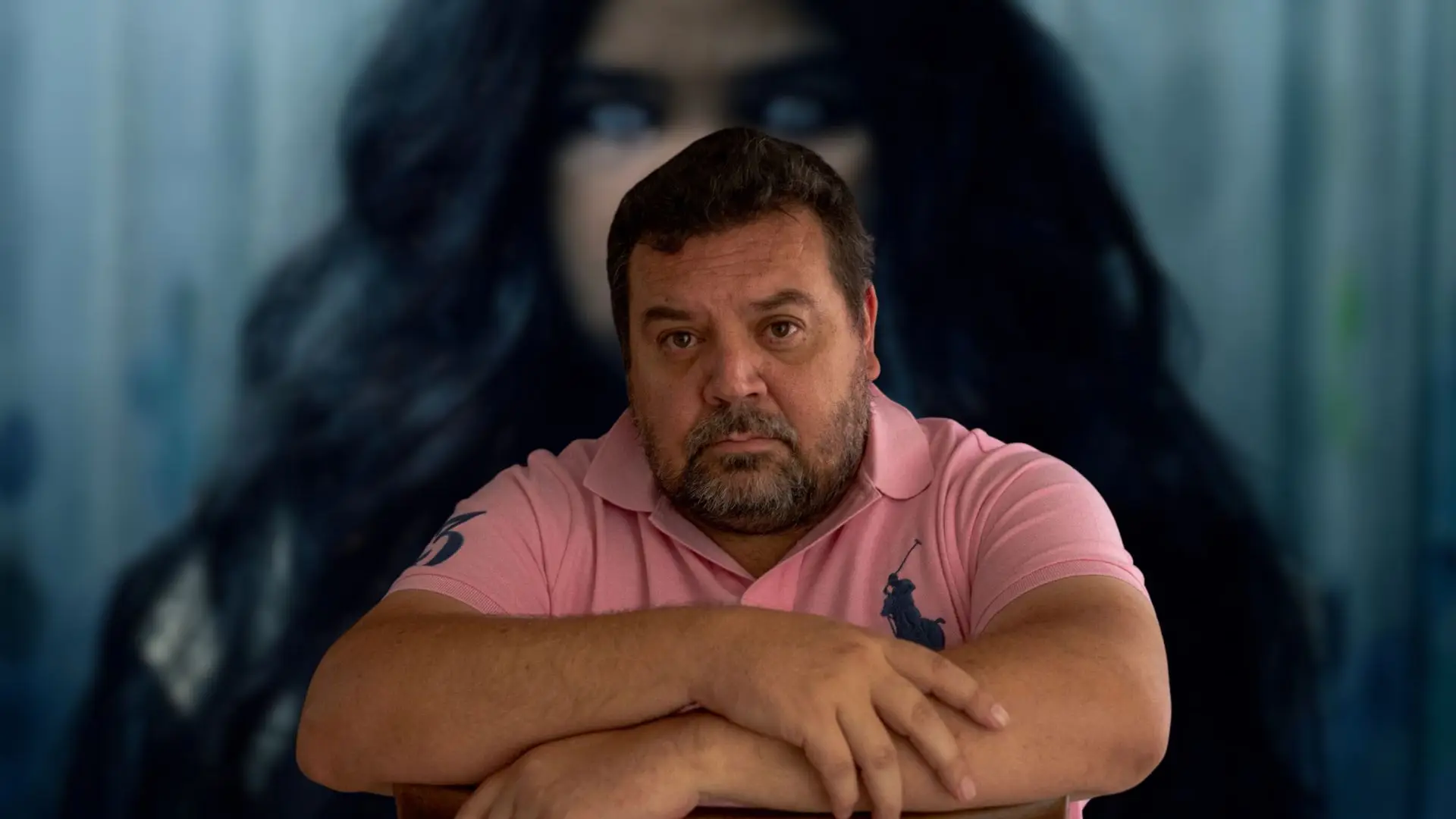
Interview with “The Moogai” Writer/Director, Jon Bell


Hosted by
KT & Oti
Show Notes
Jon Bell is an award winning director with work across television and film including The Gods of Wheat Street, Cleverman and The Moogai. A young mother becomes increasingly unstable when she is terrorized by a malevolent spirit she believes is trying to take her children. The Moogai is releasing wide in Australian cinemas on Halloween (31 October).
This interview is audio only. For other video interviews check out our YouTube playlist.
Episode Details
- Duration
- 0:00
- Released
- October 22, 2024
- Category
- Interview
- Hosts


Transcript
Transcript (2,583 words)
Full transcript of Interview with “The Moogai” Writer/Director, Jon Bell.
KT: Jon Bell is an award winning director with work across television and film, including The Gods of Wheat Street, Cleverman, and The Moogai. The Moogai is about a young mother that becomes increasingly unstable when she is terrorized by a malevolent spirit she believes is trying to take her children. The Moogai is releasing wide in Australian cinemas on Halloween, the 31st of October. Jon, thank you so much and welcome to the For Your Reference Podcast.
Jon: Thanks for having me on.
KT: I just want to say off top that, uh, my partner and I really love this film. and I'm very excited to talk about, uh, The Moogai today. It is based on a short film. It had a global premiere in the Sundance Film Festival, the Australian premiere, which I was at the Sydney Film Festival, um, screening where it won the GIO audience award, for best Australian feature as well as the Melbourne International, International Film Festival. So for the audience award, as well as in general, I just wanted to start off by saying congratulations.
Jon: Oh, thanks. Like, you know, I don't think any of us. Do any of these things for awards, I would just try and make us, but we'll tell that stories, I suppose, but when you actually, you know, get an award, some of that's, you know, that's, it's incredible. Like, it's just incredible that people connect with it, connect with the film. it feels, yeah, it's, it's, it feels. Feels very rewarding.
KT: Yeah. It's, it's always an interesting, uh, you know, conversation with filmmakers of, I guess the whole topic of awards, because it can be something that feels great, but also something you want to repel and something you just want to focus on making the art, right. It must be an interesting sort of experience.
Jon: Yeah. I think people are trying to remain. You know, objectively creative, because as soon as you start chasing awards, it's going to change what your art is. And then, well, forget it. You might as well not make anything.
KT: Yeah, absolutely. I would say that your voice is very, it's very specific and it's very standalone on what you would, I guess, expect. Especially in regards to Indigenous stories. So again, I'm just loving all over the film and your work as well. So I'm very excited, to talk about The Moogai today. I've actually watched it twice. I was at the Sydney Film Festival, like I mentioned, and my partner Oti and I watched the screener in the lead up to reviewing and interviewing as well.
KT: at the Sydney Film Festival, there was a Q&A panel and you said something that stuck with me. That The Moogai is a love letter to Aboriginal women for keeping the family and the community together. And I guess also considering the, you know, the Sundance or the global sort of audience that this film can have, I would love to hear you speak a little bit on what that means about being a love letter, especially for Aboriginal women.
Jon: Yeah, it's like in the face of You know, just an apocalyptic effect, you know, the people, that people have experienced. there's almost been, you know, genocidal, it's, it's, it's genocide. It's genocidal policies and practices, uh, that have tried to drive, Aboriginal men into the ground in every way.
Jon: And in some, in the, throughout the, throughout the. You know, a couple of hundred years, the past couple of hundred years and in so many ways, uh, Aboriginal women have just held on and held things together and been the glue that's held families together in the face of that onslaught. I sort of, you know, kind of grew up as, as, the child of a single mother.
Jon: And, uh, seeing my mother struggling. not just, you know, to put food on the table and stuff like that, but also to keep me on the straight and narrow and not give in to certain, you know, angry young man kind of feelings. And then, you know, you just end up on the inside looking out like, you know, there's a whole, a whole host of things that, Aboriginal women and not, and then not to mention, you know, having to get, trying to get out and march in the streets.
Jon: You know, , through that era, like there's a whole host of things where it's like, you know, man, you just look back on some of these things and go, I don't know how you did all this. I don't know how people, I don't know how these women managed to get us here, and not give up and just keep going and, and live and love and die and then just do the whole thing again.
Jon: I'm kind of, in a lot of ways, in awe of. That never say die attitude. And yeah, that's sort of what the three generations of women in this film are doing against the Moogai's policies and practices and you know, what they're doing for that little baby boy. so in a lot of ways that's, that's what the film is.
KT: I just wanna sit in that for a second. yeah, yeah. Yeah. Because you know, it, it's a very wanky world, the film, film world, Jon. Yeah. . No, it's, it's, it's, it's a very wanky world and sometimes the telling of the films can feel very separate to the very real lives that a lot of us live. Mm-Hmm. and it doesn't necessarily feel true to the women that we honor and the communities that we live and we thrive and a against all odds we thrive against.
KT: Right. And yeah. And it's, it's, it's an interesting sort of contrast, especially when you talk about, you know, sci fi or supernatural, but this is law. But if we talk about like film, yeah, there's a, usually in white spaces, they will use indigenous, you know, it's a white movie, Jon, when they start Googling different lore around the world.
KT: Yep. Yep. And it's an interesting, uh, sort of reclamation. It's an ownership in storytelling of these are our stories, this is our law. So it's an, it's an interesting sort of contrast that we see. And that's something that we see in Moogai. And I think the love letter is very real and it's, it's breathing.
KT: And it's, and it's living as well. It's, it's one of the best things to see in art to be able to express That, and you had your granddaughters there that were in the film as well as, uh, in the Sydney Film Festival as well. And it's, it's the resilience, but it's also hopefully in our lifetime we get to see the softness, you know?
Jon: Yeah. As well. Yeah. True. Having the girls in, in the film and, and, and having them at the, uh. At the screening as well was about like, also putting them and saying, there's no, there's no onus on you to, to have to hold this thing up, but just know that, you know, you're a part of this line, you're a part of this tradition.
Jon: You don't have to, you could just go and live your life and be you, and there's nothing wrong with that. This is part of what you come from. That was a, that was an important thing for me as well. Like in, in a lot of ways I made it for. Like, the stolen mob to always know that there's, there's no force in the universe that can separate us and, you know, you'll always have belonging with us and to us.
Jon: And, and, and then also to say, To those generations coming up, it's an, it's an exciting future. Let like, don't, don't, don't have, fear and don't, don't have dread that the future doesn't belong to you. It belongs to you. It's your future. You make it, you go make it in the same way that these women who came before.
Jon: kept it together, this is what they kept it together for, for you to be able to have that. uh, and I, I, I don't know, I, the films, That I'm trying to make as much as I step away from these, I think I might step away from these issues. I always come back to these themes of like, you know, empowerment and, and, and how one breaks out of certain systems of control and prisons and all of those kinds of things.
Jon: I don't know. I think that's probably just my own personal preoccupation, but there's, there's a lot of that stuff in there too, in terms of, you know, what Sarah goes through. She needs to come back to her culture and to her history and to her heritage to be able to, compete with the Moogai, to actually fight back against the Moogai because, you know, as a sort of corporate success, she can, she can deal with, with, with the laws of this land, but trying to deal with something that's older and something that's, kind of operates in a different, a different, world, uh, you know, that you need to learn those, those, uh, how to, how to attain power and how to, how to get some control in that world as well.
KT: Mm hmm. We can, we can focus specifically on the film, but I do just want to, I just want to hold, what you just said because, you know, I think it is very important. We don't have to get too deep, but in the climate of this country that we're in now, it's so important to have these stories. I understand there definitely needs to be a sort of debrief and re centering, and it's also not healthy to stay in that space, but I think it's important that we don't not have these conversations because they're hard to have, right?
KT: Whether it's through real life conversations or whether it's through film as well, you know, tapping into the mistreatment of, in the medical field, about the police being institutionalized, this was all in The Moogai. as well. So even on, uh, a non, uh, confronting sort of level, it can still be talked about even through film, which is what you were able to weave in The Moogai as well.
Jon: Yeah. Uh, you know, I think other points of view are so important in any uh, you know, uh, in any conversation, like you got to, you know, get outside the prevailing points of view and, and, and question things like, so that's, that, that, uh, it's not a dissenting voice, but that other, that other point of view is, is, is.
Jon: really important in, uh, in the conversation for, for, you know, these bigger issues for Australia. But I also think too, in terms of the legal and the medical, uh, and educational sort of practitioners in The Moogai, you know, those characters, Or a certain point of view that, uh, it doesn't necessarily, but I guess,
Jon: they're invested on something, keeping the system going and the system is invested on every level in keeping them invested in it. If that makes sense, like, like the system needs them to have that point of view so that it can continue and so that it can, can exist. And so, you know, even if the individuals aren't necessarily making, you know, quote, unquote, uh, racist decisions or something, cultural, the cultural, uh, difference, you know, kind of view, you know, just brings out to.
Jon: views on something. So, you know, even when, you know, at school or in the hospital, when someone's saying, oh, this person needs this kind of treatment. No, that's not what this person needs. This person needs to go on. I don't know, maybe the D deficiency or something, you know, It's not all one way, and people sometimes who are so invested in the systems, continuing, don't even realize.
KT: Well, I think it's also they don't want to have to think about it, on a very real level, like I think sometimes it's not even an active hate, it's just like, I've got my own shit going on, and it's like, no, we're all invested in the liberation of, like the collective liberation of all of us, including our indigenous family.
KT: In so called Australia, um, and, and you're right, it's it, but it's baked in, and these are colonial systems as we know, so, it's all baked into there. So it would be interesting to hear the different sort of layers, cause I clocked it. I was like, it doesn't matter whether they're the best people ever, cause it's into the systems as well. Right. It's not like bad white people. It was, it was definitely more than that. Yeah.
Jon: Yeah. No, it's the system. That's, that's the thing that frees everybody to be able to look at it.
KT: Yeah,
Jon: you don't have to you don't have to go. Oh, I look in the mirror and I see myself and I hate myself No, no, it's not that it's just go and see what you're doing and why you're doing it like ultimately What what sort of uh, you know, what master are you serving by doing this thing? It's just I don't know. It's just like a self examination.
KT: It's how you move Yeah.
Jon: Yeah. Yep. Right, totally.
KT: In regards to Moogai, you know, we have a TV and film podcast, so, you know, we watch a lot of things. Uh, you know, even a lot of games have like the incorporation of like the Wendigo for like Native American Oh yeah.
KT: sort of culture as well. this is absolutely up there for me in regards to the melding of indigenous law as well as a horror, like a full blown. horror. Um, so I do want to commend you on that. I love that we're just like really unpacking and ready to fight these colonial systems, but I do need to wrap up, unfortunately.
KT: Um, before I wrap up with the final question, I just want to say I'm Tongan. So I'd just like to say on behalf of my partner, Oti's Kenyan, I'd like to say so much for your time today. Thank you. But wrapping up with our final question, we finished up via reviews of a recommendation. So what would you pair with The Moogai as a double feature?
Jon: I guess I, I, I, okay, I'm going to say, well, it's probably going to sound okay. I'm going to say The Gods of Wheat Street. Like, cause that was probably for me, that was probably, the first. On screen, the thing that I did where I had a spiritual world on screen, you know, it was still about, these, uh, this Aboriginal family, empower, empowering themselves and becoming small business owners, but I don't know, connecting with the ancestors and, Sort of taking your lead from those who've gone before. You know, those kinds of themes are pretty similar.
KT: Beautiful. Well, thank you again for The Moogai. Thank you for your time. I wish you all of the love and grace in this burning world. We still have love and we're still connected. Thank you so much, Jon.
Jon: Thank you. That's a good yarn. That was a great talk. Thank you. Thank you
KT: so much.
Related on FYR
Discussion
Loading comments...