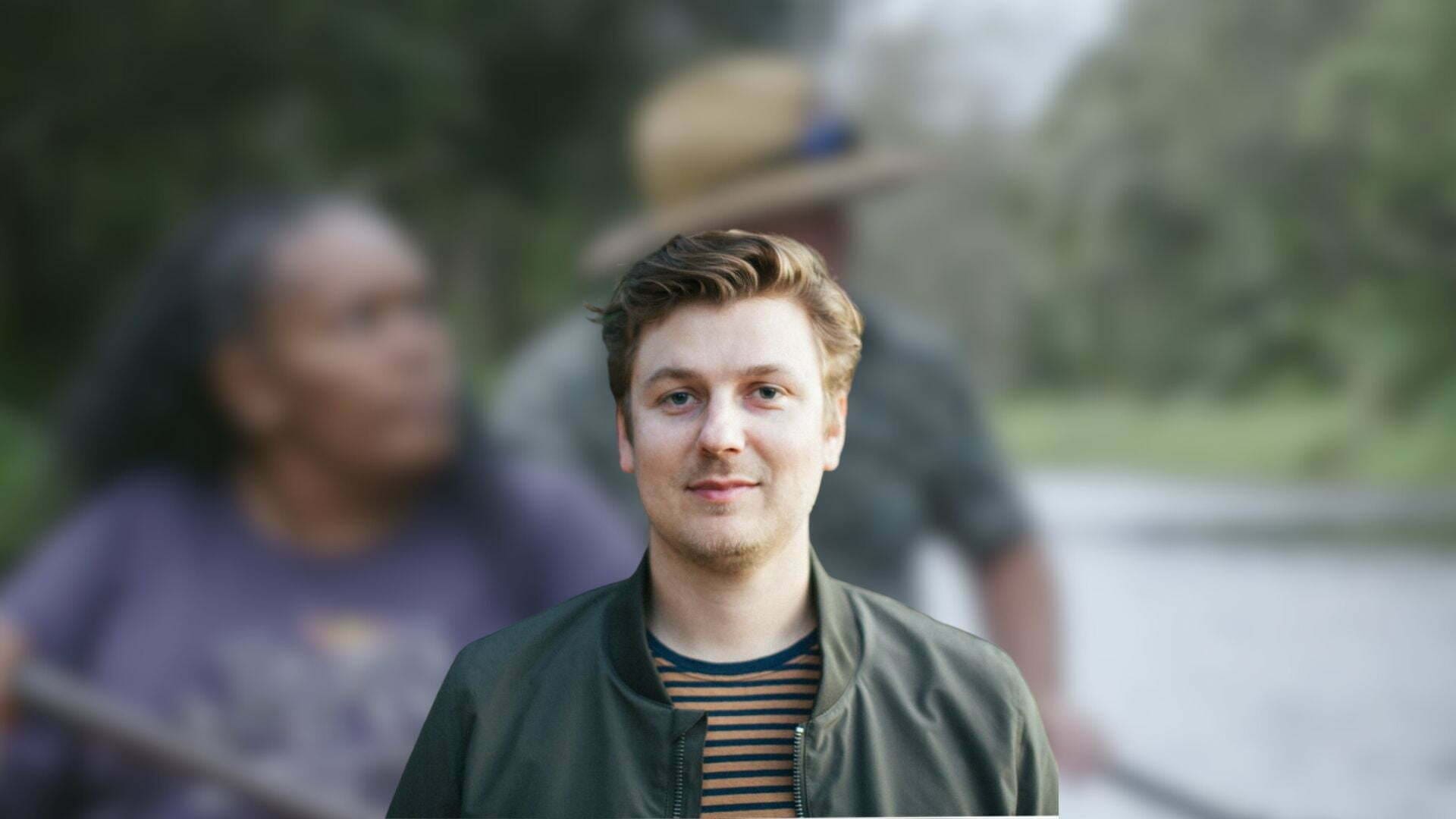
Interview with “The Last Daughter” Co-director, Nathaniel Schmidt


Hosted by
KT & Oti
Show Notes
Australian/American filmmaker and director, Nathaniel Schmidt’s award winning work explores extreme weather and lived experiences.
A poignant documentary co-directed by and featuring Wiradjuri woman Brenda Matthews on a journey to find her white family – and uncover the truth about her abduction.
The Last Daughter has a national release on June 15 and is also a part of the 2023 Sydney Film Festival.
Episode Details
- Duration
- 0:00
- Released
- June 20, 2023
- Category
- Interview
- Hosts


Transcript
Transcript (3,248 words)
Full transcript of Interview with “The Last Daughter” Co-director, Nathaniel Schmidt.
KT: Australian/American filmmaker and director Nathaniel Schmidt's award winning work explores extreme weather and lived experiences. The Last Daughter is a poignant documentary co-directed by and featuring Wiradjuri woman Brenda Matthews on a journey to find her white family. And uncover the truth about her abduction. The Last Daughter has a national release on June 15 and is also a part of the 2023 Sydney Film Festival. Nathaniel Schmidt, thank you so much and welcome to the For Your Reference Podcast. No worries. Thanks for having me. Well, first off, congratulations on a great film, a very important film.
KT: Um, I know Brenda also has the book as well, but I think it would be great to start off with, you know, how did you come across Brenda's story and when did you both decide we need to come together and we need to make this film?
Nathaniel: Yeah, so I, I remember when I first heard Brenda's story, I was in the Crocodile Hotel in, um, Jabiru in Northern Territory. And, um, uh, I was connected, someone told me about the story and, um, we were connected through an elder, um, a Bundjalung elder. Who connected us to Brenda and her husband, Mark. And then we met at Currumbin, um, RSL in the Gold Coast and just started talking and yeah, hearing her amazing story. And there was just the very, very beginning that was over, you know, five or six years now. And so it's been a long journey since then, but it's, we, at the very, very beginning, as soon as we heard the crux of the story, we knew this was something that I'd never heard before. And it was a story that this nation needed to hear.
KT: Yeah, especially because there's, I guess, the general sort of talking about, um, which we'll get into more detail, but I think even the angle, even though it is her personal life, like, that particular type of story is very new to, I guess, mainstream. sort of screens as well. And, um, because it is a documentary, I do have a couple of questions about the actual process and the making of, and I think that's also good to point out. It's not just like a year or half a year and you just churn out like a gorgeous film about someone's life. It takes time to, you know, nurture and simmer and that sort of thing.
KT: Um, but in regards to the making of the film. And the actual cut of it, how did you both decide when to be present in the actual moment where we are now? And I guess when to go back in time to give us sort of context. There are also moments where we will focus on one person like Brenda and we might go to Connie for example. So what was that like?
Nathaniel: Yeah, um, so that was something that we debated and talked about as a team, um, for a while on the in and out points between the past and present story. So. A lot of it was guided by simply how Brenda remembered her own life. So Brenda, as a child, her, all of her memories start in this white family. And so this whole experience was what she can actually remember for whatever reason that is. She remembers growing up in this loving white family. And then for her, everything's flipped in reverse when she's shocked by having to go back to her Aboriginal family, where she really belongs. She had no memory of the past.
Nathaniel: She didn't know all those things. So just as a little girl. Brenda is trying to figure out her existence and where she belongs. But when she went back to her Aboriginal family, that's when all these feelings of like, um, missing the white family, but feeling like she couldn't miss them because she's supposed to be an Aboriginal family. So as a little girl, you know, eight years old or seven years old, um, that's where Brenda's childhood, like wound starts. Mm-hmm. and then as an adult, We're then, we're flicking back and forth between these like, these moments that are kind of these key beats between that past and present story.
KT: And I don't want to butcher it, but there was a gorgeous opening line to this film as well, where Brenda shares a sentiment of, you know, you only start to unpack these things once you get older, when you become an adult, right?
Nathaniel: Yeah, that was, that was something that Brenda said very, at the very beginning when we, when I first met her, we did her, um, her, uh, Her like first kind of just understanding the story that was something that always stuck with me and has stayed true. The whole journey was as a child, you push things down. Yeah. I'm an adult that things bubble up. And I think that's kind of like the sentiment to her story, but so many others.
KT: Yeah, it must be interesting to have lines and like, Oh, we're going to put this here. Like this line is going to be at the start of the film and it's going to inform it as well.
Nathaniel: Yeah, it just created the nice hook we needed to, I think. Um, yeah, just, just, just, just lure people into this incredible story. Yeah.
KT: Um, and there's something that you said that I wanted to touch on, um, about, you know, Brenda feeling guilty because, you know, not feeling completely whole because she has that periphery of her white family, but then also not wanting to, you know, like not wanting to fracture the current situation that she has with her Aboriginal family. And that was something that, you know, even as a watcher, I was like, Oh. Yeah, like I can only imagine what it would be like for my mom and how she would feel if I were to go and I was like, when I was in and I was staying and yeah, it was definitely a sort of like conflict watching that, but you also understand it as well.
Nathaniel: Yeah, yeah, no, totally. Like, that's, and that's, that's been a core thing I think from. Uh, Brenda's experience the whole way through is just, how do you feel, how are you supposed to feel when you've been raised by these two different families? And in this case, she was loved by both families, but Brenda still felt, um, torn and not really knowing who she should be, how she should be, what she could say or be around her family. And so that's been, for Brenda, this big, you know, thing that she's had to, to deal with her whole life.
KT: And I guess flowing on from that, this is again more about making the film, were there moments where it was uncomfortable to continue filming or even after filming, deciding whether to keep it in the final letter. I don't want to spoil too much about the film but there was a moment where they went to the courthouse.
Nathaniel: Yeah. Yeah. I mean, in like, a lot of the, I guess a lot of the uncomfortable moments, you know, like, were not necessarily always what you'd expect, but like, um, when we went back to Gilgandra, which is the place, the town where, um, uh, Brenda and her siblings were removed from their parents, um, that was a really important trip for not only Brenda, but her mother, because that was the first time going back there since it all happened. And so it was kind of like, Brenda wanting to take her mother and to revisit all these places of trauma of her past that that place was also a place of joy for them once as well. So it was kind of like, that's where all their family connect the log and bone is, you know, where a lot of the mob come from.
Nathaniel: And we still talk about that fondly. But yet. There's this, um, painful memory in that place as well. And so as Brenda mentions in the film, going back and, and, and to these places of pain brings a sense of healing, you know, and so for Brenda and her family anyway, you know, um, so I guess as far as like filming in those moments there, you know, like, and, and it was just with this whole thing was always. Tread carefully and at the utmost was relationship, you know, like, um, we had the trust and I think they knew what we were trying to do, you know, with this, this whole, this whole film. And so they went to those hard places. Because we were there to help them in sharing this story that hasn't really been told the right way before.
KT: And I think that's just it, especially, I'm Tongan, but I was born in this country. Yeah. Um, and there's like, there's an uneasiness from non Indigenous people to talk about our Indigenous history in this country. And there's that, and there's also art, and you know, there's having those hard sort of conversations, which sometimes is easier through a documentary instead of having like a one to one sort of conversation. Was there a consciousness on the comfortability of non Indigenous people when you were making this film?
Nathaniel: Oh, totally. Like, I think, um, Larissa Behrendt kind of summed it up best, who was mentored me and Brenda in the process. She kind of, she basically said, I like it how you're Trojan horsing, you know, the Stolen Generation story, particularly for non Indigenous people. We start with a non Indigenous family, which is a unique access point. To this whole story. I don't think we've ever seen before and, um, it flips everything on its head and basically imagine if a white family had their child taken away from them and then put back story
KT: headlines everywhere. Yeah,
Nathaniel: yeah. So, like, that was kind of the, the interesting in of how do we. So, and particularly, you know, Connie and Mac, very, you know, like for a non Indigenous Australian family like their, their last names, because, you know, for crying out loud, which is like the most last name ever. Um, so it just created a really accessible doorway, I think, for non Indigenous people, and that's definitely been the response we've had thus far. And, and even just how they've responded to each other, the two families, um, without giving too much away, um, has been really something that's, I think, opened Thank A lot of people to something they maybe would not otherwise choose to engage with. Um, so yeah, it's, yeah, it's the story, you know, is remarkable just on its own without us getting involved, you know, like, um, that's been our experience anyway.
KT: But there's definitely credit to the care that was taken into making this film. And, you know, you talk about elders and Larissa Behrendt that you work with to make this film. And that's so important. It's not like an Avatar made in isolation, like sort of film, even though, you know, James Cameron is great, obviously. Um, but yeah, there were so many touch points. On this film, and even what you're saying, we're talking about the film, um, and it is about the Stolen Generation, and there was a moment in the film where, you know, officially, you know, historically, 1969, what we're talking about, was it 1974?
Nathaniel: Uh, yeah, uh, Brenda was taken in 1973. 1978. Four years after the act supposedly ended.
KT: Yeah, exactly. So it's, how do we reconcile what we think we maybe knew that we never talked about? Um, and whether, whether it is that same label, it still has very real ramifications for everyone.
Nathaniel: Yeah. Yeah, totally. I think, I think what, what, um, was always really important to me, and I think the rest of the team as well, um, is regardless of what we know about the system and the rules and, you know, what, what's right, what's not right. These are just people trying to deal with something that happened to them. Yeah. Taken away and that has flow-on consequences that affected a whole bunch of different people. And 40 years later, they're just trying to figure that out. They're just, they're just families trying to figure it out. And Brenda's at the center of that.
KT: Yeah. And I think leading with love is very important and that was definitely present, um, in the film. That was literally my next question of how do you balance the historical facts with. The personal experience, but yeah, um, let's continue. I do have a last question, but before my last question, um, I wanted to talk about the reunion scene. We don't need to spoil it too much. Um, but that was some beautiful black Indigenous joy. I just, my little heart just grew so much. Were you present at the time? How was it filming that?
Nathaniel: Oh yeah. Uh, that was actually early on in the piece and, um. Uh, yeah. So like, um, we had, um, uh, Brenda always wanted to meet the families to come together in Sydney. That was kind of like the halfway point between the two families. And, um, uh, it was a bit crazy just trying to get it all to get to happen. But then, um, and, and now all the nerves, all the feeling were real on all sides, you know, everything you're feeling in that moment was real. I remember going down with Mark, um, to pick up Connie and Mac and filming that, but also filming.
Nathaniel: Um, uh, Brenda and her mother just the night before driving down from, um, Toronto, where she lives, um, uh, to, um, uh, Sydney and just Nan feeling those nerves, you know, um, but just the most beautiful way of just saying why she wanted to do this, I think, like, I was just talking to someone last night at the screening and just that hits people so emotionally hard every time that she, yeah. What she has to step up and why she has to do this, even though she doesn't have to meet these people. I just was so, you know, so emotional. Um, so, yeah, um. And yeah, just when everything took place, like, uh, like Mark always says, her husband just says every time. Even the sound guy was like shaking when putting on lavs and all these things.
Nathaniel: So there's, there's this story behind the story that we've all been on, you know, and so like coming back to Sydney for us is pretty emotional just because like a lot of the stories taking place here and being here at school and, um, all that. Like, I just saw, I just had coffee with Nan this morning, yeah. And so it's a different season for us now after knowing each other for so long and, um, but now we've always just said like, Nan, your story's getting told now, like the truth's getting out there, even though you've been, um, lied about for so many years, you know, like, I think not everyone knows about that, but to her, that's been the hurt and the pain she's been carrying this.
Nathaniel: This, this life is so long.
KT: Yeah. And I, I think that's kind of core to a connection, you know, really getting to the truth. Um, and I'm so glad that there is that feeling of release as well. And I do want to give a little shout out to Mark because we didn't get to talk about even Mac and Connie, but like a shout out to Mark as well. Cause you know, um, Brenda was talking about how she would share and every time she would share. The trauma would come back, but there would also be that feeling of peace and you can definitely feel that Mark was a great support in all of that as well. So, um, yeah, definitely all around. It was led with love.
KT: I felt the love watching it. Um, and I'm so, I'm so happy that there is a release. So the feeling of everyone that's involved, um, as well, but, uh, we're going to finish off with, um, our last question, if that's okay, um, we finished off our reviews with a recommendation. So what would you pair with The Last Daughter as a double feature sort of situation?
Nathaniel: Oh, that's a great question. Um, uh, like documentary or anything, like, it can be anything,
KT: anything that helped you to be inspired or yeah, anything.
Nathaniel: I mean, a lot of the films that were kind of like inspired us, like, obviously, like, like Lion was a great film, like, oh, gorgeous. Yeah, like, and, and I think for us, we had, we had our Lion moment that reunion, uh, ourselves, you know, so like, you know, the similarity in our film. Of just, like, people who have been separated for so long. And I was even just thinking that. Imagine, you know, like, there's a photo of someone in your house. And, and, and, and, you know, you, they're, they're part of your family, but they're no longer part of your family. And that's what Brenda was in both families.
Nathaniel: Who's this girl in this family and who's this girl in this family. And then after all this time, they reconnect and that relationship, you know, comes back together. And I think. So for me, like, um, Lion was very much a big inspiration, I think emotionally. Mm-hmm. what we were trying to do. And, but it, it just naturally happened that way. I think it does when people come together. So, yeah. Um, yeah, I think, yeah, a Lion would be good pair or any, any of the amazing other, um, Aboriginal stories that have been done, you know, across the years. You know, like I think, um, like we just saw The New Boy, um, you know, that table. Oh, gorgeous. Yeah. Story. It was a different story at a different time.
Nathaniel: Um, you know, obviously like, uh, I think Rabbit-Proof Fence. Is the original Stolen Generation story that a lot of Australians have come to, to, um, to see. And I think this, this continues that story to show that this didn't end, you know, the old days, you know, like this, these, these things are still happening. I think that was also a thing for us that we, um, we're always thinking of this is like, um, this is the continuation of this story in this generation and is living proof in this day and era to show that people are still dealing with the pains of the past.
KT: Yeah. Well, I appreciate you answering that because we have been interviewing a lot of filmmakers lately and I'll throw that question. That was a great, Lion is a great, Rabbit-Proof Fence. Um, but thank you so much for your time. Thank you so much for this film. I would like to extend that. Thank you to Brenda and the family as well. Um, but I really appreciate your time. And again, thank you so much and congratulations on a great film. Thank you so much.
Nathaniel: Thanks for having me.
Related on FYR
Discussion
Loading comments...