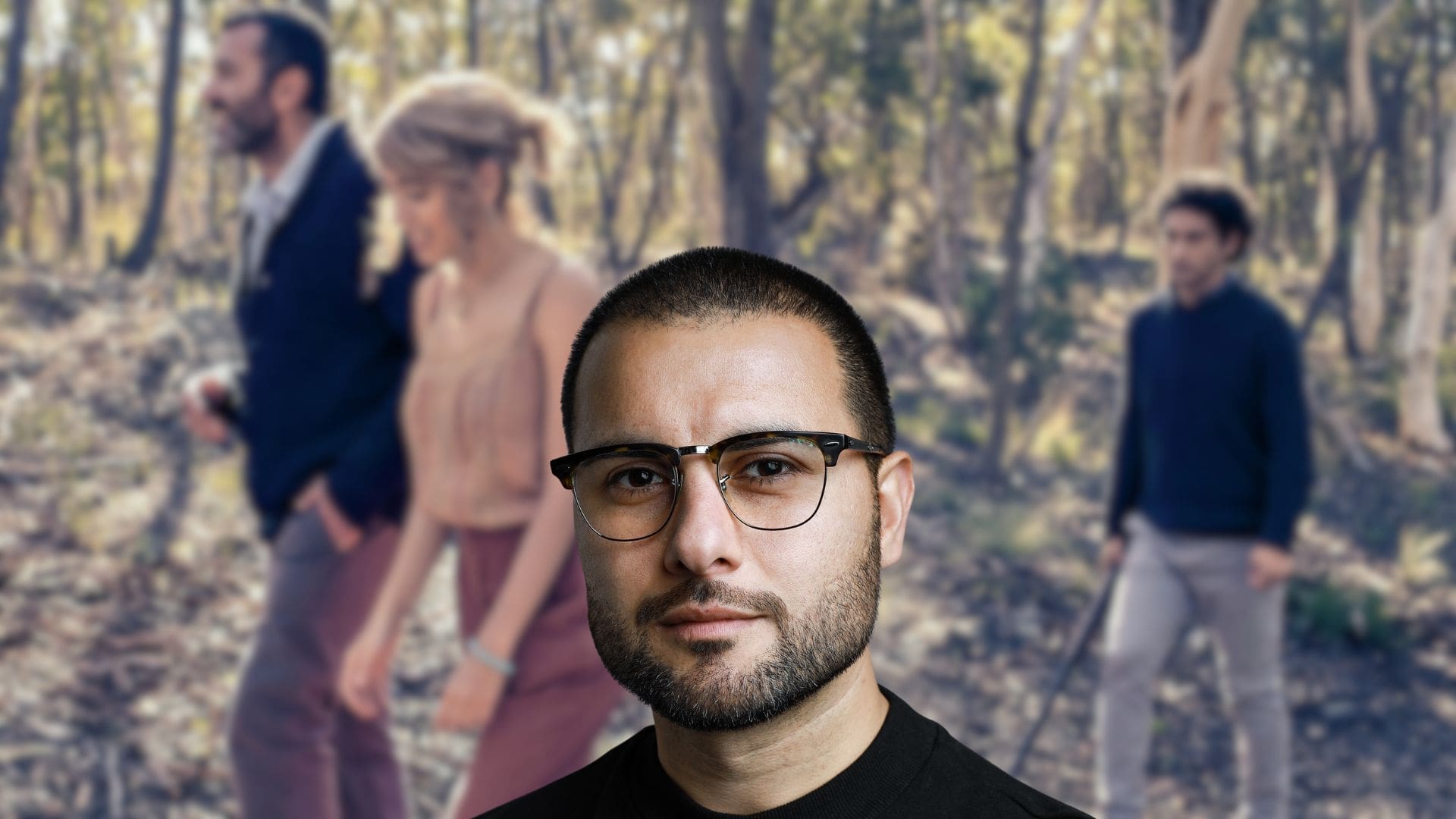
Interview with “Tennessine” Director, Amin Palangi


Hosted by
KT & Oti
Show Notes
Iranian-Australian filmmaker Amin Palangi brings his distinct style to his award-winning work, from short films to documentaries, always centring his heart and experience. Tennessine debuted at the 2023 Sydney Film Festival.
Episode Details
- Duration
- 0:00
- Released
- June 30, 2023
- Category
- Interview
- Hosts


Transcript
Transcript (3,123 words)
Full transcript of Interview with “Tennessine” Director, Amin Palangi.
KT: Iranian-Australian filmmaker Amin Palangi brings his distinct style to his award-winning work from short films to documentaries, always centering heart and experience. This year, Tennessine will debut at the 2023 Sydney Film Festival, a sensual psychological drama in which an Iranian arrives in Australia to reunite with his lover. Amin Palangi. Thank you so much. And welcome to the For Your Reference Podcast.
Amin: Thanks very much for having me. It's a pleasure.
KT: I am very excited to talk about Tennessine. I'm very excited to talk about this film. Um, what I wanted to start with was the visual sort of story, the visual sort of language. There was some gorgeous, sprawling aerial and wide shots. Um, of the landscape that was used in the film, and I would love to talk a little bit of how that visual style came to life.
Amin: Yeah, absolutely. I mean, um, there's a number of things that we thought about, um, that I had made a short film, uh, titled Break, in the same, Uh, location, which sort of gave me the inspiration for this film. Um, and it was literally, it was a small, um, team, um, the house that we shot in the location belonged to a close friend of mine. So it was somewhere that I used to. Holiday in, if you like, and I was always just blown away, um, by the emptiness by the sense of isolation, but also beauty was this contrasting factors between the sort of, you know, as in, particularly if you've come to Australia, it is what you expect of Australia to be like, but it is not something or somewhere that we live in, particularly.
Amin: So this contrast really. Um, interested me and I wanted to make a film there. Um, and I think the other thing was to, as I mentioned, is this harsh reality perhaps around, um, stepping into a new land, um, and not only, you know, experiencing or, you know, questioning your identity or priorities, it's also being surrounded by the unfamiliarity of a new country. Yeah. That are beautiful at the same time, but they're also, you know, you're in a strange place and strange land.
KT: There are some delicious themes. There are some delicious themes. I definitely, um, want to get into with you today, but, um, something that I just found really. Um, effective and really impressive was, you know, even the visuals of the fire and you would hear the crackling of the fire or even in the early sort of moments when no one else is awake, you'll hear the birds. There was some funny dialogue about the birds, um, as well, but it's just the, it helps to bring together that sort of experience of understanding, you know, where we are in this, um, sort of narrative with. As well as Nazanin. Right. Um, yeah. Yeah. And that's actually what I wanted to come to. There's a commentary about being Iranian or Iran throughout the film.
KT: Yeah. Um, you know, not too much spoilers, but Nazanin mentions how she does miss Iran, but she didn't ask to be displaced. And it's those sorts of moments that really make the film, you know, when making a film, how do you balance focusing on the main story? But also incorporating dialogue like this to ensure that it speaks to audiences.
Amin: Um, thanks for your, um, very careful, uh, viewing of the film and sort of picking up on those themes. Obviously, um, you know, as an Iranian migrant and also, you know, with our, um, writer Osamah Sami, who was, it was Iraqi originally, was born in Iran. And I think we share an experience there. Um, and, you know, in light of recent events in Iran, um, this film was written before this, but it, you know, it's sort of the narrative hasn't changed. I think about what is happening in Iran. I'm glad that now it's highlighted and it is, um, sort of is being known internationally. And, you know, we have like that attention. Or what particularly women in Iran are standing for and doing, um, and, you know, for our film. So to even give a little glimpse, as I mentioned, the film was made and written, um, before these events, but I can see that the themes haven't changed in our, perhaps we were sort of, um, both Osamah and I were quite, um, we're speaking from the heart and I can see that like that's sort of showing.
Amin: It's through the film. We weren't particularly, like, trying to embed any messages as such. It's not, it just came naturally, yes. It's perhaps, it's a common story because most people who migrate and particularly from Iran, when they leave the country, it is You know, they were hoping for a better future for, um, um, I guess for freedom, um, and, um, it's quite natural and a lot of them, you know, either can't go back or don't really see a place for themselves, um, um, back there. So, as I mentioned, yeah, I think it just sort of came quite naturally. Yeah. Pointing the internal, uh, struggle of characters as well as, I guess, what you see, um, externally between them.
KT: Yeah. And I think like you're saying, you're already tapped in. You don't need a cultural consultant to like, come in and tell you where to put bits of the dialogue and that sort of thing, right? Yes. The core of this film for me was love. And understanding that love can and does shrink or it can expand throughout a relationship, you know, if it's just Arash or even between the two of them as well. Um, I'd love to hear more about the exploration of self love, relational love, I guess, loving a new country. Very big question. So sorry.
Amin: No, no, it's all right. I mean, because, uh, you know, you're hitting the nail, um, quite well. It's Obviously, I mean, even in my previous film, Love Marriage in Kabul was about love. It was in documentary form and in another country, but I am quite interested in relationship dramas, the nuances and the compromises that the difficulty of, um, I guess, managing personal expectations and relationship expectations. Just through observation, personal experiences, and I'm sure Osamah's personal experiences, this is how this is sort of, um, you know, it's on paper, so it's fiction, but it's sort of obviously there is a level of truth and authenticity to what we have both created here, um, in terms of, you know. I look at migration like an interruption in someone's life and the way this interruption affects you.
Amin: And I think it takes a little bit of time to unravel and that's why we decided that, you know, Nazanin's character has been here for a while and Arash is a new. Has just landed because there's like, a level of difference. You're hoping, um, you know, when I look at Nazanin's perspective, I think she's hoping for Arash to see her as a new person, because she has changed, uh, perhaps even more than. She has admitted to herself. So Arash's arrival was like that sense of mirror reflection. Yeah. Um, uh, because Arash brings the past and Nazanin's as we go through the films realizing more and more that she has actually changed. She's moved on.
KT: Yeah, I wrote it down. Um, if I didn't have someone like you, I wouldn't think of the past.
Amin: Yes, yes, it's it's sort of like, you know, because when you any country, really, and particularly in Australia, because we are quite free. I mean, in all aspects. And, you know, for an artist, like, that freedom of expression is quite. Key and can completely rebuild who you are and give you a new sense of your own voice and expression. So, I think, yes, it's, you know, at the core of it is about love, but it's about how migration affects love and affects as a result, you know, affects us individually. And then it's to choose. Whether, you know, we start questioning and the decisions that we had made in the past and whether they're still relevant to us.
Amin: And I think this is also something I see quite common between a lot of couples that even come together here, they start questioning, um, like
KT: people watching and then writing down like,
Amin: yeah, it's the bonds, right? Like you bond over. A lot of different things. I think when you are, let's say in this case you're in Iran, you bond, um mm-hmm. over quite a lot of different things that you would, uh, hear. So the choices you're making are contextual or affected by the, the, the country or the context you are living in.
KT: Yeah. Um, I was definitely on Nazanin's side. Um, I, it was interesting to explore because there was culture of like coming into a new country. So Arash was, you know, trying to adapt and trying to understand this whole new, I think there was even a line of him saying, I don't even know who you are, or I feel like I don't know you. Anymore and that sort of thing. And I'm like, but is it gender too? Like, let her be free.
Amin: I'm glad that you're on her side. Yes. I mean, of course, this question of gender and I mean, we weren't blind to, Osamah and I weren't blind to the fact that we're, you know, two men writing this story and they're like three characters in this. So I guess writing Arash felt a bit more natural, but when we were looking at Nazanin's character, we. We had not cultural consultants, but consultants from our, uh, female, um, friend, writer friends and actors, um, who sort of helped us make sure that at least for us to feel a bit more confident.
KT: Well, if you need another, I'm not Iranian, but if you need another gender consultant. Sure.
Amin: Excellent. Um, yeah, but I mean, you know, it's, um. It's the, I guess, always quite important to me, um, that responsibility you have as a filmmaker when you're representing, um, something and it's that balance, like, I always stay true to what I would like to share. Um, and of course, um, but I think, you know, I never want to deprive myself of other people's expertise, knowledges, understandings. And in this case, I mean, it was vital to get, um. You know, advice, uh, from female colleagues and friends to have this well rounded character. Yeah. Yeah. That's portrayed so beautifully, I might add, by Faiza. She's done an amazing job.
KT: Gorgeous. Yeah. When you have a multi faceted, you know, sort of story with characters that have layers, you know, even the way we're talking, it's not just one sort of theme. It's not just coming to a different country. It's not just exploring a love that you had before. And you know, even though I am playful about the gender thing, I think, um, I think a lot of it also, I think a lot of people can resonate with the fact that Arash was feeling like he didn't understand the dynamics of the relationship anymore, which regardless of gender and culture and that sort of thing, it's a scary thing to be because you have this person.
KT: You feel like you're going to have them forever, maybe, and sometimes you grow in different sort of ways, and I saw that as well, of him, not just like, I'm a man, but it's like, she, like, she was my person, we were going to have a whole life together. Where do we go now?
Amin: Yes. And, and I think he's trying, I mean, he's really trying to quickly adapt. Um, but as I mentioned, it is something that comes with time, that sense of discovery. I think, um, you know, when you, and this is, you know, I've been a migrant all my life so, so many times with my parents and even, you know, if I just focus on my experience migrating to Australia, It's a long time ago, but it's something that I think it has shaped who I am and also affected all of my artistic activities. And you always sort of feel in between and you want to create a bridge, um, and, you know, between the cultures, which is in a way a bridge in yourself between your. Identities of who you are, how and who you relate to. And I think that's a process that requires a bit of time for people to sort of recognize.
Amin: I think in the film, Nazanin is just at the verge of recognizing. That, uh, that she has actually, she is different, she has moved on. And for Arash, this is shocking. As you mentioned, like, they were each other's person, um, when they were back in Iran. But that feels like a million years ago now. It feels quite far.
KT: Because it's scary. to, you know, have your life set up and, um, also have it change as well. I want to talk about the name of the film, Tennessine. Um, I'm not sure how much you want to keep it as a surprise for the audiences, but, um, You know, we talk about Arash being a man of few words, but he knew how to cut with those words.
Amin: That's true. Uh, yeah, I think that, uh, you know, Robert Rabiah's character, Naser, that's, because Arash is an introverted person, when it's with other people, what you notice in the film, he has a lot to say to Nazanin, actually. Um, and so it's this sort of also, the idea there for me was. How even introverted characters, you know, when they're in public, they're very quiet or when they're in an unfamiliar terrain and they're quite quiet. But when they are with someone that they feel close to, there, you know, is a chatterbox. It's got so much to... say and very precise. In fact, as you said, so Tennessine, um, uh, yeah, I guess it, it's not a huge, um, secret it's, um, it's a nickname, uh, of, uh, Nazanin's character in the film and it's how, um, he sees her.
Amin: I think he has this idea of like finding words that sort of explain something quite. I guess substantial in his mind. So a lot of expressions, a lot of metaphors, um, which I think tells me that he's a character that is quite idealistic. And he lives with ideals. And I think, um, his journey in the film for me is about how he is trying to grasp reality over those ideals. Um,
KT: yeah, yeah, yeah. That's absolutely right. Because it is a lot of theoretical and then he's actually living through. His own life is actually coming to, um, his own skin as well. But, you know, since we already talked about Tennessine, if someone were to call me a harmful substance, I would be highly unpredictable, highly unstable. I was like, I was, I was almost falling in love with this man. And I'm like, so sweet, so quiet. And then he just like cuts through. I'm just like, Oh,
Amin: that's true. That's true. He means well, he means well. He does.
KT: He does mean well. Um, absolutely. Um, uh, before I get to my last question, I just wanted to touch on, um, the fact that you were or are a screen production lecturer at the University of New South Wales. And I kind of, I kind of just want to talk about how is it being a creative in Australia, but also shaping and understanding the future of. Creatives in Australia. Um,
Amin: okay. Yes. It's another big question. Um, I mean, I obviously enjoy teaching. I teach screen production at UNSW and it's perhaps because we make films with students. I actually try to do their assessments and as with them. So I also stay active and creative. Um, I think. You know, I heard recently we're not called filmmakers anymore. We're called content makers. And I made a little joke about that in class last week. Um, but I mean, overall, I think, you know, we're looking at. Digital media or video to be the mode of communication mode of conversation and people tend to want to read less and watch more and they like things quickly. So, um, I can't really predict the future. As you have seen, there's been a revitalization of classics and, you know, people do analog photography now and I think it's just a way.
Amin: Um, what I am pretty sure is we will continue telling stories now the form may change and or not, uh, but we will, this urge to express will continue regardless of how and what the format is. And I'm quite excited about the, um, the future.
KT: So am I, I think stories are the richness of this country. And I think if we can continue to speak on our own truths and our own experiences, um, that's really where we're going to get to some real cinema, whatever sort of format that looks like. Absolutely. Yeah. And you definitely achieved that in Tennessine, even though the name I'm going to fight with. We finish off, we finish off our reviews with a recommendation. So what would you pair with Tennessine as a double feature?
Amin: Um, at the Sydney, uh, Film Festival.
KT: You can, or any sort of film, even your own other films. Um,
Amin: okay, right. I'll film my own other film. I'd be a bit biased. Um, I mean, um, I guess there were some inspirations. And, you know, when you said that, like, what would you pair it with? I sort of, those inspirations came to mind. I think Tennessine is definitely different. I mean, it's. Definitely a different film to those, but, um, I, I would pair it with Burning, uh, which is a much better film. I would say it's a Korean film.
KT: But I can, I can see how these would be paired together. Gorgeous. Yeah.
Amin: I think I will land on that one because it was a film that I really liked. And the, the, the triangular relationship there inspired me a lot.
KT: Oh, it's going to be a tasty double feature. I mean, well, thank you so much. Congratulations on the film and I'm excited for the discourse that comes out of this as well.
Amin: Thanks very much. Thanks for your time. It was fabulous. Yeah.
Related on FYR
Discussion
Loading comments...