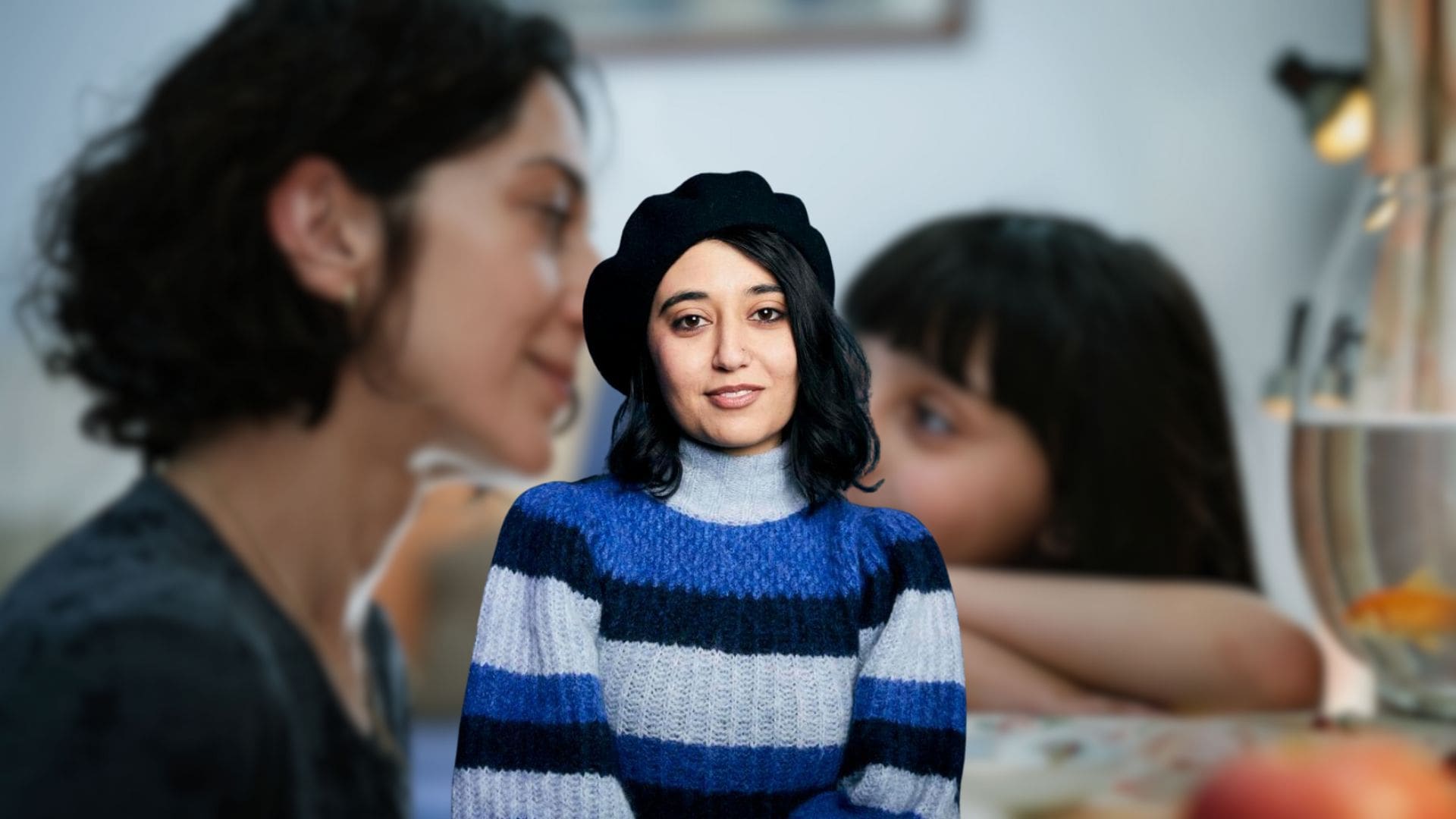
Interview with “Shayda” Writer/Director, Noora Niasari


Hosted by
KT & Oti
Show Notes
Award-winning writer/director Noora Niasari grounds her work with lived experiences and hopeful joy. Shayda had its World Premiere at the Sundance Film Festival earlier this year, where it won the World Audience Award. Announced as the Australian submission for the 2024 Academy Awards.
Shayda is in Australian cinemas now.
This interview is audio only. For other video interviews, check out our YouTube playlist.
Episode Details
- Duration
- 0:00
- Released
- October 6, 2023
- Category
- Interview
- Hosts


Transcript
Transcript (3,476 words)
Full transcript of Interview with “Shayda” Writer/Director, Noora Niasari.
KT: Noora Niasari is an award winning writer director who grounds her work with lived experiences and hopeful joy. Shayda had its world premiere at the Sundance Film Festival earlier this year, where it won the World Audience Award. It was also announced as the Australian submission for the 2024 Academy Awards. Shayda is in Australian cinemas from October 5th. Noora, thank you so much and welcome to the For Your Reference Podcast.
Noora: Thank you. Thanks for having me.
KT: I felt a lot. I loved a lot. I'm watching this film and I can't wait to talk about Shayda with you, but I would love to start off by saying congratulations on the win at Sundance as well as the submission into the Academy Award.
Noora: Thank you so much. It's incredibly exciting and humbling to, to be representing Australia in this way.
KT: Um, something that I really loved about the film and, you know, obviously no spoilers, but obviously it's based on, you know, experiences in your life as well. There was a tribute title card saying for my mother and the brave women of Iran. Um, and it's so important to be able to talk about film and talk about experiences. And, um, I, I want to, I guess, talk about the decision on film versus documentary, you know, in the Sundance video, as well as in interviews, you talked about, um, wanting to fill in the gaps of your childhood by getting your mom to write a memoir. And I would love to hear all the 10 different feature films that can come out of that as well.
KT: But I would love to hear about the decision of. you know, creating a narrative film as opposed to a documentary.
Noora: Yeah, I mean, the, the film itself, it's inspired by our experience, so, you know, there's a lot of fictional elements. Um, it's, it's definitely emotionally autobiographical. Uh, it's very true to, um, you know, the, The core of our experience, but at the same time, you know, it's, it's a piece of cinema. And so when I was in the writing process, it was really about finding the cinematic potential of the story beyond, um, you know, the. the, I guess, documentary details of our lives. Um,
KT: like distilling the essence of experiences,
Noora: Yeah. Distilling the essence. And I, and I, and I felt that the essence was really about the bond between the mother and the daughter, you know, really grounding the film in their love and their connection. And, and how that, you know, how that is able to kind of like transcend all of the.
KT: Mm
Noora: Difficulties that they're facing, um, through that bond. And, and, and I wanted the audience to really, you know, be, be alongside them in that journey. Like it's a very intimate, intimate, um, exploration of, of their relationship and their day to day, you know, struggles and also the celebration and the color and joy of Persian New Year. Um, So, you know, it was, it was important for me to create a framework, uh, for the story and that framework, you know, obviously it's a very, um, it's a very narrative consideration. Uh, you know, when you say, okay, I'm going to focus it on the. The time after the escape, you know, when they're, when they're starting their lives in the women's shelter, making decisions like not to show flashbacks, not to show,
KT: yeah.
Noora: you know, the, the thing that they escaped from, but for, for the audience to really sit in the tension and suspense of. you know, what is she, what is she afraid of? You know, what, what is the potential, um, danger, uh, after an escape? And, and, you know, that, that really takes you into her psychology. So I really wanted to. Yeah, to, to find this framework through narrative, um, over, over a documentary, because I, I think that it, it becomes more universal, um, you know, once you create those constraints and, and, and frameworks, um, for a story.
KT: I think the themes also feel universal as well and I think there is a bit of a layer of distance in a narrative sort of film and being able to maybe not have those experiences, but be like, I understand what it's like to not be safe as a woman in this particular moment. You spoke on the tone of the film and I guess being able to play in that. Um, there are many happy, joyful moments that I definitely want to talk about, driven through Mona's character. Um, but what I really loved about Shayda was the ability to go there and to really go there and to stay there. And, you know, it may be in some instances being seen as uncomfortable, but uncomfortability isn't going to get in the way of truth and experiences as well.
Noora: Yeah, yeah, definitely. Uh, you know, I, I, it was an interesting parallel because, you know, for me, I know I wasn't thinking about, you know, the outcome of the film, what it would, what it would be in the world. I was, when I was making the film, I was very present, um, in a very day to day Experience. Um, and I, you know, that's what the actors were bringing as well. And, and Zar, who plays Shayda, um, she's such a remarkable performer and she's just able to lock into a situation and, you know, bring out the best in, in anyone she's in a scene with. Um, her presence and her ability to, uh, you know, experience those joys, you know, to, to the fullest and, you know, whenever, whenever her and her and, um, Selina, who plays Mona.
Noora: Would be playful and would, um, you know, be dancing and, you know, it was, you know, everyone had a smile on their face on set because you just felt, you just felt the realness of that connection. Um, and that was such a beautiful thing to be able to capture because it, you know, it's so much about, it's so much about that, about the, the, the love between. Between them and their ability to, you know, be really present in, in the joy, because, you know, it can be really fleeting
KT: Yeah, there's joy in moments, absolutely. And we live in those moments or in between those moments.
Noora: exactly. And in the film, you know, I was very conscious of creating this rhythm of like, of, of hope and then fear and then hope and then fear. It's like, you don't sit in, um, one feeling for too long, um, because that's really the experience of, of. of people in those situations, like my mother and I, uh, you know, it's, it's fleeting. All the emotions are fleeting because, you know, at any moment that, you know, something could, could shift your lives dramatically. Um, it's a rollercoaster, you know, but I, I'm, I'm really, I'm really happy about, you know, the, the way that the film. Is able to take the audience on, on that journey, um, to really experience, uh, you know, what, what life is like for, for a woman living in a women's shelter, trying to, you know, find freedom and autonomy for her life.
Noora: Um, you know, I feel like it's authentic in, in, in the portrayal of, of this experience.
KT: DV is definitely something that, um, gets touched on in the film. We don't need to go into too much detail if you don't want. Um, but I, I guess I just want to commend you on so much love and care that was poured into the film. I think it's important to, um, You know, to be able to explore these sorts of issues, um, but have it being filmed in a very safe way. Um, and that's definitely how it felt on a literal level as well as symbolic levels of, you know, the film being set in a woman's refuge and throughout.
Noora: Yeah, I mean, it was, you know, my key priority was first of all, like protecting Selina from the material, like, you know, she was six years old, uh, so she, she never really knew what's going on. We, we always protected her and, you know, I, I got very maternal in that way and, you know, obviously in a meta, in a meta way, she's kind of my inner child. And she's a very joyful kid and hasn't experienced any kind of trauma. Her parents are together. She has a really happy life. And so, you know, I went to great lengths to protect her and everyone was on, on the same page, you know, the cast, um, you know, we would set up all of these child safe situations. And so, you know, I think that's a really successful outcome that she, she doesn't, she, she's just really unaffected by the experience.
Noora: Um, but it, but it was, it was like, it set up a framework for everyone because. Um, you know, we had a lot of times where there was a closed set, so only the essential crew were there. Um, there was a quietness and a sensitivity to what was being discussed on set.
KT: Mm
Noora: And then, you know, that, that just became habitual for the crew, even when Selina wasn't there. Um, if we had like a, a double, um, or if, if it was just the adults doing their scenes, it, it, there just became this softness. and gentleness to the set, um, which, you know, was really important because a lot of the women as in, in the film, you know, the actors
KT: Mm hmm.
Noora: and Zar, you know, we all collectively have been through similar experiences and, and had this, you know, unspoken understanding of, of what that trauma is. And And, and we held space for each other, you know, it just became this really loving, um, healing, um, journey together that we, that we went on. And, you know, I, I hope that that comes through in the film because, um, you know, that's, that's an unforgettable experience for me, um, being able to make this film with such strong, beautiful, um, women. And it was a, it was a, It was a wonderful journey.
KT: It absolutely comes through and I think... You know, in the 2020s, I think, uh, film audiences are a bit more conscious of, I guess, how the sausage is made, like, people care about, like, people care about the production, so I'm like sitting there with my hand, like, in front of my face, but I'm like, we're going to be okay, but I'm like, I hope they're going to be okay, but, you know, there was definitely that feeling of love and safeness and surrounding the warmth, um, around there as well, which I think also comes to, The importance of people telling their own stories, you know, um, where you would feel that exploitative sort of lens, maybe decades ago, where we weren't in control of our own stories.
KT: It's so important to have that. And I definitely felt that watching Shayda.
Noora: Oh, thank you so much. That means a lot to me. And. Yeah, I agree. It's really rare for, for, um, especially like women of color to be able to, to tell their stories and be, be the authors of their stories. Uh, and, you know, I just feel so grateful to everyone who backed this film, who believed in my vision and, you know, especially my cast who, who understood how personal this was to me, who could see, you know, when I would get triggered and, um, You know, they would, they were able to hold space for me and me for them.
Noora: And, um, especially, you know, it was especially interesting working with Osama Sami, who plays Hossein.
KT: He was in, um, Tennessine and I interviewed him and Palangi at the Sydney Film Festival. I was like, I know this fella. Hello.
Noora: yeah, he's such an amazing human being. I mean, he has this sense of humor, you know, obviously, cause he comes from a standup comedy background as well. And, um, you know, he was just able to break the tension on set, you know, between takes and, you know, he would. You know, we do a really intense scene and then he, and then he'd be like, okay, here's the musical version. And he would start singing and everyone would laugh. And, um, you know, it was, everybody had the understanding of how challenging the material was, but I think there was a, um, you know, just a collective spirit of, uh, you know, taking care of one another.
Noora: Uh, which, you know, it meant a lot. And, and I, and I also had. We also had an on set therapist for part of the shoot, which, which was really meaningful. And, um, yeah, I, I think, I think it's challenging that. These kinds of stories, I feel like in, in, in the industry and in terms of funding bodies and budgets, and like, there isn't a lot of awareness about the psychological mental kind of duty of care required. Um, and I. you know, we only had, I only had the onset therapist for a week of the six week shoot, you know, and I wanted to have her for the entire time, but it wasn't a budget consideration. Like it wasn't, it, it wasn't something that there was money for, even though I fought really hard for it. Um, but it's definitely something that needs to be implemented, you know,
KT: Yeah.
Noora: um, because there's a cost to telling our stories and, you know, it's a duty of care and, you know, I, I, I really hope that Shayda can be an example of, of, um. You know, how, how we can potentially, you know, move forward in terms of creating those systems to protect us and to, to allow us to keep telling these stories, but in a way that's sustainable.
KT: Yeah. I love, I love that because there is a cost to telling stories and the profit sometimes isn't out.
Noora: No, it's not.
KT: Yeah.
Noora: I mean, obviously, it's a huge privilege to make a film, especially these days. And I'm, you know, obviously, I'm, um. You know, I, I, I'm incredibly grateful for the opportunity and for this, for this, um, platform that, that I'm building now. Uh, but I do want, I, I, I, I do want there to be, you know, changes and shifts in terms of, you know, how. People of color, especially, and women are protected in, in their, their emotional well being, um, is, you know, given priority, um, in telling the stories, so, it's a long journey, I think it's, it's, it's a long process because it's, it's new that we're able to be authors of our, of our narratives and, um, you know, we have to push for, you know, some systematic change.
Noora: Um, and, you know,
KT: genuine, meaningful change,
Noora: and yeah, it's like, oh, there's no budget line for, um, onset therapist for the entire show. I'm like, well, let's make one, you know, it's not that hard. It's, um,
KT: Like this isn't, this isn't like a barbecue at Bunnings. Like we're talking about some real shit. We
Noora: yeah, real shit. You know,
KT: safety. Yeah.
Noora: Yeah, totally. Cause I went into like a really deep depression after the shoot. Like I was at rock bottom and, um, you know, I, I was really blessed to have the editor that I had. She's just, she's just like the funniest. You know, warmest, beautiful, you know, Iranian woman who I brought out from California to Castlemaine, the town where I, where I live. And we did, we did the editing there and, um, you know, she just picked me up, like, she was just able to make me laugh and, you know, get things back into perspective. And, um, she was full of energy and it just kind of enlivened me, um, the friendship with her. Uh, and collaboration with her. And, you know, I was very lucky, but it was very tough.
Noora: It was, it was like incredibly tough to, to get through the post production stage because I was at that, you know, very dark place after the shoot. You know, imagine making a film about your childhood trauma.
KT: Yeah.
Noora: You're having to relive everything, but also with a smile on your face and directing actors. And, you know, um, it was, it was probably the biggest challenge of my life making this film.
KT: Yeah. And I felt it and I know a lot of other people will resonate. Um, with that as well, I was born and raised in Western Sydney, so it was a beautiful multicultural, I guess, on the pamphlet would say, um, but it was so great. You know what I'm saying. Um, but it was so great to experience different cultures, um, you know, and that sort of thing. But, you know, we've talked about whether it's funding, whether it's appetite, whether it's, you know, the capacity to have storytellers tell their own stories. It's such a beautiful thing to see. We still need to get somewhere, but we are still seeing more stories, um, being told. It's good to be able to see, you know, different stories and real stories being told in a culturally safe way. And Shayda centers on the Persian New Year. Um, how was it being able to not just tell a story, but be able to have touchpoints that resonate with you and
Noora: Yeah. I mean, the thing is that the Shayda and Mona, they're Iranian, right. But they're starting a new life in Australia and they're surrounded by women from all different cultures. You know, the head of the women's shelter, she's an indigenous woman,
KT: so many others? Leah Purcell, love, love, love. We haven't even talked about the cast yet, but love, love, love.
Noora: I adore her. She's so fierce. She's a fierce mama and she has this maternal energy. Nobody, nobody wants to fuck with her in, in this book, um, or in real life. But, uh, yeah, you know, it's, I think it's just so reflective of our society. You know, this, the house is it, it's, um, it's a very specific situation, but it, but it does reflect, you know, what's really The makeup of, of, of Australia, you know, it's, it's a multicultural, um, place and, and, uh, you know, I'm, I'm so proud that I was able to create, you know, this little microcosm of, of how I experienced growing up in Australia, um, and, you know, being able to represent all different cultures and, and, and to show that, you know, domestic violence, it, it, it doesn't discriminate, you know, it's, yeah.
Noora: all different cultures, different socioeconomic backgrounds, doesn't matter how much money you have, doesn't matter where you come from. Um, it affects everyone and it's, you know, I think that's a real misconception as well. Um,
KT: I would say layers of that in
Noora: Exactly. You know, it, you know, it's, um, it's, you know, it's a universal experience and it's one that binds all of the women, uh, in terms of, you know, they, they have this shared trauma, but it's unspoken and they were able to hold space for each other and the friendships, um, you know, develop over the course of the film. And there's so much beauty in that, in, in terms of, you know, finding a connection with a stranger, but. You know, there's a, there's an inner depth to, to what they share.
KT: Shayda as well.
Noora: And yeah, I'm, I'm, I'm really proud that I was able to, you know, bring. Those experiences to the screen because we don't, we don't see enough of these kinds of stories. I, I really feel that strongly.
KT: Yeah. I want to thank you for your time. We finished off our reviews with a recommendation. So what would you pair with Shayda as a double feature?
Noora: Any, any film?
KT: Any film.
Noora: Um, I was lucky enough to meet Almodóvar at Toronto Film Festival.
KT: Oh, wow.
Noora: I, I always thought that, um, his film All About My Mother is a really good. Is a really good pairing with Shayda. Um, I love that film so much and it was definitely an inspiration in, in when I was writing. So that's my recommendation.
KT: Great. I love that. And if you ever wanna tear things apart and shake the table, I'm absolutely here.
Noora: Thank you so much.
KT: No worries. Thank you so much for your time, Noora.
Related on FYR
Discussion
Loading comments...