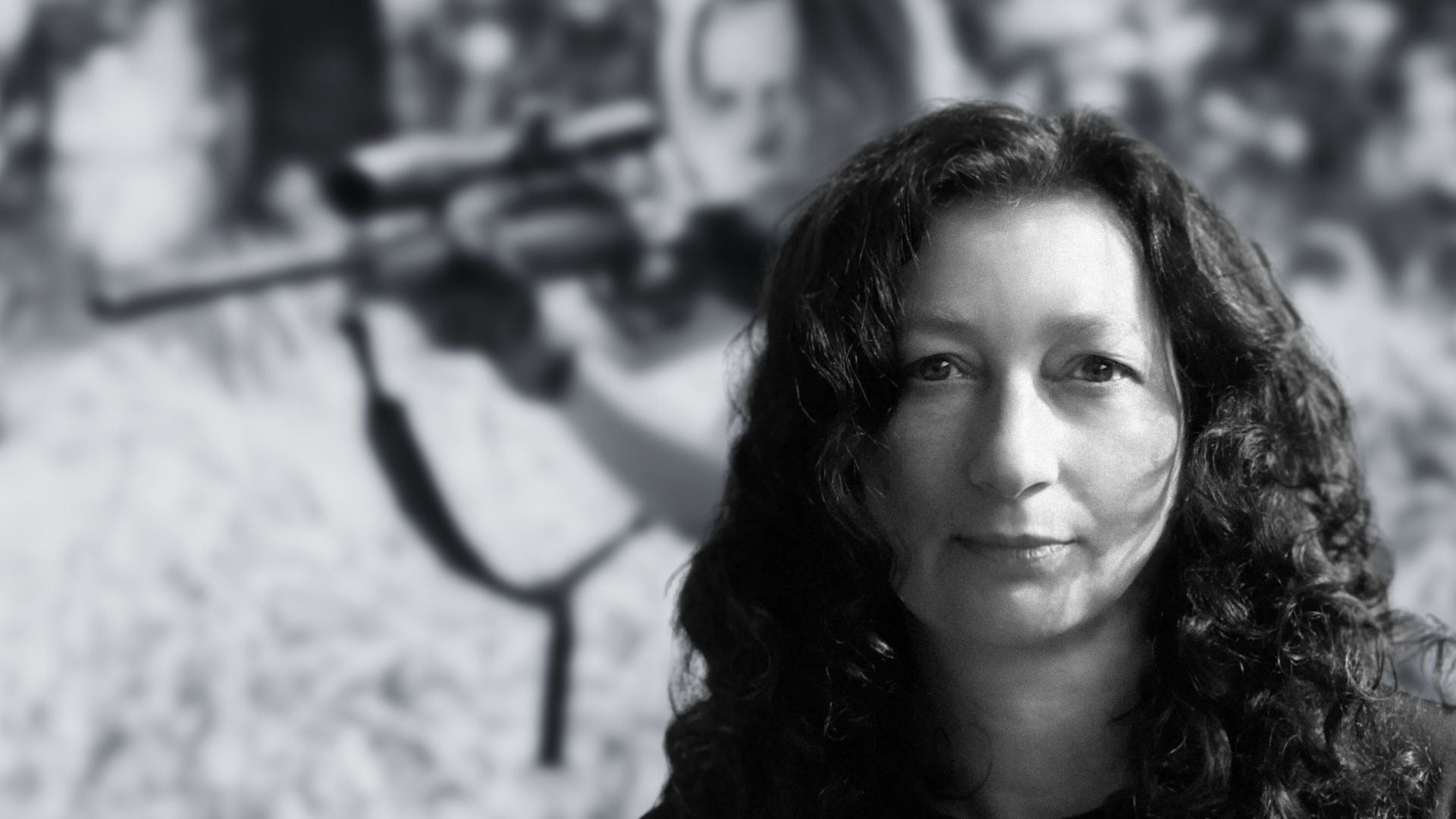
Interview with “Seven Snipers” Director, Sandra Sciberras


Hosted by
KT & Oti
Show Notes
This week we chat to Director Sandra Sciberras for the film, Seven Snipers. We discuss how the contrast of being a meticulous sniper vs the unpredictability of being a parent, shooting on location and grounded action cinema.
As suggested by Sandra, double feature watching of Seven Snipers & Predator.
SEVEN SNIPERS is in cinemas April 30
Note: this interview is audio only. For other video interviews, check out our YouTube playlist.
Episode Details
- Duration
- 0:00
- Released
- April 28, 2026
- Category
- Episode
- Hosts


Transcript
Transcript (2,563 words)
Full transcript of Interview with “Seven Snipers” Director, Sandra Sciberras.
KT: When a former elite sniper is hunted down by the ruthless warlord who once held her captive, she must fight to the death to protect the daughter she has raised in hiding, an ordeal that will expose everything from the past she has tried to bury. Seven Snipers is in Australian cinemas April 30, and we have a great opportunity to chat to the director Sandra Sciberras. Sandra, thank you so much for your time and welcome to the For Your Reference
Sandra: Oh, thank you. Thank you. Thank you. Yes. Hello. Nice to be here.
KT: Cinemas are so important. Watching in the cinema is very important and going to the media screening, uh, was a lot, there was a lot of reactions. Very audible. Oh, ah. Like a lot of reactions to this film 'cause there's a lot of pain and there's a lot of action, I guess so to say. And, um, you've, you've described your love for and channeling Grounded Action cinema. I don't know if we want to trademark it. Um, but, you know, films like The Hurt Locker and Zero Dark Thirty. Um, I guess before we get into the. Delicious nuts and bolts of this film. What was it like, I guess, evoking that sort of grounded action cinema?
Sandra: I think the best way I could describe that is to, is using the words like immersing yourself.
KT: Mm.
Sandra: You know, like really being immersed in in the, in the sniper head space.
KT: Yeah.
Sandra: Which, to me, evoked such terror. Um, to me that is high stakes kind of action, you know? Mm-hmm. So that's, that was probably the, the, the, the most important thing I, I wanted to do, and I needed to do for mm-hmm. Us for the, as as a viewer. And, you know, when I made this movie and I made this movie because I wanna see this movie in the, in the cinema, so I wanted to see this movie, and I like films like this. So it was, it was about, I think, immersing ourselves into those really quiet moments. When, um, when we're in that space. Mm-hmm. And we dunno what's gonna happen and the tension that comes from that. Um,
KT: yeah, absolutely.
Sandra: Yeah. Yeah. And the protection, you like the mother protecting her kid.
KT: Yeah,
Sandra: like that's pretty intense. And then the kid having no idea why she needs protection, it's like, what's going on? I was, I was just, you know, I was in a tent with my boyfriend, like, whoa, whoa, what am I doing here happening? You know, even that's, and, and that's really tense as well
KT: and I think that brings like the groundedness to it because, you know, I do love Fast and Furious and flying to the moon, but there is something nice about action that is grounded from, yeah. You know, it's tapping into like real life as real life as a sniper real life can get. Um, and you know, even reading through the press kit, um, and I guess also working with Andrew O'Keefe who penned the film, um, there's a note about him writing the script, but it really. I guess got its dimension, you know, after losing his mother and being able to channel that grief through there. If you don't mind sharing, I would love to know, I guess from your own experiences, what you injected into Seven Snipers to, I guess give it a bit more, you know, oomph and, and make it feel a bit more real.
Sandra: I think. I mean, you know, I have two sons and I'd stop at nothing. So I would absolutely stop at nothing to to, to save them in whatever way that is. Yeah. So I think being a parent is probably the most, um, the first thing I would bring to a role, like to, I brought to the film and when I read the script, that's what I read.
KT: Hmm.
Sandra: You know, the, the fun director in me, the who, who wants to make a film with, you know, with these kind of elements, that was a secondary thing to, to the actual heart of the story. So what I, what I took from the film, what I connected to was Chris Hendricks and the idea that something bad is going to, will stop at nothing to take. Her kid, and she will stop at nothing to protect her kid. So that conflict is Yeah, what I just imagined, you know, um, for, for, for me. And, and that's, and that's what connected me to, um, to the work that Andrew brought to the script. And then I took it that, you know, to the, to the, and I, yeah. Took it to the next level, the next different, you know mm-hmm. Movie. Yeah.
KT: And, and I think that is quite an interesting visual, but even narrative. Contrast of the psychology of a sniper being so calculated and methodical, and I don't even know what the barometer for the wind was, but it's like very, like very methodical in the way, um, you know, a sniper would operate versus being a parent. And I can only imagine, you know, raising a young woman in this film and it's messy and you wanna, you want kids to be able to be kids and gallivant around in a tent with their boyfriend, but sometimes you need to do your sniper practice.
Sandra: Yeah. Actually just need to do the practice that one day might save your life. And that's, and that's, that's the magic of what that secret world is. You know, Uhhuh for Chris Hendricks, she's been trained, obviously training this her daughter for a long time. Be prepared in the best way that she can. And so, um, yeah, I, I, I think that's, yeah, I mean that's what makes the story the heartbeat, right. Of the film.
KT: Yeah. And I, I guess also as women, there's so much dimension to us, but I guess also from a story point of view, was there, I guess for you moments where you're like, oh, you don't want her to be too. Not necessarily soft, but you know what I mean? Like, does she always have to be the, the hard line woman or can, like was that a kind of a, a balance for you? Or it just went with the story and where the performance—
Sandra: No, it was a balance. We had to be, it, it, you know, there we shot a lot of different varieties we shot, you know, we did shoot bits where Chris Hendricks was a little bit more kind to her daughter, you know? Mm-hmm. But, um. It kind of works against who it, it works against her, right? And so if she's not tough, she doesn't have a nobody, she has to trust her own instincts. So she's the only person in the room that really, really knows what's going to happen. So she has to be at that intensity and doesn't have time for her kid to cry. Doesn't have her time for her kid to. You know, do anything other than just listen to me. And then of course the kid doesn't, what do you mean I'm jumping on the motorbike? Oh, I'm gonna get my man, you know, and off she goes and the mother has to go after her. So it had, that is what we were saying before about that groundedness. Like it, that is, that parts of the story in the film is what makes the film to me a little bit unique in a very, very kind of, you know, violent, dominant world of
KT: Yeah. And it's like we can be soft once we're safe.
Sandra: Kind of, yeah, let's just wait till tomorrow. We've gotta actually get to tomorrow.
KT: Yeah. Like, fortunately, unfortunately, it's the way of operating in the world, right?
Sandra: Yeah, yeah, yeah.
KT: Um, there's a lot of tension and there's a lot of action in this film, and I guess from, 'cause even in the press kit, you know, it was talking about how, you know, the, the magic happens throughout, but especially in the editing. Process. Right. And I can only imagine, you know, what, what was been left on the cutting room floor. But I guess from a pacing point of view, um, to portray and to keep the tension. Was that a fun little dance? Was it a bit frustrating? 'cause you, 'cause to be fair, even in the film, in the first few scenes, the action is right there. The premise is right there and we're straight in. So I guess what was it like for you balancing or even if you needed to balance like that tension? That push and pull,
Sandra: it was important to take our time with the edit.
KT: Mm.
Sandra: I was explaining it to somebody the other day, like it's, it's, it's normally, you know, you can spend years writing a script to get the tension on this page, and then you shoot the film hard and fast, and then you come to the other end and you take a breath and then you go, what the hell did I just make? So, are you gonna, are we gonna lean more to the, are we going to move the audience with the camera more? Or how are we gonna find that balance? Because you shoot a lot mm-hmm. And you have a lot of choices. Um, so even though we, you know, we shot hard and fast for four weeks, like, but we actually shot a lot. So we had to find the balance between how much is just straight tension. And I love films that, that, that you kind of hear the heartbeat. Yeah. You know, you, you feel the heartbeat of these characters. Um, so no, we had to, you know, edit the film, take a little break, come back to it, edit the film, take a little break, come back to it. So we had, we had to do that. I always knew though, that the film was. Very tense from the beginning. So even though there's like a kind of a domestic scene going on between mother and daughter, blah, blah, blah, blah, she's never quite there. She's always waiting to put that binoculars up and see who's who's on her property. So I think. The music sits you in pretty early on, right? Yeah. The moment opening credits are on, it's all pretty, pretty, pretty. And then it's like, nah, let's not get too pretty. So we, we kept it tense from the beginning because you had to be in, in Chris Hendricks world very mm-hmm. Very quickly, you know?
KT: And, and speaking of like the visual, is it called a scope?
Sandra: Mm-hmm.
KT: Like, like how every character had their own scope. What was that process? Was it very like, fun and woo wooo of like their character traits are a bit more playful? I don't even know what a playful scope, just like, what was that?
Sandra: For starters, believe me, you know, a sniper, uh, they don't look like that, you know, but. We, we had to bring our own storytelling, uh, technique because we wanted, uh, the audience to understand, you know, who was looking through the scope. So
KT: as a way to like illustrate. Right.
Sandra: Just to illustrate and, and you know, we weren't gonna do that originally, but then at some point. It was kinda like, well, you know, I'm not, if I was making a real war movie, it would be very different. I think I would be like, almost like, obviously more loyal to those particular techniques, but we, we, we moved away from, from some of, some of the, some of that, some of the truth in order to mm-hmm. You know, make the film more, um. Understandable by all audiences, not just the mm-hmm. Not just the com, you know, the, the community. So we, no, I mean, no, we, we, we played with all those things. I mean, the, the scope is really important because how much of the film do you wanna see through it? And you wanna see the actor and how much of the grass you want, the grass. Every time there's a blade of grass, you wanna evoke tension. So you're not just looking out, you know, just looking at grass. You're looking for. Something, it's like, you know, if this was a shark moving, you are looking out at the water, you know that there's a shark underneath. Yeah. So you just dunno where it is. You're waiting for the fin to pop up. So for me, that was the kind of, um, you know, that's, that's the, that's the game we're playing, uh, from an, from a entertainment point of view, you know?
KT: Yeah. And, and, and to be able to shoot, was it a hundred percent on, like, on that farm, in one location?
Sandra: Yes, it was. Yes. Other than just the opening where we just went around the corner, you know, and shot the road, but no, we were, we were on the farm.
KT: Which I imagine brings its own challenges as well, right?
Sandra: Yeah, yeah, yeah. It was hot, you know, it was, but they were there, you know, everybody was in a, they were all in ghillie suits, you know,
KT: Uhhuh.
Sandra: I got to, I got to, you know, have my first iced caffè latte, iced coffee and I had about 20 of 'em a day, you know, to keep me going.
KT: Yeah.
Sandra: Because it was hot. Um, but we, it was challenging, you know? But when you're on location, it has its own feel.
KT: Mm-hmm.
Sandra: And I, I feel like we were really lucky that we could do it all in the one place, even though it was, you know, quite difficult. Um. Mm-hmm. It wasn't easy to do this, it was, you know, it was a challenge. Um. Mm-hmm. But then all films have their own challenges, so.
KT: Sandra, this has been such a great chat. It was really fun to see, like it doesn't matter, but it was fun to see a female protagonist like protecting a daughter and be able to chat and debrief with you afterwards. I wanna thank you so much for your time and wrap up with our final question. Uh, we finish off our reviews with a recommendation. So what would you pair with Seven Snipers as a double feature?
Sandra: Oh, wow. What a great question. You've got me though. Uh, can I go? Not can I go like retro? Can I go Predator?
KT: Yeah, absolutely.
Sandra: I'm gonna go Predator.
KT: Yeah. I love that. Do you have a reference? Uh, a preference on the ordering?
Sandra: Oh, snipers first.
KT: Okay. Absolutely.
Sandra: Snipers first. Uh, um, yeah. And then get into Arnie in Predator, that—
KT: I love it.
Sandra: I mean, I, I dunno why, you know, but now I do know why, because it's the dragon. The dragon is the predator. You dunno where he is.
KT: Humans first, then other galaxies. Yeah, absolutely. Sandra, thank you so much for your time.
Sandra: Thank you. Alright, have a good one. Thank you so much.
KT: You too. Take care. Bye
Related on FYR
Discussion
Loading comments...