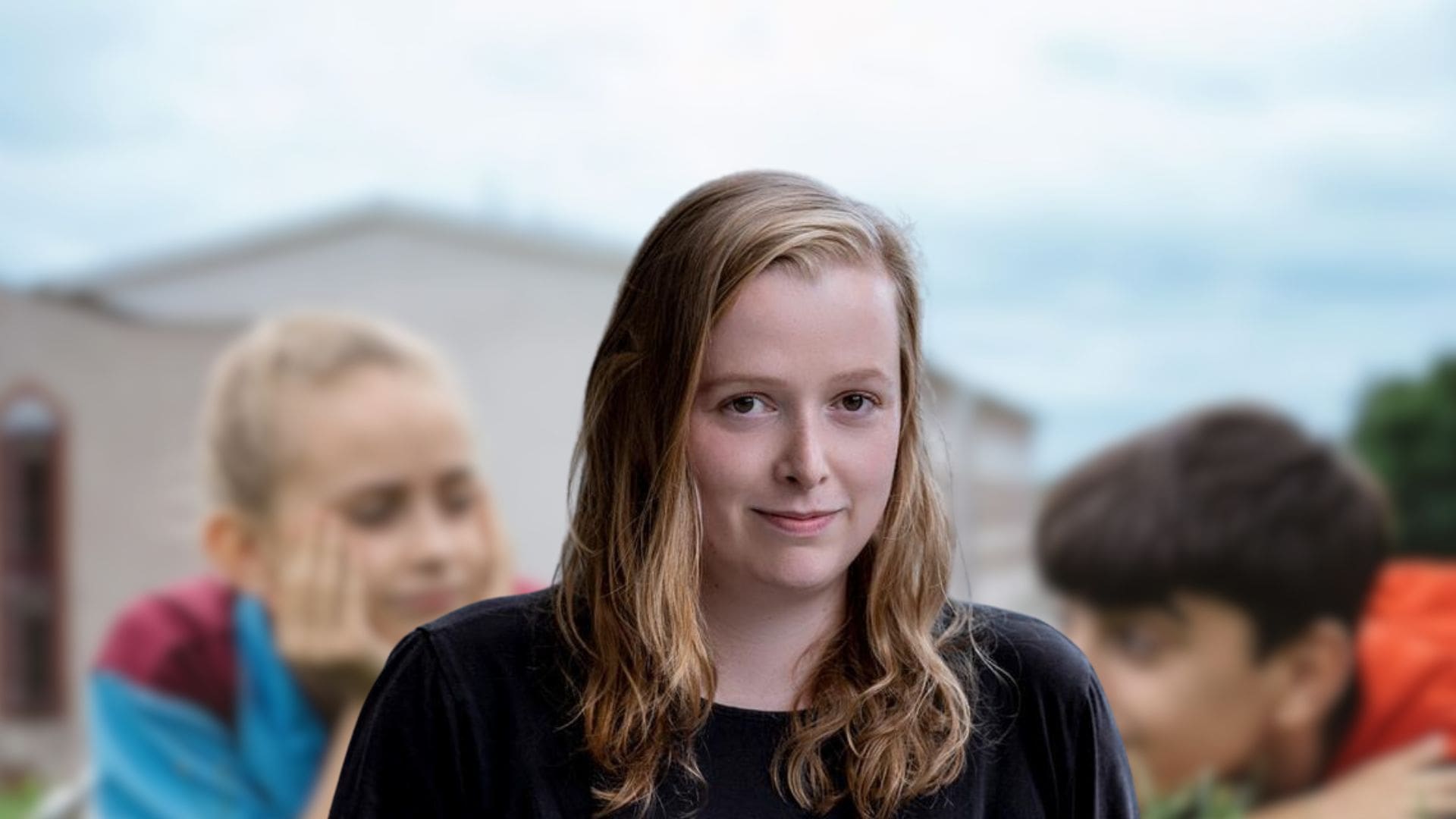
Interview with “Scrapper” Writer/Director, Charlotte Regan


Hosted by
KT & Oti
Show Notes
Chanelling raw emotions through music videos, award winning writer/director Charlotte Regan keeps the tempo through the world of cinema.
SCRAPPER follows a grieving kid thrust into adulthood and father in over his head. SCRAPPER is in select Australian cinemas September 14
Episode Details
- Duration
- 0:00
- Released
- September 12, 2023
- Category
- Interview
- Hosts


Transcript
Transcript (4,044 words)
Full transcript of Interview with “Scrapper” Writer/Director, Charlotte Regan.
KT: Channeling raw emotions through music videos, award winning writer/director Charlotte Regan keeps the tempo through the world of cinema. Scrapper follows a grieving child thrust into adulthood and a father in over his head. Scrapper is in select Australian cinemas, September 14. Charlotte, thank you so much and welcome to the For Your Reference Podcast.
Charlotte: Thank you so much for having me.
KT: Having you, holding us, like there was a lot of feelings in this film and I'm very excited to talk about Scrapper, especially Lola, um, as well, but I kind of want to start off with music videos. And I guess the, the nature of the music videos that you were making. Did the journey of capturing music videos to directing a feature film feel like a natural sort of progression for you?
Charlotte: Um, yeah, I don't know. Like, I think I found, like, even with this film, like we did some press the other day and everyone was like, how was it directing Harris? And, and I was like, oh, like with music videos, you like stand on a rooftop with like 50, you know. Rappers like stood there, like not wanting to act and you're like, please guys, could you just look a bit happier video? And so once you, yeah, I feel like it's a great environment.
KT: You gotta be rapping, you know, you gotta stay sponge in these streets.
Charlotte: Keep that moody face. Yeah, yeah, yeah. You've got to keep the fingers in ideal pointing position. Yeah, yeah, yeah, yeah. Harris is very, very chill in comparison. I'm very willing to...
KT: And you've worked with Harris before, right?
Charlotte: Yeah, yeah, yeah. We worked short back in the day, a very, a slightly dodgy short that we don't talk about, but yeah.
KT: Oh, okay. Yeah, yeah, yeah. It's the Voldemort. It's the Voldy. We don't talk about it. Yeah. Um, it's... It's a bit, it's a bit of a question that's a bit unexpected, so I might leave it for later in the interview, but there's a lot of, um, music video turned feature film directors, um, that I just want you to percolate and have a little think about, um, later on in the interview, but it's so cool to understand your context, um, and I guess coming into that context, you talk about Scrapper being a joyful story about working class worlds, right?
KT: So you're on an estate. It's set in the estate. I'm from Western Sydney, so I'm all the way. The other place. But even watching the film, I'm like, I've seen Georgie before. I've seen Ali before. Um, I've also seen Jason before. I've, I've dodged him, but you know, the world felt so real. And I guess because we are talking about class, there are definitely sort of like similarities as well. What was it like being able to, I guess, stay true to your own experiences that, yeah, there's the hashtag struggle, but there's a lot of joy as well.
Charlotte: Yeah, yeah, it was, it was always the most important thing to us when we were kind of developing the story is like, like working class people are allowed to be like joyful and they're allowed to be funny. So if anything, like hardship, I find breeds more humor than anything like dark humor is kind of my favorite brand of humor. So, I just didn't want them to be defined by their, their hardships or their trauma. I wanted them to be defined by like who they are, like what they love, like what they enjoy doing, their beliefs, you know, like, and that came from everything from the cinematography to the production design to just like letting people,
Charlotte: Yeah, exist in that joy. I hope.
KT: Yeah. Yeah, and I think it's kind of like that test of like, when you meet new people and you make a joke that maybe is a bit too far, I'm like, oh, you're not my people. You just like, you don't get it. Yeah, yeah, yeah.
Charlotte: It is the ideal, like, dark humor setting, innit, where you drop a dark joke and you're like, oh no, like.
KT: Yeah, and I think, I think it's also one of those things of like, you know, it isn't until like later in life. If you can afford therapy, if you have great people in your life, if you can enjoy little luxuries where you're like, Oh shit, like I've been through it. I continue to be through it. But like, as a kid, you're just out and you're living.
Charlotte: Yeah. Probably the world you're in is the. the best world possible, you know what I mean? You don't, like, think, oh, I have less than other people. It's actually only when, like, it's like you say, it's only, like, when I came into the film industry and then I met so many middle class people that I was like, oh, God, my upbringing was a bit different, innit? Because these lot are talking about a different kind of upbringing to what I know. But, yeah, so I can never decide if it's, like, Was, were our upbringings like harder or is it the lens of this like middle class perspective that is, you know, like making it feel that way? Do you know what I mean?
Charlotte: And the judgment of being in these spaces that we feel like we don't belong.
KT: Speaking of people that you've met throughout the filmmaking world, um, shout outs to Molly, uh, the DOP for the film. Yeah. Yeah. Yeah. Um, in a Wachowski Matrix sort of timeline, I did have a chance to speak to her about How to Have Sex, but this will actually come out before that, I think. But it's so good to be able to meet you and she's, she seemed great. You seem great. Like it must be such a great sort of creative space to be in.
Charlotte: Yeah, yeah, yeah. Molly is one of my best friends in the world. And we were friends before we started working together, which I think you don't get with many collaborators. And it's like, fucking incredible. Like, and she is an incredible, like just creative. She can do any role and she can. Smash it, you know what I mean? But it's amazing kind of doing the journey side by side. You know, like, oh, just text her whenever. Or she'll text me when we're experiencing something and we often find it's something both of us have had to navigate at some time.
Charlotte: And it's incredible having a friend who you can talk to about that for sure.
KT: Oh, that's great. Um, well, I guess let's, let's go back to Scrapper. Um, I wanna talk a little bit about the tone of the film and I think that comes to what we've already been talking about as well. Um, I think. Because I guess, um, we had Georgie as the center, I was expecting it to be a bit more like, I guess what I'm trying to say is there were some scenes that were more of like a slow burn or like, they just let the scene sort of, but, um, yeah, simmer into the next sort of scene, um, which was really cool because you can sort of build that sort of dynamic between Jason and Georgie, but I guess when you were working on the film, um, how did you decide on what the tone would be?
Charlotte: Um, I think it came, it came to us slightly when we set out to do like a joyful working class film and, and just like naturally the, the tone I love in films is like films like The Guard or films like Taika's film Boy and stuff like that.
KT: I was thinking Hunt for the Wilderpeople as well. When I was watching it.
Charlotte: Yeah, he just balances tone so cool and he's like so down to like take risks, and you know, and even if those risks are sometimes flawed. And I think we, me and my producer Theo always said we'd rather make like a flawed film that takes risks over like a perfectly packaged film that doesn't do anything different, I guess. Yeah, so it came from that, I guess, yeah.
KT: Yeah, so it's like a living and breathing. Um, sort of energy. Uh, one of the core sort of themes that were explored in the film, it was more, it was more just an underscoring as opposed to being like the core sort of piece, but grief is explored, um, through this film and, you know, insular stories about grief are really my thing. Like, I just really enjoy those sorts of films. Um, and I think, you know, through the last few years, all of us have been through some sort of loss. And I know this is a joyful film and it is about a young girl as well, but what was it like channeling something as heavy and also as connecting as grief in Scrapper?
Charlotte: Yeah, no, it was, yeah, it was quite magic, really, like, um, when I was writing early on, I lost, like, my, my dad and my nan, and I actually found, like, um, looking into, like, how kids deal with grief and children's books was actually helping me to cope with it more than, I was reading so many books about it, like, written by adults, obviously, and I just find that adults tend to, like, Yeah. Make it like an academic sub subject, like, or make grief, like something logical. And it, and it's not, you know, it like, it can't be defined or put in a box. And I think the, the kids stuff I was reading was, was more willing to, to see that and to like be present and to just be like, your emotion might be this today and it might be this tomorrow.
Charlotte: And that's just like life, you know? And I, I, we're laughing, we're crying,
KT: We're feeling everything.
Charlotte: Yeah, that was a much better approach. I feel like with everything in life, grief included, we could always all do with being a bit more like kids or a bit more connected to who we were as kids for sure.
KT: Yeah. Yeah, it was so great to explore, I guess the dynamic between Jason and Georgie, in that it wasn't like, Oh, we don't want him here, or maybe we want him here. Like I feel like for myself anyway, watching the film, I felt the way Georgie felt, I was like, I'm not sure about you, but I'm okay, let's see how this goes.
Charlotte: Yeah, yeah, yeah, which was very much like what was happening with Lola and Harris as well. Like Lola is a very suspicious person. So she was like, I think I like Harris, but you know, he's got to win me over. He's got to grow on me, you know? So it was, it was great that like their relationship was because we filmed semi chronologically, obviously not always totally, it's not possible. But so it was mimicking like what was actually happening. So it was lovely when we got to the end, like the, where they dance in the hangar is our last, the last scene we filmed. And that was when they were at like the peak of their friendship and they'd grown over the six weeks.
Charlotte: So it was great that it was like happening in real time as well.
KT: Yeah. Yeah. The, the train station scene was my favorite one in particular. Was that, was that an easy one to, was that an ad-libby sort of scene or was it all pretty scripted of narrating over that couple?
Charlotte: Yeah, yeah, a bit of both for sure, like Lola is naturally a heavy improviser, so she loves to improv and yeah, her audition tape, right? She's insane, she can just talk rubbish for hours, honestly, she really can. It's incredible. So a lot of that we we workshop that scene. That was the scene we went through the most like when her and Harris first met in particular and she brought incredible ideas to it and so did Harris. They're probably responsible for like most of the good dialogue in the film, I'd say, yeah.
KT: It's just it's such a great inshallah. Um, something that I really loved as well was the, I, I don't want to spoil anything, but I guess just the sense of imagination and we really get to that sort of build up throughout the film as well. Were you one of the kids that had like a really big imagination growing up?
Charlotte: Um, no, I don't think so. I was pretty. Yeah, that didn't have much. I read loads of fantasy books. I was obsessed with the Harry Potters, the Lord of the Rings of the world, but I couldn't create my own stories at all. Yeah. Yeah,
KT: Well, that's the thing, right? Because it's like you told me there's a dragon on the page and I'm like But I like, people are imagining things and I'm like, I don't, I don't, I don't see it. That's it. Yeah, yeah, yeah. I think it's that struggle, you know, it's just like, we take it for what it is. If you tell us what it is, that's what it is. Do you have any sort of favorite music video turned filmmakers? I was trying to think of some.
Charlotte: I'll go quite, I'll go quite recent, I guess. Um, I love A.V. Rockwell's film. And what was that film called? A Thousand and One?
KT: Oh, yes, yes, yes, yes, yes, yes, yes. That was beautiful.
Charlotte: I've seen music videos from A.V. Um, and then Savanah's film, Earth Mama. I kind of love some of her short film short form work back in the day as well. It was incredible. Um, and then, uh, we had like, uh, it was like banging the perfect cinema film. We had over here like Rye Lane, um, and the director came up with like with short, like commercials, music videos, stuff. So. That was one. How about you? What's your top three? But this is like straight off the dome.
KT: Are you sure you're not a rapper? You just had it all locked and loaded. What are you saying? Who's some of your gems that have gone to... Well, I always talk about the most iconic opening scene in all cinema, and it is Hype, DMX and Nas, it's just gorgeous. Um, I just, yeah, it's just, it's effortless and it's great, but I'm making it about my film stuff. So we'll continue. But I just, like, it's just a gorgeous, like, it feels like a whole music video, but it makes sense to the narrative. But yeah, maybe there'll be like a Belly adjacent in the States, you know. Yeah, yeah. I want to talk a little bit about the Sundance Ignite program, if that's okay. Just for aspiring sort of filmmakers and creatives out there.
Charlotte: Yeah, yeah, of course. Um, yeah, it is, it is like this incredible space, like being a part of Sundance in any way is just sick, like they are legends and the community is incredible. But the Ignite program in particular, like you got to, I can't remember how many it was. I feel like there were 12 of us from around the world, like who were at similar stages in our careers. Um, and just that in itself, like the same thing I'm talking about having Molly as a mate, you know, like meeting people that are. At a similar stage to you, we all still speak to each other to this day. And that was over five years ago that we met, you know, and we were across different, different countries or whatever. Um, and then you get given like incredible mentors and just like, you only have to ask Sundance to like, try and introduce you to someone and they'll be down to try it, you know, the person that willing to help, you know, and still to this day, like that was a one year scheme and I still feel like they are a massive
Charlotte: like part of my career, and you can give them a shout if there's like something you want to ask. And yeah, it's just sick, it's sick to meet so many mates that are making films and feel so inspired, and then obviously getting the free Sundance tickets and flights, banging, because who else at that age can afford to like, yeah, go to the accommodation is spending at Sundance. So that was a pretty mad experience as well, yeah.
KT: Well, that's what dreams are made of, right? It's a hundred percent. Yeah. But I, I honestly feel like that's the best way to make films. It's not, not that the traditional route of filmmaking is a bad thing, but it's more. If you have the experience and if you have stories to tell you find your way to make the film as opposed to being there and being like, give me your story. Give me your story. I'm going to tell all of your stories.
Charlotte: Yeah, yeah, hundred percent.
KT: Yeah, yeah. Um, in regards to the film there were some really cute sort of moments with Ali and especially the mom being like, where's your uncle I've never met your uncle like all of those sort of things that just felt so natural to, I guess the working class sort of environment. Is that like the stuff in the script and like building the character sort of interactions, was that something that was? Pretty much easy to do.
Charlotte: Yeah, like, I don't know. Theo, my producer, was a big part of that. And, and just the cast do it, you know, like, we just had such a sick cast that were like, would take my awkwardly written scenes and, and run with them, you know, with a worse cast. I don't know if worse is a word, but we're going to run with it. Uh. It would have been much much dodgier. Um, so yeah, we didn't think about it too much. They felt like characters we knew and recognized and we always grounded ourselves in that as long as these characters feel real and feel like people we've met in these worlds and we're not kind of going too far into fiction then it's calm.
KT: Yeah. Yeah. Do you have a favorite sort of scene that you shot throughout the film?
Charlotte: Oh, I'm mad. I don't get mad into this. I hate watching the film. Um, probably, Lola says her favorite is the train station and I'm happy to follow Lola's, Lola's lead. I'll take that one as well. If that's her favorite, it's mine as well.
KT: Yeah. Yeah. Well, I think that's a good answer as well. How is it being... Involved from end to end in regards to the film, writing, directing, editing as well. Like how was it being involved throughout the whole process?
Charlotte: Um, no, it was like, it was magic, you know, like that's kind of one of the things I love most about film is like, like the change of pace and the change of people, like you go from pre production where it's like loads of talking about things and these fictional ideas that you can't envision properly, and then you're on a shoot and it's like chaos, and then you're in an edit with like one person and you just sat there chilling like having bougie salads for lunch. And it's like the, the change of, the change of pace and the different environments you get to be in. I don't feel like many other jobs kind of offer you that kind of like varied structure. I get like super, super bored like really easy, maybe that makes me a boring person, but I'm mad with like, I can't even in the edit, I have to be given like Lego sets to build or a drawing to do because I can't just sit there.
Charlotte: So Molly is exactly the same with me. She's obsessed with Lego. Um, so yeah, film is great for like, yeah, just like the stimulation of like different people in different environments is amazing.
KT: Yeah. Well, you talked about Theo. Well, what's that working relationship about? We love a shout out. I also love how just very naturally you're bringing your people and you're bringing your team in. You're giving them a shout out. I want to hear more about your sort of working together on Scrapper with Theo and also other projects as well.
Charlotte: Oh yeah. Theo is like one of my favorite humans in the world by far. Um, I've actually moved into a new flat and he lives two roads away from me. So definitely a big part of my move was like, Theo's nearby. I can like hit up Theo if I'm in crisis, you know, like you worry. When you live alone, that you'll wake up in crisis. And I'm like, Theo will be there. Um, yeah, he's, he's one of my best friends, me, him and Molly were very much like, uh, like a trio of like, sit together on nights off and talk about the film or just not talk about the film, but just hang out together, you know, and we, and we still do, we used to do that.
Charlotte: We'd call them family cinema nights with the three of us. Theo would pick something super arty and me and Molly would be like, let's just go and see this Marvel film, innit? This banger.
KT: I think this film is about systemic oppression and all of that.
Charlotte: Yeah, he's all about, he's all about the films that stick with you for the weekend, innit? Yeah. That's why yeah, he's incredible. And he's incredible with script. He's, he's great with cast, you know, he's just the perfect kind of like partner through, through work.
KT: Yeah, yeah. It's a gorgeous balance and it really comes through in the film as well. Um, I'd like to wrap up with our final question. We finished our reviews with a recommendation, so what would you pair with Scrapper as a double feature?
Charlotte: Uh, oh, whenever anyone asks this, because it gets spoke about so much, all I can ever think is Aftersun, because like I still need to see that. Oh, it's a banger. Yeah, yeah, yeah. It's sick. Um, so I'm going to say Aftersun because it is what like some of my favorite reviews are like, um, my, I think my mom found one on Letterboxd and I was like, I love the bad reviews. If I'm feeling good, they like bring me mad joy and my mom loves them as well. And like my favorite one yet was, um, This Charlotte is the worser of the two Charlottes, the other Charlotte who made Aftersun is a much better. And I'm like, that is a poster quote, bruv, like Picturehouse, everyone should put that, that's a poster vibe.
KT: So as a fellow, reviewer slash critic in my dark little damp corner of the world, reviewing is weird. It's a weird space, but if you enjoy it, then that's okay. But it's. It's a weird place.
Charlotte: Yeah, you have to have an opinion and you can't like win everyone over. And the, so I'd say a hundred percent Aftersun, the, cause we get compared to it all the time, which is the biggest compliment because it's like an incredible film. Like you've got to see it is like, like floors you emotionally and has some of the most amazing performances. It's like one of the most confident first features I've ever seen for sure.
KT: It's beautiful. Don't tell anyone, but you can tell everyone that you're my favorite Charlotte. Thank you so much. Double feature of Aftersun and Scrapper. Thank you, Charlotte. It was so great to meet you. Thank you. You too. Have a good day. Cheers.
Related on FYR
Discussion
Loading comments...