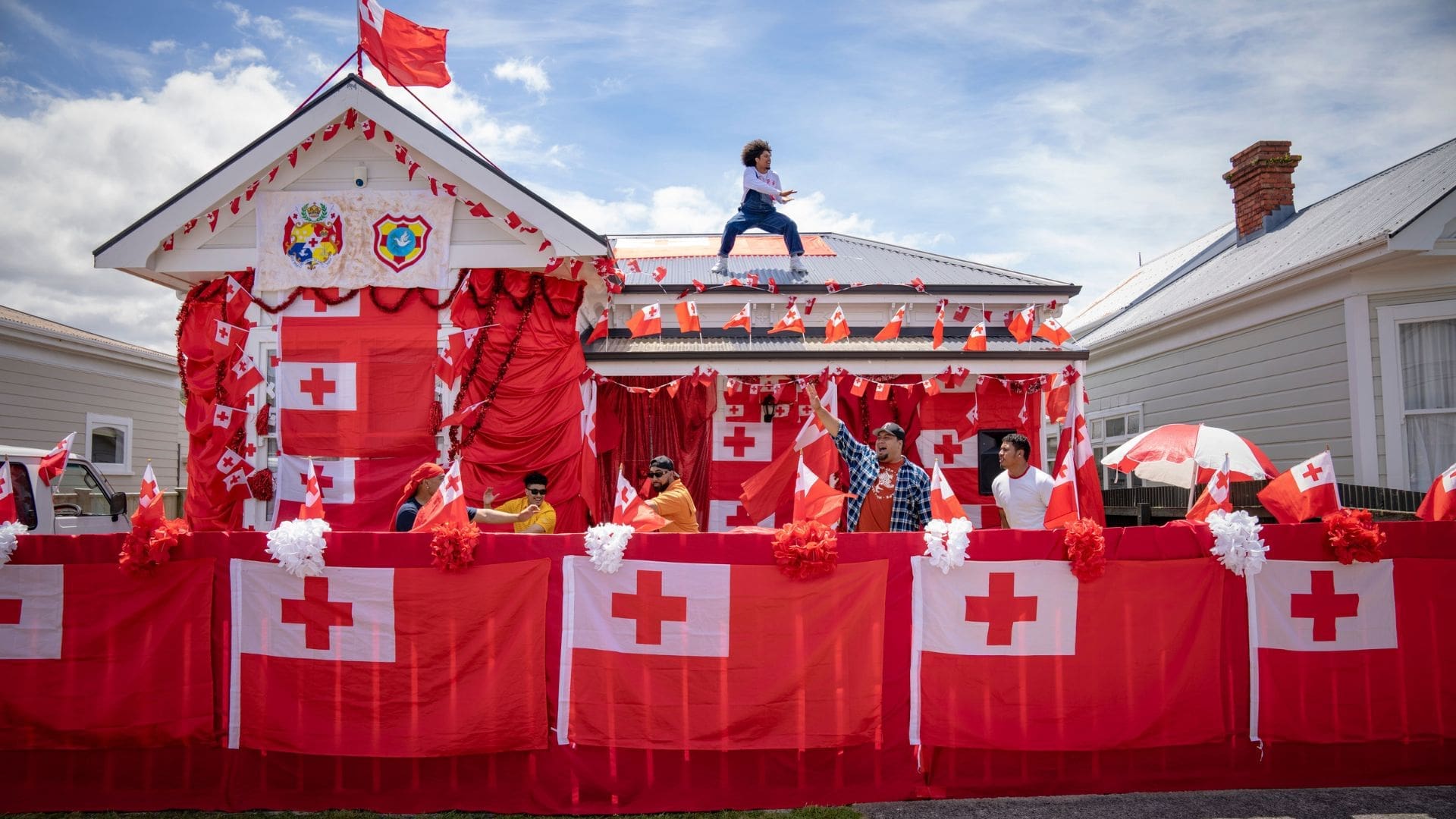
Interview with “Red, White & Brass” Director/Writer, Damon Fepulea’i and Actor, JP Foliaki


Hosted by
KT & Oti
Show Notes
Mālō e lelei & Tālofa to two amazing creatives that embody the well-deserved attention and excitement for Pasifika storytelling in Aotearoa and world cinema.
Damon Fepulea’i is an Aotearoa-born director of Samoan and European heritage with work spanning an award-winning short film as well as directing in television.
Aoteroa-born Tongan, JP Foliaki, brings the mafana in the lead role and draws on his professional and creative capacities, always with the heart of the community at the centre.
Red, White & Brass will have its Australian premiere at Sydney Film Festival after its release in Aotearoa and screening in film festivals HIFF and LAAPFF.
‘RED, WHITE & BRASS’ is in cinemas on June 22
Watch the video version of the interview:
Episode Details
- Duration
- 0:00
- Released
- June 16, 2023
- Category
- Interview
- Hosts


Transcript
Transcript (5,413 words)
Full transcript of Interview with “Red, White & Brass” Director/Writer, Damon Fepulea’i and Actor, JP Foliaki.
KT: Mālō e lelei and Tālofa to two amazing creatives that embody the well-deserved attention and excitement for Pasifika storytelling in Aotearoa and world cinema. Damon Fepulea’i is an Aotearoa-born director of Samoan and European heritage with work spanning across an award-winning short film, as well as directing into television. Aotearoa-born JP Foliaki brings the mafana in the lead role and draws on his professional and creative capacities always with the heart of the community at the center. Red, White & Brass will have its Australian premiere at the Sydney Film Festival after its release in Aotearoa, as well as film festivals, the Hawaiian International Film Festival, as well as the L A A P double F. Red, White & Brass is in cinemas June 22. Damon and JP, mālō. Thank you so much and welcome to the For Your Reference Podcast.
JP: Thank you for.
KT: Well, this is really exciting. We have Damon with his feature film directorial debut, as well as JP in a leading major role. I would love to get just an idea of how that felt, what the process was like. Damon, if you want to go first, if that's okay.
Damon: Yeah. Yeah. Um, yeah, once again, thanks for, uh, having us here and that was an awesome, uh, promo for us too. I was getting, I was getting goosebumps. I was like, wow, I'll send the clip. That makes us really good. Uh, yeah, I, I, um, came on board part way through the process and the story is a true life story and, uh Oh yeah, yeah. Yeah. Basically, uh, had the story and, um, the two of us, uh, wrote, wrote the script together. Mm-hmm. And yeah, that's how it sort of all started for me. Like, um, and once the film was green lit, um, I was on as director as well. So yeah, it was very exciting for me.
KT: Was there much of a difference between like directing Head High? We really love in the For Your Reference podcast, by the way. Oh yeah. Super fans. It's a shame it's not continuing. Um, but yeah. So how was it directing and television to film?
Damon: Yeah, I, I had, um, quite a, a, a varied sort of, um, uh, CV in terms of the sort of things I've made. And, uh, I, I did spend about four or five years just doing sketch comedy, which I think. Fast turnaround television, which kind of, um, put me in good speed to do something like this, I think. So it was kind of my training ground because we'd always, with sketches, you are always kind of making different genres all the time. It's like, oh, we're gonna do a trailer. It's like a horror. Oh, we're gonna do like a, a musical or So, um, that helped. But then the difference going into film was just how long everything takes.
Damon: Like with film is like a. It's a, it's a beautiful medium. Like, you know, it's a, um, but everything is like, it just requires more lighting and more time. Everything's kind of more, uh, there's more work goes into it. Whereas in television it's just like, oh yeah, you set it up, you, you shoot it really quickly, then you move on. And, um, even though we didn't have a lot of time on this film, it was, um, yeah, that, I think that was the biggest challenge was just to get everything shot. On time. Mm-hmm. But on, on a, a sort of, it's like a, the difference between going in a, a car and a bus, like the bus just takes longer. Once, once you are kind of, uh, decided on how you're gonna shoot a scene, it's like, oh, if you try to.
Damon: Veer away from what your plan was. It takes a long time to kind of, uh, adjust. So yeah, I re, re difference reroute. Yeah. I was like, oh, ok. Go slow. Kind of move the bus there, then back, and then round and so yeah, I thought, yeah, that was the trickiest thing for me.
KT: I think it's also, um, it's good for people to know how long it takes to make a film. I guess like any good relationship, it's a long suffering and it's like you need to navigate it, you need to get through it. Um, yeah. But JP, let's talk about Maka. I think all families, in my Tongan family, we definitely had a Maka. I hope it's not me. As much as I loved your performance, I hope it's not me. Um, how was it being? In the lead role, and obviously we need to talk about the Tongans of it all, but how was it being in the lead film of the Tongan feature film?
JP: Yeah, I was honestly incredible and like quite surreal. It's that type of thing where that happens or it's happening and you. You almost can't believe that it, that, that it is, or that you've been blessed with this opportunity because I think, um, you know, I jumped into this acting space quite late. Um, but it's never too late. But I mean, you know, in comparison to some of my friends and stuff, uh, it was something that I p uh, picked up and got interested in recently and. Before this, I had only had, uh, small extras role on Polynesian Panthers that Noah was also co um, co-producer of, uh, and was on there as well.
JP: Yes. And he had seen, and he had seen, um, you know what I was like on social media, he had seen me like on a reality TV comp. Uh, so he had seen what I was like on screen and then like what I was like online and then just like, I think. Who I was as a person and then got me in for an audition. So cut and past, I went through that process and when I found out that I got the role and when I was reading the role as well, you know, when my family read the brief about Maka, because not gonna lie, I actually am that Maka and my family Maka is like 10 notches up.
JP: Yeah. But, um, you know, just outside or in that ballpark, I. When I read that out to my family, like recently as well, uh, there's just like far, it's like that role was written for you. And, uh, my family's like, man, is this, is this a movie or is this a documentary on your life? Cause like, I also do music and I'm for mm-hmm. Forever, like pulling on my family and my friends. Like, you can come and do hair and makeup, you can come and do choreography or come be a dancer. Like, you know, and it's just, Selling everyone that they can be a part of this thing that I'm trying to drive. Mm-hmm. And then to be able to get a role like this, obviously on a much bigger scale.
JP: Um, but uh, it meant a lot and it was, yeah, like I said, quite surreal. And it's just buzz honestly, to be able to get a role that I can relate to so much, um, that I can understand. And be a part of like, obviously the Tongan culture and all the different characters that are in it. Um, yeah, it was, it was an incredible experience. One that I'm still buzzing out to, like right now, like, we're in Sydney for the film festival in 2000 people. Blast is gonna be there tonight. It's like, What, just when you think, you know, just when you think, yeah, it's finishing up, like this moment is coming to an end as god's, like,
KT: it was, it was funny watching your performance because again, like every, even just, even just island families have a Maka, right? And like there were moments where I'm just like, ma. One of the characters, I think it was one of the aunties, like, said it at the same time and I turned and I'm like, there you go. If you know, you know, that's how you, it's, it's just Correct. Yeah,
JP: it's very, yeah. That's honestly just shows like the power and the importance of um, yeah, like. Our own stories being told by our own people, but in a way that's, you know, relative to the wider audience and that we have an audience, um, for these film companies and studios and people that have the resources to invest and get these stories told.
KT: I think what's also beautiful about that is recentering, right? Mm-hmm. It's, we're going to make a great film. It's gonna mean a lot to us. And if you wanna come along the journey, that's great as well. You know what I mean? Um, but see, it's talking about mai, like even mafana as well. Um, it's interesting because it's one of those words where, you know, and I've, I know you've done it in all interviews or be nice if you'd like to, um, give your meaning as well. But even trying to explain it is something that's more than, it's more felt than it's explained. You know what I mean?
JP: You know, it's so funny because when we, you know, we was right throughout the script and then obviously we experienced it as Tongans. Um, but when you are asked to explain it, we were like, uh, uh, when we were doing like our, uh, media briefing, like right before this all started, and then, um, we're like, man, it really is that, uh, Like a combination where always saying like, of like happy emotions, pride, joy, um, and you know, even like being brought to tears when you're talking about things that you love or it's really important moments in people's lives and your loved.
JP: Expressing that love and gratitude for you, that's also mafana as well. And like my mate was saying, you know, mafana can also be like when you're giving a hundred dollars for Tauna and you don't have it, you don't, you need that money for gas. Yeah. Uh, but it's all right. The car can run on mafana as well. Like there's just so many different versions of mafana that we.
KT: We need to, we need to talk about the inflation of mafana though. Inflation.
JP: Yes. See, that's another one that's, that's gonna be like, you know, like, uh, what do you call it? Like, another term that branches off mafana. But yeah, no, it was just so cool to be able to, um, um, get the opportunity to bring that to life. Um, yeah. Yeah, absolutely. Put it on screen.
KT: I would love to talk about, um, the production design and the costume. And obviously I don't want to take too many, um, moments, um, in regards to it, but there was a return missionary as someone that grew up moment. Um, there was a return missionary comment. I, it had me out, like I got knocked out. We needed to pause the screener. Um, but I wanna talk about how important production design is and also how important. Costuming is, especially to a film like Red, White & Brass.
Damon: Mm-hmm. Yeah. We had, um, it was really important for us as well to make sure that everything was authentic as possible. So we had, um, em who did the production design mm-hmm. Um, was awesome cause cuz she is Tongan, but she's also like, um, yeah. She just brought so much like the reality and it's me being non and I was always. Like, we'd have all these discussions early on in the pre-production and, and we'd talk about things and then she, to explain to me a lot of the things of like, what, what these things are.
Damon: And there there's a lot of, yeah, cuz now that I've seen the film so many times now, I look at the background and I'm always like, and I, I, I kind of buzz out on the little details that I missed. You know, when you are, you are looking at these faces and watching that, and then, Sometimes they're like, why is there so many pictures of horses in the background? I dunno if that's a Tongan thing or it's, that's a loyal horsey.
KT: Kinda, yeah, hecka, horsey time, Damon.
Damon: Yeah, I was there. Things like that. And, um, but it was just, um, and one of the most joyful experiences was actually, um, because we originally were gonna film in Noah's actual church, which was in the, in the heart of, it's in Wellington City, but it. For a lot of, uh, reasons. It was gonna be too hard to film there cause we couldn't get parking and couldn't set lights up. So we had this big search for a church and then when we finally found the place, just both EMS and I were kind of looking at each other and we were just fell in love with this, this location.
Damon: And it just had the feel that just felt right. It felt like, um, it, it was a, a smaller church so it had kind of this feeling of um, being a little bit more underdog as well. And, uh, But also the, the, the people there would the, there was like a garden there and the, yeah, the, the first day when we went to look at the place they had, um, they were giving, they had fruit and vegetable boxes for people. So it's just kind of a, a general nice feeling about it. And, um, yeah, I don't know what the question,
JP: and, you know, it's even funnier, you know, it's even funny. It's Samoan church.
Damon: Oh, so they
JP: came back. We put up the Tongan, we had that big shield on the wall, and they came. It actually got put up on TikTok the week we were filming there. Yeah, when you can come back to your Samoan church and there's a massive Tongan shield on the wall, that's crap. But yeah, s killed it. Daisy, she's, she's not Tongan, but she was, Honestly did her research, eh? Mm-hmm. Uh, she was costume design. Um, s yeah, she, art department. Um, hiv, uh, yeah. She was amazing. Again, that thing of like making sure that you have, you know, people that are from that world that, um, are able to, um, be on board the project and mm-hmm. Uh, bring that authenticity to it.
KT: Nathan Lee is Tongan to me. Oh yes.
JP: Well, he's now, he's now, yeah. Go
KT: him in the church. Yeah, yeah, yeah. All together.
Damon: Yeah. But even the, um, I think because Noah was on set most of the time, he was the sort of the, the guardian or the gatekeeper of making sure that everything was authentic. Mm-hmm. Partly to the time and the place and to his family, but also that it was Tongan and even down to like the haircuts. Because like all the haircut for Samsoni was like very specific. It was,
KT: I love Samsoni. I think everyone had a Samsoni growing up. Yeah. Like a random, not even a relative, just like staying with you for an indefinite amount of time. Yeah. What actually be more like Sam?
Damon: Yeah. You know, that haircut was very specific and they, they did it the first time and I was like, oh no, it's more like this. And. I think it was like, oh, we'll go see my cousin. Yeah,
JP: that's, it was always that and you know that, um, what in the return missionary line, like that was adlib and we were always like, when we got what we needed, um, Damon and Noah be like, okay, we've got what we needed. Like, you guys can adlib now. Or even sometimes we'll just be cheeky and we'll just. Adlibs and then they're like, what did, what did you say?
KT: Oh, I loved it. It was so delicious. Cuz to me, all the ika, you know? Yeah, yeah, yeah. All the, Wellington Tongans were always cooler, uh, especially with like the brass bands as well. I was like, oh man. And then when they had that line, I was like, this is for me. Specifically?
Damon: Yes. That, that was one of the things that was important for us as well, because that was a line that, um, not everyone would've got, but it was like for no, Noah, that was one of the lines that Noah really fought for in the, in the, um, post-production process. Yeah. When you're kinda like, you've got those, you've got the film and you've got the story, and then you've got those variations of takes or like a line where you're like, oh. You know, would enough people get it? Do we go for the joke? Do we go for something else? And that, that was one of those lines that Noah was like, ah, no.
Damon: Tongans will find that funny. Yeah. And he fought for it, so it was, but they're
JP: honestly dying, eh, when they hear it. And I was like, fuck, I didn't realize it was that funny. That's just, that's what I mean, like, so normal. That's just like us talking to our cousins that look like return missionaries.
Damon: Cause they're,
KT: I'm excited for the premiere tonight. Uh, it's gonna go off. It's gonna go off. Or if you hear one person cackling, it's me.
JP: We can't wait to see you there then.
Damon: Yeah. Um, so there, it's a massive theater too. It's like apparently seats 2000 people and I was like, what? That's yeah. So, so hopeful.
KT: It's, it's gonna go off, it's gonna be exciting. Yeah. Um, there are a couple of themes that I wanted to touch on that are inside of the film. Um, I wrote or bust, that's the way I wrote it, um, of coming up together. If we come up, we come up together. You don't go around and do your own thing, we're all gonna come up together. I wanna talk a little bit about, um, the story, but also in the making of that, cuz you know, even talking about the production design, how everyone just came together.
Damon: Mm-hmm. Yeah. I mean that, I think that in terms of the, um, Some of the th I mean, we were, we were always like, the film was an exploration of what it, what it is to be Tongan and to be, um, Pasifika as well. And, uh, when we were writing it basically the, the two lead roles of, uh, Maka and Vinny. Yeah. Was pretty much Noah and me. So me being Vinny as like a, a Pacific Islander who's not as, um, A attached to my culture and to who's kind of, um, doesn't speak the language and is, has been sort of slightly removed from, uh, my Samoan heritage. It was kind of like a lot of Vinny's character was me or my, from my experience. And it was, and for Maka, you know, it was like Noah was embodied, embodies Maka, and it was kind of like, Kind of, Vinny is kind of like, we explore what it means to be Tongan.
Damon: Is he? Mm-hmm. To me, to me the film's actually Vinny's story in, in some ways a few are gonna break it down as character thinks that the, the, the character who, um, Changes the most or has the biggest arc is, is Vinny, he, he sort of starts as the, the, the plastic Tongan who, um, you know, does, doesn't have the Tongan church clothes and Hook doesn't speak the language. Yeah, yeah, yeah. Brown on the outside, white on the inside, and, uh, always been called plastic. And that was, um, so his journey was kind of, In some ways how, how we explore the themes of the films. And so you've got Maka as the character who was, um, explaining this is the Tongan way and he does it throughout, whether it's through his words or even demonstrating, oh, you know, this is how you cut the, the taro.
Damon: The taro, yeah. And it's like that, that, that was, um, the relationship and that was kind of. Yeah. Vinny's journey as he goes, you know, becomes more Tongan. And so, um, by the end of the film you see him in his fully, um, well, spoiler alert, fuck, he's, you know, performing. Um, and he loves it, you know? Yeah, yeah. There's no spoiler
KT: to Tonga Pacific at Joy. Oh,
Damon: I know. It's a happy he finds this happy place, but that, that was, uh, yeah, a lot of the themes we explored through that relationship. Mm-hmm.
KT: Don't worry, like sitting there in a dark room sipping wine is definitely me. Oh yeah. Think of all the times. But I think even, um, it wasn't specifically on Vinny, but personally in my experience, was a conflict of prioritizing my parents learning English. Which is also, you know, me not learning Tongan as as much as I could have, right? Mm-hmm. So it's understanding that complexity and you know, all of those layers as well. But, um, mm-hmm. I absolutely resonated. There was definitely notes in regards to Vinny, um, going through these sort of experiences, a lot of pivotal sort of scenes character growth.
KT: Absolutely.
Damon: Mm, yeah. Yeah. That, yeah, I mean that seemed, we had, um, we actually ended up cutting that one down a bit, but there we had a lot more of. Like, um, cuz Vinny basically hosts all of his friends, uh, cousins to come and watch the Rugby World Cup. But it's kind of like they all just showed up in that scene. Yeah, yeah. They basically us there. Yeah. But we, we had a extra part where it was like he'd put on like all the uh, like um, the snacks were like, tapas kind of like bougie kind of food and had the red wine and little,
KT: a bit of goats cheese. You reckon?
Damon: Hummus you reckon? Yeah. Hummus. Oh my gosh, yes. Forgot about. Yeah. And then, uh, that
JP: didn't make
Damon: the cut. Um, it didn't make the cut. There's a few scenes, but it was like, um, it, we, we, it was just kind of extended that whole thing of like all the boys going, Hey, where's the, where's the chicken? Where's the, yeah, could we just get some KFC or. Yeah,
JP: it was a funny scene. Extended version coming soon. Yeah.
KT: Yeah. Um, JP, did you wanna comment on anything about being Tongan enough? Not being Tongan enough
JP: being, yeah, I think, well, just going off like Vinny and his journey, I think even though he was obviously starting from a place where he was quite disconnected from his culture mm-hmm. Um, Uh, I think a lot of people can relate to, and he did drive that, that storyline of the, that constant, um, conflict, you know, between wanting or wanting to be Tongan, but not feeling Tongan enough or not feeling, um, close enough to your culture, not knowing your language enough. So how much can you actually claim to be. Um, of that, you know, particular culture. Uh, and I think he drove that really well, that was so, so strong. But also, um, you know, the, the different nuances that come with being Tongan and then, you know, the. Conflicts we face with our parents and wanting to do things that I could relate to as well, you know, um, not following what I was, what I studied.
JP: Mm-hmm. But doing, you know, working in this industry now, um, trying to convince people, it's like it forever trying to convince people that, you know, we do have what it takes or that, yeah, I have what it takes or that we can do it not to worry about what anyone else thinks about you. All those types of things that we experience as Tongans we're able to bring to life through the film. And I. Even though it was like a comedy, um, acting those things out was quite surreal and like, you know, we felt more fun about it. Um, a lot or like a really hit home when we're having those, or filming those scenes. Cause we know what so well, you know, being told that you can't do this because people are gonna look at our family fund or you shouldn't do this because that's not what the sacrifices were made for.
JP: Um, yeah, like all those. Different, uh, I think nuances of being Tongan, and all our different experiences were able, the, I guess everyone that was involved in the film was able to bring it together to, um, create this beautiful story that everyone could relate to regardless of whether you're Tongan or not.
KT: I wish we had the time, but I would also plug to our friends and lovers to check out JP's interview on the Pacific Morning Show. I think it's called Pacific. Oh, yeah, yeah, yeah. It was really good. Like I really appreciate it. Um, yeah, I know what it's like to be on like the outside trying to get inside of the community. Um, but yeah, I wish we had the time, but, um, I do have a question before we get to, um, the final question. And it's pretty much, you know, we're like the Pacific United Nations at the moment, and it's like as a.
KT: As a Tongan, like, I dunno about the word critic, but as a Tongan film person being able creative to cover a Tongan Thank you. Um, a Tongan film with Pasifika, you know, to have this interview, it really means a lot and it hits different. Um, absolutely. And I, the question that I have is when we come together, you know, it's always a good time, you know? Mm-hmm. But how do you know that this wasn't just gonna be all fun, that you actually tapped into something special?
JP: I think for me it was when we did our first table reading because we're all, you could feel it in the room that we were like emotional by the time we got to the end piece. Yeah. Um, yeah, and I think there's some things that, like you, there's some things that, you know, that's just God's work. Like you can feel it. Like there's no way that with my lack of acting experience, that I could have got a role like this that I can relate directly to and be able to carry it out. Do the role of justice. Um, you know, if the right things didn't align for me and, you know, it can all be fun and games and we love to have a qta and it's, you know, we know how to have a good time.
JP: Yeah. But yeah, there were several moments in the film when we knew it was gonna be something quite special. Just the fact we were able to have mom and dad on set. Noah's parents, that first table read, like I said, uh, you know, seeing the uniforms. We would walk past a costume room and would see it. There you come, man. Yeah. And then actually being able to put it on. Um, yeah. And everyone else you'll see, you'll see what else? I mean, go watch the movie.
Damon: Yeah. There was, I think for me it was the, um, there was a scene where we filmed, there was a, uh, a hymn that mm-hmm. The, the, the band performed before they go out to do their final performance. And in the script it was always an important scene, but it wasn't. I think in some ways it becomes, uh, one of the most important scenes in the whole film because it's kind of the culmination of, um, and also you see the main characters, not through words, not through like scripted words, but you see that moment of change that happens as they perform.
Damon: And it's kind of that moment when you see Vinny kind of fully connect to his Tongan heritage, like proudly singing. And then you see also the, the journey that Maka has had, who, who's kind of, um, in some ways almost a petulant child who hasn't got his way at the end suddenly. Yeah. Like feeling, um, a sense of responsibility that he's gotta go about regardless of how he feels. He's gotta go and represent, um, his, his community in the best way possible. And it, it never occurred to me really, I didn't how important that scene was. And then when we filmed it and. How good the singing voices of this crew are, this cast. And um, I remember when, uh, Tony, who was our sound recorder, um, cuz I, I kind of listened when they do a performance, I'd listen on headphones and they, they're not very good.
Damon: It's kind of like you get sort of a, a basic, the sound coming through. And then mm-hmm. After one of the takes while we were resetting, Tony came up to me and he, uh, played back like, The good version. Like a, yeah, he kind of did a quick mix and he gave me his expensive headphones and he put it on. Mm-hmm. It's like tears coming down and people walking past going, what's wrong with him? And it's like, but I had that moment of just realizing, I think that was the moment of going, oh, I think we've got something special here. Like if just, um, just from hearing the sound of the, of this, of the song was, um, was, was pretty amazing.
KT: Yeah, therapy is very important. I believe in therapy, but hearing Tongan hymns out loud. Oh, that will heal everything.
Damon: Oh yeah, yeah. You forget about hearing everything. You're like, that's
KT: ok. That's alright. Like, I'm fine. I'm floating. Um, if we can quickly finish off, um, we finish our reviews with the recommendation. So what would you pair with Red, White & Brass as a double feature? As
JP: a
Damon: double feature? I think my. No, I'm still thinking. Yeah, I'll, I'll go while you're thinking. Uh, yeah, I think my one would be Cool Runnings. Ah, oh nice. Nice. I think that was our kind of, for me that was like one of the more kind of inspirational films for me when we were sort of trying to work out what, what is this kind of film's kind a fish out of water pie, but like this, like seeing these Jamaicans, like in the Winter Olympics, it was kind of like, oh, seeing this group of Tongans kind of.
Damon: Out in a car park playing the instrument. So it was, it was kind of, there were a lot of parallels, but also I think we wanted to do something similar in terms of, uh, the emotional journey, getting the feels, and also just in terms of tone that it's like, oh, here's a family film. Everyone can go and watch it. It's not, um, it's, it's, yeah, it's a, it's a broad film made for everyone.
JP: Mm-hmm. I think definitely Cool Runnings agree with that one. Uh, also maybe Sister Act 2. Uh, Drumline. Yeah. Sister Act 2. Some aspects really reminded me of that, that whole, you know, that whole, uh, cast on Sister Act 2, they had to create a choir and get to like an end competition, uh, and go up against the church really. Uh, and. Parents telling them not to sing. You know, that reminded me a lot of that and Drumline for obvious reasons of the instruments and stuff was a lot of fun.
KT: I love that question cuz it's, and it was also so like, easy for you guys to be able to answer that as well, but it helps draw. Um, so go and watch Red, White & Brass twice, but also go and watch those films as well. Mālō ʻaupito, thank you so much, um, and congratulations on a great film.
JP: Um, Mālō, we'll see you later tonight.
Damon: Will, thanks so much for.
Related on FYR
Discussion
Loading comments...