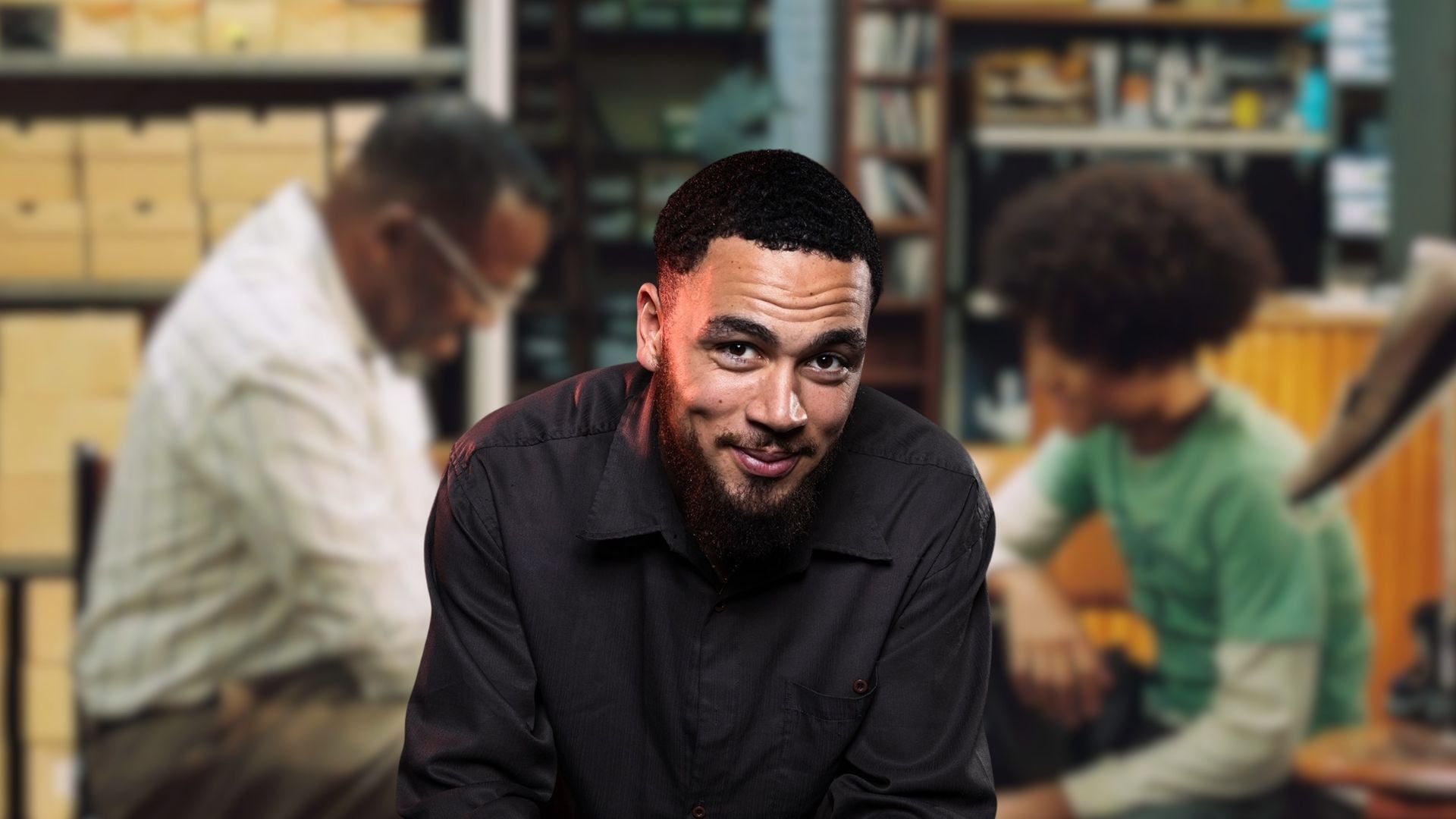
Interview with “Pasa Faho” Writer/Director, Kalu Oji


Hosted by
KT & Oti
Show Notes
This week we chat to Writer/Director Kalu Oji for the film, Pasa Faho. We discuss how the visual language connects to past, present and future as well as writing from experience and exploring big themes through characters that feel like real people.
Pasa Faho has special event screenings across Australia, with more to be announced. It will also be released on SBS later this year.
- Lido – Feb 5 6:30 PM
- The Sun – Feb 6 6:45 PM TBC
- Mercury – 12 Feb 7:00PM
- Thornbury Picture House – Sat Feb 14 3:50 PM
- Brunswick Picture House – Sat Feb 14 5:00 PM
- Cinemateque @ GOMA – Feb 15 2:30 PM
- ACMI – Feb 19 6:30 PM
- Launceston Film Society – Village Cinemas – Feb 23 6PM, 25 4pm & 6:30PM, 26 Feb 6PM No Q&A
- Luna Leederville – Feb 25 6:30 PM
- NFSA – Feb 28 1:00 PM
- Narooma Kinema – March 5
For info on more screenings head to their website: https://tendays.film/PASAFAHO
As suggested by Kalu, double feature watching of Pasa Faho & Black Orpheus.
Note: this interview is audio only. For other video interviews check out our YouTube playlist.
Episode Details
- Duration
- 0:00
- Released
- February 9, 2026
- Category
- Interview
- Hosts


Transcript
Transcript (3,798 words)
Full transcript of Interview with “Pasa Faho” Writer/Director, Kalu Oji.
KT: A struggling shoe salesman and his 12-year-old son must rekindle their estr identities or risk losing everything. Pasa Faho has special event screenings across so-called Australia with more to be announced also on SBS later this year. As an Australian, I'm very excited because being on SBS is very legit. It's a life experience. Sorry, I'm messing up the intro. We're gonna keep it in. We're doing it live. No, I love it.
Kalu: Yes. We feel the same way.
KT: We, we have the chance to chat to writer director Kalu Oji. Uh, welcome so much, uh, and welcome to the For Your Reference podcast and thank you for your time.
Kalu: Thank you for having me. Thank you. Thank you, thank you.
KT: I don't know if anyone's told you this, but I feel like we've known each other lifetimes and I think that's a compliment. To you, but I'm very excited to talk about this film Premiered at Melbourne International Film Festival. Congratulations on Best international feature film in the African International Film Festival.
Kalu: Thank you. That was
KT: special credit credits, accolades all around the world.
Kalu: Yes. Slowly, slowly. It's beautifully beautiful.
KT: I guess I just wanna start off by saying congratulations. 'cause I, I imagine making a film, not your first film, but making a film and getting it seen to all the people you wanted to be seen by is a lot. So I just wanna say congratulations and just check in. With how you're going right now.
Kalu: Thank you. Thank you. Yeah. Yeah. It's, it's a, a mountain indeed to be honest. Massive, massive last couple years, and I think this part of the process is so. Nice and gratifying and this very inspiring, you know, since releasing the film in August and taking the film around, uh, America and Africa, and now a little bit in Europe and across across Australia. It's just been, yeah, it, it's been joyous to be honest, to be really joyous. And I feel like each time we show a new audience, the film has kind of hits you with all these, all these points of reins inspiration, so,
KT: mm-hmm.
Kalu: Thank you. And it has been, it's been beautiful, but not, not. The easiest two years.
KT: Yeah, yeah, yeah. Like, like in a good way.
Kalu: In a good way. In a very, in a very satisfying way. As we stand here today,
KT: well, I'm full of compliments today because your press kit is great. It was a very, it was a delight to read, but it was also very nice to look at Uhhuh. Like I'm pretty sure you've written, and you've probably read a lot of press kits, but it's so textual and it's so collagey, and you can feel like, and there's even some q and a. Questions, even some good little nuggets, but there are some in there. I don't know if it's open to the public, but in the press kit you talk about what it was like directing Titans legends, uh, in Cinema Nollywood, as well as first time actors as well. I guess, you know, from your point of view, what was it like? Obviously you've talked about in interviews of it being based off. Like some of your experiences, but what was it like going from page to screen with these first time actors as well?
Kalu: Hmm. Oh, wow. It was such a, such a wide ranging, uh, set of experiences with the and, and set of relationships. but I think one of the, you know, one of the things that was, I, I guess at the. At, at the very core of our methodology was this idea of collaboration, to, to kind of build these characters and to, to cast people early, let people in early, get people in early. and so I think a lot of the, especially for the fir for the first time performers, and a lot of people who were local, you know, we, we had so many conversations and we've done so many workshops or auditions and, or these idea ideas that had been. Uh, germinating for ages. So I think by the time we got onto, onto set, you know, especially as people who are stepping onto set for the first time, they come with a lot of nerves. Yes. But a lot of excitement as well. Um, it, I felt like it, it was this kind of final push or this final wave into getting what ended up being some really, really beautiful scenes and really beautiful interactions and, and really natural interactions and things that I feel like maybe wouldn't have, um, maybe wouldn't have carried the same, uh, excitement and joy had they been, you know. Seasoned actors. insane. All of that. uh, working with Okey. And, and Tyson as well. but, you know, having someone say, someone, say Okey's case who's had decades of, of, uh, experience was, I think as I, when I reflect on it, maybe one of the, one of the decisions I'm most grateful for, for making, throughout the casting process is, is, is approaching him and, and casting Okey. 'cause I think he, um, yeah, there's, there's a lot. I learned throughout that process. And there's a lot, you know, to, he, I think what he brought to the film would, would've been very, very difficult to find in, anyone else. So yeah, it's a, it was a beautiful experience and wide ranging
KT: and I think it's one of those things like what's understood, you don't need to explain that. Right. And I feel like, like world cinema is so exciting, but I feel like a lot of us are storytellers even without. Trying so it makes sense even if people haven't been in front of a camera before, because you know, we, we are who we are and we carry who's been before us and what we carry ahead as well. So it was just really nice to have. That vibrancy and that texture. And I guess for a little moment I kind of wanna talk about, because like I was trying to set the film because I was like, oh, okay, like we've got the beaded curtain. That could be any point in time in an ethnic household to be fair. But then, uh, Binna talked about a laptop and I was like, hang on. I was like, so where are we like in this continuum? But I think that speaks to how timeless. Culture is as well. Mm-hmm. Mm-hmm. Even if we are, you know, forward a bit too forward in the technologies, we still have that sort of grounding as well. But I wanna talk a little bit about like the visual language and the texture to the film.
Kalu: Yes, yes. Very much so, and I'm glad you've just, you've used all those words now describing it because they're all the words and we it out all
KT: the shirts. I was like, every dad, every uncle. I was like, did you, did you grab it out of everyone's wardrobe? Like,
Kalu: I think you can make a film in a hundred years from now and they'll still, people will still be wearing those shirts. The uncles will still have those shirts on. Um, but it was that, you know, the aesthetic aesthetics are so important to me and, and to, I mean, to every filmmaker. Um, but uh, this, the idea of it. Feeling like an artifact or feel feeling timeless, as you said, was also very, very, very important to us making this film. for a, a few reasons. One, you know, as a, as a director and as a film lover, I think that's what I'm drawn to stylistically and aesthetically and, and tonally. you know, most of the films I've fallen in love with and continue to fall in love with a, of films that have some kind of shade of that. and, uh, so I want to, you know, bring that into our own work. But at the same time, I, I think I was quite aware that we were telling a story that was gonna be shot in 2024. It was going to be released in sometime the, the next year or two afterwards. but it was exploring these characters and these ideas and these questions and these conflicts that have been, here for, you know, the last 20, 30 years. Uh, and so I wanted to capture a sense of that. I wanted to, when the audience watches a film, whether you are Igbo or not, whether you are Nigerian or not, whether you're African or not, whether you are, whatever you are. There's this feeling that you are opening a world that, uh, is new to you in that moment, but that feels like it's been there for decades and, and we get an understanding of that.
KT: It's kind of like that coloring of like, actually, I don't know how young you are, but like in a photo album where you have the film and like, hell, that coloring and that sort of nostalgic sort of comfort, I guess. Yes.
Kalu: Yeah, yeah, yeah, yeah, yeah. Very much so.
KT: there are many big and heavy but very successfully explored themes in this film. and I think that's one of the best things in regards to a film where you have a theme or, you know, an experience you might want to talk about, whether it's obligation, whether it's expectation, you know, all of those sorts of things that make us, us and interconnected in, you know, a family sort of dynamic. How was it having themes that you. You know, you could talk about, you wanted to talk about, but explore through characters that felt like real people.
Kalu: Mm. Yeah. That's so nice. That's a good question. a few things I think. As you've said, there are some very, there's some big themes in here and I was trying to have some big conversations, particularly within community. one of one, one part of that is, and similar to the films we made previously, uh, I dunno if I'll ever not talk about themes that feel big or at least big to me. But, I never want to be too didactic or I never want to explore 'em at the expense of, I guess. Uh, how one might experience, uh, one might experience a film. I, I, I, I want the, I guess I'm quite aware of, you know, the emotionally how I want the audience to come out of the film.
KT: Mm-hmm.
Kalu: I think at the, at the same time throughout the development process, 'cause I was exploring these big themes, uh, and I was, you know, I have my lens and I have my body and my experiences. It was also quite conscious of, of. having these conversations with, you know, with, with, with as many people around me as I could. and, you know, and using this stuff to inform the script, to inform the work to, inform the characters. And so I think what, uh, the, where we, where we kind of came to by the time we cast the film, by the time he stepped onto set, was this, I guess a, uh. A collage, or it's a, almost like an, like an open discourse had been kind of channeled into each of these characters. 'cause each of them is, is representing a theme or a set of themes. but it's, you know, even we had the character of Buke or Bin or Amaka and they're all, they're very specific to who they are in, in the film. but. The, each of them have at least 10 people speaking to, you know, what, what that experience, what that experience is or what that, you know, what that conflict is that that character's dealing with. And, not necessarily that's stuff that's being written on the page, but it's, it's I guess, a in in informed by a lot of, a lot of people's, perspectives. So I think that was probably, what was, what was important to me, if we're gonna put these characters in front of the camera. We're gonna feel quote unquote real. Mm-hmm. With, to feel not so, not purely singular, but, to, to, to feel rounded and honest. yeah.
KT: Uh, my, my partner's Kenyan, Oti. Mm-hmm.
Kalu: Avi happy.
KT: So it was quite, um, yeah, shout outs. Uh, but it was nice watching the film. With him and, you know, having moments, I was like, is this triggering? Is how you feeling? How, let, let's check in, let's check in. Mm-hmm. But it's, it's nice to be able to experience a film that feels like there are a lot of themes where it's like, it's not as if, like you said, not you want it, you don't want it to be like. And this is gonna be a scene that is traumatized or, and a affect him for the rest of his life. You want it to feel like if you get it, you get it. Mm-hmm. And there were so many moments within the film, specifically with a and and you want that 'cause that's that juice, that's that currency. Right. Does it ever feel too close though? Or is that a fun little balance for you to like stop your heart and yourself from feeling too much or is feeling too much? The good thing?
Kalu: Uh, I think I'm still, I'm still probably learning the answer to this question.
KT: Mm.
Kalu: I think there's so much, there's, you know, I put so much of myself into, into my work and not just Pasa Faho, but every single film I make, it's, you know, it's, it means the world to me that time. So I do think this, you know, making Pasa Faho did come with that layer of U I'm exploring things that are very, very close to home, and ideas that I've sat with and I think about, and, and they do mean the world to me. and I think there's, so, yeah, there's, so there's pros and cons to that, to that decision. Uh, in, in terms of having access and having an understanding and, I guess having material, which I just, you know, I would, I would, which I would die for. but yeah, there is, there is a trickiness to, to, uh, within that as well. And I think, you know, part of it was, you know, that I guess it, it didn't inform, the, the, like the real staunch desire for collaboration and for kind of, the, uh, Story, collaboration, speaking to people with different people's experiences and, not trying to have just one singular voice. but yeah, it was, it was, um, it pros and cons. Pros and cons.
KT: Uh, and I guess in regards to that, 'cause you talked about building of a team, uh, Ten Days. If we get some time, maybe we can shout out and talk about, a lot of the good work that you guys are doing. 'cause it, it really is like. It's never just one person. Right. And I think that's, that's part of the mark of how lovely and generous people are like yourself that just so naturally speak to the team sort of effort. But what I wanna talk about is the women of the film, Amaka. I, I don't wanna spoil too much 'cause it is a gorgeous film and it should be enjoyed as you're watching it. But there is, uh, I would say pivotal for her character. the kitchen scene. and uh, last year, uh, we had the opportunity to interview Rungano for On Becoming a Guinea Fowl.
Kalu: Oh, nice.
KT: Yeah. And we, like we, we talked a lot about, or I'm Tongan, but we talked about like in culture being women and the weight that we hold. I guess the easy answer is your team, but I guess in general of Amaka as well as the matriarchs and the women, in that particular scene. Did it feel like you were observing it from a distance, or did it feel like you were inside of that sort of moment because you've been, you know, running through the kitchen, hearing these sorts of conversations?
Kalu: it def, it, it, it felt like I'm standing with a. In, in the, in the sense that those conversations are, are, are, you know, directly, that that experience isn't pulled from someone directly around me. But those, those themes and what she's experience, the emotions she's experiencing, uh, you know, uh, uh, conversations I've had with the people very, very close to me. and feelings I've observed and the people very, very close to me. I think there's always gonna be an outside perspective. There's always gonna be a kind of, you know, I'm always, I'm never gonna be able to look at that experience from. From completely, within, uh, but it was, yeah, it was, I I think like all the characters, to be honest, they're, they're all people who, who, you know, have existed in my life in some form or another, or thematically. It's, they're all themes that existed in my life in some form or another.
KT: Mm-hmm.
Kalu: Yeah.
KT: Is there, I, I, I guess, We don't have to get into like too much sort of detail, but there is a theme of church in this film. Yes. Yeah, yeah, yeah. I guess just to, to open up the vulnerability, there was a big Tongan church, like where there were fundraising for years. Fundraising for years. There's a whole conversation there. but there is a theme of church and faith and, you know, a, a closeness in the community. I guess it's kind of opposite to the feeling too close about personally. Did you and the team ever feel like, oh, we wanna dabble, but maybe not too close. We don't wanna get the aunties and uncles mad, or was it just focusing more on the story?
Kalu: Hundred percent that, that was, that was, probably, probably at the forefront of my mind the most as a writer of the film. but it was this, uh, I wanted to, I wanted to explore this, this theme and this through line. and, you know. It is tricky because the, the, a fundamental part of the modern Igbo identity, um, is, is to be a Christian. and that's so rarely challenged or so rarely. It's, it's very taboo to, to, to, to, interrogate that. Uh, and I guess, you know, so, so I, I did, I did feel, Uh, like trepidation, you know, in, in the development process around putting those ideas down and then particularly taking into people as well and, and, you know, just taking them to a lot of the, a lot of the people who were in the film of people we met with or I met with throughout the development process and shared the script with, and we'd talk about things. And so what, you know, to bring those ideas and to bring that into kind of interrogation to people is, yeah, I, my, it was my heart was boom, boom, boom. A little bit. At the same time, I think it's so much of the film, that aspect of it, that, that and every other aspect, whether it's Amaka's character, a Abus journey, or the relationship between Binna and a Abu, it, the film is trying to explore the things, and trying to bring to the forefront the things that we so often don't say. and so I think there was, um, there, there, you know, there, there was, I guess an extent. What, what is the word I'm looking for? It's not excitement or acceptance or what it is, but it was just, you know, it is quite matter of fact in a way and, and what we're present in the film and, and you know, what I believe to be true as well, and I think what most people, probably believe to be true is the duality of, of, of something like the church duality of, uh, it being. One being such a beautiful place where when, when diaspora exists in the community exists, has been kind of uprooted and finds home somewhere else, this becomes this, this, this port where people, uh, meet and celebrate and are supported and find safety, and find comfort and find community and all these beautiful things, which is so important within that experience. And at the same time, church is, I mean, historically it was a vessel that was used to colonize much of, um, much of the global south.
KT: I heard
Kalu: that. Um, and so, you know, that that's, it's, and that's, that's not lost on, on, on most people. Mm-hmm. so it's kind of, it, it's, it's, it's presenting both of those things. It's trying to talk about both of those things and not necessarily, you know, saying one, you know. Not necessarily saying anything, but it's saying a lot at all. Yeah, yeah, yeah, yeah. It's, yeah. Yeah. It's present, put in front of people.
KT: Kalu, you do big themes in film. I do big themes in, uh, interviews and that was on me for asking such a big question. as we are wrapping up, but I do, before we wrap up, uh, with the final question, I do just wanna quickly say. I really love this film. There was a moment that I wrote down, um, watching with Oti, if you disagree, disagree in your mind, like, yeah, there's like textbook conversations you can have, but there's an interconnectedness with culture. That is the whole conversation. It's not a textbook thing. So I really much, we loved, uh, your film so much and I wanna wrap up with our final question. Uh, we, uh, finish off our reviews with a recommendation. So what would you pair with Pasa Faho as a double feature? I know there's not much time. I'm sorry. It's
Kalu: nice. Oh, nice. double feature. Double feature. Double feature. I've put this in a document just today, so I'm, I'm gonna, it's the front of my mind. a film called Black Orpheus, a Brazilian film from. I think sixties or something. But it's beautiful. It's, it's, I think maybe I'm pairing them because they both, uh, there's kind of a, a, a colorfulness and the joy. but they also, it, it also explores some very, very, very poignant ideas. so yeah, Black Orpheus.
KT: Kalu. Uh, thank you so much Mālō ʻaupito on behalf of Oti, asante sana. Thank you so much for your time.
Kalu: Thank you very, very much.
Related on FYR
Discussion
Loading comments...