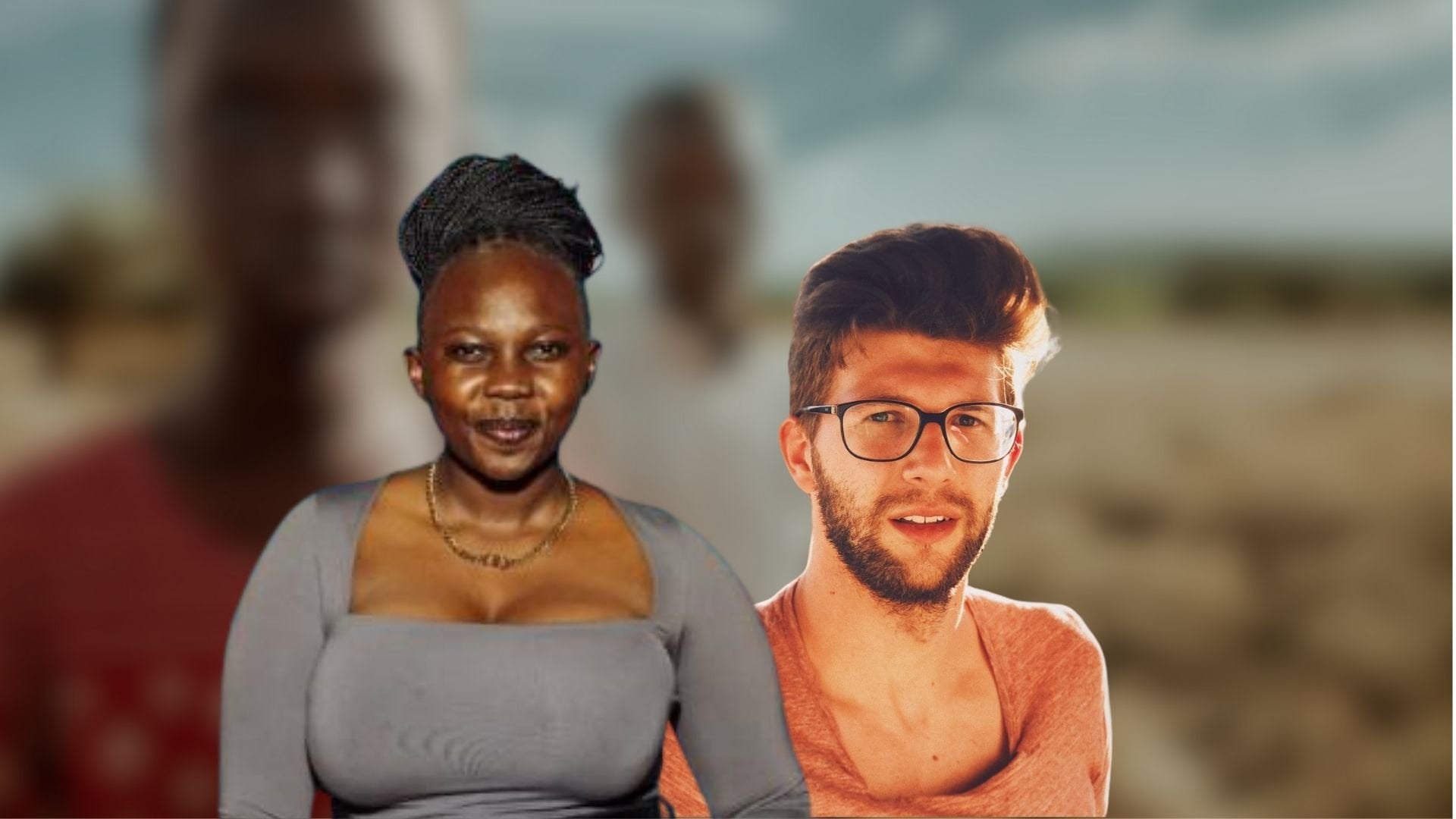
Interview with “Nawi: Dear Future Me” Co-Directors, Vallentine Chelluget & Kevin Schmutzler


Hosted by
KT & Oti
Show Notes
This week we chat to Co-Directors Kevin & Vallentine on their film, Nawi: Dear Future Me. We discuss the filmmaking process, balancing commentary and narrative as well as jovial moments on set.
Africa Film Festival will be running from Thursday Sep 4 – Sunday Sep 7. More details on their website: https://africafilmfest.au/
Nawi: Dear Future Me will be screening Sunday 7 September at Riverside Theatres, Parramatta.
As suggested by Kevin & Vallentine, double feature watching of Nawi: Dear Future Me & ___.
Note: this interview is audio only. For other video interviews check out our YouTube playlist.
Episode Details
- Duration
- 0:00
- Released
- September 2, 2025
- Category
- Interview
- Hosts


Transcript
Transcript (7,083 words)
Full transcript of Interview with “Nawi: Dear Future Me” Co-Directors, Vallentine Chelluget & Kevin Schmutzler.
KT: Nawi: Dear Future Me. Winner of Best International feature and best performance at the Raindance Film Festival will be making its Australian premiere at the African Film Festival Nawi: Dear Future Me will be screening at Riverside Theatres on Sunday, the 7th of September. Today we have the opportunity to chat to Vallentine Chelluget as well as. Kevin Schmutzler on the For Your Reference podcast. Thank you guys so much for coming onto the podcast today.
Kevin: Thanks for having us.
KT: There, there's so much to talk about, uh, in regards to Nawi: Dear Future Me, but even before we get there, I guess wanna acknowledge the film festival circuit and a lot of love, um, including the special jury award at the 15th Beijing International Film Fest as well. It's, it's obviously made a time, it's gonna have a time in Australia. How are you both feeling?
Kevin: So for us it was, it was great because it's an international project, but it's very Kenyan rooted. Um, and Val can can speak more on that, um, in a few seconds, but it was always when we made this film, like being basically two teams in one, like a local Kenyan team and an international team, trying to ensure that the film. Works in both, with both, both, uh, target audiences, like the local target audience where it's super important to spread the message, but also the international, uh, target audience. Because for, for, for like the European part of the crew, including me, it was super important to like, get the message out there and create, create a lot of awareness what that can then, um. Inspire change basically. And so it was always like, we were super nervous actually to see how audiences would react because we didn't know whether we accomplished that, um, to make a film that works locally and internationally. And so when we started, um, screening at those festivals and then, and then ultimately started like winning awards and everything, and like really winning awards from the Pan-African and Los Angeles to Beijing, like from the far west to the far east, from north to south, it was like really? Mind blowing to us saying, okay, like people all over the world can resonate with this story, can resonate with this little girl fighting. Fighting for her dreams, fighting for her freedom. And that was just so good to see that, that the film hits this emotional tone where people can relate to.
KT: Mm-hmm. Absolutely. Vallentine.
Vallentine: Mm-hmm. For me personally, I, I feel very, very, very proud. Fast because honestly. Even before we reached the international level, like in the local level, I was really nervous on how our audience, our local audience, is gonna take the film because it speak, it speaks on our culture. So just to have it being screened and people react to it positively and. Uh, people connect and resonate with the characters of the film. Was a proud moment for me and the film itself. Going international is also a proud moment for me. Going to the festivals and seeing people from different continents relate and connect to the characters and to the story and to want to change something about what actually happens in real life was, I can say like the film, the aim of the film was actually a success.
KT: Absolutely. And, you know, doing research for the film, um, and, and watching interviews as well. Um, it was nice to hear Milcah Cherotich talk as well. So, um, what I imagine would be the bones of Nawi: Dear Future Me, um, came through a national writing contest in Kenya from Milcah, and there was something that she mentioned in one of the interviews, um, about Nawi's character, in particular feeling guilty. About being a girl, about as women, that we don't have to pay the price for being women from marginalized communities. And that is a theme that is quite strong. That is kind of the, the flow, um, inside of Nawi and I, I, I guess it'll be nice to hear how it went from. Milcah's story all the way to, you know, the, the collaboration that you guys had. How was it being able to, I guess, keep the essence of Milcah's experiences as well as, you know, the tonal sort of notes that she had in her story and, and making sure that it also stays true to the screen in the film.
Kevin: And maybe, maybe I start with the structural part and Val then you can follow on with the, with the emotions. Um, so, so. We have to understand that at the center of the project, there is an NGO that is working in the region of Turkana, like in the north of Kenya. Mm-hmm. And that NGO is called Learning Lions. I understand. And they are doing a lot in terms of girls education, training programs and so on. Um, and they have started with this project by reaching out to filmmakers. Um. From Kenya, but also internationally. That's how my brother and I came, came into play. Mm-hmm. By saying, Hey, we wanna do a project here. Like a very collaborative thing. Um, we don't know what, we have a lot of issues here. The world hasn't seen it. The world hasn't seen this region. Let's brainstorm and get together. And that's how it all started. And that was back in 2017. So, so like now it's 25, so eight years ago, which is a long time. But every indie filmmaker who listens to this will, will be able to relate because it always takes these years to, to get something from done from scratch. And so,
KT: but the audiences need to know as well. Yeah, that's why it's always nice to have these interviews so people realize that it's, it's a labor of love. It's a long suffering labor of love to get these films made.
Kevin: It, it's a journey and every journey is a fight. Um, but then in the end, eventually, like in this case, you're lucky and reach somewhere and then it's the best feeling in the world, obviously. But so, so in 20 17, 18, 19, like groups of people, um. Were coming together, brainstorming for stories, trying to find stories, and it was always difficult. Um, with us. Europeans involved obviously because we have like a different angle on things and, and it always didn't feel right what we were doing. And so that's when the idea, uh. And it was Briza. One of our, one of our producers who is also one of the directors of the Learning Lions NGO, he came up with the idea of hosting a writing competition, um, throughout East Africa saying, Hey, let's just open it up and see what people wanna talk about. And that the topic of this writing competition was actually super wide. It was just about the future of Africa. Hmm. And, and as the Learning Lions are doing a lot of tech education and ICT education in their programs, I think the, the producers were mostly hoping for, for some African sci-fi stories to be submitted,
KT: uh, for futurism type.
Kevin: Yes. That was, that was kind of the, oh, and then we can use the people that we have already trained in VFX and do some light SAS and whatever. And then what happened actually was we had a couple of hundred submissions. But, but like three quarter of those submissions were coming of age stories. So it was, it was like crazy to see what the, what the people actually wanted to speak about and what they actually wanted to share. Yeah. And of these coming of age stories, again, like more than half of it was stories about early marriage and forced marriage and, um. The rest was like boys coming of age and, and these kind of, um, what we tried to mirror with the character of, of Joel then in the script. Mm-hmm. And Milcah submission was just the one that completely stuck out. By the tone that she used when, when she was writing it by the words that she used and how, and how the story flowed. And that was why like everyone in the jury, and it was nine people on the jury voted for the same story. And that was basically the, the storyline of Nawi that was then turned into a script. Mm-hmm. And in that process then also Val came on board and then, Val, maybe you can. Uh, jump to the second part of the question about the, the emotions and the guilt and everything, and how, how you guys tried to keep that together.
Vallentine: Yeah, so basically we, we had to do a lot of research and consultation to make the film, to maintain the o. Authenticity of the film. And I feel like the actors also did a lot of work. 'cause we had to, we had discussions on the scenes. We had to talk to Nawi herself because at the end of the day, she was still a 12-year-old girl taking this on this big role. And she had never acted before. So to make it as real as possible, we had discussions with them, we had rehearsals, we had, um. Script read throughs just to try and like, make the emotions and, um, the scenes, uh, feel as real as possible. And even the dialogues, we worked a lot on the dialogues so that when they speak them, um, it feels very real. And I feel like also as a crew and as the cast living in Turkana and in the outskirts of Turkana, not living in Laua also really played a big part into making the film. Very real because we were living among the people and seeing how they live, how they talk, how they dress, and all that. So it also added to like the creativity of us as directors and we were four directors. So, uh, each of us brought a different aspect and a unique aspect to the film. So the fact that we were four directors also helped. Because Apuu is actually from Turkana, so she knows the heritage, she knows the culture, and uh, I'm coming in there. Also, I know how to deal with the actors and uh, I would check on the dialogues in Swahili and the dialogues and Kevin and um, Toby were also there to help us. Like it was just a whole collaboration between us, the directors. The crew, the actors, to make the film as real as possible, and everyone on set. Plus the actors. The story was really close to their heart, like the story hit home. So it was a personal story for all of us, and all of us did all we can to make it as real and. To make the audience feel that, um, to feel sympathy to, to flow with the characters, especially Nawi, to travel with her through the journey of being in high school, escaping from home, coming back again, and giving up her dreams. And then we see the sister at the end now in school. So, yeah, I think I've rambled a lot. But basically it was a whole collaboration. It was a big collaboration between people from different places coming together to make. A real story, um, come to life and for it to be seen in the world.
KT: And I think that's so important because it is specific to Turkana, but it's also, it was a 640 million. Like it's a global Yeah. Issue. And even if it, even if it was specific to Turkana, it's also everyone needs to get into shift. That change, right? We all need to care. We need to care more about others, we need to care beyond, um, ourselves. And I think what was really beautiful about watching it, I, so I watch it with my partner, Oti, Kenyan. And uh, it was interesting watching it because he said that is a no, like if you're Kenyan, you know, all of the, like the practices that are happening. But in Turkana in particular, but obviously I didn't know. And I was watching it and I was learning it through. The film, and I, I guess for this sort of question, it's more about how do you balance the commentary that's so important. That could be in a documentary, for example. And obviously it is very emotional and it should be emotional. And how do you balance that with achieving something narrative wise, right? Because it's important to talk about, but we also have Nawi as a character, so there needs to be some sort of character arc. It doesn't need to be positive. Per se, but there's the commentary and then there's also achieving a narrative. What was it like, I guess, you know, with this, uh, you know, this paramount, colossal four-director team. What was it like, I guess, for each of you individually making sure that you've got commentary, narrative? Or was it quite easy because they, you know, wove in together?
Kevin: I think that was a very essential point in a very, it's a very crucial question and it was definitely tricky and to be honest in, in how the movie is received right now, we are getting that kind of feedback that some critics. Um, feel that there is too much of a commentary in it and. Others feel that it's like perfectly balanced and that this is the kind of the kind of, uh, media format that this, um, that this topic needed to get out to the world because it's so emotional. So there are actually, to be honest, both, both sides and both angles, and as I said in the beginning, it was super difficult because obviously also an NGO was involved as I mentioned there, like the. The initial driver of the project. So, and they had their expectations too. Um, so it was always about balancing the emotional arc of the character and the message and trying to not over teach the audience. Um, and I think in, throughout the film we really tried to, um. Take back that commentary as much as possible. But the topic itself and the fact that, that everyone in the crew has a rather clear position towards the topic, uh, makes that kind of, it, it still shines through. So, um, we try to not, not do, do a black and white kind of thing and to like, especially the father. I think the casting of the father was a very, very. He's amazing and he is able to play those nuances showing that. The men are also trapped in, in sort of a system and not a su and are not necessarily super comfortable with what is happening, but it's just how they know it and how they grew up, and how they feel that they, that they have to act to maintain their status, status in, in, uh, society. Mm-hmm. So, so these roles were super important to kind of balance it out, to not make a, make a movie that is sort of a blame game or whatever, but at the same time, naturally. Everyone is at the side of the girl and cheers for the girl and wants her to succeed because she's our hero. She is who we follow emotionally throughout most of the film. And she has a clear point of view as clear standpoint, the standpoint that also Milcah has when she wrote everything. Mm-hmm. Um, and so the commentary of the whole situation is necessarily a part of the project. And I think it's fair to say that we. I also wanted to be a part of the project, but I do understand that some people, and it wasn't your question, say it could also be a documentary. Yes, it could. It wouldn't be that emotional if it was a documentary, so for example, um, it was during our Oscar campaign in the US that we had this feedback from some critics saying, Hey, um, this looks like a PSA. Um, and I think in the states people are very cautious about where the money goes and how, and, and, and how things are financed, et cetera, et cetera. So obviously they didn't know that this was a privately funded film and everything, and there is now. Um, with the movie slowly being released, um, in, in several parts of the world, there will be a huge donation campaign channeling money towards the fight against child marriage, um, in Turkana, but then also in, in the neighboring regions. But when those guys were just watching the film, um, it came a bit as a surprise to us because we really thought, okay, we have kind of balanced it out and there. They merely focused on things like in the end saying, Hey, this, because there's a collaboration with an NGO and that. And that's when people started say, Hey, why? Um. This is not art. This is a commercial. I'm like, okay, what? But if, what if we had left out this like line and then Yeah. Then I wouldn't have noticed. I'm like, okay. So mm-hmm. So what, what do you wanna tell us? Um, but definitely it's a, it's a huge thing because obviously as filmmakers we kind of guide where the opinion and where the emotions go. Yeah. And we decided naturally to go with Nawi. We wanna, we are Team Nawi, everyone in the audience is Team Nawi, mm-hmm. And so, and so that's a decision that, that we jointly made with Milcah, with all the directing team, with all the producers. That was another question. And at the same time, we wanted to not completely crucify the, the male people in the society, but also show that there are different shades of gray within their characters. Especially by also picking up the brother and showing. What, what it's like to like become a man. And there are also kind of conflicts involved in how you grew up in the society as, as a boy. Um, but obviously, and I'm putting it to a, to an end, everyone is Team Nawi, we want them to be Team Nawi, and there is some commentary and some message that it's like very obvious that comes through and shine through. But to change it, to change things, we need that. We need that to happen. We need people to cry. We need people to feel emotional to then start to act. And so the decision on how to move forward and how emotional we wanna play everything out was actually not so difficult because it was kind of obvious.
KT: Mm-hmm.
Vallentine: Okay. Um, I think Kev has covered a lot, but what I would say is. You know, one of the biggest aims of Nawi was to like start the hard conversations and make the conversations start happening, and to hopefully bring a change to whatever was happening to Turkana. And in the way that we built the characters, each of the characters. Nawi is the, is the lead, but she's driving the whole story. But in the way that we build each of the characters, it made every audience in every place that Nawi was screened. Even if it's a father, if it's a daughter, if it's a brother, if it's a mother or just a cousin, each and every person is going to relate. He is he or she. If it's a father, he's going to. As much as the sympathy towards Nawi and stuff, he's also going to relate with the father. He's gonna feel what the, the different types of emotions that the father is going through and is going to try and relate to the dad and try to relate to what is going on, the dynamic between the dad and Nawi. So I feel like for Nawi to, um, start up those conversations, the strong emotions had to be there. Yeah. People had to feel the pain. People had to go through the pain with Nawi and the father and the brother and the mother 'cause all these people were going through different types of pains. So I feel like for it to start up those important conversations that we wanted, the emotions had to be as strong as they are. People needed to get angry, to get sad to cry. To feel every emotion to say, okay, we actually need to do something about it. We actually need to talk about it, and we actually need to make it be known out there. So I feel it as much as there's a lot of, um, opinions about it, I think the way we made it was the way it was meant to be
KT: no, I, I, I absolutely agree with the both of you and I, I didn't want to interrupt and I usually don't, I usually don't interject my thoughts about film criticism in general, but I think it is worth noting here. Um, I think part of the problem that a lot of people have, whether it's because we're used to Western cinema, you wouldn't watch a World War II film and get mad. There's propaganda in there. You wouldn't get mad, like the, the use of weaponry in a World War II or in a World War, whatever sort of film it is, right. People will watch. I don't even need to name it 'cause I'm not directly talking about Pacific War movies, but you understand what I'm saying. And I, I think there is a cushiness that people have that they want to feel like they care, but they don't wanna feel the pain. So they'll go and watch something. And this is obviously about a young girl. And it's obviously about cultural practices that may or may not be needed to talk about. Right. It's obviously going to be talked about. It doesn't make sense to me that there wouldn't be commentary and I don't even think commentary's a bad thing. And I actually felt frustrated on the behalf of the both of you and the team, that people would even comment that because art should challenge you. Art should shift culture and if you feel bad, direct that feeling right. I think sometimes when people watch things, even if it's like documentaries as well, they don't want to feel bad, so it gets offset somewhere else. Right, but that's, we need to get in the trenches and we need to feel bad. We need to find a way to be constructive with that guilt and you know, with the rage. 'cause if you look around the world now, there's a lot to be angry about. If people are happy, then we've got a problem. Like we need to, yeah, we need to tap into that. So I, I guess I just wanna. Hold you guys as well as the production. 'cause critiquing is one thing, but to say that you don't need to have commentary with a protagonist that is a young girl and she's potentially has to marry an older man because X, Y, Z. Of course there's gonna be commentary in there and I feel like fighting now. I, I guess I just wanna, I wanna hold the bear for you. Um, in this moment. Um, but I, I guess on a lighter note, we have literal sunshine. We have Michelle Lemuya Ikeny who plays Nawi and what is required of her. She absolutely delivers and so much more as well as the cast. You know, the, the, the young actor that plays Joel. As well. Um, what was it like being able to, everyone in general, but Michelle specifically, I just wanna give her a little bit of a spotlight, if that's okay.
Vallentine: Um, first I would just like to say that Michelle is such an extraordinary girl, uh, because, um, I met her one week before we started filming. I dunno if it was one week or two weeks before we started filming, but yeah, I, I met her a few weeks before we started filming and. Honestly, I was blown away because this was her first time acting. She had never been in any film set and the way she would receive information and like digest it very quickly and then just do what you want her to do, was mind blowing, like she was so easy to work with. Even just building the emotions with the character Nawi. She was so in tune. With who Nawi was, Nawi is in our story. She took the role and made it her own. You know, many actors say, okay, okay, okay, I'm gonna take this role, I'm gonna transform into this person. But Michelle really took the character Nawi and made her. Made it herself. She was Nawi like, she embodied Nawi, who Nawi was, and she just, um, she just took the flow of the story and the fact that she lives in Turkana and she had seen some of her schoolmates and maybe people who are living around her girls who are living around her, go through this experience. Was also something that added to how powerful she made the character Nawi be, because she could actually, she, she knew how it actually went, how the experience is and how these girls feel when these things are happening. So. We also had to do a lot of work, a lot of rehearsals. But now it was phenomenal.
Kevin: She was, she's a phenomenal actor and she was so easy to work with and she would ask questions whenever she did not understand anything. And yeah, basically, So, so maybe I can, I can like rewind a bit. And it was super interesting because in the casting process, um, especially Briza and, and other Kenyan producers were like, okay, no, we need to find a girl that, that comes from the region, that, that understands the tradition that doesn't have to act if it. As, as if it was a kid from Nairobi, and then act as if she was super familiar with those, those traditions and everything. But we need someone from there. We need someone who knows it and who, who, who basically is the girl. And that is what, what happened, like Val said. Um, and when we met Michelle at the first, um, so we did a lot of school castings. Like we went from school to school to school to school to. Have open auditions for every girl in the region who wanted to, who wanted to try. Mm-hmm. And we met Michelle at a school and she stuck out immediately. There were like two girls sticking out from that class, and she was one of them. Um, and it was clear that, that she, I mean, she was 11 by the time that we casted, and she was just so adult and so. So wise, not only for her age, but as a human and, and telling us, okay, I know these girls and that's why I wanna, I want to take the, like, like the other girl said, okay, I wanna take the role because I want to act and I would love to like be a great actor. And she said, I want to take the role because I know girls and I wanna make them visible. And that's, that's the answer from an 11-year-old kid. Which is, which is crazy. And, and we did a lot of acting training with her then, uh, throughout the year until we started shooting. And in the beginning the producer said, okay, let's, let's do the. Oh, sorry. How do you, how do you say, uh, the, like, the supporting cast should be, should, should contain a lots of professional actors from Nairobi, like the father, the mother, um, the teacher. These should be like professional actors so that in the scenes, the kid, like the kid or the kids like Michelle and also. The boy who played Joel, who was actually named Joel. Um, so that in someone, yeah. So it was easier for him. Um, so, so that they have someone that, that they can lean onto in the scenes. And what happened, like after a week of shooting or so, like everyone was just leaning onto, onto Michelle because she was just so good and so. Her rhythm was so good. Her timing was so good. And um, yeah, it was like a crazy development to see when they were rehearsing scenes. Um, like she was picking up so fast from the older actors, like how they would move, how they would, um, pace pays anything. And then when we would shoot, she would be the one who leads. And that's very rare, I think.
KT: Yeah. Um, I, I wanna thank you both so much. I know we went over the time and there's definitely a lot that we didn't get to talk about, even in regards to the hierarchy of the wives of like Rosemary and Mama Kai as well. And, um, I, I also noted something we, I, I know I've taken time, so we don't need to discuss it too much, but I thought it was interesting that. One of the peak sort of moments of levity was with the young boys and I turned to Oti and I was like, isn't it interesting that at least for a little amount of time, that the young boys can dream for a bit while the young girls are still, you know what I mean? And it was, it was so like, even without it being said, it was quite clear tonally, um, I guess where joy, where pockets of joy can be found as well. But before I wrap up with the final question, um, is there anything that you guys wanna add that we didn't. Um, get to get in today. Obviously we can have, um, the Learning Lions like details, um, in the show notes as well. But is there anything that both of you might wanna mention before we close off with the final question?
Kevin: I, I'd, I'd like to add that, um, and I've tapped in this briefly that the whole project was actually started to. Start an initiative that amplifies the voices of those girls. Mm-hmm. Um, and now that, that this film is like slowly getting out, um, we're starting to to, yeah. Like group ambassadors and like-minded people around us, around the film to help amplify the message. There is Nawi Film, uh, where we. Where we, um, showcase what we're doing with the Nawi initiative. Like, for example, a desert cinema that is now touring through the re remote remote villages, bringing the film to the people and starting discussions afterwards. There's a first girl school for rescued girls that we have built into, or like that has opened like, uh, half a year ago already. So there's a lot going on and we wanna, we really wanna want this film to like. Amplify this times 10, times 20 to like really make an impact in the world and for everyone who decides to, to watch the film during the festival and so on. We'd be super happy if. Talk to us about, or shoot us a message about how they liked it, what they think of, if they have any ideas of how to amplify the cause and everything in Australia, please hit us up because that was why this film was made. And um, yeah, it would be great if we could keep riding that wave.
KT: Mm-hmm.
Kevin: Had a funny story about production.
Vallentine: Oh, okay. Um, so there's this scene in the movie, like that's, that's the one experience I, I keep on thinking about whenever someone asks me about how the shooting was. So there's the wedding scene. Mm-hmm. That we did. So, you know, um, uh, our culture, people feel very strongly about our culture. So yes, we've had, we, we had had like discussions with the extras, um, who are gonna, uh, be part of the wedding scene. But, but you know, we were dealing with, um, the actual old folks from Turkana, like the village elders, um, from Turkana. So we had explained the whole scene, you know, we are acting and this is a shoot and we are gonna repeat it a few times and blah, blah, blah. So there's a part where a woman puts a ring on Nawi's neck, like to signify that she's now married. So we did the first shot and they did the whole thing. They put the, the ring on her neck. And we said cut. So when we wanted to do the next scene. The village, like the women and the old men like started to um, cause a commotion 'cause they did not understand why we are gonna repeat it and Nawi is now married and we wanna take it off and do it again and like re they did not understand that part. Like it was, it was so funny because to us in our minds, we knew that they had understood what we are gonna do. But when we wanted to go for a second, take and repeat the part where, um, the woman puts the ring on Nawi's neck, they were like, no, no, no, no, no, no, no. Uh, you're going against how it's supposed to be. This is not how it's supposed to be. We can't repeat it once the ring is on her neck,
KT: as in like a bad, like a bad luck type thing.
Vallentine: Not a bad like, per se, but they did not understand, you know, like it's, it's like, okay. When a wedding ring has already been put on your finger and then they want to take it off again and put it back again. So to them they feel so strongly about that part specifically because once the ring is on your neck, you are married.
KT: Mm-hmm.
Vallentine: So they did not understand why we wanna take off the ring again and then repeat the whole sequence and put the ring back on Nawi's neck. And it
Kevin: was
Vallentine: so, it was,
Kevin: sorry, let me, lemme on that because it was then super funny. Because it was as if sort of a protocol was, was started and the chanting began. And the dancing began, and no one was able to stop it. And that's, and that's I think what you meant when you said it kind. Sometimes it feels a bit documentary because in that scene, for example
KT: mm-hmm. Like
Kevin: all of us ran away, started to hide in, uh, hide in one of the, in one of the manyattas. And just the two DPs. Uh, the two camera, the camera man and the camera woman were still out there. We had the, the screens inside that manyatta, and they were just kind of running around. We were, we had like, obviously intercoms, but they didn't understand a word that we tried to shout to them because it was so loud outside.
KT: Mm-hmm.
Kevin: And they, and the extras were doing, like the whole ceremony, the way that it was done. And Klaus, and, and then they were just running around trying to grab impressions and everything of everything that was done and so on. And then that was basically it. And then, and then the scene was done.
KT: So
Kevin: that was crazy. And it was like super immersive actually. Mm-hmm. Um, and, and yeah, that, that was definitely a unique. Experience that scene.
KT: Yeah. And it needs to happen. Like there needs to be joy as well. Um, yeah. And you know, when you're processing the pain.
Kevin: Yeah. And in the end, obviously it's now super accurate in terms of culture and everything, how everything is depicted. But it, because it just happened and. Our camera people just filmed it. Mm-hmm. The way that it happened, and it wasn't like, uh, Val or Apuu or me telling anyone, okay, now do this. And they then do it because, uh, they just did it like it's actually done and we just witnessed it. Mm-hmm. And then, and then again, it comes to Michelle, back to Michelle and her incredible talent because obviously with her we had, uh, uh, uh, like discussed, okay, we're gonna do this, and then we're gonna do this, and then you're gonna this and here's the break. And, and then. Then all of a sudden everything changes. But she's just able to go with the flow to keep acting, to keep being in the role and being Nawi, and just improvise as she goes along with something that she has not experienced before. Mm-hmm. And that's crazy for a kid.
KT: Absolutely. And I, I wanna thank the both of you so much again. Sorry we went over time. I'm gonna wrap up with our final question. Um, what would you pair with Nawi: Dear Future Me as a double feature? So it can be a film, a TV show, but just like a double feature sort of watching. What would you recommend with Nawi: Dear Future Me.
Kevin: Impure. Okay. Um. It's also from, from last year or two years ago, also Kenyan production. Um, similar topic, but going more in the FGM direction, which we completely left out.
KT: Yeah,
Kevin: because, uh, because it's like another film and you can't just have it in there and not really give it the depth that it needs. So we decided, uh, decided to. Take it out of the script, although it has been there in like earlier drafts, but it was kind of destructive. Mm-hmm. Um, but I think it's an essential part of the whole problem. And so if you were to program a double feature, like film, like Impure or there's another one, another Kenyan one that I saw at the Pan-African Festival in LA, but I also forget the title because I'm super bad with titles. But then an FGM related movie could be interesting to like complete the picture.
KT: Mm-hmm.
Kevin: Or maybe something happy that would also be good.
KT: I, I, I think that's valuable and it can be happy as well, but we can, we can balance both, right? We find joy where we can, but we also stay where we need to. Val,
Vallentine: I was trying to find the name of the film, but I, I, I can't seem to find it. I was really looking and. I don't know if it's a Saudi Arabian film, but it's about a Muslim girl who was, it's a very famous film. Oh my God. I don't know if you know it, Kev, but maybe if you know it, you can tell me. It's about a girl who is in, um, a remote village and it's, it's, it's on FGM, but it also has, um, modern aspects to it. Um, so she was, um. Like she underwent the FGM process and then she's supposed to marry this guy, but she escapes and goes to the city and she starts working as a waitress in a hotel. And then a photographer, famous photographer, um, comes to the. To the restaurant, and she serves him and he's like, oh my God, you would make such a wonderful model. And then the photographer takes, it's, it's a whole process. And then she becomes a, becomes a model in the city. And she goes through this process of, um, reconstruction. I don't know. Do you know the film, Kev?
Kevin: No, I don't. I don't. But I have another, another answer now.
KT: Mm-hmm. I, I, I was trying to Google it, but I don't think I could find anything. Sorry. Did you say you have another one, Kev?
Kevin: Yeah. Uh, I have another, uh, another one that I, that I recently saw at the festival that was called The Fisherman. It's a Ghanaian film. Oh, The Fisherman
KT: are,
Kevin: um,
KT: it's either opening or closing night for the Africa Film Festival. I've seen film. Oh, nice. Yeah.
Kevin: But the director's called Zoe something and I thought it was really an incredible film. Oh, Martinson. I think. I think, I think it would make like a super interesting, uh, double screening with Nawi because it's so completely different genres, completely different perspectives mm-hmm. On the African continent, um, and on like culture and every, it's like, it's like, like day and night. Mm-hmm. But it's the, but it, but it kind of. The fact that both films are showing at the, at um, the festival, at the film festival Yeah. Shows us that there is sort of a relation between them, but it shows like this whole, yeah, this whole uniqueness and this whole broadness of, of what, um, Africa in this, in this. In this context has to give because one is like super cultural, super. Um, we are in the remote villages, et cetera, et cetera. In Kenya, it's sort of a desert. And then the other one, you're in Ghana, you're at the, at the, also in a village, but at the shore everything is like super colorful. It's super funny. People are dancing like surrealism,
KT: like sort of, yeah,
Kevin: it's kind of surreal. And the other one is super real. And it's actually a nice contrast. One super heavy, one super light. Um, but both visually stunning, I think, and in their own way give you so much to think about. So I think that could also be a nice pair because of the fact that they are so different, but also have a lot of things in common.
KT: Yeah, absolutely. And it, it's cool to see different layers of, uh, African cinema and storytelling, um, to the world. Yeah. I wanna thank you both for your, for your time. I know I took pretty much all of the time, um, but I just wanna say I, so I'm Tongan, so Mālō ʻaupito, um, and on behalf of Oti, thank you so much for your time.
Kevin: Thank you.
Related on FYR
Discussion
Loading comments...