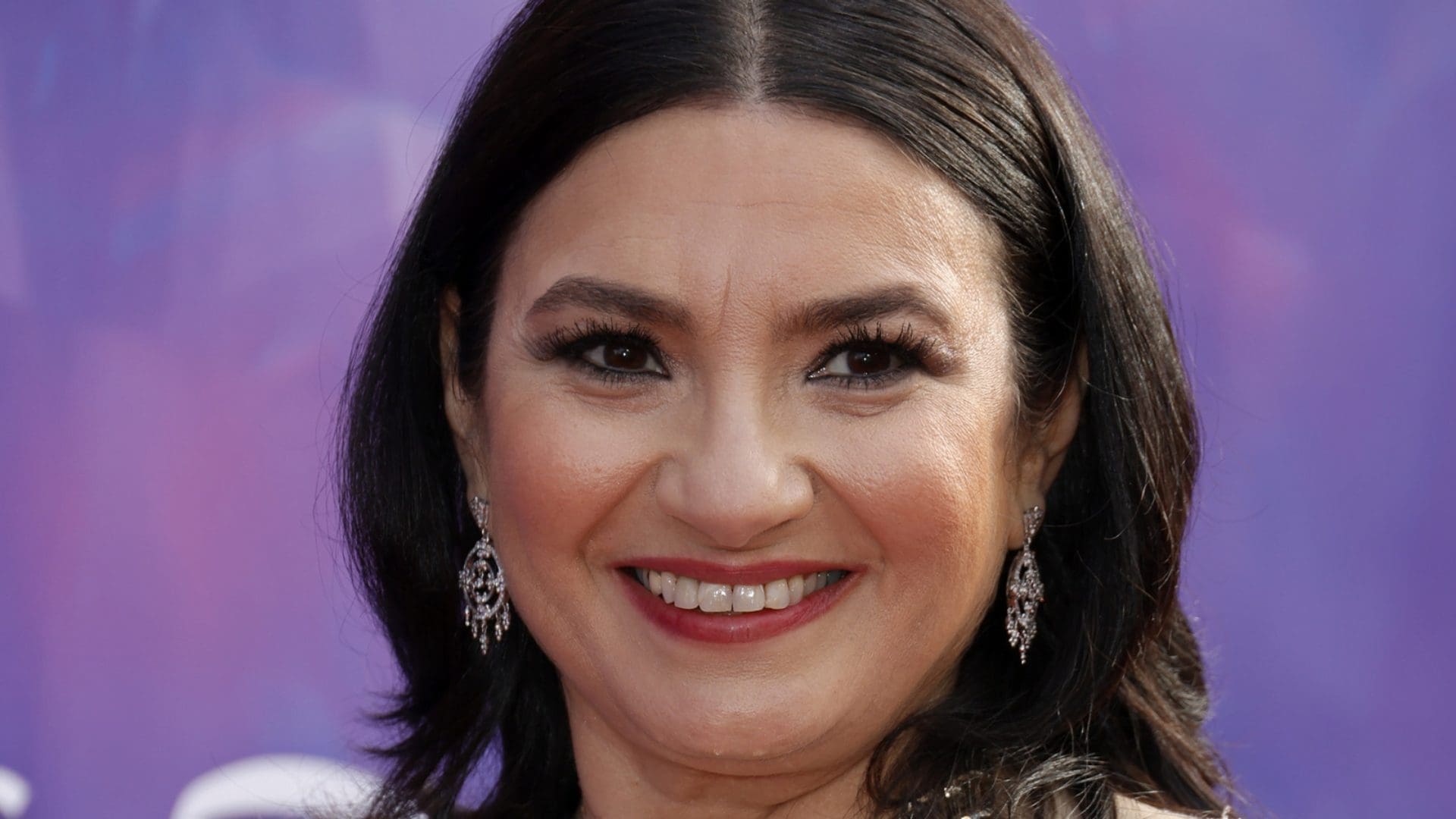
Interview with “Ms. Marvel” actress, Zenobia Shroff


Hosted by
KT & Oti
Show Notes
From a career spanning decades to touching down in our hearts, Zenobia Shroff brings warmth, heart and humour to all her roles in The Big Sick, Ms Marvel and many more. Representation but make it wholly dimensional. Tough love, but make it funny. The first South Asian Mama in the MCU. The For Your Reference Podcast welcomes Zenobia Shroff.
Episode Details
- Duration
- 0:00
- Released
- January 16, 2023
- Category
- Interview
- Hosts


Transcript
Transcript (3,557 words)
Full transcript of Interview with “Ms. Marvel” actress, Zenobia Shroff.
KT: From a career spanning decades to touching down in our hearts, Zenobia Shroff brings warmth, heart and humor to all her roles in The Big Sick, Ms. Marvel and many more. Representation, but make it wholly dimensional. Tough love, but make it funny. The first South Asian mama in the MCU, Zenobia Shroff, thank you so much and welcome to the For Your Reference Blog. Welcome.
Zenobia: Thank you. Thank you guys for having me and thank you for waking up so early in Australia to do this.
KT: Anytime, anytime for you, Zenobia.
Zenobia: Thank
Oti: Well,
Oti: I would love to know what made you fall in love with acting and stay in love.
Zenobia: Am I in love with acting? Are you? I can tell you
Zenobia: That's some long suffering. Yeah. That's not the case. Am I in love with acting?
Zenobia: I don't know. You know, I read this amazing quote by Mr. Spielberg recently. I do believe it was. And please forgive me if I'm misquoting him. But he said that the process is not that great, but the calling is undeniable. And that's how I feel. I'm not particularly fond of the process always. You know, it's, we work long hours and you're in uncomfortable situations, costumes, hair, makeup, 04:30AM calls, you're traveling a lot, especially on the road, it's hard to stay healthy, all of that. But the calling is the calling. And
Zenobia: when I am between action and cut, I think, okay, maybe I was put on this earth to give that to people. You know? Yeah. Yeah. And also, going back to what made me fall in love was I grew up in postcolonial India in the 70s and 80s. At the age of 17, I went to the Sterling Cinema, as we called it, or was the cinema. And I saw Meryl Streep in French Lieutenant's Woman, or Lieutenant's Woman, as your wishes.
Zenobia: And I just remember she did two roles in that. She was playing a person who was and I remember sitting there and thinking, yeah, I think I can do that. I want to do that. And it was a seminal turning point moment for me. Yeah. But I tend to always say that I'm madly in love with it all. Last night I watched, for example, Banshees of Inisherin, which was beautiful. And I remember watching Colin Farrell and I thought, we've never seen Colin do something like this. And he was so good
Zenobia: and he touched me so. And those are the moments when you see the great performances,
Zenobia: I fall back in love with it for sure.
KT: If you haven't had a chance to watch The Lobster, he also has a very earnest role
KT: in that as well. But that's beautiful. To see Meryl Streep and be like, I can do that.
Zenobia: I can do that. I can do that because I've been doing it since I was a young girl in amateur theater. My parents met in a local theater. They never took it up as a profession because they had to raise three girls. But I was always, you know, the lead in the school plays. And yeah, I was always a quick study around that stuff.
Zenobia: That's not my if you're not asking that and I'm just rambling on. But I was meant to be a therapist.
KT: So we so we send the invoice, you send us the invoice, and we pay for it after this?
Zenobia: No. I I did my master's in psychology. Hey, don't miss my Ms. Marvel coffee mug.
KT: Oh, very nice. Very nice.
Zenobia: I did my master's in psychology and it was either do the training program to be a therapist or use a ticket I had got as a dancer, I was also a dancer, to come to New York City and study my craft. And my mentor and acting teacher said, You're not going to waste this ticket. You're going to use it and you're going to go. And so I packed my bags and I have $500
Zenobia: and two suitcases and that's been thirty three years.
Oti: Wow. Wow. So was there a moment where you thought, oh, I could I have my master's degree in my bag, you know, if this doesn't go right, I can just always go back?
Zenobia: I never had a plan B, I'm gonna be really honest. Right. Yeah. Will say that having a master's degree opened the doors to having some decent day jobs because, you know, I had an education, and I was suited I worked in a place for people with mental illness and did And a lot of, I was always going to, if I did was a therapist, was always going to look at childhood influences. I translated that into, babysitting and nurse, nannying and all of that.
Zenobia: But I didn't feel I could go back. Right. Yeah. But I think that's the point. Like, if you're going to go all in, like, go all the way in. Go for broke. Right? But I was also very young. I was early twenties. And, you know, you think the world is your oyster. And nothing can go wrong. What what do you mean nothing will go wrong? I'll just go to New York City and become an actor.
KT: I love that. But I think also with, you know, your background and your education as well, you know, you talk about thespian level performances and I think understanding the way we function or the way we dysfunction as humans can only really help your performances anyway.
Zenobia: Absolutely.
Zenobia: Everybody says, oh, do you regret not having your, you know, being a therapist and what, you know, you studied all those years. Like it was what, four, yeah, no, three and two years, five years to get the master's degree. And do you regret it? And I'm like, are you kidding? I use it every day. I use it every day, not just off camera, but it's the first place I go to when I'm with a new character. And when I'm, I mean, is acting in the end if not the exploration of the human condition
Zenobia: in all its very myriad forms? And so, when you're talking of a human being, you can't not talk about their quote unquote psychology. So I
Zenobia: use it a lot.
KT: Yeah. Well, we'd love to talk about The Big Sick. You play Sharmeen. There are lot of big themes and we love to be able to see it on screens that we might not necessarily have seen them otherwise. You know, things like culture to religion to family. And we would love to know, like, what's a scene that you really, really loved, like filming for The Big Sick?
Zenobia: The last one, when she she gives it when they have the showdown and she lets them know,
Zenobia: what their immigrant struggle has been like. Yeah. Because I think that's a that's a scene that resonated a lot with a lot of people in this country and other immigrants. The parents go through so many sacrifices. And I'm not I don't have both children, but I went through I sacrificed a lot to get to this point where I'm sitting on podcasts and going to award shows. I sacrificed a tremendous amount. And I'm not saying it, you know, in a victimized way. I know that sacrifice of that immigrant so that I was an immigrant.
Zenobia: I am, you know, a New Yorker at this point, but I know that sacrifice. I know missing people's weddings and births and my, you know, I know that sacrifice because, hey, now I might be getting a job for a small play. And so I think that I was able to resonate with that scene. But then I also really liked the scene where she turns her head away after giving the biryani in the car, Yeah. You know, right at the end. And Michael Showalter, our director, we shot it two ways. She looks away and
Zenobia: she waves to him. And I don't I think they used the one where she looked away. Yeah. Because we were like, what? Why? Yeah. And I loved it. I love us. We did very quickly. We shot it very quickly, all of it. And I loved doing the improv with Kumail. I did love that. Wow.
Oti: We There finished was a lot of improv. Yeah. Yeah. We finished watching Ms. Marvel and we really loved doing it. How was it taking the role of Muneeba? You know, she is sort of a tough love mom, but yet willing to meet Kamala halfway.
Zenobia: I wasn't taking the role of Muneeba. Muneeba is my
Zenobia: fifteenth South Asian mother. Mhmm. I have made a career on playing South Asian mothers, starting in 2007 when I got my first big break. So there was no unfamiliarity with Muneeba as to how, you know, I knew this role. You play it 15 times, you know it well. And I'm not just saying a mother, I'm saying specifically South Asian mothers. Right. Whether they are Pakistani or Muslim or Hindu or Indian,
Zenobia: but they've all been. And there's all the immigrant mother stories have had, you know, parallels about wanting your children to walk a straight and narrow line much more than their white counterparts. And we are as a culture, and you might resonate with this as people of color, we're stricter with our children. Yeah. So we we don't tolerate a lot of guff. We don't say thank you for going to party. You know?
KT: So Love love is through actions. You know? Yeah. It's not physically saying I love you. Yeah.
Zenobia: So handling it that way, I came to it with really knowing it. But then Muneeba on the page was just this woman who was saying things like, Kamala, you know, come for dinner. Kamala, you're late to school. Kamala, you're late for your driving test. Kamala, go to your room. Kamala, you can't go out. And then that's your job to elevate that, to make it something more. And also for me personally, I'm always aware that there are 15 other women that people can look at and say, oh, she did this one. How do I distinguish
Zenobia: Muneeba Khan from Sharmeen, from, know, Priyaullah from The Affair? How do I, I have to make that distinction for myself so that I'm happy with the work I'm doing. So then you take what's given on the page and you try and elevate it. And I think, I just think the family dynamic, I don't know if you agree, worked very beautifully between the four of us. And it sort of became this thing. And Iman and I had wonderful chemistry in the scenes. And the more we worked together, the more that chemistry came out. And
Zenobia: that's So I just tried to take each script and really, you know, elevate what was given. And I was given some good rich storyline.
KT: Yeah. Yeah. And even on that, a lot of the dialogue, you know, was really great. It gave us an insight of Muneeba, not just as a mother, but as someone that lived a whole life before having Kamala. And there's a couple of lines I just wanna, you know, throw out there to talk about. And, you know, being raised
KT: by a black mother, a brown mother, there's definitely experiences that we had. This line in particular when you're talking or when your character is talking to Kamala, who do you wanna be? Do you wanna be a good person that we raised you to be or a head in the clouds sort of person? And then just very quickly, there was another line. And, again, this is more Muneeba as an actual wholly realized character. I never felt so alone, but I found my family and let them love me. Oh, you say psychology, Zenobia.
Zenobia: Wow. Yeah. Talk about I think that scene, who do you wanna be? Yeah. Is at the end of episode one when Kamala escapes to Comic Con and then comes back. And that was a rewrite. And I think turned out to be the strongest scene in the episode. Yeah. I mean, it was a brilliant way for our creators to end that episode. I love that scene. I love that scene because you know, that's where you say you try and elevate it. I'm not just a woman making the biryani and setting the table.
Zenobia: I am a fully realized person who's made sacrifices, come from Pakistan to give you a good life. So yeah, I'm going to question you, young girl, who do you want to be? And that was the most powerful because that's a lot of immigrant parents are like, what do you want to do? Who do you want to be? And it was amazing. And also the second one that you referenced,
Zenobia: what was that
KT: that line was I never felt so alone, but I felt Yeah. That there chance to love
Zenobia: Yeah. That was a beautiful scene in the bathroom And she says, that scene came very naturally to me. The dialogue starts with America was my mountaintop. And for me, for Zenobia, America was my mountaintop. I was 24 years old. I had no money except for the $500 I had come with and my three months' tuition that had been paid for at the Circle in the Square School. And I had not a single contact. All I had was some crazy idea in my head that I could do this. And then that voice,
Zenobia: you know, that always speaks to us, isn't it? That says, there's a bigger life for you than South Bombay. You gotta do this. Right. And that voice has never left me. But America was my mountain. I had no money for a long time. I struggled. I had health problems. I had financial problems.
Zenobia: This is all much more than you ever wanted to know, right? Process
KT: When are we gonna get the Zenobia Shroff biopic? That's what I wanted.
Zenobia: The Zenobia Shroff biopic has happened in the form of a one woman show. If you Google me, you'll see it. I did 30 characters in eighty minutes. And we my partner and I wrote it. It started as a monologue, which I used to do as a stand up monologue and then became a full fledged one woman show called How to Succeed as an Ethnically Ambiguous Actor.
KT: Yes. I love that.
Zenobia: Because that was because, you know, everybody was like, where are you from? You can't be Indian. You're so fair. You do not talk this way. You cannot possibly be Indian. Are you Italian? Are you this? Are you that? So it became the story of my life until that point. And we took it all the way to an Off Broadway run. And I would love to do more with it. I think it's got very good episodic potential. But going back to your question, that scene was very important.
Zenobia: And also, that scene came very easily to me because if you're going to be a method actor, which I guess I am a little bit, I have a lot to draw on because America was my mountain.
KT: A lot of a lot of your performances in Ms. Marvel was a healing balm. I think a lot of us didn't know whether we would feel that sort of healing, but, we'd love to wrap up. Yeah. So
Zenobia: Thank you.
Oti: Yeah. So we we were talking about representation,
Oti: diversity, and inclusion, and we've seen it shift throughout the years to a point where in Ms. Marvel, we can see a wholly realized character in Muneeba. Back in the day, you'd get just a one dimensional character who has little or no growth. Do you feel as being in the industry, have you seen the change? Have you seen it firsthand
Oti: or experienced?
Zenobia: Oh my gosh. Don't wrap up right yet because that's a big question. So talking of America being my mountain and, you know, thirty years ago when I came to this country, I was told, like I referenced before, to change my name because I had white passing, a horrible term but used. Yeah. And to get dialect lessons, you know, learn to talk like American. And you just learn to talk like American, you're going to be fine. We can pass you off for Italian.
Zenobia: We can pass you off for Greek. We can pass you off for Spanish. But you know, you really don't want to be saying you're Zenobia Shroff from from Bombay, India. Like, don't make it hard on yourself. Make it easier for yourself, sort of thing. Make it easier for yourself and make it easier for us to sell you as agents and managers. And also because there was nothing, zip zero nada going on at that time for South Asians. And
Zenobia: yet your instinct as a young woman too was like, no, I'm not doing that. I'm not becoming someone else. And I didn't get hired a lot because nobody knew what to do with me. Nobody knew what to do with me. I was doing I was it's the line that Nakia says in Ms. Marvel. She's like and I'm paraphrasing, like, I was too white to be Indian and I was too Indian to be white. Nobody
Zenobia: knew what to do with me. And so twenty years ago, it started changing a little bit. Ten years ago, we started getting definitely some momentum. And so for the young kids on the show, you know, it's a different experience. But for me, the weight of my history is very squarely on my shoulders when I signed that contract. That the day has come when Marvel and Kevin Feige have taken a chance on showing the origin story
Zenobia: of a Muslim American kid from New Jersey. I never thought the day would come and it's very emotional for me because I am one of the people in this city along with many other women and men in their forties and fifties who built the damn round table. We built it leg by leg, plank by plank. So that kids like Iman and Maitreyi Ramakrishnan and others can take a seat. But we built the table. And so the weight of my history is not lost on me when, you know, I see it. And it blows
Zenobia: my mind in a good way.
KT: But even to be able to offer kindness and warmth and not be bitter about the whole experience of would absolute definitely, you know, be weighed down by it. And even, you know, I'm a Pacific Islander, but even just seeing, you know, a Pakistani Muslim family tears, Zenobia. I was like crying throughout this year. Tears, tears. Absolute tears. It's unreal.
Zenobia: Feels good. Yeah. I cannot tell you the amount of young women
Zenobia: and their mothers who wrote to me during that period when they were dropping the episodes in June and July and saying, can you be my Ammi? You're just like my Ammi. My Ammi says hello. My Ammi says she talks to me exactly like you talk to Kamala. My Ammi says she's never seen you on the screen in her whole life in America. Yeah. And that's when you know art can move the needle. We can shift the needle.
Zenobia: We're doing more than just entertaining you. We are trying to shift the culture here. And our show, I'm very proud, is a watershed moment in American TV.
KT: I I there's literally nothing else to say. That was beautiful. Thank you so much for your time, Zenobia. Is there anything that you want to plug? Anything you're working on? Unless it's hush-hush and we're not allowed to know, like it's It's just always hush-hush.
Zenobia: It's always hush-hush, you know. I just would like that, you know, the Marvel actors also get hopefully recognized for the fact that we're not just like swinging from chandeliers, we're bringing craft to our scenes. And it would be nice that, you know, the industry recognize that. I'm bringing thirty five years of experience to my craft, I mean, to the set. And, yeah, it's time to to see us as actors and not just, you know,
Zenobia: doing tricks or stunts or whatever.
KT: Well, let's shake things up. The brown table, the black table, every every
Zenobia: That's right. That's Yes.
Zenobia: Exactly. Exactly.
KT: Well, thank you so much for your time. Thank you so much for The Marvels coming up, you know that, in in July
Zenobia: 2023, this year. The mar Marvels or Captain Marvel two, as it was originally called, with Brie, Iman, and Teyonah Parris, and the Khan family is in that as well.
KT: Oh, exciting.
Zenobia: Yes. Do that. Oh, oh, you didn't know that? Oh, yes. The Khan family is in there. Yes.
KT: Well, thank you so much. It's been such an honor to be able to speak to you today. Thank you so much. We'll be cheering you on from the side. Thank you.
Zenobia: Thank you so much for having me. Bye. Bye.
Related on FYR
Discussion
Loading comments...