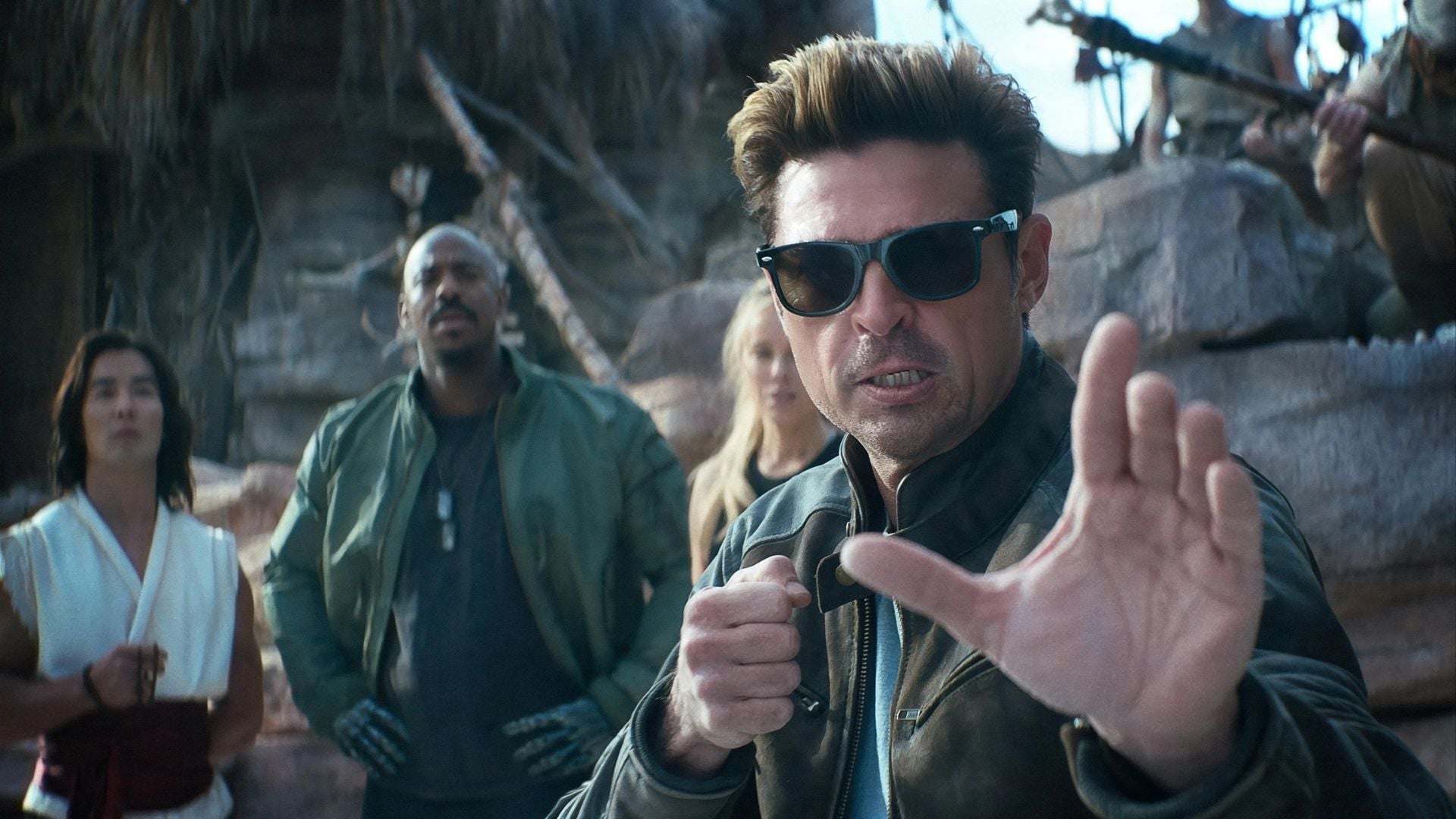
Interview with “Mortal Kombat II” Director, Simon McQuoid


Hosted by
KT & Oti
Show Notes
This week, we have MKII press starting with our chat with Director, Simon McQuoid. We talk about the emotional arcs being the goal for this second offering, the cinematic storytelling scale, as well as the cheesy and camp elements that are a part of MK DNA.
As suggested by Simon, double feature watching of Mortal Kombat II & In the Mood for Love.
Red-carpet coverage with the cast, will be released later this week.
Episode Details
- Duration
- 0:00
- Released
- May 5, 2026
- Category
- Interview
- Hosts


Transcript
Transcript (1,095 words)
Full transcript of Interview with “Mortal Kombat II” Director, Simon McQuoid.
KT: Simon, thank you so much for your time, and welcome to the For Your Reference podcast.
Simon: Thanks. Nice to be here.
KT: I just wanna say off top, in IMAX, I loved, loved MKII. I think the thing that stood out to me the most was how emotionally cohesive the film was. In this second instance, we get more characters and we get to dig deep a bit more in the emotion. Before we get to the fun stuff, what was it like being able to dig a little bit deeper on the emotional arcs in this film?
Simon: I mean, I'm glad you felt that, because that was actually probably the primary goal going into the second one, that we connect with the characters—
KT: Mm-hmm.
Simon: —more. Not only the characters we love, and also the characters we wanna hate, you know, the characters we wanna see get their comeuppance. And that's why Kitana and Jade and Shao Kahn were brought in, and Sindel, because they represent a pure set of emotions that we could work with, you know, with what their stories are in the Mortal Kombat lore. It's a revenge tale. And I wanted the journeys that they go on and the emotions that they are working with and are driving them to be very simple, primal emotions that we understand—
KT: Yeah.
Simon: —and we connect with. And I felt like if we can get this connection to the audience on that kind of emotional, primal level, then all of that joy, all of the executional scale and wonder and crazy sits upon something truthful.
KT: Mm-hmm.
Simon: And that was always the plan going in.
KT: Oh, right from the start, I was crying and I was also splooshing, some might say. If I could distill the film, it'd be cinematic, cheesy in the best way, and also camp, so I hope we can get to as many as we can today. Cinematic: the scale of this film compared to the first one, the set pieces felt like we were in the game, and also bringing that emotional sort of pull. What was it like being able to tell a cinematic story—not to say the first one didn't—what was it like being able to do cinematic storytelling for MKII?
Simon: Yeah, well, I just wanted to embrace what I call the maximalist nature of Mortal Kombat. It's like—
KT: We're all in, baby.
Simon: Yeah. And to be able to build it from the ground up knowing what ingredients we needed to do that—
KT: Mm-hmm.
Simon: —that was really helpful. Like, I was sent the script on the first one, so I was working with a script that existed, whereas this time round, we all sort of built it from the ground up. So just being able to do that in itself—
KT: Mm-hmm.
Simon: —allowed me to know that, okay, I can increase the scale because we have worked out what the locations are, we have worked out what our story is. And so what was important to me is that we go to all these different realms and arenas, so there was this tremendous sense of variety visually.
KT: Yeah.
Simon: And so it's just a matter of, okay, I can decide what the ingredients are, rather than, "Oh, these are the ingredients, I will try and give them scale," if that makes sense. I could actually build—
KT: Like there was a formula in the first one, and we're just going all out.
Simon: There was a script existing, whereas if you can build it from the ground up, then it's like we can have the blue portal, we can have the Tarkatan village—
KT: Yeah.
Simon: —we can have the Dead Pool. So we brought all those things in, and that allowed us to really feel the bigger swing, and you feel it on the screen.
KT: It felt like a collector's edition! Like, if you're old enough and you can afford the fancy figurines, this is what we're here for, in the best way. And I think cheese—and I meant it in the best way, because there's a lot of gore, love the R-ratedness, and there's also a lot of pious sort of characters as well— In the DNA of Mortal Kombat, it's very cheesy as well. We have Kano, and we also have Johnny Cage, the kung fu cinema and what people have seen a little bit in the trailer. It was so much fun because it is a fun franchise as well. How was it embodying that cheesiness that fans and friends and lovers will come to know and love?
Simon: Yeah, I mean, it was really trying to analyze and think about why—you know, there's so many ingredients to Mortal Kombat the game and what it's been, and so many different facets and so many different features over the decades it's been created, and all the characters, and Ed just keeps expanding it, you know. It's amazing. So I wanted to make sure that even though we had a sense of humor and even though we were swinging really big and a lot of the fights are very brutal and full-on, I always felt that it needed to always be connected and earthed so it never got too fluffy and silly and flyaway. I never wanted it to feel disposable. I wanted it to always come rooted, and coming out of—like for instance Johnny's, Karl's performance of Johnny, it's very layered, it's got a lot of facets to it. When we first meet him, he's down in the dumps and—
KT: A different iteration of a well-loved character.
Simon: Yeah, exactly.
KT: And I wish we had more time to talk about the campiness, and I do just wanna applaud the pageantry. Even in the first film, whenever Shang Tsung was on I was like, "Diva!" With his hair! And there's a few more divas in MKII as well. So I'm sure people will look forward to that. I wanna thank you so much for your time and wrap up with our final question: we finish off our reviews with a recommendation, so what would you pair with MKII as a double feature?
Simon: As a double feature? Wow.
KT: Same vein or completely different, however you like!
Simon: Well, I will say watch In the Mood for Love, Wong Kar-wai. 'Cause look at the color and look at the detail and look at the richness of that—that is one of my favorite films, so I would say they make an interesting pair.
KT: That's a different sort of "Get over here!", isn't it? Thank you so much, Simon.
Simon: Pleasure, pleasure.
Related on FYR
Discussion
Loading comments...