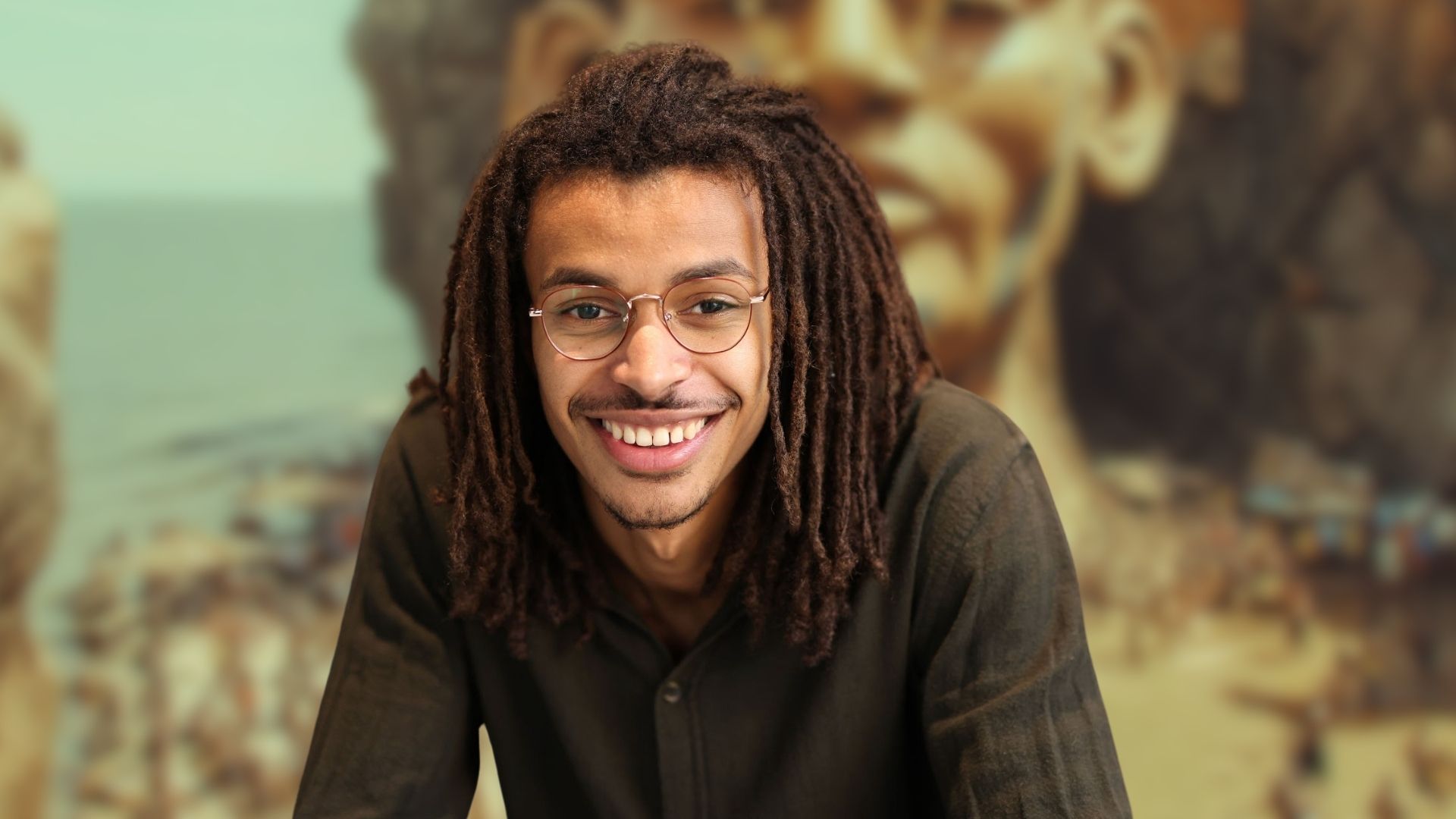
Interview with “Memory of Princess Mumbi” Director, Damien Hauser


Hosted by
KT & Oti
Show Notes
In 2093, filmmaker Kuve visits Umata to document life after a war banned modern tech. Local filmmaker Mumbi challenges him to create without AI, leading him to discover beauty in life’s simple moments.
Memory of Princess Mumbi will be screening at this year’s Sydney Film Festival (SFF) on June 7 & 14.
As suggested by Damien, double feature watching of Memory of Princess Mumbi & Sherman’s March.
For other video versions of this interview and others, check out our YouTube playlist.
Episode Details
- Duration
- 0:00
- Released
- May 22, 2026
- Category
- Interview
- Hosts


Transcript
Transcript (2,659 words)
Full transcript of Interview with “Memory of Princess Mumbi” Director, Damien Hauser.
KT: In 2093, filmmaker Kuve visits Umata to document life after a war banned modern tech. Local filmmaker, Mumbi, challenges him to create without AI, leading him to discover beauty in life's simple moments. Memory of Princess Mumbi will be screening at this year's Sydney Film Festival. Friends and lovers, we're so early there aren't even screening dates, so check, uh, the show notes, um, and the Sydney Film Festival website when this interview comes out. We have the great opportunity to chat to Damien Hauser today. Damien, thank you so much for your time, and welcome to the For Your Reference podcast.
Damien: Thank you for having me.
KT: AI is obviously-- We're definitely going to get into that and chat about it, but before we even get to that, you know, films are a great way to, you know, be a window into people's lives and for audiences to experience other lives. Um, and there's a very nice, like, memory title near the end of the film, "In memory of your brother, Charles Philip Hauser." Um, a-and I guess whether, whether or not, I imagine so, but, you know, for this film, Memory of Princess Mumbi, what was it like being able to channel and express yourself, even grief, through this film?
Damien: Well, it was, it's, uh, it was actually-- It, it was crazy because I didn't really do it on purpose. Mm. Mm. Because when I did the film, it, like, he just passed away like, uh, like one and a half months ago and, and this film was really a way for me to, to try to distract myself as well from, from kind of, like, trying to, to live, like to go on with my life, but also just have, try to find something that is fun to me and that, that's why it was so important— Yeah to make a film, because that, like, I think I make films since I was s-seven years old, and that has always been like a, a part of me. And so therefore, when I did the film, it was really, really, really spontaneous, and I think it was only really throughout the process how much I realized, like, how much the, this film is and also the story and everything is really connected to, to also my brother. Mm-hmm.
KT: And,
Damien: and so it was really something that happened very organically but not really, like the-- me expressing kind of like that just happened through, Like not on purpose kind of.
KT: Yeah, like you, you were exploring. It was like an escape. It was like a play, and then somehow might be connected, not connected, and I, I guess it's all a part of the creative process, right?
Damien: Yeah. Yeah.
KT: Speaking of the creative process, there's, there's a lot of visual texture, um, in regards to the film. So there's retrofuturism, af— Afrofuturism, and, and a lot of like visual, like interesting sort of spectacles as well. Um, what was it about these sort of visual textural layers that made you wanna incorporate them? Like is it kind of collaging where you don't know where you're done, and you just keep putting stuff on and figuring out, like— how it works?
Damien: Yeah, actually, actually collaging is, is a very good way to describe it. Also, the, the whole way I, I, I worked, um, because this film was so, I, I think I only recently said that, um, it Like, to me this film feels like a film which is made in the brainstorming phase because it's all over the place kind of, and it was my first project where I never had, like, where I never. Since there wasn't really a script, I never had like time to work on the story or anything, and it was just all over the place. And I think visually it's, it's the same. It was really, It was be- before I decided to make this film, I was already like exploring, kind of like prompting kind of worlds that I would like to maybe also live in. And, and then— I re— Yeah?
KT: That's okay. I think it was for one of your other films, I was like researching and watching your other interviews, and you talked about Ghibli, like, like— Yeah Miyazaki 'cause, um, my partner's Kenyan, Oti, and we have this podcast together. And when we were watching this, I was like, "I feel like that's a Howl's Moving Castle." Like I feel like
Damien: 100%. Right? 100%. Thank you. Yeah, yeah, yeah. You could have said no— No, the— but
KT: thank you. I will, I will make sure— No, no, no to tell him.
Damien: No. Um, no, that's, that's 100%. And actually, like I was really going for also because those Ghibli films were always like such a huge inspiration to me. Yeah. Not, like not only visually, but also, the, the stories and, and, and it was very funny, like trying to prompt kind of like worlds which kind of are Ghibli-like, but as well very African as well. Yeah. And it was very funny because, because the Ghibli aesthetic is actually very, inspired by Swiss and Italian culture often. Like if you look at—
KT: But Howl's Moving Castle was a book, right?
Damien: Yeah. It, it was I think even an Italian book.
KT: Yeah, it's a European— I can't remember which European, but I remember— Yeah. Yeah. I've read the book. Yeah.
Damien: and, and, and it was kind of funny because I, I grew up in Switzerland and to see— To like not realizing that this culture was constantly actually in front of me.
KT: Yeah. Um— And it's, it's so cool to see the way the world connects, right?
Damien: Exactly. Yeah.
KT: Which I think is— Yeah quite interesting because even with Ghibli films, like there's like, uh, usually like a theme of environmentalism in there, but there's, there's usually some sort of commentary and this is not necessarily in your face, but it drives the story, um or the collage, the collage, the tapestry of this film of like a war and addiction to technology. Um and we talked about, you know, you, you talked about like the layering and the collaging and the brainstorming in, in creating this film. What was it like balancing, I guess, wanting to say something, which is the commentary, to that free-flowing? In other interviews you talked about how there was like free-flowing improvisation as well versus narrative. So those are three big things, like commentary improvisation, and also like having a narrative throughout. What was it like balancing that in the film?
Damien: So th- the nice thing is, I always knew like a little bit what the film is about. Mm. Like what I tried to do with this film is a film that even if AI is at some point like at a very crazy state where it can make films, like— Mm I still wanted to do a film that AI could never do, um, which is, a film that like if AI would be in a state where it could create full-length film, it w- would always create, like it would always be based on films that exist, and films that exist are always based on conflict. And so I tried to make a film that, that, doesn't focus on conflict in life, but focuses on those little beautiful moments in life, and that was always, that was always kind of the, the heart of the film for me. Mm-hmm. And, and, uh, and I. And therefore when it came, came to improvisation, we improvised so much, and I was just searching for those moments that I, that I could never write down, that I myself as a director could never stage. And, and I ended up doing kind of like a collage of those moments. And so the commentary was always actually very, I always knew exactly what the commentary would be.
KT: Mm-hmm.
Damien: And, and now I forgot what you, what else, what that was the other question.
KT: It's okay. You, you, you absolutely answered it. obviously I don't wanna spoil anything in regards to the film— but there is a very tangible, I, I guess like, like, like complication in regards to like Mumbi's storyline about her involvement in the film. And again, I don't wanna spoil anything, but I was like, oh, uh, uh see, I can't even express it 'cause it's just like you need to experience like the film. But it, it was really interesting, and I really enjoyed, like the sentiments, like the dialogue, um, through the film. You know, there, there was a moment of saying, "Films aren't life." they are an interpretation of life. Mm-hmm. And, and you, you, you, you center it as much as you can around the theme. i- is that, i- is that something that you felt in the process, in the editing process? or i- is that just, like, a nice thing, like, a nice poetic thing to say? How, how did that sort of. Like, you know those really nice little nuggets throughout that I, I don't know if AI said it or if you said it. Like— how was it being able to put those nice lines of dialogue in the film?
Damien: Well, I mean, I can't really take credits for it. Mm-hmm. But it's also not AI generated or anything. It's really the actors that improvised most of those lines. And I think actually that specific line with film, um, film isn't life, but an interpretation of, interpretation of it, that's actually something I wrote. Nice.
KT: I, I'm glad I picked the right one.
Damien: Yeah. Um, and there it was really, because it's And, and, and, and that specific sentence is really, it's when you, it's just it comes from, I guess, when you want to, like, if you tried to a film about a, a real life person you can never, never stay true to the, to this life because a whole life is, is a whole life with a thousand themes in that life, and—
KT: Yeah and,
Damien: um, a film to be, for a person to understand the film, you really have to choice, uh, to, to choose one thread of a life. And, and, um, and I think, and in, Memory of Princess Mumbi that was really, the thread was really, the beautiful moments in life.
KT: Yeah. Absolutely. And yeah, it, it's, it's interesting, and it'll be interesting, you know, seeing at a Sydney Film Festival, and all of the audiences as well. Was there anything on the I, I guess 'cause we talked about collaging and, you know, obviously when editing there's, like, the cutting room floor. Did, was there ever a moment where you felt like it's done? Or, like, say for example I've started collaging, like, my little, like, every month of my life little Polaroids and stuff. Mm-hmm. Like, but you can just keep going really, but did you ever feel like with your film you're like, "Okay, this is the last little sparkle, like, it's done now"? Do you ever feel like that, or you have to give yourself a deadline?
Damien: I, I, I usually give myself deadlines, but then I also, I always usually, like, feel that way because, um, because when I was on set I was completely free and we, I think we gathered over 44 hours of footage— Mm and it wasn't like repetition but it was actually 44 hours of different conver- conversations. Yeah. like, there could be a 44 hour, length version of this film. Mm-hmm. In the, in the editing process it was really about somehow making the story work and kind of like fix the, the thing. So it was always, it's always, the, the problem is always very obvious. You show it to people, you see this doesn't work, this doesn't work, and then you have to work on it. Actually, the, the very first, first version was two hours long and I was really, like, all about beautiful moments in life and stuff, uh, because the, uh, this whole film asks the question, do human need conflict or, or can we also— Yeah live without it? Mm-hmm. And, and it was so funny because when I showed it to people the first thing they said was it was too boring. Oh. And I had to cut out, like I, I think I, I eventually cut out over 40 minutes— Uh-huh of this, after this first version, and now I have like an 80 minutes version, and all the conflict remained. Okay.
KT: And, and
Damien: those, those little beautiful life moments, they kept on shrinking and shrinking, and now I feel like it's at a, a nice balance where it's like still, like you still have those, those beautiful moments, but it's much more accessible. Mm-hmm. Um, but it was very funny and it showed me kind of that, that humans might actually, like that this rule of like the three-act structure and— Yeah and how to structure a film, that that actually really applies to, to us humans. Those are the type of films we want to watch.
KT: It's like a rollercoaster, right? Like, we wanna feel a thrill, but there are things we're used to expecting, I guess— Exactly in a film.
Damien: Yeah.
KT: Yeah? Yeah. Um, I wanna thank you so much for your time and wrap up with our final question. we finish off our reviews with a recommendation, so what would you pair with Memory of Princess Mumbi as a double feature?
Damien: Ooh, as a double feature. Damn. Um—
KT: I feel like you'll, no pressure, but I feel like you'll have some very good recommendations based on the way you made this film. I'm sure you have very interesting film tastes or even influences. Um, but no pressure. Okay, actually, yeah. You can, you can answer it— Yeah, so— however you like.
Damien: Actually, there is one film that like, there is one film called Sherman's March.
KT: Mm-hmm.
Damien: It's from the '80s, and it's, and I feel like, I think that would be actually a nice double feature. And Sherman's March I think is about, it's a, a real documentary and it's, it's about a guy who wants to shoot a film. Okay. And I think his family wants to, because it's like in his mid-30s or something, he, like, they want to pair him with, like they want to introduce him to maybe his potential— Like get
KT: married?
Damien: Future. Yeah, like, like, yes. And it's, it's very funny because he's really just re- like he's constantly recording his surroundings.
KT: Yeah.
Damien: And, and I feel like that you're The fact that those people are aware that he's recording and also sometimes like maybe even like they have to laugh about or they address everything, it makes it so much more real because it's not a documentary that where the filmmaker's kind of like, where the filmmaker is hiding behind the camera and like—
KT: Right, they're the subject, right?
Damien: They're acknowledging that he's Yeah, that they are there and, and I feel like I love those kind of films because they're usually very, very personal and it's to me it's like the m- most objective you can get in a documentary because you acknowledge that you as a filmmaker, that you, that this whole thing is through your perspective.
KT: Like you've always got your thumb on the lens. Like e- even if you're not physically there, you're still, like your presence is still there.
Damien: Yeah. Yeah. Okay.
KT: I love that. Well, I feel your presence in the film. It was great to have your presence here.
Damien: Thank you. Um, I wanna thank you—
KT: Thank you so much for your time, and congratulations again on its screening in Sydney Film Festival.
Damien: Thank you so, so much.
Related on FYR
Discussion
Loading comments...