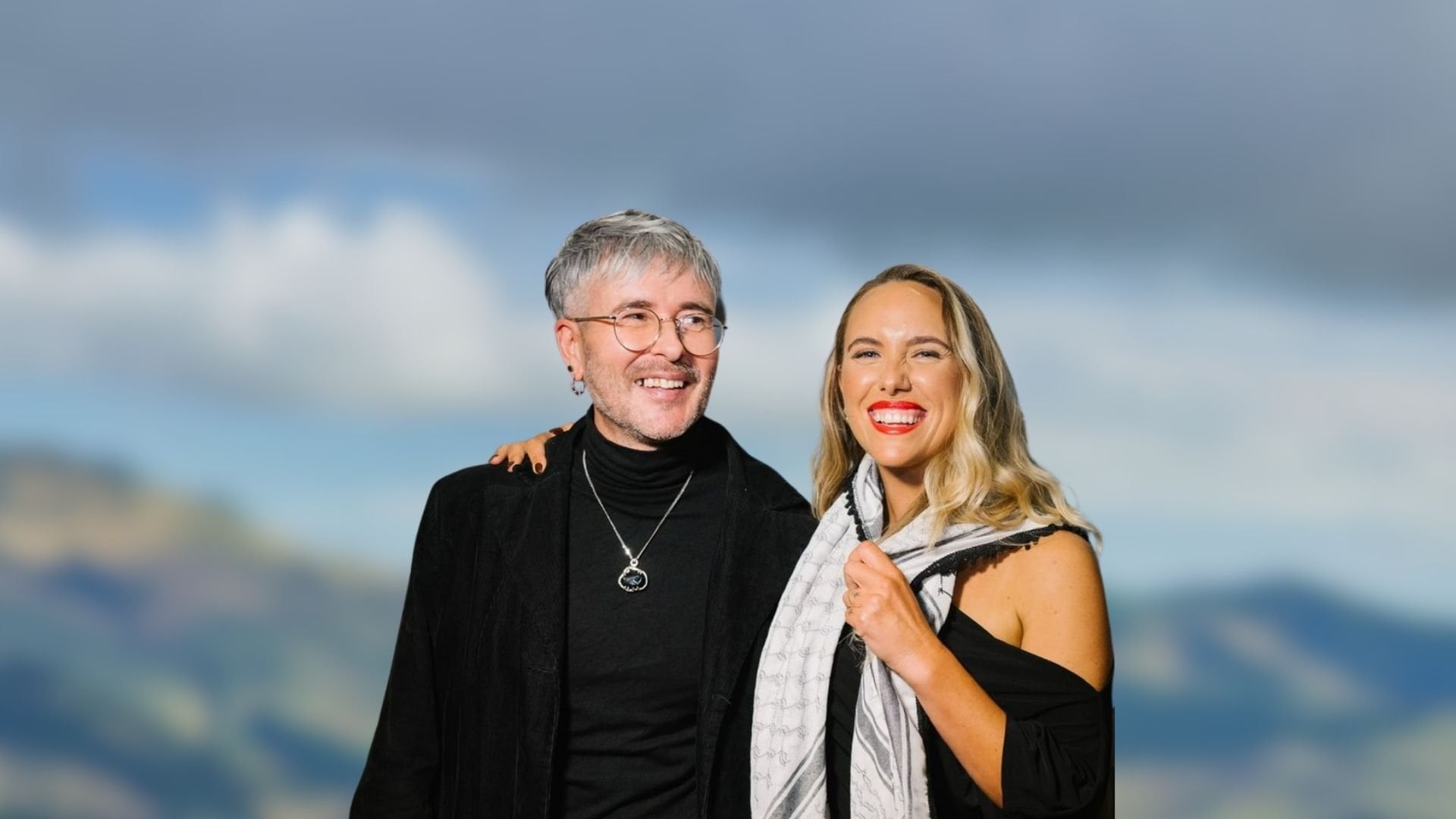
Interview with “Marlon Williams: Ngā Ao E Rua” Director Ursula Williams & Musician Kommi Tamati-Elliffe


Hosted by
KT & Oti
Show Notes
We chat to Ursula Williams & Musician Kommi Tamati-Elliffe about the love and importance of keeping culture alive, referring to documentary ‘subjects’ as participants and the journey in getting the album and film made.
Marlon Williams: Ngā Ao E Rua in AUS cinemas on October 25
Note: this interview is audio only. For other video interviews check out our YouTube playlist.
Episode Details
- Duration
- 0:00
- Released
- October 21, 2025
- Category
- Interview
- Hosts


Transcript
Transcript (4,236 words)
Full transcript of Interview with “Marlon Williams: Ngā Ao E Rua” Director Ursula Williams & Musician Kommi Tamati-Elliffe.
KT: Marlon Williams: Ngā Ao E Rua is a documentary on New Zealand music sensation Marlon Williams and his most ambitious project to date, writing an album in te reo Māori and the personal challenges he faces along the way. Ursula. Kommi, thank you so much for your time, and welcome to the For Your Reference podcast.
Ursula: Oh, thank you for having us.
Kommi: Yeah, thanks for having us, KT.
KT: Uh, you know, it's all about community, but I definitely feel like a fan because I slowly crept my way to say hi to Ursula in the Sydney Film Festival where the film was screening. Um, so I'm very excited to talk, uh, to the both of you today about this film. Obviously, it was nice to be in the crowd and, you know, there was a lot of love and fanfare from the fans. For Marlon and, you know, being able to, I guess, dig a little bit deeper into it. But I guess I just wanna hold this moment for the both of you and see, um, you know, how it feels to have the film out there. And not necessarily protective of Marlon, but you know, being able to share what you brought into the project as well. How, how are you both feeling at this moment?
Ursula: Do you wanna go first? Kommi.
Kommi: Um, okay. I'm feeling, uh, really, really good about it. It's exciting. I guess, uh, yeah, it, it's surreal at the same time as, um. You getting, getting used to it? 'cause it's, it's been out for a bit and it's been at a, it's been to mm-hmm. Years and, and now that it's like, it's on Māori Television. Um, uh, yeah. A lot of more people in the Māori community in my community have seen it. And I've got, um, yeah, um, tamariki talking about it, my, my daughter's friends and stuff like that. And so I'm not famous, Marlon's famous. So therefore. I'm almost cool because I know Marlon and that, so there's that bit, but yeah, you give, like,
KT: you give that sort of like sage, Gandalf, like raiden, you know, like Yeah, yeah. Giving that wisdom along the way. Yeah. Yeah.
Kommi: And, um, I, I didn't know till the, I guess, till I, I didn't really think about how much I was part of it till it was out there in the world as I, um, yeah. So Ursula. Thank you for, uh, catapulting me into stardom. Oh, it's my pleasure. Yeah. I dunno if I'm gonna be in it that much. Um, and I, I hate watching myself and I still don't like those bits of me in there, but I wouldn't like anything with me in anything. So, but, um. More comfortable with it than I, than I was back then. But me aside, the kaupapa, sorry, I've just dropped something. Um, the kaupapa, um, is fantastic. Like in, uh, just, uh, to be part of that with Marlon. Um, it's, it is a bit of, a bit of a, um, of a friendship, romance of sorts in there. That's one small part of it. And, um, it was just a joy to be pulled into, into Marlon's musical world, like wow. Um. And to meet Ursula through that at first, like anyone with a crew and a camera. Um, 'cause I've worked in broadcasting in the past, I suppose, and so I'm just like, ugh, over that, get out. But, um, but I fell in love with the whole crew and Ursula's amazing. Um, and we became friends through that. And, um, and if, if Ursula wants me to do anything or Marlon wants me to do anything, I'll do it.
Ursula: So Good to
KT: know. Uh, Kommi. That's exactly what it is because you are so real and you're so true to it. I think that sort of lens might feel a bit itchy or like a bit uncomfortable, but I think that's why it's important to highlight it. Even though you shy away, like you know, real ones know and they can see that you're about it and you're not like, pan to me, don't look atala. Like it's my time to shine. Like you're literally there for the kaupapa and you are like, you're about it. And I, I'm pretty sure audiences can feel that. I could feel that in the screening and, you know, watching it again, preparing for this interview.
Kommi: Oh, KDA. Oh, chur.
Ursula: Absolutely. I also think Kommi, like you were so good at allowing, well object objectively, you know, you're so good at kind of stepping back and allowing Marlon to find what he needed to find, whilst also being such a strong anchor for all of us actually, because you being there made me safe being there as well. Like I think, yeah, it was, um, it's funny 'cause you asked that question and it's like. As we were making this thing that happened to kind of come out concurrently and you've got an album and a film, you know, and both of those things are quite an undertaking, and yet as we were making them, it felt so natural and cool and like a family just kind of hanging out and, you know, um. Yeah. But then concurrently kind of releasing this thing into the world that has been so kind of private. And ours at first was quite, yeah, it was big. Like I didn't realize how big it was gonna be. You know? I guess coming back to, uh, your question, it's like you throw it out in the world and it. Out there. And finally people can reflect on it and make up their own mind about it, and it becomes its own thing kind of outside of you and what you guys have been making, and the response has been so positive. But most importantly, you know, hearing Kommi and Marlon reflect on it and know that it's something. That they are proud of. Mm-hmm. And that they stand by is that's all that really matters, you know? Yeah.
KT: So, and that's, and that's why lens is so important. Um, and I think for the both of you, the way that you put your mana and you put your energy and your love into this film, that's what made it real and that's what made it. So important. And lens is, lens is something that we talk a lot about, um, on the podcast. And you know, I think even us being like, uh, you know, Ana and being from the Pacific, we understand how important it is. I, I think it's interesting to see, you know, people embrace Pacific people, but also being a bit protective of that. And like, if you're gonna understand us, you need to come correct. We don't give that freely to everyone. And even though Marlon is an international global star is born star, there's still that energy that is identity and makes us, us. And I think that's what made this film so special because the both of you feel protective and rightfully so of how the story is, even though how they receive it is completely up to them, right?
Ursula: Yeah. And how the story is from within. You know, and insur, you know, 'cause there's, yeah, there's people who are public facing, you know, like Marlon and Kommi. Mm-hmm. You know, they're performers. Um, but. Then there's the likes of Marlon's parents who are, you know, really, really private. And so yeah, you have to do your due diligence and duty of care for everybody who's putting themselves out there. Um, and not just now, you know, it's not theater, it's not gone tomorrow. Mm-hmm. Um, it's something that'll sit in our archives. And so yeah. It, it's just, uh, yeah. I feel really like we've done. A great job just in the reflection that the people who have been in it
KT: mm-hmm.
Ursula: Are saying that they're proud to stand by it even after time has passed.
KT: Absolutely. And Ursula that comes to my next. Question. 'cause documentaries for the most part in, in this case, are about people. I know they call it like the subject of a documentary. Um, and it was, but it's humans, you know, we, we we're not powered 24 7 and, you know, maybe there are some vulnerable moments that are on the cutting room floor that are just for, you know, the experience, not for the output of the film. Right. So I guess you kind of touched on it already, but I guess what was it like balancing. You know, the four years of working on the album and you know, the career of Marlon Williams, and I guess that vulnerability because you want it, you want audiences to understand the journey he's going through, but also there are some things that are just for him and his parents or. It's not for everyone to experience. How was it balancing that?
Ursula: Yeah, quite tricky. Um, but also I guess, you know, Marlon is unapologetically himself in so many instances and he puts himself right out there, you know, um, and. Uh, it's funny because at first because he was so well media trained, it kind of took a little while for me to recognize the Marlon that we were filming versus the Marlon that was in the room. Mm. And so that took a little bit of time to break down those walls. And so we started to, you know, um, do interviews that were just private, just him and I to start talking, you know, in a, in a more natural way to kind of get that sense of his authenticity that would. That would translate in terms of, you know, his tone and things like that. But yeah. But with that comes a huge responsibility to ensure that those, you know, could be perceived as almost private conversations need to weave in, in a way. Again, that is. Respectfully done. And I actually call my, um, subjects participants, you know, because we, we are all participating in this thing and co-creators of something that, um, is going to have a life outside of us even after we are gone, you know? So yeah, I don't, I definitely don't take that kind of thing very lightly. Like it's definitely, um. Something that I think about a lot and keeps me awake at night at a lot as well. And it's all very well if you are making a decision, knowing the participants that you're working with. But it's a whole other thing when you've got other voices in the room, you know, um, funding bodies, distributors, stakeholders, producers, networks who are wanting to feel those classic things like friction or drama or. Turning points or you know, like those types of things. So yeah, it's always a balance and I think, um, that was what was so great about having Kommi involved as well, because it meant that they were able to bring in some like droppiness but also some epic like challenge to Marlon. You know, there was that widow that you set and laid down and there were things that you could say that Marlon couldn't based on. And, you know, I don't wanna speak on anyone's behalf, but from my perspective, based on like, um, an intimacy with te reo Māori that he was growing into. Yeah.
KT: Well, I, I think that comes to a nice little, like a paraphrasing of what you said, Kommi, in the documentary about, you know, for you to be working in the culture is exactly what people said you would end up doing. Um, and you, you said that you couldn't imagine not working in a Māori. Environment. You just wouldn't. And I'm like, Ooh. I was like, feel that. Well, I have my day-to-day job, but it is very important that this podcast ends. Feels
Kommi: very odd for me. Yeah. Being in a non-Māori environment and, and in an extension of that, um, around, um, other Pacific people as well. Having Ursula as, as the director who were, be like in the room with us. This. Um, as soon as I knew she was Samoan, I was like, oh, oh no, this is all good. Then, you know, just Sam,
KT: it's like that, it's like that relaxing, right? Like it could easily mistake
Kommi: either of us as like, you know, who are these? But, um, but yeah, yeah, yeah. And so there's automatically distrust. It's this, this, this cultural understanding that we have that we don't need to. Um, the code is already there, um, the way we interact with one another and, and those, those barriers come down 'cause of, um, yeah, I've, I've worked in, um, TV shows and things where the producer, the director, everyone's Pākehā, but me and I turn on the Māori. So it feels like very much like a minstrel show.
KT: Yeah.
Kommi: Was not that. This was, um, yeah, having ish as, as someone with, with, um, with her background. Um, and, and those, or they're still here. All those, all the docos have watched all of them. Those, um, everything she's done is, and, you know, um, um, brings me into a place of comfort. And so yeah, the barriers come down. Yeah.
KT: Because then it's not that sort of friction. 'cause you don't always want to be like the angry Pacific person. Like, no. It's like, come on guys, it's high time. You know, I think of like Spike Lee's Bamboozled, like we don't need to be fighting up against what, what needs to be told and to feel it in a se essence and you know, to transport it that way. And I'm so glad that, you know, the film is what it is and you know, you were able to hopefully. The vision, you know, is, is where we are with the film that we get today.
Kommi: Aye. Aye.
Ursula: And also, I think it was so important for me as a filmmaker to, you know, knowing Marlon and observing him and, um, seeing what he offers in people's worlds. Like, it was so important that this was about Indigenous joy and using that as a force of resistance. Mm-hmm. And that being part of, you know, some of the antidote to some of the stories that have been told or that we tell ourselves is. People with Indigenous whakapapa, you know, there's a lot of mamae. And so, um, reversing that and having so much joy present in the film was very intentional, um, from that perspective. Yeah.
KT: Uh, uh, I wanna talk a little bit about, uh, I guess the music and the making of the album. Or the, like, the, uh, the, I want to talk a bit about the songwriting process because it's nice having like the lyrics, uh, of the music, uh, you know, and the lyrics that are being sung. Um, and I do wonder, I guess my cheeky little question is the fact that it was in te reo Māori, was there a benefit to the fullness of what you wanted to say as opposed to it being translated in English and like diluting it to not scare like non-Indigenous people? Or that wasn't even a conscious thing.
Kommi: I, I think, um. I guess Marlon's already non-threatening. Yeah. And I can be threatening when I choose to be, um, Amber. And, but we're also got this element of silliness between us, and that didn't need to be necessarily translated because Māori um, um, Marlon has his, his cheeky understanding, um, with, with, with te reo Māori nuances in there. And um, so I guess we threw a bit of that in there. Um, and, and I guess first and foremost it was about the wairua, the feeling mm-hmm. Um, of, of, of the songs and d derived from the ideas that Marlon had. And, and there's a couple of songs in there that I wrote as well. Is is about the, um, yeah. Is is is about the get it, the wairua f first and for. But yeah. Um, in saying that there are some cheeky little, um, secret messages here and there and, um, things open to, uh, alternative interpretations and that, which is on the English translations online at, at, at present. I won't go into those though.
KT: No, I, I, I think, I think we got, I, I think we got where we were going. Um, but I. Uh, it's such a beautiful thing and it makes sense, obviously, but I do want to lay some love for the insertion of real news. You know, like using actual, um, you know, broadcasting like information. In regards to, I think, and I've said this a couple of times, even during Sydney Film Festival, there are other Māori uh, documentaries, uh, that were on, like The Haka Party Incident, for example. Uh, and. It's one of those things where I think for a lot of us, especially me growing up in so-called Australia, like kind of feels like the beacon of Indigenous rights. Um, but obviously within the actual context of it, there's still a lot of friction and like a sort of regression in ways that, you know, I might not have learned for like Aboriginal communities growing up that might be like. It's like, oh, there's a, like a friction sort of going on. And I know obviously people might say it's obvious that it would be in this documentary, but I do just want to give love to the fact that you guys did put it in there and you made it very clear that this is more than just music. And, uh, music is revolutionary and it is a shifting, um, and, you know, a, a resistance. Um, of power as well. So I just wanna hear a little bit about that. Obviously we don't need to get too deep into the revolution, but I just wanna hear a little bit about, you know, having that in the film, even though it was obvious, but the choice to make sure it was in the film and it was clear.
Ursula: Yeah, so I guess, you know, Marlon wouldn't put himself out there in terms of being political. You know, he's, from my experience anyway, I really don't wanna speak on his behalf again, but from my experience, he ha he was writing this for personal reasons. But of course, te reo Māori, like any Indigenous language, is political because it is something that has been stolen. You know, and, and so, and purposefully pushed out in a colonial society, so inherently by speaking te reo Māori or, um, or singing by being yeah. Or being, um, is, is political. And so, um, whilst Marlon, you know, won't always state those, um. State has kind of political stance for me. I wanted to put a little bit more of that in there because, and you know, there has to be an antidote to some of the things that have been going on in, and it's so interesting 'cause you know, Australia as a whole other thing. Um, but Aotearoa had a, has a treaty. You know, and recently that has been, um, again, um, questioned by, by Paia and by those in, in power. And so, you know, inherently this film we standing. With, you know, re and Te Māori obviously, but it had to go that little bit extra for, um, I don't know, just, just in terms of where I'm at as a filmmaker, you know, it is like, yep, it, the, the album is. Beautiful, personal, you know, political, even though not necessarily intentionally political piece of art. But I did wanna go that one step further and just, um, show some of the inherent racism that can be seen in. And as you say, there's like, it's, it's this place that people look to for Indigenous rights, you know? But actually, Māori fought so hard for something that should just simply be theirs, which is land language, you know, whakapapa, um, all those things. So, so, yeah. Um, I don't know. I don't know what else to say.
KT: Kommi, do you, do you feel, I wouldn't say like political, but I guess being an existing in spaces that feel right for you. Even in the film you talked about te reo takes one generation to lose and three to regain. It's one of those things that you, you don't,
Kommi: four or five generations to regain it. Since I said that, I've been rethinking that discussions and yeah, some people were saying no, it's actually like, yeah, I've, yeah. Taken, yeah. Um, yeah, it can, it can take a lot more, it can take more than, more than, um, three to regain it. Yeah. Um, but yeah. Um, um, I guess, um, I forgot what I was gonna say. Sorry. Where were we going? Where were we going with this?
KT: Like, like being in places that feel nourishing and, you know, it's, it's working towards who we are, who you are. Um, and what's, what's most important, you know.
Kommi: Um, I guess, yes, I guess what I do is I just be what I, what I am. Mm-hmm. And, um, sometimes I'm reluctant to, to, to be political and speak up unless someone extracts that from me. Um, but yeah, like Ursula said, was saying, um, just, um, just. Uh, doing it in itself, being Māori actively and, and, and speaking and, uh, not necessarily shoving it in people's faces, but doing it in our happy natural ways in our own land. Mm-hmm. Um, that alone is, is it can be perceived as protests and sometimes it is. Um, yeah. Um. Yeah, I guess, yeah. Well, these so-called, um, leaders and politicians are, are, um, stirring division and trying to colonize, um, the airwaves even. Um, yeah, we are out here filling that same space with Yeah, with whakapapa and with aroha, um, with sound that refuses to disappear. So, yeah.
KT: It's a, I I think we're at a beautiful time of global Indigenous solidarity, you know, from, from Kneecap to Palestine to, you know, everywhere from West Papua, like we're all. Getting it. Like if you get it, you get it. And I got a shout out Liv from Madman. I, I don't have favorite PR people, but she's my favorite PR person. Oh,
Kommi: love. That's lovely.
KT: She gets it and it, it just feels that much better when you're in a space that you love, whether it's music, whether it's making films and documentaries and being able to feel it in a way that is more than just. I guess like a piece of art in a gallery. It lives in, it breathes with us.
Kommi: Yep.
KT: I wanna thank you so much for your time and, uh, wrap up with our final question. Um, we finish off our reviews with a recommendation. So what would you pair with this film as a double feature? It could be a short film, it could be a TV series, could be a documentary. I guess we can also talk about albums and music as well, but like a nice sort of pairing. Sometimes people do similar themes, sometimes people do like opposite. To balance it.
Ursula: Oh, that's a good question. Um, I guess in terms of global solidarity as a documentary pairing, I would say, um, No Other Land, um, which was the Oscar nominee made by the Palestinian. Um, journalist in, um, on the ground in Palestine. Mm-hmm. Um, as a documentary pairing, um, crayfish, something to eat. Remember the, although Kommi would not agree with that, but crazy. Oh, well,
Kommi: vegan for cultural reasons and the right. Situation. Yeah. I might have a little bit Yeah. TT and collected by an uncle or an auntie, you know? Yeah. Then I might, yeah.
Ursula: Um, we drank a lot of Double Brown and ha
Kommi: Oh no. Yeah, yeah. And, and red wine.
Ursula: Oh. Music though. Kommi has to be man voices.
Kommi: Oh yeah, the money. Put the voices. Yeah. It features a little bit in, in the doco. Um, yeah, it, it's definitely, um, uh, uh, influential of the album. Um, Marlon's, um, sound, sort of the, some of the, the, the, the, the old timey vibes he was channeling came from that, the money, I put the voices. Songs of the re I think it's called. Yes, the album. Yeah. Bad Tell Marlon, but I've got that on vinyl. Yeah. Oh, did you still not told him? Well, no. Oh yeah, if I told you, but still, if I told you again and still not told him.
Ursula: Do you this in the edit or do you. I've got, I've got a carrot to dangle with,
Kommi: with you.
KT: Well, there we go. We've got, we've got film pairings, we've got music, we've got food, and we've got red wine. So no first, first
Kommi: it all, I agree with all of that. Yeah, those were my ideas actually. Yes. Okay. Sure.
KT: Call. Thank you so much for your time.
Kommi: Yo. No, no,
KT: KT.
Kommi: Thank you.
Related on FYR
Discussion
Loading comments...