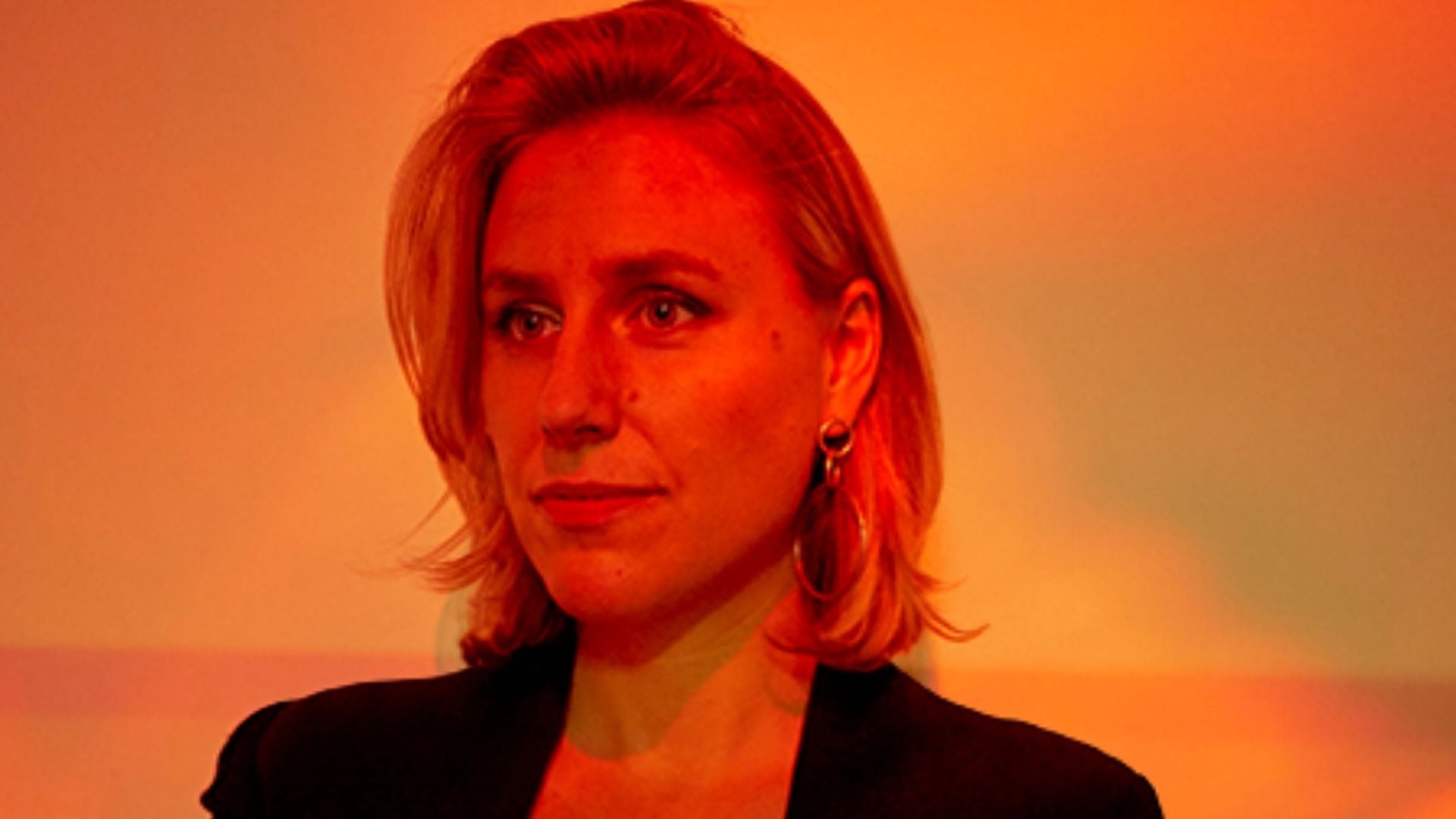
Interview with “Make It Look Real” Director, Kate Blackmore


Hosted by
KT & Oti
Show Notes
Intimacy coordinator Claire Warden guides actors through sex scenes on a film set, negotiating the vision of a director, the physical and psychological needs of the performers, and a documentary crew filming her every move. Make It Look Real will be screening at this year’s Sydney Film Festival (SFF) on June 12th (sold out) & 14th (sold out) & 15th.
As suggested by Kate, double feature watching of Make It Look Real & Portrait of a Lady on Fire.
Note: this interview is audio only. For other video interviews check out our YouTube playlist.
Episode Details
- Duration
- 0:00
- Released
- June 3, 2025
- Category
- Interview
- Hosts


Transcript
Transcript (3,337 words)
Full transcript of Interview with “Make It Look Real” Director, Kate Blackmore.
KT: Make It Real follows intimacy coordinator Claire Warden and she navigates the complex dynamics of guiding actors through sex scenes on a film set, balancing the director's vision with the physical and psychological needs of the performers. All while being filmed by a documentary crew, and that's where Kate Blackmore comes in. Friends and lovers, Make It Real will be showing at the Sydney Film Festival on the 12th and the 14th of June. She's booking up. So hopefully in this time there may be more screenings, but you better get in and get your tickets. Kate, thank you so much for your time and welcome to the For Your Reference podcast.
Kate: Thank you so much. Really happy to be here.
KT: Documentaries are always very exciting because it's like, yeah, I get why we're watching this. Like, and there's probably so much research and so many thoughts you have. Um, obviously with Claire and just in general. Um, but I guess I just wanna start off by saying. Uh, congratulations. Make It Look Real premiered at the Adelaide Film Festival. It made its international debut at the South by Southwest. Um, well yeah. I just want to send like, just take this moment and say congratulations.
Kate: Thank you. Yeah, it's been, it's been great that it's had, um, some really excellent premieres, especially being at South by Southwest. That was a real thrill for our team, um, and to, to share it with an American audience because I think it's very relevant to that, uh, that audience at the moment. Just with every, every, all the dialogue that's happening around intimacy coordination in, out of Hollywood. So it was really great to screen it there.
KT: Absolutely. And, and that's exactly it, because you have. Hopefully you're not the Sean Beans of the world as talented as he is, but you also have like Mikey Madison and the Actors on Actors talking with Pamela Anderson about it, and it's such a necessary conversation. And um, you know, the, there's obviously some collaboration to get this film to work. The Screen Australia, Screen New South Wales, Adelaide Film Festival Investment Fund. How did this all. Come about. Obviously there's the making of it, but how were you like, we need to talk about this and I'm the one I can, I can put the lens on this.
Kate: Well, I was just curious. I mean, all of my projects just kind of start with a bit of a question and a curiosity about a, a particular thing. And I guess I, I read an article about intimacy coordination, um, when it was like just emerging as a, as a, as a discipline, as a role. Um, and that was about 2017. And, um, I was like, why haven't there been intimacy coordinators before? Why is this such a new role? And I was really surprised because I, I don't work with actors and I don't work in that.
Kate: Area, like I'm a documentary filmmaker, so I was, I just, I think a lot of people just assume that actors would have support on, on set when they're doing those kinds of scenes, intimate scenes, sex scenes and sexual assault scenes as well. But, um, yeah, really up until the Me Too movement, there weren't, there weren't, there wasn't a trained professional, like a stunt coordinator to support actors. So I guess I really wanted to know why, and I was really interested in. Um, the role of the intimacy coordinator and how they were really challenging, um, kind of patriarchal cultures on film sets basically. And like really trying to, um, give agency to actors and advocate for actors and to kind of, um, redress that power imbalance that had existed between actor and director for so long.
Kate: And of course there needs to be, you know, the director needs to sort of. Have a vision and the actor is working to support that vision. But I think, um, you know, there's no excuse for, um, exploitation or abuse on any film set or any kind of industry or any, um, in any workplace. So I was just, I just thought that they were such, uh, yeah, interesting kind of people and that they would be, um, I met Claire Warden who's this at the center of our film in New York, and I thought that she would be such an amazing person to.
Kate: Create a film with and around. So, um, yeah, we kind of had a conversation six years ago and it, it evolved into this film that we finally released
KT: and, and in the documentary Claire talks about, I think it was like six months before the Me Too movement really lifted off. The ground. Um, my partner and I, Oti, we watch a lot of TV and film, you know, with our podcast. And I'm a very sexual person. I'm very sensual, I'm freak nasty sort of gal. Um, yeah, but it very much is, was a, um, Kathryn Hahn's TV show that Claire also worked on as well. But you know, like I would watch scenes and I'm like, I just like, this was a gorgeous scene, but I just hope not just the women, but I just hope everyone was safe.
KT: And then I can sploosh and I can feel good. Like, I can feel good after, after. Because I think people care where the sausage is made, pardon the pun. You know what I mean?
Kate: Yeah, totally. Yeah. And I think it's, it's something we, like, we don't really think about too much. We just think that people are acting. But, um, to, yeah, to know that, you know, in, in the past these sex scenes were often kind of just, you know, the di the act, the director was sort of like, I'll leave, leave it up to the actors and the actors can kind of figure it out. Like there was no support, no training, no like choreography. Um, but yeah, like I love seeing sex on screen if it's done in a way that is.
Kate: Safe and like, yeah. I think a lot of people think that intimacy coordinators are, are sort of there to, um, you know, to sort of, um, dampen any kind of, um, sensuality or sexuality or like, you know mm-hmm. Like they make it too safe or something. But actually, like, if you have good support on set, then actors are able to even go further in their, within their characters and in their roles and like, you know, because they feel safe. To push the boundaries. And like often you end up with sex scenes that have that feel even more authentic and they look even more real. And, um, yeah, I think so.
Kate: One of the starting points for this film was the Last Tango in Paris. Um, so for anyone who doesn't know in that film, it was made in 1972 by Bernardo Bertolucci, starring Marlon Brando and Maria Schneider. So there's a really infamous scene in that, in that film called The Butter Scene. It's a sexual assault scene that involves butter, well, it's kind of colloquially known as the butter scene. Um, and basically the details of the scene were worked out just before shooting by Marlon and Bertolucci, um, Marlon Brando and Bertolucci, and Maria really wasn't involved in the, in the discussions about it at all.
Kate: So what you're seeing. On screen is Maria Schneider being like absolutely kind of humiliated and, um, degraded and like, you know, her humiliation is real basically. And all of that was by design, by Bertolucci. And he, he really sort of didn't trust Maria that she could act out that scene. And so he kind of, yeah. Um, asked Marlon Brando to just like actually physically assault her. Um, so yeah, what you're seeing is like real life abuse on screen and that's just. You know, that's awful to, to think, you know, like I can't watch that scene knowing that, um, so
KT: to, to anyway, to, to honor the subject matter. I watched it, but it, it was hard to watch. But I, I think it's also a reclamation and it's a reshifting of the male gaze. Of, yes, you can have women on screen, but we're wholly dimensional. And if you are confused, like if you are confused about the dimensions and being able to, you know, pleasure, feminine, you know, sexuality, then that's on you, bro. Like, that's not, yeah, that's not our problem. And speaking of Claire in this film. It's such a beautiful, I can't relate to having parents to be able to speak so open about sex, but it was really nice to see, and it was actually quite refreshing to have Claire, like there was a moment, there was a scene, um, in the documentary where we have Claire's parents and um, you know, just like you're saying, Claire's mom said, you know, in some films you do need to portray the abuse.
KT: Like it's important to the story and it, it does reflect real life and it needs to be done. And it's reassuring that those playing those roles. They're so important and that they're being looked after, followed by the dad saying, I'm so proud of you. And yeah, I was like, I knew I was gonna feel something, but I was feeling everything watching this. How was it being in that moment? Because obviously you're getting all of the notes, you're getting all the historical context, but this was a very Yeah. Real beautiful tender moment with Claire and her parents.
Kate: Yeah. Claire's parents is, yeah, totally amazing. Everyone would want parents like Claire's, I think like, yeah, so supportive. And I think we, I, I think a lot of people are just curious about like, um, you know what people. So, yeah, I mean, I guess when I, when I met Claire, I was like, what do your parents think of what you do? And like, we actually went to her parents after find out and you know, they really understood it and they really supported it and they thought it was like, you know, the, you know, such, such an important job and that she was kind of, you know, really sort of change, pioneering, change in, in the industry.
Kate: And they were super proud of her. So. Yeah, I think a lot of people just think that intimacy coordinators are like obsessed with sex and, you know, um, know everything about sex and like, you know, just their whole lives are consumer sex. But actually there's so much more to the role than just like, you know, choreographing actors in sex scenes. Like it's really much more complex and you're sort of, they're supporting the, the minds and the bodies of the actors. And they're also working with, um, you know, the directors. And the script writers often, like at script level to make sure that the sex scenes aren't gratuitous or they're not kind of just sort of token or, you know, sensationalist and all that kind of stuff.
Kate: So they're really trying to, um, ensure that they are part of the story and that they push the narrative forward. And, um, and then they, like, they really ask the director like, so many details about what, you know, what might be in the scene. Like what the dynamic between the. Uh, the character is, and like, you know, things like, would the woman be on birth control? Like, you know, all that kind of stuff helps determine like, you know, how these, how these people would be,
KT: I think, you think Kieran was like, she is gonna reach her hand down and have a little fun, and then Claire's like, no. What does that actually mean? Like, let's, yeah, exactly. That out. Mm-hmm. And I think even just having, you know, the, the subject, like being Claire, but also working with Kieran on a film like Tightrope, that was very interesting. 'cause incidentally, I think even Claire said it like, you know, he just seems like a blokey bloke and he's gonna have a problem with it. Or Yeah. You know, there would be some sort of resistance. And what I also appreciated about the documentary. That I think all good documentaries do is they have a subject, but there's a lot of context as well.
KT: So even if you don't really know what's going on or you haven't done any reading prior, you can get into the information and um, I guess. My question's more about how did you find, 'cause unfortunately, I, I guess it wasn't hard finding quotes from actresses. Yeah. And even sometimes it was heard in like a funny context, but then you're like, girl, you're in danger. Like you just, yeah. Yeah. So there was, there was quotes from actresses, there was some history given in the documentary and then it also felt very. Accessible. Like obviously it is very emotionally charged and I feel like I wanna rage and punch everyone, but I love that. But I, I also feel like it was grounded as well.
KT: So I guess how do you balance the historical context to make sure people understand how important this is? Mm. And also leading with heart and rage and emotion, but also making sure people understand what's being said here.
Kate: Yeah. Thank you so much. I'm so glad the film, um, impacted you in that way. I mean, that was, that was the desired outcome, I guess. But yeah, we've had a lot of people kind of have opinions about, you know, the film in, in the sense that, you know, there should be more historical context or like more archive or more interviews with real actors. Uh, not real, but like, you know, well-known actors. But, you know, it's such, it was a very kind of small, low budget film and also. Um, we were very, I was very aware that I didn't wanna try to tell the whole story because that, you know, that's, there's so much that you could kind of include in a film like this. Um, so I really wanted to center it. I, I thought kind of using Claire as a vehicle and then centering it around the way that Claire's work impacted, you know, actors would be much more, um.
Kate: Kind of revealing as opposed to just like a bunch of talking heads kind of talking, you know, talking about the history of sex scenes and how they've sort of impacted them. Like, I really wanted to see how Claire's work was affecting someone in real time. Mm-hmm. Um, so that was the decision to kind of focus it on that journey. But then, but we realized quite early on that we needed the context in there. Um, and yeah, we, we had a lot of material to choose from. So basically we've incorporated, um, archival interviews with pretty well known actors like Jennifer Lawrence and Jodie Foster and, um, Nicole Kidman, even just sort of talking about the impact that sex scenes have had on them and assault scenes, and that's really harrowing.
Kate: Um, so yeah, we've, we thought, you know, it was important to sort of make people understand what intimacy coordinators were sort of fighting for and fighting against, so that's why we included that. But obviously there's so much like I could make. 10 time, 10 feature documentaries about this or like a whole series about the history of how sex scenes have been made and the toll that they've taken on actors. Um, so well I'm pack
KT: my ticket Kate at all 10 of those. It's, it's important, and I feel like this film will make it clear to people that this is important, but how does that actually work in the real world? Yeah. In regards to contracts. Mm-hmm. Not necessarily is it legal? Is it like kind of a, if you can like, like please make sure you do it, is, is there any sort of compelling sort of element that would, I guess, encourage productions to have intimacy coordinators?
Kate: Well, I think a lot of producers see not having intimacy coordinators as a potential risk. I know that's the case in America. Like a lot of productions don't wanna get sued after the fact, so they'll have intimacy coordinators for that reason. Not, not, not really about the actors, but I guess it is, it is actually slowly becoming mandated. It's not at the moment, I think HBO have mandated it across all of their productions. So slowly in, you know, diff different studios are kind of making it mandatory, um, here in a. Australia it, yeah. It's not mandated, but obviously it is recommended. Um, and, and I think, you know, the, the industry really well, the intimacy coordinator sort of industry really wants to make, make it like stunt coordinators. You know, stunt coordinators are mandatory in every single set if there are stunts. So it should be the same with sex because al also like the, um, the violence, the potential violence in a sex scene isn't physical so often you can't see how it impacts someone, but. You know, the emotional impact is, is invisible and it might affect someone much later.
Kate: And, you know, it's, it's really about, um, understanding the kind of psychological and physical, um, impacts that those scenes can have, and being more aware of that and having conversations around that, which is what intimacy coordinators are really doing. Yeah. Yeah.
KT: And Claire even mentioned in the documentary, like, violence in sex is a fine line. Between that. Yeah. Come on, call back. Um, I, I've already taken so much of your time. I want to thank you so much and wrap up. I could talk a thousand lifetimes and gorgeous, delicious, wholehearted dimensional, uh, sensual experiences with you. But I'm gonna wrap up with our final question. We finish off our reviews with a recommendation. So what would you pair with Make It Look Real as a double feature?
Kate: Oh, at Sydney Film Festival or just in, just in general. It's, oh my gosh.
KT: Unless it makes it easier.
Kate: I mean, I just keep, I just, when I think of intimate scenes and intimacy and kind of sexually charged films, I think of Portrait of a Lady on Fire by Céline Sciamma, the French film. And that is, there's, it is so erotic, but it doesn't show anything. Like there's an, there's like the climax of, um, that film is this, this. Very central scene where like it's
KT: yearning and it's earned. We're earning and yearning.
Kate: Yeah. But it's like a finger in an armpit like that is just, yeah. Like it's the most erotic kind situation because it's earned. Yeah. And yeah, there's no men in that film basically. It's all around me. Like it's just amazing. Yeah. I love that. Um, so yeah, I mean, I, I feel like I don't want people to think that we shouldn't have sex on screen. 'cause yes, it's such an important part of our lives and we need to see it rep represented on screen, but it just needs to, I really want people to take away from the film like a deeper consideration of like, who gets to make these scenes and why, I guess, and how so?
Kate: Yeah. I think, um, Portrait of, of a woman on fire woman, fire lady, I don't know, maybe fact check Portrait of a
KT: Lady on Fire.
Kate: Yeah, Leon, essentially, if
KT: you're gonna do it, do it right, do it. Put your back into it. That's all we're saying at the end of the day. And we're all gonna feel good. Exactly. But Kate, thank you so much for your time.
Kate: Thanks, KT.
Related on FYR
Discussion
Loading comments...