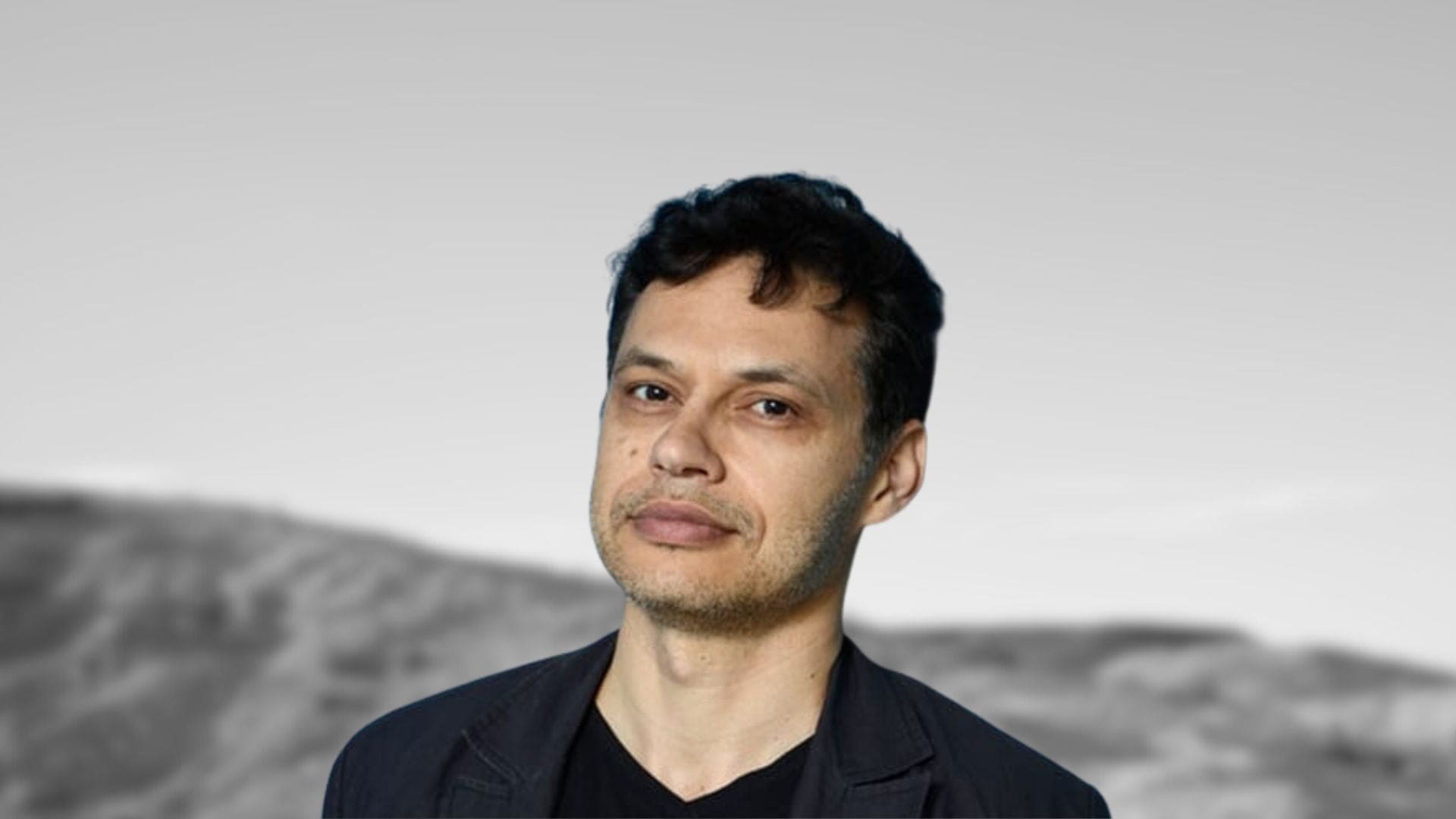
Interview with “Limbo” Director/Writer, Ivan Sen


Hosted by
KT & Oti
Show Notes
Known locally and internationally on the big screen and weekly viewing, Ivan Sen draws out the visual beauty of this country to the expansive Indigenous storytelling in his work. A legacy of a distinct lens and pen.
Limbo will be in Australian cinemas May 18, 2023.
Episode Details
- Duration
- 0:00
- Released
- May 16, 2023
- Category
- Interview
- Hosts


Transcript
Transcript (1,507 words)
Full transcript of Interview with “Limbo” Director/Writer, Ivan Sen.
KT: Known locally and internationally on the big screen and weekly viewing. Ivan Sen draws out the visual beauty of this country to the expansive Indigenous storytelling in his work, a legacy of a distinct lens. Ivan Sen, thank you so much and welcome to the For Reference Podcast.
Ivan: Thank you. Thanks for having me.
KT: No worries. we have loved your work for years, particularly the films Mystery Road and Goldstone, that center around an Aboriginal detective named Jay Swan. Limbo is kind of opposite to that. We have a white detective through Simon Baker as the character Travis, but it's still focusing on Indigenous issues that are important, like missing and disappearing young Aboriginal girls. I would love to know whether it's from a directing or like a storytelling point of view, what sort of avenues were opened up. From a different sort of perspective,
Ivan: you mean the perspective of of the police officer or? Yeah. yeah, I mean, the trauma that's that Indigenous. People face when that, when that's when they have to deal with the justice system in Australia, is something I really wanted to, present, but also, that interaction with, with the, justice system through, through the perspective of a, of a police white police officer as well. And, highlight the, the, I guess the injustices of, of that interaction. for, since colonization really, and. Also that intergenerational trauma that It also, it also occurs when you have families and you have children and people grow up and then they get old and, but people are still remembering what happened to their auntie, which, and they're still within the fabric of the family and the community.
Ivan: And it does have flow on effects, within the community and the families involved and, and, I think. I wanted to present also a perspective of, of just damaged people who, who were drawn to each other. And the damage that the police officer has is, is, is different to the damage that the Indigenous family has, but they both, they both damage and they both are drawn to each other for, for, for these reasons.
KT: Yeah, I'm not going to spoil it, but there is a nice scene between Travis's character and the kid in the car, where there's a very, Removing of the layers of, you know, pretending like everything's okay. And it's just having a frank conversation with a kid. Yeah. And, and it's, you know, the intimate layers, which are, I was really very keen to, to play with, between this white man and this black, this black family. But I mean, he, the policeman is, he doesn't think of himself as a racist, but he doesn't. He doesn't say he's not either, you know, and, and for him, for himself, it doesn't really care whether he is or not, you know, I saw the tattoos.
Ivan: Yeah. But I mean, in, when he starts to actually want to do something for this family, it's not really to do with. I mean, the race thing kind of goes out of it and he kind of feels like this young boy is like his own son who he's lost connection with. And so he's, he, in some way he's trying to make his own relationship feel better by doing something. for this family.
KT: Yeah, I think we're all on this journey of recompense and, you know, trying to make things right, even if it's through a sort of proxy. you know, casual film watchers or, you know, those that really enjoy and analyze the title of the film, is very indicative of Visually, and even as you're saying, a lot of the characters being in a potential sort of limbo, I'd love to talk a little bit about, the aesthetic decision to make the film in black and white.
Ivan: I mean, there's all kinds of reasons why it ended up going the black and white way, but, in the end, there was just felt there was more benefit to be black and white than not. and we found out early on that it really. The color, the color, there was no color to distract you from what was going on within the minds of the characters and what was going on between the characters. And you can, and I felt like you, you focused more on the details and, it also gave a certain atmosphere where you didn't, you were feeling a certain feeling, but it wasn't, there was no bright colors to distract you emotionally. and so, yeah, it just, and, and technically from a contrast point of view, it just lends itself to black and white because, because of the minerals in the dirt, that's very white, you know, it's a very white color out there and that's why the opals are kind of out there.
Ivan: But, so you've got this white palette, this white, kind of canvas. And, and you can put black things on top of it, or you can put gray things on top of it. And one of the black things was the old Dodge Phoenix, the old car, which, has always been there from the very beginning of, of, of, of the script. and I felt was really important to, for not only from a contrast point of view, but also, a design, point of view in, in providing a, a kind of a living memory type of living in a memory type of feeling for the film.
KT: Yeah, and you, let's talk a bit about Coober Pedy, you talk about the setting, you know, even talking back to the themes that would evoke with the title of Limbo, what was it like shooting, you know, in an underground or mostly sort of underground setting throughout the
Ivan: Well, I mean, underground is good because you're, you, you are out of the elements and it's a pleasant 23 degrees, all year round. So it's, it's simple. It's pleasant to shoot in there. and it's great kind of, wet weather cover or, or wind cover, out there it was really windy. And so the wind was kind of the, the, the hardest thing to deal with because there's no trees there. So the wind can just like get a speed up and, and, and that was a, that was a bit of a issue to work with. but, I mean, the place is just, the underground experience is something. I think it's quite unique and it's something I wanted to, to portray on camera for a long time. And I, I don't think many films have actually, presented the underground kind of living culture before, up there. They've, they've more concerned with, with the lunar landscape or the, you know, the desert kind of, visual landscape.
Ivan: Yeah.
KT: Yeah. The only recent sort of example I can think of is Firebite, which has Rob Collins. and Rob Collins was also in here as well. So that was very nice to see.
Ivan: Yeah. I mean, Rob, Rob was involved with this, film for last. Like since, since I started writing it, I, I contacted Rob Collins and told him that I'm writing this character for him and wanting to, to do this film. And, and I wanted to work with Rob for, for a few years now. And Rob was very keen to work with me. And, so Rob was, Rob, was there from the very, very beginning. And he's such an amazing actor.
KT: An amazing actor. It's such an incredible film. you know, even being able to see the themes from the Mystery Road as well as the Goldstone sort of films. Something that I would like to know is do you create to be a mirror or to open a dialogue or maybe both?
Ivan: look, I think, I think all art should, should do both of those things. but, yeah, but as far as, you know, trying to send a message down someone's throat, I'm not into that at all. And I think that actually is counterproductive to producing art. Yeah. Yeah.
KT: Absolutely. so we finished off our reviews with a recommendation. So, what would you pair with Limbo as a double feature?
Ivan: A double feature? You mean like at the drive in?
KT: Yeah, go on. Give us like a double sesh.
Ivan: Oh god, I don't know. I really got, I really don't know. geez, you got me there. I really, I don't know. It depends if you want a companion or something that's going to, contrast with it, I guess. We can watch it twice. We can watch it in black and white. That's going to be a creative decision, yeah? Maybe something polar opposite of what it is.
KT: That's okay. They can watch it in black and white and then in white and black.
Ivan: Or they could watch a colour version of it. I can do one of those.
KT: Yeah. Well, thank you so much Ivan Sen for your time. I really appreciate it.
Ivan: No worries. Thanks a lot.
Related on FYR
Discussion
Loading comments...