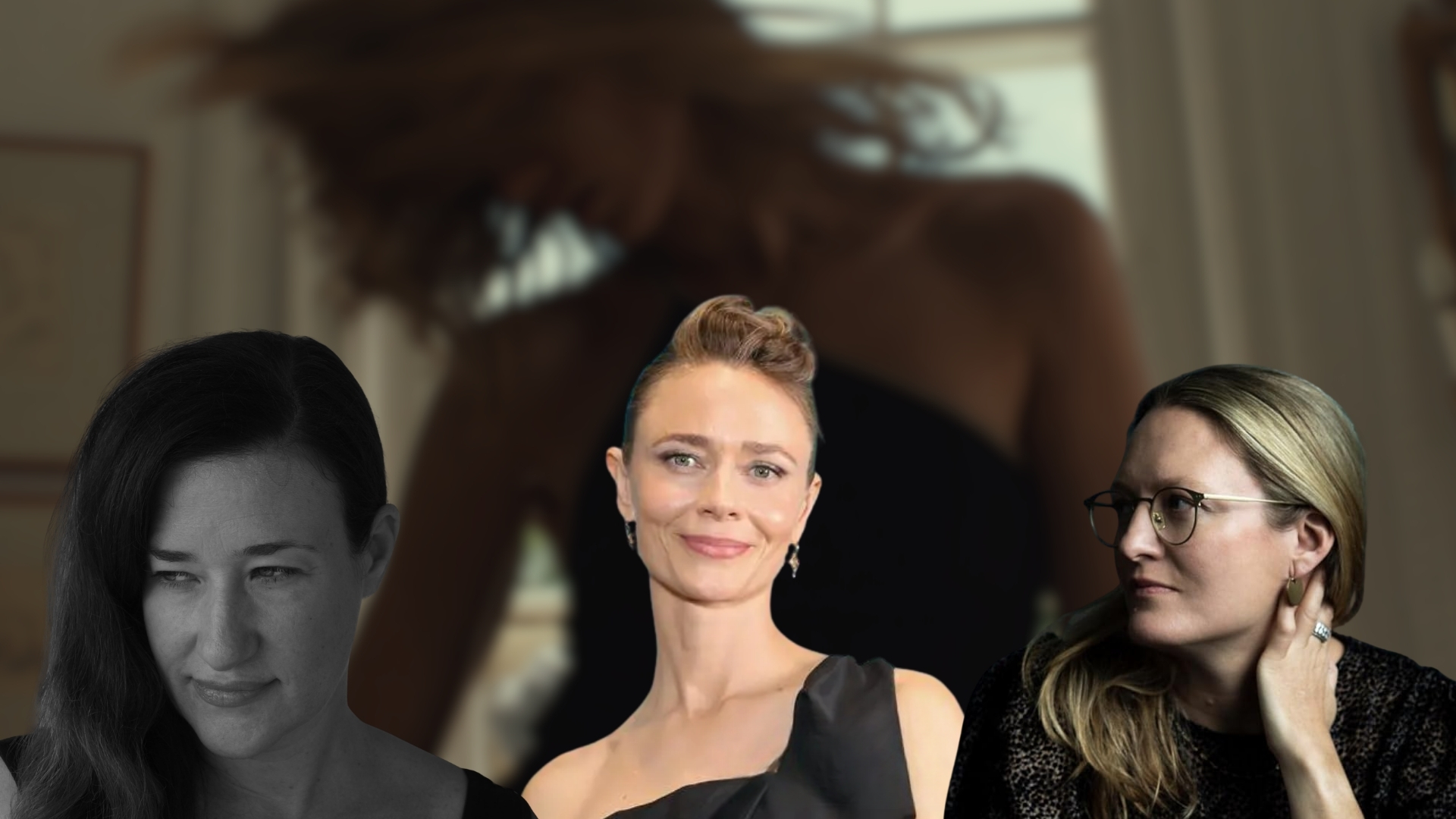
Interview with “Life Could Be A Dream” Director Jasmin Tarasin, Editor Gabrielle Muir & Actress Maeve Dermody


Hosted by
KT & Oti
Show Notes
This week we are joined by Director Jasmin Tarasin, Editor Gabrielle Muir & Lead Maeve Dermody to chat about Life Could Be A Dream.
Life Could Be A Dream is in cinemas nationally on May 14, with a donation of $1.00 from every ticket sold across the Palace Cinemas circuit during the release of the film will be made to The Man Cave.
As suggested by Jasmin, double feature watching of Life Could Be A Dream & .
Note: this interview is audio only. For other video interviews check out our YouTube playlist.
Episode Details
- Duration
- 0:00
- Released
- May 12, 2026
- Category
- Interview
- Hosts


Transcript
Transcript (3,164 words)
Full transcript of Interview with “Life Could Be A Dream” Director Jasmin Tarasin, Editor Gabrielle Muir & Actress Maeve Dermody.
KT: At 40, Sarah's forced to confront a painful truth. She's trapped in a marriage held together by the faded illusions of love. Life Could Be a Dream is in cinemas nationally on May 14 with a donation of $1 from every ticket sold across the Palace Cinemas circuit during the release of the film will be made to The Man Cave. And we, what a treat today, friends and lovers. We have a full house. We have director Jasmin Tarasin, editor Gabrielle Muir, as well as the lead, Maeve Dermody, on the For Your Reference podcast. Ladies, thank you so much for your time, and welcome to the For Your Reference podcast.
Maeve: Thank you. Thank you. Thank you. Lovely to be here.
KT: This is great because, you know, press kits are cool and fun and informative, but it was so visual, um, the press kit that you guys had. And Jasmin, it was noted that you talked about filmmaking is not a singular voice, so I'm so glad that we have, you know, a, a, a great, um, collection of people involved in this film today. Also, debut narrative feature, um, as well. And Jasmin and Gabrielle, you've worked together before, but I guess to start off, how was it for the both of you working on a narrative and a feature film this time round?
Jasmin: Um, Gabby and I have worked together our whole, our whole, our whole kind of, um, film industry life, which is, which is, you know, quite a few decades. Mm-hmm. And we've worked across docos, um, art and commercials. But yeah, this was our first narrative feature working together, and we absolutely loved it. And, um, yeah, it was such a joy to You know, I'm very kind of, um, a, very kind of secure with my film family, so to We just kind of work across different projects together, and it was just, yeah, absolutely fantastic process, um, to know and trust so much who you're working with. It's very important to me, as I do work very collaboratively
KT: And Gabrielle, uh, you talked about some editors might not even read the script and just have the work presented, and then that's how they go into the editing process. But you really wanted to see, and also being a fan of the literary, you know, sort of art, how was it, I guess, being, working so closely together, but also wanting to know all of it, being involved right up until the end? What was the editing process like for you?
Gabrielle: Um, it's, it's much more rewarding for me when I can be involved, uh, from an early stage. Because, I mean, to be honest, writing and editing are sort of, uh, like the two most closely related parts of filmmaking. People always think, oh, you're at opposite ends. But, um, it's, I actually think of editing as, like, being the final writer on a f- on a film.
KT: Mm-hmm.
Gabrielle: Um, and it But in terms of, um, when you, when you have an established relationship with somebody, there's, um, so much more trust, and you can be so much braver and clearer and y- and there's, there's, um, just no, no hesitancy in putting yourself out there. And I think that that makes for really creative decisions and creative collaborations. And it's also just amazing when you're in the room, not just with somebody that you trust, but somebody that you is, you know, a genuinely close friend. Mm. It was just such a it was such a magical experience. Um, yeah. It was just great.
KT: And I guess talking about collaborations and working together, um, Jasmin, we also have your son, and I think that, that also goes into the mother-son dynamic, Maeve— Mm of your performance, because there was so much. And I do definitely wanna get into the visual storytelling. But even just the, there's so much, you know, that Sarah was experiencing internally, and I guess it would be interesting to know the decisions and the choices that you made of, there's a thousand thoughts and feelings, but this is the output, I guess, that we're getting. What was it like being able to channel, you know, your performance and I guess bringing in that dynamic with Otis in the film?
Maeve: Hmm. Yeah, I mean, I guess it could've been a bit complicated. Yeah. Being Jasmin's son. That's— Potentially complicated. Um, but it, yeah, it did len- it was almost like she lent me her son. And I, I mean, I had this mirror there of how I mean, they're very Jasmin and Sonny are so e- they have such a close relationship and very tactile relationship. Mm. And, um, I guess I sort of, I just had it reflected at me all the ti- through the rehearsal, and I just sort of, I mean— Yeah, I just sort of, um, got to catch it and sort of weave it in, and then we had our own thing. You know, we had our sort of getting to know each other and, um, uh—
Jasmin: You created your own dynamic, yeah.
Maeve: Yeah, we definitely created our own dynamic but I had that mirrored to me. Mm-hmm. And I also have a young son, so I, like, got to pour that in as well. Um, and then the writing was, it was all there in the writing as well, you know, sort of it There was s- such a secure place to land—
KT: Mm-hmm
Maeve: for all of that sort of developing the relationship. Yeah.
KT: I think what was interesting about Life Could Be a Dream is we've seen many, I guess, different representations of what it can look like for women in relationships where it's not necessarily safe. Sometimes it's a bit more obvious to the audience as well as the protagonist, and this is a different offering. It's a, it's a different view of what that looks like, but it's, it's just as vulnerable. And I, I guess, like, going around the room, maybe starting with Maeve, what was it like, I guess Or maybe it wasn't a consideration of what's been done before, how, not necessarily on the nose, but like, you know, how prominent it was and how, I guess, more, more subtle, more simmering— Mm-hmm this film felt. If, if it's okay, we go to Maeve, and then maybe Gabby—
Maeve: Yeah
KT: and then—
Maeve: No. Yeah, I mean, I It's kind of my, um, style of Not style of film. F- it's, it's a, it's a film that I would love— Interesting film. Yeah, but It's like a film that I would love anyway— because it's, you know, so much about an, in the inner life of someone— Mm-hmm um, and the subtleties of that, and the way it's, um Yeah, it is the, the more invisible coming, coming through, and the pa- the history of that person, and, um, the fantasies of that person. And, um, yeah, so for me it was ideal. I, I love that, you know, I, I find it more enriching than, um, something that's more, more obvious or obviously violent or— yeah, sort of,
Gabrielle: Literal. Yeah. Yeah. Yeah.
KT: Yeah. Yeah. And Gabby, how was it, I guess, w- cutting that together in the editing room?
Gabrielle: Um, I just, uh, I, I f- think this film is incredibly, I, I like to use the word elemental. Mm-hmm. Um, you have this sort of, um, this, the greenery and the sky and, and obviously the water, the Th- there's even fire, and but obviously the water is sort of, it's like it's Sarah's element that takes us into her memories, both good and bad, um, and her fantasies and her nightmares. Mm-hmm. Almost, um, was, was the vehicle by which we could get inside, um, what was going on, you know, internally for Sarah's character. And, and, um, I think it was a really, um, unique, great way to sort of be, be able to depict the inner life of somebody.
KT: Mm-hmm.
Gabrielle: Um, and yeah, so I, I found that really special to sort of be able to go in there and, and, um, uh, rather than just overtly sort of narrating it all.
KT: Yeah. And, and Jasmin, for you, I guess, what were the sort of, like, choices that you made of like You know?
Jasmin: Well, I think that, you know, the whole kind of subject matter, which is, you know, this invisible kind of violence against someone that no one can see—
KT: Yeah
Jasmin: it was very important for people to be able to feel that and to be, be part of that. So a lot of the decisions we're trying to allow the audience when they're watching is to feel the internal process of what that person is experiencing—
Maeve: Mm-hmm
Jasmin: when you may not be able to see on, you know, this happens and this happened, this, this happens. It's not really like that. It's like what you feel in your body is, is everything. Mm-hmm. And so, you know, through Maeve's complex, you know, beautiful performance, Gabby's editing, the sound design, the beautiful cinematography from Meg White, um, all of that fed into this vision for me, which is about someone experiencing that experience for themselves as a viewer and embodying that. So, um, that's really It's been so fantastic for me. We've had a whole series of preview screenings, um, over the last, uh, month, and we're continuing to do that. And the- everyone's saying, "I could feel it in my body before I could think about what was actually happening in the story." And I'm like, "Yes, great. Perfect." So that's, that was, that was the, that was the vision, um, or the feeling. Mm-hmm. Um, so, um, yeah, that was kind of where we started, and I'm so glad that that's where we ended.
KT: And I think it's one of those things of like you don't need to know or understand. This is what's happening, and this is the— That's right journey we're going on, right? It's like I don't know if this is, like, that serious or You know? And I think that's, maybe that's evocative and in a microcosm of being a woman of like, you don't need to believe me. I'm telling you, this is what it is. Mm-hmm. And I love the way it was layered in the film of, like, the visual sort of dream-like sequences, like, uh, I guess described as the fractured- sort of fairy tale, and I was like, "You're not the only one that's dreamt about Mr. Darcy." It's as fiery as I felt— watching this film, um, as well. I, I guess, how was it, how was it navigating? 'Cause I think a lot of it is because we're, we're living Sarah's experience, right? So it makes sense that that's how we get those elemental, like, um, Gabrielle said, of the film. But I guess how was it traversing that? 'Cause it's You see it on the surface, like, like we said, you know, there are moments where if you were to go out and just look at anyone, you don't know what they're going through. Mm. But this is what they're experiencing deep down, and I guess what they manifest isn't necessarily what they're feeling, right?
Maeve: Uh-huh.
Gabrielle: Yeah.
Maeve: Yeah, how well-trained you are at not showing it. Yeah.
Gabrielle: Mm.
Maeve: Yeah. Yeah, I, I kinda feel like it's a sort of, um, m- in the mush, like a cat- you know, the caterpillar is actually mush before they become, they come out of the cocoon. And it feels like that, like, just swimming in all the kind of history and reform- like, sort of trying to reform—
KT: Mm
Maeve: in some way with a, with sort of stripping what has come before—
KT: Mm
Maeve: as well. You know, like, all the roles you have had to play and all you had to suppress and, um, to carry on and, and stay afloat, and there's just a point where you just can't anymore, and— So you have to go through this transformation. Yeah. Yeah.
Jasmin: And I think, you know, when you kind of can't see, you know, um, the abuse, you sort of, you know, you, you tr- you're thinking, "What's, what's in my mind? What's not in my mind?" Yeah. And kind of just trying to find that intuition in yourself. And as, since Sarah's character swimming was the way that she was able to clarify those thoughts—
Gabrielle: Mm. Yeah
Jasmin: um, finding that intuition, that resilience, that agency when you, um, are trying to go back to yourself is, is extraordinarily hard. Mm. When you've compromised yourself. That's right, yeah.
Gabrielle: And, and also that, um, I remember as we were editing, you were talking a lot about the, um, about your catalog of sort of good memories can hold you back more than anything else. It's like you've got, um, you know— Absolutely this, this, like, top 10 list or whatever that that can keep you trapped in a situation where you really actually need to move on.
KT: Mm.
Gabrielle: Um, and, and I, I, I like the way that we played that in the film and, and even we use The, uh There's one time where we go back to the same memory, and I've actually intentionally used different takes because I think even with memories, you, you know, there's not some objective truth— Yeah or, or some way it was. It's, it subtly, you know, it's, it's a constantly evolving thing as, as you go through your life.
Maeve: Yeah. And it becomes the Isn't it literally the, it becomes the memory the more— The more you replay it.
Gabrielle: Mm.
Maeve: Yeah. Your mental state.
Gabrielle: Yeah, you, you, you recreation.
Maeve: Yeah, but it's actually like how— Yeah a memory works in your brain. It's not, like there's not one original thing that happened. Mm. Yeah. It's about, it's the way you replay it that becomes the memory.
Jasmin: Yep.
Maeve: Yeah.
KT: And I think that's I, I think what we've, like, we've been talking about today is, like, the creative sort of decisions to layer the film because, like, obviously you just wanna be yelling, be like, "Get out of there, girl." Like, you know, "Get out of there." But there was, there was a moment, like I wouldn't necessarily say Sarah was, like, repressing her feelings, but she was just trying to, you know, she trying to survive, trying to save Otis, et cetera. But there was a very, um, like a really nice moment of release, like a guttural, you know, instinctual release that I don't wanna spoil, um, in the film. But it was really nice to be able to layer that on. And I think even it's even evocative of life, 'cause people don't get to sit around and have a proper forum chat of this is the topic today. These are the, you know, lessons that we need to learn. So even the little moments where Otis will be repeating things that Dad Jake— Mm would say, I'm like, "Oh, this boy. Let's steer him right sort of direction." And it was nice to be able to experience that. And even to hear at screenings it's being received in the same way um, I guess that all of you put your intention into, right?
Jasmin: Yeah. Like last night we had a screening with and The Man Cave, and Sonny did a panel after the screening. Mm. And, um, it was so wonderful, um, to hear, um, the guys at The Man Cave who work with, um, young men in schools on emotional, um, e- emotional intelligence. Intelligence. Yeah. Yeah, yeah. Resilience. Resilience and yeah— Workshops. Yeah do workshops. And just saying how important it was for, um, for, in that character, for Otis to identify the positive and negative role models in their life, and make decisions moving forward about what, who they wanna be as a man or, you know, as a person. And so h- you know, opening that up, that conversation I think is everything. And, you know, it's a major reason why I made the film. Um, but yeah. So I just feel like, um, yeah, they're the kind of conversations that we want to kind of encourage.
KT: I really feel like this film will bring, continue to bring a lot of conversation. Something that we didn't even get to, like, touch on today, I guess, is, like, I don't have any children but it's like feeling like you're the parent in particular moments. And there were moments where Otis was taking on, whether it's, like, a, a companion role or, you know, whether it's, like, parenting or, like, protecting Sarah's character. And I, I— I'm sure we'll get to hear many more conversations. But I wanna thank you all so much for your time, and wrap up with our final question. We can all pool it together, or you can individually answer, but, uh, we finish off our reviews with a recommendation. So what would you pair with Life is a Dream, um, Life Could Be a Dream as a double feature?
Jasmin: Oh.
Maeve: God.
KT: Like, do we wanna have more conversation? Do we wanna, like— just decompress and just have fun?
Jasmin: Yeah, like I, after making Life Could Be a Dream, I've just been watching like really bad comedies, so Yeah.
KT: Um,
Jasmin: I don't know if that's a double feature, but, um, yeah. Wow, that's a really interesting question. Mm. Yeah. Wow.
Gabrielle: Um
Jasmin: I suppose it's a tricky one, but I suppose if, you know, looking at the flip side of, you know, that kind of cathartic relationship, like something like Aftersun. But it'd be quite a double feature. It would be.
Gabrielle: It'd be exhausting.
Jasmin: Um, but yeah.
KT: Jasmin, that's me at Sydney Film Festival. I get my tote bag, I get my snacks, I get my notebook.
Jasmin: If you wanted to kind of really get in there, that would be good. But I suppose, yeah, I would probably pair it with something, I don't know, some sort of— Something fun, sun. Yeah. Yeah. Pretty Woman. The fantasy. Yeah, the fantasy. Pride and Prejudice maybe. Mm.
Gabrielle: There we go.
Jasmin: There we go. Pride and Prejudice.
KT: Yeah, there— Can I put a note of like the—
Jasmin: Yeah
KT: my official BBC miniseries Colin Firth. Can I, can I say that?
Maeve: Yeah. I liked it. I quite liked the Joe Wright film. Yeah.
Jasmin: Yeah. Yeah.
Maeve: But yeah, the whole series.
Jasmin: Yeah, yeah. I don't know. That's a good one. Yeah. Yeah.
KT: Well, congrats on the success, and the continued success, and the fact that it's like, you know, together with The Man Cave and continue to have these conversations, but I wanna thank you all so much for your time today.
Jasmin: Thank you for having us. Thank you so much.
Related on FYR
Discussion
Loading comments...