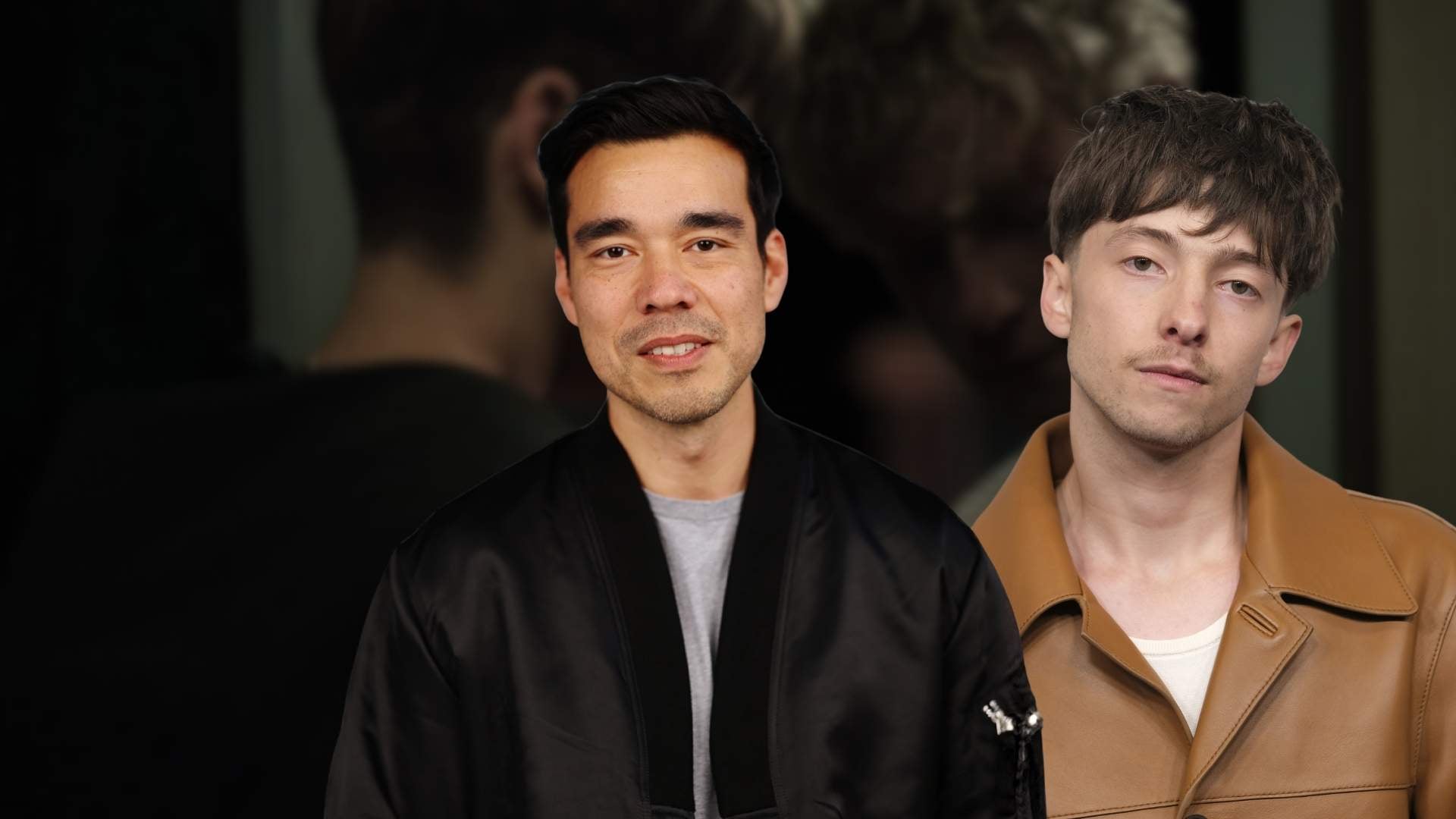
Interview with “Leviticus” Director, Adrian Chiarella & Actor, Joe Bird


Hosted by
KT & Oti
Show Notes
We sit down with Adrian and Joe during the buzz of SFF to chat about their upcoming film, Leviticus.
We celebrate queer horror icons,
IN AUSTRALIAN CINEMAS FROM JUNE 18
Episode Details
- Duration
- 0:00
- Released
- June 22, 2026
- Category
- Interview
- Hosts


Transcript
Transcript (2,626 words)
Full transcript of Interview with “Leviticus” Director, Adrian Chiarella & Actor, Joe Bird.
KT: Adrian, Joe, thank you so much for your time and welcome to the For Your Reference podcast. Thank you.
Adrian: Thank you.
KT: Before we get into all of the shock and horror, I guess I wanna say, first off, congratulations on all the accolades of the film. Oh, thank you. But happy Sydney Film Festival— Oh, happy Sydney Film Festival and happy Pride Month. Yes.
Adrian: Happy Pride Month, yes. Yes. Yeah.
KT: We need a yassification. Yassification, yeah. We had the yassification— Yes uh, inside with Babadook and then maybe we'll get that.
Joe: Yeah, I was gonna, I was saying that that was like, 'cause obviously Causeway did the thing and I was like to Adrian— Did The Babadook. "Do they, are they aware that The Babadook is a queer icon?"
KT: Oh, yeah.
Adrian: Yeah. They are. I think they are aware. Yeah,
KT: they are aware? Okay, great. With the top hat and everything. Top hat and everything. Yeah. Yeah. Right? Uh, Adrian, in interviews you've talked about, uh, an internalized sorta landscape and how exciting it is for horror at the moment, and, uh, you- potentially your own experiences have been woven into the film as well. What was it like being able to dabble into that sorta sub-genre of internalized landscapes in Leviticus?
Adrian: Yeah. It was really great to draw on, um. I think in Australia we have this incredible tradition of horror movies here. Mm-hmm. It's like a little sub-genre that we make on this side of the world, and I think the actual external physicalized landscape is a huge part of that. And what, um, uh, what I've noticed a lot of great horror filmmakers in Australia do is they take that landscape and they, they explore an internalized psychological landscape as part of that. Mm-hmm. So yeah, that's been really fun to work with as, and, and to bring something personal to it as well, um, you know, in terms of the queer experience.
KT: Uh-huh.
Adrian: Yeah.
KT: Absolutely. And Joe— You do have young roles that you take on, but they are layered, and they are very heavy. Yeah. And I hope you have a debrief as well. But I guess in Leviticus, with the performance that you have, how was it able to, like, for you to put in all of that effort for a layered— Yeah internal conflict of a performance?
Joe: Yeah, I think, um, like, it was. What was so, like, you know, like, drawing from the script was that these characters were so multifaceted and had so much depth. And it's-- Like, as an actor, that's so fun to play around with 'cause there's so many different, um, you know, emotions and— Yeah different, like, wants and needs in a character's mind. And, you know, working with Adrian, it was kind of like, you know, he had a vision, and I had a vision, and we kind of went together collaboratively to kind of, you know, find who this character was.
KT: Mm-hmm.
Joe: And yeah, I think, like, the, you know, complex roles are always the most interesting 'cause it just, like, leaves room for so many things to just happen in the moment.
KT: Yeah.
Joe: And yeah, I just had really fun filming with everyone 'cause everyone was just so, you know, vulnerable and open with each other, that it just created that sense of relaxation and comfortability to be able to, you know, go into those, like, deep, dark emotional states, yeah, without, you know, it leading to anything, like, negative, you know? Yeah.
KT: And also, like, you're being held, and you know that it's a safe space to explore— Right.
Joe: Yeah.
KT: Right the really heavy sort of stuff and you can, you can play around with
Joe: as well. And, you know, we had an intimacy coordinator, Amy Cater. And, you know, I think a lot of people think that intimacy coordinators are kind of just there for, like, kind of sex scenes and stuff like that. But it's also, you know, there to, like. She was, um. They were there to, like, you know, make sure that we were okay during these scenes. And, you know—
KT: Mm-hmm
Joe: they noticed that, you know, we weren't, like. You know, just, "Oh, you know what? We might need to just pause for five minutes before we resume." And, you know, things like that, just checking in. And yeah, I mean, everyone was just so supportive. Yeah. No one was there to push anyone past what they could not do.
Adrian: Like the scene where Nicholas Hope has the light around, and he's performing the ritual, and the boys are writhing around on the floor. So we had Amy, our intimacy coordinator, that, there that day just in case anyone was kind of triggered by the sort of stuff that they were seeing happening on that day, so. Yeah. Yeah.
KT: And I guess that's part of it, right? Right. 'Cause that's when you get the good stuff.
Adrian: Right.
KT: But I guess for you, Adrian— Is it, is it a good thing when it gets too close? Do you need to make sure that you keep something for yourself, or is it letting it all out on the page and the screen?
Adrian: Uh, I Yeah, that's a really good question. I mean, I, I kind of let as much out as possible, but I, I wanna make sure it's safe for me and for everybody I'm working with—
KT: Yeah
Adrian: as well. So yeah. Yeah, it's a good question. I try and get a, a, a balance with that. Yeah.
KT: Uh, I know tonally it's very different, but I do love Seed of Chucky. It's like one of those things— Oh, yeah . If we're talking about the Tillies and the queer icons— Yeah. Yeah um, of it all. But I guess being able to explore, um, you know, queer love, queer identity um, like in Seed of Chucky, but also in Leviticus. Who would ever say that in the same sentence, right? Yeah. Yeah. Uh, but I guess it's a balance of commentary as well as the horror sort of elements that is afforded in that genre. So I guess for the both of you, beside with Adrian, what was it like being able to balance having something to say and also having a cool way-- I'm assuming it's an extension of not needing to balance, but it's like— Sure having horror can further extend what you're trying to say.
Adrian: Yeah. I think there is a reason why horror has such a special place for so many people in the LGBTQ+ community. Um, something to do with these themes of kind of otherness and feeling destabilized, uh, when you're going through this coming-of-age period, this journey of self-discovery.
KT: Mm-hmm.
Adrian: I think there-- that that always felt very relevant to me. Um, and what we were doing with this film was just sort of drawing back the curtain of, of using it as a metaphor to explore something taboo and actually putting it at the foreground. So yeah, that, that was something that I really wanted to do with this film.
KT: And for you, Joe, I guess with the commentary and the horror, but just in general with your performance, how do you know with that push and pull how much to give and, and I guess l- like let it float for the audience so to say?
Joe: Yeah. So I. Like, I think, you know, a big part of kind of, you know, when you're like, I guess, acting in a scene, it's kind of, you know, letting everything go and trusting— Mm that, you know, everything that you've done in the previous, like, you know, in the-- back in the past is just already there. And I think as well, it's just, yeah, making. I mean, I spoke with Adrian and making sure to kind of like, you know, 'cause this kid is, is vulnerable, but he also has a guard up, and it's just like about allowing, you know, that vulnerability to show, but also having that guard still be up— Mm-hmm which is like, you know, quite a, like, intersectional kind of point. I don't know. It's just like they're really. Like, fear and desire are cool emotions to mix 'cause like, on paper, I guess they wouldn't go together. But you know, I feel like it is such a, you know, complex human emotion that people do feel, but it doesn't really have a name for it per se. Mm-hmm. I mean, yearning, I guess. But in a sense, yeah, I c— I don't know. But I think, yeah, it's just like— The way that the script was written and, you know, the chemistry that I built with Stacy, it's like all those emotions will kinda come naturally, uh, 'cause you kind of set everything up beforehand so that it, yeah, it's produced quite, yeah, effectively and naturally and real.
KT: Yeah. I think it's like it, it's, it's very feeling. It's not mechanics. It's like let me show you how much I want you like—
Joe: Yeah,
KT: exactly as opposed to being able to write that. And shout out to Stacy as well as everyone— Yeah, exactly involved in the film. Um, I guess what was it like i- in the media screening watching it? I was like, "Ooh, this is rough." I like, I, I— I know it's young men, but I was like, "Can we love? Like, can we hold each other?" But I guess that's part of that like sort of, um, release as well. So I guess how was it traversing, I guess, adolescence and, you know, young men and being able to explore each other, Joe, with Stacy?
Joe: Yeah. I mean, like, you know, as a young man myself, I guess like, you know, I draw from like— I mean, yeah. Speaking with Adrian as well and his, like, teenage life and just, like, kind of talking with each other and just, like, you know, it's like I'm going through the same things that, you know, Adrian would've gone through when he was a teenager in just terms of life. You know, like, friends and then relationships and whatnot. And I think that, yeah, we—
Adrian: Joe asks everyone their deepest, darkest secret within minutes of meeting, so
Joe: you know, Adrian— I don't know, I just like them a lot, 'cause I just feel like, um, yeah, it was just kind of like forming bonds with everyone to—
KT: Yeah
Joe: yeah, to create that.
KT: I think that's called trauma bonding. Trauma bonding. And that can be delicious in its own— And we just
Adrian: trauma bonded in there, so—
KT: We sure did. Yeah. I'm gonna act like my heart's not racing right now. Yeah. Um, in, uh, a- as a part of Sundance, Adrian, you mentioned how there was a scene about the explanation— Oh, yes of Leviticus. Yes, yes. Um, and pardon the pun, how it felt a bit preachy. Yeah. So I guess on the cutting room floor, there's probably a lot of, uh, tantalizing, fun things that are on the cutting room floor. Yeah,
Adrian: yeah.
KT: Um, but I guess it's also, what was it like balancing giving the audience enough— Uh-huh and then I guess letting them experience the rest, I guess with that example, but just in general?
Adrian: I think that's a really interesting example where we kind of overexplained what the meaning of the film was. Mm-hmm. Uh, but I think for me, the real magic of any film is when you sort of use these images and sounds that we've put so much work and so much love into, and you use them more as a prompt to kinda get the audience thinking about all these— Yeah other ideas that you can't actually see and hear. Uh, and so for me, that's, that's the real fun of filmmaking. And so I— I started as an editor, so I've always valued that part of the process. And when I sat down with our editor, Nick Fenton, we really thought about what does the audience need to actually see and hear. And sometimes you can show things to the audience, but you're actually overexplaining. Even though no one's talking, you're actually just overexplaining by showing too much. So yeah. Mm,
Joe: yeah. Like, less is more.
Adrian: Yeah, yeah.
KT: What is-- What's understood ain't gotta be explained.
Adrian: Exactly,
KT: yeah. Essentially, right?
Adrian: Yeah,
KT: yeah. Um, we're coming into Sydney Film Festival, um, so it's gonna be very exciting to be able to premiere that. I'm sure you experienced, and I hope you felt the love for Talk to Me when it was coming out as well. Um, how are you feeling about— The screening, I think it's tomorrow, right? It's tomorrow
Adrian: night.
KT: Yeah. So how are you guys feeling?
Adrian: Yeah, yeah. This is my hometown. Yeah. This is the film festival I grew up going to. Yeah. It's a very, very special screening for me. We also haven't screened in a theatre that size. Yeah. It's huge, the State Theatre. Woo. It's the first time Australian audiences are gonna see—
KT: Yeah
Adrian: an Australian film as well. There were
KT: some very Australian-isms
Joe: in the film— Yeah Yeah. Yeah for sure. Like, my, my little brother's coming up tomorrow, so I'm excited for him to come watch it with me as well. Like, yeah, it's just gonna be, it's gonna be an emotional, fun night I reckon.
Adrian: Yeah. It is. Yeah, yeah. I've got family coming. We've all got, yeah, people who are very special to us who are gonna be there. Yeah. So, yeah. It's Mia's first time seeing the movie as well. Mia's first time seeing the movie. So, yeah.
Joe: Yes, it'll be fun. It'll be a lot of fun.
Adrian: Yeah. Yeah.
KT: It was, it was very healing. It was a lot of fun. It was very exhilarating— Oh, good. Yeah as well. And I wanna thank you both so much for your time— Thank you and wrap up with our final question. We finish off our reviews with a recommendation, so what would you pair with Leviticus as a double feature?
Adrian: Oh, okay. Oh, double feature. What do you think?
Joe: Um— I- In a, in a way, it's like I don't wanna. I wanna pick, like, a film that's so the opposite,
KT: you know what I mean? Sometimes people do, like— Contrasting a, a contrast or, like, a same sort of theme. Yeah. It's up to you both. Yeah.
Adrian: I, I would pair it with a very old but favorite film of mine. There's an old Japanese movie called Onibaba which is this, which is the one with the mask, if people know that iconic image. But that was one of the first horror movies I saw that kind of mixed the, uh, the themes of, like, desire and jealousy into, like, this kind of terrifying story that, that emerged out of what was going on between the characters.
Joe: Mm. I think I'd pick Stoker, 'cause who wouldn't want a Mia Wasikowska double feature, you know what I mean?
KT: Yeah.
Joe: Yeah. Like, that's what I want. Yeah. And also, I just love that fi— I feel like it has that sort of, like, weird vibe. Creepy— A bit, like, creepy— teenage-y teenage-y, like— Yeah, yeah type vibe. And also two Australian actors in it, Nicole Kidman, Mia—
KT: Yeah
Joe: as well. Yeah, yeah So it's like. Yeah. Yeah. And that's, yeah, I'd say that.
Adrian: Nicole Kidman playing a scary mum.
Joe: Exactly. Yeah. Yeah.
KT: We're in for a good time, I think.
Adrian: We are. Yeah.
KT: Adrian and Joe, thank you so much for your time.
Adrian: Thank you so much.
Joe: Thank you.
Related on FYR
Discussion
Loading comments...