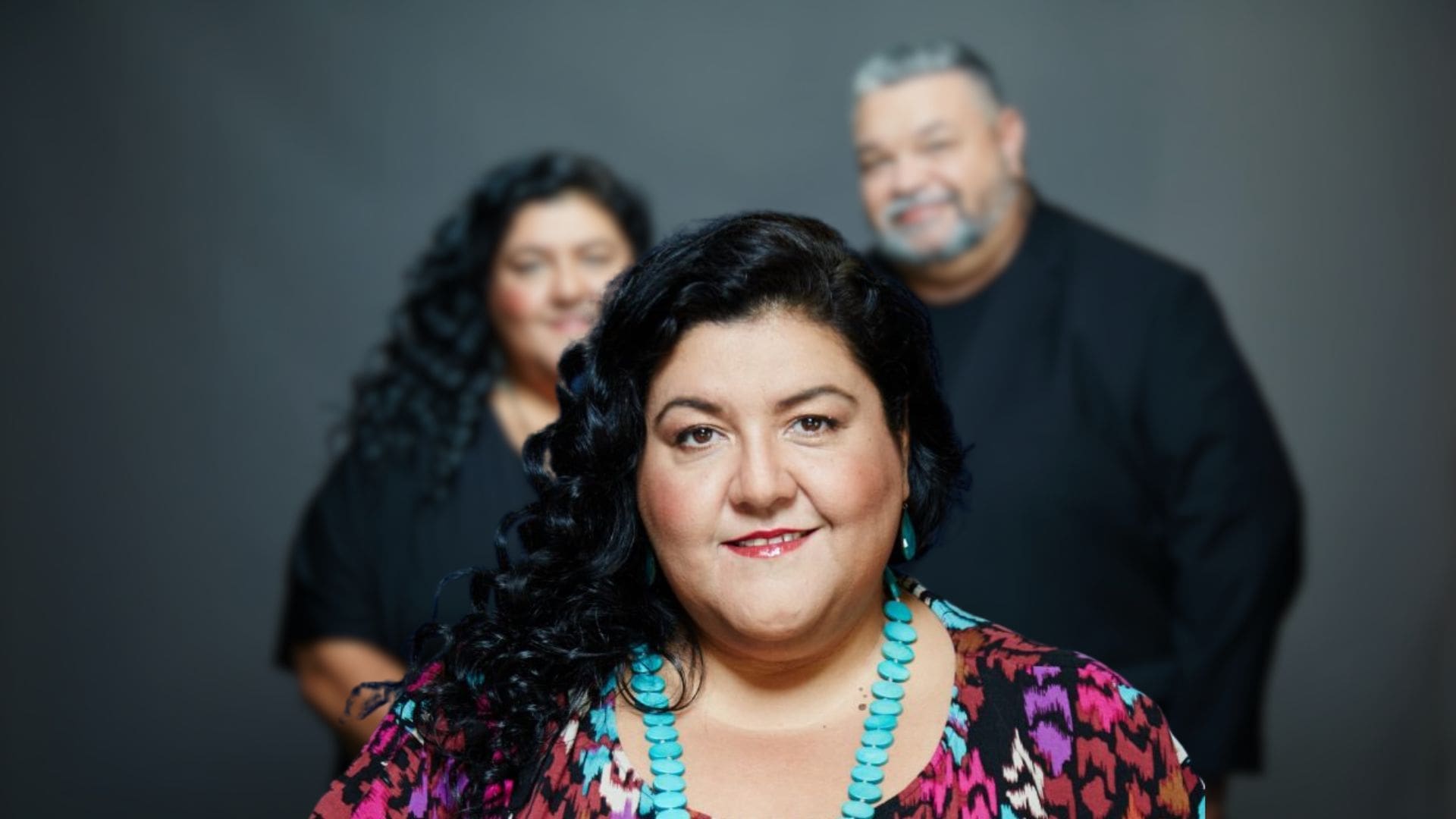
Interview with “Kindred” Co-director, Gillian Moody


Hosted by
KT & Oti
Show Notes
Embedded in the screen industry for years, Wodi Wodi woman Gillian Moody keeps compelling focus on First Nation stories.
Co-directing together with Wonnarua man Adrian Russell Wills, Kindred will be making it’s world premiere as a part of Sydney Film Festival.
Episode Details
- Duration
- 0:00
- Released
- June 23, 2023
- Category
- Interview
- Hosts


Transcript
Transcript (2,603 words)
Full transcript of Interview with “Kindred” Co-director, Gillian Moody.
KT: Embedded in the screen industry for years, Wodi Wodi woman Gillian Moody keeps compelling focus on First Nations stories. Co-directing together with Wonnarua man, Adrian Russell Wills, Kindred will be making its world premiere as part of the 2023 Sydney Film Festival. Gillian Moody, thank you so much and welcome to the For Your Reference Podcast.
Gillian: Hi, thanks for having me.
KT: Well, first off, congratulations. It's a great film. It'll be really exciting to see the reception to it. Um, it'll be great to know, especially, um, in the documentary. You both talk about how you've known each other for years and you've been such great friends. So has it been, you've always talked about it, you finally did it, or like, how did we say, this is it, we're doing it?
Gillian: Yeah, I mean, a bit of both, I suppose, like we, it is something that we've talked about for years. We've been friends now for 25 years. Um, and you know, there's also, we have a really great, both of us have a really wonderful and close relationship with my cousin, brother Lee as well, who, um, you know, who we all sort of share the same experiences. So at some point, I think we, we always imagined that we would. make a film about our stories in some way. Um, but I suppose the why and now became, this has been a four year journey. I will say that, um, because of COVID because of various other things, you know, family and, and just life getting in there and being a part of, you know, just living the experience as we're making it.
Gillian: Um, so four years ago, I suppose we kind of thought now might be a good time for us to start making this film because For me, I felt it was really important that I made this film while my, both my mothers were with us. Um, I was very concerned that, that I, you know, could lose them because they're both sort of at various ages where, where that is. And so I was very, very much, you know, about if I'm going to make this film, then I have to make it now while they're here. I don't want to make this film without them being here. So I suppose four years ago, that sort of, for me was definitely the reason why I kind of felt like it was important to start thinking about this, but also in Adrian's family as well, like, um, you know, the experience of loss in, in, in that family as well, sort of made us.
Gillian: It made him sort of really aware and think, you know, yes, we need to, we need to tell these stories. Um, we'd also over the years had lots of people that when we meet people, it's a topic that comes up, I suppose, just naturally in some ways, because, you know, when you're with mob as well, or, or even just introducing ourselves. Um, through a non Indigenous sort of space, you know, I, we often, um, introduce ourselves by identifying who we are and who our mob is. And so part of that for me, um, is the fact that I'm adopted and that I grew up with an adopted family. And so, you know, Once, once you mention those sort of things, people are like, Oh, wow, that's, that's, that's amazing.
Gillian: That's really interesting. Tell us more. So, you know, when, and then when you start telling those stories, then people would always say to us, Oh, you need to make a film about this. So here we are, you know, four years down the track after sort of, um, sort of really sort of seriously thinking about it, I suppose. And we've ended up with this beautiful film, Kindred.
KT: Yeah, it's definitely more, um, personal and, and more exciting than an FAQ page on a website, like having a documentary film covering those sorts of stories. And, um, I think being in this country, I'm, I'm Tongan, um, but even just how uncomfortable non Indigenous people are talking about the Indigenous history of this country and the not so great parts. Um, something that I wanted to know in, you know, making this film, were you both conscious of that uncomfortability and did that kind of influence how, or was it, this is the story meet us here?
Gillian: Uh, no, we were, we were definitely conscious of it. And I suppose one of the reasons as well, why we decided to make it was because. The history in this country is, has often been talking about Stolen Generation stories. And so I feel like we've always felt that the country really does have an understanding of, of, um, those experiences and traumatic experiences for so many people. And even in our own families. You know, there are examples of that. But we all, but we also felt like people hadn't yet talked about the next sort of stage, which was the, which was the era that we were born in, in the 70s, where people were The policies and everything had changed. And so adoption had become more prevalent, I suppose. And there are different reasons for the, for adoption happening.
Gillian: And I don't want to give away too much because it's actually talked about in the film in some ways about, you know, our own personal experiences and how we came to be adopted as well. So. Um, but we've really felt like it, people needed to understand that, um, there are different levels to, um, why we grow up away from country and away from kin. And so it was really important for us to sort of give. Um, our examples of those experiences, you know, we start the film with a, with a, uh, acknowledgement that this is just, this is our experience and that there are so many other experiences as well. Yeah,
KT: um, as a part of the line up as well, we also, um. We're able to interview for The Last Daughter, which kind of in the, in the, in a niche sort of topic, but even then they're both very different. These films are both very different and it's worth to give the time and the space to go through every story.
Gillian: That's right. Yeah. I think, I mean, that's in some ways that's. It's really great that there are two very different stories that are, you know, tackle almost a similar subject, you know, that are, that is a part of Sydney Film Festival. And I'd really encourage everyone to, to go and experience and see both of those films in many ways, because you are, you know, it does exactly what we're saying. We, we only represent two, you know, Adrian's and my experiences. And yet there are so many other people that have these, these experiences are similar out there as well.
KT: And even between the two of you, um, this is more of like a creative process sort of question. But in the, I guess the editing in the final cut. Because they all seem to weave together, even though you obviously had two different lives. How was that process of choosing when to cut back and forth between the two of you?
Gillian: Oh, look, you know, we, we have to give huge credit to our editor, Lindy Harrison. She's, you know, she just. Sat with all of the material when we, after we sort of finished, we finally sort of went, right, that's it. End of shoot. Nothing more. Now, you know, Lindy was sent all of the, all of the material and she spent many hours going through it all. And we actually had to sort of step away from it for a while because it was just too, too fresh, too emotional, too, too heavy in a way. And so we needed to have that little bit of separation.
Gillian: We'd had lots of conversations with Lindy. Um, in our development stage and in our pre sort of before we went out and shot. So she was really aware of what the film was that we wanted to make. And so she then crafted that together and presented initially. I think we had something else talking about this morning. I think we had about a three to four hour timeline for our original first cut of the film, our assembly.
KT: It's the Kindred cinematic universe.
Gillian: That's right. It's a three parter. Um, and so, you know, that just in itself was showed just how much or how worthy, how many worthy moments within our stories and our lives that, that could have potentially been on screen, but we weren't. Making a 4 hour film, we were making a feature length documentary. So we had to make some big decisions around what to cut. And so, um, and so that's when, you know, once we had been presented with this assembly, then we worked really closely together with Lindy to sort of, um, to bring that down and cut it back to what we are now.
Gillian: We now see on the screen. Um, but also sort of. What happened is like initially in the beginning I talked about from the set from the beginning when we first set off to develop this was that there was three sort of storylines that we were telling there was my story, there was Adrian's story, and then there was our story, which the our story is our friendship, but it's also our families and the fact that those are our families. Intertwined as well. And so Lindy did this beautiful, beautiful, um, crafting to, to cut that so that, um, as you mentioned, it's then really beautifully woven together. Yeah, there's times when we're sitting in each other's stories and we see the similarities, but we also can see the real differences between them.
Gillian: And then there's moments when our stories kind of cross over or meet and travel together. Um, and so, yeah, it's, uh, she's done an amazing job with all of that. And then, you know, coupled with our, our sound design and then our, our, um. Our original music as well. It's just beautiful, you know.
KT: Yeah. Yeah. I think that's also important, you know, for people to know and it's also good to know that this film was nurtured in love and there was a proper team and a family, you know, that went into pouring into this and it is living and it is breathing just like our lives are and it doesn't take like half a year to make a documentary film. So it's so important to highlight that as well. There was a moment that. It made me chuckle where it was like between the two of you just talking about your experiences growing up in school and I'm like, I was like, Oh, they were very different. Like it's very much not the same. Um, so that was, that was quite a good key moment.
KT: Um, that was there. I don't, um, we don't have to talk into too much detail, but there was something that I've never heard about before. That was that you touched on in the documentary film about the booklet.
Gillian: Yeah, yeah, I think, um, I think that was unique to the adoption agency that mum and dad went through, um, because as I said in the film, you know, I have a sister who's two years older than me, who's adopted as well, and she has that book as well, um, whereas, you know, Other people that I've known who have been adopted don't seem to have anything like that and didn't seem to get any information, but it's one of those treasured items for me. Like it's, you know, I still have it still sometimes, but pull it out and have a look at it. But, um, yeah, it's, it's a very special item and it was the, it was one of the things I suppose that confirmed for me. In some ways that, um, that my adoption was a decision that was made in some, in, in some sense. Yeah.
KT: Absolutely understand. Um, before I come to the, uh, last question, um, before the last question, I, I just want to quickly, um, just touch on Rest in Love and Peace and Power to Albert Hartnett. Um, the documentary kind of. Wraps up in, I guess the love through grief, because that's how you get through a lot of, you know, those sorts of moments and I just wanted to, you don't need to comment on it. You can if you want, but I just wanted to commend you guys on how the film was made and how it ended in such a beautiful way.
Gillian: Yeah, I think, um, I think that's one of the things, you know, we, we, we wanted to make a film that spoke of love, but also didn't shy away from those really hard topics and those, those moments in life where, which is loss, you know, both, every family has loss in it. Every family is in deal is dealing with, um, you know, the, the, the possible loss of people as well. And so. Really, we wanted to have a, create a film for me. It was a love story. Um, I wanted to really create a love story and, um, and show just what that means to me in my life to have had those people in my life.
KT: It's always a beautiful thing, you know, um, in Tongan it's Tokoni, like you come together and you just love on each other. It's a beautiful thing. Yeah. Yeah. Um, so just to finish, we usually finish our reviews with a recommendation. So what would you, uh, combine with Kindred as a double feature?
Gillian: Um, oh geez. Yeah. As a double feature. That's an interesting one. I mean, yeah. Look, we referenced Fringe Dwellers in the film, and I would almost say, like, for both of us, um, it's a, it's, it's, it's a really important film in, in the sense of, of us being introduced to seeing Indigenous people on screen. And so I suppose for me, I'd, I'd recommend that one in some ways, because it, it is a snapshot of a time and a place where Aboriginal people were starting to live and be, you know, brought into the fringes of that white world, you know.
Gillian: Um, so maybe I'd say that one could be a really beautiful one. It's a drama, so it's a bit different to a documentary, but maybe that would be a good one to pair it with.
KT: Yeah, tonally, it definitely makes a lot of sense and we throw this to a lot of our filmmakers and creators and it's always, it's always great to hear the response, um, out of the, as well. But thank you so much, Malo Aupito Aupito, Jill, for your time. Congratulations on the film again, and can't wait to hear all about it at Sydney Film Festival.
Gillian: Yeah. Thank you. And I know Adrian would have loved to have been here for this chat, but he's currently up directing, being the amazing director that he is. And he's up directing on some TV drama at the moment.
KT: I love the way you're bigging each other up. I love it.
Gillian: Yeah. Yeah. That's just natural. It's how we live. Absolutely. Thank you. Thank you.
Related on FYR
Discussion
Loading comments...