Interview with “Journey Home, David Gulpilil” Co-Directors, Trisha Moreton-Thomas & Maggie Miles


Hosted by
KT & Oti
Show Notes
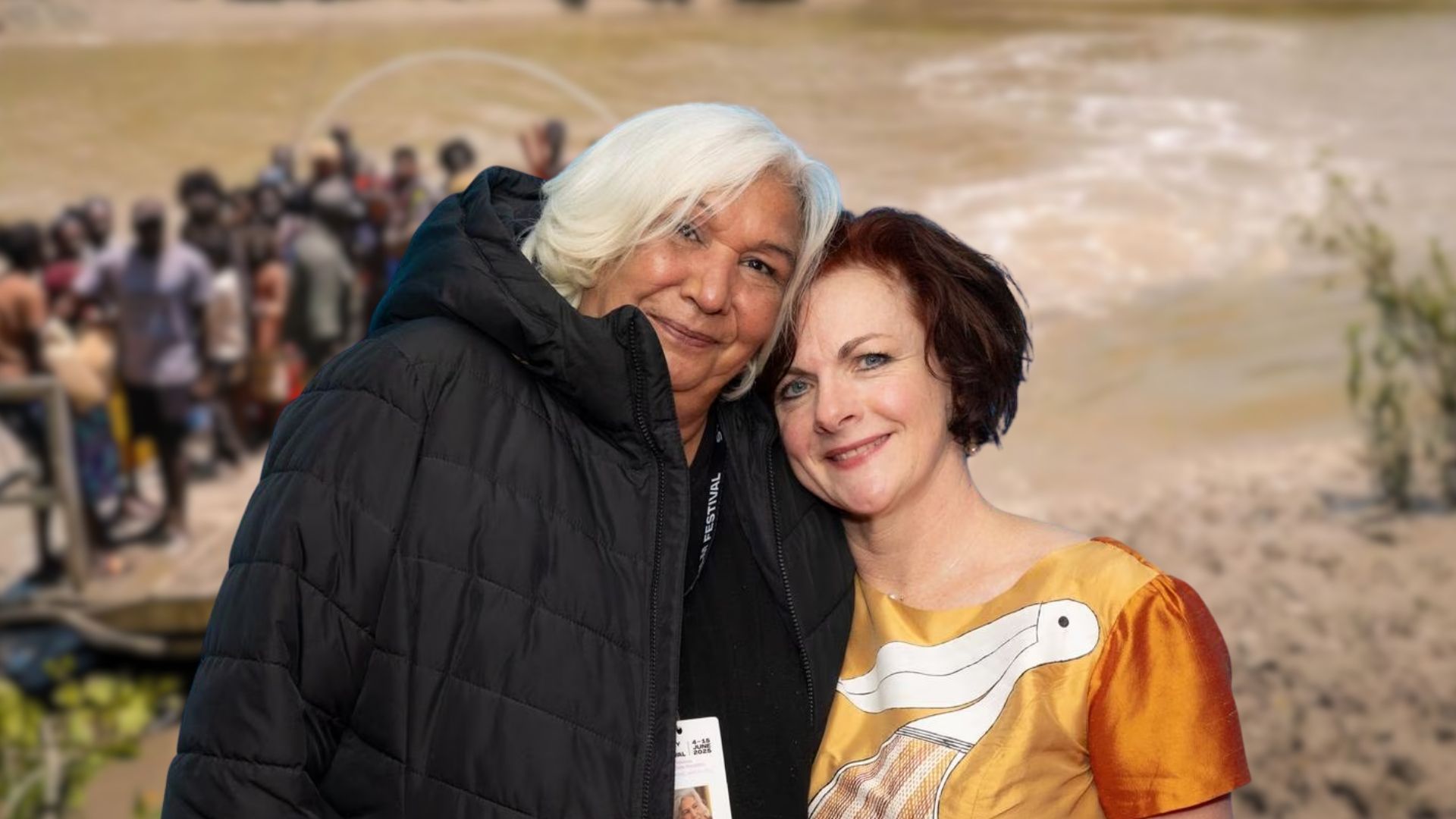
This week we chatted to Co-Directors, Trisha Moreton-Thomas & Maggie Miles about their film reflecting on the legendary life of David Gulpilil. We reflect on culturally ‘getting it right’, logistics of filming and the intricate balance in directing from Indigenous and non Indigenous perspectives.
Trigger warning: actors and people mentioned in this interview may have passed away at the time of you listening.
Journey Home, David Gulpilil in AUS cinemas from October 30.
As suggested by Trisha & Maggie, double feature watching of Journey Home, David Gulpilil & Showing Melbourne to Maningrida.
Note: this interview is audio only. For other video interviews check out our YouTube playlist.
Episode Details
- Duration
- 0:00
- Released
- October 28, 2025
- Category
- Interview
- Hosts


Transcript
Transcript (3,386 words)
Full transcript of Interview with “Journey Home, David Gulpilil” Co-Directors, Trisha Moreton-Thomas & Maggie Miles.
KT: Narrated by Hugh Jackman and Story Told by Baker Boy, the film follows Australia's most renowned Indigenous actor, David Gulpilil. After he passes away far from his homeland, his family struggle against huge logistical challenges to fulfill his final wish to bury him on his homeland over four and a half thousand kilometers away. Journey Home, David Gulpilil will be in Australian cinemas from October 30, Trisha Moreton-Thomas and Maggie Miles. Thank you so much for both of your time and welcome to the For Your Reference podcast.
Trisha: Thank you. Yeah. Thank you for having us.
KT: Uh, the both of you have done significant work and I am a, a, a long time admirer. First time speaking to the both of you, um, fan of the both of you and the career that you've had and the beautiful life. That David Gulpilil has had, I guess given the nature of the film, but just in general, I do just wanna put a note for our friends and lovers that, uh, people that we'll be speaking about may have passed away at the time of you listening to the recording as well. Um, but as we start off, David Gulpilil, uh, I imagine both of you have your own stories. You're welcome to share your own stories, but I guess as of this moment where we are. Um, how are you both feeling that this film is going to, you know, have more of a release for the Australian public to witness, Trisha?
Trisha: Uh, I, you know what? I think if the old man saw this film, I think he would be happy with it. I think he would be proud of it. We, Maggie and I dug in really deep with his family, especially Maggie, like her relationship with Mr Gulpilil's family. It really is the glue. That sort of keeps this film together and so it's this incredible, um. Legacy that this man has left behind and we just, I think I've lost my trail of thought here. I've gone somehow, but yeah, it's, um, yeah, I, I think he would be very proud of this film. I know his family who were producers and executive producers on us are very proud of this film also. So I think through them, I, I get a pretty good feeling. He'd be happy with it.
Maggie: Yeah. That's the best feeling, isn't it? Because I think he would be proud of his family too, you know? And, and we are getting so many messages at the moment 'cause we're coming so close to it, being in the cinemas mm-hmm. And all the comments from the family about Oh, you know, whether, whether he's. Grandpa or father or brother, you know, would've just loved to see it on the big screen. You know, watching it on the big screen and how proud and excited they all are to see themselves up there and to see their families, um, you know, being represented, doing such an uplifting and extraordinarily empowering thing that they did for him.
Trisha: Mm-hmm. And it's also this film because they are very much a big part of, like Maggie and I are credited as directors. Mm-hmm. But they're a big part of directing this film as well. Yeah. And which, what is allowed to go in and what isn't allowed to go in and how we, how we show certain aspects. And then, you know, what's. What we can use visually as opposed to what we can use, um, or in the audio. So, um, so yeah, I, like I said, I, I think he'd be proud of it. I'm certainly proud of the family who, who pulled us all together to make this film.
KT: And I, I, I think that's absolutely, 'cause it has that feeling of warmth. Um, in the making of this film. And it makes sense that his family, it was it his niece in the, in the film talking about how they had on the big screen. Mm-hmm. Um, and you very much felt the warmth in this film. Um, not to make this too much about myself, but I am Tongan and, uh, something that my mom always said was, you know, when it's my time, I want to go back. I want to go back to. Hmm. So, um, this, this film resonated culturally to me. It, I, I think it, it goes in ways that like people can understand it, but it's, it's, it's felt and it's entrenched in that love and that culture. And it's exactly like you're saying with the family being involved in the film. Um. David has had such a beautiful career. He has very energetic interviews, uh, on record as well, and there was the most recent, My Name Is Gulpilil film. That was a nice, you know, encapsulation of his career as well, but this very much focuses on that final wish. Of going back home. I think even in the film he talks about my spirit will go back to the water, you know, as well. How important was it in this documentary in particular, having a succinct focus, a singular focus on that journey? It's a big journey, it's a big, beautiful journey. But how was it having that singular focus in this film?
Trisha: Um. I think, well, we always look with anything that you start, any film you start, you kind of have to know what the ending is or where, how you have to have an image of what the ending is or a sense of it. And so we knew that was the moment we were all heading towards was laying him in the ground. Mm-hmm. And then I think we just. Shot the heck outta everything that was happening around us. So
Maggie: yeah.
Trisha: But it's not till you get to the edit that you can really focus in on it. Mm.
Maggie: Did. There's one thing that did come up in, in terms of that ending, that as it's so complicated, you know, looking at all the material and you've got all these names, obviously David Gulpilil. There was some material that iPad material we used, which is the first time that's ever been used, that archive. Mm-hmm. Um, he was named Gulparil. Sometimes the names change because people have been confused over the years. And then of course we had his homeland of Gulparil. Mm-hmm. And in our first edit. We decided not to let anybody say the word Gulparil. Mm-hmm. Because it was just so confusing with David Gulpilil, you know, there was, so, even though we knew the end goal, it, there was so much confusion around what was what and where we were and who was what. But then when we actually realized that the ultimate end goal. And this was, came from discussions with Alfred Young Po. With Peter Gula. With Koya. With Jaida. The ultimate goal was after his body was laid into the ground, and that was his spirit actually returning to Mario. Hmm. And, um, that, that was like a, a, a real extraordinary realization. Whe when we were, when we're kind of in the middle of the edit
KT: mm-hmm. It's a beautiful, and
Trisha: we, we had many discussions about how it should end, whether it should end on a high, you know, something a bit more energetic, something thing. But, and you know, there are times I'm looking at Maggie going, I don't know about just stopping on some trees and, but you know, when, when I look back and I go, actually that is the absolute perfect way to end it because. It is about country. It is about quiet. It is about your soul being at peace and going home.
KT: Mm-hmm. The sugar bag, honey bee.
Maggie: Sugar bag, honey bee. We had our own way of singing that in the edit.
Trisha: Yes. I, I don't think we can sing it online. You might be up for some, um, royalties.
KT: Um, and, and I guess that comes to, we, we've kind of already touched on it already, but like the importance of culturally getting it right. It's about honoring, it's about honoring a life as opposed to it getting the sort of notes that people look for in a film, right? It's, you know, wanting to make it feel real, but also respecting the privacy of the family because. Grief is very personal, even though David was a very public figure. Um, I, I guess, how was it, it, it felt like it was done very naturally. It doesn't feel like you were sneaking footage somewhere. I think,
Trisha: I think I, I, I can't speak for the Yolŋu culture. I can see, I, I know what I saw. I know what was explained to me. Mm. Grief and, and how their culture deals with it. But I can speak for mine and in my culture, in traditional culture, grief is not personal. Mm. It's laid out there in front of everybody, and that's all you do for six weeks is you grieve amongst the ceremony, amongst all of that. Um, it's open grieving and then you close it off after six weeks and then never to be mentioned or spoken of again. But it, that grief is very, very open, and I saw that, you see that with the women throwing themselves, um, on the ground. You see, you see these moments of, of unadulterated grief. I think it, it, it's just open for everybody to see and they're not afraid to show I'm really hurting. I'm hurting enough to hurt myself. Sorry, I just thought Yeah,
Maggie: that's okay. Yeah. A lot of trust, you know? Yeah. Tr Trish is speaking about is also the family. We're happy to. For us to witness and film all of that. And when I see the shots inside the room with the coffin, you know, that was also a lot of trust. Mm-hmm. And we were sensitive about when to move into those spaces and when to keep away. And if there's a moment where the coffin was carried all the way through the bush on his homeland to the. House, you know, the shell of the house where he was kept over at Gulparil and E, everybody sleeping with him every night around the coffin. He was never left alone. Mm. But those men and women held that coffin up for 10 minutes while the song cycle was completed around them. And, um. Peter and, um, old Harold and Gary were going through their cycle of recognizing all the clans along the you, you know, the particular song cycle they were focusing on and, and that, um, that was just amazing. And, um, so, so I think what was important, certainly I kept reminding myself as we talked about this. Don't try and be clever with this material. Don't try and impose your own ideas on it. You gotta listen to the material and you gotta try and understand it. And then we tried to convey what. Happened, you know, that's why it's so profound because the Yolŋu knew what order of events should take place and how they should take place, and that's a story that they created in such a profound way that w we only understand well. I personally only understand the top layers of it.
KT: Mm-hmm. Absolutely. And there, there was a moment when in that plane how they flew him on a lower level so the communities could say, yeah, yeah. Goodbye him. While it was on the way as
Maggie: well. A lot of fun to be had as well, dur uh, amidst all that real, you know, strong emotional stuff.
KT: Mm. And I guess that comes into the logistics of this because we are talking about thousands of kilometers, days of traveling, but even just. Waiting, like there, there are some things you couldn't rush, like waiting for the swamp to dry out could take months as well. Um, I, I guess you both talk about knowing where the end was gonna be, but obviously there are things that you can't even anticipate. Throughout all, you know, sometimes it's just time, which I guess maybe is a good lesson for life in this, like, in this ever moving world, but how was it, I guess, managing the logistics and the sometimes the things you can't even anticipate in the making of this film?
Trisha: Yeah, I, I, we just, you just have to be ready to film at all times and, um. With this one. It, it's Maggie. Um, I mean, I, I, I can't sing Maggie's praises enough as an Indigenous person working within, um, an Indigenous space. Um, through most of my career. It was, it, it was just so beautiful to work with a, a non-Indigenous person who I didn't have to be watching over her shoulder. Making sure she wasn't making shortcuts and protocols and or respect in the community. Um, Maggie just took the lead with that and I absolutely, um, within the first month of working with her, I realized I didn't have to panic here. This was somebody who was going to do it and do it right, and probably at times better than I would've. Oh, consultations. But yeah, no, um, it was a, it was so, it was so refreshing to be an Indigenous filmmaker and not have to take on that massive, big responsibility of also keeping an eye on a, on a non-Indigenous person that you're working with. And, you know, I'm not saying that's a bad thing, it's just. People don't understand the culture and so, and they often mix it with their own and they don't tread carefully. And so it was so great to work with somebody who was so respectful of Indigenous culture and did not make a move without consulting the community first.
Maggie: Thank you.
KT: But I think even, uh, 'cause because grief in, in my culture is also very public as well. But I even appreciate it the way you answered it, Maggie. Just shows that you're about it. It would be very easy to just, you stomp into that house and zoom into people crying. But I think that's why you work so beautifully together, the both of you. Yeah. Because you lean on each other and you know. What we are there for because it's people at the end of the day and we're all human. Yeah. But it's also good to know, Trisha, you're, you're ready to, you know, gather someone if they're not doing it correctly.
Trisha: Oh, Trisha, there's a few up. Yes. There's a few people that got. Got a little lash of a whip every now and again. So poor little darlings. Anyway,
KT: they're gonna learn. They're gonna learn, uh, either their way or our way. Yeah,
Trisha: well that's the thing. Well, look, you know, it's like, come on, let's just do this Right. No matter which way where we are. If I'm making a film in China, I wanna sit down, you know? It's, you get somebody from that culture who mm-hmm. Who shows you the respectful way in, you know, so, or you, you, you collaborate with them.
Maggie: That was the great thing about working so closely with the family too. Yeah. Before, you know, with the Yolŋu and you talk about logistics and because as Trisha me mentioned before, she had a few family responsibilities. So when we were waiting to mm-hmm. Well, we were just waiting like, what's the next we, we knew the family were gonna set the date for the funeral, but we didn't know when they were gonna meet to set the date. We knew we had to go out to Gulparil. We didn't know where Gulparil was, and Trisha's like, well, why don't you get up there and find out where it is? So I'm like, okay. So it was like. Three months up in Arnhem Land in the lead up to the funeral, just researching. And then we had the condolence motion in Parliament. And that first trip out to Gulparil, of course you carry a camera with you because you don't go anywhere like that without filming on the way. And that was more, you know, research documentation. So we actually know that while we are going four wheel driving from Ramingining for an hour, and then we are getting to a little part of the river, which. We've called Gulparil Crossing. I dunno if it really is. And by the way, it's a tidal tidal river and it's full of crocodiles, and the only thing you can get over there on is Jamie Gulpilil's little old tinny with no engine and no oars. When you get there, you gotta walk in for 20 minutes, half an hour with everything you've got. And when you get there, well, it's Bush. There's no. Uh, there's a shell of his old house, but, you know, no shop, no toilet, no running water, no electricity, but paradise, you know? Mm. So that was, it was, it was fun to go on those expeditions with the family and, yeah. I,
Trisha: I noticed you didn't mention the thigh. Thigh deep in mud in mangrove mud. Yeah,
Maggie: yeah, yeah. Alan Collins has this photo, which it was just like, what? Just mangrove mud. Uh, right up, you know, pulling that tinny, pulling that tinny with a few Yolŋu ladies along the side of the river because it, there aren't any oars. It's tidal. So you get pulled down, then you gotta pull it up to the other part of the crossing, looking
Trisha: all over the place, terrified in, in case a couple of Crocs come at you.
KT: True. But it's, it's that balance, right? It's being able to hold those heavy and, and very necessary truths and feelings. And it's also, um, you know, having fun along the way and. You know, I, I prepare for these interviews and I always hope that we have some. Feeling of a connection. But I want to thank the both of you 'cause we really went there today and it was so nice and it was so beautiful. And I hope it was as nice as beautiful for the both, both of you. No,
Trisha: it's, it's been a lovely tap. Yeah. Lovely. A hundred percent. Yeah.
KT: Thank you. I'm gonna, I'm gonna wrap up with, um, our final question. So we finish off our reviews with a recommendation. So what would you pair with Journey Home, David Gulpilil. As a double feature. It could be a TV series, could be a short film, could be another film. Um, just as like a, a pairing to watch. Sometimes people do similar, sometimes they do opposite vibes. Whatever you like.
Trisha: Well, for me, sorry.
Maggie: No,
KT: you go. Well, I,
Trisha: I think, um, our, the, a film festival just, um, showed. Uh, Journey Home the other night, or was it last night? I can't remember so many times. We've gotta run everywhere, but they've just shown it and they paired it with Mr Gulpilil's little doco, um, Maningrida, Melbourne to Maningrida, is it? Yep. Yeah, and I think that's a perfect pairing for this call,
Maggie: and that's a short one, so we can do three actually, so we can all get in on this. So I would also have to say Walkabout. Yeah. 'cause that was the start, and he's just so remarkable on screen. You know, we got to see some of these old movies when we were doing this, and so David was e essentially plucked from a tribal existence in the Arafura Swamp. Onto this set of this film that played at the Cannes Film Festival. Then he went on to meet the Queen and Party with Jimi Hendrix, and that was And Bob Marley. And Bob Marley, of course, yeah.
Trisha: As you do you know. Yeah.
Maggie: Yeah. So maybe two features and a short.
KT: So on behalf of my partner, he's Kenyan, I wanna say asante sana. On behalf of myself, I wanna say mālō, thank you so much for your time. The both of you
Trisha: killer. See you.
Related on FYR
Discussion
Loading comments...