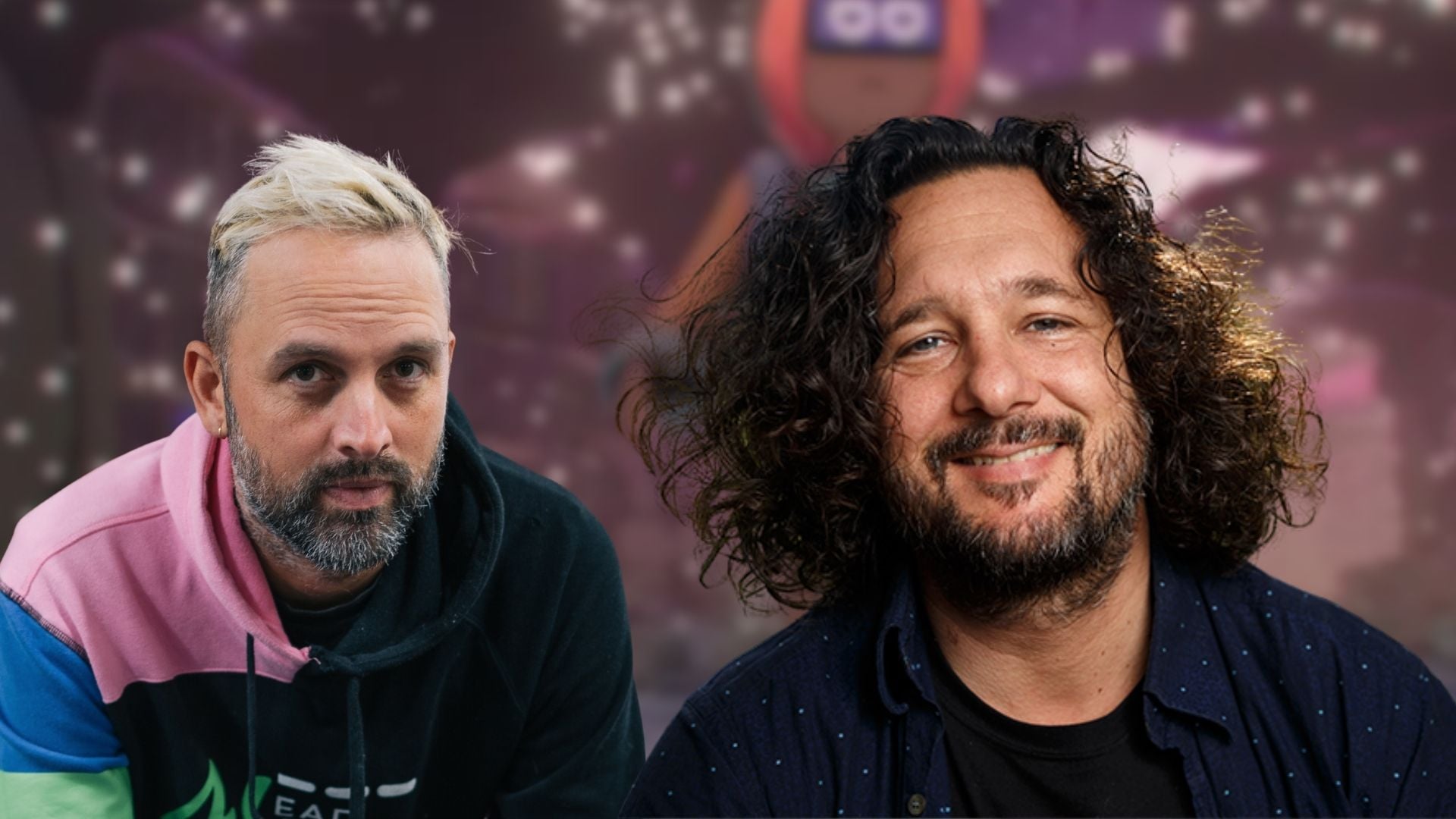
Interview with “Imagine” Co-creators, Jack Manning Bancroft and Tyson Yunkaporta


Hosted by
KT & Oti
Show Notes
This week we chat to Co-creators Jack Manning Bancroft and Tyson
Yunkaporta for film, Imagine. We explore Indigenous identity being now and always, mosaic storytelling style and being brave and embracing unity.
Imagine is in AUS cinemas January 26.
For info on more screenings head to their website: https://imaginefilm.org
As suggested by Tyson, double feature watching of The Midnight Gospel.
Note: this interview is audio only. For other video interviews check out our YouTube playlist.
Talk to your workplace about launching a RAP and work with Supply Nation for procurement. Links to orgs and causes you can donate to:
Aboriginal Embassy:
https://aboriginalembassy.com/donate
Pay The Rent:
https://paytherent.net.au/
Dhadjowa Foundation:
https://dhadjowa.com.au/pages/donate
Our Islands Our Home:
https://ourislandsourhome.com.au/
First Nations Futures:
https://www.firstnationsfutures.com/co-invest
Common Ground:
https://www.commonground.org.au/donate
Change The Record:
https://www.changetherecord.org.au/donate
Seed Mob:
https://seed-mobs-eoy-giving.raisely.com/
Uprising Of The People:
https://uprisingofthepeople.org/pages/donate-help-us-grow-and-thrive
Indigenous X:
https://indigenousx.com.au/donate/
Magabala Books:
https://magabala.com/pages/support-us
Djirra:
https://www.givenow.com.au/fvpls
Awesome Black Media:
https://awesomeblack.org/awesome-black-media/ab-club/
Mental Health for Mob:
Episode Details
- Duration
- 0:00
- Released
- January 26, 2026
- Category
- Interview
- Hosts


Transcript
Transcript (2,760 words)
Full transcript of Interview with “Imagine” Co-creators, Jack Manning Bancroft and Tyson Yunkaporta.
KT: Imagine follows, 15-year-old Kim and their alien canine companion, Jeff, exploring identity freedom, and a world on the brink of collapse. Imagine will release in cinemas nationally and have special event screenings on January 26. Jack and Tyson, thank you so much for your time and welcome to the For Your Reference Podcast.
Jack: Hey, thanks for having us.
KT: It's an exciting time. It's a calcifying time. It's a dangerous time, but it's also a time to imagine, I imagine, uh, I kind of wanna, I kind of wanna calcifying,
Tyson: calcifying. That's a good word for this. Hmm.
KT: Yeah. Good metaphor. Absolutely. Uh, maybe it's being calcifying. Jenny, I kind of just wanna start off with. Obviously there was, there was a lot leading up to, but we had the premiere at the Melbourne International Film Festival last year, which is very exciting. And we're going to have screenings on January 26th and maybe if we have time and if there's capacity there obviously are conversations around that date. But I guess I just wanna touch on how you both are feeling in this moment. You know, there, there's so much in regards to the both of you. Um, I, I think it's storytellers is how it's being described, but as creative as indigenous people, titles are really just a way of understanding, but we do it all. You know, I, well, I'm Tongan. Um, but I, I would love to hear how the both of you are feeling in this moment, you know, with this film about to come out, I guess, more broadly into cinemas.
Tyson: Uh, is that you, Jack? Jack has nicer feelings than me. My feelings are awesome. Let's, let's hear you. Um,
Jack: let's hear your less nice feelings then, and then I'll go after. Okay. Okay. We can scare the
KT: people in the second half if we want. Yeah. Feelings. Yeah.
Tyson: Feelings of calcification. Um, you know, I also wish
Jack: that sometimes I could have, so like I would be the person allowed, afforded to have like, not nice feelings, but let's go with nice feelings. I, um, you know, I, yeah. It feels good to be brave, you know, like I, to make something. Um, this film's taken like, you know, five years and it, it's been 10 years since the organization we've been working with went global and, and tried to do more complex gifts that could stand up and, and really contribute to the world and last for a long period of time. And, and it's hard to be misunderstood for that period. You know, it's hard to go away and do something that you hope can last and has depth. Um, so it's just satisfying to be able to go back to a lot of people in the ecosystem around us and then give this, and then hopefully tour it to, you know, us the islands nearest off the Tonga, and then around the world to Europe and different places and spaces where people can hopefully, um, connect with a story that gets us out of the muck. So yeah, bit of relief and satisfaction that, um, we've landed in a place and then hopefully we can start the gifting process and, and.
KT: Tyson.
Tyson: Yeah. Uh, well, I, I guess for me it's just, um, I, it is surprise at this stage. It's the audacity, the idea of 400 people all creating a story and you know, then bringing in more people in larger. So, are you
KT: listening yet? We're here. Are you listening? Right?
Tyson: Yeah. But bigger groups of people as well. Like the idea that, that collectively, you know, there could be enough, um, you know. Diversity, but also cohesion of, of thought to create something that is inspiring and that does progress a person through, uh, from trauma, um, to sort of coming out at the end as more of a whole person that's able to, um, you know, release all the trauma and understand themself as a dynamic being in time and space, you know, who has that flow and mm-hmm. You know, to be able to bring a lot of non-indigenous people into that understanding of, of what it is. You know, um, you know, to have that flow and be that flow of spirit, um, that's pretty great. And especially because throughout the film we're drawing, it's not just indigenous knowledge. In fact, it's, most of the knowledge in the film is from wisdom traditions all around the world. Mm-hmm. You know, so we're drawing everyone together and showing them that their stories are all not just valid but needed and that we need to sit down and have the yarns and share our story, our law together, um, so that we can. Understand altogether, you know, globally, um mm-hmm. You know, that we do have a common purpose here, you know, and, you know, a common, you know, sense of kin together.
KT: Mm-hmm.
Tyson: Just, you know, probably, probably a relevant message for the day. It's the first time I'm, I'm coming up on Invasion Day without just a feeling of dread and wanting to crawl into bed and disappear under the blanket.
KT: Oh, we're, we're all about calling it Invasion Day. We're all about getting rid of the date, um, on our podcast, my partner's Kenyan. Um, so every January 26th we cover either Aboriginal or, uh, Torres Strait Islander film or TV series. Um, and we, we give resources and that sort of thing. So we're very 10 toes down staunch in the For Your Reference household. So you're welcome. To be as free and be as brave, um, as you wanna be. But exactly like the both of you are saying, it's a shared understanding because the global pandemic got to a point where all of us were struggling in, in a very baseline sort of way. And that connecting of like, this is messed up, right? Like, we need to care before it happens to us. We need to care about all of us. And there's such a shared. Unfortunately trauma, but there's also a shared joy in that coming together. And I don't know, uh, Tyson, if you mean well,
Tyson: G Gal Gadot. Gal Gadot, Imagine. Wow. Sort of YouTube clip didn't do it for you anyway, that didn't do this well. It's a bit like, I feel like that's a, that's a litmus test. Yeah. Jack will tell you, it all came out of the film. The story, it all came out of that. It happened during the pandemic. It's when 400 people got together and wrote it. Yeah.
KT: Then it feels clinical. It feels like you're not taking all parts of your identity. It's like you are sad. Only it's like, no, given the history, given the context, it's a long running feeling in our bones. Right? It's not just, we are just sad in this moment. Now it's a reckoning. It's a reckoning. It's calcifying. That's, we're bringing all the words here today.
Tyson: Mm-hmm. Yep.
KT: But I did that. Well, you
Tyson: know, I, I'm even seeing calcific. Okay. It's calcification differently lately. Mm-hmm. You know, uh, such as the inspiration of the work. Yeah. I've got these big calcified lumps on, on the, all the bones on my fingers because I like, I carve like traditional tools and weapons and things like that, and I like I as much as I can, I carve them with traditional tools, which takes a long time, you know? Yeah. And so, and, and, and. There's so much impact and constant wear and tear on your fingers, you know, with these big calcified lumps, and they look ugly as hell, but they actually kind of help with the carving that 'cause those big lumps are there for a reason. That protects my fingers from getting, you know, cracked.
KT: Well, I guess, yeah, it's, it's, it's also a reminder of the work that gets put in. Do
Tyson: you know they're in the right place? Yeah, yeah, yeah. Calcification is good in the right place.
KT: That's the memoir that, that's the memoir right there.
Tyson: Yeah.
KT: Um, it was, it was, it was really interesting and there was a lot of, uh, texture in Imagine, given the nature of the mosaic sort of collaborative style that we had. There was a, there was definitely acknowledgement, there was talking about colonialism. We even talked about Shoguns as well. Um, you know, from the Vikings, and I don't wanna spoil too much, but there's so much layer and dimension. Inside of Imagine and there's so much bringing up of conversation and I guess for the both of you, I would love to hear your point of view of it is necessary. I'm feeling from the both of you to have a conversation. So I guess my question would be through Imagine are we looking to potentially even just start a conversation and if possible answer some of those questions out of that conversation, Jack? Big question. No pressure.
Jack: Yeah, I think it's, uh, you know, I think we've done a lot of talking as a species, the critical period for design. So it's now entering, we've gotta get active with the conversations and we need systemic designs that can then be applied in the next century and beyond. And so this is a design text. This is a text to get together and be like, yeah, not just talk, but. Build, act, grow, respond, and respond to the polycrisis with the reality of what's going on. And use your imagination and collaborate really deeply and be able to say, I don't know, and, and find ways to be able to find people that do know and meet across different playgrounds. I think that, you know, the, the fascinating thing about this experience and about the experience of imagination, like as a concept and a field to work within, we're really amazing species of. Because we can communicate and our, our challenge is what viewpoint we communicate from, um, what lens we've zoomed out to. And the only lens that, that we should be looking at life through is a planetary lens. Like it's the only one that is deeply true for our existence. And unfortunately, most of our lenses come from really, really, really reduced frames, and they don't give us. They don't give us a zoom out effect to see our orientation, um, for where it lands and, and designing. I think a lot of the thinkers throughout Imagine film give us a reminder of the reality of our orientation. Like we live on a rock in outer space that's spinning at a thousand miles an hour right now on its tilt. Like no time on any place on the rock is the same. The clock ticks differently in every other spot. Like all of these sort of fixed things which we apply ourselves around. A lot of them hold us in some sense of order and the order is breaking. And so not to be alarmist, but to be able to create an opportunity to, to drive through the fear and the anxiety is what Kim feels. And to, to take the knowledge which has been afforded to us throughout many generations before and the new knowledge and systems that are here. And we just have to design different systems and we have to create the solutions that we don't know exist yet. 'cause they're. They're crazy, crazy, crazy confluence of challenges that we've inherited, and that's gonna require the biggest combination of imagination that humankind's ever seen.
KT: Mm-hmm.
Tyson: Yeah. And we need the meta, the meta narratives and the narratives, uh, that'll bind us together. Uh, but also all of our diverse narratives. These will need to work together to make it happen, uh, because that's what creates the social imaginaries that. Band together, um, large groups of people at scale, uh, who can then work collaboratively towards change.
KT: I, I think it's, I think it's also quite interesting, you know, watching different films, seeing different sort of mediums, even the way this is animated as well, to also factor in. Indigenous ways of knowing. It isn't just we're moving forward in a future of technology. It's all being, you know, you would see the VR headset, but we're also coming through maybe a Dreamtime through a serpent sort of songlines as well. I guess. How was it? I trying to meld now before, after, or together? 'cause it's not in spite of, it's together. Right.
Jack: Yeah, well I think that's what always was, always will be actually means, you know, that, that it is always here and it's just our, you know, the dimension shift and the context shift, but the past knowledge is, is there and we might not have the capacity to be able to understand it. Um, and so training our listening skills, and it's definitely something I've learned in my lifetime. Learning how to listen to other species, learning how to listen to landscape and the memories and, and it was probably the most haunting thing of this project, being able to honor that spirit effectively, um, and carry that through. And, and I hope that's what we've done for, you know, a lot of the older knowledge holders around the world. I hope they can watch this and be like, oh. You guys got that right. You know, um, and then working with the context of today is, is critical. 'cause that's the reality we're in. You know, we can't just, you know, have this romanticism of indigenous knowledges and then not place it in a context where AI is eating the world. And we have like seas rising and demonic leaders everywhere. And so we sing Kumbaya on the side of the conference and think we're all awesome and go out and not fix anything. AI
KT: is also losing billions though, and I'm having a good time celebrating that for now.
Jack: Yeah. Yeah, I suppose, yes. Yeah, absolutely. But, you know, we have the, so just, there's just context. Just, just facing up to the context and facing up to the modes that we're in and these gnarly networks that have got us moving in all these different ways. And so, yeah, I think that's, that's definitely was really hard to hold all of that stuff in between as a curator, you know, which I think we've tried to do. But again, hopefully we've, we've landed in a place in time where it does fill together.
KT: Yeah,
Tyson: uh, it should just say that the indigenous knowledge isn't in the content of the film. You know, most of the content is, you know, people's cultures from around the world. But, um, yeah, no, the indigenous knowledge is in the how, not in the what. Mm-hmm. It's in how the film is made, how the story's put together, you know, how, how it is bound together, you know? Um. You know, uh, around an Aboriginal worldview, an Aboriginal universe, pluriverse of knowledge. Yeah,
KT: I'm with it. It's a calcifying era. That that's what I'm saying. Um, but I wanna thank you Jack and Tyson so much for your time and wrap up with our final question. Uh, we finish off our reviews with a recommendation. So what would you pair with the film Imagine as a double feature?
Jack: A design session where global leaders are brought together with communities and different people in the cinema in real time, and you have people from inside and outside the margins designing the economies we need right now.
KT: Love it.
Tyson: Oh, double feature. That's really tricky. That's putting, putting a fellow on the spot. Yeah. Yeah. Uh, the, well, the, the Netflix, um, series, Midnight Gospel was very much an inspiration 'cause it works with found audio. Mm-hmm. You know, from a podcast. And yeah, we did that for the film. You know, we took a lot of found audio from podcast and that's where the wisdom came from to inspire Kim. Uh, so I pair them together, although. It didn't have to be an all-nighter to get through the whole Midnight Gospel series.
KT: Oh, we're also, we're also trying to reckon this world. So it's gonna take all night, it's gonna take all eternity, but that's it. Jack and Tyson, thank you so much for your time. I really appreciate it. All right, no
Jack: worries. Thanks. Good. Thank you. Thanks heaps.
Related on FYR
Discussion
Loading comments...