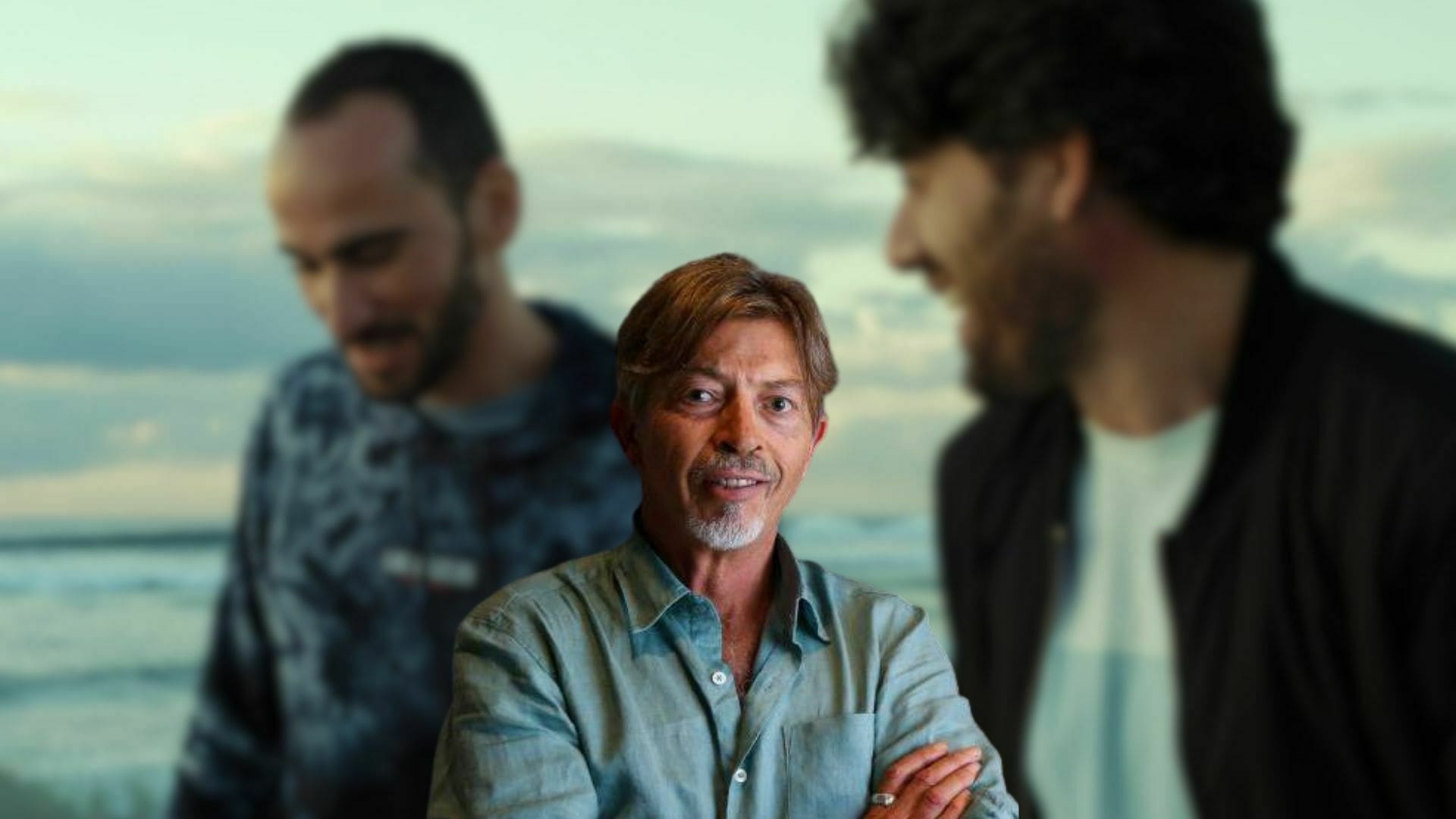
Interview with “Freedom is Beautiful” Director, Angus McDonald


Hosted by
KT & Oti
Show Notes
From economics to the arts to activism and filmmaking, award-winning artist and documentary filmmaker Angus McDonald uses his art and lens to keep a compelling focus on issues that many are uncomfortable talking about.
FREEDOM IS BEAUTIFUL will be screening at Melbourne Documentary Film Festival on July 29.
Episode Details
- Duration
- 0:00
- Released
- July 15, 2023
- Category
- Interview
- Hosts


Transcript
Transcript (2,650 words)
Full transcript of Interview with “Freedom is Beautiful” Director, Angus McDonald.
KT: From economics to the arts to activism and filmmaking, award-winning artist and documentary filmmaker, Angus McDonald uses his art and lens to keep compelling focus on issues that many are uncomfortable to talk about. Freedom is Beautiful follows the journey of two extraordinary Kurdish refugees, Farhad Bandesh and Mostafa Azimitabar, who were finally freed from detention after being in prison for almost eight years under Australia's brutal offshore processing regime. Freedom is Beautiful will be screening at the Melbourne Documentary Film Festival on July 29. Angus McDonald, thank you so much and welcome to the For Your Reference Podcast.
Angus: Oh, thank you so much, KT. It's a pleasure to be here talking with you.
KT: Absolutely. Well, um, it's been so great to get to know your work. Um, you know, whether it be art, whether it be activism, I would love to, um, I guess start off with You know, what art means to you and what you hope your art does to the world.
Angus: Huh. That's a big question.
KT: Big question. Yeah. Yeah. I'll softball the rest. It's okay.
Angus: Well, I guess, you know, I've been an artist for almost 30 years. Um, Yeah. I'm a painter mostly. I've only recently begun working with video and film about five years ago, but I guess the answer to that question for me is that, you know, all art is a form of storytelling. Um, it doesn't really matter what medium you're using, music or poetry or painting, uh, filmmaking, all they are, uh, um, stories. And, um, I guess since I began looking at certain, uh, social issues. In our society, they wanted to get engaged with, with my art, my stories have changed a little bit, you know, whereas previously I was doing, I guess, art that was more, um. One dimensional in the sense that I was just trying to create things of beauty and consider those questions.
Angus: I guess I've moved into an area where I'm trying to talk about and tell stories about bigger issues that impact us all as a society and through that, hopefully make some sort of contribution towards positively impacting society.
KT: Yeah, and I think that's the interesting about art. There's the technical sort of angle where, you know, making sure that you're getting everything right or getting that sort of accolades within the industry. But then it's also making sure that you're, you're feeling as well as everyone else that's feeling. And I would love to hear about your journey. Into activism and specifically in regards to asylum seekers, because if we have the time, that's not necessarily something that this country is, you know, comfortable talking about, but I would like to hear specifically, um, you know, where that came to be and where you felt this needs to be something and this is art.
Angus: Well, I, I, I think it, I think a whole lot of accidents, um, are really the explanation for that. I, you know, when I left art school, A long time ago, I spent my first six years, um, after art school painting in Greece on a small island, um, and which was an incredible time of my life, and Um, then fast forwarding to 2016. I just had my 30th exhibition. I've been painting full time for about 20 years, and I really wanted to take a step back and think about what I was doing with my practice, and it happened to coincide with a major migrant crisis that happened in Europe in 2015, 2016, with a million migrants crossing the Mediterranean from Turkey into Greece.
Angus: Uh, including the island that I lived on all those years ago and friends of mine in there had told me all about what had happened and thousands of people arriving every day up up and down islands in the eastern Aegean. So I had this time on my hands and I was thinking about my practice. So I traveled over there and went to my island plus a lot of other islands that were, were, um, very, very big, uh, um. In terms of daily arrivals, including an island called Lesbos, which was the epicenter of that whole migrant crisis. And I guess I was just so inspired by the local communities and how they'd reached out and lifted up those people that were coming on boats and, um, and the numbers were, you know, huge compared to the very small numbers that were arriving here.
Angus: And I was also starting to become aware of. Uh, the hard line policy that the, um, the federal government implemented here in the middle of 2013.
KT: Yeah, because it's like, oh, it's happening over there. And I said, no, it's happening here.
Angus: That's right. And it was happening on such a small scale. And yet we went to such great lengths. to develop this regime that was going to harm such a small number of people. It was, you know, we went to a lot of trouble to inflict suffering on this very small number while in the rest of the world, uh, it was all very large scale and no one else was doing something like that. So I decided to come when I got back to try and share some of those stories. And I realized that painting about them really wasn't going to cut it. Uh, so I decided to try and use video, um, and because a lot more people are going to have access to it. And that's really how my journey began with film, I suppose, but also my journey with thinking about issues around forced displacement and trying to make a contribution to changing the policy here, which is, was really, has really been an indefensible, unforgivable, uh, political policy over the last 10 years.
KT: Yeah, don't worry. I do have a question on that a little bit. Um, but I think, I think part of the important, um, the important thing that you talk about is your experience, you know, you know, you can, you can read all of the reports and that sort of thing, but to actually have experience and to, you know, have people that you knew in Greece and, you know, get to understand and I guess humanize and bring a face to, you know, The struggle as well. And I want to focus a little bit like coming to Freedom is Beautiful. Now. Um, I want to focus on two, uh, two quotes, one each, um, that I picked from the documentary, obviously no spoilers, but there's some joy as well, which is, um, but in regards to the quotes we have Farhad saying, uh, and music is part of my resistance without that I couldn't survive.
Angus: Yeah. Well, um, as an artist myself, One of the most fascinating things for me in making the film and getting to know Farhad and Moz, um, because they're both very talented artists, musicians, poets, um, getting to understand how they actually use their art, um, in their circumstances, in their situation, um, how in practice, art was really powerful for them. I mean, in the first place, it helped them to find some tranquility to transport themselves away from this horrendous environment that they are existing in on a daily basis. Secondly, they used it to engage in peaceful struggle. You know, they wrote songs and made paintings, um, about the situation against the policy using their art.
Angus: And thirdly, through their art, they were able to. Make big connections with many artists and creative people on the outside in Australia and build networks that way. So art really was the crux of their, their resistance, their survival, and their connections that they made, um, through all that time they were on Manus. So for me, understanding that and seeing how it actually was true in practice for them was probably one of the most compelling parts of my experience of making the film and getting to know them.
KT: Yeah, and in my opinion, the best art is a reflection of culture or the reluctance of changing sort of culture. So it was definitely felt throughout and I think that speaks to the beauty of how important art is. It's not some superfluous sort of thing that doesn't really matter and isn't integral to who we are and our human experience, but talking about Moz, um, there's a quote and this one is a bit more heavier, but he was talking about how, if he, or, you know, if anyone else was feeling unwell, in response to any sort of health issues, it wasn't necessarily.
KT: Given the same sort of care, um, you know, maybe even just Panadol when it's really sort of serious sort of conditions and Moz talks about they wanted to target our resistance. So we would just give up and go.
Angus: Yeah. Well, they basically were placed in a, in a situation where the whole regime was set up to exert pressure on them in every single way at every level on a daily basis to humiliate them, to make sure that they had absolutely no choices in their life. You know, they were called numbers instead of names, uh, in regard to, you know, Moz talking about Panadol. I mean, they really, really couldn't care less about treating medical conditions. And probably one of the most common conditions that, um, detainees developed on Manus was, uh, psychological issues and trauma from the experience of detention.
Angus: Yeah, there was no. Infrastructure or resources directed to, uh, treating people in that situation, you know, and that was very deliberate. Um, and as you said, the whole thing was to make them feel so much pressure to be so unwell in every way that they would rather maybe go back to their home country, even if their life was in danger, rather than continue on in the situation they were. That was the, that was all very deliberate and consciously part of the architecture of that policy.
KT: Yeah, and that kind of comes to a question. You know, we talk about arts and we talk about creativity. What is it like? I guess it is creativity, but it's also displaying lives as they are. How is it balancing that and trying to enforce something as rigid as policy in Australia?
Angus: You mean, um, You mean with the film or
KT: Yeah, like how, because you're making this film and you're also pushing for change in policy, but they're very much opposites of the way in which they're operate, you know, you have this sort of machine and the reluctance of changing policy or acknowledging, you know, the report that was released most recently, not, not necessarily addressing everything. That's been raised as well, you know, that sort of balance because there's obviously a change that's happening, but the rigidity is absolutely present too.
Angus: Yeah, well, I, I guess, you know, for a lot of Australians, like, as you mentioned, um, at the beginning of, you know, the interview, it is a confrontational subject. And it's difficult for Australians to, to listen to, you know, what happened or, or to find out what happened. They don't have to do that. I mean, you know, they're, you know, they're, they're free not to listen. So I guess one of the things about a film like this was to not shy away from, um, Revealing and conveying to the audience what happened, but at the same time for me, make the film about how art and, and hope and positivity, which was all very authentic, um, was really the, the, the best way to deal with it for those two guys.
Angus: And that's why I think the film, even though it's dealing and those guys have really been through so much and I, you know, I respect them so, so greatly, uh, the film itself really, uh, A film that's, that's uplifting. You know, I didn't want to make a film that was, that, that was all about what happened. Um, I wanted to make a film about how two, uh, individual people whose stories they share, um, found ways through love and, uh, peaceful resistance to, um, fight the policy, you know, and that's very inspirational. And I really wanted to make it a film that does inspire people and also show the human face of this whole, um, you know, this whole heinous situation.
KT: Absolutely. Um, Thank you. There's, there's definitely, I think, um, this is more of a filmmaking sort of question. How is it balancing the tonality? Because, As much as there is joy, this is a very heavy sort of topic. So, you know, these beautiful sort of quotes that we get, um, from both of the guys to, you know, the really sort of heavy sort of moments. What is that like building that sort of balance for this film?
Angus: Oh, it's so challenging, really, because in a way you can't really understand Um, the breadth of their achievement to, to remain so positive and to, and to survive. Um, to survive, uh, all those years of detention under such brutal conditions. If you don't understand some of the facts, So you have to provide some context, but at the same time, you don't wanna bog the film down just in that. Yeah. Um, so that was probably one of the most challenging parts of creating this film was to find a, a, a balance between talking about, um, the circumstances they were in and then concentrating on, on the way they dealt with it and, and inspiring people through their own personal stories.
Angus: That, that was, that was really, really difficult. I also really didn't want to get bogged down too much in politics, so, I guess the device I used for that in the film was to try and, um, talk about the politics in one six minute sequence, a kind of montage of historical events to try and give people a kind of a picture of what happened, and then put the politics to one side, really. Um, that was how I decided to do it. I mean, I think, I, I think maybe I might have. Kind of found the right balance. I'm not sure. But, um, yeah, that definitely was, was very, very hard.
KT: Yeah, I absolutely believed you found that balance. We, we were taken through that journey and, you know, there were definitely moments of levity just in their journey of support. Yeah. Well, um, I'm going to wrap up with our final question, if that's okay. Sure. So we finish off our reviews with a recommendation. So what would you pair with Freedom is Beautiful as a double feature?
Angus: Ah, well, I guess one of the most inspiring films that I've ever seen in the same space is a documentary called For Sama, um, which is the story of, um, of a couple who, uh, fled the Syrian conflict. Uh, and Sama was the name of their daughter. Uh, and that film is, uh, a chilling and beautiful film about humanity. And I think, um, a very inspirational film for anyone who wants to try and feel... Uh, what it's like to be in that conflict and to survive and to be helping people all the while. And then finally make it to safety.
Angus: That'd be my, I guess, my, my pairing film because it was certainly a major inspiration for me.
KT: Yeah. And it's, it's definitely important, um, to highlight that as well, but thank you so much Angus for your time. It's a beautiful, gorgeous film, Sydney Film Festival, and also, um, Melbourne Documentary Film Festival coming up. Thank you so much for your time.
Angus: Thanks for having me, KT. Great talking to you.
Related on FYR
Discussion
Loading comments...