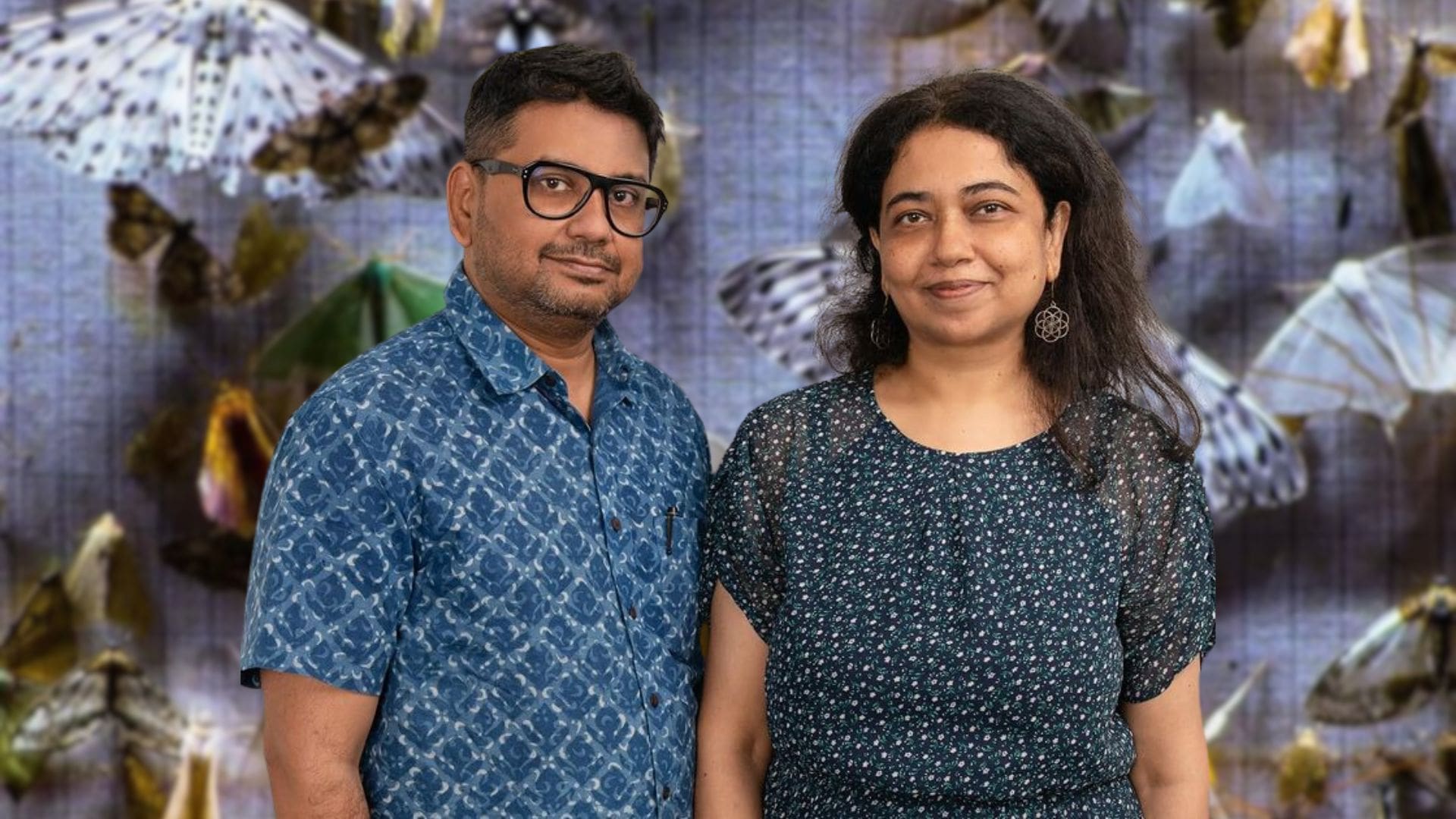
Interview with “Flickering Lights” Directors, Anupama Srinivasan and Anirban Dutta


Hosted by
KT & Oti
Show Notes
Filmmakers Anupama Srinivasan and Anirban Dutta will be screening two films at Sydney Film Festival this year about nature, people & triumph. Flickering Lights & Nocturnes.
Flickering Lights portrays life before and after electricity in a small village in today’s India. Winner from Amsterdam’s International Documentary Film Festival.
Nocturnes follows a scientist in the high forests of the Eastern Himalayas, who uncovers the secrets of moth life, in this Sundance-selected, immersive documentary.
Check sff.org.au for screening details.
Episode Details
- Duration
- 0:00
- Released
- June 11, 2024
- Category
- Interview
- Hosts


Transcript
Transcript (4,199 words)
Full transcript of Interview with “Flickering Lights” Directors, Anupama Srinivasan and Anirban Dutta.
KT: Anupama Srinivasan and Anirban Dutta will be screening two films at Sydney Film Festival this year about nature, people, and triumph, Flickering Lights and Nocturnes. Anirban, thank you so much. And welcome to the For Your Reference podcast.
Anirban: Thank you. Thanks so much.
KT: Well, you guys look great, especially since you have two films coming out, which is very exciting. Did it always happen to be that way or did the mystics of the world just make it so?
Anupama: Well, we started Flickering Lights around seven, eight years back and that took a long time to make. And meanwhile, we made another film, which took five years. So they just happened to sort of coincide. So we premiered Flickering Lights in October in Busan in 2023. And, uh, Nocturnes was at Sundance in January. So it within three months. So that's why they're both doing the festival rounds, uh, in 2024.
Anirban: So it's almost like, uh, you know, in Sydney, we have a mini retrospective.
KT: Yeah. Yeah. As the kids say, we're booked and busy, you know? Exactly. Or because we have such in depth and I think that's what people don't realize. Yeah. Yeah. Well, not that they need to, but they probably don't necessarily realize that this is years of work that goes into a making, especially of a documentary, right?
KT: I do want to start off with Flickering Lights. That was the one that I guess flickered my attention. Because you can imagine the Sydney Film Festival program, I think there's over 200 sort of titles there. and I was very interested, in watching this and my partner Oti, we watch the screener together and it's very interesting because it talks about a history that I wasn't even necessarily, you know, across as well.
KT: And I think that was a very good way of the title cards that were used, not just at the start of the film, but also throughout about, you know, The Naga people, as well as the Indian government, and I guess the sort of tension and the ongoing conflict that was there as well. I guess from a filmmaking point of view, what was that balance like of, oh, what if they don't know enough or this, they might need to know this at this particular time.
Anirban: So, as, uh, filmmakers, we believe that We believe in making immersive films. So we do not push for story or narrative. We try to be with the community and let the rhythm of the community take over and see what is the pace of the life, how things are moving. But given that, that we were very much aware of what was going on, once we edited it, we felt that there were this little.
Anirban: If for the better word possibly hook story hooks that were needed for the audience to get that little bit of those uh nuggets for them to flow with the immersion so we just gave those nuggets and those nuggets were given through the cards that we are talking about that you were talking about so that way it kind of and the illustrations with that kind of happened to uh you know help Tell what we wanted to kind of tell or show.
Anupama: And Anirban is the one who made the illustrations. And, oh, very nice. And most of them he had sketched while we were on location, like in dull moments when we weren't shooting and he was just sitting in the village.
KT: There was a couple of times in the film where they forgot that you guys were there, which I guess is credit to your filmmaking style as well, right?
Anupama: Yeah, we, we actually shot for many, many days over three, four years. So we visited a village many times and we used to live there and, uh, live like everybody else in the village. So, uh, so the whole process was also about, uh, us who live in Delhi, quite far away from where the film is shot in mainland India, going to the Northeast, which is.
Anupama: In a way, a bit cut off from the rest of India and people that be alienated. So for us, this film was our effort to make a bridge. And so we wanted to go live there and then make those human connections first and interact with people like just people and not as filmmakers with a camera. So for us, that was sort of, uh, the greatest, uh, sort of gift of the film is that we were able to go beyond that and sort of make human connections.
KT: And I think it's interesting. Obviously don't want to spoil it, but there were some moments in the film where you guys were right in there at early hours of the morning. And I'm like, Oh, they must've been living in the community to be able to get those very specific time sensitive, sort of shots. And I think that's also a great point as well, because.
KT: Whether it's streaming or whatever it is, I think people get used to documentaries being a sort of way or having a sort of narrative. and it was interesting watching Flickering Lights because it really is a day in the life of. It really is a singular focus and, not necessarily feeding, this is going to be the end, like, you know, where you're going to go at the end of this, because that's very much.
KT: I guess the triumph of the community as well in Torah, right? Of today might be the day, today might not be the day, but we're here.
Anirban: I think very well said. I think, as filmmakers, we have an aesthetic and political point of view. When we make films, we feel that This kind of a certain three act structure, which creates a crisis and then there is a resolution of the crisis at the end of the film is something that is being fed through the streaming platforms, the television, the Hollywood narrative, but that's now that's not the way life works. unfolds.
KT: Life does this.
Anirban: Life has its own rhythm and every place has its own rhythm. So why should all films have similar structure? So we said, instead of being nervous as a filmmaker, whether we have an end, whether we have a crisis, we said, let us be here and absorb how the life is unfolding in front of us. And whatever that time it is, let us spend that time staying here in the in the village and to see what we come up with and then try to make a film out of that.
KT: Absolutely. Um, but that's exactly how it is. Like it's like life, like it continues, it doesn't continue. And, I really appreciated the commentary that was in the film, whether Because the interesting thing is it's, I guess the, the log line or what brings you to the film is the electricity, but it's so much more than that, you know, it's the hope of the community.
KT: It's the living of generations and decades that we see throughout the film. There's mentions of curfew. There's, there's so much that's going on and being able to achieve that in a way like Anu was saying. It's of people. We're doing it of people and that's how it should be done. It should be handled with care. unfortunately, I, I do want, I want to make sure that we cover Nocturnes as well, but is there anything that's important that you want to cover.
Anirban: Yeah, definitely. I would like to say Anu is the principal cinematographer of the film. So her gaze, how she filmed is very much part of the experience that you are left with. And as filmmakers, we also made some aesthetic choices. Most of the film is shot with a 50 mm prime lens. There is no zoom in the film. So, You wait and you don't give a false sense of intimacy when you are actually not by zooming in. So that meditation and also the height of the camera, we are fans of Ozu, the great Japanese filmmaker.
Anirban: So the most of the film is shot at a certain height, which is about three feet from the ground where people sat on small stools around the fire every day. So we put the camera most of the time in that height so that that created a certain kind of being present in that space. So, you know, this is just for audience to kind of invite the audience to come and experience it as we felt living in the village sitting on those small stools and chairs along with the community.
KT: It was definitely shot in a beautiful and intimate and in a very caring way. So hats off. So you're just both so natural sort of storytellers and you can see it coming through.
Anupama: And I also just wanted to add a little bit about the context of this community and especially many communities in Northeast India. That the general way in which they come across in mainstream media, which is very rare in India. They're not even talked about. But if they are, it's usually as victims of violence. So it's always like there was an insurgent attack or the army killed as many people and, and there's just numbers of people who died.
Anupama: Or, you know, they feature sometimes in travel, a kind of, you know, programs as this exotic community who has this very different way of life. And it's a total exoticization of the Naga people. So we were very conscious that as filmmakers, as thinking people, as sensitive people, we want to engage with this community in a very different way, in a very direct way without having these kinds of, uh, other represent, and really Just throw away those representations totally.
Anupama: And that's where we chose this thread of electricity, because that's something that people all over the world relate to and have been living with, and these people are still struggling for it. Uh, and the political thread just sort of, uh, is very subtle and just present enough because otherwise most stories that come from there is just dominated by that.
Anupama: It's just about the violence. But we didn't want to leave that out because that is even though everything might look beautiful and idyllic. There is always a threat or a thing hovering around that any day there might be a blockade and then that might last for months.
KT: Yeah. I think it was done very effectively and I really appreciate the lens of, I guess like in the media and India and how it is portrayed because I think that was one of the questions that I wasn't necessarily going to bring in the interview, but I was like, Oh, okay.
KT: I'm learning about the blockade stuff. But I'm like, okay, but that makes sense in the context that you're giving as well. And oh, the, the talanoas, in Tongan, like the discussions that we could have about this film. I'm so sorry we have to move on, but I really absolutely loved Flickering Lights. And another delightful surprise, was Nocturnes.
KT: Cause we got an opportunity to watch it as well, as a part of this interview. And, Yeah, like if you could have two very different documentaries to pair together, it would absolutely be this one. I would love to know how this actually came about. and just like moths of, of all, sort of subject matter and, creatures out in the wild. How did this, uh, documentary or project come to be?
Anirban: So we live in Delhi. And Delhi is one of the most polluted cities in the world. And we are choking during winter because of the pollution. And we are dying of the heat in summer. Right now it is 50 degrees centigrade in Delhi. So it's like a, it's a very extreme place where we are living.
Anirban: And We were slowly feeling that with our devices, with our life completely taken over by our cell phone, our iPads, there was something very simple, like connecting to nature, listening to sound, talking to each other with attention, we're going away from our life. And we were looking for an idea. To make a film, which was an invitation to connect deeply, to hear with more intent.
Anirban: And then we met Mansi, our main protagonist, human protagonist rather, because we feel moths are our main protagonists. Uh, in one of the, uh, projects that we were doing in Western Himalayas. And then she described this fascinating scene and she said my real love is moth. And I work in this place in Arunachal in the northeast of India and when we put up this white screen and switch on the blue light, thousands of moths hold to the screen.
Anirban: And the moment she described it, Anu and I looked at each other and said, there's a film there.
KT: I think she described it as dripping, at one point, like the moths dripping.
Anirban: That's right. So, so it's like this, You know, we were missing something in our life and then we just had this interaction with this amazing person and we, when we went there, we felt, Oh, this is a film which can be this invitation that we want to bring to the world where you come and experience it. You know, we were trying to create an experience like the first time you went to a planetarium and you looked up. And you are not looking for a story. You are. You are in awe. You want, the possibilities are endless.
KT: There's no bills to pay. Life is limitless.
Anirban: That's right. And actually looking at that screen every night in Arunachal Pradesh, there were multiple narratives that were possible. Mm-hmm. And that is what we wanted. We want our audience to build. by going through this experience that we went through there.
KT: so Anu, I guess, you know, bringing the sort of framing and the lens that we had in Flickering Lights and making sure the care was there, was it, Was it a challenge in trying to do the same for moths?
Anupama: So we had this incredible camera person for Nocturnes, uh, Satya Rai Nagpaul, who's a very dear friend and an amazing camera person who also has a background in entomology.
Anupama: So he actually has worked with moths and butterflies in his college days. And so coming into this project, we really felt that, uh, apart from his, uh, sort of amazing sense of. of how he treats light. Uh, his love for insects was also one of the reasons we wanted to work with him because I think for engaging with something which is so repetitive because the whole film of almost follows this action of the scientist and her team putting up a screen and waiting for the moths.
Anupama: And, and that's what science is about. It's about, you know, this rigor of doing it and consolidating
KT: result.
Anupama: And then it's only then that you get even a very, very small result. So we needed somebody Who can bring a freshness to the gaze every night and look at it with love and attention every night and not that, Oh, we've done this, you know, we've done this five times.
Anupama: We don't need to do this again and film every moth with care. And so he would remember like, Oh, you know, in the last schedule, we wanted to film this particular species, you know, so he would remember it because he was so interested. So I think that. Uh, that, that, that his attention to detail really sort of helped the visual language of the film and in a sense, Anirban, I and, uh, Satya had a, uh, sort of unified, uh, cinematic sort of vision for the film.
Anupama: Mm-hmm, uh, in terms of the pace that duration of the shots that. And as we went along in the process, uh, we slowed down because coming from initially we were taking shorter shots and then after we used to keep saying, no, no, slower, longer, hold it, hold it. And then in the edit, we sort of took it to another level in which.
Anupama: We were very selective in the scenes that we used and then within the scenes, we allow time to expand and then within like there's some shots in which the, in the scene, like if there are say 10 shots, there are only two shots in which we see human beings. All the rest is with the moths and the sounds of the moths.
Anupama: And so, so the whole thing was how can we. Draw your attention to an insect that you might hate, or you might not even have thought about and make you see the beauty of it. And then it comes you with a beauty first and then way towards the end, we understand, you know, why they are important or what, how they hold the ecosystem together.
Anupama: But we didn't want it to like be a science lesson or something to teach you something. It's more about just looking at the world and wonder and falling in love with the moths and the forest.
KT: Yeah, and I think that's something that I really appreciate about your filmmaking is like we're not rushing, we're not like trying to get to some well I guess it's a documentary but we're not getting to like a peak twist or something. We're allowing ourselves to breathe and exist. And sometimes we need a bit more of that in life. And I really appreciated in Nocturnes in particular, those sprawling sort of shots that felt like those textual sort of like landscape wallpapers, you know?
Anirban: Very much so, because, uh, as you rightly said, we are just so tired of running all the time and we, what are we running for and what are we doing to ourselves? I think there is a need throughout our lives right now to kind of slow down and what is this beautiful world called mindfulness of having that presence of your thoughts when you are doing an action and in this film the whole idea of seeing with more intent and the soundscape that we worked with the immersive sound where we recorded the sound with 5.
Anirban: 1 microphones stereo microphones the idea was to create this world where you get Immersed with the sound and at looking. So then you form your own narratives. You look at the blue moth, the green moth, the yellow moth. And then you say, what is this moth doing? First, you look as a whole. Then you make your own pick within that. So as filmmakers, we wanted you to slowly discover. So tomorrow, if you see Nocturnes again, you will discover more because there are many things that are there in layers that you will discover.
KT: Absolutely. And something that I really appreciated was the title card at the end talking, you know, acknowledging the Indigenous people and the land on which you're in. And. You know, most people would probably say you didn't need to do that, but for me, and I, I love and adore Black and brown and Indigenous cinema, like that, I was like, good. And I was like, but that also makes sense because it wasn't a surprise to me based on how beautifully you film everything from, from the earth to moths to people.
Anirban: Thank you. I think, isn't it important that we acknowledge The people on whose land we are standing are able to make that film. They have kept this forest so that we can go and make that film. So there shouldn't be any other way, right? That's like a minimum we can do to acknowledge.
KT: Yeah, absolutely. I love how naturally, you know, you speak about the great team that you had. or maybe teams that you had across the board. did you want to spend any time, like, just giving love and flowers to people that worked on both of the films? I know we don't have enough time, but like, just a little bit.
Anirban: Yeah, absolutely. Anu, please.
Anupama: Yeah, we, we, uh, was so fortunate to work with Yael Bitton as the editor. She's absolutely fantastic. Again, somebody who we totally aligned with cinematically and who really pushed the film to be very, very economical, actually. Uh, because, Anirban's and my tendency is a little bit more digressing. And then I think, uh, Yael sort of brought a focus and allowed, uh, allowed that time to be compressed, but at the same time, you are able to flow with it in a very meditative way without the duration of the film being like, you know, two hours.
Anupama: So I think that was really her exceptional skill and talent that allowed us to do it apart from the fact that she's a great friend now. And the sound team.
KT: That's a great editor though, right? Because then you would have like a 20 hour document.
Anupama: Exactly. And, uh, and we had an incredible sound team that was, and we did our sound mix in New York.
Anupama: There was this amazing sound engineer and, a sound designer, Tom Paul, who we worked with and Sriyank Tanjappa and Neetu Mohandas. back in India who did all the groundwork and the track laying and the organization of all the material for like three, four months before we headed to New York. So, and then we had Shukanto Majumdar, who was a location sound recordist and it under very, very difficult circumstances, kept the equipment safe and kept recording sound through, uh, radio.
Anupama: I think they've all done an incredible job and it's just, and then we had amazing support from Sandbox Films who are, you know, co producers and, uh, uh, and the executive producers of, you know, Jess and Greg who have been associated with the film from 2020. Uh, so they've been with us from the beginning and helping us and cheering for us throughout.
Anupama: And thanks to them, we were able to. Uh, really elevate the film, I think in terms, mm-hmm, of getting the best crew on board. Uh, and also their amazing sound studio where we got a chance to work at. And also,
Anirban: yeah. Yeah. you know, this film also happened because of the incredible work done by the biodiversity lab, mm-hmm, of Ramana Athreya, who have been working there for 25 years. It's not a small feat. Absolutely. work in this very remote part of India with very little resources day in and day out. His team, he has been doing this and the wonderful Bugun community who has made this reserve forest as a buffer to the main forest.
Anirban: That is why all these beautiful organisms live. So hats off to these guys for preserving this, for allowing us to come to their place and tell this incredible, create this incredible experience to share with the world.
KT: Well, hats off to the both of you as well. I'm going to wrap up with our final question, but it might be a bit of a cheat because our final question is we finish off our reviews with a recommendation. So what would you pair with? the film as a double feature. I guess you could just say Flickering Lights and Nocturnes, but if you also want to add another film in people's watching sort of experience, would you like to add one?
Anirban: Yeah, we would definitely like to add Payal Kapadia's film, which just won at Cannes. Uh, wonderful Indian filmmaker. Yes. Yes. Congrats. Yeah. And please go and see her film, along with our film, Flickering Lights and Nocturnes. Uh, we are very proud of her work and the wonderful work she does. So, and, and, All We Imagine as Light, and I'm very, very happy because she is a, woman Indian filmmaker.
Anirban: We really need to celebrate the contribution of women to Indian cinema. And so we are proud and very happy that she's got made this amazing film, which is at Sydney.
KT: Anu, would you like to add another film? I think that, I think that's a great three combination.
Anupama: Well, I'm not too familiar with the program at Sydney, so I'm not sure.
KT: All just films in general, but
Anupama: yeah. Yeah, I mean, we are huge fans of Apichatpong. So any film of Apichatpong, we're ecstatic of the lovely Thai filmmaker.
KT: Okay, great. well, thank you so much for both of your time. I appreciate your time in taking this interview, but I specifically appreciate how open and how much we're able to dig deep and we're lifting each other up, even other filmmakers as well, and it's been such a beautiful space to, chat to the both of you today.
Anirban: Thank you. Thank you. And hope to see you in Sydney.
KT: Yeah.
Anirban: Thank you so much.
KT: Okay. Bye. Bye. Bye.
Related on FYR
Discussion
Loading comments...