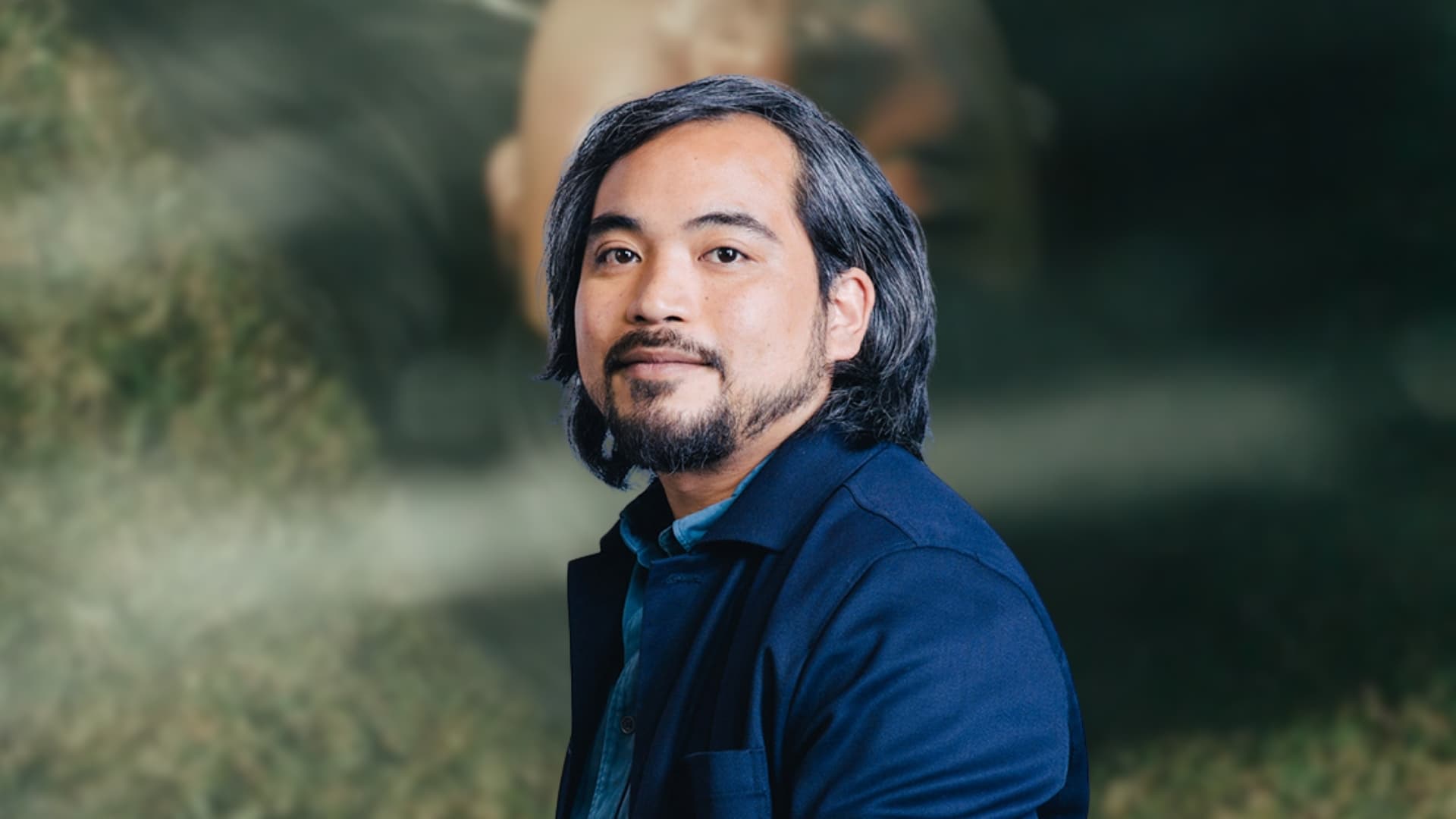
Interview with “Filipiñana” Director, Rafael Manuel


Hosted by
KT & Oti
Show Notes
At a pristine resort on the outskirts of Manila, 17-year-old tee-girl Isabel tries to return a mislaid golf club to Dr. Palanca, the club president, discovering sinister revelations about her workplace, its elite members, and her own past.
Filipiñana will be screening at this year’s Sydney Film Festival (SFF) on June 7 & 11 (sold out)
Note: this interview is audio only. For other video interviews check out our YouTube playlist.
Episode Details
- Duration
- 0:00
- Released
- May 19, 2026
- Category
- Interview
- Hosts


Transcript
Transcript (2,701 words)
Full transcript of Interview with “Filipiñana” Director, Rafael Manuel.
KT: At a pristine resort on the outskirts of Manila, 17-year-old tee girl Isabel tries to return a mislaid golf club to Dr. Palanca, the club president, discovering sinister revelations about her workplace, its elite members, and her own past. Filipiñana will be screening at this year's Sydney Film Festival, and we're so early, the dates are still on the way, friends and lovers, so make sure you check out the show notes. We have Rafael Manuel, every- everything to do with this film, um, joining us today. Rafael, thank you so much for your time, and welcome to the "For Your Reference" podcast.
Rafael: Thank you for having me. Really excited to be here.
KT: I know the film has, like, a more simmering tone, but I'm just right out the gate showing all my love and excitement for this film. I am very excited to hear the reception. It, it, it's obviously, um, made its way around this, the film festival circuit, but for Sydney Film Festival, um, I can only imagine how exciting it is for you. It's your first feature film on the award-winning 2020 short. Uh, how are you feeling in this moment?
Rafael: Um, still processing. Like, I know it's not the most exciting answer, but I guess in a way, um, it's been a really long journey from the short that you've mentioned. It's been about, um, six years, I think, since we released that short. And, um, it's been a really slow burn journey, um, leading up to this and then kind of like You know, so I, I've had a lot of time to think about what it is that we made as a, as a team, and to finally see it out in the it's Yeah, it's really beautiful. We had our premiere, our world premiere in Sundance, and then our European premiere in Berlin after. And, um, yeah, um, it's my first time, like the short, I, I don't think the short ever played in, in Australia, so I'm really excited to see how Australian audiences take to, um, my cinematic language and kind of like, uh, not-- I think the themes that I explore in Filipiñana are themes that, you know, like that, that are very commonly explored in Philippine cinema today, but the way that I want to explore them, I think is something that's a bit new, uh, with regards to how Phi- uh, Philippine cinema tackles these themes, and I'm really excited to see how Australian audiences kind of, uh, how, how, what the reception is in Australia to, to the cinematic language that I utilize in Filipiñana, I—
KT: Yeah. I, I grew up in Western Sydney, so I grew up in Blacktown. So like on Main Street, there was like a Filipino, and I'm pretty sure the Filipino restaurant's still there. Like, there are heaps of Filos or at least in Western Sydney where I grew up. So I can only imagine how exciting it's going to be culturally and even just in general with the film festival as well. Um, you, you talked about in interviews, it might have been the Sundance interview, where you talked about the golf course being a microcosm, you know, of the country. And, um, n-not, not necessarily to make it about Pacific Islanders, but even like in Hawaii, for example, we're seeing, you know, even in Jamaica, like we're seeing all countries around the world, it's like we're more than your resorts. We're more than your sort of tourism. And that was something that like I-- it was very tangible, even though it was very, um, like it wasn't in your face, but it was very tangible watching the film. And I, I guess I would love to know from your point of view, 'cause commentary is so important, but you don't wanna shove it down people's throats either. And I think a very good, um, a very good example of that like imagery was the water Right. I don't-- obviously, I don't wanna spoil too much about the film, but we're introduced to, you know, one per family in regards to resources that are very scarce, right? And then it literally, uh, it-- I thought it was a bit funny, like it felt like a comedic cut to the resort and showing the abundance of-- 'cause no one's even there. Who's it for? And like all of the water just being like used in a sprinkler across the resort. But I guess specifically for water, how was it for you? 'Cause I'm sure there's rage as well, but how, how, how is it channeling that commentary specifically for resources and water in Filipiñana?
Rafael: Oh, that's a very good question. Um, I guess a little personal anecdote, um, re- with regards, with regards to that example, uh, to, to that, uh, I guess visual or even thematic tool that I use throughout the film of, of, of water is, um, when, uh, the team and I were, uh, recceing, um, we were location scouting, uh, these golf courses, uh, for the short, and this was even when the short, like seven years ago, six years ago, um, we were looking for golf courses that we could, that we could possibly shoot in. And during that time, there was a water. There was a drought, there was a water shortage, um, throughout the city. And, um, but we noticed that in all the golf courses that we went to, like the, um, there didn't seem to be any
KT: You wouldn't know it. Yeah.
Rafael: even you wouldn't know it because all the, all the sprinklers were on all the time because, you know, this is like, a lot of the times this is imported like, um, Bermuda grass, and, uh, they needed to keep it green for the members because to keep the aesthetic of the golf course. And so, yeah, it's a, it's, it's a metaphor, but it's also rooted in, uh, kind of like a very real, you know, re- in reality. Um, and yeah, I mean, if we go deeper into kind of like what a golf course is, right? It's like, um, what is it called? Exactly. And also, but it's also gentrification of land, right? Because it's like, um, you're taking something very wild like a, like land and, uh, you're kind of, you know, manicuring it and like making it, like you're, you're imposing human will onto it. And so, yeah, for me, the g- a golf course is like the perfect, you know, example of, of, of, of gentrification. And, uh, um, yeah, and it's just so absurd to me that like, for example, in a place like the Philippines, which is an archipelago, you know, which is surrounded by water, like water is such, um, like a privatized, uh, resource. Yeah
KT: Absolutely. And I, I think what I really appreciate-- I don't know if anyone's ever mentioned it to you, but watching this, I actually felt quite emotional because I think, you know, and, and there is, like, well-deserved rage as well. But I feel like the way that this film was layered through Isabel as well as Clara as well, um, you know, through- throughout the film with Charlie as well, it's right there. Like, if you wanna see it, it's literally right there. Like, I think sometimes in film it is nice to have, like, a through line, but it's all there. You have the tee-girls, you have the caddies. You know, there's an exchange with, um, uh, with Clara's character. So she's, like, from the US and, you know, she's, she's here in the fields. And even in that moment she's like: "Why do you, why do you need caddies there?" Like, and there's so much to explo- and it's right there, which I think is quite a beautiful-- Like, 'cause I love-- 'cause we have a podcast, I love a deep dive, I love discussing the layers. But it really was right there, and I think that's quite-- that, that's what made me emotional, made it so heartbreaking because it's not political, it's not what-- it's literally if you care enough, it is there. The conversation is ready to have, friends and lovers. It's right there.
Rafael: Yeah. Yeah. No, I love that you, you kind of, you, you, you, you put it that way. It's such a beautiful way to put it. Um, yeah, and I, I don't know what I can, uh, like what else I can talk about because without spoiling the film, right? Because even the ending in, uh, in its way is kind of like, to, to use your words, it's putting it right there. It's putting Isabel's right, Isabel's plight right there, the ending Uh, and, uh, like one question that got brought up was, um, my choice of putting the credits over such an important scene. And actually what it does is in, um, especially with the festival audiences who are rushing to see other screenings,
KT: That,
Rafael: you know, as soon as the credits roll, like some people will stand up and will leave—
KT: They're grabbing their tote bags and their notebooks and their snacks and their—
Rafael: Exactly. And, uh, but what's happening is right there, and it's a choice, you know, in a way. You're gonna stay and watch it till the end or, you know, if you're gonna. Yeah, and if you're gonna go on.
KT: And I, I'm very appreciative of the time you gave. So I, like, I know we only have, like, a few more minutes, but I do just wanna know, it's so wild to me, and even, like, the run of, like, Sydney Film Festival interviews we did-- You're the first one, by the way You're my first Sydney Film Festival for this year. Um, but it's like, how are people going and watching these thought-provoking films or even documentaries, and the world's worse? Like, and it's the same thing you say, like people just wanna rush out, um, and no one really wants to eat the whole meal. But I think I interrupted you. Sorry.
Rafael: No, no, not at all. Um, yeah, uh, what was I saying? No, I mean, that's-- yeah, that's e- that's exactly it. Um, and, uh, there's kind of like a, a parallel between. I, I saw such a beautiful parallel, um, in some of the screenings that I've been at where people did, you know, like grab their totes and then leave. And that, like, when this happened, like some members of my team were kind of sad. You know, they're like, "Oh, they're missing, like, the best part." But for me, it's, it's kind of beautiful, like, in a way, in a, in a, in a, in a very tragic way because right before that shot, you have the scene of Isabel calling out for help to the golfers who just walk away.
KT: You can, like, look away on the street, you can scroll your timeline, but it's still there.
Rafael: Exactly. Exactly. Yeah. Yeah, yeah, yeah.
KT: And it's just so poetic, Rafael, you know?
Rafael: Thank you.
KT: It was very poetic and it was very dreamy, and it wasn't-- I just love it. Like, I just-- I will talk about this forever. I'm very excited to go and watch it when it's in, like, cinemas for Sydney Film Festival. Um, Uncle Renato, like, there's so much of, like, characters, but I don't wanna focus too much on, like, the plot. But there's a sentiment that he shares to his, uh, niece, Clara. Um, and I'm just gonna paraphrase here, but, you know, "The best people like you move abroad, and what this country needs is for you to stay and fight and change. We need more people like you to stay and be interested." And I just wanna put, like, a little note on there, because it was interesting he was saying that in the framework of the power of the golf course. I just-- I don't-- I'm pretty sure the layers were there. It wasn't just building the country, it was benefit for yourself and benefit for me.
Rafael: Yes, 100%. 100%. Um, I guess but in a way it was-- that was a way for me to make Uncle Renato, I mean, a bit more complex, right? Because it's like I didn't-- I was not interested in portraying any single character as a villain or as like a, you know, like as a hero. And, you know, what he is saying is very real. Like, and it's something that, you know, Filipinos in the country and Filipinos abroad like myself, like really struggle with. It's like this kind of guilt of like because things are so messed up in our country, like there is a sense of guilt for Filipinos abroad like to chase our dreams, you know? Because it's like we're out here like, you know, with a greater sense of freedom to some extent because we're not weighed down by all the baggage that our country has to some extent because we're not faced with, with it in the day-to-day.
KT: Mm-hmm.
Rafael: But, you know, and it's kind of like, should we feel guilty for living abroad and for chasing our dreams abroad when, you know, people are suffering back home? And—
KT: It's a tough one, 'cause I feel like— So I'm Tongan, I'm Pacific Islander. Um, like I think all of our parents, like we move-- they move for a better life for us to have a better life, and it's, it, it, it very much is that sort of conflict, and I feel like that in of itself, we could probably talk for hours like about
Rafael: yeah, yeah,
KT: But that's what I really like I, I just really loved this film, and I really appreciated the care and I guess the, the boldness and the brave, like the, the braveness to let moments linger because, you know, sometimes when you watch films, especially with runtime, scenes get cut, right? There, there are particular scenes, I don't wanna spoil anything, but there are particular scenes where you could see another film cutting it, but letting it, letting it breathe kind of extends that uncomfortability throughout the film. Any-- Like, like we said, like that looking away, the scrolling on your timeline, grabbing your tote bag to go and watch your next film. Like it doesn't let you sit too much in that because granted, a, a, a lot is going to shit right now, unfortunately. So it is some, some of it is self-preservation and some of it is growing a life for yourself. But I just, I really wish we had many more minutes, but I will respect your time, Rafael. Um, I wanna thank you so much for your time, uh, and wrap up with our final question. We finish our reviews with a recommendation, so what would you pair with Filipiñana as a double feature?
Rafael: Ooh, ah, such a good question. Uh. Ooh, and only one, only one film?
KT: We can, we can be in the cinema all day. I'm cool with that.
Rafael: Yeah. Uh, there are two films that are very influential to me. Like, just off the top of my head, I would put, um, Lucrecia Martel's "La Ciénaga." I think, um, the way that she tackles violence in her films is, um, I find it very inspiring 'cause it's not in your face at all. And, uh, in that same vein, I also like the, the playfulness of, uh, Jacques Tati in "Playtime." So yeah, Lucrecia Martel's "La Ciénaga" and Jacques Tati's "Playtime."
KT: Okay. Well, I, I think that there's a lot to think about. There's a lot to digest. Um, congratulations again on making a great film. I will very respectfully, from a distance, follow all of your work. Um, I'm very excited for this to play at Sydney Film Festival and, um, on behalf of myself, Malo Aupito, on behalf of my partner, uh, Oti, who's Kenyan, Asante Sana. Thank you so much for your time.
Rafael: Thank you so much for having me.
Related on FYR
Discussion
Loading comments...