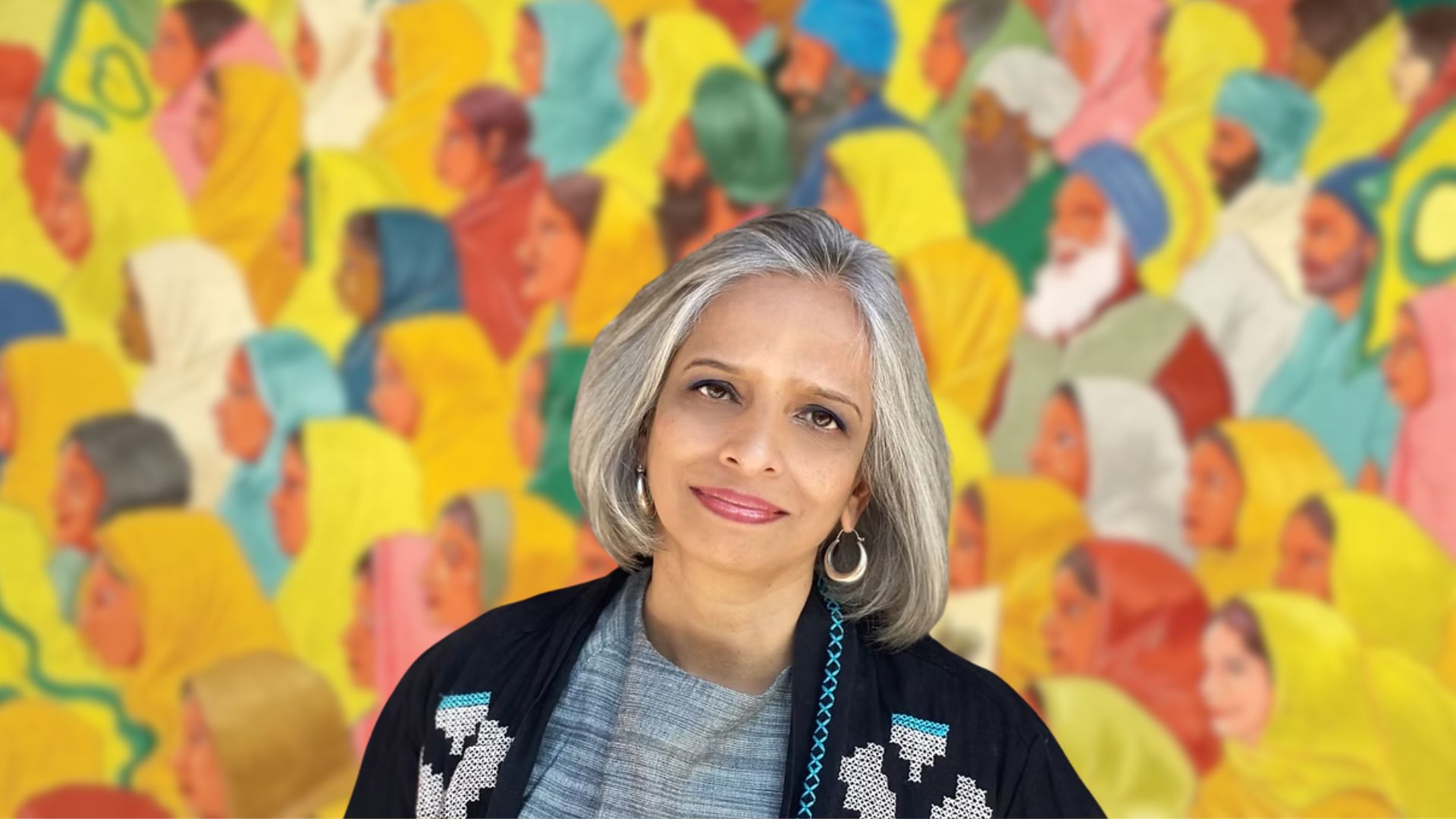
Interview with “Farming the Revolution” Director, Nishtha Jain


Hosted by
KT & Oti
Show Notes
Farming the Revolution captures a mass movement in vivid close-up, as 12 million farmers challenge the Indian government, forcing it to retract its unjust farm laws.
Farming the Revolution will be screening at this year’s Sydney Film Festival (SFF) on June 5th & 7th. This film is also a part of Collection: Focus on Nishta Jain screening The Golden Thread and Gulabi Gang.
Note: this interview is audio only. For other video interviews check out our YouTube playlist.
Episode Details
- Duration
- 0:00
- Released
- May 26, 2025
- Category
- Interview
- Hosts


Transcript
Transcript (2,878 words)
Full transcript of Interview with “Farming the Revolution” Director, Nishtha Jain.
KT: Farming the Revolution captures a mass movement in vivid close-up as 12 million farmers challenge the Indian government forcing it to retract its unjust farm laws. Farming the Revolution will be screening at the Sydney Film Festival on the fifth and 7th of June as a part of the focus on Nishtha Jain's package, which will also be screening The Golden Thread, as well as Gulabi Gang. Nishtha, thank you so much for your time and welcome to the For Your Reference podcast.
Nishtha: Thank you so much for inviting me. I am very excited.
KT: I've been watching your interviews and it's been so great to, I guess, get a bit more of an insight on the documentary and, I guess even just starting off on like the making of the film, you talked about shooting it on a DSLR camera and having over 600 hours of footage and even that you felt wasn't.
KT: To the scale of the protest that we had going over, um, 13 months as well. I guess before we even get started with the film, is there anything that you wish in that three hour cut that you had initially that didn't make it to the film that you would like, you know, the audience to know about?
Nishtha: Oh, yes. I mean, it's impossible to capture, a movement so vast. Mm-hmm. And it was also, uh, protests were not only just ha uh, not happening all over India, but also at the Delhi borders. They were happening at, sometimes four, sometimes five places, and then inside, the states in Punjab, in Haryana. So it's absolutely, impossible to, you know. Sort of, give a true picture. And also, uh, in terms of the farm unions that were involved, I mean, it began with 44 farm unions from Punjab, which is the, the Food Bowl of India, so to say. But then. but then so many other farm unions joined, so I don't even have an idea by the end that there were like 400 or more perhaps. And so, uh, realizing the impossibility of, you know, trying to, do a coverage of this and, and there was a lot of Indian me media that was doing it, so I didn't feel.
Nishtha: That pressure. But nonetheless, nonetheless, even within, my selection, it's not 600 hours. I mean from 500 hours, shot over 135 days. It was a very, very difficult task. And, the idea is not to sort of do a coverage, but also to tell a story, uh, find characters and tell the story through them. Mm-hmm. So that's what was guiding me to, you know, um. but your question about what, what we, left out, I mean, so there was so much that we left out and, uh, I mean, ideally I feel it should have been a trilogy, but it's difficult to, market, such a film. Mm-hmm. And, um, I think it needed.
Nishtha: To give a little more history, you know, to, sort of handhold people who don't know much about, Indian farmers unions, their histories, et cetera. So, yeah, I mean, I, I feel the film could have done with a little more handholding and also explaining the, you know, the importance. and that importance of course can be only told in the context of history and what has happened. So. So yes, but you know, then one has to choose, right? So, so yeah.
KT: And what I feel like what good documentaries do in Farming the Revolution and your team and yourself did um, in this documentary was give that context. I know there's obviously a lot, even myself, I'm Tongan, and I'm Pacific Islander, so you know, there are some intricacies to the politics and the general running of India that I'm not necessarily across. But you know, good documentaries will give you enough to understand. You know, a little bit of the context, and I also appreciated that colonialism. Was touched on because I think if we're going to eat the whole meal, we can't eat around the edges. And there is absolutely a through line of not just colonialism, but I guess powers as well. Yeah. And this very much is a, in the trenches with the people. And I think that was very important to have that sort of context.
KT: So even if you felt like it wasn't enough, I just wanna give you, um, I guess your, like, thanks to you for putting that in.
Nishtha: Yeah, I mean, uh, it was important just sort of to touch so that people can go back and then read more, you know about it because it's impossible. For example, in the film people, keep on referring to Bhagat Singh, the legendary, you know, leader from our independence movement, you know, and who was hanged by the British. And, and suddenly, you know, at this protest there were hundreds and thousands of Bhagat Singhs. And you know, who, who are fashioning themselves around his story. Mm-hmm. And, and drawing, courage from him 77 years, you know, 75 years later. So, um, so people, you know, wanna know who's sing, but of course the film can't go into, uh, go into all of that.
Nishtha: Or, or, or why, or, or, you know, the importance of this movement. Coming, you know, at a point where, there've been 400,000 suicides in India, farmers suicides in India over the last two decades. And, and the promises that were made to the farmers and then, and then the government going back on those promises, you know? Mm-hmm. People had voted for this government because of the promises they made, and then they went back on it. So, and, and then brought in a system, which would. Actually destroy, uh, whatever little, just keep taking, right? Yeah.
KT: Yeah.
Nishtha: Absolutely.
KT: I also have in my notes, and feel free to correct me if I'm wrong, but there was a moment in the documentary talking about Martyrdom Day with Bhagat Singh, the Freedom Fighter. And I really appreciated, again, it, it's, it is more than colonialism, but in this particular moment it was talking about how he would study about other countries and how to mobilize and you know, how and where revolutions would take place. And I think that in this world of, I think anger is good, I think people should. Shouldn't be numb and they should find a way to channel that anger. But it's, it's also caring. We need to care about each other, even if things don't affect us, because that's where, you know, if it's not us today, it could be us tomorrow. And we all need to mobilize together. I.
Nishtha: Absolutely. And I think, the biggest message of the film is about the community of care. Mm-hmm. and I think, I mean, with everything that's happening in the world right now, I, I think we need to go back to the basics of what constitutes humanity, which is love and care for each other. And the only way. Hundreds and thousands of people who were living in such difficult circumstances on the roads, for a period, of 13 months. And of course they were doing it in rotations, et cetera, but even spending a night over there, you cannot, you know, minimize, the difficulty of even spending a night because they're not. They no toilets and they're No. So you, you know, I mean, uh, the kind of facilities. Mm-hmm. So, so yeah, I mean, we, we go back to the basic, like we want to, we want to fight, you want to protest and we also have to take care of each other.
KT: And one of the aunties in the film, she. She talked about, you know, it's been over 12 months, they should try at least 12 hours. Um, yes. To, to like understand the scope of that and I think what's. What was so beautiful and very emotional about watching Farming the Revolution was how important women were and are in general. Um, because there, there was talking about not just the attendance, but making sure women are safe. And in this, like, there's so much in this world we can talk about, but even in this world as women and making sure that we are safe, and there were so many sentiments that were shared across the documentary, and that's why your eye and your lens is so important because to get those, you know, sort of moments of, you know, when women come along a, a movement becomes stronger.
KT: And I, I think there was also a quote saying, we haven't achieved our mission if women aren't in equal numbers as well. And like, I would like to hear you, I know we don't have much more time, but I would love to hear you speak on that if that's okay.
Nishtha: I mean, as the, as the women leaders themselves explain in the film that when, when women join the movement, it becomes something else. You know? It's, it's, it's, it's another kind of energy. And women are not just like, protective shields, you know, it, they're not just like. You know, stopping the government from attacking the men. It's not, they're not serving that purpose, but they're serving a very important purpose. And, and first of all, also recognition as farmers themselves. Mm-hmm. You know, in general, like we can say women's, uh, you know, and it affects both men and women, everything, and families. And, um, but there, this is a statement that, you know, women also are, are contributing.
Nishtha: Uh, farmers, even if they're not like, you know, physically on, on the farm. Mm-hmm. But, but, but they are supporting, supporting the family and everything around it. So they, they are also have to be seen as farmers and women were, what was very interesting is that, that they were very careful also women, that we are not just here to cook, you know? Yeah. Uh, and, uh, so we are not just here to cook and, you know, play the same roles as we do at home. And, uh, so that. That men have to also cook for themselves when they're going to be there. And of course we'll also cook. So there was sort of a communal, uh, you know, cooking that was happening. And, and, and women were not just confined to that role itself.
Nishtha: You know, they were also mobilizing people, um, and other women. And, uh, so they were very much, you know, participating in all aspects, of this protest.
KT: I, I think what was really interesting and I really appreciated was it was like the leaders had a very straightforward way of speaking. It was very practical, it was very pragmatic. It was making clear, none of this makes any sense to sell stuff back that we've already made and making sure that people understand like it's. It's not just by the passion, but it's a consciousness. It's a raising of consciousness and a knowledge. But there was also music and poetry, um, as well. And I know we don't have a lot of time, but one of the, um, quotes I wrote down was The big fish eats a small fish to fill its stomach. And it's, it's, it's so beautiful because there's, there's still hope there. Um, and I, I guess that's also important to fuel that right. Right.
Nishtha: I mean, when I reached there, I experienced something that I. Imagined and hoped for, but experienced for the first time. Mm-hmm. Um, so it was like a different zone. You know, you would come out from Delhi where everybody had the mask, because COVID time and, um, there was a very different at atmosphere in Delhi, and you'd cross that zone and you c and you come into the, into this place where hundreds and thousands of farmers and then, it was, you know, completely different. It was like a university you had entered, you know, because there were Mm. Yeah, there were a lot of poets and singers and performances, street plays, and amazing speeches, by these leaders. and I learned so much from those speeches on the stage. You know, I mean, that was my history class right there, about, sort of subaltern farmer, uh, you know, histories, which I, which, which I ha I wasn't so, prepared, you know, and, uh, with, you know, in terms of reading, et cetera.
Nishtha: And so. So this idea that farmers are like country bumpkins was, it was like, what? I mean here we are, we have single spoils. Like, you know, it was a completely charged, intellectual, informed atmosphere. Mm-hmm. I haven't seen a group of people who are so informed and so, so organized as well. And organized as well. But you know, so when you talk to people in, in, in, you know, in the cities, you just like, after a point, you know, you feel this need, you know, you can't talk further because they don't know anything about the grassroots. And so there's a sort of an idiocy, uh, of the ignorant person in the city. And so much grounded knowledge, so much rootedness of the farmers that I constantly felt and which kept on inspiring me.
Nishtha: Really. I mean, I had no funding, yeah. For a whole year to shoot, but it just kept me going, you know, just the spirit that just kept me going.
KT: And that's a, that's a lovely way to, I guess, come to our last question, Nishtha. I would love to speak many more eternities about freedom and joy. Um, and I want to thank you so much and wrap up with our final. Question, we finish off our reviews with a recommendation. So what would you pair with Farming the Revolution? Obviously we have a lovely focus at the Sydney Film Festival. Um, but just in general, any documentary, any film. What would you pair with Farming the Revolution as a double feature?
Nishtha: Right. I mean, there's so many, but I mean, I like to talk about one of them, which is called Marching in the Dark. Mm-hmm. And it's about, uh, looking, it's looking at the wives of farmers who have committed suicide and, and the way forward for them. And I mean, I think that could pair very well with this. It's, they're totally different films that, that's, uh, sort of at the micro level and this is here the community power. So it's, it's very different. But, um, that would be another film. And, and, and then, and then there are several films from India actually.
Nishtha: Um, that, that, I mean, there's a film called Hailstorm, which is looking at a farmer over a period of a year and, and what it is to deal with climate change and how does climate change affect a single farmer, you know, and the disruption that it can cost because I think the most important thing going forward now. Is really climate change. And the farmer, I, I don't know how they're going to, going to, cope with this calamity, without the support of the government. And we don't have, we don't have that, we don't have that compassionate government, which is, which can look at, at, at this, at this huge crisis, which is facing our farmers.
Nishtha: So. So I think, that's an, that's, that's one of the films. And, um, well there's, there is, there is also a film, I think it's called the Seed Story, if I'm right. And it's about seed banks. Mm-hmm. And, uh, and there's a, there's also, uh, you know, wand, there's the, there are films on wand that are very important. So yeah, there, there are many that could be paired.
KT: Yeah. That is a beautiful adventure for people to go on all these films. Sorry, was there anything you wanted to say?
Nishtha: there's another, there's another film, by a fellow filmmaker, called Randeep Maddoke, who was, also there, shooting, I mean, filming the farmer's protest, and I'm actually producing his next film. But his previous film called Landless is a, is a landmark film, talking about landless Dalits. Mm-hmm. And they're making another, I'm, I'm supporting his next project, which I think is, is going to be absolutely, um, important. and it's in the making right now. So it's Landless 2, uh, working title. But, uh, the, the reality of the landless farmer is, is just another, I mean, another tragedy that's another level here in Farming the Revolution, we are talking about farmers who have land and then, and, and they are fighting to protect this land. Laws like the laws that were introduced could endangered, uh, you know, being farmers and therefore losing their land.
Nishtha: And we, this film is looking at people who don't have land and are trying to get back land. Yeah. So, so yeah. I hope Sydney Film Festival would be able to show that film in the future.
KT: Mm-hmm. Well, there's making world, there are many fights and it's all power to the people. Um, Nishtha, thank you so much for your time again. Thank you so much.
Related on FYR
Discussion
Loading comments...