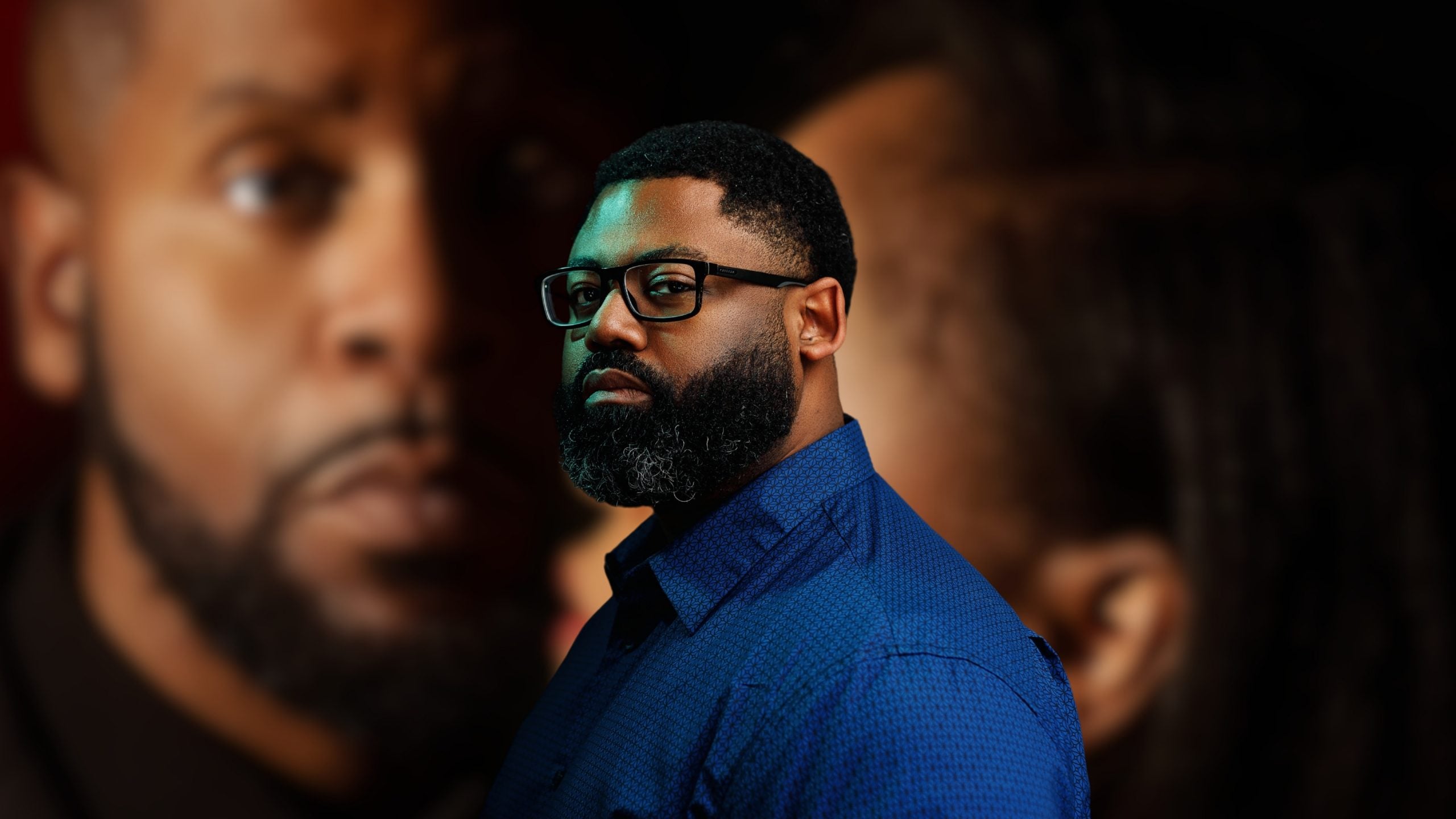
Interview with “Betray: Thirst” Writer/Director, Jaron Lockridge


Hosted by
KT & Oti
Show Notes
This week we have the opportunity to chat with Jaron Lockridge for Betray: Thirst, the second offering of the Betray series. We discuss his hands-on approach of producing, writing and directing as well as the importance of friendships and keeping love alive.
Check out the video interview.
Betray: Thirst is available on Apple TV + and Amazon Prime.
Episode Details
- Duration
- 0:00
- Released
- May 20, 2025
- Category
- Interview
- Hosts


Transcript
Transcript (3,316 words)
Full transcript of Interview with “Betray: Thirst” Writer/Director, Jaron Lockridge.
KT: Jaron Lockridge, thank you so much for your time and welcome to the For Your Reference podcast.
Jaron: Thank you so much. I'm glad to be here today.
KT: I am very excited to talk about all of the delicious betrayal and the hydrating thirstiness. But before we even get to that, um, you know, you've done over 10 films, so I guess I kind of wanna start there. What do you enjoy? Big question, but what do you enjoy about filmmaking and, you know, writer, director, producer, credits, credits, credits. How do, how does it feel being so involved end to end in the filmmaking process? And what do you enjoy about filmmaking?
Jaron: Uh, I would say the main thing that I enjoy is just because I'm a writer first, so having an idea, being able to put that idea to paper. And, and able to bring that, that vision to screen is one of the most rewarding experiences of the filmmaking process. Uh, a lot of the, the hats that I have to wear to make the film, even though it's, it's starting to get better now as my budgets get a little bit larger, but, you know, it's always the low budget thing where. Um, just because I didn't have the funds to hire people, I had to learn these jobs in order to make the film. So, um, that also taught me, you know, to appreciate each part of the process because wearing those hats, you see how taxing it is and how much collaboration, um, is beneficial to the process. So, mm-hmm.
Jaron: Um, a lot of that is kind of like, just in a way making those films that way. Were, was my, my film school, it, it, it. Trained me to the process of being a filmmaker. And, uh, if I had to do it all over again, I'd do it the same way,
KT: which I think makes a, a, a, a more enriching sort of experience because you learn all the parts. As well. Right. Hopefully it get to a point where you don't have to physically do all the parts, but at least you know what you're looking for, um, you know, across the board as well. And I'm so glad that you brought up the, you know, the focus on the writing because Oti and I had such, I. A great time, like, you know, in, in, in this world of like independent film podcasts, we get a lot of screeners, even from filmmakers directly as well.
KT: And some of it's poignant, some of it's very serious. We were cackling, like we were having a good time watching this film and I guess I wanted to hear your approach. To writing. 'cause there are so many just like funny lines and just like being in relationships of like, yeah, you got me. Yeah. Like, you got me. I'll get you back. Um, and I guess it's, is it the humor that comes first? Is it the dialogue or is it building out that story first? Or do, do they kind of weave in together?
Jaron: It kind of comes all together. Uh, I try to my best, uh, a lot of my writing, I go off of either life experience or, you know, experience where I've witnessed this or, or I've known of this. And my, my focus when writing is try to make it as real and as relatable as possible. And, uh, a lot of times, you know, when you're dealing with people, it's like in the movie, you, you know, a character like Darren, you know, a. A character like this, and you just try to mix all that to make it seem as real as possible.
Jaron: You don't want it to be one note. You don't want it to be so serious and heavy, you want to kind of mix it up. Um, and, and to me it's kind of like music. It's like a sheet of music when you see it, especially with an audience, if you're hitting these certain beats the way that you envision them, uh, it should come across that way when, when people see it on screen. So a lot of times it's just trying to make it as relatable a piece as possible. Uh, whenever I'm writing something.
KT: Yeah, I, and we all do know what Darren, uh, lovingly. Um, naturally with thrillers there's, you know, a lot of tension and there's like a buildup, um, you know, to payoffs. And obviously I don't wanna spoil the film, but I guess even from a filmmaking as well as a story writing point of view, how was it or was there a balance of, I guess, pulling back in some moments to make sure you have a higher impact in others?
Jaron: It was, you know, just trying to find that balance in the script. Um, this is one of those stories where you had to understand the characters. Uh, I didn't want the audience to. Necessarily hate any of the characters. Just kind of have that question at the end, like, what could this person done something different? Or, you know, that, just to ask that question. So a lot of the, the first part is just building up these storylines between these characters and, and just showing how, how it came to this and, and when it gets to that part, you know, just showing, you know, how, how it all comes to a head and how. They still deal with the situations that they're dealing with.
Jaron: So a lot of that, especially with this movie, which is kind of a mash of genres, it starts off just a, you know, a drama, mostly romance drama. And then it kind of just goes into that when a situation happens. So, um, just. Writing and trying to make it to the way that the audience can, can relate and see why this certain situation happens after dealing with this for the majority of the film.
KT: And I, I guess I just wanna focus on the title of the film, which really speaks to the themes, uh, in betrayal and thirst. And do you feel like they're independent of one another or do you feel like they're interconnected, I guess, in ways that we might not anticipate?
Jaron: Yeah, the, well, the, this is gonna be the second film. I had a film, uh, a couple years ago called Betray, and I came up with. Just thinking of this film series, uh, where it's more of an anthology style film series that kind of revolves around that theme of, um, betrayal, uh, infidelity and, and stuff in certain ways. Um, and then when I came up with Thirst, that was like, Hmm, that, that would be cool to just kind of add that into that little movie series. Um, so it's, it's. It is related, and it's a story of its own in a way, um, to the way that it has those same themes, but it's a entire different storyline. And, and it's something that I'm going to continue. Uh, I already have the script for the next one, which is way different than this story. I just like looking at certain situations that I don't see get, you know, talked about or seen a lot.
Jaron: Situations like when we're, you know, this marriage has kind of lost its spark. And, and, and I'm going to, you know, just tap into these, these topics and just try to, you know, raise these questions and, and cause a dialogue with these films.
KT: And, you know, I don't want to talk too much in spoilers, but you're absolutely right because. You understand both sides, like Shavon. Sometimes it's not the time. You know,
Jaron: sometimes, sometimes, Hey, this, you know, yeah, it's time to go to bed.
KT: Yes, sometimes, but you know, you also see Jamal's side. As well. And I think that's where you get the real sort of, um, conflict and I guess the more interesting sort of drama when it's based in that, of like, no one's necessarily wrong, but we need to work on something. Right? Yeah. And then that's where you have those themes of. Betrayal and thirst, you know, coming to the foreground in this film. And, you know, the description for this film is very interesting and I, um, you know, much less credits than a literary class. But, um, a successful lawyer's life unravels when he crosses a dangerous line with a client.
KT: Risking everything he's worked for and Oti and I have had a fun time debating this particular, um, the, the, the film as well as the sentence as well, because we're talking about the risk and I guess mm-hmm. Is the risk at the act or is the risk at discovery? Like, is it, is it when you're stepping out that you're risking or is it when people find out that you've stepped out? That's where the risk is.
Jaron: It's kind of both and, and especially for his, you know, situation where, you know, he's crossing professional and ethic lines by doing what he's doing. Yeah. So. You know, by him doing, you know, falling to this in, in this way, he's risking not only his family, his career, so that's where the, the, the gist of him risking everything he's worked for. He's, he's been in this, this relationship for 15 plus years. Uh, he's, he's rising as one of the top lawyers in his city. And, you know, he's, he's talking to. His partner who is kind of a, a loose end and just doing as he wants to and he's scolding him, Hey, you need to do better. You need to do this. And yet, you know, he kind of does exactly what he's,
KT: well, well, but yeah, that's, I throw AURs in thumb. The glass house. Yeah. Yeah,
Jaron: exactly.
KT: Um, yeah. 'cause it, you know, maybe Shavon was like, Mario win and she don't wanna know, like, you can go out and do your dirt as long as she doesn't find out. Um, she's, she's cool just chilling with her wine there, like, you know, like the different dynamics in a relationship. And yeah. I guess speaking about relationships, I guess this is more about friendships and you know, how important it is for men to have close relationships and mm-hmm. You know. Not just romantic relationships, but relationships where they can actually open up and they can be vulnerable. Mm-hmm. And we see that with Jamal and his uncle.
KT: Like there's some real. Marriage shit. Like there's some real conversations and you know, his uncle's really dropping some real advice from experience, I'm assuming. Um, yeah. As well. And I, I wanted to hear you talk a little bit about that. 'cause there's thrills, there's fanfare, there's cackles along the way in this film, but there's a real groundedness to, I guess, male relationships. Um Yeah. You know that.
Jaron: Yeah. Yeah. Him and his uncle are, are very close. Um, I had to cut a scene that really. Really, uh, showed, you know, how close they were. Uh, but yeah, him, his uncle, that's kind of like his father figure and he can't go to his best friend Darren, because his best friend Darren kind of looks up to him for that type of, you know, stature and, and advice and, uh, that's why he was so disappointed. Uh, because they, he models him and Shavon as the perfect couple. So when, you know, he needs that advice and that wisdom, his uncle is the, that's the person he decides to go to. And, and his uncle, you know, he, he tells him, Hey, you know, it's nothing that you're going through that's new, but you know, with all that said, what you did was wrong.
Jaron: Uh, and, and you're gonna have to either move this way or that way. And, and that ended up influencing, you know. The, the next decision that he had to do in reference to Shavon. So yeah, that the, the uncle was a real, uh, uh, guidance for him, uh, especially being that he's older and, and, and more wise than he is. And, you know, when he vented to him, he was able to, you know, agree with him, but also a let him know what, you know, how it really is and mm-hmm. How, how he should move forward from that point.
KT: And I think that's the main thing of like. It's important to be real, but you need to know what's in love. Right? Yeah. I was like, ah, that hurt. But I get it.
Jaron: Yeah.
KT: Like it just pulling me back in line. And, um, I I, I also really enjoyed seeing the dynamic between Jamal and Darren and, uh, I think the Darren's need to stay away from me 'cause he is a dangerous man and I get it. Um, but also it's credit to your writing as well because there are moments where I'm like. Jamal, you're wrong. Like Darren, like I think, you know, even just talking about their dynamic, I think. Jamal was very much a good guy, but was he a good guy? Because he had to do it out of obligation and he was kind of doing like a muscle memory, whether it's like a, a, a dogma of like how to conduct yourself in the world.
KT: And Darren was kind of free, but he knew where his boundaries were and he talked about the dynamics between him and Ebony, which we don't have to go into detail if we don't wanna spoil it, but. Darren was free in the world that he created, and he knew where his boundaries were, whereas Jamal was very tightly wound. Um, and it's like, well, yeah,
Jaron: yeah,
KT: you get one chance you slide on in. Like of course you did like that. Yeah. That's not a surprise. Um, but I guess I wanna talk a little bit about their dynamic because there's a moment with the Hub City Journal. Um, like they have like an interview, um mm-hmm. Of their practice. And I think that's where we get a little bit more. Into their dynamic. And you know, like you mentioned, and in the film as well, Darren's, like, I look up to you like you guys are the blueprint. Like you're the one that we, um, you know, we, we refer to when we think about, I guess happy and fruitful relationships, whatever that means, right?
KT: Yeah. Yeah. Um, how was it writing for those two? Because I definitely saw dimension in Darren, even though I do believe he's also a menace as well.
Jaron: Yeah. In a, in a way, Jamal is. It's kind of envious of Darren in a, in a way because, uh, he, he lives life by the book. He does everything right, and he sees Darren just having the time of his life still. Like he doesn't have to deal with the same issues that he's dealing with at home. Uh, and, and he, he gets to hear. Darren brag about it, and he's like, oh man. Okay. So in a way he's kind of, although he's the more squared one and the more to the T, and he's calling Darren out on his stuff. In a way he's kind of envious of that because it it is, it's not going.
Jaron: It's a way that he wants it to go. Yeah. And when, um, you know, when it comes to the business, the, the professional end of it in, in the office, you know, he, he gets on Darren on a professional end because of he's slacking and stuff, but personally, yeah, he's, he's a little bit envious of him and how things are going, so Right for him, although he's the way he is and he in, in, in a sense, he's like, I'm doing everything right, but yet I have to fight for something that I shouldn't have to fight for.
Jaron: So, uh, that, that's kind of one of the. Dynamics between them, uh, best of friends, and as you can see, uh, in a, in a certain moment in the film, even when they're going at each other, they're there for each other. But yeah. Uh, yeah, I just kind of wanted to show that dynamic in the film, having one that's totally opposite than the other.
KT: Yeah. And you know, like, it, it was interesting to see because complacency is a big role in relationships. Mm-hmm. And. The writing was great, but I just loved Shavon and I was like, I don't want to be in a relationship with her, but I can't be mad at her because the things that she was saying was so relatable and it was so her and Darren as well, like playing with each other was a lot of fun. Um, but it, I I really appreciated the layers that you had, um, yeah. In this film. And I guess before we start to wrap up, um, just in general of getting a film. Made, um, and I guess any sort of advice that you might have, um, especially for, you know, um, stories in the Black South as well. Um mm-hmm. How, like is there any sort of, or is it just get out there, get out there and, and, and do it?
Jaron: A lot of it is, a lot of it is just deciding you're gonna do it and do it. Um, I'm, I'm real big on ownership. Mm-hmm. Um, that's something that I value with my work specifically. Um, so that's something that I hold high whenever I, I get ready to make a film or distribute a film. Mm-hmm. Um, but yeah, like if you, if you have a story, just, just, just write your story. Um. My, my thing is I love writing human stories, stories that are relatable, stories that throw a question out there, story that challenges a, a, a mindset or a thought. Um, but if whatever your stories are, you just have to, you just have to do it. Uh, this is one of those times where it's really no excuse.
Jaron: You can, you can get on YouTube and learn how to do almost anything. Uh, so if, if. You know, filmmaking or making movies, um, is something that you want to do and you just don't know how to or where to start, or something's holding you back. The only person that's holding you back really at the end of it all is you. And just, just getting out there and making it, you know, I mean, if I can do it, I promise you anybody again,
KT: but you, you, you do it in such a great way. And, uh, I wanna thank you so much for your time and wrap up with our final question. We've finished off our reviews with a recommendation. So what would you pair, obviously this is a very, this is a very obvious answer, but what would you pair with Betray: Thirst as a double feature?
Jaron: Hmm. Lemme see. Oh, that's a great question. As a double feature, I probably would go, I don't know if you've heard of this one. It's kind of old. I would probably say A Thin Line Between Love and Hate.
KT: Yes, I've heard of it.
Jaron: I, I would do A Thin Line Between Love and Hate.
KT: Okay.
Jaron: I'd say it would double feature for it.
KT: Yeah. It's that tension. It's that, it's that.
Jaron: Yeah.
KT: It's that rustling together.
Jaron: It has some funny moments in it too.
KT: Jaron, thank you so much for your time.
Jaron: Alright. Thank you.
KT: Thank you.
Related on FYR
Discussion
Loading comments...