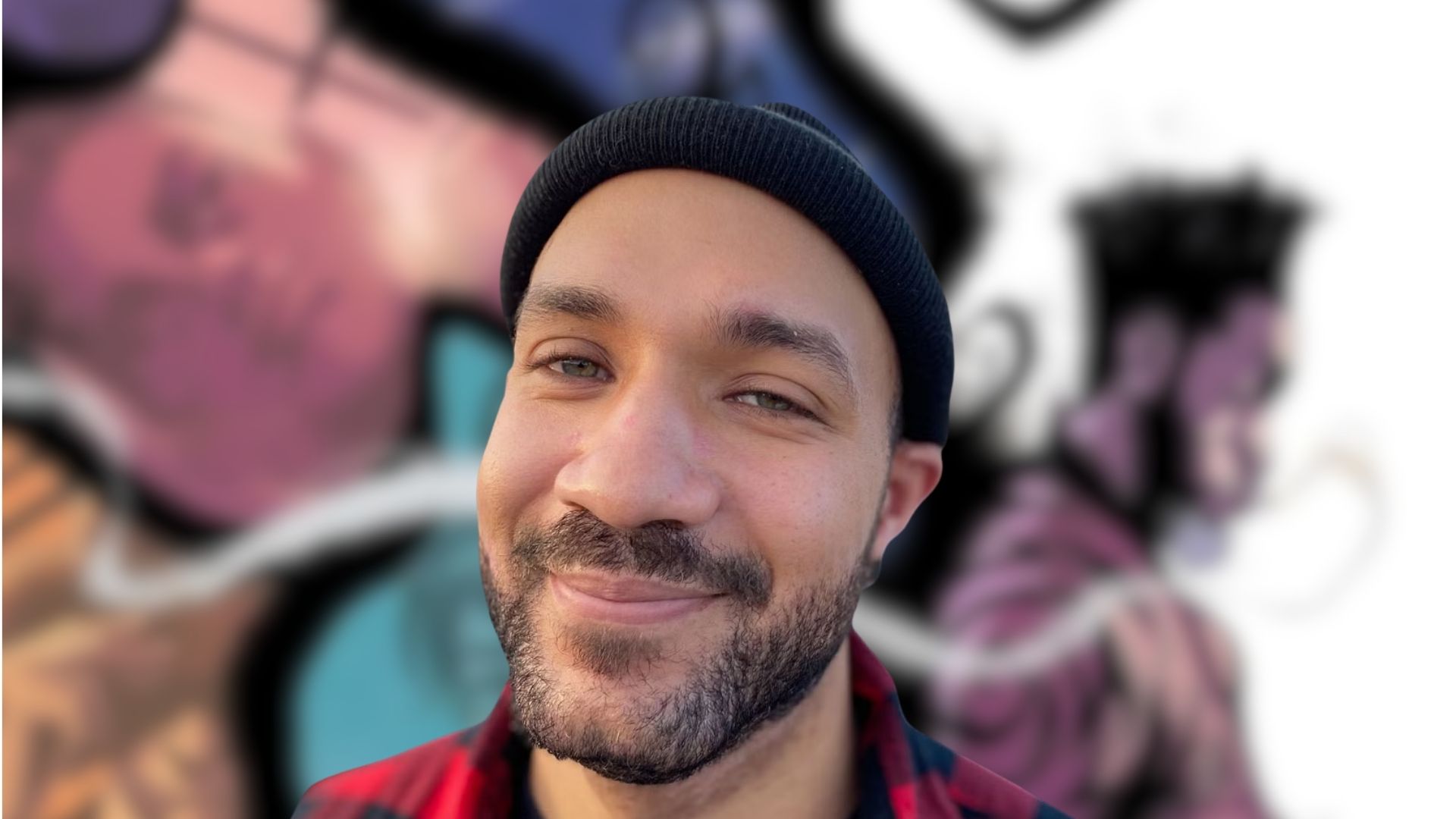
Interview with “Ancestral Recall” Creator & Writer, Jordan Clark


Hosted by
KT & Oti
Show Notes
We have the delightful opportunity to chat to Jordan Clark, Creator and Writer for the five part comic book series, Ancestral Recall. From his work on well known IP to making a series of his own, we discuss how Jordan works as a collaborator, weaving in Black history as well as a broad layered reflection on AI and the impact of technology on marginalised people.
For more information on Ancestral Recall including how to buy copies: https://comicsahoy.com/creator/jordan-clark
We reference his essay in relation to technology: https://jclarkcomics.com/
You can also hear Jordan Clark and Cameron Mason delve into White Savior tropes on their podcast: https://whitepeoplewontsaveyou.podbean.com/
Long time friend and lover of the FYR, Jordan has guested on the podcast for The Wiz, Pop Out (general chat about hip hop and reflecting on the epic Kendrick vs Drake beef) and GNX Album review.
Episode Details
- Duration
- 0:00
- Released
- September 7, 2025
- Category
- Interview
- Hosts


Transcript
Transcript (17,051 words)
Full transcript of Interview with “Ancestral Recall” Creator & Writer, Jordan Clark.
KT: friends and lovers welcome, welcome to a very exciting interview we have today. It's our second comic book, author, interview, friends and Lovers. And the first one was for indigenous, uh, an indigenous comic called Dark Heart, um, number one. So, and that was also at the Sydney ComicCon. But today, today, and we still are in the comic cons, but today, today, today, we are calling on not all the ancestors, maybe some of cinematic ancestor universe in the future. Who knows? I might be putting too much on him. Jordan Clark, thank you so much for your time and you have been welcomed, but in an official comic book, author, writer capacity. Welcome to the For Your Reference podcast.
Jordan: Thank you. Appreciate that. Good to be here. Good to be back. Good to see you.
KT: I am very excited, uh, to talk about Ancestral Recall, issue number one, issue two on the way. Friends and lovers, make sure you check out the links. I know there's, uh, your website, which I know maybe is on the way on construction, but we'll put all the notes. We'll put. We'll, we'll put all the links, um, in the show notes, friends and lovers. I will also link, there's been so many great, uh, interviews and conversations that you've had in the lead up to as well as Comic-Con that I just for Funsies was watching, but also as a part of researching for today as well. So there's definitely a lot of ground that has been covered. Um, so friends of Lovers check out the links in the show notes. And what I also really love as well is the way that you would reach out. At the same time there was a press release as well, and I guess that just mm-hmm. Speaks to. Not just the subject matter, but I guess how important it is for you and who is reaching, like who, who, who's it reaching, um, as well. And I guess we'll talk to that. 'cause if I get a big ass question before we even get your intro, um, we'll, we'll, we'll be here, um, forever and I'm happy to be here
Jordan: Sure.
KT: Forever as well. But, um, Jordan Clark, friends and lovers, you can read the bio, check it all out, broadcast journalism, uh, you know, through, through all of these interviews, I think we met each other through talking about a, a very questionable Aboriginal, uh, centered, maybe hint seasoning of an Australian film. So that's kind of how I met you. So it was nice hearing interviews, broadcast journalism, writing, being, being able to explore that format into comic books as well as the White People Won't Save You Podcast. Um, which comes to storytelling, which I, I want to get to in general. You know, it's, it's not the most expansive sort of nutshell, but there's so much of a career that you've had across all different mediums, factual storytelling, narrative, um, which is really the way that we connect through people and hopefully try and reach people, um, yeah, as well. But how are you feeling? How are you feeling, um, in this moment? And you are most welcome to, uh, introduce yourself to the audience as well, um, in general.
Jordan: Yeah, no, I think you, I think you did a pretty good job covering it. I've Jordan Clark. I am a comic book writer. I also co-host the podcast, White People Won't Save You. Um, in my new comic book series, Ancestral Recall is in stores now. Wherever you get your comics at, you can get it physically, you can get it digitally. Um, and I'm, I'm feeling pretty good. The first issue came out a couple of weeks ago. Uh, the second issue is coming out very soon, on September 3rd, um, and. Just the, the reception so far has been, uh, very heartwarming for me just because I know a lot of times, you know, when you're doing specifically in the world of comics, like if it's not Batman, if it's not Spider-Man, if it's not like a big, uh, you know, IP kind of thing. Like, it's not that people don't care, but it is hard to get people's attention just because like all of that stuff is taking up so much of the, you know, marketplace and a lot of people's just attention. And so, you know, to have this, this little book about black history and like reaching back to your ancestors and, and kind of, uh, how we think about the past and how that informs the future, I think, uh, has been great to see it. Like when people come up to me and they talk about it like. I think it, it has struck the nerve that I was hoping to in terms of people really like connecting with it and really thinking about some of the historical figures in the book and wanting to do more research on them. So, uh, I'm feeling, I'm feeling good so far. I was very nervous, you know, before everything came out. Mm-hmm. But like, I'm feeling, uh, more and more, uh, confident in like, we were doing the right thing as, as people kind of read and react to it.
KT: And you were talking about people coming, approaching you, ComicCon, ComicCon. Credits, credits, credits, credits. Mm-hmm. Let's have a little, let, let's have her have a little moment. Um, you also had book signings, um, as well, and I, I guess I don't wanna miss, uh, feel free to fill in the gaps. New York Comic-Con. Baltimore Comic-Con, you had some store signings as well. Um, how's, how's that sort of reception been? Obviously people have been coming to you, but you know, in a lot of your interviews, and it'll be nice to also capture this here as well. Um, you know, you are out in the big leagues with the big boys. You know, there's DC, there's Ackerman, you know, even characters that become Canon, um mm-hmm. As well. Um, you are very like Piccolo, like with your arms crossed, you know, like just watching it all. But you, you really, it really is time to like, you know, talk your shit because it's your time, you know? Um. Sure. I guess how does it feel coming into working on that? Feel free, you have spoken about it, so you don't need to, if you don't want to in this format. I will give links to the other interviews, but I guess the. The ability to work with, we'll, we'll, we'll come to AHOY Comics in a second, but creating something that is your own and being on these platforms and these big stages, um, as well to be able to speak on something that isn't diluted either.
Jordan: Yeah. Yeah. I mean, I think, you know, some of the stuff that I've done before, like you mentioned, whether it was Aquaman or like Red Sonja or like, uh. Just, just IP started work. I did like a Star Wars story. Like all of that stuff is like great to work on and like a lot of fun to be a part of. And, um, you know, like, again, very recognizable when people see that kind of stuff on your table at a Comic-Con, they're like, oh, you did this, you did that. And so, you know, it does draw people in. But again, I think for, for a lot of comic book creators, you know, the, the dream is to have like your thing, like the thing that you made, uh, that people, you know, connect with and respond to. And so for me to, you know, kind of be in some of these spaces, uh, where again, like it's not that, it's. Improbable, you know, to kind of break through into those spaces. But I feel like specifically for, for black creators and creators of color, like, um, we don't get those opportunities as often. And so, uh, I really am trying to like, soak it all in and take advantage of opportunities to, to kind of have that spotlight. Just 'cause I think, you know, these, these are stories that I've talked about it before. Like, I hate to use the word important and kind of like, you know, uh, amp it up in that way. I'll say,
KT: I'll say it's important,
Jordan: I do, but I do think that, um, you know, it is, it is relevant and timely in ways that like, I wish it wasn't, you know, so, so much. So yeah, in, in that sense of like, um, you know, obviously, obviously it wasn't intentional, but, uh, the, the. What's happening, you know, in, in America and across the world. I think a lot of people are like looking for something like this. Like they do want to connect to history and they do want to connect to something, uh, that is, that is an authentic story. And so, um, you know, it's, it has been great to be able to, to finally get it out into people's hands and then mm-hmm. You know, have those conversations with people. 'cause I think for me, that is one of the real joys of, of creating something is, you know, like it's in your head and you're working on it. Comics is very collaborative, so, you know, I've talked with my editor, my artist, and, you know, we've all had a chance to like, look at it and see it and go over it. But like now people are seeing it and they're connecting it to their lives and their stories, their families, uh mm-hmm. And they're, they're coming back to me and having conversations with me. And so it's really cool to see things starting to come full circle in that way.
KT: Yeah. And it's, it's definitely a time, I was gonna say interesting. Um, sure. It's, it's definitely a time and we are our platform to be able to, um, speak on that and we'll definitely come to that as well. But I, I guess I just wanna focus, shout out to Atagun. Um, wow. Like, I, I guess the, what I would say is I struggle with like, is it called aphantasia? Like, I struggle with like, if it says like a dragon is across the sky, I literally just see the word. I don't imagine Mm. Yeah. Like a dragon and that sort of thing. So I wanna talk a little bit about your writing, um, process and I guess how that wove into Ancestral Recall and, you know, visually bringing it to life. How does it look when you're writing Ancestral Recall? And it was pretty cool in interviews 'cause you were talking about like ideas that you had five years ago. It's now real because it's inside of Ancestral Recall. So I'm sure it's like a tapestry of, you know, mind streamings and just general sort of musings. But when you get to a point of, I want to write this now. How does it work? Do you like lock yourself away The Shining level? Like how, how do you find yourself like, or is it like structure first? Is it, I know Melvin was kind of like from the workshop, um mm-hmm as well. But I guess just in general, what did that sort of writing process look like for you?
Jordan: Yeah. I think, you know, as I've, uh, continued to, to write and work and grow, one of the things that has, uh, been something I've tried to, to really embrace is just kind of like being. Very much so in the moment of the story that I'm trying to tell. Like before, I was very like, structured, but also like, I was like, I can't start until I have the outline and I can't start until I've done, you know, this, or like, you know, and I tried to have like a certain process to things, uh, that, that worked. It wasn't like it wasn't working. Um, but I really wanted to have something slightly looser here just because I think for me, um, you know, I, you, you can, you can feel emotion on the page, uh, when you're writing a comic and you can also feel it when you're reading a comic, right? Like I think, uh, Alan Moore, you know, famed comic book writer talked about when he was doing Swamp Thing, like he. More extreme than I, but like he, he was saying like, you know, I really wanted to tap into the horror element and the things that frightened me. So like, yeah, he was scared of bugs and, you know, when he was writing, he was like, I would imagine that there's bugs all over me. Uh, you know, specifically like when I'm writing the scene with, with the bugs crawling. And like, I really was trying to get into that space of like feeling fear and feeling afraid. I was not imagining anything to that extent, but I was trying to really put myself in, uh, the mindset and the, and the. Um, you know, emotional state of a lot of these characters. Like I I said, there's a couple scenes where like, I, I cried after I wrote it 'cause I was like, all right, you like, I, I, I was there and like I'm coming out of it. Um, and so, you know, to me that I felt like that was, that was right. You know, like anytime that you can kind of put that emotion into something, you know, hopefully it shows up for the reader. And so, um, yeah. The, the process of writing this, I think was, uh, liberating in some ways because, you know, like I was saying up until this point, like I was writing things for other people that other people had created and trying to fit it into Yeah. Yeah. And trying to fit, I mean, you're, you're always trying to put your stamp on things, you know, enough so that like people remember you. But you know, when you're writing Batman, it's not really about you. It's about. Batman and Bruce Wayne and like, you know, all the other stuff. And so you can't stray too far from what has already been laid out. Mm-hmm. Whereas here it's like, it's a, it's a open sandbox that I could kind of do, you know, whatever I want. So I was really trying to be intentional with creating these characters and their relationships and, um, you know, the, the world around them. And me and Atagun had a lot of conversations about, you know, just how we wanted to present these characters, how we wanted to present this world, how we wanted to present Melvin's powers, the historical figures, you know, all of that stuff. Mm-hmm. And so, you know, for me, the writing process was, um, you know, a lot of research, you know, really trying to make things as accurate as possible. Um, but then also again, really trying to tap into, you know, an emotional state, um, and a creative state, you know, to kind of make this. It, we, we, we play a lot around with a lot of genres. You know, there's mm-hmm. Some romance in there, there's some action in there, you know, historical fiction, Afrofuturism. Um, and so, you know, it was fun for me to also get to kind of play around it with different genres and different things, uh, that I hadn't really gotten to do before in other mm-hmm. Other work. So, yeah, I mean, I, I really enjoyed, you know, just the writing process of it. And hopefully, you know, that's something that as I continue on, I'm able to kind of carry with me into the next project.
KT: And like the, the best art is when it, when you feel it, right? Mm-hmm. And, but then also, I guess as a creative, you, you don't want it hitting too close, right? But that's where, that's where the gold is. Like that's where, you know, you are connecting. And I, I. Kind of made a conscious effort to not specifically talk about storylines, even though the issue was out and the second issue was coming. But even the love that we have with Melvin and Junebug, like I just, I got emotional in that scene. And you know what's funny? It wasn't even like a sad scene. It was just them loving each other. I'm like, yes. Yeah. I was like, please continue to love each other. This is very nice. But how does it, yeah, I think, how does it work for you? Where that's kind of the juice, right? Like that's, yeah. How you know that you're resonating. But I guess is there any sort of protection you have to make sure that it's not too close or you recenter yourself from that?
Jordan: Yeah. I, I think for me, you know, um, I always try to write the things that I would like to see. In the world and like the, the kind of stories I would like to read. Um, and you know, like some people are definitely an open book in terms of like, you know, the art in their life are, you know, just one thing that, you know, it's, you can't really tell either apart, um, you know, other people, it's like, this is a job, you know, like, I remember, I think it was Robert Pattinson, somebody was asking him about, you know, method acting and like, you know, how, how does he approach things? And he's like, well, I read the script and then I show up and then I say the lines and then I go home because that's my job. Like, that's how I, that might have been the Twilight Run.
KT: I feel like he's the only one that I would try and defend in regards to that. Um, but Denzel says the same thing too, but he's so fucking great. So it's like hard to like, but I think maybe Denzel's is more like, or even like Benito, like Bad Bunny says it as well. Like, yeah, his job is hard, but it's not as hard as like. Other jobs. So maybe it's like a, uh, like, um, a calibration of like, I guess a temperature of what's going on in the world, right?
Jordan: Yeah. Different people need different things. Like, you know, obviously Daniel Day-Lewis needs to do whatever it is he does, you know, to get well, his son's doing the films and he's gonna be charact. Yeah. So, you know, like there's, there's things that work for different people. I think for me, um, you know, I am somebody who, uh, I feel like in the work that I do, I, I do have, you know, a, a bit of a separation. Like, I'm certainly not like, you know, making things incredibly autobiographical or like, you know, trying to, uh, get, get too personal in it. But I also do approach it as a way to process things and work through things, um, and think about stuff. And so for me, uh, you know, oftentimes. It's either, you know, a conscious or a subconscious thing where like, clearly something is on my mind as I'm kind of working things out through the story. And then, you know, I'll look at it on the other end and be like, oh, I guess I was really thinking about like, like this or trying to process through this. And there, there is a certain lightness at the end of it where I feel like, you know, maybe I haven't like a hundred percent figured it out or even like a hundred percent unburdened myself from something. Uh, but I do feel like, you know, I'm able to kind of put things into their place, you know, through the work and through the writing. Um, and so, you know, like I, I, I, I get through it and, um, when I'm finished, you know, there isn't, there isn't maybe like a distance in, in, in the sense that like. That was other Jordan that like, wrote that. Yeah. And then like, you know, day, day to day Jordan is like a, a completely different person. Um, but there is, uh, a bit of, a bit of, I guess it's like, if you wanna call it like a play of empathy where like I am trying to put myself into the shoes of other people and, you know, these characters are pieces of me, but, you know, not me 100%. And so I can always see myself in every character that I write. Mm-hmm. Um, but, you know, I, I do want them to be kind of their own things. You know, if you've heard about writers talking about, oh, you know, the character is speaking to me, or like, I could Yeah. Kinda sense, you know, them pulling me in a certain direction. You know, there is certainly that at play where like, I don't want to just be like, well what would I do? You know? Mm-hmm. In the situation or how would I think because like. It's, it's not me. It's a, you know, a fictional character that maybe would do the wrong thing or do the messy thing, or do, you know, the extreme thing or, you know, uh, we all, we all like to think we would be heroic and brave, you know, in, in certain situations. Maybe not so much, you know, or maybe we surprise ourselves, you know? Yeah. When we find ourselves in stressful situations. Um, and so I always try to, to find the center of the character, which might have some of me in it. Um, but I always want to also respect the character as well and not be too much like, you know, and this is my personal diary where like, I'm, you know, I'm, I'm putting, you know, these little anecdotes about my life throughout as much as I'm like, you know, I, I'm finding the center of who this character is. Um, you know, maybe using things that are relevant to me or close to me mm-hmm. Uh, to inform the character. Maybe they're, uh, uh, a reminder or a play on somebody that I know. Um, and I'm putting some of that in there as well. But, uh, yeah, I think, you know, there, there is, it is healthy to have a little bit of a distance from the art just because I think, you know, certainly we have seen people who like get right up to it and then, you know, can't really pull themselves out. So
KT: it becomes more consuming as a, instead of like a processing
Jordan: Yeah.
KT: Sort of, uh, creative process. Um, but going to Atagun, um, how did it work? So the, so the words were on the page. You guys have, like you met at the workshop at DC Comics.
Jordan: Hmm.
KT: Um, how. How did it work? Filling it in? Or was it like, did he read it and then come to you? And then I guess going back to like the writing process, does it become like, how, because we talk collaboration, but what does that look like? Yeah. Are there moments where you were like, mm-hmm. I saw Melvin this way, or, you know, like how, how did that sort of collaboration work?
Jordan: Yeah, I mean, the basic process of, of most comic book collaborations are, you know, uh, the writer will come up with, you know, the script and, you know, work that out. Um, I am a. I don't know. I, 'cause I hear some stories about some other, uh, writers and some other collaborative processes, and it's not to say that I think I'm, I'm more collaborative, but I do feel like, you know, oftentimes people kind of get broken up into their specific designation. So it's like, I do my job, you do your job, other person is their job, and then, you know, the whole thing gets put together at the end. Uh, for, for this, you know, I was, you know, talking with Atagun and he would be sending me, you know, sketches and we'd kind of be working through things together. Um, but ultimately, uh, you know, I'm working with somebody because I, I like what they do and so I don't want to be controlling or be, uh. The one kind of saying, mm, you know, don't do that. Or like, don't, don't draw it like that. Or don't, don't make it like that because of that is where your instinct is pulling you. Or that is where, you know, your creativity is taking you. Like, I want you to follow that. Yeah. And you know, specifically, you know, my, my job, you know, it can take a little while, but like the, the, uh, division of labor is not equal between writers and artists. Like it's gonna take Atagun a while to, to draw everything. And so I wanna make sure one, everything that he's drawing, he, he likes, you know, I don't want him to be like, fuck, you know, this thing again. Like, I gotta, you know, figure out how to do this. It's specifically with characters, it's like, you're gonna do that. 20 times, 30 times. Yeah. You know, like, you're gonna have to keep drawing these people again and again. And so, like if I say, oh, like, and he's got like six rings on and like four necklaces and like all this, like, I gotta remember all these details or like, yeah. Where all his tattoos go or like all of this stuff. And so, um, you know, elements like that, I'm just kind of like, you know, here are our ideas, you know, for what he could look like. Here are, you know, um, here if this was a movie, this might be the actor that played them. Or like, if this was, uh, if I'm, if I'm playing costume designer, like this is maybe some of the clothes that I see him wearing. Uh, 'cause I feel like, you know, if you think about it, like a film, like the writer is obviously, you know, the screenwriter and, and then the director. Um, but then the. Artist is like the actor, uh, the lighting, the cinematographer, uh, the costume designer, the set designer ion, yeah. Uh, you know, like all, you know, all on and on and on. And so like, they're doing the visual effects, you know, all of this stuff. And so like, I want to make sure that he's got the proper roadmap to follow, you know, so he's never just like, what, what's happening here? Like, what am I supposed to be doing? Or like, what is happening in the scene? Um, and so I'm always trying to write to the emotional quality of the moment, right? I'm always trying to give him a guide of like, you know, this is, this is kind of the, the, the center that we're following throughout the story, but I also leave a lot of room for, you know, improvisation. So, uh, Petya, the Panda, who a lot of people have come to love was an Atagun creation. Like they weren't in the script. That could be a whole spinoff series
KT: by the way.
Jordan: Yeah, I know. Yeah. He threw it in there and I was like, this is good. Like, I like this, this is good. Like, let's work with this. Let's try to throw Petya into more situations or kind of have, have fun with that idea. And so, you know, again, when I see him doing stuff like that, I'm like, this is clearly something that he wants to do. Like, he wouldn't have done that if he didn't want to do it. So like, let's, let's kind of feed into that and play with that. Um, and so, you know, a lot of our collaborative process is very much so us like, you know, having these conversations and, you know, we're on Discord and, and Instagram and he's sending me like, okay, like what does this look like? Or, you know, how do you feel about this? Or what if I added this and, you know, we'll, we'll go back and forth and talk about it. Um, and then other times, you know, he will kind of take a leap and do something and I'll be like. Let's do that. You know? Um, because I mean, I think about it a lot like improv where like, my job is to say yes and, you know, yeah. If I say, hmm, no, like, don't do that. Like, that kind of interrupts the creative flow and the process of things. And so, um, I'm always trying to figure out ways that we can build upon, you know, what we've created and what we've established instead of, you know, trying to have it my way a hundred percent of the time. 'cause if that was the case, I should learn how to draw and then I can do it all by myself. Um, but, you know, in a co, in a creative and a collaborative partnership, like it's about respect. You know, it's about, um, you know, honoring the other person's ideas, but also finding that middle ground, because sometimes it's like, that sounds cool, but not necessarily even, like, how would that work in practice? But like, that might change things substantially in a way that like, maybe that's not the story that we're telling anymore. Like maybe that works better. Later, after we've done this or after we worked on this. Um, and so, you know, it's never, it's never me trying to like shut anything down completely as much as it's me saying, okay, like, let's, let's talk that out. Like, you would like to do this, or like, this feels right. Or like, um, you have an idea, uh, of wanting to incorporate, you know, something into this. Um, you know, 'cause there are those lines, right? Where it's like, you know, if you're doing your job, you don't want anybody to like, tell you how to do your job, right? Like, if somebody was like, oh yeah, you should write it like this. And it's like, well, that I'm doing that. Like, I'm uhhuh I'm, you know, I'm working on that. So, you know, but I, I feel that's a two-way thing where I'm like, well, you should draw it like that. And it's like, well that's, that's Atagun's job. Like, that's his Yeah. You know, like decision to make in terms of how things are gonna look. So, um, like everyone brings
KT: their own value and it's like, it's the value and the trust, right. At the end of the day.
Jordan: Absolutely. Yeah, we're all a team, we're all working together and we're all trying to make the best possible thing that we can. And so, mm-hmm. Um, you know, I, I'm always, uh, more so like you cheerleader than dictator. You know, I'm always more so like, let's, let's do it. Like, let's do it together. Let's figure out how to make it work. And so, you know, there's a lot of things that you see visually in the story that were like. We talked it out, you know, we had conversations about it. We, we found references for it. You know, we kind of put these things in there. Uh, and there's a lot of other things where it's just like, Atagun was having fun and it looks great, you know? And so, like, I, I like that we have that balance of things where, you know, again, with the historical figures, like we want it to be accurate, truthful, respectful mm-hmm. Of them as, as, as actual people. Um, but then, you know, with some other things it was like, well, this is, this isn't real. Like, let's have some fun with, you know, the design of some of the futuristic elements of it or, you know, the, um, the design elements of characters. Um, and, and how could we make that, you know, pop and feel alive.
KT: Yeah. And, uh, and I guess that's where you're able to like, play and explore. And, uh, just quickly, we interviewed the screenwriters for, I think it was called The Legend of Rohirrim. Which was like very small slice of Lord of the Rings. So it isn't necessarily Canon, but they, they wrote a story in regards to that and they were talking about the animators. And in the story it was written that there'll be like thousands of horses. Like, 'cause it's an animated film, there'll be like thousands of horses and the animators are like, um, does the story need like thousands of horses? Do you need to like, animate all those little legs? Click clacking. Like, do you really need? So it was really cool hearing that, um, sort of process and not necessarily bringing it back to what the budget is, but if it doesn't make sense and, but sometimes you can go wild and crazy as well. So it's a nice balance, I suppose.
Jordan: Yeah, for sure.
KT: Um, I know you've spoken about AHOY Comics, um, you know, a across the interviews that you've done, is there anything necessarily, or even just for like those that are, um, looking to come out of like. Create a story, a whisper of a story to wanna write a story. Um, 'cause they seem very invested in, I guess, the, the number of releases that they select and also the actual release of it. Um, I guess, is there anything that you haven't already said that you would like to impart on our friends and lovers?
Jordan: Yeah, well, you know, again, I, I will always say how grateful I am to AHOY for, you know, picking the story up and, and helping to put it out into the world. Because I think generally, you know, there's. Comics like film, like television, like, you know, a lot of creative, uh, mediums and environments is, is competitive. You know, there's, there's, you know, the top dogs, the dominant kind of people taking up most of the market space. Uh, and then there's, you know, a lot of other people trying to figure out how they can get some attention. And like you said, I think AHOY has done a really great job of not focusing so much on like, okay, you know, we gotta do, you know, big gimmick release or like, how can we, you know, get, you know, the celebrity here? Or like, what can we do to really like, make a lot of noise? When are you gonna do the viral way your, um,
KT: trendy dance, Jordan? Yeah. Yeah. Do your dance. What?
Jordan: And it's, and it's. Understandable. Like, it's not even like people who do that are like, yo, uh, like, get outta here. But it's like, you know, we're all, we're all trying in different ways. Yeah. I think, uh, the internet and social media has changed exponentially in the last five to six years, where I think things that may have worked, you know, in the early, like, you know, 2010s, you know, that kind of era is like, I don't really work anymore. People don't really, you know, interact with the internet or content in that way. And there's, and there's more content than there was, you know, back then as well. So it's a lot more difficult to kind of get people's attention. And so what I really like about AHOY is they've, they focused on just like cultivating a fan base and a relationship and a group of readers and people that like. Like what they do. Mm-hmm. And so they buy the books that AHOY puts out. And I feel like, um, you know, in the past there have been, you know, I think back to like Vertigo Comics of the nineties, or I think back to Image Comics of the, you know, like early to mid two thousands where it was like this, there there is a brand and an understanding of like what this is. And so like if you like one, it's maybe not indicative that you'll like all of them, but like a similar to like, you know, when A24 was like really cooking, it was like a new A24 movie. Okay. Like, this is like a niche. This is the cinemas. Yeah. This is for the cinema sickos. Like we know what's up. Like we're here for, you know, whatever this is gonna be. And so, you know, I feel like AHOY is, is kind of trending in that direction where it's like. You know, maybe, maybe you're not gonna, like, love, love every single release that they put out, but because they don't put out 20, 30 books, you know, a month, they're putting out, you know, a very select kind of curated level of work. Like, you can tell that a, a lot of work has been put into it. Uh, BA lot of, uh, care has put put into, you know, the marketing of it and the delivery of it. Um, and that, you know, they're gonna, they're gonna see it through from start to finish. I think a lot of times, you know, in comics there's a new number one, you know, and a new release of a series and like that gets all the big hype and then two and three and four come out and it's kind of like, well, we've moved on to other things 'cause we've got other priorities, you know, instead of like, oh, this is still a priority, you know, all the way through to the finish. And so, um, yeah, I, I really am grateful that AHOY has been able to, uh, be. So behind the book, you know, because again, for, for it to be my first creator owned series, you know, something that is completely a hundred percent me, um, you know, I think that a lot ip, the ownership I've seen is
KT: by me.
Jordan: I've seen, I've seen a lot of great books kind of come and go, you know, and, and I've been excited about them and I've loved them and I've talked to other people about them, and I've been like, I don't know what you're talking about. I have never heard of that. And I'm like, oh no, you know, like, what, what, what happened? Where's the disconnect? Because you know, like you, you can, you can make a great thing. Mm-hmm. And it's, it's very easy for it to kind of get, get missed by the public at large just because it's not even that there's not a machine behind it, but it's just making sure that you're reaching the right people, you know, or, or speaking to, you know, a specific audience that is going to want to, you know, engage with that. And so I think AHOY's been really great about, um, you know, helping to connect me to that audience and, and kind of find those people who have been supportive of it. Like, you know, there's a great comic book shop blurts Underground in Chicago that just told me they sold out the book like twice. You know, and I'm like, that's crazy. You know, because like, how does that, how does that happen? And I think that happens because of, you know, the word of mouth and the goodwill of AHOY Comics and you know, them being supportive of the book in a way that gets people's attention so that they say, oh, like this is clearly something, you know? And then when word of mouth builds and that kind of grassroots, uh, support builds, then it makes it a lot easier to, you know, connect directly with people as opposed to, you know, you spend $10,000 on like a media campaign and then like, you know, crickets, uh, yeah. You know, tumbleweeds, it's just kind of like, ugh. You know, like, what, what, what could we have done differently? So, I, I, I'm really again, grateful that I, I've been able to be in this position where, you know, it's a publisher that cares and it's a publisher that's doing the work to make sure that the work is getting to people who, who want to take it in.
KT: Yeah. And I think it's. It's a very interesting sort of balance because social media has just become, and it's not even like, like you were saying, what, what gets the attention is what gets the attention.
Jordan: Mm-hmm.
KT: So it isn't even like a dig at the way people make content because that's what gets the attention. No one's sitting around and watching long form listening to podcasts. Love our podcast. Love your podcast. But no one listens to podcasts. No one's going to, um, consume long form media. Um, but I guess the encouraging thing is we do get more stories, but then that also means mm-hmm. There's a lot more to sift through, which gets diluted in any sort of algorithm, which feels like a very nice segue into one of the themes of Ancestral Recall, technology. Um, and I guess it talks more about like curation, whether it's AHOY Comics or you, you need that sort of like trusted voices that will recommend things. Um, and technology is five, I don't even know how it works storywise, but five issues. Of an arc. I wonder what we're going to get. And technology is one of the ones where I'm like very excited, um, to speak on uni. The panda kind of is in that they're like in, in, in issue one. There's not much, but it's enough of an introduction to get the cogs turning mm-hmm. Of where we are going. Potentially storywise friends and lovers. I haven't even read number two, so I'm just as excited to know. Mm. Um, as well. And I also wanna give yourself a shout out of all of the many beautiful hats that you wear, but there's an essay that you wrote that is so layered, so sourced, uh, and, and so much full of, um, you know, so many musings that it, it really just collates it all together into one cohesive piece. Um, I won't read the whole title of the, uh, of your piece, but it talks about the blackface in the machine with. AI and, you know, the way it gets consumed and I guess the way black creators can be exploited and, and, and the content be diluted for the profit of other people. Um, and I, I, I guess, is it okay if you speak a little bit about that piece? Because I, I do feel like it does, maybe not one-to-one, but I do like, I feel like it's, it's still part of the same conversation of Ancestral Recall, if that's okay.
Jordan: Yeah, absolutely. Um, I mean, a lot of, a lot of that was inspired by, you know, Ancestral Recall in the story that I was writing because the, the big bad, you know, the big thing that Melvin is fighting against, you know, in order to kind of reunite with his wife, June is a sentient AI corporation from the future, right? And so like that is obviously not something that we're dealing with at the moment, but. Looking at AI in the way that it's escalating. It's been interesting because, you know, I was, I was already kind of like intrigued, not necessarily like in a good way, but more so in a way of like, what is happening here? Because this is, you know, one minute, this was something that was like, not even like a pipe dream, but like something that people were talking about in like, just a very tech sense. Like this is like AI's like coding and computers and like, you know, uh, it, it's part of the, the thing that, you know, makes your, uh, you know, spell check work or like, you know, these other things. And it's not necessarily like. Something that we're really invested in. And then like it's in your phone and how it's like the top of the Google search and like all of this other stuff. And there seems to be like a real intentional push. Yeah. Not just from corporations, but also from from countries, you know, like in a way that feels, I've been saying kind of akin to the space race, where it's like people are trying to get to something and like, I don't know what that something is because, you know, it's not even like Skynet, everybody's dead, you know? But, but the idea of like capitalism and technology and how that's interwoven and I think that's a big part of the essay that I wrote where, you know, we do, it's, uh, it's, it's, uh, Dr. Malcolm from, uh, Jurassic Park. It's like we spent so much time doing it. We never thought like, should we do that? Right? Yeah. Like, is that a good idea to, you know, kind of, kind of push things to a certain level where like, I don't, I don't need AI to tell me. How to, how to make a smoothie, nor do I need it to write a essay for me, nor do I need it to like organize my day. Like I, I think I can do that on my own. Like if you see a lot of the commercials, I think that was one of the things that was really intriguing to me. 'cause it was like, are you a dumb ass? Like, are you incapable of making it through the day with a complete thought? Let your phone tell you what to do. You know, like a lot of those commercials were like, oh, did you forget that you're married to somebody and it's your anniversary? Your phone could like, get a gift for them and you didn't even have to do anything. Did you forget to do your work today? Just tell the AI what you should have done six hours ago and like, it'll just do it for you. And, and so a lot of that is just like, I don't know if that's good for us. And then, you know, the studies started coming out about just the cognitive effects of AI, specifically long-term use. And it's like, well, that's bad. And then all of the, uh, reports,
KT: if you're outsourcing your brain, that's what's gonna happen, right? Yeah. You're not using that part of your brain. It's not there.
Jordan: Well, and, and now, you know, again, there's, there's all of these, you know, um, articles about college students and their dependency on AI and like how it's become a big deal at universities where it's just like, how do you even regulate this? You know, in terms of like, not even, uh, you know, a student's use for it, but like teachers are using it as well. Like they're using AI to combat the AI, and it's just kind of this whole cyclical tail eating thing. But at the very root of it, I think what a lot of people have missed, um, are, are two things, which I, I think were, again, one of the main focuses on the sa the environmental impact of it. You know what I mean? Like, every time that you are asking Grok to make Yoda, you know, say some, you know, crazy phrase. Mm-hmm. Uh, you're like polluting. A black neighborhood in Memphis, you know what I mean? Yeah. And like every time that you have ChatGPT write an essay for you, like you're draining a fresh water source in South America or Asia, like every time that you're having, you know, Claude or like one of these other things, like do something like, there is an environmental impact and like we, we are very, are like, we're already behind, you know, in terms of like what we should have been doing to, uh, counteract a lot of the damage we've already done to the environment. Yeah. And this feels like a very much a, like, we're just gonna, we're just gonna make it worse. Like, we're just gonna hit the accelerator at a a thousand miles per hour. And, you know, I feel like a lot of people aren't even aware of like, what it takes to run these data centers. Like, I think they're just like mm-hmm. It's like any other computer. I don't, I don't know, you know, why it would be so, uh. You know, damaging to the environment. But then once you look into it, you're like, well, shit, that sounds terrible. Yeah. Like, I, I shouldn't be doing that just on a moral standpoint. And then on top of that, um, you know, there is a very familiar way that, um, you know, like black people and people of color often become, you know, the Guinea pigs and like the testing ground mm-hmm. For what. We can get away with, you know what I mean? Like, if, if, if you were alive for the internet in like two thousands, 2005, where it's just like racism, like here it is. Like just, just soak it in. Uh, because that, because it, because we all thought it was funny, you know, at a certain mm-hmm. Period of time. Like there was like, you know, a very abrasive, you know, once we all got online, you know, a lot of that stuff started coming out and then, you know, it kind of went underground into like, you know, the 4chans of the world and all those other places. But AI is now like, remember racism. Like, not that it ever went away. Yeah. But like, remember all the things that like you were able to do, like now you can make, you can arrest Barack Obama in the White House. Yeah. Like now you can, um, you know, make, you know, a, a talking gorilla sound like, you know, Megan Thee Stallion. Now you can like, you know, do all these crazy things and just kind of put them out there for people to engage with. And again, like. There's people who are like, this is funny. There's people like, this is disgust, like disgusting and distasteful. Um, but all of it is, is generating content and clicks and like, you know, drawing people in. And so, um, like you were saying, like sometimes it's not even necessarily about anything. It's just about a, a reaction. How can you get a reaction outta people? Yeah. Um, and if you've seen, you know, the rise of what people are terming AI slop where it's just like, you know, these ridiculous, absurd videos, you know, people are able to generate a hundred videos a day. You know what I mean? Yeah. They might not even be about anything, but if there's one that like really gets people, it's absurd enough to get people
KT: to stay on it, to look at it, to see what's going on. Right. It's the absurdity.
Jordan: Yeah. Yeah.
KT: And I think IMAX is having like an AI short. Film festival unless they've been shamed into canceling it. Sure. Um, the Sydney Film, Will Smith just
Jordan: did like a, a, a AI commercial for his tour where people were like,
KT: oh, was that what that was? Is okay.
Jordan: Yeah. Like he, he, he did a, was a commercial for the green person,
KT: that they didn't need an AI and people were saying he was Smith. So that's how I heard about that, like, around the other way. Yeah. Um, what, what
Jordan: was happening at the Sydney Film Festival?
KT: Uh, so Sydney Film Festival, uh, Eloise King did a documentary, um, on the, there's different terms, but this film was called Shadow Scholars. Um, and I think they estimated around 60% of Shadow Scholars. So this is essentially the other side of Lori Loughlin, Felicity Huffman, the, the, I guess the services that they're procuring. Um mm-hmm. So the, it was around 60% they estimated, um, were from Kenya, so, uh,
Jordan: yeah,
KT: overeducated. Uh, you have graduates in Kenya that are writing these essays, even medical essays, et cetera, et cetera, et cetera. Um, and what was interesting is they did explore the component of technology and the sort of implications because as much as you want or you know, particular western countries want to demonize 'cause it was banned in Australia. 'cause apparently they're the problem, not the students buying, but even the students are the problem. It's a big of a conversation. Let me go back to where I'm going. Um, but they, they got an expert and they were looking at AI to give them a summary on Shadow Scholars. And these systems are built by people at the end of the day. So it's never a surprise why these systems are racist. Like, I dunno why people don't understand that AI is racist. But what was turned out was it was flipped the other way that Kenyan students were procuring essays from Western countries, which was absolutely not the truth, but it was churning. Not credible blog posts of people writing however they felt and regurgitating that as if that was the truth, as opposed to, you know, the academic articles, whether they were being accessed or not. Yeah. And you, you feel this sort of like, distorting of what's real, right?
Jordan: Well that's, I think that's really what is concerning to me in, in, in the way that a lot of people are using it. Even the way a lot of people are talking about it. 'cause again, like this isn't what it feels passive right. Is for Yeah, yeah. Like this isn't, this isn't what, this isn't what this technology is actually for. Like, it's not to make you a bestselling author, nor is it to make you like an award. Winning filmmaker. Like it's a technology that for the most part, if it should be used, should be used specifically in the field of tech and coding and like doing kind of repetitive tasks more efficiently and quicker. Yeah. You know, like that seems to be what it's best practice and application is. And so, um, you know, the way that it's been kind of turned around like is disturbing, you know, in a lot of ways and, and even in, in the way that it's been trained. Right. Like I would recommend, I haven't read it yet, but I did read it and or watch it, interview with the author, uh, Karen Hao, it's called Empire of AI. Uh, it's a book that came out in May of this year. And one of the things that she was talking about, which is crazy, was that in, I think in Kenya as well, they had the training or the AI. They were, yeah, they had all of these, uh, people of course, paid like minimum wage, uh, to do, uh, the training of the, I I basically with that consist of, you know, like 150 workers were
KT: protesting for pay, right? Yeah.
Jordan: For pay, but also for psychological harm and trauma. Because what they were forced to do in order to train the AI to not be the worst thing ever is like, watch all of these terrible things and like, tell the AI this is bad and like code it out and like, you know, get rid of it. So like, you know, they would kind of do all to me, it's, to me it sounded almost like Clockwork Orange, where they're just like, watch this horrible shit. And then
KT: there's also the, uh, and then at the end of it, Brandon Cronenberg's movie, was it called Possessor?
Jordan: Yeah. Yeah.
KT: Yeah.
Jordan: And so like that, that's what they were paid to do, you know? And at the end of it, they were just like, I am broken. Like, I've been exposed to things that like, are horrific and, you know, it was all in service of this AI that, uh, a like, I, I, I'm not gonna have any stake in or any, you know, like lasting relationship. Like I was a contracted worker that like my contract is up and now I've been left, you know, emotionally traumatized since scarred. And so like, I think there's a lot of things like that too, where people don't really understand how these companies are working because like, there's no ethical billionaires, right? Like, nobody makes this much money doing moral things. Uh, and, and generally good things because they get to a point where
KT: they're like, oh, this is fucked. Like, yeah, they stop the profit. You know what I mean? And I think that's, I think that's part of the frustrating thing 'cause. There really is no way around it. We just have to care about other people, you know what I mean? Mm-hmm. Beyond profit, but we just need to like care more because there is a whole labor force and there's a whole exploitation of that to get those Yeah. Giggle gaggle memes or, you know, whatever it is. Yeah,
Jordan: absolutely. And I, and I think the more that people, um, you know, are, are aware of it, there's, there's a, there's a refrain that's been going around in, in terms of how people have been speaking about it. And I do feel like it is a bit. Not even if hyperbole, but like, it is, it is done in a specific way to make you feel like you don't have a choice. Where a lot of people have been talking about it as like, inevitable and like, we just need to learn to live with it or work with it, or, you know, accept it and like, how can you use it in a, in a way that's ethical. And I'm like, you, you can't use it in a way that's ethical. That's not you. That's not possible. You know what I mean? Yeah. Like even when people are like, oh, like, you know, like what if black people like made our own AI and trained it and did all this stuff? And it's like, well, you know, it's based on all of this older racist technology. Yeah. Like, uh, you know, like face scanning and like other things that are like inherently racist just because of how they've been. Made and created over time. Like black people were not included in any of those things, and neither were most people of color at all. So like, you know, in order to do it, you'd have to do it not just from the ground up, but like, where are you gonna put that, that crazy data center that allegedly only takes fresh water. Like, how, how are you gonna power this thing? You know, all of these questions that, uh, people haven't really had any good answers for, but necessarily don't, I think, care about at the end of the day. And so, you know, for a lot of us, I think, you know, it's not, it's not even about like, let's go right up on Sam Altman, you know, the next time he's in the street and like, you know, these are the crazy things. It might help, but more, I mean, you know, it's, it's, it's never, uh, a, a bad last resort. You know, if you, if you, if the, or tell me
KT: to, to then I think that's good. Yeah.
Jordan: But it is like. You don't have, you don't have to buy into it. You know, you don't have to do the thing just because people are saying, well, you, you don't want to be left behind. You know, when everything's AI, you don't know how to use it. It's like, but why does it have to be that way? You know? Yeah. Like, why, what is it that you know, that you're telling me that, that makes me feel like I don't have a choice in this situation? Like, I think I can, I've gotten along just fine without it. Mm-hmm. Uh, I don't see any reason to get into it, uh, or learn anything about it. Like it doesn't seem to have made anybody else's life better, except for the people who are profiting off of it. Like I've, I've yet to see somebody, you know, like create a life affirming work. With AI. Mm-hmm. So, you know, until something like that happens. 'cause I think the last point on it that I, I've been trying to tell people, you know, in terms of like either the people who are like, well, you know, it's not good enough to take my job. So like, I'm not, you know, worried about, you know, AI replacing me, or people who are like, well, you know, like AI can't, you know, model human creativity or like, you know, do all this other stuff. And, you know, for me it's like, it's not about that because that's not what the corporations care about. They care about can it do your job just good enough that nobody cares. Yeah. Right. Like, you know, is, is this AI song just good enough that people are like, eh, you know, is this AI song just good enough that people are like, eh, yeah.
KT: Because art is human expression. Like, I like, 'cause people will talk about AI in different fields, but art is very confusing to me. And um, yeah, like, you know, it might even be used in music now. I think Netflix admitted that some of their script, which respectfully disrespectfully, we could probably tell.
Jordan: Um,
KT: but it's, it's, that's what's confusing to me, automating tasks Makes a lot of sense. Um, yeah, the, the, the very essence of who we are and you know, there are stories about people using it and it's like used as a joke. I think that's what gets me, Jordan, where people will be like, ah, it's cute. I'm using it as therapy. And it's like, your way to connect any more human is to talk to a machine that's like, like even if you take the woo woo away, like how does that even make sense to anyone?
Jordan: The scariest thing that I've seen has been, you know, the AI relationships where people are like, oh, I like married my AI, or like, the AI is my boyfriend or my girlfriend. Or like, I've left my significant other for the AI, or like, I'm cheating on my husband with my AI, or like, whatever these things are. And it's like, and then recently, I don't know how any of this stuff works, but I apparently they changed ChatGPT and everybody's the version of it.
KT: Of it. Yeah.
Jordan: Yeah. My, a boyfriend doesn't love me anymore. And it's like, well, I mean, love is a strong word to use for what may have been happening Yeah. Between you and this machine. But also like, it is scary because I think what, what the, a lot of these companies are hoping for and, and banking on, which does make it more, you know, despicable and gross. Is that like it is addicting, like having your every thought affirmed.
KT: Yeah. Is
Jordan: addicting South Park? You mean like something the most
KT: recent, uh, season of South Park. I think even Stan, um, with his girlfriend Wendy, like he was using ChatGPT I think like a couple of seasons ago to like respond so thoughtfully. And then Randy's been like, Randy was like talking to ChatGPT and she was like reaffirming everything you said. And he is like, it's so nice to talk to someone, like pans out to show Sharon in bed. Like just like, what the fuck? Yeah. Um, is going on. But there was a subreddit post of um, not necessarily a, like a romantic relationship, but they said they lost their one friend. And I think I kind of encapsulates, 'cause I was also saying Oti as well. Like there is a part of me that does, like, I, I can understand why I can also feel bad, but then you're also acknowledging relationships, romantic or otherwise are always. A two-way effort. Right? Yeah. So to engage in something, you know, will never require anything of you or expect anything of you. That's,
Jordan: yeah.
KT: That's not even a relationship, you know? No. So it, it's coming a bit scary of that reaffirmation, which is sometimes you need to have someone pull you up and be like, yeah, this isn't, you know, you shouldn't be moving like this, et cetera, et cetera. Yeah. But if you have something that's constantly telling you you're doing the best thing, it's again, like it's, it's, it's, it's a layered, we are layered, like I can get why people wanna be able to connect, but that's not connection at the end of the day.
Jordan: Well, how do you grow if, if nobody ever challenges you or presents any viewpoints to you or gives you a different way to think about things or, or look at things, you know what I mean? Like, relationships aren't even like all we agree on everything or like, we fight all the time. It's like mm-hmm. You know, sometimes you're, you're in a relationship with somebody and like they just present a new way of looking at the world to you and you're like, oh, I never. Consider that before. I never thought about that before. You know what I mean? Like, I may have have seen something, you know, in my life that that told me one thing, but like now I'm open to considering things a different way. And so like, if everything that you do, uh, because that's what it is, right? Like, it's not even that AI doesn't think, but it's more so that AI is taught to learn you and your patterns and what you like and what you don't like. And so like, it knows that you don't like when it responds to you in a certain way. So it doesn't do that anymore. It just does the other thing. Or, you know, at worst it's neutral, you know what I mean? And like just kind of gives you like a thumbs up, you know, but doesn't like, you know, respond. But like, um, for so many people, uh. You know, there's talk of, you know, the male loneliness epidemic or just, you know, people feeling more and more disconnected. Oh, Jordan, we don't have the time, but I've got the time. We don't have the time.
KT: You, me and the DMs. I'll fight you all. Yeah. Yeah.
Jordan: But I think that's the thing is that even hearing Mark Zuckerberg talk about AI as a solution to that is really parasitic of like seeing an opportunity to hone in on vulnerable people and then exploit them for whatever. 'cause the last thing that people don't realize I didn't realize until recently is like, this shit ain't free. You're paying for this. Like you pay for a ChatGPT, Claude, all of these other things. Like there is a free version. I guess it's fine, you know, really, but it's in their interest in you
KT: feeding it data as well. But even social media, people think it's free and it's like, no, you are the product.
Jordan: Yeah. Yeah.
KT: Your data is so like there. Yeah.
Jordan: Yeah, they're, they're, they're hooking people in. 'cause I think the thing with the free versions is like, you only get but so many prompts or like, it has but so much stored space. So like after a while it just resets to, you know, the original and then you have to like, have these conversations with it again, and it has to learn you again. Instead of like, well if you give us like a hundred dollars, you know, you could, it can be your friend forever. You know, just like, do you, do you want your friend to shut off on you or, or not? You know, you know, and then it's like, your time, I got you all over again. Or it's like, I guess I gotta feed it,
KT: yeah. Know it's
Jordan: dead. Now I gotta, I gotta reset it again, you know, and like build that relationship back up. So I think, um, you know, the, at the end of the day, the whole idea is money, right? Like this is financial. Yeah. This is about corporations and even about governments wanting to at, at, at, at a little bit of it. Make you dumber, right? Mm-hmm. Like it helps if you're stupid and they can take advantage of you and exploit you in certain ways, or you don't care, you know, just kind of preoccupy you with something, right? Yeah. Like, that's never a bad thing for either of them. But it also helps if, if, you know, like you're saying, like they're, they're taking your data, your information. Like there was a story about, you know, I think it was maybe a year or two ago where everybody was like, make an anime version of yourself with this AI thing. And like, actually that just stole your face.
KT: Yeah. Or the old one. The old people one.
Jordan: Yeah.
KT: Yeah,
Jordan: yeah. That just, that just stole your face. And now they use your face. They trained your, your face on AI. You know what I mean? And like people didn't even know that was what was happening. And so like, you know, imagine the people that are using it as therapy and like telling very personal, deep layered, you know, information to, you know, this AI, now all of a sudden the AI is talking to Amazon, which is like sending you an ad, which is like targeting, you know, whatever this is. And like, it's this whole cyclical thing where like mm-hmm. You don't really realize, I mean, we've all had the experience of like, I was talking to, you know, to so and so about toothpaste and then I opened up Instagram and the first ad I saw was about toothpaste. Yeah. It's like, well how did they know I was talking about toothpaste. And it's like, you know, not to get third eye, uh, you know, conspiracy theory about it, but like, but it's not you. Like
KT: it's even in Australia recently, um, employers were found to use the mic on like work issued laptops to pay attention to what people are doing when they're working from home. To see if they're actually working. So it's like mm-hmm. It's like it's all there. Um, yeah. And it, it should be reassuring, but it's, it's frustrating that the only answer is to be human and care more. 'cause I think
Jordan: absolutely
KT: the way that we've been overworked in this corporate world full, what, by the way, our bodies were not made for corporate labor. If no one else wants to agree, I don't leave me alone. Um, but it's like, because of that, over consumption, we're looking for some sort of release, but there's a cost to that. There's a cost to that release. Just such a mind wonder, you know, like, I, I even feel to myself, if I do a Google search and I can't find it, that's fine. I'll never know. Like, it's just, yeah. Sometimes it's nice to be open-ended. You don't need, it's, you know what, it's literally like a new religion, isn't it? It's like it answers questions that no one else can answer. And that's always troubling. 'cause I always kind of felt that it's, if someone gives you an answer to everything, which is sometimes religion now, it's, now it's ChatGPT, like it, it gives you everything and comfort to you. And I'm sure it does good. But there's also some insidious layers like underneath.
Jordan: It's gonna make you sad to know that there is ChatGPT religion. Like there are people that worship it, uh, or have created cult religions around it. So
KT: St. Starwars cute, you know?
Jordan: Yeah. I mean, again, like there's, there's all kinds of, you know, side paths to go down, you know, conversation wise about it. But I, I think at the end of the day, you know, really, like you said, that's, that is it, you know, be human and be kind, right? Like. That was, that was the Kurt Vonnegut, you know, motto, goddammit. Like, you just gotta be kind. Right? Like, that's what you do at the end of the day. And that's really what, uh, keeps us connected and keeps us going because exactly like you said, you know, like, we're not really meant for any of this. And not even just like the, uh, you know, corporate labor, but just like to know all of these things at once, you know, to sit on your phone and like to see genocide and then to see school shootings, and then to see a puppy, and then to see a baby, and then to see, you know, a, a, a wildfire and then like, you know, your brain doesn't know what to do because like, these are all disparate images and information that, you know, we're certainly not meant to consume simultaneously all at once. But then it's also just like, how many of these things, not necessarily can I do something about, but like. What do I do now that I know about all of this stuff? You know what I mean? Like, how do I, what is my release? Right. Because that, like you were saying, like for for many people sitting and, and just going through their phone or social media is their release, but when your release leads you to, you know, a completely different level of stressors that then you have to, you know, find an escape from like, even like you were saying, like if, if you want to know something immediately, sure, you could just, you know, Google it or, or ask, you know, whatever AI that you talk to. But like, you can also read a book and that book might take you, you know, three days to finish, but also you'll come out of it, you know, having, you know, learned and used your brain and like read something and, and had a more thorough understanding of it. And then, uh, had that disconnect where like you are. With your thoughts, you're with whatever this material you're reading about. And it's not necessarily like you're, you're locked into this thing that's making you even more sad as you, as you engage with it, instead of something where it's just like, oh, you know, I kind of feel good after that. Like, I've been, um, talking with a friend who's been doing a, a phone detox over the last like, week or so, and like inspired me to kind of try to cut my screen time down as much as possible. And so, like, just reading more books again has been like, oh, I forgot how good this feels to like, just mm-hmm. Wind down and like, just read something nonfiction. Fiction, like poems, like something short and quick, like it does unlock something in you or like that Yeah. I, I do like the way that makes me feel.
KT: Yeah, absolutely. And I think there's a, there's a realness in art. As well. And I, as a part of the Sydney Film Festival, Kahlil Joseph, he had a documentary called BLKNWS: Terms & Conditions, which was a follow up, um, of BLKNWS and Afrofuturism. Uh, just black media, um, in general. And something like, it literally flipped a switch in my brain because I am very pragmatic. I'm very about the facts, but we know facts can lie. We know facts can be used to discriminate mm-hmm. And be used to control, um, tapped in friends and lovers. Uh, but there was something about that documentary and how it was layered throughout, especially 'cause we have the death of journalism and access to information being construed. I never really considered that art is where the voice of the people are, which is where the truth are. Like mm-hmm. Considering where we are in this landscape now, not necessarily that I see art as woo woo woo, because I am that oversized tote bag. My emotional support notebook going to watch sad films by myself. That is very much, yeah. So it isn't necessarily that art is an escape and woowoo woo to me, but it wasn't until I watched that documentary that I was like, actually, yeah. Like, it's so much harder to, it's so much harder to get a sense of how people feel and, and where people can express themselves. Now that media is becoming, I guess, more of a voice puppet, right?
Jordan: Yeah. Well, Ann's. You know, especially when, um, I think we, we generally have been trained to think about art as something that, and I think this is again, is, is kind of how, how people have been tricked into engaging with AI in, in certain ways where we've been, we've been taught that art is something that is like only accessible to a certain group of people, right? Like, you hear a lot of people say, oh hey, it's gonna make art more accessible. And it's like, it's always accessible. You could always access it. Like, I think what, what people are talking about is like, well, I want to be like Van Gogh. And it's like, well then you need to paint for like 25 years. You know? But do you, do you need to be Van Gogh or can you just take an art class and be happy with the thing that you make? You know what I mean?
KT: But even if you have the skills, do you have something to say? Yeah.
Jordan: Well, I think, you know, one of my favorite, I, I'm a big, I'm a big Kurt Vonnegut person, and like one of my favorite things that he always talked about was like, he, he put drawings in his, in his, in his books. You know, like there's a couple of books like Breakfast of Champions and things like that, that had like some of his sketches and drawings in it. But he would say, sometimes I would just do something for me and then I would throw it away. And it was just, it was just for me. Like, I just made it 'cause I felt like making something, 'cause I wanted to do something, uh, and nobody else needed to see it and nobody else needed to know about it. And I didn't to talk to anybody about it. Um, but like, it felt good to release and like do that thing. Right. And so I think for a lot of people, even like what you were just saying, like they feel like they need to have something to say or something to do, but sometimes art is just. Expression, you know, and like, maybe you're not expressing anything deep or, um, you know, world changing, but like, it, it, it does feel good to have something that you can engage in, uh, to do. 'cause like why, why would we, of all the other, you know, lifeforms on Earth have developed a skill to do this thing that doesn't have any general value, right? Mm-hmm. Like, why would we have. You know, drawn things or created songs or language or, you know, this other stuff, like there certainly is a purpose for us to do it. And so, you know, like if you, if you do really want to pursue something artistically, like nobody's stopping you from doing it, like there's certain levels of access, uh, that I'll agree, you know, things are more accessible to other people than, you know, certain minority groups. But at the end of the day, there are ways that you can f find. I mean, that's, that's the story of most, you know, minorities. And no matter what country, like we have found a way to do it. Like we, we, we will figure it out. We will share resources. We will create, you know, communities and places where you can go and do these things. And so I think specifically in the, the, the age that we live in now, we've been taught that like if you're not doing something that's making you money or you're not doing something that is like advancing your life in some way, like it's a waste. And uh, that's. A dangerous way to think, but also like it, it has, it has disconnected us from pleasurable activities where you can just have fun doing something, you know what I mean? Like take a pottery class. Is that pot gonna be in, you know, the Guggenheim? Probably not, but like. Did you have fun making it? Yeah. Did you, were you able to turn your brain off for a minute to like, engage with something? Were you able to connect, you know, with something emotionally? You know, a lot of people might take up something like photography where it's like, well, you're never necessarily gonna be, you know, a, a world famous photographer, but like, maybe being able to take pictures of nature has connected you to nature in a way that you weren't connected before. Or maybe, you know, taking pictures of your, of your children has connected you to them in a way that you weren't connected to them before. You know, there's ways that art is, is always available to us, and it doesn't have to be a side hustle or a gig or like, anything that you're looking to get better at. Like, I, I am not somebody who. You know, if anybody's like, oh, you know, I, I let's go do this thing, or let's try this thing. Like, I'm like, I don't know if I'm gonna be good at that, but like, let's give it a shot. Like, I'm a terrible bowler, but I'll go bowling if everybody else is going bowling. Just 'cause it's fun to be in a group of people and like, doing something and like, it's, it's also good to suck at stuff sometimes. Like, it is healthy for the ego and healthy, you know, for your, your, your mindset to say, I'm not good at this. And like. There's room for growth, and maybe I can make changes or improve at it, or I'm okay not being good at this thing. You know what I mean? Like, there's certainly something, uh, uh, you know, I'm speaking specifically from the, uh, American exceptional position of, you know, like, well, you know, you, you gotta be the best. It's not, you know, if you're not good at it, like, why are you spending your time doing it? Mm-hmm. And it's like, maybe it's just fun, you know? Yeah. Like, I, I'm a ter every time people are like, let's play like this first person shooting video game. I'm terrible at that. People kill me. Yeah. Instantly I spawn and respond and die immediately. But like, again, I'm playing with my friends, we're having fun, we're doing something like I'm okay not being the best at something if it is connecting me to other people in a way. So, like, I think it is healthy again, to have that connection or, you know, being able to access art in a way where it doesn't have to be. You know, you, you becoming the best at mm-hmm. Whatever that thing that you're trying to do. Um, you, you go to karaoke, there's a lot of terrible karaoke singers. They're having a wax. It makes some better. They're, yeah. They're loving it. You know what I mean? They're not afraid to, to show that side of themselves where like, you know, either, wow, I can't believe you're singing that song. Or like, you know, maybe that's, you know, that that's a Whitney song.
KT: Mm-hmm. So
Jordan: that, you know, that, that, that takes a certain, your name's not Whitney, but you're trying. But, but wow. It was everybody having fun.
KT: Yeah.
Jordan: You know, and, and I think that is again, an admirable thing to do to, to, to just be okay not being good at something and still finding the way to enjoy it anyways.
KT: And I think it takes the pressure off, right? Mm-hmm. Because there are things that we know that we're good at or we have to be good at, with the constraints of this world that we live in. And we, we might not enjoy it, but we know we have to do it. And then there are things that we know we can fail at and we can enjoy
Jordan: mm-hmm.
KT: Failing at, um, which I, I, I think is a beautiful thing. And I think that's such a lovely way to, you know, the, the way this conversation has gone and the way that we have wrapped that in love of humanity and failure. Mm-hmm. But also expression being the goal, right? Yeah. It isn't necessarily, um, monetizing it. And I, I just absolutely love the way this conversation has gone. Um, yeah. But is there anything in regards to Ancestral Recall? We'll do all the plugs and that sort of thing, but Yeah. Yeah. Is there anything that, um, you feel maybe you wanted to say earlier or just in general you would like to capture off about a recall issue?
Jordan: Yeah, I would say, you know, first of all, just a, just a thank you to everybody who took a chance and picked up the book and read it and, you know, enjoyed it and gave us some feedback on it. Again, that's really like how these things work, right? You know, independent comics, independent films, um, you know, any kind of project that doesn't have that massive budget or, uh, machine behind it to push it, like really relies on just the word of mouth and like the positive, uh, feedback from people who, you know, took a chance on something and, and enjoyed what they they got. So, um, again, thank you to everybody who picked up the first issue. And if you haven't picked up the first issue or you're thinking about it and you're like, Hey, this guy seems kind of cool, or This book seems kind of cool. Um, I would say like, it is a book that. Again, I, I, I try to refrain as much as possible from calling it important or like being something that is, is like a, like a cure to anything. But I do think that, uh, black history at this moment is very, very realistically under attack and, and being, you know, silenced and being, uh, pushed aside. Uh, I just read this book, Erasing History, um, which is about just kind of like the way that fascist regimes will actively, you know, go against, uh, any history that doesn't mesh with their idea of this kind of totality totalitarian regime and like thing that, that says there's, there's one superior group. Everybody else is beneath it. If this story or this idea or this history doesn't fit into that, then like it never happens. And you know, right now we're living in a country where, you know, they're trying to push PragerU, Christopher Columbus telling you that like slavery was like just a thing that like happens all over the place. And like, yeah. Like they're trying to put this in place of PBS where it's just like, hey, you know, like everybody had slaves. Like, w what do you mean? Like it was a bad thing or a crazy thing. And it's like, well that's wild in itself, wild that you would make Christopher Columbus of all people say that. Um, and then have such shitty animation behind it. Like this is all very low effort, uh, fascist, uh, you know, ideology. But it's also one of those things where like, if, if, if you. Don't know something. Right? And then what you don't know is the basis for, uh, like your whole general ideology, right? Like you've been lied to since you were a kid about all of these things. And then you have to grapple with that at 30, at 40, at 50. Like what do you do with that as opposed to, uh, you know, being able to come up in a place where like it's, it's, it, it is about celebrate, celebrating everybody's history and contributions, but it's also like there is no world without other people. Like you can't live without other people. Like, but the celebration is
KT: empty. If you don't acknowledge the struggles of others, though it feels a bit shallow.
Jordan: Yeah. Um, I'm trying to remember the exact phrase, um, that they use at the end of the book about like civic. Uh, collaboration or community in a way that it's like, it's, IM, it's impossible. We're never all gonna agree about anything, you know what I mean? There's no universal, there are universal truths, absolutely. But there's no, uh, you know, specifically if you're talking, you know, politically or even societally, like, there's always gonna be things that, you know, we push up against each other. But, um, civic empathy, that that's the term that they used, where it's like, you know, I may not understand exactly what it is that you want or are trying to get out of a specific situation politically. Um. We can always talk about it, we can always have a conversation about it. Right. And so like the thing for me at this given moment is there's a difference between we don't agree on how to allocate funds, uh, for public schools, or there's a thing if we can't agree on, you know, uh, the way that we should format our public transportation. Or, uh, if we don't agree about, you know, a a a lot of these just kind of like the minutia of how a society and, you know, a government is run. There is no disagreement on, you know, like trans people's right to exist. There's no disagreement on, um, you know, like bombing innocent people in other countries with my tax dollars, there's no, uh mm-hmm. You know, disagreement on, you know, just human rights and values. Like that's. That is like, there we're not, there's no conversation to have. Yeah. Like, that's just what it is. So like, you know, when, when politics becomes that and people are now talking about, um, you know, ways that we can do harm to other people and have it be, you know, government funded and mandated, like that's not, we're not having the same conversations anymore. No. So, um. I think, you know, a lot of what I want to do with this book is really expose people to, uh, history, uh, historical figures, uh, but also just like a, a way of seeing the world that maybe isn't necessarily your point of view. You know, if you're not a black person, you're coming at this from a space where're like, well, you know, I don't know a lot about public history, or, I'm not really, you know, up to date on it. Uh, there was a review we got before the first issue came out where this person, there was a white guy. He was talking about it like, oh man, you know, when the, who sent me the book and they were saying, this is an historical comic and it's a, like a black historical comic. Like, I didn't know what I was getting into or what to do with it because like, you know, where I'm coming from, that's not necessarily my, uh, you know, expertise or like, you know, something that I know a lot about. And then at the end of it, he was like, this is one of the favorite comics that I've read this year. Nice. You know, and it's, and it's a, a way of like, what we're really trying to do is not like. Sit you down and educate you like, Hey, you know, did you know about this person? You know, here's all the history from A to Z. It's like, Hey, did you know that one of the greatest swordsmen of the 19th century was a black man from Haiti? Mm-hmm. That's pretty cool. Like, do you want to know more about that person? Like, you can go off and, and find books and, and do research about that. Hey, did you know that there was this black woman that used to drive race cars in the eighties? Did you know there was this guy who created his own martial arts? Did you know that, you know, uh, Philip Marlowe was based on this, this Jamaican private detective in Los Angeles. Like all of this stuff where you can kind of take it and say, oh, this is kind of expanding my, my worldview and opening me up to a lot of these different, you know, viewpoints and ideas that I, I had no idea about. Mm-hmm. And there's also. Robot fights, and there's also time travel, and there's also, you know, uh, what I, what I think is like a sweet romance between, you know, the two main characters, uh, you know, a sweet relationship between Melvin and his kind of pseudo protege, mirin, um, you know, and, and all of these things that kind of tie it all together. And so, you know, if you're, if you're looking to read something that, um, is, is hopefully uplifting and informative and, and kind of brings you into a world that, you know, if you're a black person, it's like, man, you know, it's great to know all of these things and like feel affirmed, you know, in my place in the world. And if you're not a black person to say, oh, you know, this is, this is really interesting to know, you know, these historical facts. And like, what about, you know, my, my ancestry and like, you know, my community and my culture. Are there other people who are equivalent to that that I can find and look up? Um, and so just kind of encouraging people to think. About the past. But you know, the way that I think about just the terminology of Ancestral Recall is like the past informs the present informs the future, right? So like, knowing about your past, having a strong connection to your past can help you, you know, in the present day to kind of think about, okay, we've been here before, right? Like somebody lived through a similar experience and they lived through it and they found a way out, or they found a way to survive, or they found a way to help people. And so, you know, there's power in having that knowledge. Um, but then there's also, oh, and we've done this before. So like, how do we make sure in the future we don't have to deal with this anymore? Or how we can move differently in the future to make things better for the people that are gonna come after us. And so, um, you know, there's, there's a lot of ideas at play in the book, but you know, really what I hope that people take away from it is just, um, you know, a, a feeling and idea of, uh. What black history has meant to, you know, America, but also the world at large. 'cause you know, some of these figures are, you know, immigrants from other countries, or, you know, were, were living in other countries at the time. Um, and like, there's, there's a whole tapestry, right? There's a whole lineage, there's a whole, um, you know, connection of, of, of black identities that I think, um, are, are beautiful, you know, and are, uh, really empowering to know about and to have, you know, and I, and I, and I look at, you know, a lot of these people and like, I'm inspired by them and hopefully other people are inspired by them as well.
KT: I love that. And it's, it, it, it, it's the whole experience, right? It's not, let's have a little bit, and it's also like, it's cool that audiences are open to like, maybe it was presented as historical, which it is, but I think it's that curiosity that people have to like, oh, okay, yeah, I'll check this out. You know, experience all different levels, um, of storytelling. But I wanna thank you so much for, um, coming on in your capacity. Like every other instance. Happy to have you every other week, Jordan. Yeah. Um, but it was also cool to speak about your work today. Um, physical copies are just inside of the US, right? I just wanted to clarify.
Jordan: I think actually it's interesting because there is a comic shop. It's all Google books and
KT: it said you can maybe, but anyway, sorry.
Jordan: Yeah. There was a comic book shop in the UK that had it.
KT: Okay.
Jordan: I don't know, you know, like it's, it's popping up in places that I didn't expect. So, um, you know, do, if wherever you live, you know, just ask your local comic book shop, like, is this something that we can get? Okay. Um, you know, I'm not quite sure of the, of what scale the international reach is, but if you can't get it physically, you can get it digitally through most of the digital comic providers out there. Um, and then at least as far as I understand it, April 17th, 2026 is when the collected edition comes out. Um, and I do feel like that will be an international release where, uh, if maybe if you missed out on getting, you know, the single issues of it, you can get the collected edition, uh, you know, early spring next year.
KT: Okay, perfect. And sorry, just for non learner people like myself, what is a collector's edition, I guess, compared to the
Jordan: Yeah, it's, it's, it's all of the issues in one book, so, oh, nice. Yeah.
KT: Okay. Um, plug time. Uh, where, where do we find you, if you wanna be found in this algorithm matrix?
Jordan: Sure. Um,
KT: what do we find j
Jordan: You can find me at JR Sosa 18 on all of the social media platforms. Like, I'm, I'm, I'm kicking X to the side, Twitter to the side, I think probably this weekend. Uh, 'cause I feel like, you know, it's not even that. It's, it's run its course. It absolutely has. And it's not even that, you know, the person that has come to own it is a, a despicable person. Uh, but it's also like. What are we doing?
KT: Yeah.
Jordan: What are any of us doing anymore? Like, I'll, I'll, I'll, I'll check in there every once in a while, mostly now just to promote stuff and I'll look around and it's like, people are still here, but like, I don't seem like anybody's having a good time. It seems like we're all kind of miserable,
KT: right? Because there's tweets, I'm like, there's no way that I was following that person. Like, based on what they're saying. No. And who's saying it? That's a different conversation.
Jordan: Yeah. Uh, but I'm on Instagram and Bluesky and, you know, all the other places, so you can find me there. Uh, I also co-host a podcast, White People Won't Save You. Uh, alongside my friend Cameron Mason. We break down the craziest white savior movies, uh, that you can imagine. And then we've reimagined them from a black and POC perspective. Uh, currently we are breaking down the top 20 white savior movies of all time. And so, uh, we're gonna start putting that out for people to check out what we're, we're making our way through it. We've, we've. Viewed all of these movies, they are insane and crazy. There are some things be that you might, yeah, you know, there's some things on there that you might say, oh absolutely. Like of course that's on there and other things that you might be surprised that we put on the list. But, um, yeah, I mean I feel like if, if you're looking for is something that we try to keep it, you know, light and funny, but we also try to have, you know, discussions specifically depending on what the movie is, uh, if there is, you know, deeper discussions to be had. Um, but you can find us at White People Won't Save You Pod on Instagram and TikTok, and I always get this wrong 'cause Cameron made the Bluesky and it's the acronym, so it's W-P-W-S-Y on Bluesky. I think I got it.
KT: Well, if it is, it is, if it isn't, it'll be in the show notes. Um, but again, Jordan, thank you so much for your time.
Jordan: Yeah, absolutely. Thank you so much for having me. It's been great.
Related on FYR
Discussion
Loading comments...