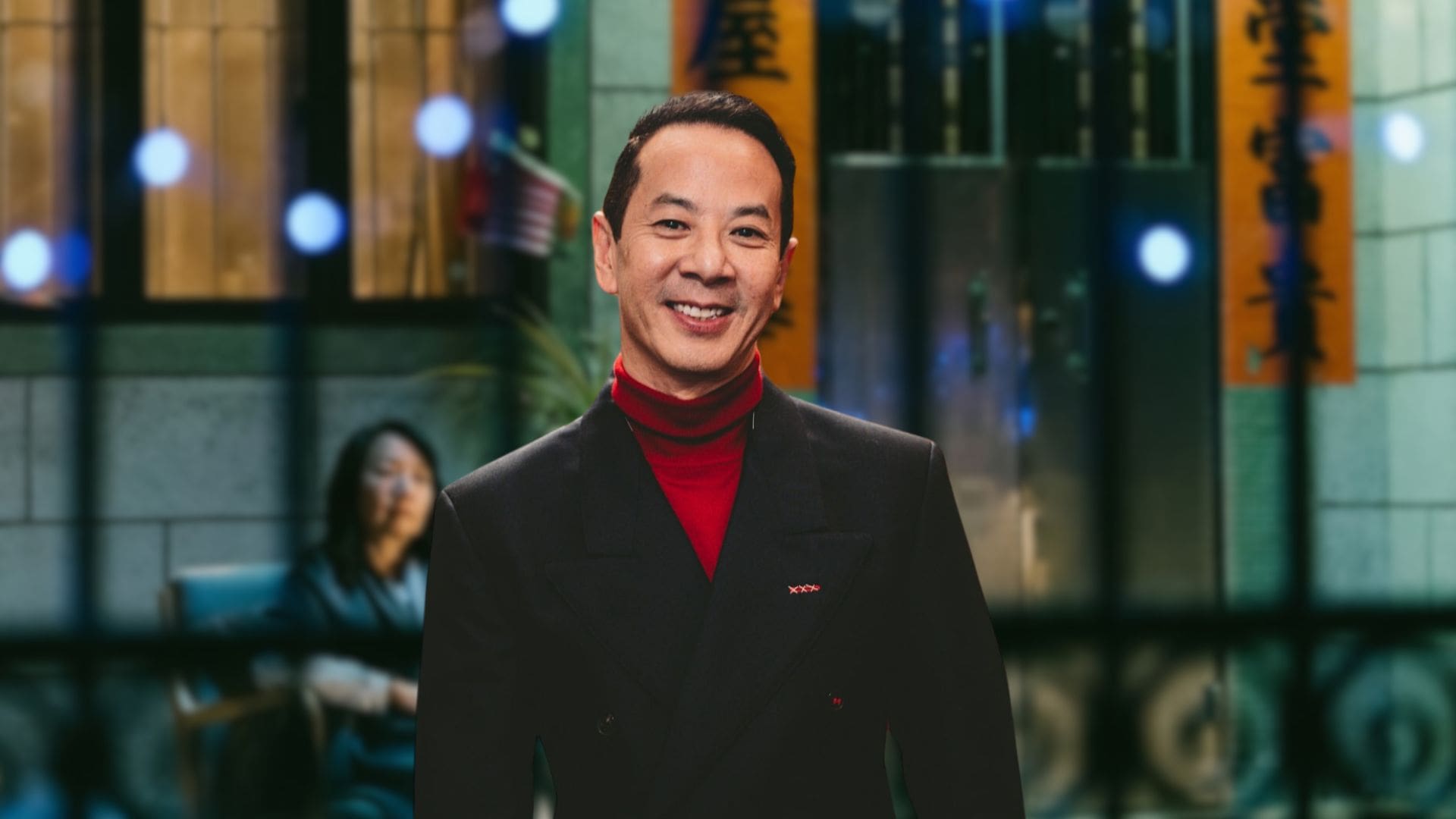
Interview with “All Shall Be Well” writer/Director, Ray Yeung


Hosted by
KT & Oti
Show Notes
Detailed notes coming soon.
Episode Details
- Duration
- 0:00
- Released
- June 4, 2024
- Category
- Interview
- Hosts


Transcript
Transcript (2,682 words)
Full transcript of Interview with “All Shall Be Well” writer/Director, Ray Yeung.
KT: Ray Yeung is a Hong Kong filmmaker renowned for directing Cantonese language, queer cinema. All Shall Be Well was this year's Teddy Award winner, Hong Kong Film Festival opener and is an affecting, poignant drama about love, loss, and legacy. And we'll also be showing as a part of the 2024 Sydney Film Festival. Ray, thank you so much. And welcome to the For Your Reference podcast.
Ray: Hello. Hi. Hi. How are you?
KT: I am in pieces. I am holding myself and I'm feeling a lot of love. And I just want to say thank you so much for making this film and congratulations on all of the success of it so far.
Ray: Thank you. Thank you so much. I'm so glad that the film is coming to Sydney.
KT: It's so, it's so exciting and, I was born and raised in Australia, but I'm Tongan. both of my parents are Tongan and there were so many parallels of, Conservative sort of, you know, discussions and exploring around just queer relationships in general, that I just, I loved it. And I hope maybe one day in future, there'll be a Tongan film like this, but for now, I'm very, I'm very excited to talk about All Shall Be Well with you today.
KT: Um, it's been so great hearing you, you know, like checking out your interviews and talking about the research, that went into All Shall Be Well. And while I did love this film, I did wonder, was there ever a moment where this could have been a documentary because the stories were so heart wrenching, but also there was a story in that as well?
Ray: Yeah, I think it would be difficult because you're telling, sort of like, two people are involved, or two parties are involved, and one who's fighting for the rights, and the other one who's claiming that they have the rights to the estate. So if you do a documentary, there will Either be one sided, it's very difficult to get a balance of it, I would think, but anyway, the situation is that when I met those women, they have all gone past that experience already.
Ray: So the court case has all been gone. So, and that's why I wanted to approach this story. In a different way, I really didn't want it to be like a very biased, you know, one side is obviously the goodies and the other side is obviously the baddies, because I feel that if the audience watched that and they automatically would identify with, say, the hero and think, oh, those are villains.
Ray: And they do not want to identify with them. I really wanted the film to be something that the audience can also empathize with the family members. So that they will ask themselves that question is, Okay, if I would never be able to afford to buy this apartment, and suddenly, Legally, I'm entitled to it. Would I still let this woman, who I know have been living there for many years, and partner of my deceased family member, would I still let her stay there? I think that is the question that I want to pose to the audience.
KT: And I think that's the beauty and the essence of All Shall Be Well, because I think people want that sort of textbook experiences, but as we know, especially when it comes to family and dynamics and relationships like that, there can be love as well as, you know, avoidance. as well. It's not as if they weren't family dinners and gatherings and bonding in that way. So it definitely led to having a lot more layers and a lot more texture.
Ray: Yeah, I think because everything is, uh, sort of like, complicated, you know, and, uh, different levels and different dimensions, I mean, like, the particular situation with this, scenario in the story is these two women for years thought that they were accepted by the family. They thought that because it's open, they were invited to all the events, you know, and, uh, even their kids were staying with them.
Ray: So all that, all that, so they thought that, they were part of the family until, something happened. Then they realized that, oh, the homophobia was always been there. And boy, that is a change of situation. And immediately, you know, it came, it came to a head.
KT: And I don't want to spoil any of the lines, but there were a couple of moments on both sides of the family Well, they'll just like, it's just a cutting one line being like, Oh, so you never, like, this is how you always felt. Right.
Ray: Yeah, yeah, yeah. I think, I think, I think sometimes in the, in, in, in this situation, it's like suddenly the penny drops. It's like, Oh my God, actually, all this time. That's what you thought about it. And, Then it realized, you know, the sudden realization, I think, for a lot of the people I interviewed, they were very shocked.
Ray: But the situation, the difference was that actually the family members change much quicker. in one situation, this woman, her partner passed away. The next morning, the family members already asked her and said, Oh, where are all her watches? Because we want. Uh, to have a nice watch for the funerals, can you bring back all the watches that she bought for us to choose?
Ray: So really of course they never returned them. So I mean that is just greed, you know, but you know I I don't want to portray the family members like that because as I said before I think that will immediately make it very much like uh fighting for inheritance kind of story which is not This is only about that, you know
KT: And I think it allows the elasticity of people to be able to relate to it because there's so many moments in that where you might possibly relate of, you know, I've taken care of your kids, but that's not, you know, That doesn't equate to what they might equate to, like what a real, real relationship is. And you know, the, the, the, I do want to come to like the legality and the socially acceptable and that sort of thing.
KT: But even before I come to that, I don't know if it's your goal, Ray, but I got very emotional at least three times watching this film. I was like, like I really. There was so much in this and I think a lot of it had to do with grief and what happens around grief and how, you know, there were beautiful moments that Auntie Angie saw, but that caused an emotional moment because she was so raw in her grief as well.
KT: Was there a part of the writing process and directing that was a bit of a release to be able to channel that sort of grief for you?
Ray: Yeah, I think it's, uh, it's a very long process, I have to say, the writing for me, because I started, researching the idea in 2020,
KT: Mm hmm.
Ray: through it and, uh, rewriting, and then I also had, uh, A lot of table reads in order to share my thoughts and I invite a different party, uh, people to come. Some were involved in the cases, some were not.
Ray: So, I mean, through that process, I've gone through a lot of ups and downs, you know, and there were moments that I thought I wasn't even going to carry on with it. And then, of course, when we started trying to get the finance to get it together, there were a lot of breaths. That's great. So, yeah, so I think there's a lot of that in the film as well.
Ray: Yeah, but I think mainly, the most of it was really just to focus on the characters and just to go through the journey, the emotional journey within. And with all the characters, not just Angie actually.
KT: hmm.
Ray: Because all of them are going through a certain kind of grieving, uh, and dealing with it in their own ways, and, uh, trying to, uh, make that authentic, I think.
KT: Yeah, absolutely. And I love a good cry. Like this will be on my list of a good cry film.
Ray: Oh,
KT: something that I really loved, exactly what you're saying. There isn't a sharpness, there's a roundedness in regards to the character journeys, as well as the dynamics that we have between them. Victor in particular, I think of, and we don't need to talk too much into detail of spoilers, but I loved seeing the conflict that Victor in particular had of, understanding the nourishment and the love that he got from, Angie and Pat compared to his mother, but also where he was in his life. And I guess the things he needed too. Yeah.
Ray: that we have to make choices, there's the dilemmas, and depending on how, uh, you want to choose, and I think that will reflect what kind of Personality, you are your character. Sometimes it might even surprise yourself, the choice that you have to make.
Ray: Uh, so I think that it also explored that as well, that kind of a humanity. I mean like no one, I try not to judge any of the characters. I try to give them a reason to do what they wanted to do, but the audience will be able to judge for themselves. I think, you know, I mean, some audience, they watch it. They felt so angry that they want to punch some of the family members.
KT: They probably wanted to punch their family members before that too.
Ray: Yes, but some of them felt that, well, you know, I could understand why they do it. That isn't, you know, right or wrong about this, you know, so, you know, it really depending on how people see it.
KT: How was it working with the cast in, I guess, voicing your vision and how you were anticipating it to come out on screen?
Ray: Uh, I, it was, uh, well, I work with Tai Bo, who plays Shing, and I also work with, uh, Patra Au Ga-man, who play, uh, chain, and so, so both of them, my previous work with them before. So I. That was easy because, you know, I know what they can do and I know how to work with them. Uh, with the rest of the cast, I actually always work in the same way.
Ray: I, uh, write a little, uh, short biography for every single main character in the film so that every actor knows, uh, what, the history of this character is. And I also make them listen to the other characters, uh, read out their bios. So that they all have like a shared history. And then I also workshop with them and also do table reads with them.
KT: There are so many great, there are so many great moments. There are so many great lines, in this film. Did you have a particular scene that you enjoyed directing or even on the cutting room floor, seeing it come together?
Ray: I think the very last scene, uh, because it is, uh, Pat and Angie, uh, together, uh, sort of like having a heart to heart. And in that scene, actually, originally it is a flashback and it was at the middle of the movie, actually. And, uh, but. We kind of put it on the last day of the shoot, and it was the very last scene that we shot. And as it turned out, that day was rainy, which was not what we wanted in the script. But anyway, we
KT: a beautiful sun type thing.
Ray: Yeah, that's what it was in the script, but on the day, they were like, raining and the two of them, the two actresses were standing by the water and, uh, they were supposed to have a heart to heart and it was just pouring and they were all wet.
Ray: And I just thought, Oh my God, this is not working. So we put them into this little, uh, pagoda, uh, no, pagoda, like a gazebo thing, and they were inside there, so, and it was getting dark, so we decided to shoot it anyway, and then it turned out to be really magical because, I think it was very quiet at that time because there was no one around and just the two women sitting in the gazebo and having a chat.
Ray: And there was this moment that you just captured that everybody was a bit stunned. And then afterwards, because we wrapped, that was the last day of the shoot. And that night, the assistant director called me up and said, Hey, that last scene was really good. I said, yes. So she said, How about, think about putting it in the very, very last, the movie because it's so wonderful.
Ray: So I said, Oh yeah, that's such a good idea. So I decided to try it with my editor and we both thought that it really works well because it, and also the speech really sums up the whole storyline as
KT: Mm hmm. Yeah, that last, I was, I was already emotional the whole time, but I was like, Oh man, it's the, it's the beauty and the joy that usually, elicits the most emotion, especially when you've gone through such a journey. And I hope you don't mind, this is an interview, but it's mostly just me loving all over.
KT: Um, before I get to my last question, I guess I just want to, I want to lay my love for the fact that, you know, it was clear that someone was going to die. Like that wasn't the shocker. That wasn't the part of why you would watch the film. It was exploring the sort of dynamics and the fallout and, you know, being able to move through.
KT: Those very hard moments and those are the best sort of films. I remember it was very, it was very much at the start of this film where you just see Pat and Angie, like just going out to the markets and shopping and I'm like, this is the life I want. How do I, how do I game the game and get this life? But I just wanted to say thank you.
KT: Like, I know it's an interview, but I'm just saying how much I love the film. Um, but, Just finally, like finalizing with our final question, we finished off our reviews with a recommendation. So what would you pair with All Shall Be Well as a double feature?
Ray: my God. You mean like any movies that has been
KT: Yeah. Like any movie documentary, probably
Ray: Can I say my last movie, Suk Suk, is about two grandfathers falling in love. I do. It was supposed to be show at the Sydney Film Festival four years ago, but because of COVID So the festivals cancelled or went online, so I was never able to come to Sydney to share that movie with the audience, and that was my biggest regret.
Ray: So I'm so, so, so happy that this time, All Shall Be Well is showing here, I finally feel that I can come to Sydney and meet the audience and share my work. So, I'd be very selfish and say that it would be wonderful if the Sydney audience can watch Suk Suk, which is called Twilight's Kiss in America, with All Shall Be Well, because I think they will provide a very, very good, complete picture of what the Hong Kong situation is like for, uh, elderly, elder LGBT people.
KT: Gorgeous. Thank you so much, Ray. Thank you so much for your time. All the best with Sydney Film Festival. And I can't wait to hear all of the reactions coming out of it, but thank you so much for your time.
Ray: Thank you so much.
Related on FYR
Discussion
Loading comments...